
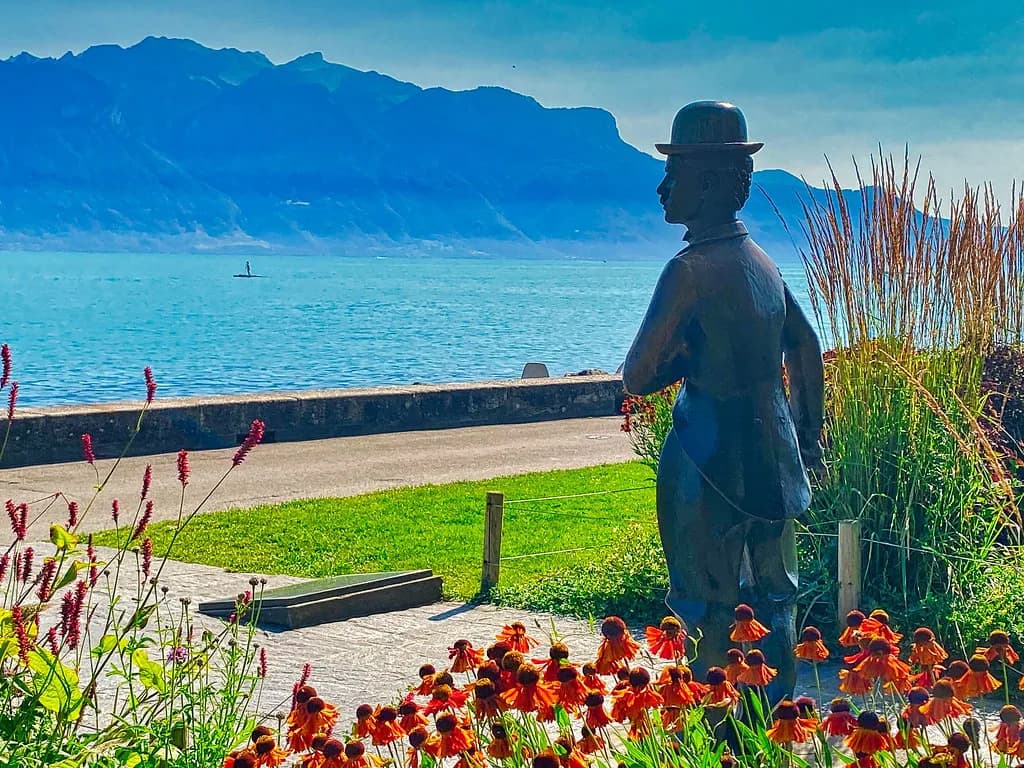
Quai Perdonnet, Vevey: What to See on the Lakeside Promenade
Quai Perdonnet is Vevey's lakefront promenade, joining Place du Marché to Entre-deux-Villes along the shore of Lake Geneva (Lac Léman). It works as both a route across town and a place to stop, with open lake views and the water close at hand.
The quai was built in stages between 1861 and 1876 and named after Vincent Perdonnet, a Vevey citizen whose donation to the town paid for improvements. That history explains why the promenade reads as an engineering project as much as a scenic walk.
What Quai Perdonnet is and why it matters in Vevey
Quai Perdonnet is a promenade rather than a single sight, so there is no gate, ticket or fixed route to follow. It links Place du Marché, the market square at the edge of the old town, with Entre-deux-Villes, and functions as a transit axis through the city as well as a place to pause. If you are weighing how to spend a day here, this walk is one of the easiest things to do in Vevey.
For a short visit, the quai is the easiest place to understand how Vevey meets its lake: the town sits slightly above the shore, and the promenade is where streets, trees and water line up. Visitors describe it as a pleasant lakeside walk where sculptures and monuments add interest along the way.
Where it sits: Place du Marché to Entre-deux-Villes
The promenade runs between two easily identifiable points, which makes it simple to plan around. Start at Place du Marché, where the old town streets meet the lakefront, and walk until you reach Entre-deux-Villes.
Because the quai is open public space, there are no published opening hours or entry fee for the walk itself. Treat it as a stretch of shoreline you can join wherever a street meets the lake, and use the two end points to orient yourself if you are coming from the old town or from further along the shore.
How the quai was built, 1861 to 1876, and who Perdonnet was
Construction ran in phases between 1861 and 1876, and the work included collapses and rebuilds before the promenade settled into its present line. The town's own account notes that the quai became both a living space for Vevey residents and a major draw for visitors.
Vincent Perdonnet was a Vevey bourgeois who made a substantial donation to the town with the aim of modernizing and beautifying it. Naming the quai after him is a little ironic: the town's account records that he had expressly asked that no public place carry a person's name.
The 150-year exhibition at the Musée historique de Vevey
The Musée historique de Vevey marked the 150th anniversary of the quai's completion with an exhibition, Un quai nommé Perdonnet, which ran from April 1 to October 4, 2026. A public vernissage was held on March 31, 2026, at 18:00. Plans, paintings, engravings, photographs, objects and archive documents traced the quai's construction, its later adjustments, and the collapses and reconstructions in between.
The exhibition also went below the waterline. Diving equipment lent by a private owner and by the Musée du Léman in Nyon illustrated the reconstruction work of the 1930s, and underwater photographs by diver and photographer Gatien Cosendey showed what lies beneath the quai today. Guided tours of the exhibition were scheduled for April 8, May 6 and September 29 at 18:00, with registration by email or phone, and the advertised rate was CHF 8, free for Vibiscum members.
That run has ended, so plan around whatever the museum is showing when you arrive rather than the Perdonnet display. A free activity for children aged six and up, Enquête au bord du lac, sent families from the museum reception along the quai to Place du Marché with an investigation booklet.
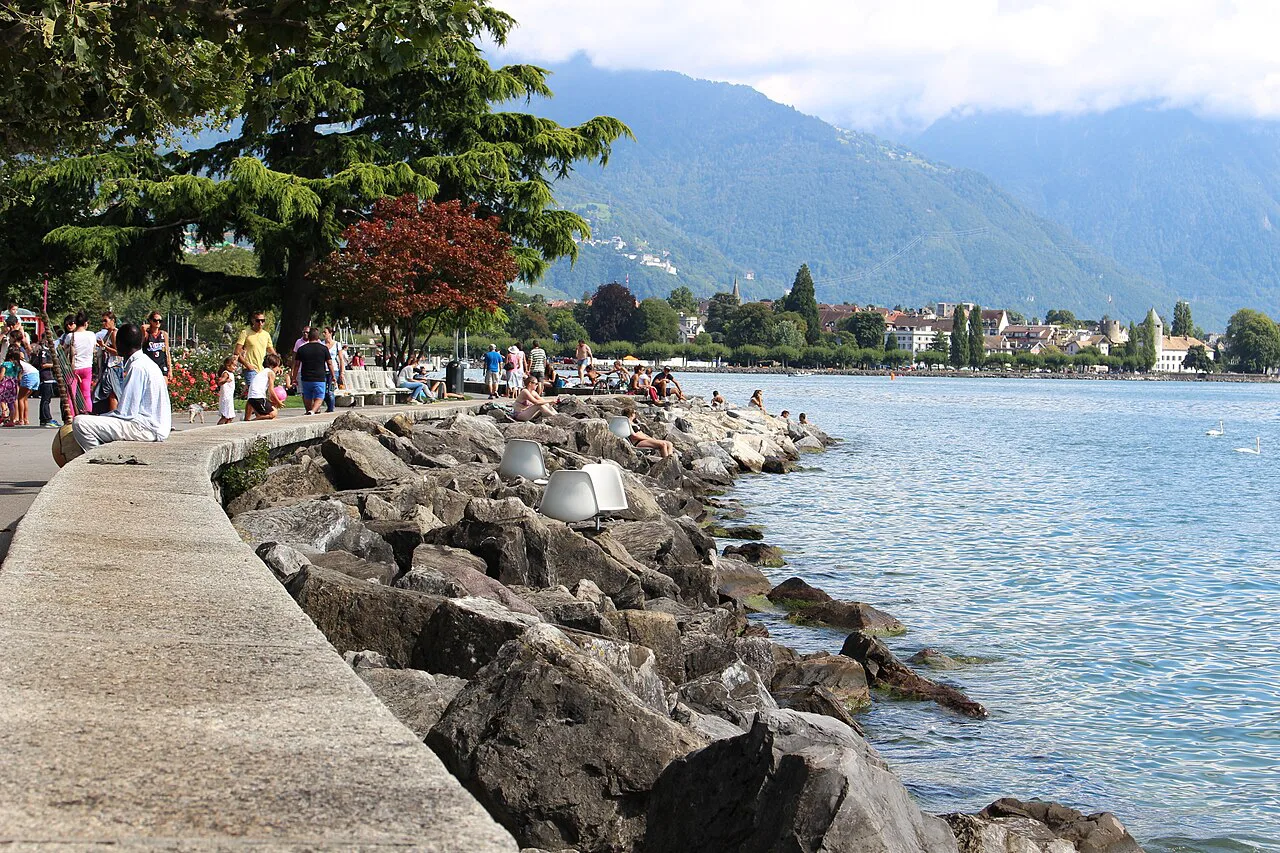

What to see on the promenade: sculptures and monuments
The quai is best experienced as a sequence rather than a checklist. Sculptures and monuments stand along the promenade, and they reward a slower pass rather than a quick scan.
The promenade is also a working edge of the town, not only a viewing platform. Boats, wildlife and passing traffic all share the shoreline, which is part of why the museum framed the quai as a place people have made their own in many different ways.
Lake panorama and the Alpine view
The main draw is the water itself. The promenade faces the lake, so the view opens up as soon as you step onto it, with the far shore and the mountains beyond forming the backdrop. On clear days this is the stretch of Vevey where the scale of Lake Geneva is most obvious.
Allow time to simply sit or lean on the railings rather than treating the quai as a corridor between other sights. The panorama changes with the light and the season, and the promenade's width means you can usually find a spot away from the busiest crossing points.
How much time to allow and how to combine it with the old town
A straightforward walk from Place du Marché to Entre-deux-Villes fits comfortably into a short break, and most visitors will spend more time stopping than moving. Treat the promenade as a leisurely stretch of the day rather than a timed route, and linger over the monuments and the lake view.
Pair the quai with the old town behind Place du Marché, where the lanes climb away from the water. If you want to build a fuller day, our guide to the best things to do in Vevey sets the promenade alongside the town's other stops, and a museum visit slots in naturally because the Musée historique sits at Rue du Château 2, a short walk up from the lakefront.
Practical details: Musée historique opening days, address and admission
The Musée historique de Vevey is at Rue du Château 2, 1800 Vevey. It opens Tuesday to Sunday from 11:00 to 17:00 and stays closed on Mondays except public holidays, with annual closures on December 25 and January 1. Admission for temporary exhibitions was advertised at CHF 8, free for Vibiscum members, and guided tours required registration by email or on 021 925 51 64.
Because exhibition programs change after a show closes, confirm the current display and admission on the museum's site before you set out. The quai outside needs no planning at all, which makes it a reliable fallback if a museum is closed when you arrive.
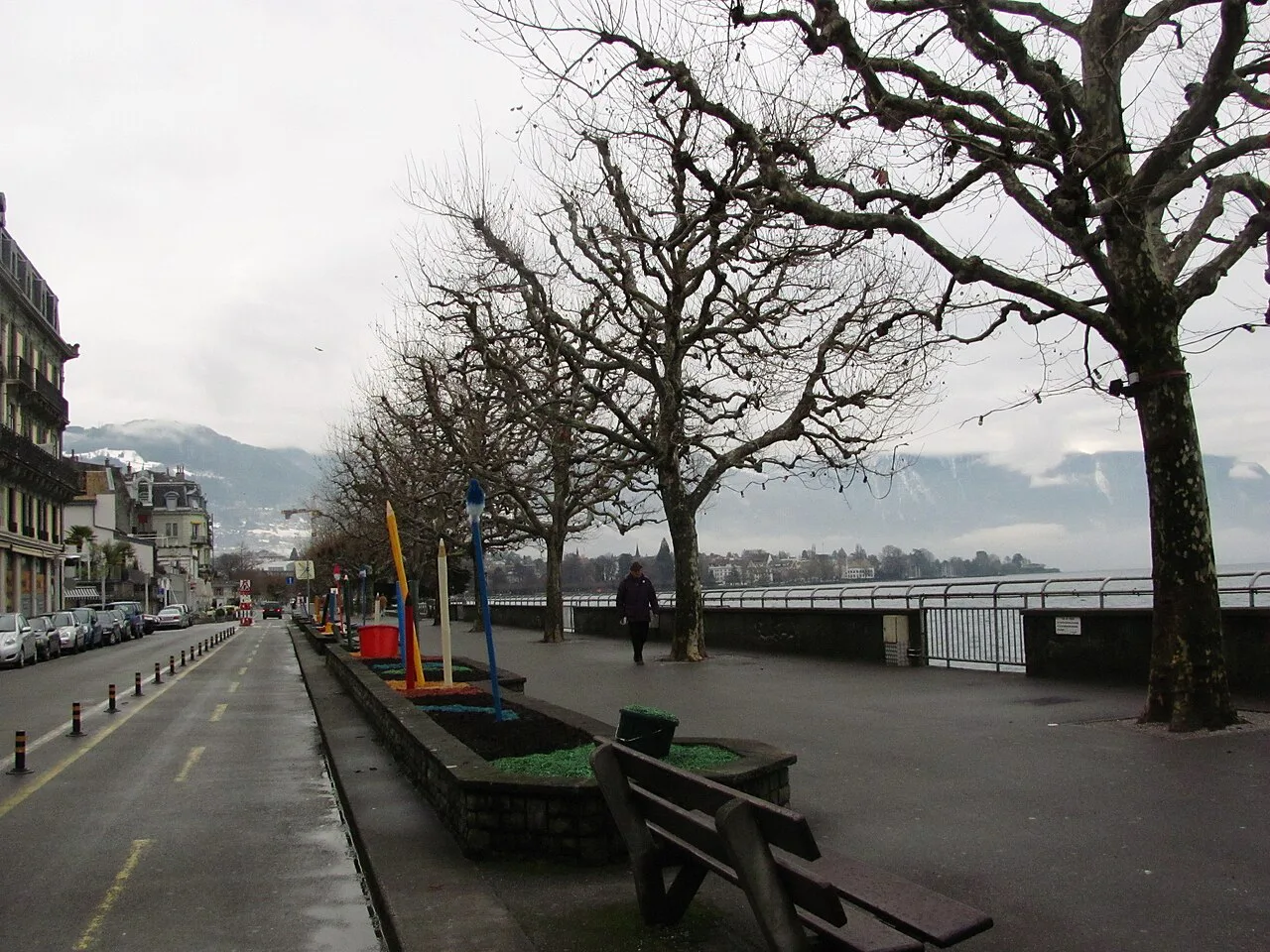

Nearby: Place du Marché and the old town
Place du Marché anchors the old-town end of the quai and is the natural place to start or finish a walk. From there, the lanes of the center lead to other Vevey stops, including the Alimentarium in Vevey, the food museum on the lakeside, and the Charlie Chaplin Statue in Vevey further along the shore. If you want to compare this waterfront with the town's other stops in one place, our guide to things to do in Vevey is the natural next read.
Art lovers can add the Musée Jenisch Vevey, which sits inland from the lake and pairs well with a promenade walk. Keep the quai as the spine of the visit and treat these stops as extensions of it rather than separate outings.
Money-saving notes for museum visits
The clearest saving at the Musée historique was the free entry for Vibiscum members, and children's mediation activities around the Perdonnet exhibition were offered at no charge. Standard adult admission for temporary shows was CHF 8, which keeps a museum stop inexpensive by Swiss standards.
The promenade itself costs nothing, so a low-cost day in Vevey can combine the quai with one paid museum rather than several. Check whether any guest card or rail pass discount applies before paying, since offers change with each exhibition.
Plan Your Visit
Quai Perdonnet is the simplest good decision in Vevey: a free lakeside walk between Place du Marché and Entre-deux-Villes, with sculptures, monuments and a wide view across Lake Geneva. Let the promenade and the old town fill the day rather than timing them.
Before a museum stop, confirm the current exhibition and its hours, since the Perdonnet anniversary show has already closed. The waterfront, by contrast, needs no schedule.
Explore more Vevey guides
Frequently Asked Questions
What is Quai Perdonnet in Vevey?
It is the town's lakeside promenade, running from Place du Marché to Entre-deux-Villes along Lake Geneva. Built between 1861 and 1876, it serves both as a walking route through town and as a place to stop for the lake view.
When was Quai Perdonnet built?
Construction took place in stages between 1861 and 1876. The project involved collapses and reconstructions before the promenade took its present form.
Who was Quai Perdonnet named after?
It honors Vincent Perdonnet, a Vevey bourgeois who gave the town a substantial donation intended to modernize and beautify it. He had asked that no public place be named after a person, which makes the choice of name a mild irony.
Is there an exhibition about Quai Perdonnet?
Yes. The Musée historique de Vevey ran Un quai nommé Perdonnet from April 1 to October 4, 2026, marking 150 years since the quai's completion, with plans, photographs, objects and underwater images. That run has ended, so check the museum's current program.
What are the Musée historique de Vevey opening hours?
The museum opens Tuesday to Sunday from 11:00 to 17:00 and is closed on Mondays except public holidays. It also closes annually on December 25 and January 1. The address is Rue du Château 2 in Vevey.
How much does the Musée historique de Vevey cost?
Temporary exhibitions were advertised at CHF 8, free for Vibiscum members, with guided tours requiring registration. Admission varies by show, so confirm the current rate on the museum's site before visiting.
How long does the walk along Quai Perdonnet take?
Plan around half an hour at an easy pace between Place du Marché and Entre-deux-Villes, longer if you stop for the sculptures, monuments and lake panorama. The promenade is public outdoor space with no ticket or schedule.
What is near Quai Perdonnet?
Place du Marché sits at the old-town end, with the old-town lanes climbing behind it. The Alimentarium and the Charlie Chaplin Statue lie along the lakeside, and the Musée historique de Vevey is a short walk inland at Rue du Château 2.