Things to Do in Interlaken: Views, Lakes and Mountain Trips
Plan Interlaken with named viewpoints, lakes, gorges and mountain railways, plus realistic timing and ticket prices in Swiss francs.
On this page
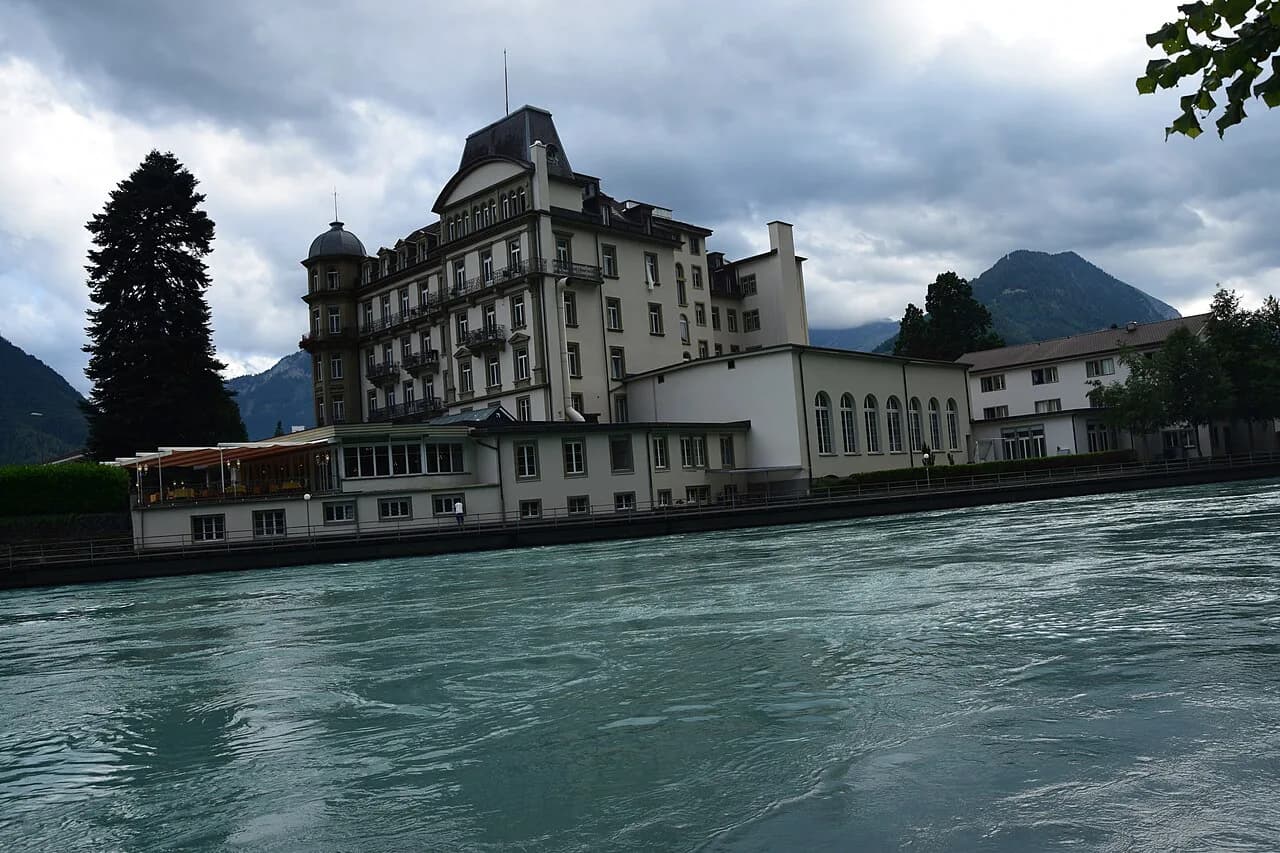
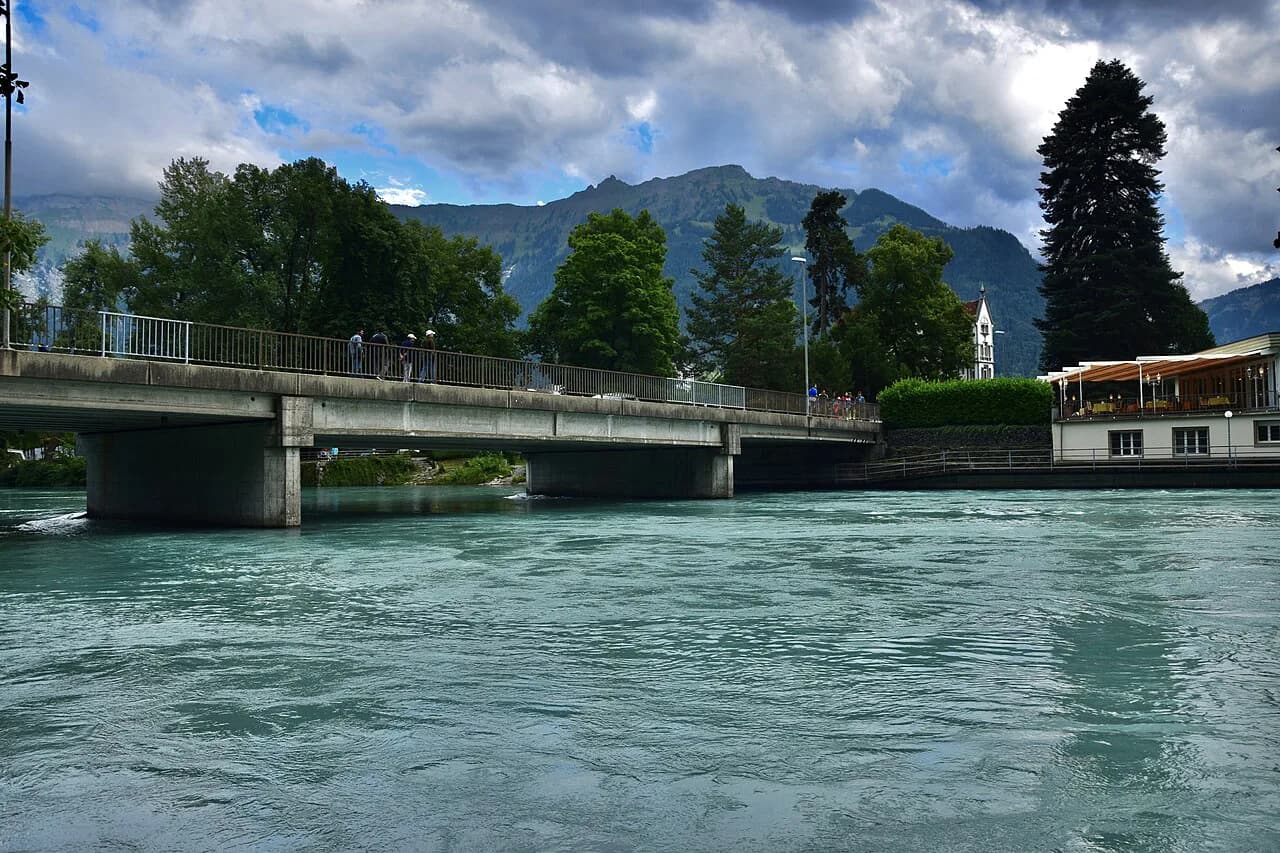
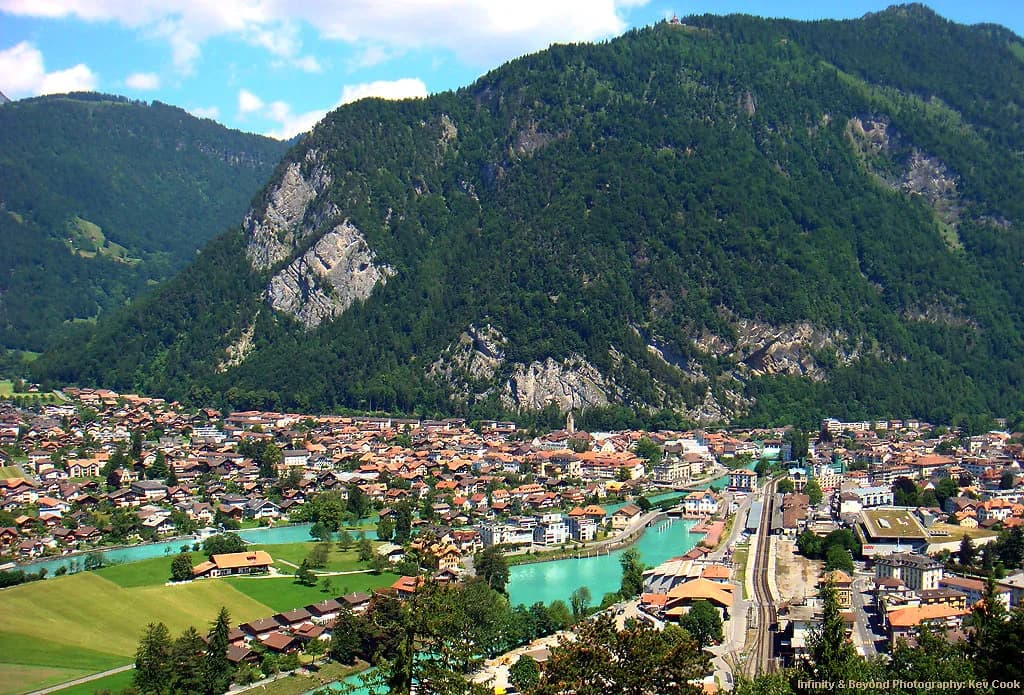
Interlaken is a compact town on the valley floor between Lake Thun and Lake Brienz, with the Bernese Alps rising on both sides and the Jungfrau massif closing the view to the south. Its real value is as a base: the town itself fills half a day, while the mountains, lakes and gorges above it fill the rest of a trip.
What follows groups things by height and by weather, so a clear morning sends you up a cable car and a cloudy one keeps you in the valley. Prices are given in Swiss francs wherever a figure is documented, and the trips that cost nothing beyond a train ticket are flagged as such.
How Interlaken Is Laid Out
Interlaken has two stations, West and East, linked by a short walk through the center and past the Höhematte meadow. Trains to Grindelwald, Lauterbrunnen and the mountain valleys leave from Interlaken Ost, while boats on Lake Thun leave from the pier near West. Convention places the old center in Unterseen across the Aare, a short walk from West, and it rewards an hour of wandering before or after the mountains.
The town is small enough to cross on foot in about twenty minutes, which makes it easy to pair a morning mountain trip with an afternoon in the center. If you want a fixed route through the streets, squares and riverside paths, the Interlaken Self-Guided Walking Tour covers the center in a couple of hours without a guide.
Harder Kulm: The Quickest Big View
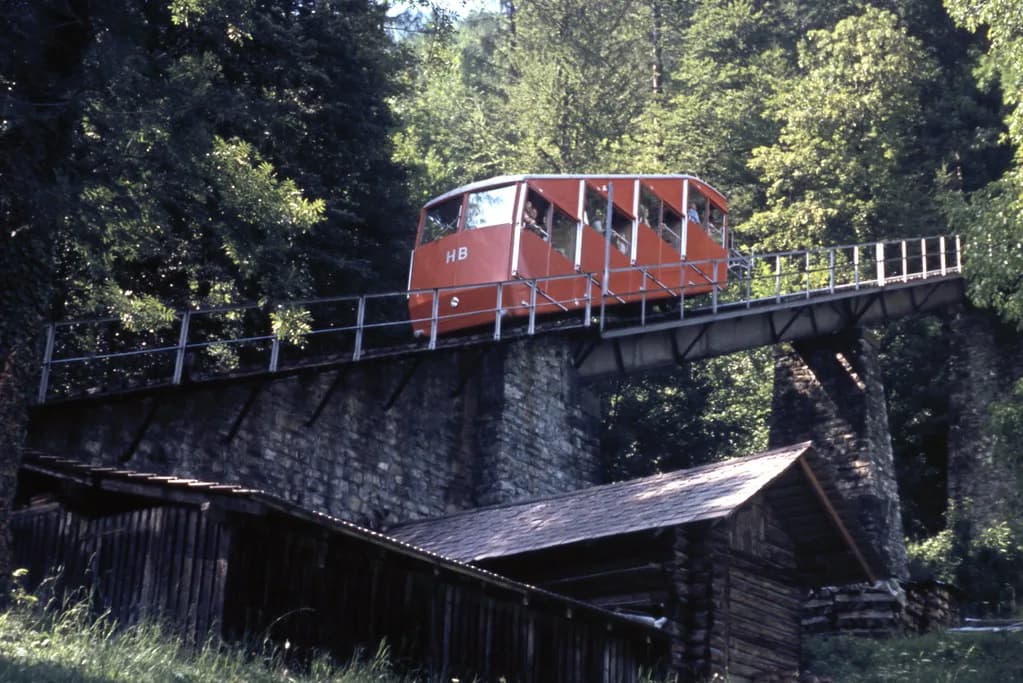
Harder Kulm is Interlaken's local mountain, a viewpoint at roughly 1,300 meters above sea level with a platform looking down on both lakes and across to the Eiger, Mönch and Jungfrau. A funicular covers most of the climb, and a steep footpath reaches the top in under two hours one way for anyone willing to earn the view.
Go early. The platform is the most photographed spot in town and fills up in the afternoon and toward sunset, when the light is best but the railings are crowded. The funicular ride is short, so this is the one mountain trip you can slot into a half-day alongside the town center.
Höhematte and the Flat Half-Day
Höhematte is the open meadow in the middle of town, between the two stations, with the Jungfrau framed at the end of the grass and paragliders landing overhead on clear days. It costs nothing, it is flat, and on a day when cloud sits on the peaks it is a better use of an afternoon than a cable car into whiteout.
The streets around it hold watch and souvenir shops, and the meadow is the natural place to sit with a picnic assembled from a Coop or Migros. A blanket is worth carrying, since benches fill quickly at lunchtime in summer.
Lake Thun and Lake Brienz
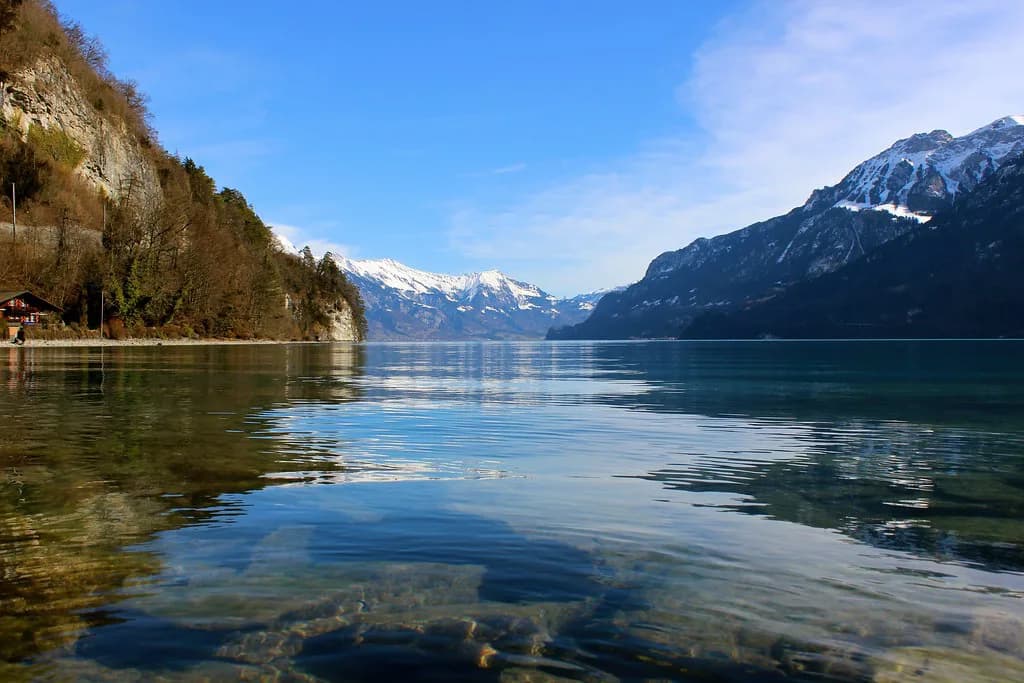
The two lakes behave differently. Lake Thun is the broader, more dramatic shoreline with the pyramid of Niesen above it, while Lake Brienz has the turquoise color and puts you closer to Giessbach Falls and the woodcarving village of Brienz. On a short stay, pick one cruise rather than both, and choose the lake that matches the mountains you plan to see anyway.
Boats run from the piers near both stations, and a cruise is the low-effort option on a day when the high mountains are clouded in. Kayak tours on Lake Brienz run about two hours with a guide and suit travelers who want the water without committing to a full day.
Jungfraujoch, Kleine Scheidegg and Schilthorn: The High Trips
Jungfraujoch is the highest railway station in Europe at 3,454 meters, reached by cog railway via Kleine Scheidegg, with the Aletsch Glacier, an ice palace and snow outside year-round. It is the single most expensive excursion in the region, and the Swiss Travel Pass takes 25 to 50 percent off the fare depending on the leg.
Kleine Scheidegg at about 2,000 meters is the cheaper compromise: the ride up to Wengen is covered by the Swiss Travel Pass and the onward leg is half price, and the Eiger, Mönch and Jungfrau stand directly in front of you. Schilthorn on the other side of the valley trades glaciers for the 007 exhibition and a revolving restaurant, and it is the better pick if you want a film location with your panorama.
Grindelwald First and the Bachalpsee Walk
Grindelwald is about 45 minutes by train from Interlaken Ost, and from the village a separate cable car climbs to Grindelwald First at nearly 2,200 meters. The cable car costs CHF 68 bought at the ticket office, and from the top station the First Cliff Walk leads along a suspended walkway with the valley below.
From First, an easy but uphill walk of about an hour reaches Bachalpsee, the mountain lake that appears on most postcards of the region. Cable cars save the climb and the money is better spent there than on the unremarkable walk up through the lower slopes.
Schynige Platte and the Cogwheel Train
Schynige Platte is reached by a vintage cogwheel railway from Wilderswil, a short train ride from Interlaken Ost. The wooden benches and open windows belong to another era, and the panorama trail along the ridge gives a clean view of the Eiger, Mönch and Jungfrau without the crowds of the higher stations.
The weather up there can turn through several seasons in a day, so layers and a waterproof shell matter more than they do in town. A short walk to the Oberberghorn viewpoint is enough for travelers who do not want a full hiking day.
Gorges and Caves: Trümmelbachfälle, Rosenlaui and St. Beatus
Trümmelbachfälle near Lauterbrunnen sends ten glacier-fed waterfalls through tunnels inside the mountain, reached by paths and platforms that leave you wet from the spray. It operates in the summer months, so it does not belong in an off-season plan. The Rosenlaui Glacier Gorge and Grindelwald Glacier Canyon follow the same summer-only pattern, and all three are the place to be on a hot day or after heavy rain.
St. Beatus Caves on the slope above Lake Thun work in the opposite conditions: a lit cave walk with stalactites, a subterranean waterfall and a terrace looking over the lake, useful when it rains. The cave path is open year-round, while the museum and restaurant keep a March to November season.
Niesen and the Pyramid Above Lake Thun
Niesen rises to about 2,400 meters in a near-perfect pyramid, visible from the Lake Thun shore and reached by train to Mülenen followed by a funicular. The summit has a restaurant and trails, and the shape of the mountain is the reason to go rather than the height alone.
Check the summit webcams before committing to the fare, since a clear view is the entire point of the trip. Travelers with several days in Interlaken fit Niesen in more easily than a first-timer on a two-day visit.
Oeschinensee and Blausee
Oeschinensee sits in the Kandersteg valley and is reached by gondola, with a 20-minute stroll from the top station to the shore or a longer trail for better views. The gondola costs CHF 32 return or CHF 24 one way, and the Swiss Travel Pass takes 50 percent off.
Blausee is small and charges an entrance fee for the short loop around the water, which makes it a stop for travelers who want a lake without a hike rather than a destination in itself. Boats and a kiosk round out a visit of an hour or so.
Rainy-Day Options in Town
The Funky Chocolate Club runs chocolate-making sessions in the center of Interlaken, where you temper and mold your own bars, including vegan versions. Sessions fill up, so booking ahead is sensible when the forecast is poor and everyone else has the same idea.
For a wet day that still feels like a trip, the St. Beatus Caves stay open year-round and the cave walk is fully under cover. Museums in Interlaken and the surrounding area fill the remaining hours, though the bigger collections are a train ride away.
Adventure Activities: Flying, Canyoning and Water
Paragliding is the most requested tandem flight in Interlaken and the cheaper of the flying options, with a short instruction and a harness before you launch above the town. Hang gliding lasts longer and flies out over both lakes with the Bernese Alps behind, and skydiving adds a free fall of about 45 seconds before the canopy opens.
On the water, canyoning runs about an hour and a half with a guide, including a rappel down a steep wall, jumps into pools and a zip line. Kayak tours on Lake Brienz and jetboat rides from Bönigen cover the calmer and the faster ends of the same lake.
Villages Worth the Short Train Ride
Lauterbrunnen, about 30 minutes from Interlaken Ost, sits in a valley walled by cliffs with dozens of waterfalls, Staubbach among them, dropping into the village. It is deservedly busy in summer, so an early train buys you quiet paths and space at the viewpoints.
Mürren, reached by cable car from Lauterbrunnen, is a car-free village with a direct view of the Eiger, Mönch and Jungfrau and a relaxed pace that makes it a good half-day add-on. Iseltwald on Lake Brienz is smaller still, known for its chalets and the pier that became famous through a Korean drama.
How Many Days Interlaken Needs
Two days cover the essentials: one day for the town, Höhematte and Harder Kulm, and one full day for a high mountain trip such as Jungfraujoch, First or Schilthorn. Four days let you add a lake cruise, a gorge or cave, and a village like Lauterbrunnen or Mürren without racing between them.
Build the plan around the weather rather than the calendar. Mountain railways and cable cars are a poor investment under cloud, so keep one flexible day for whichever summit has the clearest forecast and fill the others with the valley, the lakes and the caves.
When to Go and What It Costs
Summer brings the longest opening hours for gorges, waterfalls and high cable cars, along with the largest crowds at Harder Kulm and in Lauterbrunnen. Shoulder months are quieter and cheaper on the ground, but some seasonal gorges and canyon attractions close outside the warm months, so a late-spring or early-autumn trip needs a plan that does not depend on them.
On passes, the Swiss Travel Pass covers trains, buses and boats and takes 50 percent off the Oeschinensee gondola and the leg beyond Wengen toward Kleine Scheidegg, with 25 to 50 percent off Jungfraujoch. A Jungfrau Pass covers travel up to Kleine Scheidegg without extra cost. Run the numbers against your planned trips rather than buying on principle.
Which Paid Mountain Is Worth It
For a first visit with limited time, Harder Kulm gives the best return: a short funicular, a view of both lakes and the big three peaks, and no need to commit a whole day. Grindelwald First earns its CHF 68 with the Cliff Walk and the Bachalpsee walk, but only if the forecast is clear. Jungfraujoch is the trip to save for, not to squeeze in.
Skip the paid lakes and viewpoints that duplicate what a free meadow or a boat deck already shows you. Blausee and the Iseltwald pier both charge for access to small, photogenic spots, and the money is better spent on a mountain you cannot see from town.
Plan Your Visit
Interlaken works best as a base with a short list: one big mountain, one lake, one valley and the town's own meadow and funicular. If you are weighing a stop elsewhere in Switzerland, the things to do in bern make an easy add-on by train. Decide in the evening which summit has the clearer forecast, then build the next day around that and keep the flat options in reserve.
Explore more Interlaken guides
Frequently Asked Questions
What should I do in Interlaken in November?
November limits you to the year-round options: the town center and Höhematte, Harder Kulm when the funicular runs and the cloud lifts, the St. Beatus Caves, and the chocolate workshop. The gorges at Trümmelbachfälle, Rosenlaui and Grindelwald keep a summer season, so do not build a November plan around them. High mountain railways run, but a clear forecast decides whether the fare is worth paying.
Is Interlaken a good place to visit?
Yes, as a base rather than a destination in itself. The town is flat, compact and easy to cross on foot, with two stations that put Grindelwald, Lauterbrunnen, Schynige Platte and the lake piers within a short ride. The scenery above town, from Harder Kulm to the Jungfrau, is the reason to come.
Is two days enough for Interlaken?
Two days cover the town, Höhematte and Harder Kulm on one day and a single high mountain trip on the other. Adding a lake cruise, a gorge or a village such as Lauterbrunnen or Mürren needs a third or fourth day. Trying to fit Jungfraujoch and Grindelwald First into the same two days leaves little time for either.
Which village near Interlaken is worth the trip?
Lauterbrunnen is the classic choice, about 30 minutes by train, with cliffs and waterfalls right above the village. Mürren, reached by cable car, is quieter and looks straight at the Eiger, Mönch and Jungfrau. Iseltwald on Lake Brienz suits a short stop for its chalets and lakeside pier.
How much does the Grindelwald First cable car cost?
The cable car costs CHF 68 when bought at the ticket office in Grindelwald. From the top, the First Cliff Walk is free, and the walk to Bachalpsee takes about an hour uphill. Check the current fare and any pass discounts when you buy, since prices change between seasons.
Is Harder Kulm worth it?
For a first visit, yes. It is the fastest big view from town, with both lakes and the Eiger, Mönch and Jungfrau in front of you, and a funicular removes most of the climb. Go early in the day, because the platform gets crowded in the afternoon and at sunset.
Sources
Notes for your Swiss city break
Optional updates to our Swiss city guides.
You might also like
Continue reading
More guides you'll find useful