Things to Do in Zürich: Old Town, Museums & Parks Guide
Plan things to do in Zürich by area: Old Town, churches, museums, lakefront parks, viewpoints, the Polybahn and Uetliberg, plus how many days you need.
On this page
Zürich rewards a short, walkable plan. The Zürich Old Town spreads across both banks of the Limmat, Bahnhofstrasse runs south from the main station to the lake, and two modest hills give you the classic views without leaving the city. Two full days covers the core sights; a third lets you add a hill and a museum at a relaxed pace.
Prices are high, but plenty of the best things here cost nothing to look at: the riverside squares, the lakefront quays and the viewpoints at Lindenhof and the university terrace. Paying comes in small, predictable chunks, such as a tower climb or a museum ticket, so budgeting around two or three paid entries per day works well.
How Zürich Is Laid Out
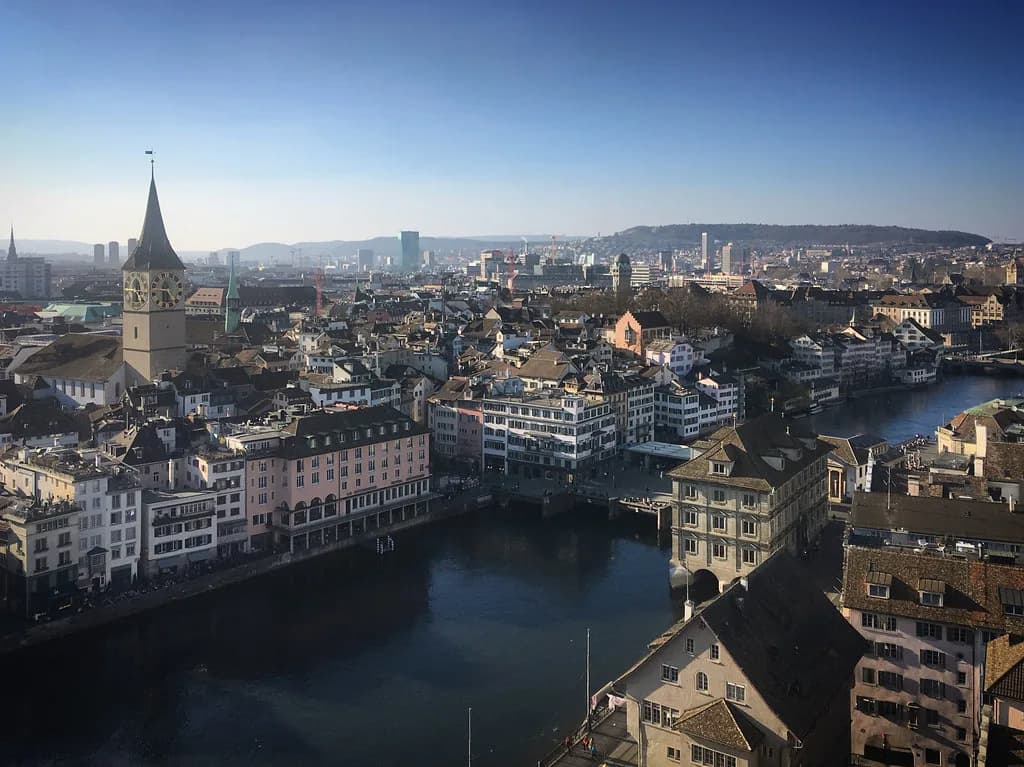
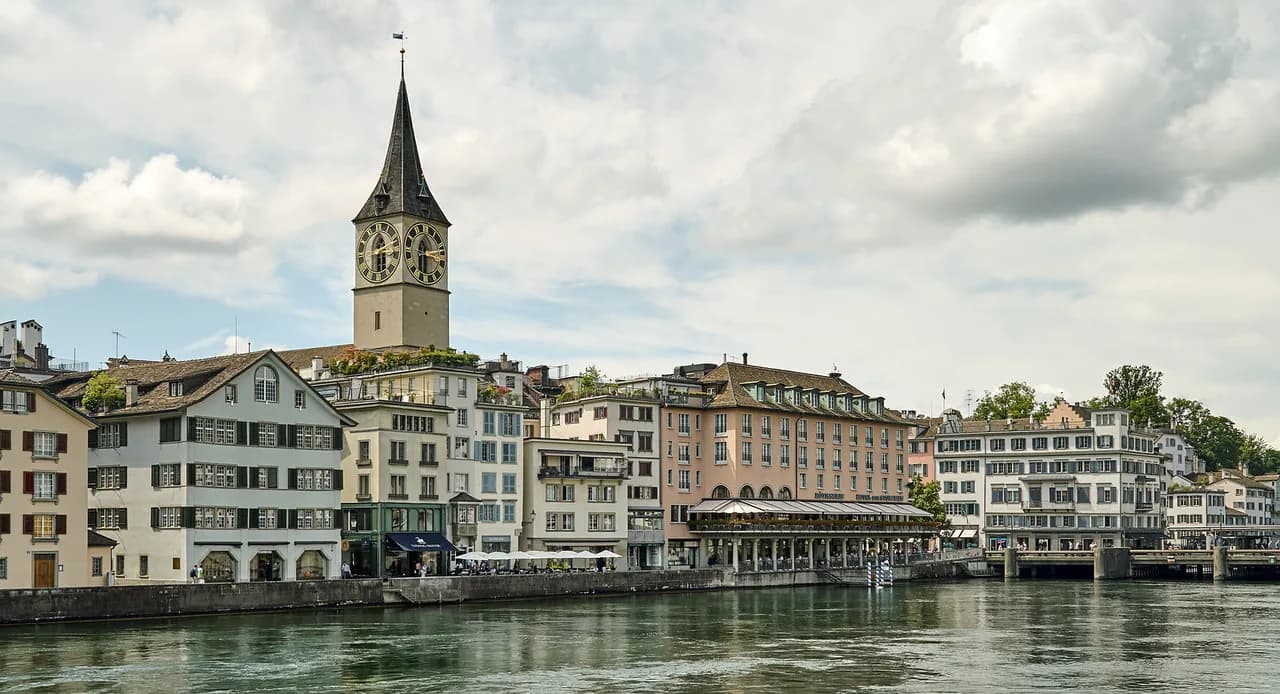
The old town, the Altstadt, sits on the left bank of the Limmat, with the Niederdorf quarter on the right bank across the river. Bahnhofstrasse runs almost straight south from the main station to the lakefront quays, so the whole core is a rough triangle you can cross on foot in well under an hour.
Behind the station, Zürich-West occupies the former industrial quarter, while the hills rise on both sides: the Polyterrasse on the ETH campus above the old town center, and Uetliberg as the wooded ridge to the west. A self-guided route between the station and the river squares is the simplest way to get your bearings on arrival.
Old Town (Altstadt) and Lindenhof
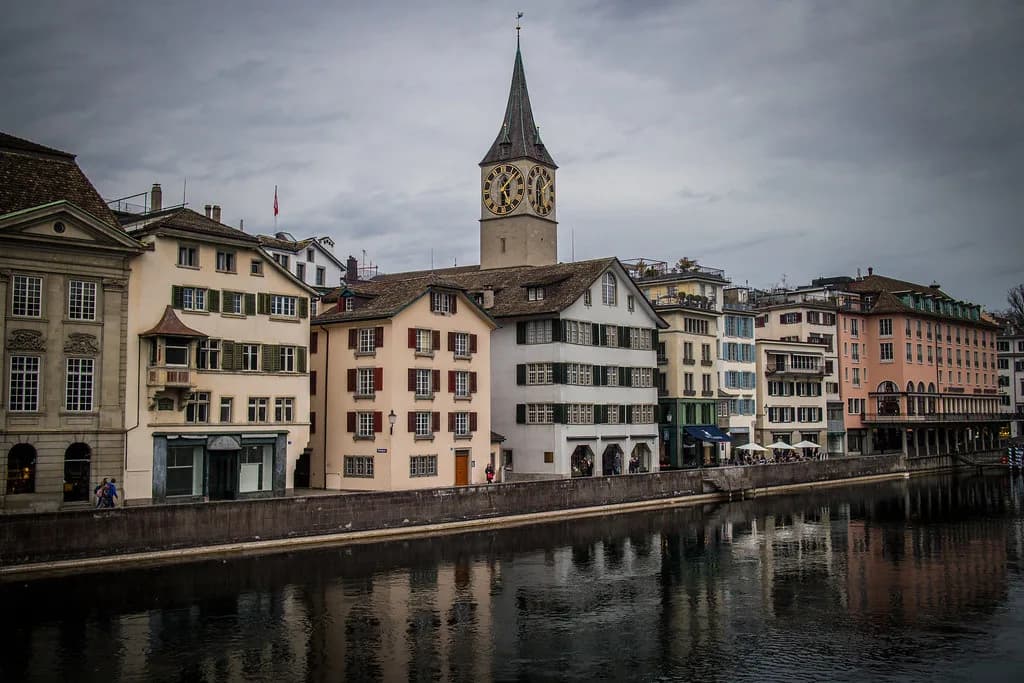
The Altstadt is a knot of cobbled lanes and medieval buildings whose layout still follows the medieval street plan, with small boutiques, galleries and cafes in the ground floors. The Niederdorf across the river is livelier, and street performers and markets often add noise to the narrowest alleys.
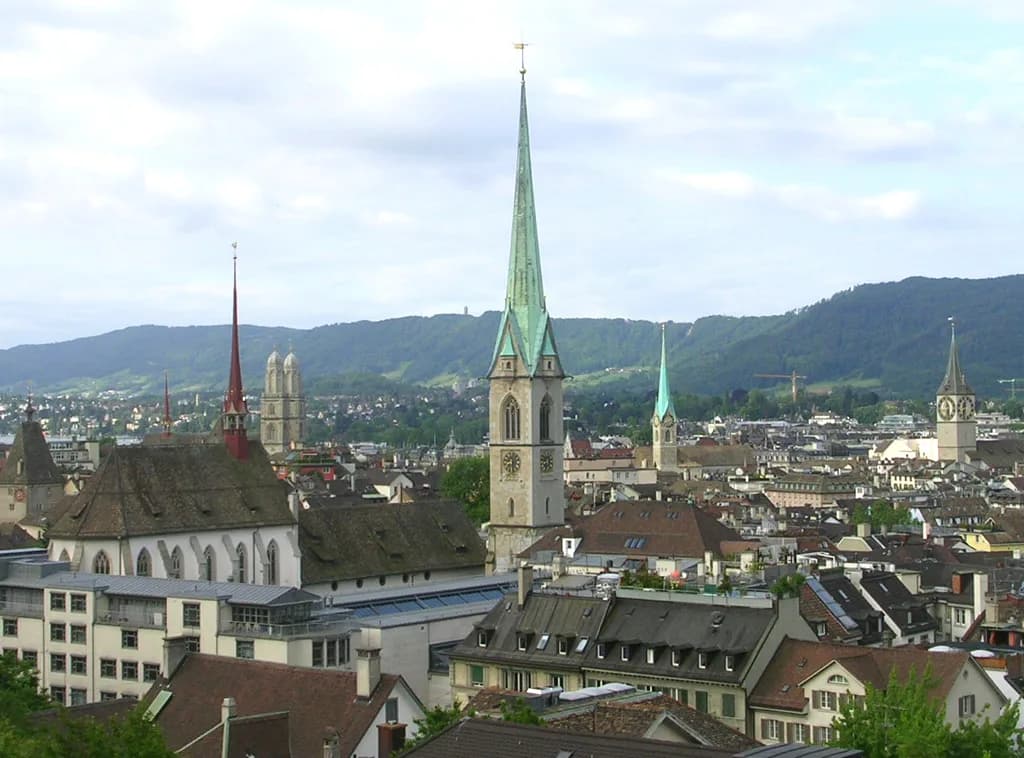
Lindenhof is the calm counterweight: a small park on the site of a Roman military post and a later royal palace, looking down over the Limmat and the rooftops. It costs nothing, takes ten minutes, and gives you the postcard photo of the two minsters facing each other across the river.
If you want the old town compressed into one legible walk, the Zürich Old Town Walking Tour links the river crossings, the squares and the church fronts in a sensible order. It is the best single hour you can spend before deciding which sights deserve a return visit.
Grossmünster and Fraumünster
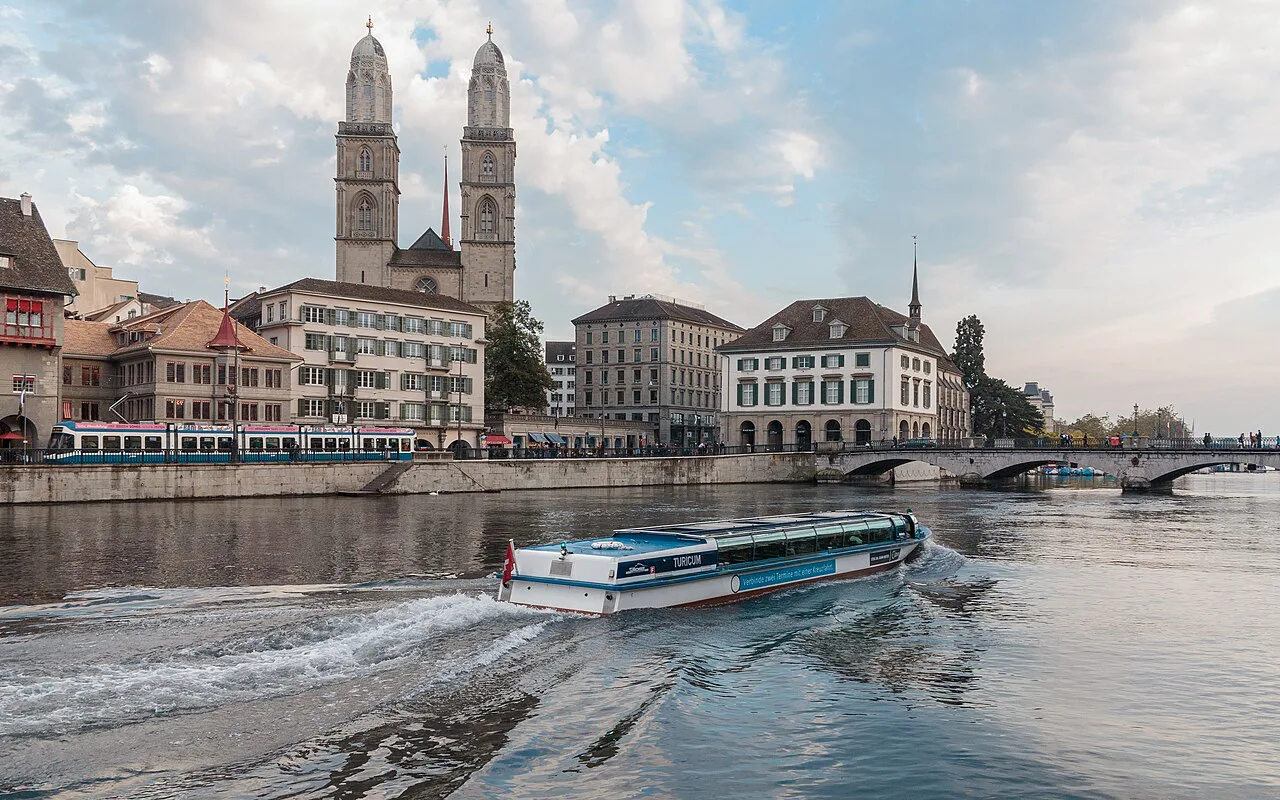
Grossmünster is Zürich's signature silhouette, a Romanesque church begun around 1100 with twin towers added in the 15th century. Inside, the 11th-century crypt and Augusto Giacometti's stained glass from the 1930s are the reasons to step in, and the tower climb ends in a panorama over the city and, on a clear day, the Alps.
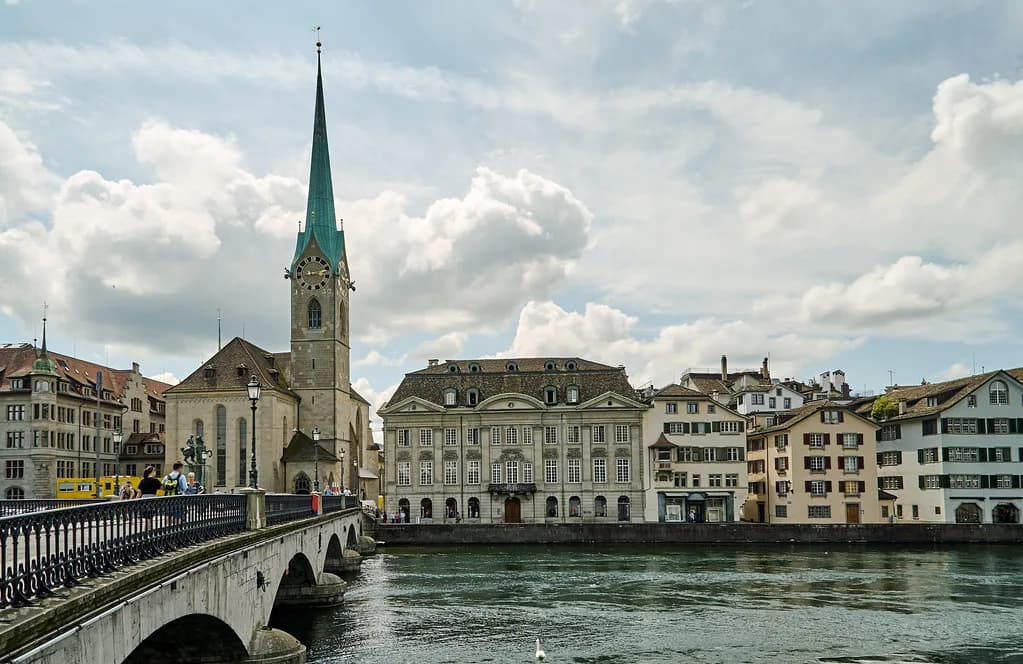
Fraumünster, founded in 853 as a convent for aristocratic women, keeps its slender green spire on the skyline and its five Marc Chagall windows from the 1970s inside. The Chagall glass is the draw, and it is worth timing your visit for daylight rather than squeezing it in after dark.
These two churches sit within a few minutes' walk of each other via the river bridge, so pair them in one morning rather than splitting them across days. Both are working churches, so check the door for service times before you plan a tower climb.
Bahnhofstrasse and the Shopping Core
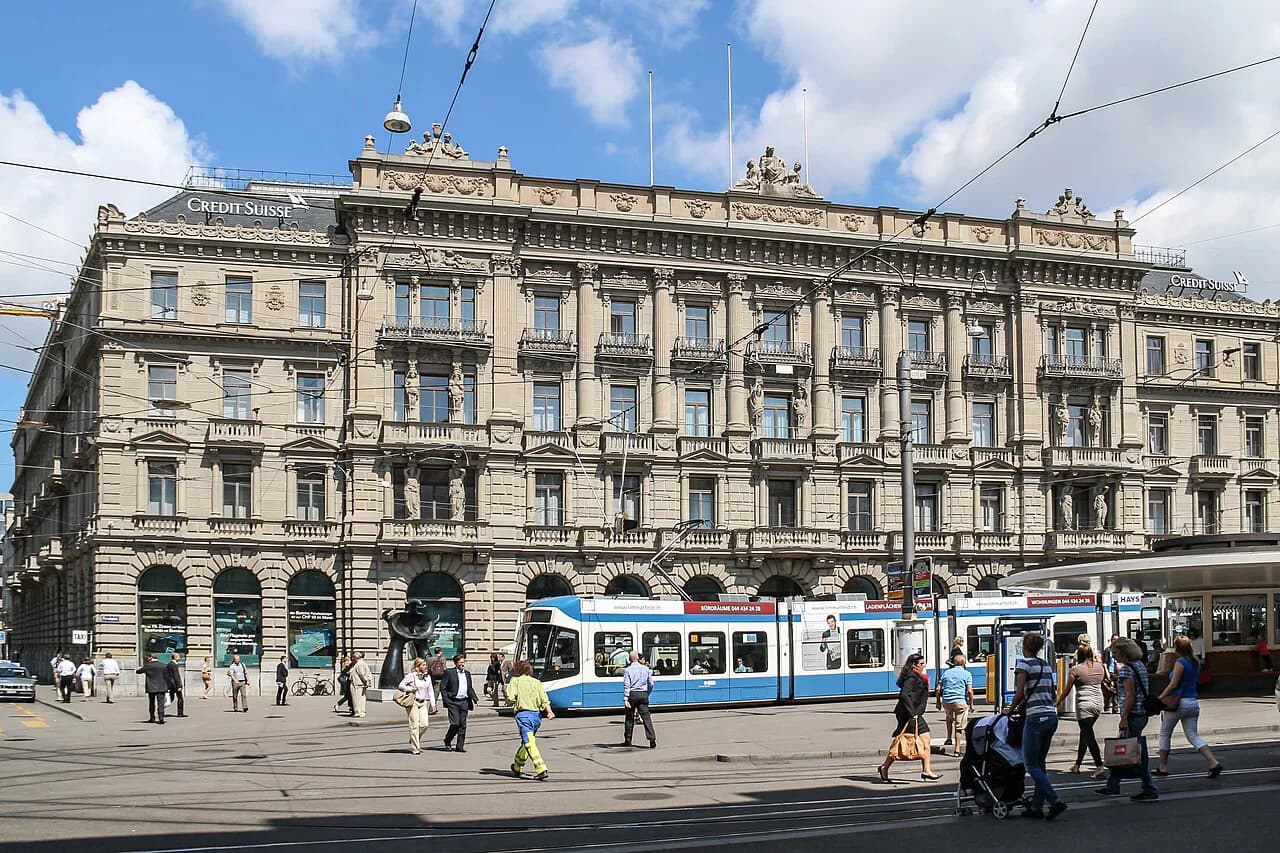
Bahnhofstrasse is Zürich's main retail strip, running from the main station toward the lake and lined with the international brands you would expect in a financial capital. Window-shopping costs nothing and the street is a useful orientation line between the station and the water.
Around the festive season, Bahnhofstrasse is strung with twinkling lights that locals affectionately call Lucy, and the switching-on is celebrated with its own ceremony. Dates and arrangements change annually, so confirm the current schedule before planning a trip around it.
Lake Zürich on Foot
The lakefront is where Zürich relaxes. The Historische Quais am Zürisee begin in front of the opera house and are the city's best-known promenade, usually crowded with swans.
Continue south and you reach Zürichhorn, a large lakeside park with a Chinese garden and waterside eateries, and on the far side of the lake the Rentenwiese park holds a botanic garden and a bird sanctuary. All of it is free to wander, which makes the lakefront a good counterweight to a museum-heavy day.
Boats cover the same water from a different angle, with short cruises toward Kilchberg and longer runs down the lake. Timetables and fares change by season, so pick up the current sailing sheet at the dock rather than relying on an old plan.
Museums: Kunsthaus, the National Museum and Small Collections
Kunsthaus Zürich is the heavyweight, founded in 1910 and now holding a collection that runs from medieval panels to modern art, with strong Dada material that connects to the movement's Zürich origins. It is a two-to-three-hour stop for anyone who cares about art, and a skippable one for anyone who does not.
The Swiss National Museum, in its castle-like 1898 building beside the station, covers Swiss history from prehistory to the present, including watchmaking and lace. Its location makes it the easiest museum to slot in on a rainy arrival day, since it is a short walk from the platforms.
Smaller collections suit short attention spans: Kulturama traces life on Earth across three floors, the FIFA Museum covers football history, and the Swiss Finance Museum explains banking and markets. Opening days and ticket prices for all three change, so confirm on the day you plan to go.
Public Art and Quirky Stops
Zürich has over 1,300 public art installations, so you meet them rather than plan around them. The best-known is Jean Tinguely's kinetic Heureka at Zürichhorn, which moves for eight minutes each day at 11am, 3pm and 7pm.
Harald Naegeli's stick figures, once treated as vandalism and now celebrated, turn up on walls around the city, and Sislej Xhafa's 15-meter sculpture-swing stands in Hardau Park. Treat these as bonuses on a walking route rather than destinations in themselves.
Viewpoints and Funiculars: Polyterrasse and Uetliberg
The Polyterrasse on the ETH campus above the old town is the free viewpoint, with seating, a nearby cafe and a view over the rooftops to the lake. The little red Polybahn funicular gets you up the slope in a couple of minutes' ride.
Uetliberg is the bigger reward, a ridge west of the city with views over Zürich, the lake and the Alps. Trains run from the main station roughly every 30 minutes and take about 20 minutes to the summit station, from where a short scenic walk brings you to the top.
At the summit you can either enjoy the view for free or pay the small fee for the Uetliberg lookout tower, which was CHF 2 at the time of writing. Treat that as a historical figure and check the current charge at the tower before climbing.
Zürich-West: Viadukt Arches and Urban Surf
Zürich-West is the former industrial quarter behind the station, and its centrepiece is the Viadukt, a run of railway arches converted into boutiques, markets and eateries. Frau Gerold's Garten spreads across a terrace in summer, and Urban Surf's standing wave is worth a look even if you are only watching from the bar.
This is a half-day for repeat visitors or a wet-weather option rather than a first-trip priority, and the mix of shops and studios changes, so simply wander the arches rather than chasing a specific address.
Lindt Home of Chocolate in Kilchberg
The Lindt Home of Chocolate in Kilchberg is a chocolate museum and workshop space built beside the Lindt & Sprüngli factory, home to a nine-meter free-standing chocolate fountain. It is the clearest family-friendly paid attraction outside the center, and the tasting is part of the draw.
The train from the main station takes about 12 minutes, then a ten-minute walk; a ferry to Kilchberg followed by roughly eight minutes on foot is the more scenic route. Skip-the-line tickets are sold online, and the current price and opening days are posted there.
How Many Days in Zürich
One day gets you the core: the old town lanes, Lindenhof, Grossmünster and Fraumünster, a walk down Bahnhofstrasse and out along the lakefront, and the Polyterrasse for the view. Cut the tower climb if the weather closes in and you still have a full day.
Two days add a museum, and the choice is simple: Kunsthaus for art, the National Museum for Swiss history, or a small collection if you want to be in and out in an hour. Keep the second afternoon for the lakefront so the day does not become an indoor marathon.
Three days let you add Uetliberg for the ridge view, or Zürich-West and the Lindt Home of Chocolate if you want a half-day out of the center. Do not try to combine all three; pick the one that matches the weather and your interests.
When to Go
Zürich is a year-round city, but the experience shifts with the season: warm months make the lakefront quays and park terraces the natural focus, while colder months push you toward the museums and the Christmas lighting on Bahnhofstrasse. Expect typical seasonal averages rather than a reliable forecast, and pack for rain whichever month you choose.
Public baths and lakeside swimming are a summer affair, and the festive lighting is a winter one, but neither changes the fact that the old town and both minsters are open to walkers in any month. Build your day around indoor and outdoor halves so a wet morning does not derail the plan.
Budget Notes
Walking the old town, Lindenhof, the lakefront quays and the Polyterrasse costs nothing, and those free stops are the backbone of a Zürich day. Paid entries cluster in the museums, the church tower climbs and the Lindt Home of Chocolate.
Several Swiss cities issue guest cards with transport and museum benefits, but the terms vary by provider and by season, so check what your accommodation or the tourist office actually offers rather than assuming a discount. The same caution applies to rail passes: compare a Half Fare card or a Swiss Travel Pass against the trips you will really make before buying.
Practical Trade-offs
Churches versus museums is the main either-or. Grossmünster and Fraumünster are quick, atmospheric and central, while a museum eats two hours; on a one-day visit, do the churches and save the museum for next time.
The hills are worth it in clear weather and a waste of time in low cloud, so make Uetliberg a spontaneous decision rather than a fixed booking. The Polyterrasse, being a short funicular ride from the center, is the easier substitute when the forecast is uncertain.
On a short visit, skip Zürich-West and the Lindt Home of Chocolate; both are good, neither is essential. Keep the center for the old town, the two minsters, the lakefront and one viewpoint, and you will have seen the city properly.
Plan Your Visit
Zürich works best as two unhurried days built around the river and the lake, with one hill and one museum added if time allows. Walk the old town early, take the Polybahn to the terrace for the view, and keep an afternoon free for the lakefront quays.
If you are extending the trip, Basel and Bern are the natural next cities, each compact enough for a day or two of the same kind of walking. Compare the two before you commit, since their old towns and river settings differ more than their size suggests. For the Rhine-side version of this kind of walk, see these things to do in Basel.
Explore more Zürich guides
Frequently Asked Questions
Is there anything worth seeing in Zürich?
Yes. The old town on both banks of the Limmat, the Grossmünster and Fraumünster churches, the Lindenhof square and the lakefront quays are all central and easy to combine on foot. Add the Polyterrasse or Uetliberg for a view, and one museum if you have a second day.
What can you do with one day in Zürich?
Walk the old town lanes and Lindenhof in the morning, visit Grossmünster and Fraumünster, then follow Bahnhofstrasse to the lakefront and finish with the Polyterrasse view. That covers the core without rushing, and leaves the museums and Uetliberg for a longer stay.
How many days in Zürich is enough?
Two full days covers the old town, both minsters, the lakefront and one museum at a comfortable pace. A third day adds Uetliberg for the ridge view, or Zürich-West and the Lindt Home of Chocolate as a half-day out of the center.
What are the free things to do in Zürich?
Lindenhof, the lakefront quays and parks such as Zürichhorn, the Polyterrasse, and the old town streets all cost nothing to visit. Public art, including Tinguely's Heureka at Zürichhorn, is also free to see at set times of day.
What should you see in Zürich's Old Town?
Prioritize the Lindenhof view, the Grossmünster with its crypt and tower climb, and the Fraumünster's Chagall windows. The Niederdorf lanes across the river are the liveliest stretch for wandering, and everything sits within a short walk of the main station.
Is Uetliberg worth it on a short visit?
On a clear day, yes: trains from the main station reach the summit in about 20 minutes and the ridge view takes in the city, the lake and the Alps. In low cloud, take the Polybahn to the Polyterrasse instead, which is minutes from the center.
Sources
Notes for your Swiss city break
Optional updates to our Swiss city guides.
You might also like
Continue reading
More guides you'll find useful