Things to Do in Bern: Old Town, Viewpoints and Museums
Plan your days in Bern with the Old Town, Zytglogge, Berner Münster, Münster Plattform, Rosengarten, Bären Park and the Gurten, plus where admission is free.
On this page
Bern is Switzerland's capital and a compact medieval city on a bend of the Aare, with a UNESCO-listed Old Town that has been protected since 1983. Most of the headline sights sit within a 20-minute walk of each other, so a single well-planned day covers the core and a second day adds the museums and the Gurten. Plan by quarter rather than by the hour, and the city rewards you with arcaded streets, free terraces and a river that runs right through the middle.
Bern in a nutshell: how the city fits together
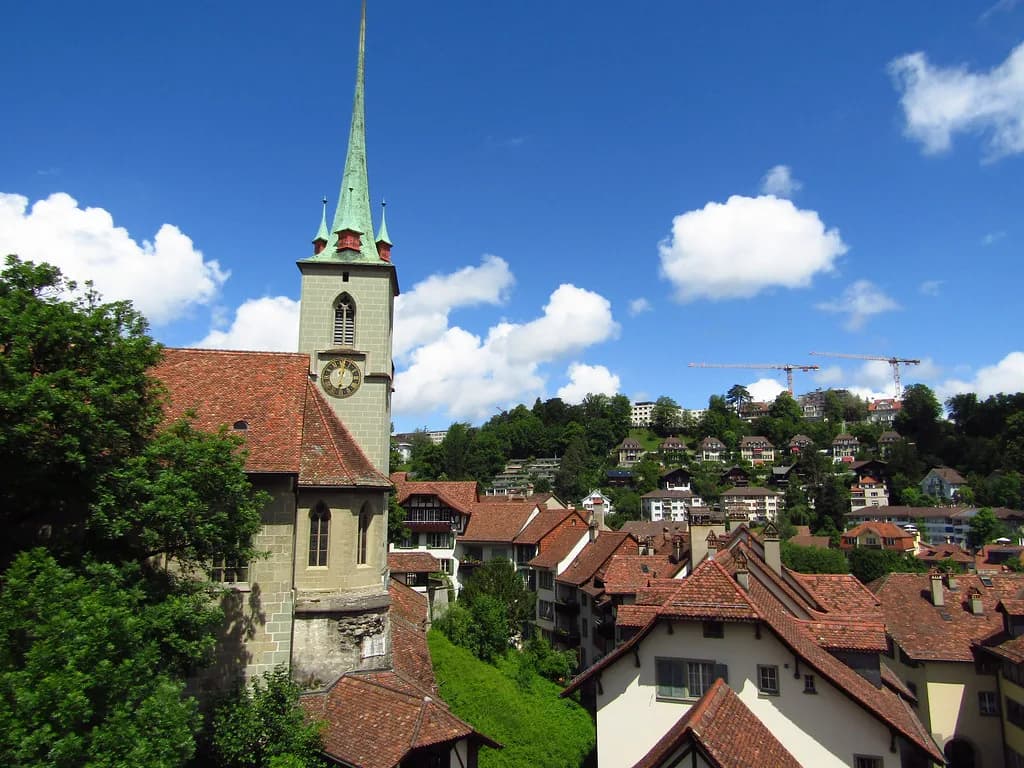
The Old Town occupies a sandstone ridge inside the loop of the Aare, with the train station at its western end and the Nydeggbrücke at the eastern end. Kramgasse and Gerechtigkeitsgasse form the main spine, and almost everything you will want to see hangs off them or off the streets parallel to them. Once you understand that axis, navigation becomes simple: west for the station and the Zytglogge, east for the Münster, the bridge and the bears.
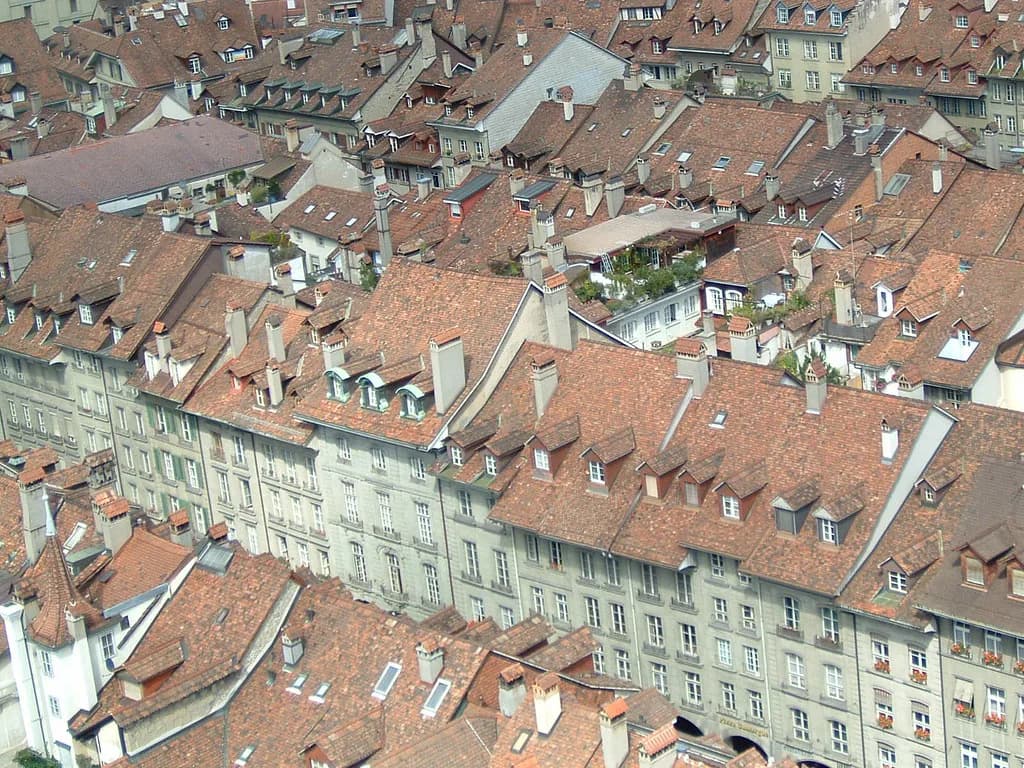
The city's four- and six-story townhouses carry continuous arcades at ground level, which the source describes as miles of covered shopping through the center. That covered walkway is the single best piece of urban design in Bern: it keeps you dry in rain and shaded in summer, and it links the shops, cafes and building entrances without exposing you to the weather. Use the arcades as your default route and step out only when you want a view. For the practical details, see the shopping in bern.
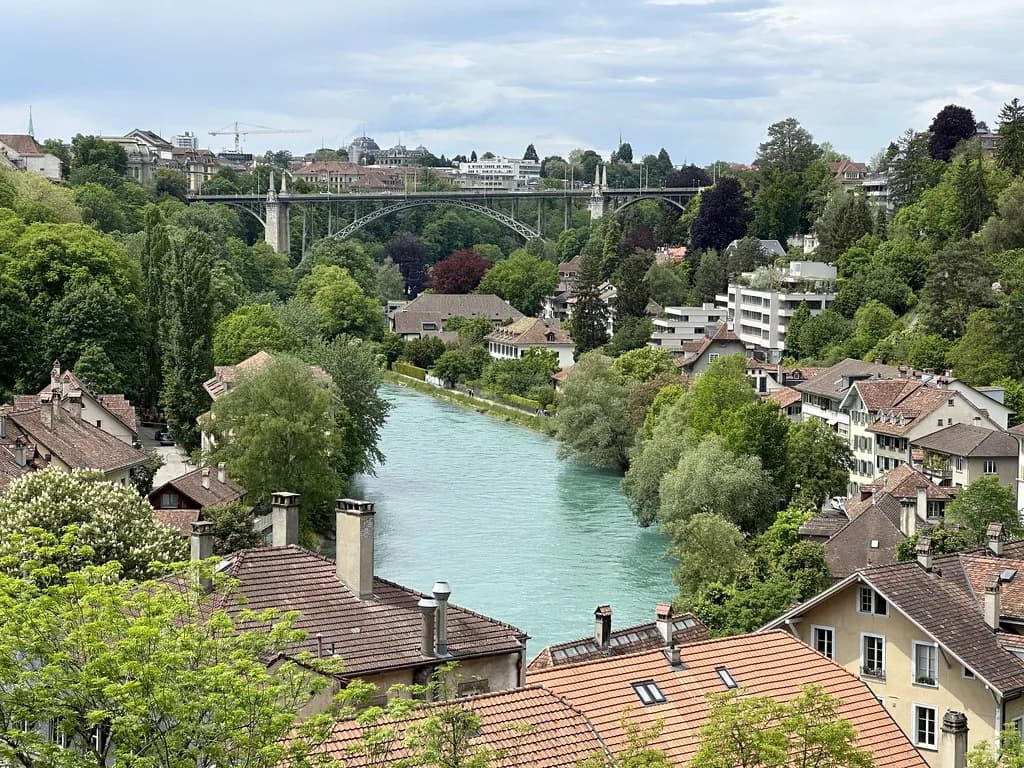
The Aare wraps the Old Town on three sides and gives Bern its geography. The riverbank paths, the bridges and the terraces above it are where the city opens up, and several of the best free stops are strung along that water line. Budget an hour simply to walk the loop from Nydeggbrücke around to the Münster terrace rather than treating the river as scenery between sights.
How many days Bern needs and how to split them
One full day covers the Old Town arcades, the Zytglogge, the Berner Münster and its tower, the Münster Plattform, the Nydeggbrücke, Bären Park and the Rosengarten, with the Bundesterrasse folded in on the way back. That is a comfortable walking day of about four to five hours of actual sightseeing, leaving room for lunch and a slow coffee. Do not try to add the Gurten or a museum on top of that and still enjoy it.
A second day is where Bern gets interesting. Give the morning to one museum — either the Bern Historical and Einstein Museum or the Einsteinhaus flat on Kramgasse — and the afternoon to the Gurten, which sits outside the center and rewards you with a view back over the whole city. If you have a third day, spend it on the neighborhoods beyond the ridge or on a slower repeat of the river loop in better light.
A common mistake is treating Bern as a half-day stop between Zürich and Interlaken. The Old Town alone justifies an overnight, and the evening light on the sandstone and the quiet after the day-trippers leave is the reason to stay. If your wider Swiss trip only allows a few hours, prioritize the arcades, the Zytglogge and the Münster Plattform and accept that the museums and the Gurten will have to wait.
The Old Town arcades and the Zytglogge clock tower
The Zytglogge is the clock tower that anchors the western Old Town, and its astronomical clock has been a Bern landmark since around 1530. Every hour, on the hour, medieval figures appear from the tower — dancing bears, a fool and a crowing rooster — so time your approach to the top of the hour and then walk on rather than standing around waiting. The tower itself has served as a guard tower, prison and clock tower over the centuries.
Below and around the tower, the Old Town streets are lined with fountains — the source counts more than a hundred across the city — and the locals drink from them. Beyond the clock, the shopping streets run east under the arcades, with department stores and small shops tucked into the ground floors and the occasional cafe in an attic above. It is worth lifting your eyes to the carved facades and painted shutters above shop level, which most visitors miss.
The Old Town as a whole has held UNESCO World Heritage status since 1983, and the designation covers the whole medieval street plan rather than a single monument. That is why the pleasure here is cumulative: the Zytglogge, the Town Hall, the cathedral and the Parliament Building are all stops on one continuous ensemble. Walk the length of Kramgasse and Gerechtigkeitsgasse in one direction and you will pass most of it without needing a map.
Berner Münster: the cathedral and the tower climb
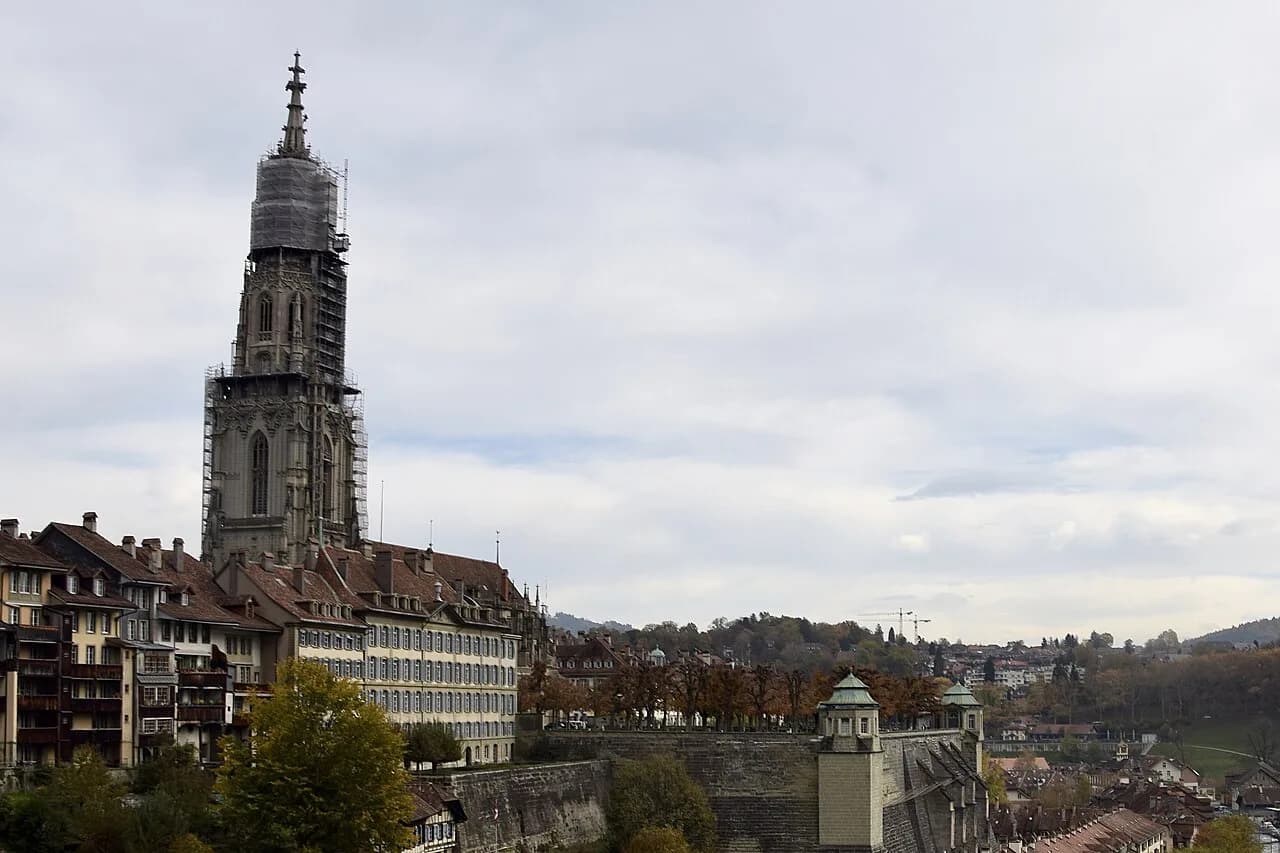
The Berner Münster is a Swiss Reformed Gothic cathedral whose construction began in the 15th century, and its tower rises to around 100 meters though it was not completed until the 19th century. Entry to the cathedral is free, which makes it an easy stop even on a short visit. The interior is worth a slow circuit for the stained glass and the carved choir stalls before you commit to the tower.
The tower climb is 344 stairs and takes you up but not to the very top. The tower carries an entrance fee of about CHF 5, reported as a 2023 price, so treat it as a guide rather than a current figure and read the board at the door. The reward is a view over the Old Town rooftops and the Aare that no terrace in the city quite matches. Solo travelers may be asked to pair up with another visitor for the climb, a safety measure rather than a restriction on access.
The cathedral sits at the eastern end of the Old Town ridge, close enough to the Münster Plattform that the two belong in the same hour. Climb first while you are fresh, then drop down to the terrace to recover. If stairs are not for you, the cathedral floor and the terrace give you the Gothic architecture and the river view without the climb.
Münster Plattform: the free terrace above the river
The Münster Plattform is the terrace beside the cathedral, looking out over the Aare and, on a clear day, the Alps. It is free to visit and always open, and it is one of the best-value stops in a city where the paid attractions add up quickly. Warm, sunny days bring out picnickers and strollers, and the trees give shade in summer.
Despite the elevation, the approach from the Old Town requires very little uphill walking, which makes the terrace accessible to almost anyone. Treat it as your default rest stop: bring a snack, sit on the wall and watch the river bend below. For a different angle, come back at the end of the day when the light hits the sandstone across the water.
Nydeggbrücke and the Aare riverfront walk
The Nydeggbrücke crosses the Aare at the eastern end of the Old Town, and crossing it takes only a few minutes, but it has views in every direction: back to the cathedral and terrace, down to the river and across to the wooded slope. Build it into the walk between the Münster and Bären Park rather than making it a destination in its own right. It is the hinge between the ridge and the riverbank.
On the river itself, the Aare runs almost 300 km, and the stretch through Bern is the prettiest part of it. The banks make for a relaxed stroll, and a snack or drink beside the water is a cheap way to break up the day. If you are walking the Old Town loop, the riverfront is what turns a street walk into a proper city walk.
Bären Park and the bears of Bern
Bären Park sits on the slope below the Old Town by the river, and the bears that live there are the living emblem of a city whose name and heraldry are tied to the animal. Entry is free and the park is open around the clock, with donations welcome. The enclosure runs to 6,000 square meters along the Aarenhang, with a private pool for the bears.
The honest caveat is that bears hibernate from around October or November for a couple of months, so a winter visit will show you an empty enclosure. Even in season there is no guarantee of a sighting, so treat the park as a pleasant riverbank stop rather than a must-see performance. The Rosengarten is a five- to ten-minute walk away, which makes the two a natural pair.
Keep the visit calm: no shouting, no throwing anything into the enclosure. There is an informative display with facts about the bears and their family, useful for children who want to understand what they are looking at. The setting beside the Aare, with the Old Town above, is reason enough to come even if the bears are asleep.
Rosengarten: the rose garden viewpoint
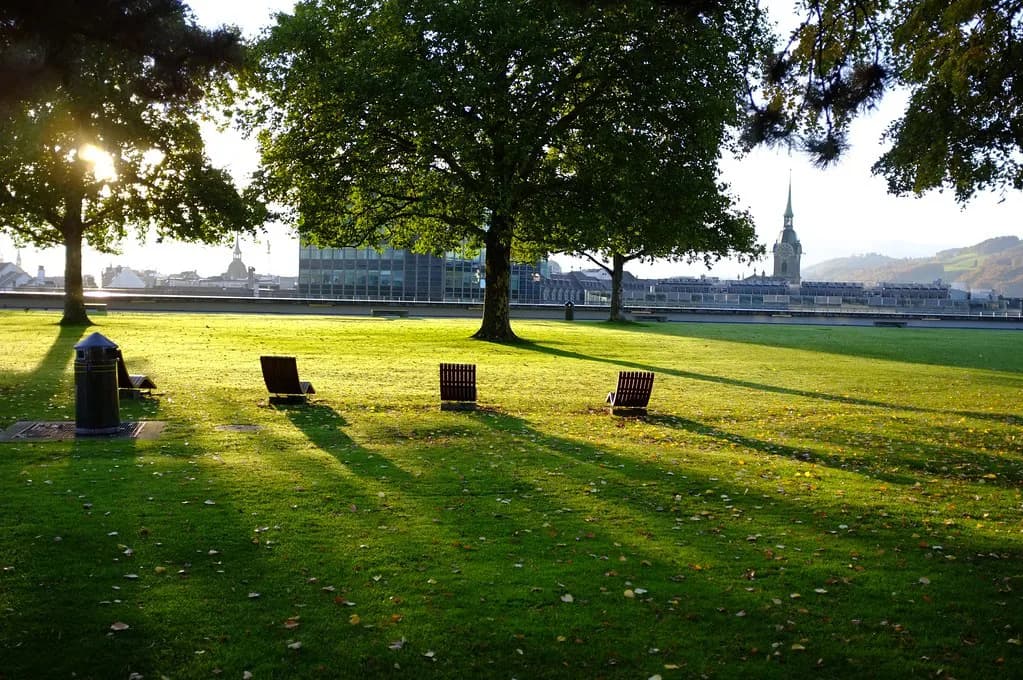
The Rosengarten is a park on the hillside above the Old Town, with a panorama over the rooftops and the river that many visitors rate as the best view in Bern. It holds more than 200 varieties of roses and irises, plus 28 types of rhododendrons in the moor beds. Entry is free, and locals spread blankets on the grass for picnics.
The garden is about 1.4 miles, or 2.2 km, from the train station, and bus number 10 from the center drops you at the back gate of the park, which removes most of the uphill walk. From the Rosengarten it is a five- to ten-minute walk down to Bären Park, so the natural order is bus up, garden, then walk down to the bears and the bridge. The rose season is the obvious reason to come, but the view holds year-round.
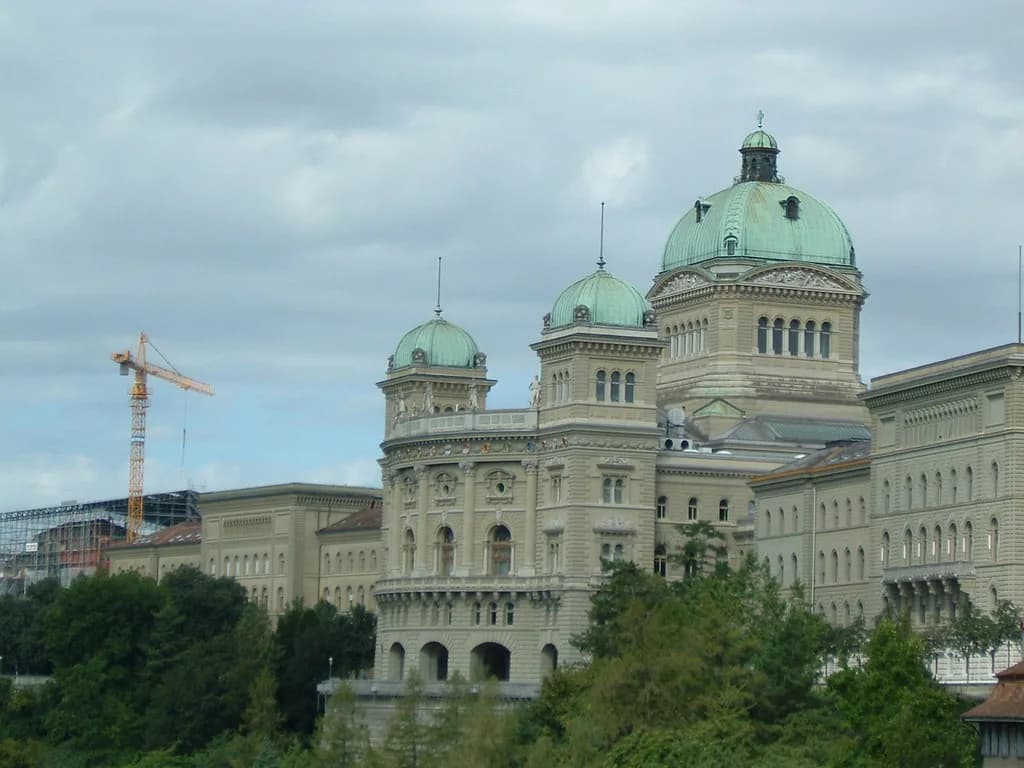
Bundesplatz, the Parliament Building and Bundesterrasse
Bundesplatz is the square in front of the Parliament Building, where 26 fountains represent the country's cantons. In summer the fountains become a place to cool off, especially for children. On Tuesdays and Saturdays a fruit, vegetable and flower market sets up on the square.
Parliament tours are free, last about 60 minutes and run only when Parliament is not in session. Book or confirm through the Parliament's own channels rather than relying on a third-party listing, and have a fallback if the building is sitting. Behind the Parliament, the Bundesterrasse is a short promenade with a view over the Aare and, on clear days, the snow-capped Alps — another free stop that most visitors walk past.
Einstein in Bern: Einsteinhaus on Kramgasse and the Einstein Museum
Einstein lived in Bern when he developed his theory of relativity, and the city marks him in two distinct places that are easy to confuse. The Einsteinhaus at Kramgasse 49 is the flat where he lived with his wife and son for two years, restored in period style. The Bern Historical and Einstein Museum is a larger museum that combines a substantial Einstein exhibition with the history of the region.
Choose based on time and interest: the Einsteinhaus is a small, atmospheric flat on the main street, while the Einstein Museum is a half-day commitment with far more material. The Einsteinhaus adult admission was CHF 7 in 2023, with a reduced rate for Swiss Travel Pass holders and children, so treat that as a historical figure and read the price board at the entrance. A bronze statue of Einstein on a bench in the Old Town is a free photo stop either way.
Gurten: the funicular and the viewing tower
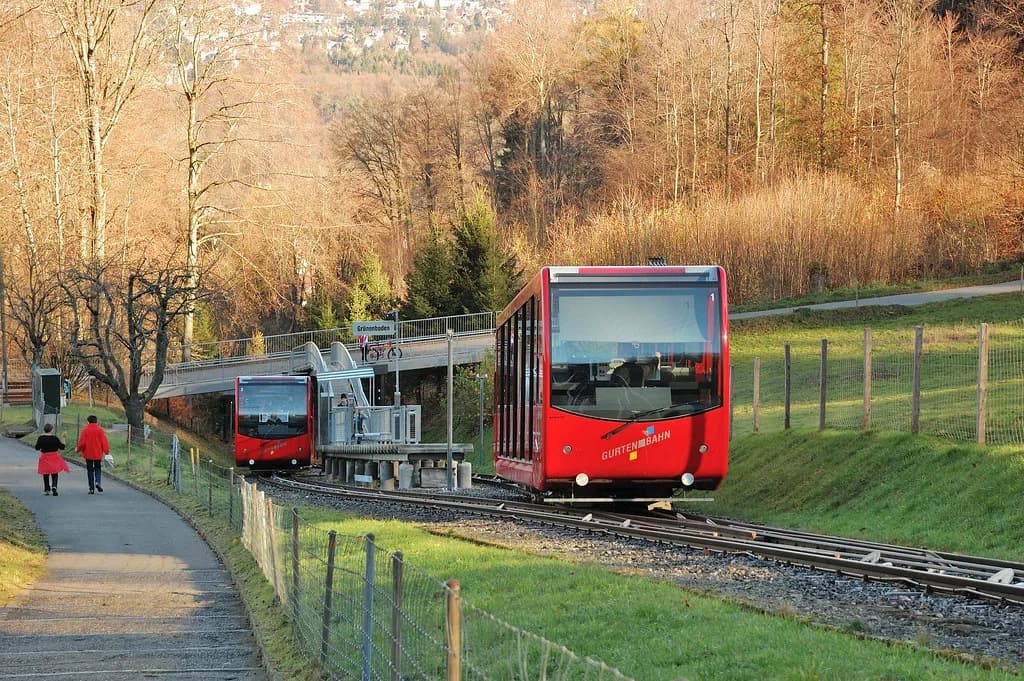
The Gurten is the local mountain just outside the center, rising above 860 meters and reached by a funicular railway. At the top there is a viewing tower with a better panorama than the summit itself, plus a playground and toboggan runs that make it a family-friendly half-day. In summer you can bring your own food and use the barbecue areas, or eat at one of the restaurants.
If you stay at an official hotel, Airbnb or B&B, you will get a Bern ticket that allows you to use public transport for free, which includes the funicular ride up the Gurten, per the source. That makes the mountain one of the best value excursions in the city — but the card is tied to that accommodation, so do not assume a Swiss Travel Pass covers it. Take public transport to the funicular station; parking at the base is scarce.
What things cost in Bern and where admission is free
Bern's free sights do most of the heavy lifting: the Old Town streets and arcades, the Münster Plattform, the Rosengarten, Bären Park and the Bundesterrasse all cost nothing. Add the Zytglogge figures on the hour and the Einstein statue, and you can fill a satisfying day without buying a single ticket. That matters in a country where a casual lunch can rival a museum ticket.
Where you do pay, the documented figures are modest: the Berner Münster tower at about CHF 5 and the Einsteinhaus at CHF 7 for adults, both reported in 2023. Cathedral entry itself is free. The lunch stop the source recommends, the Tibits buffet, prices by weight, so you control the bill by what you put on your plate. For anything beyond those, read the price board at the door rather than budgeting from old numbers.
A Swiss Travel Pass is worth weighing if Bern is one stop on a longer trip; the source recommends it for multi-city travel and notes a reduced Einsteinhaus entry for holders. It does not replace the Bern ticket's funicular coverage, so compare the two against your actual itinerary before buying either. If you are only in Bern for a day or two, the free sights plus a single tower climb may be all you need.
Sunday, Monday and winter trade-offs
Opening days matter more than most guides admit, and the safest approach is to check the specific museum or building you plan to visit rather than assuming a pattern. The Parliament Building only offers tours when Parliament is not sitting, and the Münster tower and Einsteinhaus keep their own seasonal arrangements. Build your day around the outdoor sights first and slot indoor visits into whatever is open.
Winter changes the calculation. The bears hibernate, so Bären Park becomes a riverbank walk rather than a wildlife stop, and the terraces are bracing rather than balmy. The compensation is the arcaded Old Town, which the source describes as miles of covered shopping — genuinely useful when the weather turns. Snow on the sandstone and empty streets can make the city more atmospheric than in high summer.
Where to slot a Bern walking loop into a wider Swiss trip
Bern sits on the main line between Zürich and the Bernese Oberland, which makes it an easy overnight rather than a detour. The Old Town loop — station, Zytglogge, Kramgasse, Münster, Plattform, Nydeggbrücke, Bären Park, Rosengarten, Bundesplatz — fits into a morning and afternoon without rushing. If you are coming from Zürich, giving Bern a full day and a night is a better use of time than a rushed stop en route.
From the station, most of the Old Town sights are within walking distance, and the tram network fills the gaps if you are carrying bags or the weather is foul. The Old Town is compact enough that a car is a liability: parking is difficult and pricey, and the attractions are close together. Arrive by train, walk the ridge, and use public transport only for the Gurten or the Rosengarten bus.
Practical notes: walking times, shoes and the covered arcades in rain
The Old Town is built on a ridge with cobbles and steep side lanes, so bring comfortable shoes rather than fashion ones. The main sights sit within about 20 minutes of each other on foot, and the full loop with the riverbank takes half a day at an unhurried pace. The arcades are your friend in rain, and the covered walkways let you cross most of the center without an umbrella.
The bridge crossings add a few minutes each but no real distance, and the climb to the Rosengarten is the one genuinely uphill stretch unless you take the bus. If you are short on time, do the Zytglogge, the cathedral, the Plattform and the Rosengarten and skip the museums. If you have a full day, add Bären Park and the Bundesterrasse without feeling rushed, and if you like comparing compact old towns, weigh the things to do in Chur against what Bern offers.
Plan Your Visit
Bern rewards a plan built around the free sights first and the paid ones second: the Old Town arcades, the Zytglogge on the hour, the Münster Plattform and the Rosengarten cost nothing and give you the city's best angles. Add the Berner Münster tower climb or the Einsteinhaus if you want a ticket, and keep the Gurten for a second day when the weather is clear. The city is compact and walkable, so the real decision is how many days you can spare, not how much you can fit in.
Explore more Bern guides
Frequently Asked Questions
What are the best things to do in Bern in one day?
Walk the Old Town from the Zytglogge along Kramgasse to the Berner Münster, then take the Münster Plattform, cross the Nydeggbrücke, visit Bären Park and finish at the Rosengarten. Add the Bundesterrasse and Bundesplatz on the way back if time allows.
Is Bern worth visiting?
Yes. Bern has a UNESCO-listed Old Town with continuous arcades, a working medieval clock, a Gothic cathedral and several free viewpoints over the Aare. It is compact enough to see the core in a day and rich enough to justify two.
What can you do for free in Bern?
The Old Town streets and arcades, the Münster Plattform, the Rosengarten, Bären Park and the Bundesterrasse are all free. The Zytglogge figures on the hour and the Einstein statue are free to watch and visit.
How many days do you need in Bern?
One full day covers the Old Town, the cathedral and tower, the terrace, the bridge, Bären Park and the Rosengarten. Two days lets you add a museum and the Gurten without rushing.
Can you climb the Berner Münster tower?
Yes. The tower climb is 344 stairs and goes up but not to the very top. The tower carries an entrance fee, which stood at about CHF 5 when it was last reported in 2023, so read the board at the door for the current figure.
When can you see the bears in Bern?
Bären Park is free and open around the clock, but the bears hibernate from around October or November for a couple of months. Even in season, sightings are not guaranteed.
Is the Gurten funicular covered by the Bern Ticket?
Yes, if you stay at an official hotel, Airbnb or B&B, the Bern Ticket covers public transport including the funicular ride up the Gurten. The card is tied to that accommodation.
What is there to do in Bern on a Sunday?
Focus on outdoor sights that do not depend on opening hours: the Old Town arcades, the Münster Plattform, the Rosengarten and the riverfront walk. Check the specific museum or Parliament tour in advance.
Sources
Notes for your Swiss city break
Optional updates to our Swiss city guides.
You might also like
Continue reading
More guides you'll find useful