
Niederdorf, Zurich: What to See in the Old Town's East Bank
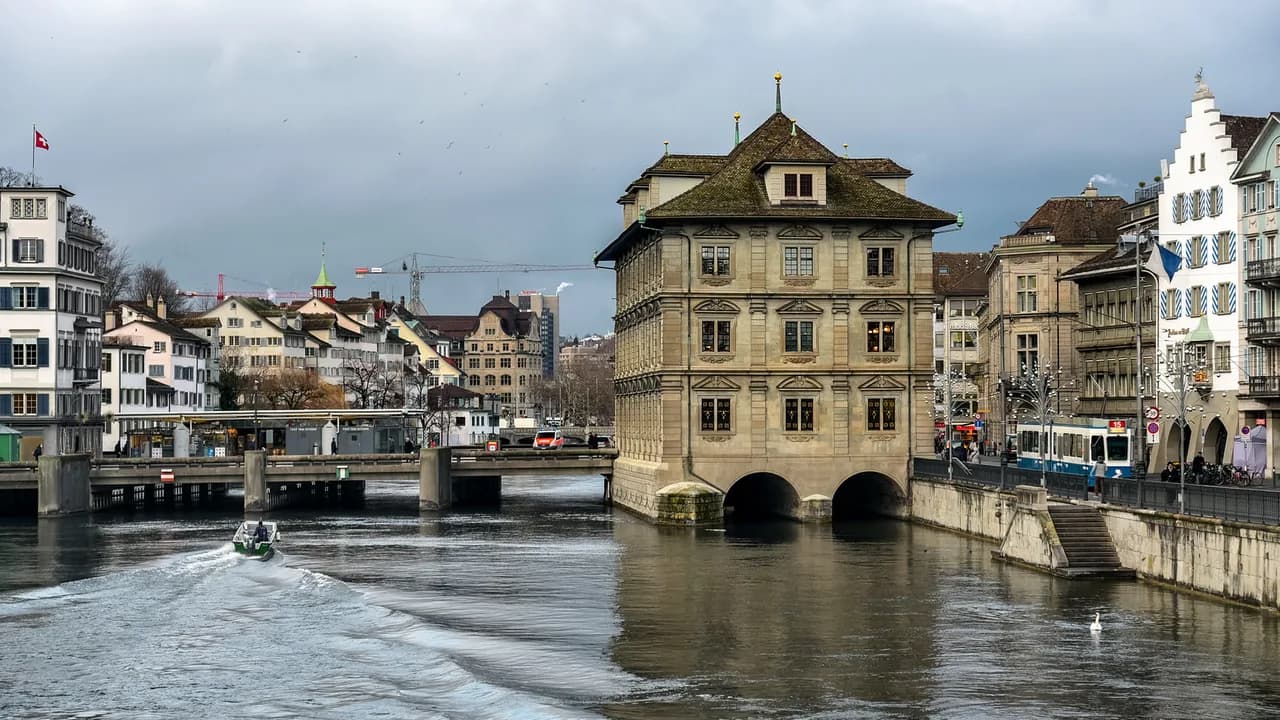
Niederdorf is the east-bank quarter of Zurich's Altstadt, the medieval core that sits in Kreis 1 and is split in two by the Limmat. The river divides the old town into four named quarters: Niederdorf and Hochschulen on the right bank, Lindenhof and City on the left.
It is small and walkable, and locals call it Dorfli, the little village. Plan on foot rather than on transit: the whole quarter runs from the Central tram hub in the north down to Bellevueplatz on Lake Zurich, a distance you can cover at a stroll.
Where Niederdorf Sits in the Altstadt
The Limmat is the organizing line of the old town. East of the water you have Niederdorf, anchored by the Rathaus and the Grossmünster, and Hochschulen, the university quarter that reaches Bellevue and the lake edge. West of the river sit Lindenhof, with the Schipfe lane, the Lindenhof Hill and the Fraumünster, and City, which stretches to Burkliplatz, Paradeplatz and Zurich Hauptbahnhof.
That split matters practically. You can spend a morning on the east bank and an afternoon on the west without crossing town twice, because the Münsterbrücke links the two halves near the Grossmünster. If you want the wider picture before you commit a day, the Zurich Neighborhoods: 4 Area Guides page sets out how the districts relate.
How the Quarter Is Laid Out
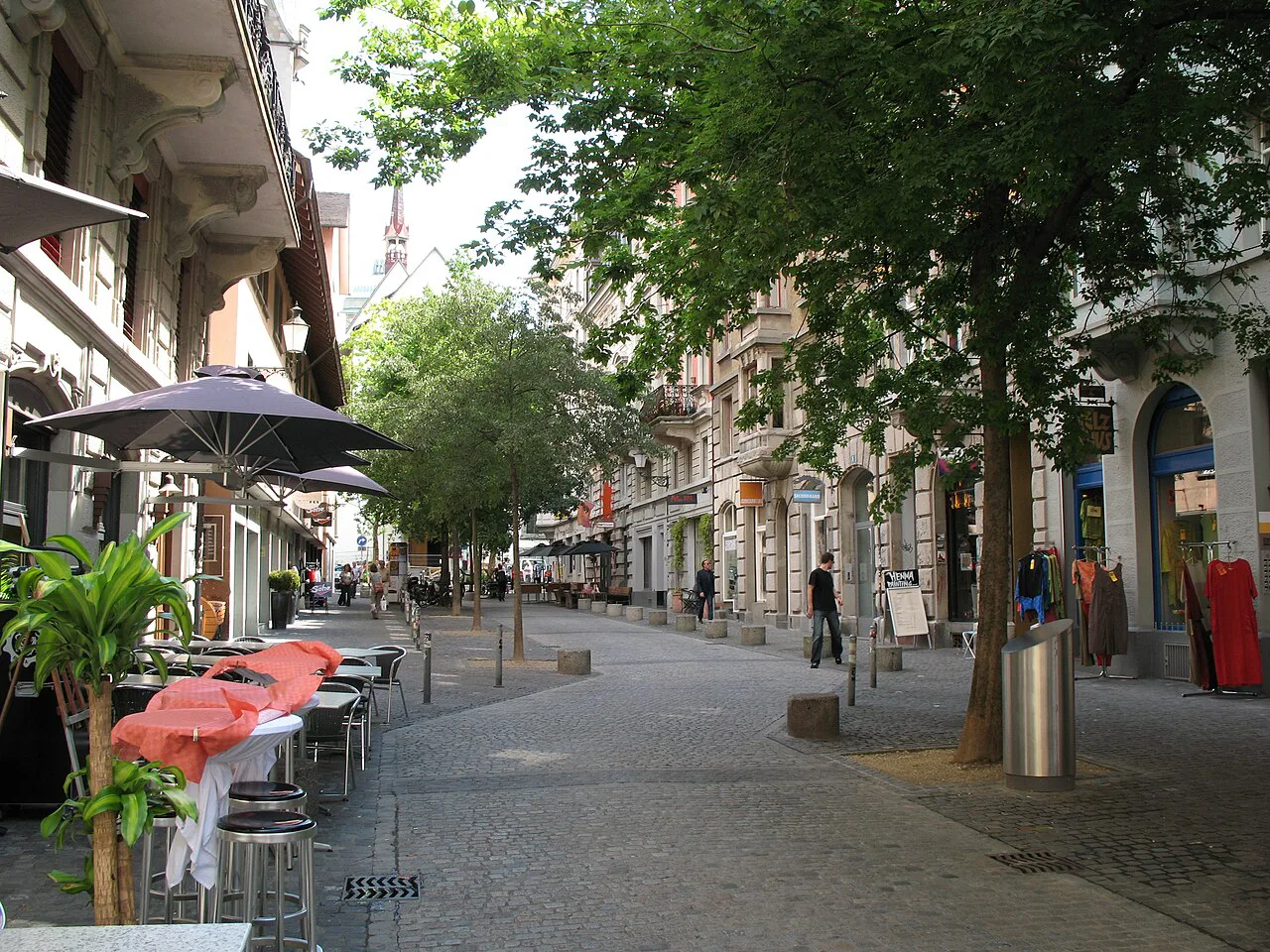
Central, in the north, is both a tram stop and a hub, and it connects the Hauptbahnhof side to Niederdorf across the busy Bahnhofbrücke. From there, Niederdorfstrasse runs south as a long cobbled pedestrian street, slicing through the quarter past Hirschenplatz and Herschenplatz before continuing toward Marktgasse and Münstergasse in the Oberdorf area.
At the southern end, Bellevueplatz is the second important tram hub, set where the quarter meets the lake at the Quaibrücke and Utoquai. Between these two anchors the lanes are short and the distances modest, so the simplest plan is a single north-to-south walk with detours into the side streets.
Who Niederdorf Suits, and Who It Does Not
This is a quarter for slow walkers, café sitters and people watchers. Outdoor terraces are scattered almost everywhere in Niederdorf, on the riverbanks, along the pedestrian streets, around the squares and even in the small alleys, which makes it easy to break a walk every twenty minutes without planning to.
It suits travelers who want atmosphere and a few free sights rather than a full day of ticketed attractions. If you are chasing quiet, come early or slip into the smaller lanes off the main street, because the spine gets busy and the terraces fill in the warmer months.
Walking the Spine: Niederdorfstrasse, Marktgasse, Münstergasse
Treat Niederdorfstrasse as your baseline and the cross lanes as your interest test. Marktgasse links Niederdorfstrasse in the north with Münstergasse in the south, and Münstergasse carries you on toward the Grossmünster; the whole spine is cobbled and closed to through traffic, so you set the pace.
Allow a couple of hours for the spine plus two or three square detours, and half a day if you add Cabaret Voltaire and the Grossmünster interior. Because the quarter is compact, a transit pass buys you little inside it; save the rides for the stretches outside the center.
The Squares: Hirschenplatz, Stüssihofstatt, Neumarkt and Napfgasse
Hirschenplatz is the busiest of the group, with boutique shops, cafés and outdoor terrace seating, and it is a natural stop for people watching. The Adler Hotel and Restaurant, whose walls carry a painting of medieval Zurich, sits on the square and serves traditional Swiss cuisine.
Stüssihofstatt is the liveliest small square in the quarter, ringed by bars and cafés, with a memorial statue and fountain for Rudolf Stüssi, the city's mayor in the early fifteenth century, in the middle. It sits just before the Grossmünster on Münstergasse, so it works as the last pause before the church.
Neumarkt and the Napfgasse–Spiegelgasse pocket are the quietest, each with its own fountain, and they reward the detour if the main street feels crowded. These lanes are short, so fold them into the walk rather than making a separate trip for them.
Cabaret Voltaire and the Dada Story
Cabaret Voltaire sits on Spiegelgasse at the corner with Münstergasse, and it is where Hans Arp and Tristan Tzara launched the Dada movement in 1916. Hugo Ball, Marcel Duchamp, Max Ernst, Francis Picabia and Raoul Hausmann were among the founders and contributors, so the address is a specific site rather than a general old-town photo stop.
Check the current programme and opening hours with the venue before you build a visit around it. The café side is small, so treat it as a short stop on the Spiegelgasse walk rather than the centerpiece of a day.

Grossmünster and the Views Across the River
The Grossmünster, built after the eleventh century, is the principal church of the city and dominates the southern skyline of Niederdorf when you look across from Lindenhof Hill. Its massive bronze doors are a newer detail worth a close look, and Zwingliplatz outside frames a clear view back over the Münsterbrücke, the Limmat and the Lindenhof side.
Cross the Münsterbrücke for the classic view back at the east bank, then climb Lindenhof Hill on the west side for the reverse angle. Neither viewpoint costs anything, which is why they pair so well with a slow café morning in Niederdorf.
Bellevueplatz and the Lake Edge
Bellevueplatz marks the southern boundary of the quarter, where the old town opens onto the Quaibrücke, Utoquai and Bellevue Platz on the water. Swans gather at the waterfront edge here, and the stop doubles as a major tram hub, so it is a sensible place to end a walk or change direction toward the lake districts.
If you want to keep walking along the water, the Seefeld, Zurich pages describe the next stretch of shoreline east of Bellevue. Otherwise, turn back into the lanes for a second pass at the squares once the terraces have thinned.
The Fountains and Drinking Water
Zurich's public fountains run with drinking water, including the fountain on Stüssihofstatt, so a refillable bottle covers you through a day of walking instead of buying water at every stop. It is a small habit that takes the edge off a city where café prices add up quickly.
Practical Costs and the Day Pass Question
Inside Niederdorf you do not need transport, so decide on a pass by what comes after. The Zürich Day Pass, sold as a separate ticket rather than a card, runs on a 24-hour clock from first activation and pays off when you head to areas outside the city center; check the current fare before buying.
A mid-September visit can still bring terrace weather, but the season shifts, so the best time to visit Zurich depends on how much outdoor sitting you want. Prices for the pass and for any ticketed sight are set by the operators, so confirm them the week you travel.

Where to Eat Inside the Quarter
Most eating in Niederdorf happens on terraces, which is the appeal and also the trade-off: you get the street scene and the people watching, but you pay for the location and wait longer when the squares fill. The Adler Hotel and Restaurant on Hirschenplatz is the named option for traditional Swiss cooking indoors.
The lanes off Niederdorfstrasse, especially around Neumarkt and Napfgasse, have the cosier spots that feel removed from the crowd. Reserve or arrive early for the popular squares, and treat the terraces as a pause rather than the main event.
Getting There and Around
Two tram hubs do the work: Central in the north, linking the Hauptbahnhof side across the Bahnhofbrücke, and Bellevueplatz in the south at the lake. Arrive at one, walk the quarter, and leave from the other, which avoids backtracking through the lanes.
Inside the quarter, walking beats transit because the distances are short and the interesting parts are between the stops. Keep your walking energy for the lanes and save the rides for the edges of the day.
How Long Niederdorf Needs
Two to three hours covers Niederdorfstrasse, Hirschenplatz, Stüssihofstatt and the Grossmünster at an unhurried pace with one coffee stop. Add Cabaret Voltaire, a longer lunch and a Lindenhof crossing and you have a comfortable half day.
Pair it with the west-bank quarters rather than stretching Niederdorf itself, since Lindenhof and City are a bridge away. In the warmer months the terraces extend the time you spend here without adding distance.
Honest Trade-Offs
Niederdorf is atmospheric but not a museum district: its value is in the streets, squares and river views, and a lot of that is free. If you want a dense day of paid attractions, this quarter is a supporting act rather than the main one.
Expect crowds on Niederdorfstrasse and the big squares, and expect higher café bills at terrace tables. The quieter lanes and the unbuilt edges by the river are where the quarter feels like a village rather than a thoroughfare.
Plan Your Niederdorf Walk
Start at Central, follow Niederdorfstrasse south, detour to Hirschenplatz, Stüssihofstatt and the Spiegelgasse pocket, then finish at the Grossmünster and Bellevueplatz. That single line covers the quarter's main sights in a morning or a long afternoon.
For the neighborhoods beyond the old town, pair this walk with the Universität Zürich quarter and Zürich West on separate days, and keep Zürich's transport passes for the trips that leave the center.
Explore more Zurich guides
Frequently Asked Questions
What is Niederdorf in Zurich known for?
Niederdorf is the east-bank quarter of Zurich's Altstadt, known for its cobbled pedestrian lanes, café squares and the Grossmünster. Cabaret Voltaire on Spiegelgasse, where the Dada movement began in 1916, is the quarter's best-known cultural address.
Is Niederdorf the same as Zurich's old town?
No. The Altstadt in Kreis 1 is split by the Limmat into four quarters: Niederdorf and Hochschulen on the east bank, Lindenhof and City on the west. Niederdorf is roughly the northern part of the east bank.
How long does it take to walk Niederdorf?
Allow two to three hours for the main spine from Central to Bellevueplatz with stops at Hirschenplatz, Stüssihofstatt and the Grossmünster. Add Cabaret Voltaire and a proper lunch and it becomes a half day.
Where does Cabaret Voltaire sit in Niederdorf?
Cabaret Voltaire is on Spiegelgasse at the corner with Münstergasse, in the southern lanes of the quarter on the way to the Grossmünster. Check its current opening hours and programme with the venue before you go.
Which tram stops serve Niederdorf?
Central at the northern end and Bellevueplatz at the southern end are the two hubs that bracket the quarter. Arrive at one and leave from the other so you do not retrace the lanes.
Do you need a transit pass to explore Niederdorf?
Not for the quarter itself, which is compact and walkable end to end. A Zürich Day Pass becomes worthwhile when your plans run to areas outside the center; confirm the current fare before buying.