
Chillon Castle: A Visitor's Guide to the Lakeside Fortress Near Montreux
Chillon Castle is a medieval waterside fortress turned museum on the shore of Lake Geneva at Veytaux, just south of Montreux in the canton of Vaud. It is Switzerland's most visited historical monument, a claim the castle foundation itself makes, and a solid half-day for anyone basing themselves on the Vaud Riviera.
A Castle Shaped by Its Rock
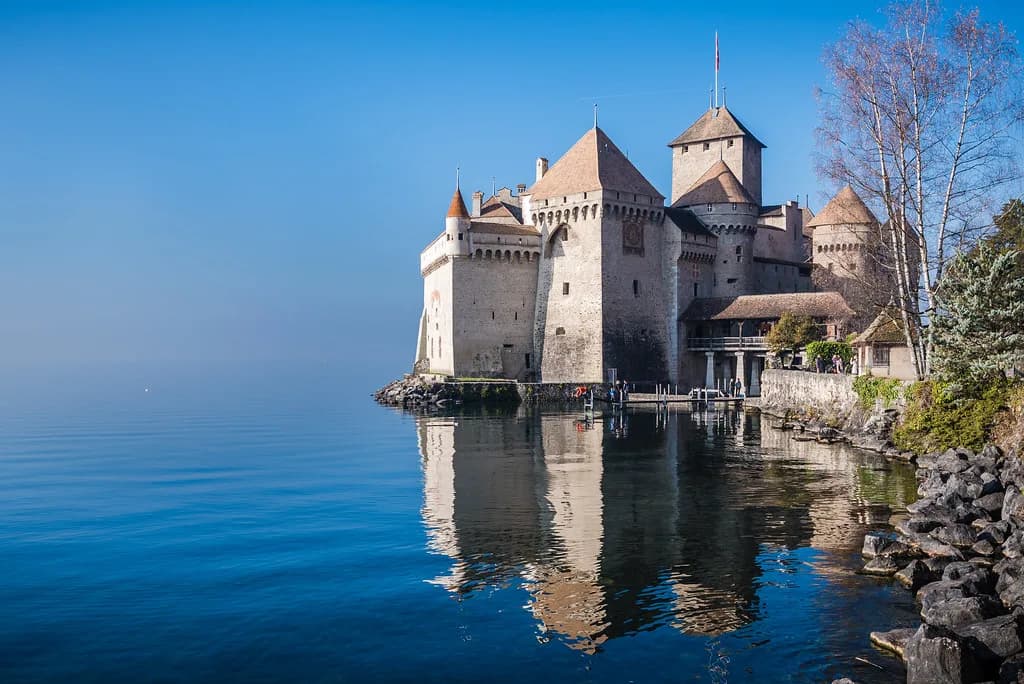
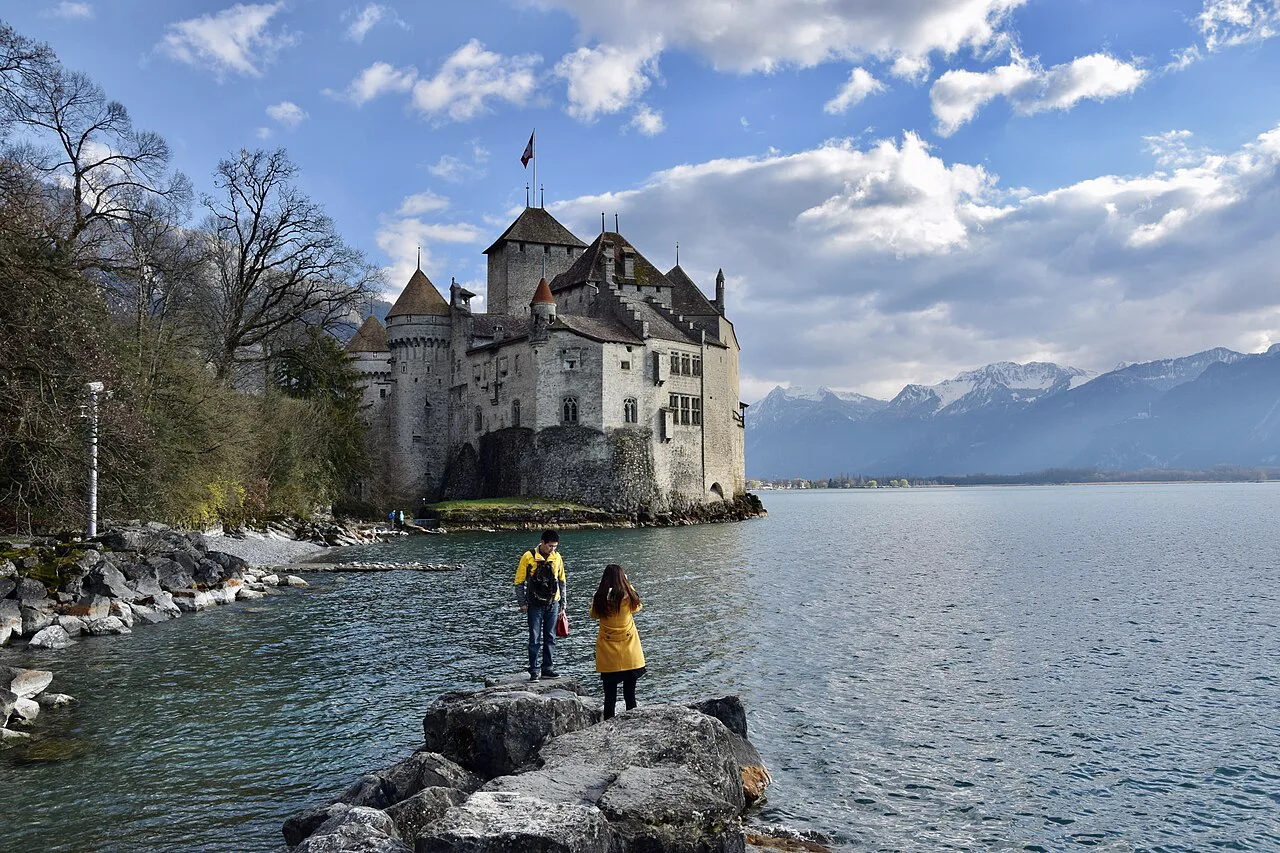
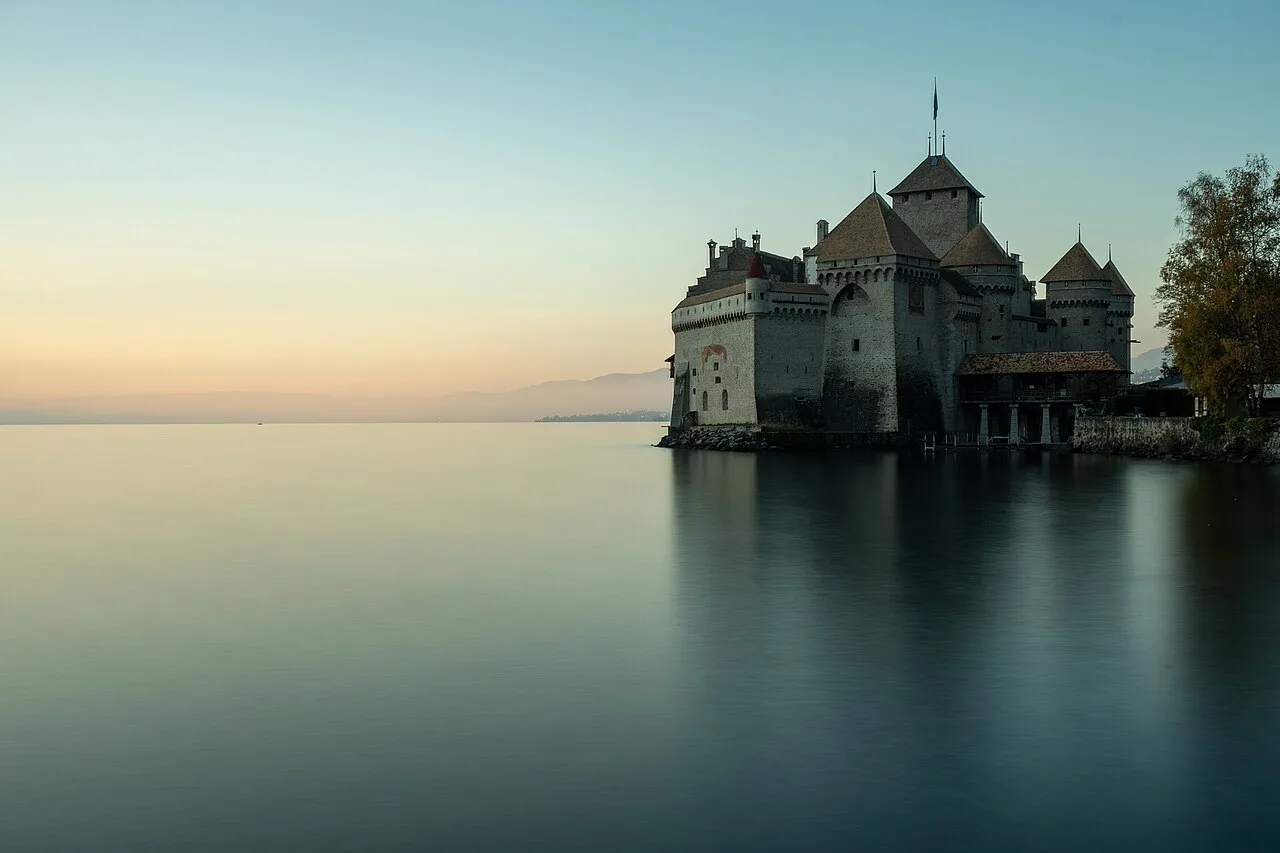
Chillon is not a square-plan fortress. Its walls follow the oval of the rocky island it was built on, roughly 100 meters long and 50 meters wide, which gives the whole complex a curved, water-hugging footprint you notice as soon as you approach along the shore. A bridge now links it to land; a drawbridge did the job before, and the pulley housing is still visible.
The layout has a clear logic. The north facade, facing the road, is the defensive side, pierced with arrow slits and loopholes and topped with machicolations. The south facade, facing the lake, is the former royal residence, dressed with Gothic windows that frame the water and the mountains beyond.
Where It Sits and Why It Mattered
The castle occupied a strategic pinch point between the mountains and the lake on the Via Francigena, the pilgrim and trade route running from northern Europe toward Rome via the Great Saint Bernard Pass. The counts of Savoy controlled that traffic and charged a toll to cover road security and maintenance, which is partly why the fortress grew so substantial.
The first written mention of Chillon dates to 1150, when the counts of Savoy held it. In the 13th century Peter II of Savoy turned it into a summer residence, and the Gothic vaulted ceilings in the cellars and pantry carry a cathedral-like quality unusual for a castle.
Getting There from Montreux
The address is Avenue de Chillon 21 in 1820 Veytaux, on the lake road south of Montreux toward Villeneuve. From the Montreux waterfront it is a straightforward lakeside run by train, bus or on foot, and the castle publishes its own getting-here directions if you want to match a specific service.
Pairing the visit with the wider lakeshore is easy because the walk or ride down from Montreux passes the Villa Biron area and continues toward the lakefront promenade and the Freddie Mercury statue. If you are weighing how to fill a day, the things to do in Montreux cover the waterfront stops that sit between the town and the castle.
Tickets: CHF 15 for Adults, CHF 7 for Children
Admission for individual visitors is 15.00 CHF for adults and 7 CHF for children. The Chillon Castle Foundation asks visitors to buy tickets online, and it publishes its own page on prices and discounts, where reduced rates are listed rather than assuming a family or student price.
Budget the ticket as one line in a Montreux day that also includes transport along the riviera. Because the site is open year-round and the entry price is fixed at the published rates, a visit is a predictable cost compared with cable-car excursions like the rochers de naye, where the fare changes with the season and the altitude you ride to.
Opening Hours by Season
Hours shift four times a year. April through September the castle opens 9am to 7pm with last entry at 6pm; March and October it runs 9:30am to 6pm with last entry at 5pm; November through February it opens 10am to 5pm with last entry at 4pm.
The castle closes only on 1 January and 25 December. On any other day, plan your arrival with the last-entry cutoff in mind rather than the closing time, because the gates stop admitting visitors an hour before the site shuts.

How Long to Allow and How to Pace the Route
Two to three hours covers the self-guided route comfortably, including the courtyards, the lakeside rooms and the prison. Add time if you take a guided tour or stop at Café Byron; a quick one-hour pass is possible but skips the atmosphere that makes the place worth the trip.
The interior is organized around three courtyards, each tied to the buildings around it: the constable's residence, the lord's residence, and the spaces that served the household. Walk the courtyards first to get your bearings, then follow the room route that climbs through the keep and out onto the sentry walks for the best view back over the lake.
What to See Inside
The keep and treasury anchor the center of the complex, linked to the main living block by sentry walks that double as viewpoints. The Gothic windows of the southern royal residence are the photogenic set piece, and the lakeside facade is worth lingering on from the water side if you arrive by boat.
Around 300 items are on display along the visitor route. Most were excavated at the castle between 1896 and 1903, with furniture, weapons and armour added, and the collection belongs to the Cantonal Museum of Archaeology and History in Lausanne under the name fonds Chillon. After 2007 the foundation shifted the emphasis to the architecture itself, so expect rooms and stonework to carry as much of the story as the objects.
The Prison, Bonivard and Byron
The prison built around the stone pillars and protruding rock is said to have held François Bonivard, a converted Protestant priest imprisoned for six years for opposing the Catholic Savoys. Lord Byron visited in 1816 and worked the story into The Prisoner of Chillon, a poem translated into 20 languages that turned the castle into a Romantic-era icon.
The literary fame brought a stream of artists and writers, among them Victor Hugo, Turner, Tolstoy, Courbet and Dalí. Knowing that lineage helps explain why the castle feels less like a regional fortress and more like a European cultural landmark when you stand in the vaulted lower rooms.
The Coat of Arms Hall and the Bernese Layer
In 1536 the Bernese took the Pays de Vaud and claimed Chillon on 29 March after a three-week siege, when the constable fled by boat. They made it the administrative hub of the bailiwick of Vevey and the bailiff's residence, and the castle kept working as a stronghold, arsenal and prison for nearly 260 years.
The Coat of Arms Hall, a former banquet hall and court, preserves the crests of the Bernese bailiffs on its walls. It is the clearest surviving trace of that period, and a good place to pause before descending to the lakeside rooms again.

Three Periods in Brief
The castle's history runs in three acts: the Savoy years from the 12th century to 1536, the Bernese period to 1798, and the Vaudois era that followed, when the site became a national asset of the new canton of Vaud. The Vaudois Revolution in January 1798 handed it over to local patriots and, ultimately, to the canton created under Napoleon's Act of Mediation in 1803.
Restoration began at the end of the 19th century under cantonal architect Albert Naef, whose excavations and rebuilding shaped what you see today, and work continues under a technical commission set up in 1892. That ongoing conservation is why the castle reads as partly medieval and partly 19th-century revival at the same time.
Language Brochures, Guided Tours and Family Visits
Explanatory brochures come in 18 languages, including English, French, German, Spanish, Italian, Japanese, Korean, Mandarin and Portuguese. Guided tours are offered in French, English, German, Spanish, Portuguese, Italian, Russian, Japanese and Chinese, which makes the castle workable for an international group without a private guide.
Families get their own programming: the castle runs children's workshops and family activities through the year, and the on-site Café Byron and shops make a mid-visit break easy. The castle is candid that it balances restoration projects against keeping the building open, so some rooms may be affected by works.
Nearby: The Rest of the Riviera
A visit pairs naturally with the Montreux lakefront and the villages of the Vaud Riviera. The casino and the Auditorium Stravinski, where the Montreux Jazz Festival takes place, sit within the town's cultural quarter, and both are within a short ride of the castle. If timing your trip around the festival matters, the best time to visit montreux guide breaks the year down season by season. Choosing where to stay on the riviera is the other half of that decision, and the Montreux Neighborhoods: 4 Area Guides compares the areas around town.
For a change of scale, the Queen: The Studio Experience in Montreux and the Musée de Montreux fill an afternoon in town once the castle is done. Both work as indoor backups if you prefer to keep the fortress as the one big outdoor stop of the day.
Plan Your Visit
Chillon rewards a planned half-day more than a rushed one. Buy your ticket online, aim for a morning slot in the longer spring and summer hours, and give the interior route two to three hours so the courtyards, the lakeside rooms and the prison each get their due.
If you are still shaping the trip, the Montreux Neighborhoods guide helps you pick a base on the riviera, and the best time to visit page gives a seasonal read on when the lakefront is at its best. Build the castle into that plan and the rest of the day falls into place around it.
Frequently Asked Questions
Why is Chillon Castle famous?
Chillon is Switzerland's most visited historical monument, according to the castle foundation, and it became a Romantic-era icon after Lord Byron visited in 1816 and wrote The Prisoner of Chillon, inspired by the imprisoned François Bonivard. The poem was translated into 20 languages and drew later artists and writers, from Victor Hugo and Turner to Courbet and Dalí.
Is it worth going inside Chillon Castle?
Yes, for the architecture as much as the objects. The southern royal residence with its Gothic windows over Lake Geneva, the keep, the sentry walks and the prison below the halls are the reasons to buy a ticket; the self-guided route takes most visitors around two to three hours.
Who was imprisoned at Chillon Castle?
François Bonivard, a converted Protestant priest who opposed the Catholic Savoys, is the best-known prisoner and is said to have been held for six years. Lord Byron's 1816 poem The Prisoner of Chillon made him an emblem of freedom and turned the castle into a European cultural landmark.
What is inside Chillon Castle?
The castle holds three courtyards, the keep and treasury, the Gothic royal residence facing the lake, a prison, and the Coat of Arms Hall with the crests of the Bernese bailiffs. Around 300 objects are on display, most excavated at the site between 1896 and 1903, with the remainder on loan from the Cantonal Museum of Archaeology and History in Lausanne.
How much does Chillon Castle cost?
Adult admission is 15.00 CHF and child admission is 7 CHF. The castle publishes its own price and discount details, including offers, on its ticket information page, which is where to confirm rates before you buy online.
When is Chillon Castle open?
From April through September the castle opens 9am to 7pm with last entry at 6pm, while March and October run 9:30am to 6pm with last entry at 5pm, and November through February open 10am to 5pm with last entry at 4pm. It closes only on 1 January and 25 December.
How long does a visit to Chillon Castle take?
Allow two to three hours for the self-guided route through the courtyards, the lakeside rooms and the prison. Add time for a guided tour or a stop at Café Byron, and plan around the last-entry cutoff rather than the closing time.