
Freddie Mercury Statue, Montreux: A Visitor's Guide
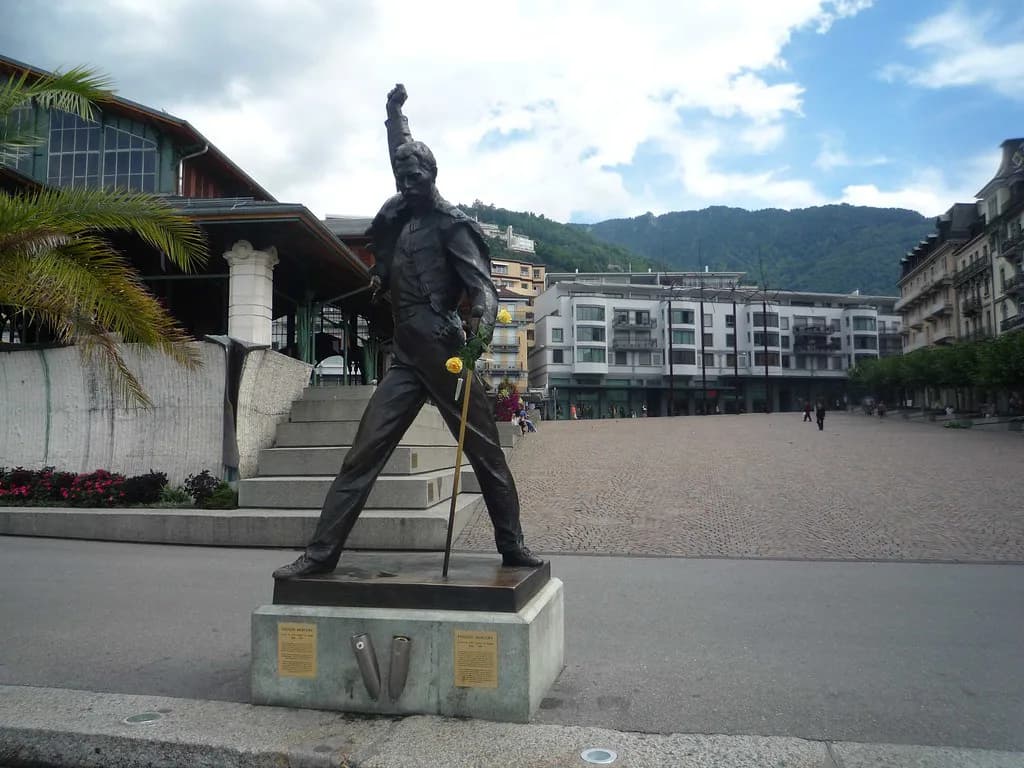
The Freddie Mercury statue is a bronze figure on Place du Marché in Montreux, facing Lake Geneva, where Freddie Mercury lived and recorded his last Queen album. It is free to visit and stands outdoors on the lakeside promenade, so it works as a five-minute stop rather than a destination in its own right.
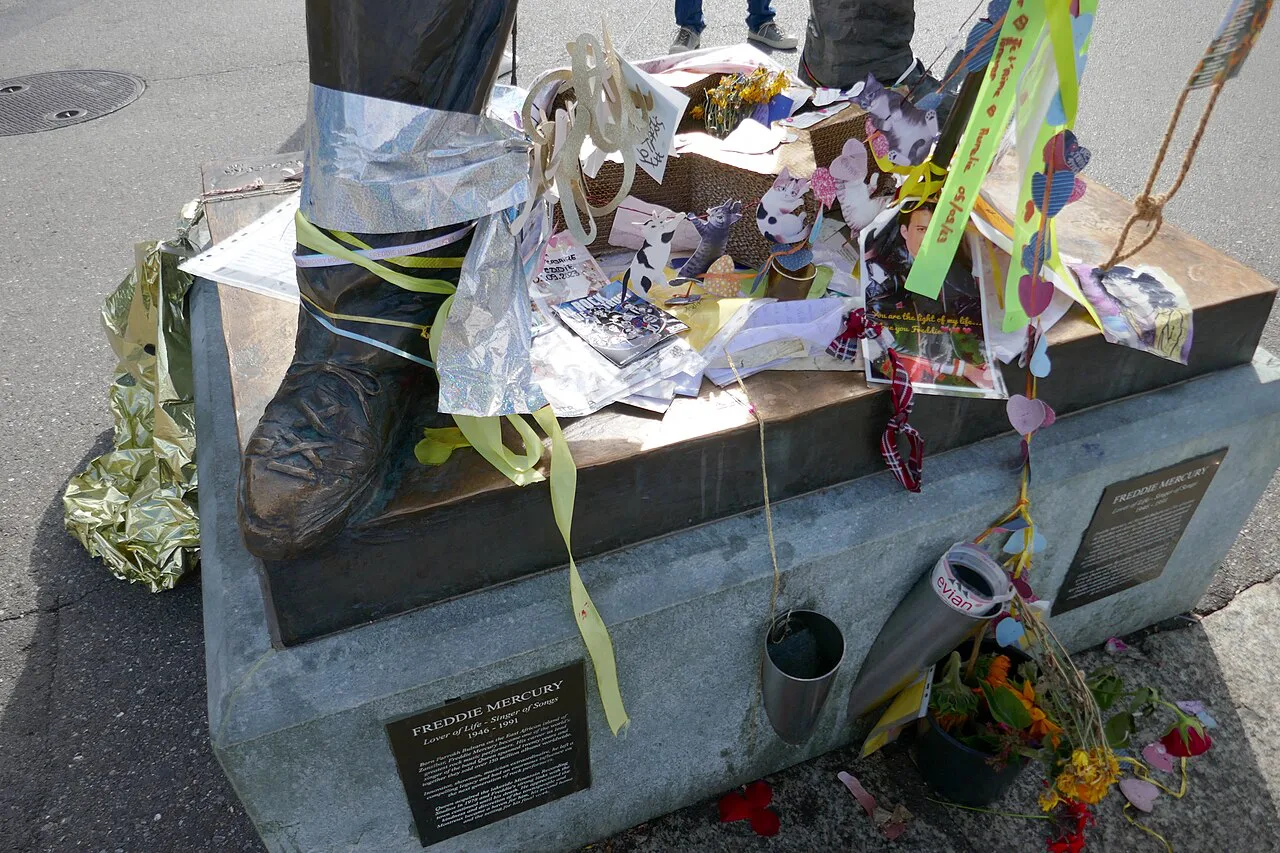
The statue was unveiled in 1996, and fans leave flowers and poems at its base beside the market square. Plan on roughly half an hour here if you want photos, longer if you continue along the flower-lined quays toward the old town and the castle beyond.
What the statue is and why it stands in Montreux
Freddie Mercury was drawn to Montreux's quiet setting and made the town his home for a time; he bought a recording studio there where Queen recorded several albums, including their final one. The statue on Place du Marché is the town's public acknowledgment of that connection, and it has become a meeting point on the waterfront.
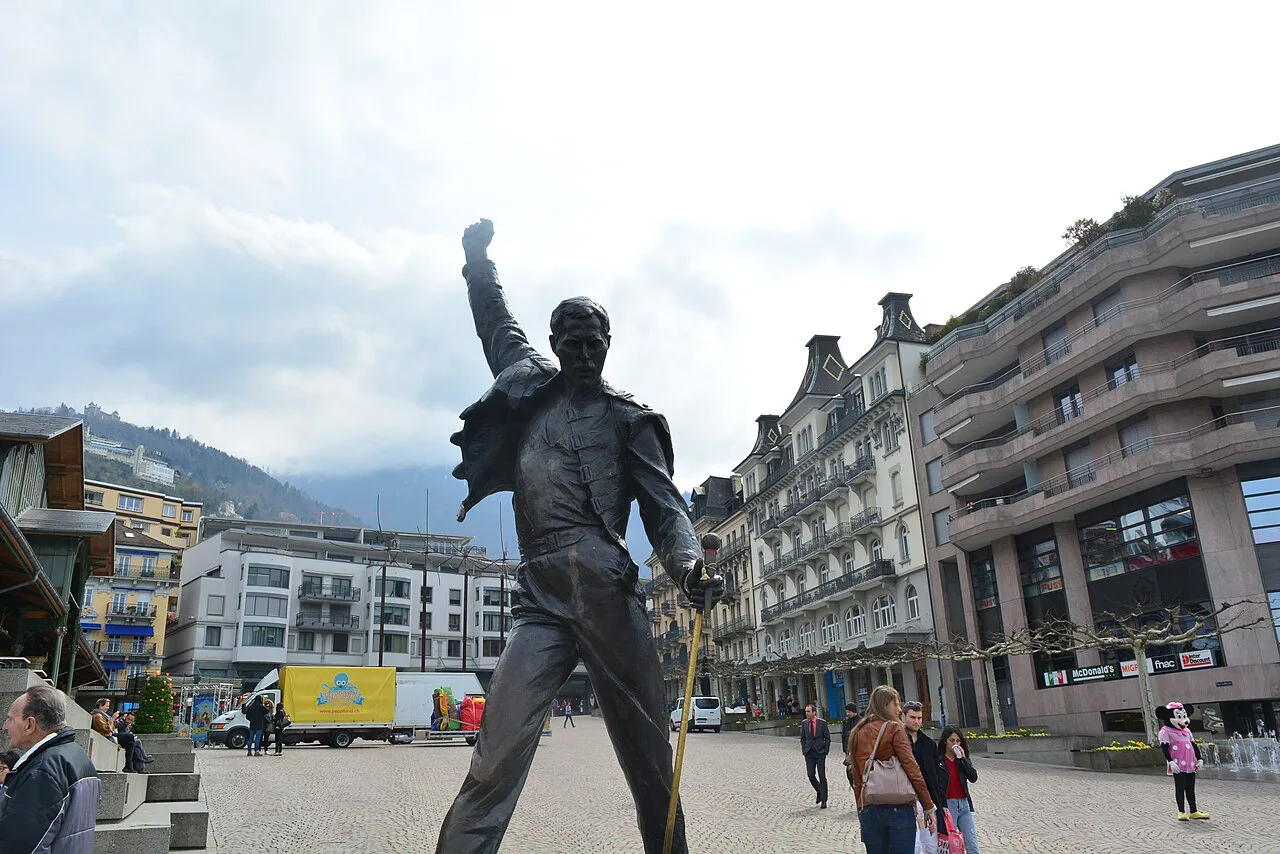
The bronze figure looks out over the lake rather than inland, so the best photographs come when you stand between the statue and the water and shoot back toward the mountains. Fresh tributes appear regularly at the base, which tells you how much the spot still matters to visiting fans.
Where the statue is: Place du Marché on the lakeside promenade
Place du Marché is the square on Montreux's waterfront where the market sets up, and the statue faces the lake from that spot. Because it is in the middle of the promenade rather than at the end of a detour, you will pass it naturally on any walk between the old town and the conference center.
The same square holds the Centre Forum Montreux, a small shopping center with grocery stores and a Migros supermarket on the lower level, which makes it a practical place to pick up lunch or water before continuing. Sitting on the quay with a sandwich while the lake and mountains fill the view is a cheap way to spend an hour in an expensive town.
How to get there: walking from Montreux along the quays
From Montreux's train station, the promenade is about a two-minute walk downhill, and the statue sits along it near the market square. Montreux itself is compact enough to cover on foot, with trains, buses and boats filling in the longer gaps to Vevey, Chillon or the mountain railways.
If you arrive by boat from Lausanne or Vevey, you land close to the waterfront and can walk to the statue without needing any other transport. Parking in the town center is the awkward part of driving here, so the train or boat usually makes the easier arrival.
What you see at the statue: a bronze figure facing Lake Geneva
The statue is a single bronze figure on a low base, set at pavement level so you can walk right up to it. Behind it, the lake opens toward the French shore, and on clear days the Alps rise on both sides of the water.
Unlike a museum, there is nothing to queue for and nothing to read beyond what fans have left, so the visit is entirely about the setting and the photograph. Treat it as scenery on the promenade walk rather than an exhibit with a beginning and an end.

Time to allow and when to go on the promenade
Budget five to ten minutes at the statue and about an hour for the promenade stretch around it. The walk between the town center and Chillon Castle covers roughly three kilometers and can easily stretch past an hour once you stop at the benches and viewpoints, so build that into the day rather than rushing the lakefront. If you are weighing when to make this walk, the best time to visit Montreux depends on how much you value warm, dry lakefront weather over quieter paths, and our guide to the timing of Montreux Neighborhoods: 4 Area Guides helps you fit the statue into a wider walking plan.
May averages a high near 58°F and a low near 41°F with a moderate chance of rain, so a jacket and rain layer make sense for a lakeside walk. The promenade is open year-round and costs nothing, which makes it a sensible filler on an arrival afternoon or a departure morning.
Nearby: Queen Studio Experience at the Casino Barrière Montreux
A few minutes away on Rue du Théâtre, inside the Casino Barrière Montreux, the Queen Studio Experience recreates the rooms of Mountain Studios with handwritten lyrics, instruments, costumes and studio tape boxes. It is the logical companion stop if you came for the Queen connection rather than just the photo.
The casino shares the address and holds slot machines, table games and poker along with bars and restaurants, so the two stops fill the same block. For a full picture of the exhibition and how long it takes, the dedicated guide covers it in detail.
Nearby: Chillon Castle along the Chemin Fleuri
The lakeside path from Montreux to Chillon Castle, the Chemin Fleuri, follows the flower-lined waterfront and takes you past the statue before the castle comes into view on its rocky island. The castle is the most visited historic monument in Switzerland, with underground vaults, four grand halls and dungeons that reward two hours or more.
Castle tickets have been reported at CHF 13.50 with an audio guide at CHF 6, and Swiss Travel Pass holders have entered free, but these are third-party figures and can change, so confirm the current price at the ticket desk or on the castle's own site before you set out.

Nearby: Rochers-de-Naye cogwheel railway from Montreux
The cogwheel railway from Montreux climbs to Rochers-de-Naye at 2,042 meters, taking about an hour to the summit with views over Lake Geneva and the Alps. A restaurant sits at the top, so a few hours covers the whole excursion if the weather holds.
Swiss Travel Pass holders have had the Montreux to Haut-de-Caux leg included and paid half on the upper section to the summit. Check the current fare and timetable with the railway before you go, since mountain lines adjust schedules and prices by season.
Money notes: free to visit, and what a Swiss Travel Pass covers nearby
The statue itself costs nothing and needs no ticket, which makes it one of the few free sights on an otherwise pricey stretch of Lake Geneva. The paid stops nearby are the castle, the mountain railway and the casino's attractions, not the monument.
A Swiss Travel Pass has covered lake cruises and trains without extra cost, given 50% off most mountain rides and free entry to Chillon Castle. Whether it pays off depends on how many days you are in Switzerland and how much you use public transport and mountain lifts, so price your planned trips against the pass before buying.
Plan Your Visit
The Freddie Mercury statue is a short, free stop on the Montreux waterfront: find Place du Marché, face the lake, and let the promenade carry you on toward the old town or the castle. Pair it with the Queen Studio Experience if the music drew you here, or with a walk to Chillon Castle if you want the scenery to do the work.
Keep the statue as a half-hour interlude rather than a full morning, and let the nearby sights fill the rest of the day around it.
Explore more Montreux guides
Frequently Asked Questions
Where is Freddie Mercury's statue in Montreux?
It stands on Place du Marché on the Montreux waterfront, facing Lake Geneva, near the market square and the Centre Forum Montreux. It is on the lakeside promenade, a short walk down from the train station.
Is the Freddie Mercury statue free to visit?
Yes. The statue is an outdoor monument on a public square, so there is no ticket and no entry fee. Nearby paid attractions, such as Chillon Castle and the Rochers-de-Naye railway, are separate.
How long does it take to see the Freddie Mercury statue?
Allow five to ten minutes at the statue itself and about an hour for the surrounding promenade. The walk from the town center to Chillon Castle covers roughly three kilometers and easily takes over an hour with stops.
What else can I see near the Freddie Mercury statue?
The Queen Studio Experience at the Casino Barrière Montreux, the Chillon Castle walk along the Chemin Fleuri, and the Rochers-de-Naye cogwheel railway from Montreux are all close by.
When was the Freddie Mercury statue unveiled in Montreux?
It was unveiled in 1996 as a lakeside tribute to Freddie Mercury, who lived in Montreux and recorded his last Queen album there.