
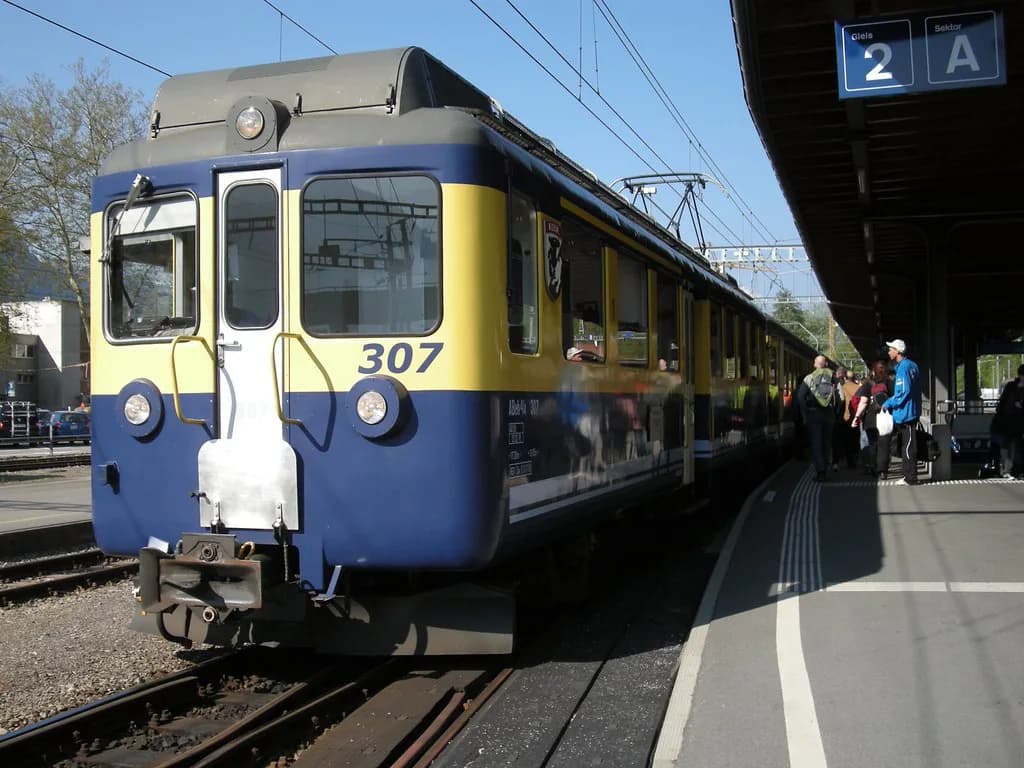
Interlaken Ost: What to See, Where to Eat and Who It Suits
Interlaken Ost is the east-side district built around Interlaken's main station, with the valley station of the Harder Kulm funicular a short walk away and the open lawns of the Höhematte within easy walking distance. It is the practical base in town for anyone whose days revolve around mountain railways rather than lakeside promenades.
The trade-off is straightforward: you gain quick access to the Harder Railway and to trains heading deeper into the Jungfrau Region, and you give up the quieter residential feel of the districts further west. This guide covers the character of the area, what is worth your time, what things cost and where the district fits into a two- or three-day plan. If you are still deciding when to come, our guide to the best time to visit Interlaken explains how the seasons change what this base is good for.
What Interlaken Ost Is
Interlaken Ost is a station district, and that shapes everything about it: hotels, shops and guest services cluster around the platforms, and the Aare runs close by while the Höhematte opens up toward the west. It is a place you use rather than a place you wander for its own sake, and its value lies in how quickly you can leave it for the mountains.
Because the district sits on the east side, it lines up naturally with the funicular to Harder Kulm and with onward connections toward Grindelwald, Lauterbrunnen and the Schynige Platte valley station at Wilderswil. Travelers who plan to spend mornings at altitude and evenings in town will find the geography works in their favor; those who want cobbled lanes and long lakefront strolls should compare it with the districts west of the Höhematte before booking. If your trip depends on clear summit views, it is worth checking the best time to visit Interlaken before you commit to an east-side base.
Who It Suits and Who It Does Not
Interlaken Ost suits travelers who treat Interlaken as a launchpad: families who want a short walk from bed to the funicular, hikers using the region's railways, and anyone on a tight schedule who would rather not add a cross-town transfer to a mountain day. It also works well for short breaks, where the first hour of the morning matters more than the view from the window.
It does not suit travelers chasing a quiet village atmosphere or a resort-strip feel. The station surroundings are busy, the Harder Kulm viewpoint itself gets crowded in the afternoon and evening, and the district is functional rather than picturesque. If the point of your trip is a calm base with a lake at the end of the street, look at the sibling districts instead and accept a slightly longer walk to the trains.
Layout and Orientation
Orient yourself by the station: the Harder Railway valley station sits a short walk from Interlaken Ost, and from there the funicular climbs to the summit in ten minutes. The Höhematte park lies to the west and is easy to reach on foot, which makes the district a workable base for both the mountain and the town's central green space.
Two practical habits help. First, plan each day from the station outward, since most mountain excursions start with a train or funicular ride. Second, use the Höhematte as your walking landmark when you head west toward the shops and the other station, rather than trying to memorize street names in a district that is small enough to cross on foot in a short stroll.
Harder Kulm: The District's Mountain
The Harder Kulm is the reason many travelers choose this side of town. The funicular valley station is a short walk from Interlaken Ost, and the ride to the top at 1,322 m takes about ten minutes, putting the Eiger, Mönch and Jungfrau skyline and both lakes in front of you almost immediately after leaving your hotel.
At the summit, the Two-Lakes Lookout Point frames Lake Thun and Lake Brienz below the peaks, and a wide panoramic circular route through shaded forest takes roughly an hour at an easy pace. Evening trips run daily so you can ride up for sunset and be back in Interlaken within about ten minutes of the descent, which makes a mountain evening possible even on a short break.
Set expectations on crowding: the viewing platform is one of the most photogenic spots in Interlaken and fills up later in the day, so an early ride gives you more room at the railing. The exposed Hardergrat ridge hike also starts from this mountain, but it is a serious undertaking for sure-footed hikers rather than a casual add-on to a sightseeing afternoon.
Harder Kulm Tickets and Passes
The Harder Railway Ticket starts from CHF 19, and a Harder Lunchtime Ticket that bundles the ride with a scenic lunch starts from CHF 39. A Jungfrau Travel Pass covering three to eight days, including boats, starts from CHF 165, and an Unlimited Jungfrau Summer Pass is also sold as a season product.
These are from-prices, so the amount you pay depends on the ticket type and any reductions that apply to you. The Jungfrau Travel Pass only pays off if you plan several mountain days in the region, while a single Harder Kulm return suits a short stay. An end-of-season offer for 2026 pairs a return journey with a CHF 25 dining voucher at the Panorama Restaurant, but it is tied to the end of that season rather than available year-round.
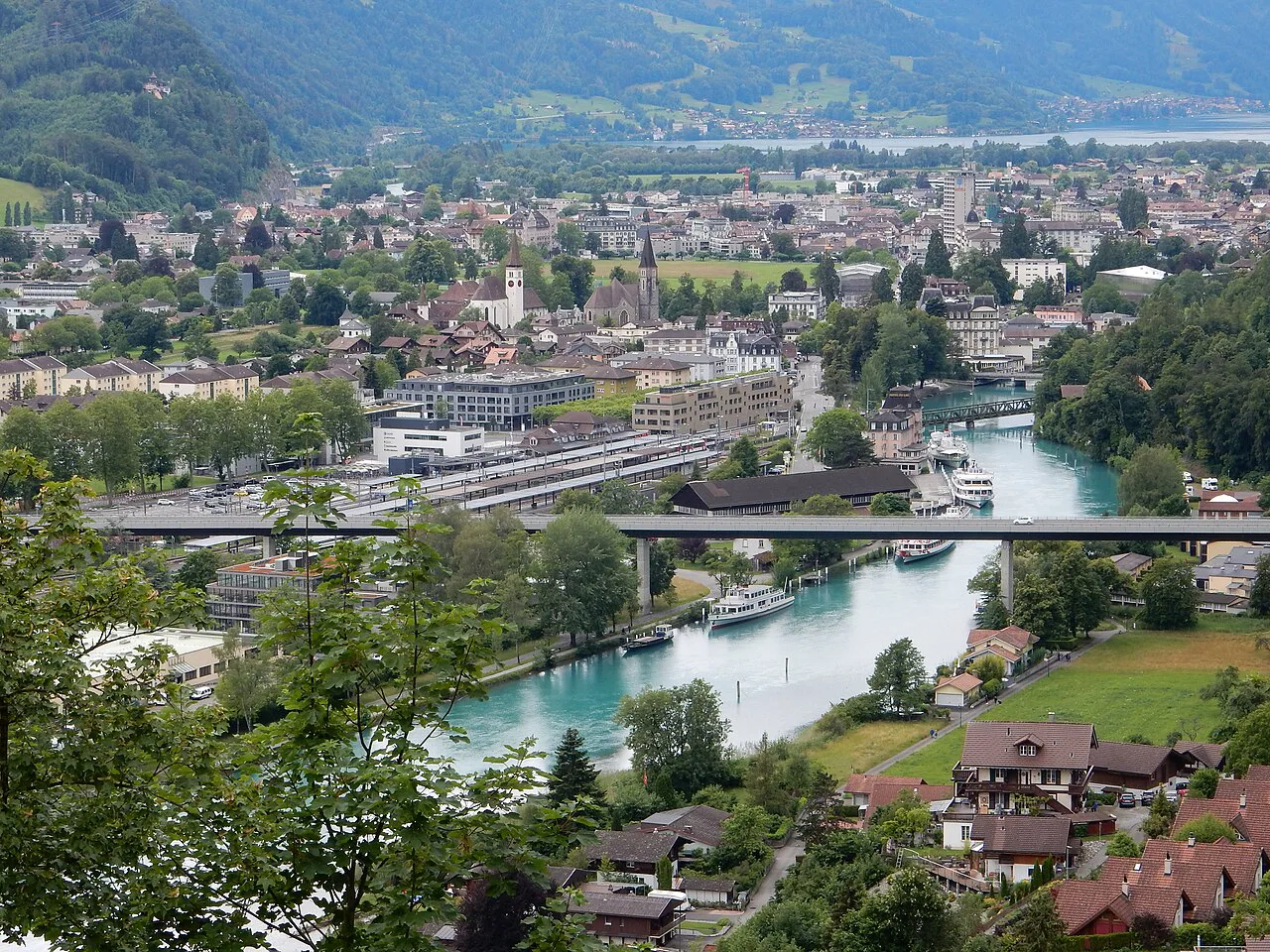

The Höhematte and Central Interlaken
The Höhematte is Interlaken's central open park, a flat expanse of lawn with the Jungfrau rising behind it and paragliders circling overhead on clear days. It sits between the town's two stations, so walking there from Interlaken Ost is an easy way to reach the middle of town without planning transport.
Treat the park as a rest stop rather than a sight: bring snacks from a supermarket, sit on a bench and let the mountain view do the work. It is also the natural link between this district and the ones further west, which makes it a useful reference point when you compare bases across the neighborhood guides.
Schynige Platte and the Skywalk
The Schynige Platte is the other mountain excursion that fits naturally with an east-side base, since the railway runs from the Wilderswil area just beyond Interlaken. At 1,967 m, the Schynige Platte Skywalk puts the Bernese Alps and Lake Thun in view after a few steps across a vantage platform beside the mountain hotel.
Tickets start from CHF 34, and the trip pairs well with the Alpine Botanical Garden and its roughly 800 plant species if you want a slower day. A nostalgic railway ride and alphorn music add tradition to the outing, which makes this a good choice for travelers who want altitude without the exposure of a ridge hike.
Rainy Days in the Region
Not every day in the Bernese Oberland cooperates, and the Jungfrau Region maintains a rainy-day programme built around museums, gorges, bathing and indoor sport. Local history, wildlife displays and a Sherlock Holmes trail give you an indoor alternative when the peaks disappear into cloud.
Gorges are the standout wet-weather option, since the rock walls shelter you and the extra rain makes the water more dramatic. Indoor and outdoor pools, wellness treatments and indoor training facilities round out the list, so a washed-out morning does not have to become a lost day in the hotel.
Eating in and Around Interlaken Ost
The Panorama Restaurant Harder Kulm at 1,322 m is the district's one genuinely scenic table, an easy-to-reach summit restaurant with the Eiger, Mönch and Jungfrau as a backdrop. It pairs naturally with the evening sunset trips, so you can eat and descend within the same outing.
Alphorn concerts are played daily at the Panorama Restaurant from 18:30, which gives the evening a fixed anchor if you want more than a view. For everyday meals, the station district is where you pick up supplies rather than where you linger, and a picnic on the Höhematte or a bench on the mountain is a sensible budget move in a town where restaurant bills add up.
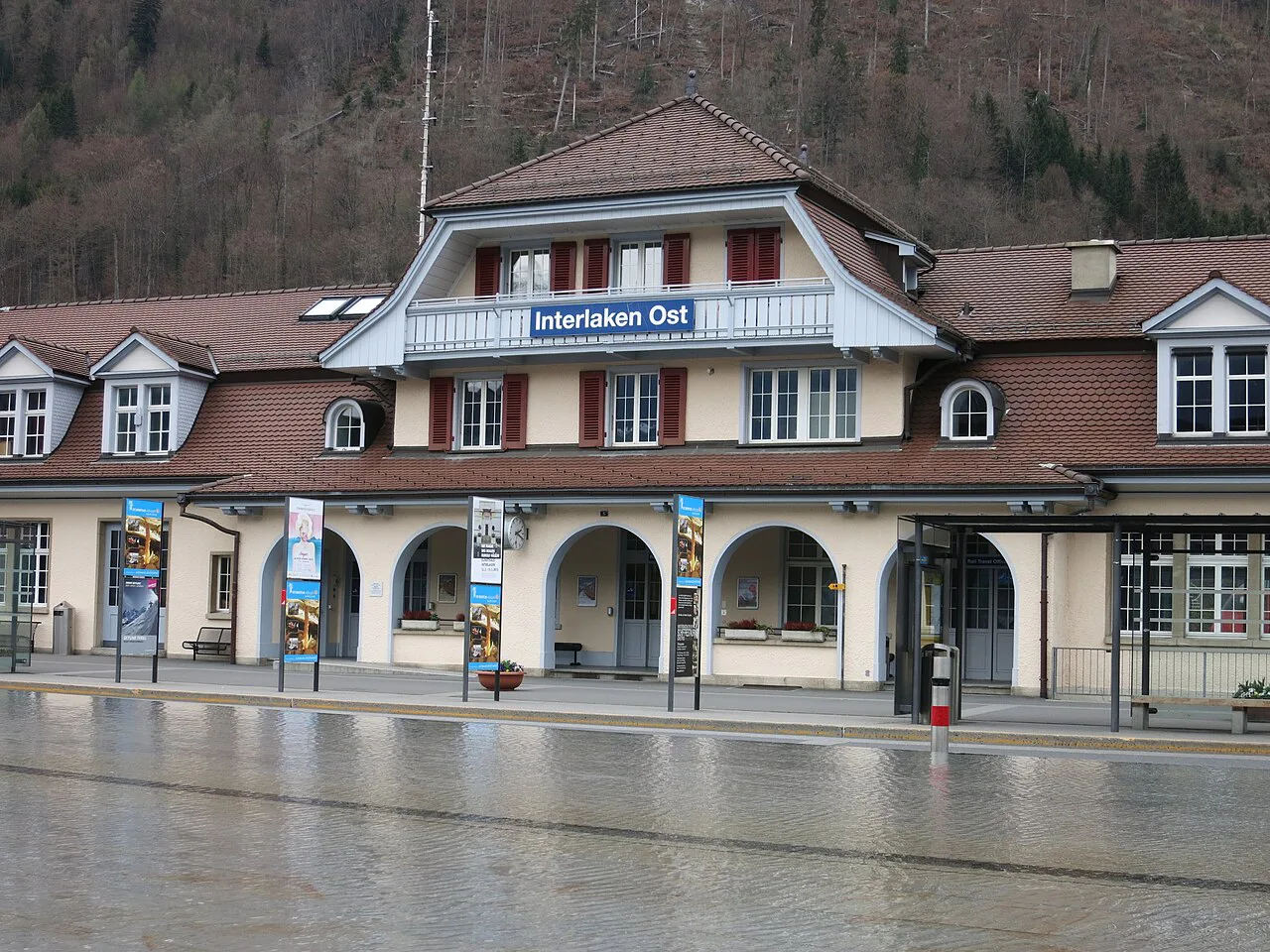

Getting There and Around
Interlaken Ost is the main station for travelers arriving from the direction of Bern and for onward connections into the Jungfrau Region. From the platforms, the Harder Railway valley station is a short walk, and the Höhematte is an easy stroll toward the west, which means most of your first day here needs no bus or taxi at all.
Check live departure boards on arrival rather than relying on printed assumptions, and buy mountain tickets before you queue at the funicular in high season. Staying near Interlaken Ost saves you a transfer on mountain mornings compared with a base on the far side of town, which is the main practical argument for this district. If you are weighing a longer stay, our interlaken itinerary shows how those mountain mornings fit into a 2- to 3-day plan.
Where Interlaken Ost Fits in a Short Break
On a two-day plan, give the first day to Harder Kulm and the Höhematte, riding up early and walking the circular route before returning to town for the afternoon. On a three-day plan, add the Schynige Platte and its Skywalk, keeping one morning flexible for a rainy-day museum or gorge visit if the cloud comes in.
The season you travel shapes which of these plans works best, since mountain visibility and evening sunset trips depend on the time of year. Compare the district with Unterseen if you want a historic small-town feel, or with Matten if you want to be between the stations, and decide based on how many mountain mornings you intend to have. If you are still pinning down dates, our best time to visit Interlaken guide helps you match the season to these plans.
What Interlaken Ost Is Not
Interlaken Ost is not a quiet village base and not a lakeside resort strip. It is a working station district with excellent access to the mountains, a crowded viewpoint above it and a park within walking distance of its hotels, and it rewards travelers who plan their days around departures rather than around the neighborhood itself.
If you want long lakefront ambles at the end of the street, compare the districts to the west before you commit to a booking. If you want to be on the first funicular of the morning with a ten-minute walk to the valley station, this is the right side of town.
Plan Your Visit
Base at Interlaken Ost if mountain access is the point of your trip: the Harder Railway valley station is a short walk from the platforms, the ride to 1,322 m takes ten minutes, and the Höhematte is an easy walk west. Budget from CHF 19 for the Harder Railway Ticket and check current fares and pass options before you buy.
Build your days around early rides and keep one wet-weather alternative from the region's rainy-day programme in reserve. That combination gives you the district's main advantage without the afternoon crowds that arrive at the viewpoint later in the day.
Explore more Interlaken guides
Frequently Asked Questions
How do I get from Interlaken Ost to Interlaken West?
Both are stations within Interlaken, and the central Höhematte park sits between them, so the transfer is a short walk through town rather than a trip that needs planning. Check connections on the departure boards at the station on the day you travel.
What is there to do around Interlaken Ost?
The main draw is the Harder Kulm funicular, whose valley station is a short walk from the station and reaches the summit in about ten minutes. At the top you find the Two-Lakes Lookout Point, a panoramic circular route of roughly an hour and evening sunset trips. The Höhematte park is an easy walk west for a quieter hour with a Jungfrau view.
How long does the Harder Kulm funicular take?
The ride from the valley station to the summit at 1,322 m takes about ten minutes. Plan extra time at the top: the lookout point takes around fifteen minutes, and the shaded circular route takes roughly an hour.
Is Interlaken Ost a good area to base yourself?
Yes, if your days revolve around mountain excursions. You get a short walk to the Harder Railway valley station and straightforward onward connections into the region. If you want quiet streets and a lakeside feel, compare the districts west of the Höhematte instead.
What does a Harder Kulm ticket cost?
The Harder Railway Ticket starts from CHF 19 and the Harder Lunchtime Ticket, which includes a scenic lunch, starts from CHF 39. Multi-day options such as the Jungfrau Travel Pass start from CHF 165. These are from-prices, so check the current fare for your dates before buying.
What can you do in Interlaken when it rains?
The Jungfrau Region's rainy-day programme points to museums covering local history and wildlife, a Sherlock Holmes trail, gorges that are sheltered and more dramatic in wet weather, plus indoor and outdoor pools and indoor sport facilities. Pick one anchor for the morning and treat the afternoon as flexible.