Zurich Cable Cars & Funiculars: Which One to Ride
Zurich's cable cars and funiculars climb to viewpoints over the city and Lake Zurich. Here's which lines exist and what each ride gives you.
On this page
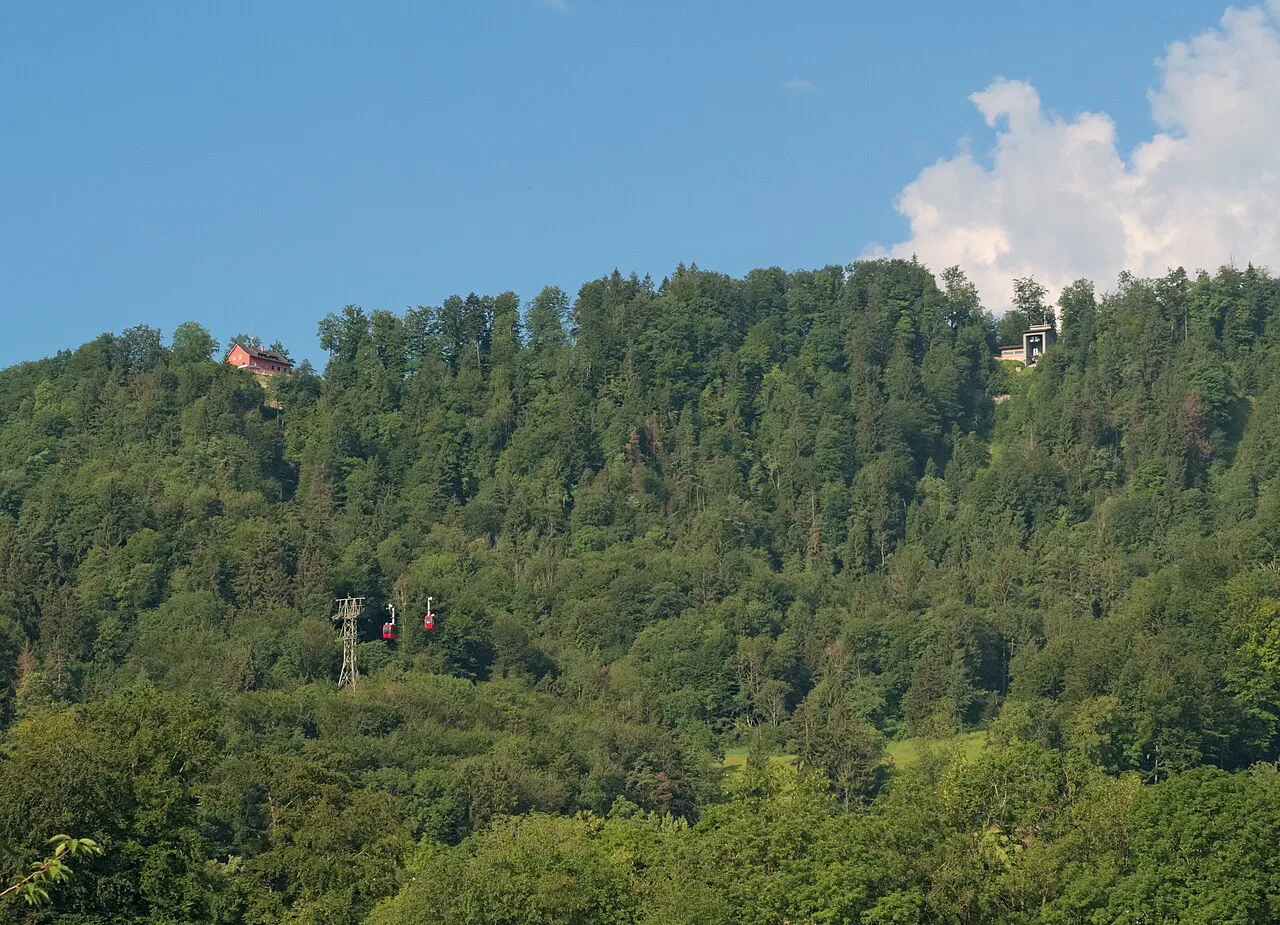
Zurich has no alpine gondola inside the city. What it does have is a handful of short funiculars and a rack railway that lift you a few hundred meters to terraces and ridges, plus one proper cable car just outside town that opens the classic Lake Zurich panorama. The Polybahn climbs from Central to the Polyterrasse, the Seilbahn Rigiblick serves the Zürichberg neighborhood, the Dolderbahn reaches the Dolder ridge, and the Felsenegg cable car rises from Adliswil.
Quick Answer: Which Line to Pick
For the best view per minute, take the Felsenegg cable car from Adliswil up to the Felsenegg viewpoint over Lake Zurich. For a view without leaving the center, the Polybahn from Central to the Polyterrasse is the fastest lift above the rooftops. Seilbahn Rigiblick and Dolderbahn are neighborhood lines on the Zürichberg and Dolder ridge, useful if you are already exploring that side of the city rather than chasing a summit. If you are still mapping the rest of the trip, our things to do in zurich guide covers the sights these lines connect to.
Felsenegg Cable Car: Adliswil to the Lake View
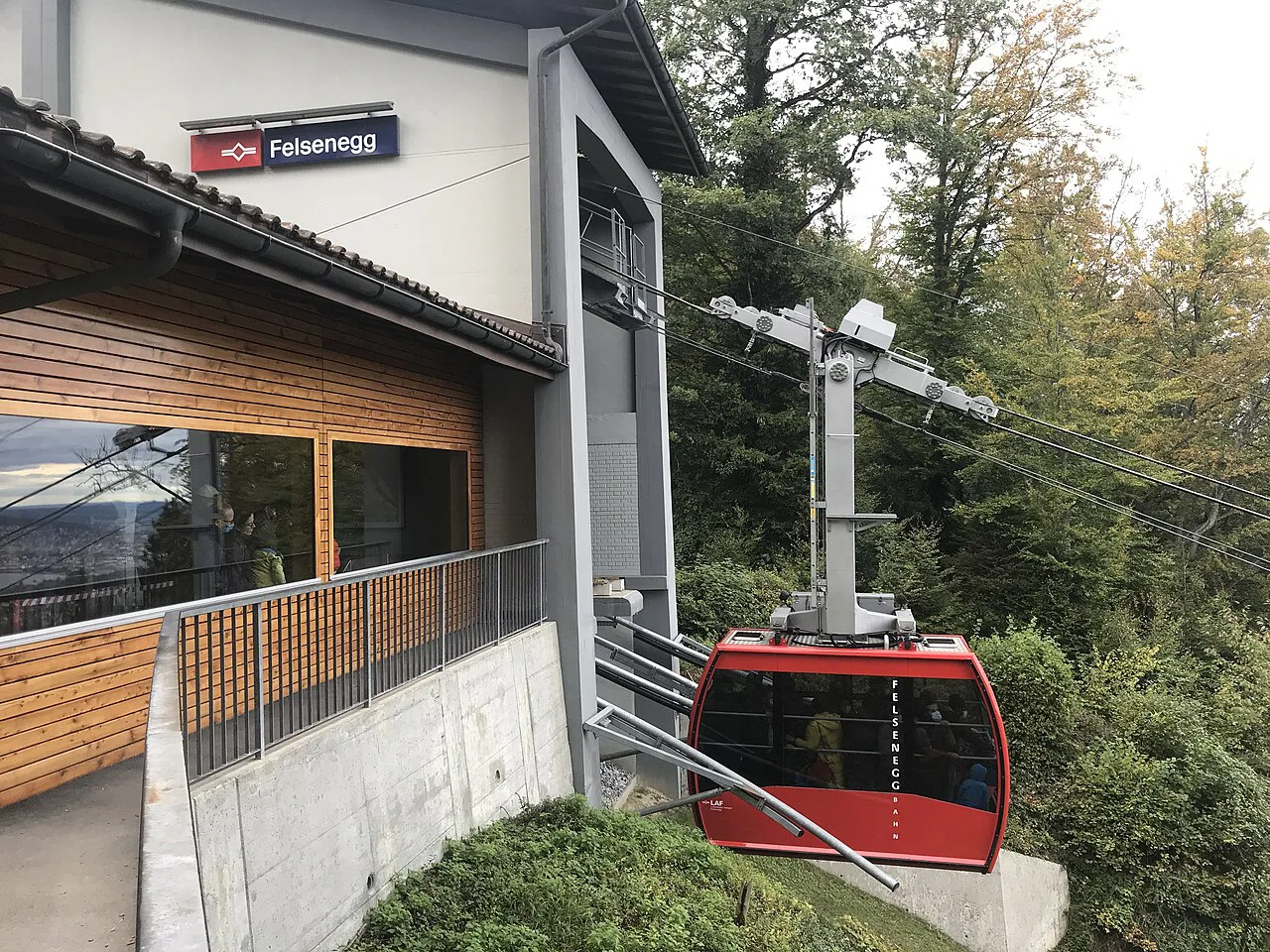
The Felsenegg cable car is the one line in the Zurich orbit that reads like an alpine lift rather than a city shortcut. It runs from Adliswil, on the far side of the Uetliberg ridge, up to the Felsenegg viewpoint, where the view opens across Lake Zurich toward the Alps. Treat it as the best-value panorama if your priority is a wide lake-and-mountain view rather than a city rooftop.
Getting there means a train to Adliswil and a short connection to the valley station, then the cable car up. Once at the top, the reward is a terrace view rather than a long hike, so a half-day is enough. Before you commit to the trip, check the day's operating window with the Luftseilbahn Adliswil-Felsenegg, since the ride is the whole point of the outing.
Polybahn: Central to the Polyterrasse
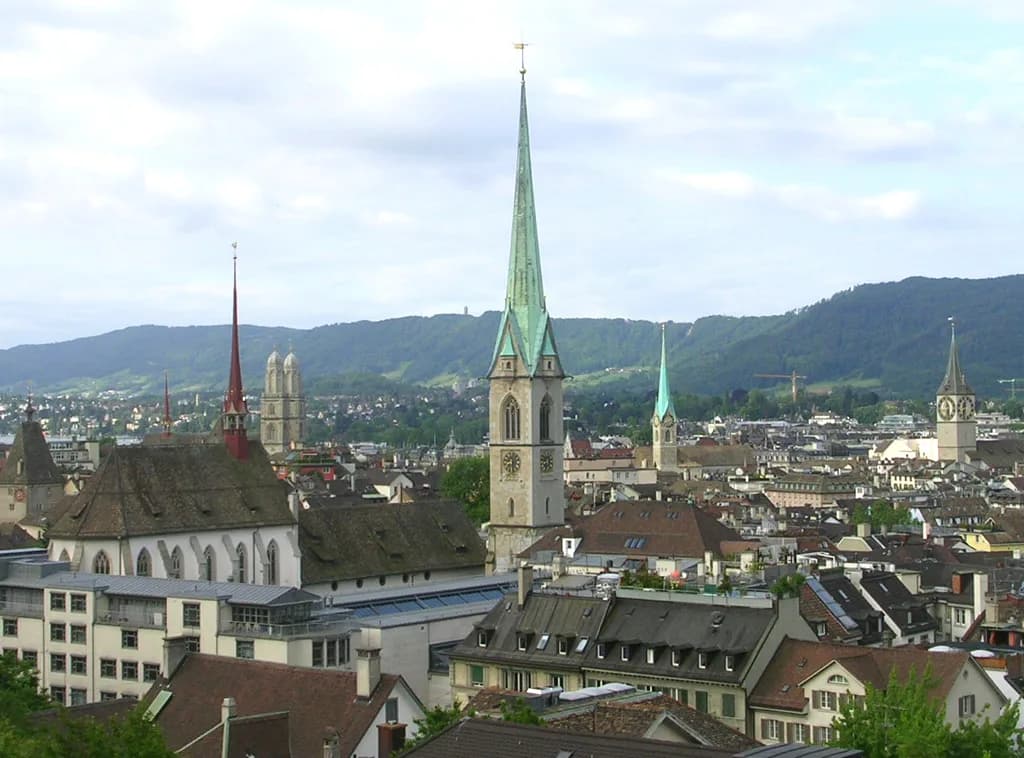
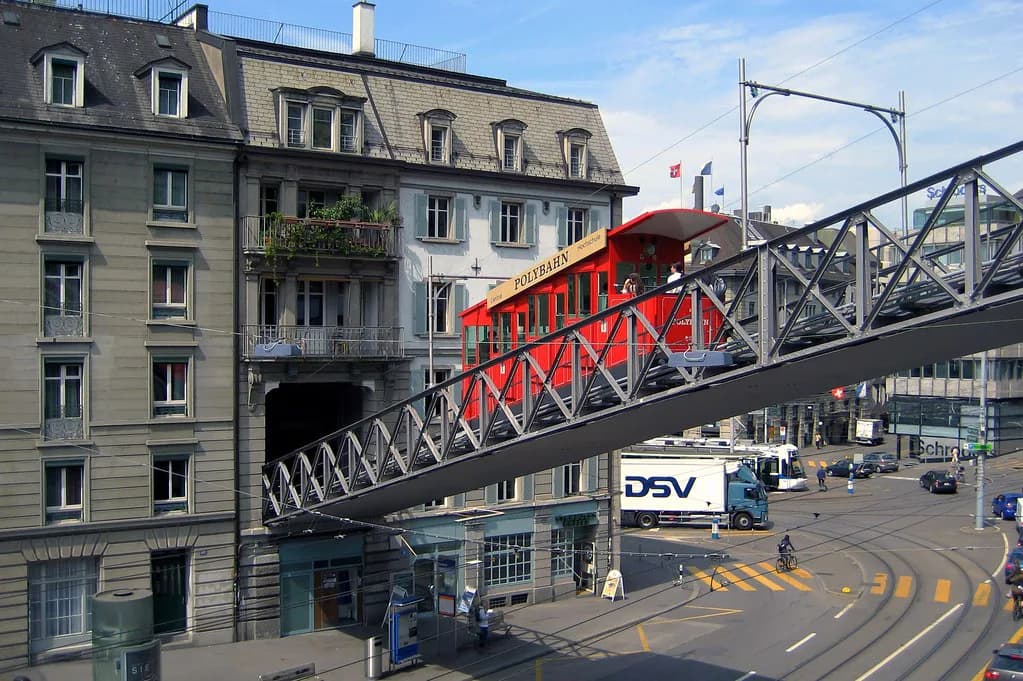
The Polybahn is Zurich's shortest and most charming lift, a red funicular that climbs from Central on the Limmat up to the Polyterrasse below the ETH campus. The ride takes about a minute, but the terrace at the top gives you a clean view over the Old Town roofs, the Grossmünster and the river. It is the easiest way to add a viewpoint to a walking day without committing to a mountain.
Because the Polybahn starts at Central, it slots naturally into a stroll between the Zürich Old Town and the university quarter. Ride up, take in the terrace, and walk back down through the Niederdorf to the river. You get the view without spending a chunk of your day on transport.
Seilbahn Rigiblick: The Zürichberg Neighborhood Lift
The Seilbahn Rigiblick is a small funicular serving the residential Zürichberg slope above the city, connecting the Rigiblick area with the streets below. It is not a sightseeing line with a grand panorama at the top, but it is a genuinely local piece of Zurich transport and a quick way to gain height on the Zürichberg side. Use it if you are already exploring that quarter or heading up toward the Dolder ridge.
Set expectations accordingly: this is a neighborhood connection, not an attraction in its own right. Pair it with a walk on the Zürichberg or a stop in the surrounding streets rather than making a special trip. It works best as a practical shortcut that happens to be fun.
Dolderbahn: The Rack Railway to the Dolder Ridge
The Dolderbahn is a rack railway that climbs from the Römerhof area up to the Dolder ridge, where the city gives way to forest and open ground. It is the longest of the city lines and the one that feels most like a proper mountain railway, even though it stays within Zurich. Ride it for the climb itself and for access to the ridge, not for a single dramatic viewpoint.
The Dolder ridge is a good place to combine the ride with a walk through trees and open parkland above the city. Because the line serves a residential and leisure district rather than a classic sight, it suits travelers who want a quieter half-day away from the Old Town crowds. Check the day's service before you build a plan around it.
What the Zürich Card Covers
The Zürich Card bundles unlimited second-class travel on trams, buses and trains in the city and surrounding fare zones with free travel on the Polybahn, Seilbahn Rigiblick and Dolderbahn funiculars and on the Felsenegg cable car. It also includes free admission to most Zurich museums and discounts on city tours and other experiences. If you plan to ride two or three of these lines plus visit a museum, the card can replace a stack of separate tickets.
The card's own price and current conditions are published by Zürich Tourism, so compare that figure against your planned rides and museum entries before buying. Travelers staying several days and using public transport heavily usually come out ahead; a single Polybahn ride does not justify the card on its own. If the museums are a big part of your plan, check opening days first, since Zurich museum schedules vary.
Ride or Walk: Pairing a Line With a Viewpoint
These lines are short hops, so the best plan is to pair each ride with a viewpoint stop rather than a full hike. The Polybahn pairs with the Polyterrasse, the Dolderbahn with the ridge paths, and the Felsenegg cable car with the terrace at the top. Ride up, spend time at the view, and walk back down if you have the legs for it.
The Uetliberg is the alternative for a summit view without a cable car: it is Zurich's own mountain, reached by train from the city, and the walk along the ridge gives sweeping views over the city and lake. The tourist board recommends starting early on Uetliberg for a sunrise and then enjoying brunch at Uto Kulm, which makes it a strong option when you want a full morning out rather than a one-minute lift.
Weather and Season: When the Ride Pays Off
The view is the whole reason to ride, so pick a clear day. Zurich's summer months bring long evenings, outdoor life along the lake and river, and the clearest conditions for a Felsenegg panorama; spring brings magnolias, cherry blossom and milder air for terrace stops. Fall is when the view of the Alps is often at its clearest, according to the city's own seasonal guidance, which makes it a strong season for the higher viewpoints.
On overcast days, skip the cable car and use the time for a museum instead; Zurich's museums are a sensible rainy-day substitute. Just check the day's opening hours before you go, since museum days vary across the city.
Trade-Offs: Short Rides Versus Long Views
The city funiculars are honest about their scale: the Polybahn is a minute-long climb and the Seilbahn Rigiblick and Dolderbahn are neighborhood connections, not alpine experiences. If you want a dramatic view, plan the Felsenegg cable car or the Uetliberg into your day and treat the others as pleasant extras. If you want convenience, the Polybahn is the quickest way to a rooftop-level view from the center.
For travelers with limited time, one strong viewpoint beats three short rides. For those with a full day, combining the Polybahn, a walk through the Old Town and a museum makes a balanced itinerary without a long trip out of town.
Plan Your Visit
Choose the Felsenegg cable car for the widest Lake Zurich panorama, the Polybahn for a quick rooftop view from the center, and the Dolderbahn or Seilbahn Rigiblick if you are already exploring the Zürichberg side. Check current operating details with the lift companies before you go, then build the rest of the day around the view.
Explore more Zürich guides
Frequently Asked Questions
Where does the Felsenegg cable car start and finish?
It runs from the valley station at Adliswil up to the Felsenegg viewpoint above Lake Zurich. You reach Adliswil by train from the city and continue a short way to the valley station, then ride up. Check the day's operating hours before setting out, since the ride is the purpose of the trip.
Does the Zürich Card cover the funiculars and the cable car?
Yes. The card includes unlimited travel on the Polybahn, Seilbahn Rigiblick and Dolderbahn funiculars and on the Felsenegg cable car, plus free second-class travel on trams, buses and trains in the city and surrounding fare zones. It also gives free admission to most Zurich museums and discounts on city tours. Zürich Tourism publishes the card's current price and conditions.
Which Zurich lift gives the best view?
The Felsenegg cable car gives the widest panorama, opening across Lake Zurich toward the Alps from the viewpoint above Adliswil. Inside the center, the Polybahn from Central to the Polyterrasse delivers a clean roof-level view over the Old Town and the river in about a minute. The Seilbahn Rigiblick and Dolderbahn are neighborhood connections rather than viewpoint lines.
Is there a summit view without a cable car?
Yes. The Uetliberg is Zurich's own mountain, reached by train from the city, and the ridge walk gives sweeping views over the city and lake. Starting early for sunrise and taking brunch at Uto Kulm makes a full morning out. It suits travelers who would rather ride a train up than a short funicular.
When is the best time to ride for the view?
Pick a clear day, because the view is the reason to ride. Summer brings long evenings and outdoor life along the lake and river, spring brings blossom and milder terrace weather, and fall is when the Alps often stand clearest from the higher viewpoints. On overcast days, use the time for a museum instead.
Sources
Notes for your Swiss city break
Optional updates to our Swiss city guides.
You might also like
Continue reading
More guides you'll find useful