Zürich Old Town: What to See and How to Walk It
Plan a visit to Zürich Old Town: Grossmünster, Fraumünster, St. Peter, Lindenhof and the Niederdorf streets, plus a walking route on both banks of the Limmat.
On this page
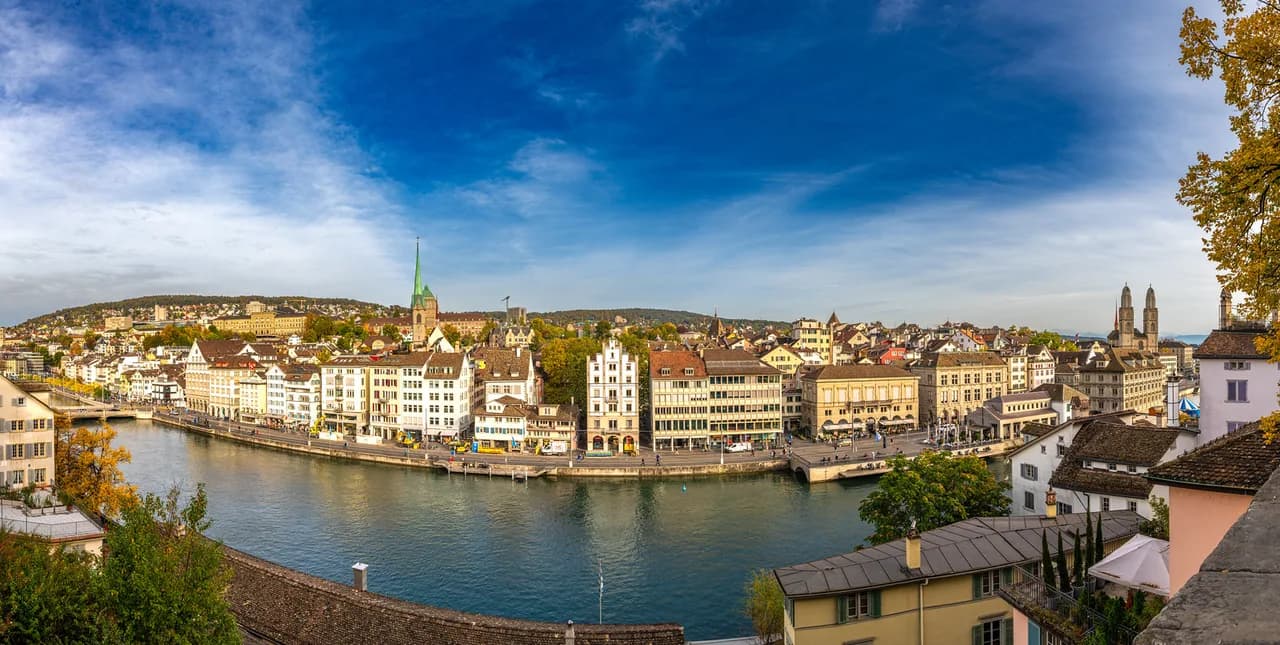
Zürich's Old Town is the historic core on both sides of the Limmat river, where guild houses, churches, squares and quiet corners sit close together. It is compact enough to cross on foot in an afternoon, yet dense enough that most visitors only see the two or three headline sights. The trick is to plan by river bank: the left bank holds the Fraumünster, St. Peter, Lindenhof and the Bahnhofstrasse and Paradeplatz corridor, while the right bank holds the Grossmünster, Niederdorf, Augustinergasse and the Schipfe waterfront.
Nothing in the streets and squares costs anything to wander, so the Old Town is one of the cheapest good days in an expensive city. You pay only when you step inside a paid attraction or ride the Polybahn up to the ETH terrace. That split between free wandering and paid stops is the single most useful thing to know before you go.
How the Old Town Is Laid Out
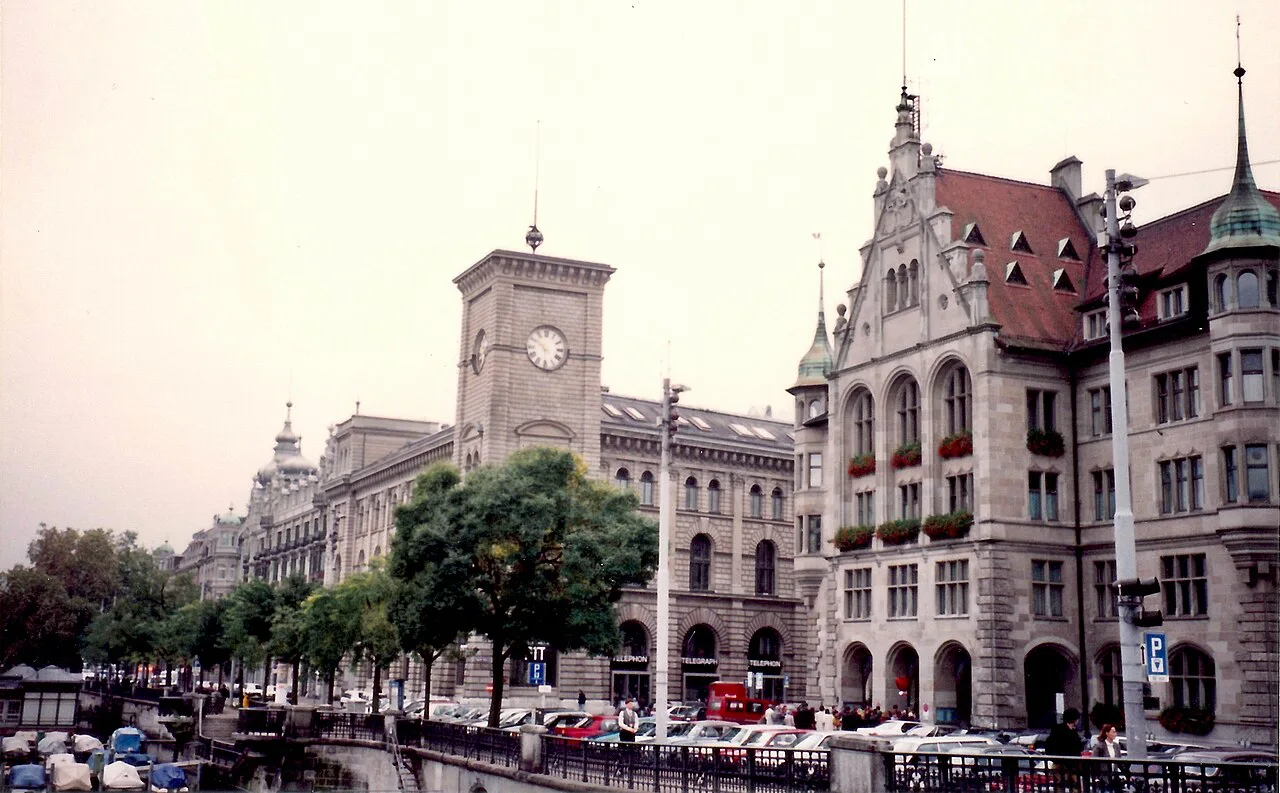
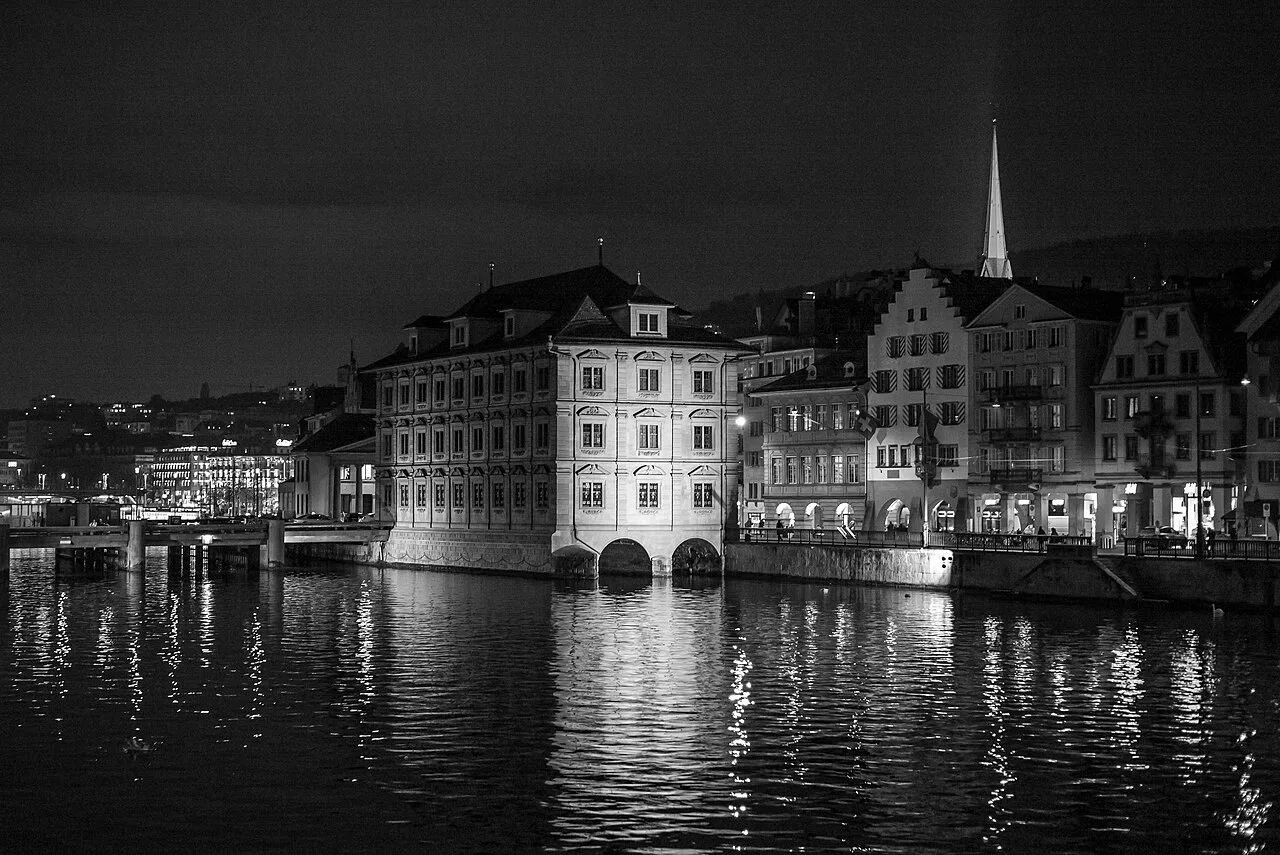
Think of the Old Town as two halves joined by bridges. The left bank, west of the Limmat, holds the Fraumünster and St. Peter churches, the Lindenhof hill, and the shopping and finance axis of Bahnhofstrasse and Paradeplatz. The right bank, east of the river, holds the Grossmünster, the car-free Niederdorf quarter, the colorful Augustinergasse and the Schipfe lane along the water.
You reach the whole area easily from Zurich Main Station, which sits at the northern edge; from there the Old Town unfolds on foot without any need for a tram. Plan your day as one bank in the morning and the other in the afternoon so you cross the Limmat once or twice rather than repeatedly. This also keeps you out of the busiest crossing points at peak times.
The Three Churches
The Grossmünster is the city's signature silhouette: its twin towers are described as the most recognized landmark in Zürich, as much a part of the city as the lake and the main shopping streets. Stand on the far bank for the classic view, then walk over for a closer look at the Romanesque building.
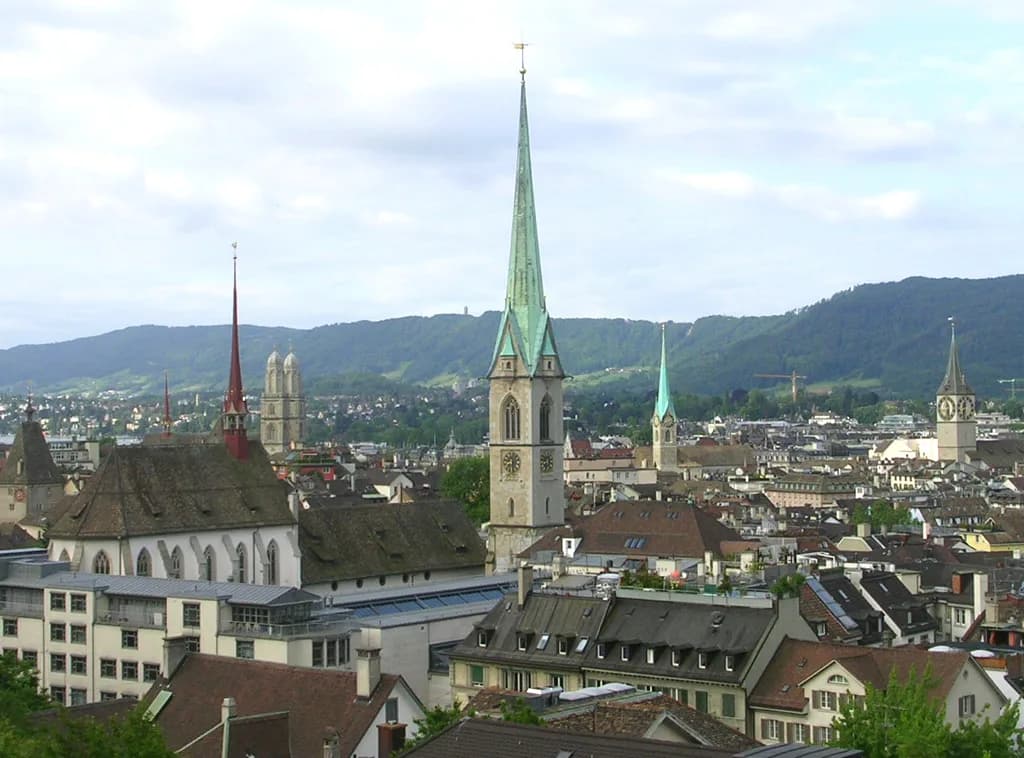
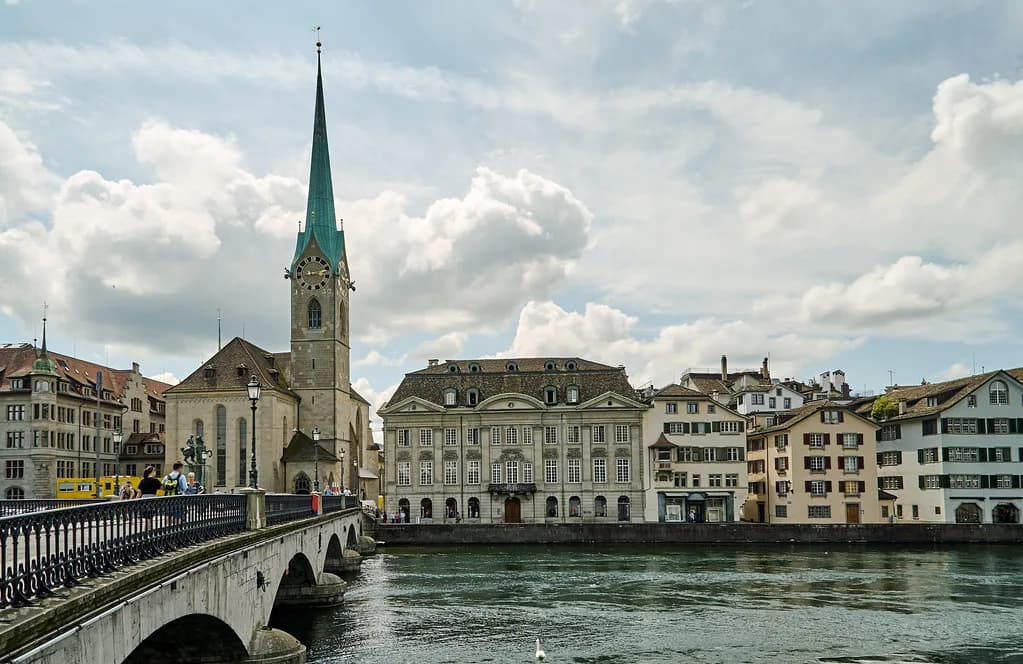
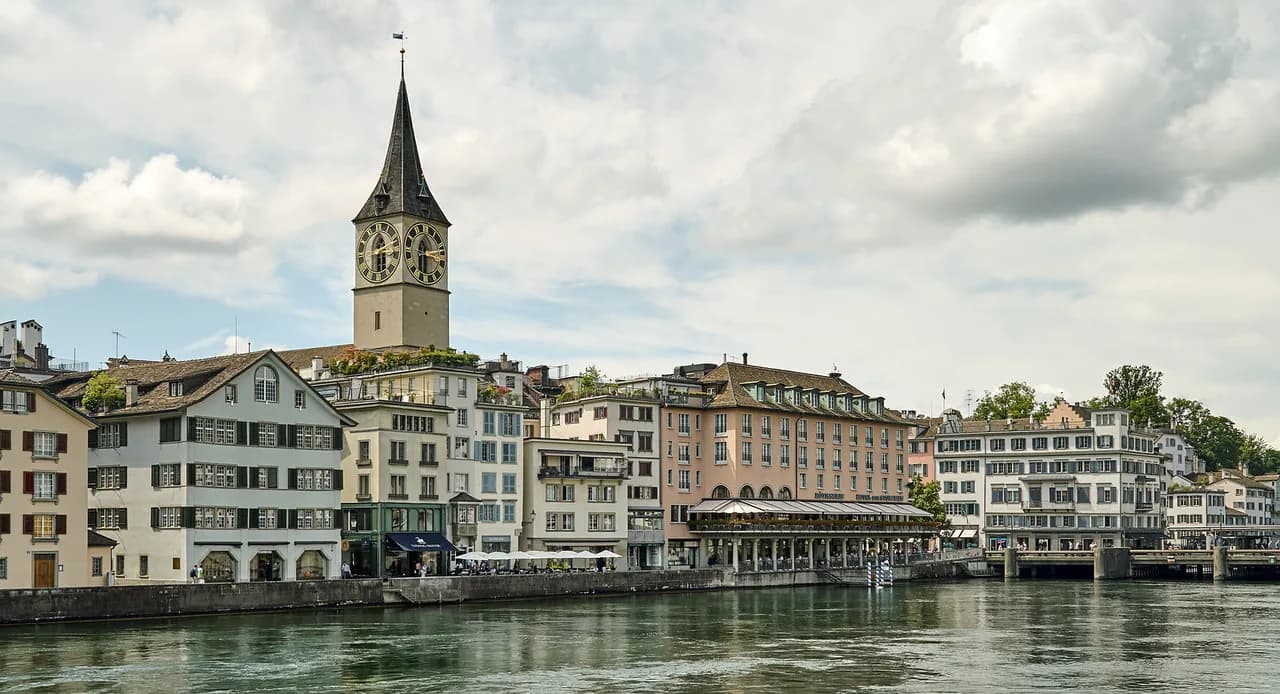
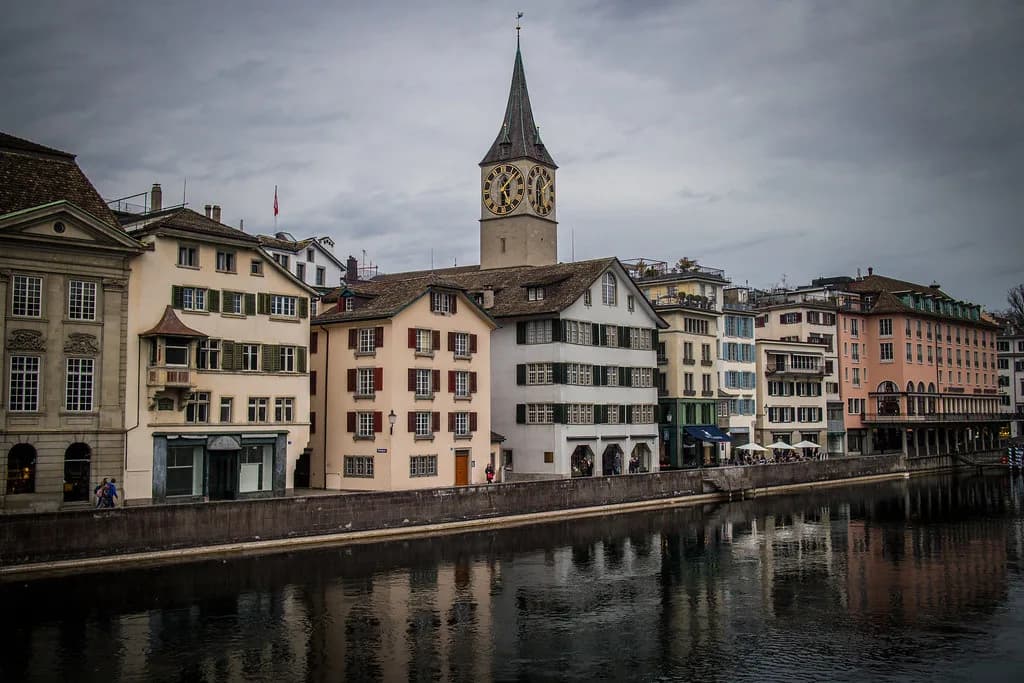
St. Peter is the oldest church in Zürich and carries the largest tower clock face in Europe, two records that make it worth a pause even on a short visit. The Fraumünster, a former abbey not far from Paradeplatz, is known for its Chagall windows, and its own history rewards more than a glance. Treat the three as separate stops with distinct reasons to go in, not one blurred churches item.
Lindenhof and the Roman Tombstone
Lindenhof is the raised square where, by the city's account, Zürich began. On the way up you can find a tombstone from 180 AD whose inscription, Turicum, is the first written mention of the city's ancient name. It is an easy stop to miss and a good one to build into the walk between the left-bank churches and the river.
Streets Worth Walking
Bahnhofstrasse is the famous luxury shopping street running from the station area, and it began life as a ditch. Niederdorf, on the right bank, is the car-free part of Kreis 1 and the place to slow down, shop and feel the city's everyday pulse. Augustinergasse, lined with old and colorful houses, bay windows, lanterns and arches, is the most photogenic single lane in the quarter.
Schipfe was a medieval transshipment point for goods and later hosted silk and shipbuilding trades as well as public baths. Rennweg was once the widest street in Zürich and now holds exclusive boutiques. Walk these on the right-bank half of your day rather than doubling back across the river for them.
Squares: Paradeplatz and Rechberg
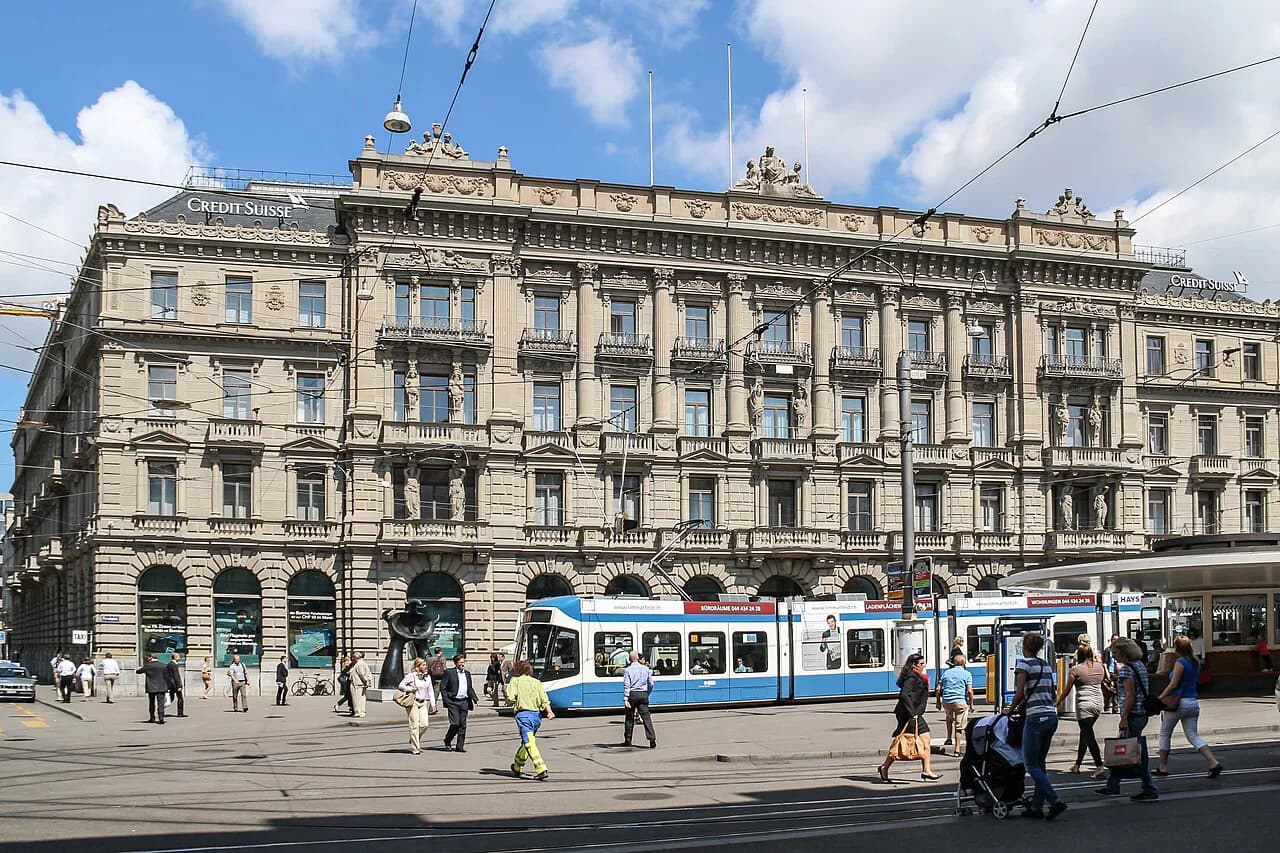
Paradeplatz is Zürich's well-known financial center, and in the 18th century it served as a cattle market. It is central and famous, but honestly it is a pass-through of banks and shops rather than a sightseeing stop in itself; use it as a waypoint between the left-bank churches and Bahnhofstrasse.
Rechberg is the terraced garden familiar to students of the university and ETH, and an absolute gem for visitors who want a quiet pause and a view. Pair it with the Polyterrasse above rather than treating it as a separate trip.
Museums and Indoor Stops
Kunsthaus Zürich, with its 2021 extension, is the largest museum in Switzerland and shows outstanding works of art. It is the heavyweight indoor stop in the area if the weather turns or you want a serious collection.
Cabaret Voltaire is the birthplace of the 1916 Dada movement, and today visitors come for multilingual performances, collages and sound poems. It is small, central and a very different experience from the Kunsthaus. Keep both as options and decide on the day based on how much time and budget you have left for indoor stops.
The Giacometti Murals at the Uraniastrasse Police Station
Augusto Giacometti's murals of 1925 cover the vaulted ceiling and walls of a precinct hall at the Uraniastrasse police station, described as the most beautiful precinct in the world. It is one of the Old Town's best small finds and the kind of stop most short visits skip entirely. Build it in as a five-minute detour rather than a destination in its own right.
Viewpoints: Polyterrasse and Bürkliterrasse
The Polybahn climbs from Central to the ETH terrace in just 100 seconds, and the trip is worth it for the views over the Old Town from the top. It is a cheap way to get a rooftop panorama without paying for a dedicated viewpoint. If you prefer to walk up, you get the same terrace at the end.
Bürkliterrasse sits by the water, and on a clear day the view sweeps across Lake Zürich to the snow-capped Alps. It works well as the closing stop of a right-bank walk. Check the day's conditions before you commit to a long detour for the panorama.
A Walking Route, Start to Finish
Start at Zurich Main Station, drop onto Bahnhofstrasse and walk to Paradeplatz. Turn toward the left-bank churches for St. Peter and the Fraumünster, then climb to Lindenhof and find the Turicum tombstone on the way. Cross the Limmat to the Grossmünster, then work through Niederdorf and Augustinergasse, pause at Schipfe, and finish with the Polybahn up to the Polyterrasse for the view.
The official Zürich Old Town Walking Tour is the most popular guided city tour, with guides explaining the city's origins and famous personalities. If you want structure and commentary rather than self-guiding, that is the option to book; otherwise this route covers the same ground independently.
How Many Days the Old Town Needs
One focused half-day covers the three churches, Lindenhof and both banks on foot. Give it a full day if you add the Kunsthaus or Cabaret Voltaire and want unhurried time in Niederdorf. Two days makes sense only if you are mixing the Old Town with the rest of the city, in which case split it as one left-bank morning and one right-bank afternoon.
A rainy day is a good reason to shift the balance toward the indoor stops and shorten the street walking. The Old Town's covered churches and museums keep a wet afternoon productive. Rain is also the moment the Giacometti murals pay off, since they are indoors.
When to Go and How Busy It Gets
The street layout makes the Old Town busiest around the main station approach and the Bahnhofstrasse corridor, so walk the quieter lanes such as Schipfe and Rechberg earlier if you want space. Mornings generally give you clearer photos on Augustinergasse and the riverbank. None of the sources give an events calendar or seasonal crowd levels, so check the city's visitor information for events around your dates.
Costs and Money-Saving Options
Wandering the streets, squares and the Lindenhof is free, which makes a low-cost day easy to build here. The Zürich Card gives holders a 50 percent discount on the Zürich Old Town Walking Tour, the only money-saving detail the city publishes for this area. For ticket prices at the churches, museums and the Polybahn, check each operator's current page, since those figures change by season.
Built right, the day mixes free wandering with one or two paid stops so the cost stays predictable. Pair the free streets with a single museum or a church visit rather than stacking every paid option. That approach lets you spend your budget on the stops you actually care about.
Common Mistakes and Honest Trade-offs
The main mistake is treating Bahnhofstrasse and Paradeplatz as sightseeing when they are mainly a shopping and finance corridor. Give them a walk-through and put your time into the churches, Lindenhof and the right-bank lanes. The second mistake is zig-zagging across the Limmat all day instead of committing to one bank at a time.
The third mistake is skipping the small finds: the Giacometti murals and the Turicum tombstone are the stops that separate a memorable visit from a checklist one. And if you are comparing Swiss old towns, note that this one is compact and river-split in a way that Bern's arcaded Old City and Basel's old town along the Rhine are not.
Plan Your Visit
Build your Old Town day around the two banks: left bank for St. Peter, the Fraumünster and Lindenhof, right bank for the Grossmünster, Niederdorf and Augustinergasse. Add one paid indoor stop and finish with the Polybahn to the Polyterrasse for the view. That order keeps you walking forward rather than backtracking across the river.
Save the free streets and squares for the bulk of the day and spend deliberately on the stops that interest you. For deeper planning on the surrounding city, the wider Zürich coverage connects this walk to the rest of your trip.
Explore more Zürich guides
Frequently Asked Questions
Is Zürich Old Town worth seeing?
Yes, especially for first-time visitors. The historic core on both sides of the Limmat packs the Grossmünster, St. Peter, the Fraumünster, the Lindenhof viewpoint and the Niederdorf lanes into a compact area you can cover on foot. The streets and squares are free to wander, so the day costs little beyond any museum or church you choose.
What is the Old Town area of Zürich called?
It is simply Zürich's Old Town, the historic center on both banks of the Limmat river. The right-bank car-free quarter is called Niederdorf. The city's own visitor site treats the area as one Old Town with the attractions, streets and squares grouped within it.
How long does it take to walk around Zürich Old Town?
A focused half-day covers the three churches, Lindenhof and both banks. Allow a full day if you add the Kunsthaus or Cabaret Voltaire and want unhurried time in Niederdorf. The Polybahn ride up to the ETH terrace takes about 100 seconds, so the view costs little time.
Which side of the Limmat is the Old Town on?
Both. The left bank holds St. Peter, the Fraumünster, Lindenhof and the Bahnhofstrasse and Paradeplatz corridor. The right bank holds the Grossmünster, Niederdorf, Augustinergasse and Schipfe. Planning one bank at a time avoids repeated river crossings.
Are the churches in Zürich Old Town free to enter?
Entry fees and opening arrangements are set by each church and can change, so check the Grossmünster, Fraumünster and St. Peter pages before you go. Walking the streets and squares around them costs nothing. The Zürich Card does give a 50 percent discount on the official Old Town Walking Tour.
Where do you get the best view over Zürich Old Town?
The Polyterrasse above the Old Town gives a broad view after a short Polybahn ride from Central. Bürkliterrasse looks across Lake Zürich to the Alps on a clear day. Rechberg is a quieter garden terrace used by university students.
Is the Polybahn worth riding?
It is a cheap way to reach the ETH terrace and its view over the Old Town in about 100 seconds. If you would rather walk, the same terrace is your destination. Ride it at the end of a right-bank walk so you finish on the view.
Sources
Notes for your Swiss city break
Optional updates to our Swiss city guides.
You might also like
Continue reading
More guides you'll find useful