Montreux Funiculars: Which Line to Ride and What You See
Two historic funiculars climb above Montreux: Territet–Glion and Vevey–Mont-Pèlerin. Here is what each ride covers and where you end up.
On this page
Two funiculars climb from the Montreux–Vevey shoreline, and they reward different moods. Territet–Glion is the short Belle Époque classic with a plunging lake view at the top; Vevey–Mont-Pèlerin is the longer run through the Lavaux vineyard terraces toward a summit viewpoint. Picking between them comes down to whether you want a quick panorama or a half-day in the vineyards.
Both lines are historic, both start near the lake, and neither is a theme-park ride. The choice is really about time and scenery: one gets you up and back in a tight window, the other takes you higher and leaves room for a walk and a wine-country stop on the way down.
Quick comparison: Territet–Glion versus Vevey–Mont-Pèlerin
The Territet–Glion line begins at Territet, just east of Montreux's center, and covers 600 m on its climb to Glion. The Vevey–Mont-Pèlerin line starts at Vevey Funi and runs 1,500 m up to Mont-Pèlerin. The second ride is more than twice as long, which is the first clue that it also takes more of your day.
At the top, the difference sharpens. Glion delivers a plunging view over Lake Geneva almost immediately. Mont-Pèlerin puts you in the Lavaux terraces with the Plein Ciel tower a 45-minute walk away. If you have one afternoon, Glion is the efficient pick; if you have a full day, Mont-Pèlerin gives you more to do once you arrive.
Territet–Glion: a 600 m climb in Belle Époque style
The Territet–Glion funicular is one of the oldest in Switzerland and still runs the Belle Époque route between the two villages. The ride is short — 600 m — but steep enough that the lake drops away behind you as you climb. The cars and the track carry a period feel that makes the trip itself part of the outing, not just transport.
Because the line is short, it suits a morning or late-afternoon slot rather than a whole day. You board at Territet, near the lakefront below Montreux, and step off at Glion on the slope above. The base station is easy to fold into a walk along the shore before or after the ride.
What you see from Glion: the plunging view over Lake Geneva
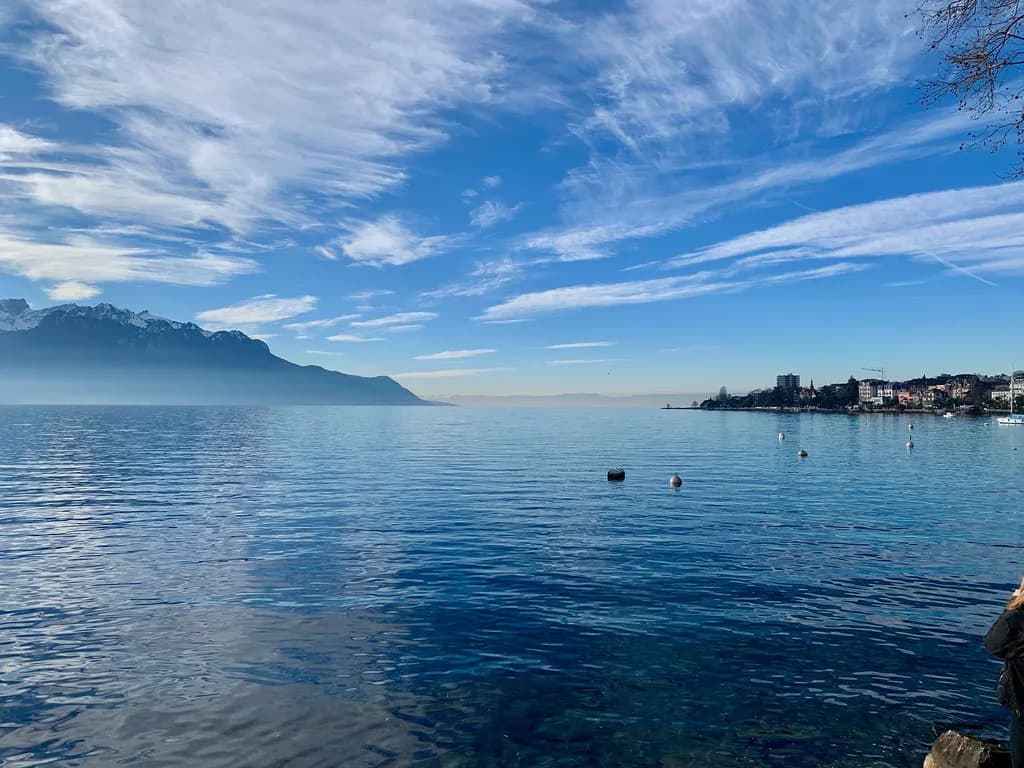
The payoff on the Territet–Glion line arrives as soon as you reach Glion: a plunging view over Lake Geneva opens up from the village on the slope. The lake stretches away toward the French shore, with the Alps behind it. It is a compact, high-value panorama rather than a long excursion, which is exactly why the short line works for travelers on a tight schedule.
Plan the ride so you have time to stand and look rather than turn straight around. Glion is a small village, and the reason to come up is the view, not a list of sights. Pair it with the rest of your things to do in Montreux and the ride slots in without eating your afternoon.
Vevey–Mont-Pèlerin: 1,500 m up through the Lavaux terraces
The Vevey–Mont-Pèlerin funicular departs from Vevey Funi and heads toward Chardonne before continuing to Mont-Pèlerin. The full ride covers 1,500 m, climbing through the terraced vineyards of Lavaux. Because it starts in Vevey rather than Montreux, it fits best as a separate outing along the shore rather than a quick detour.
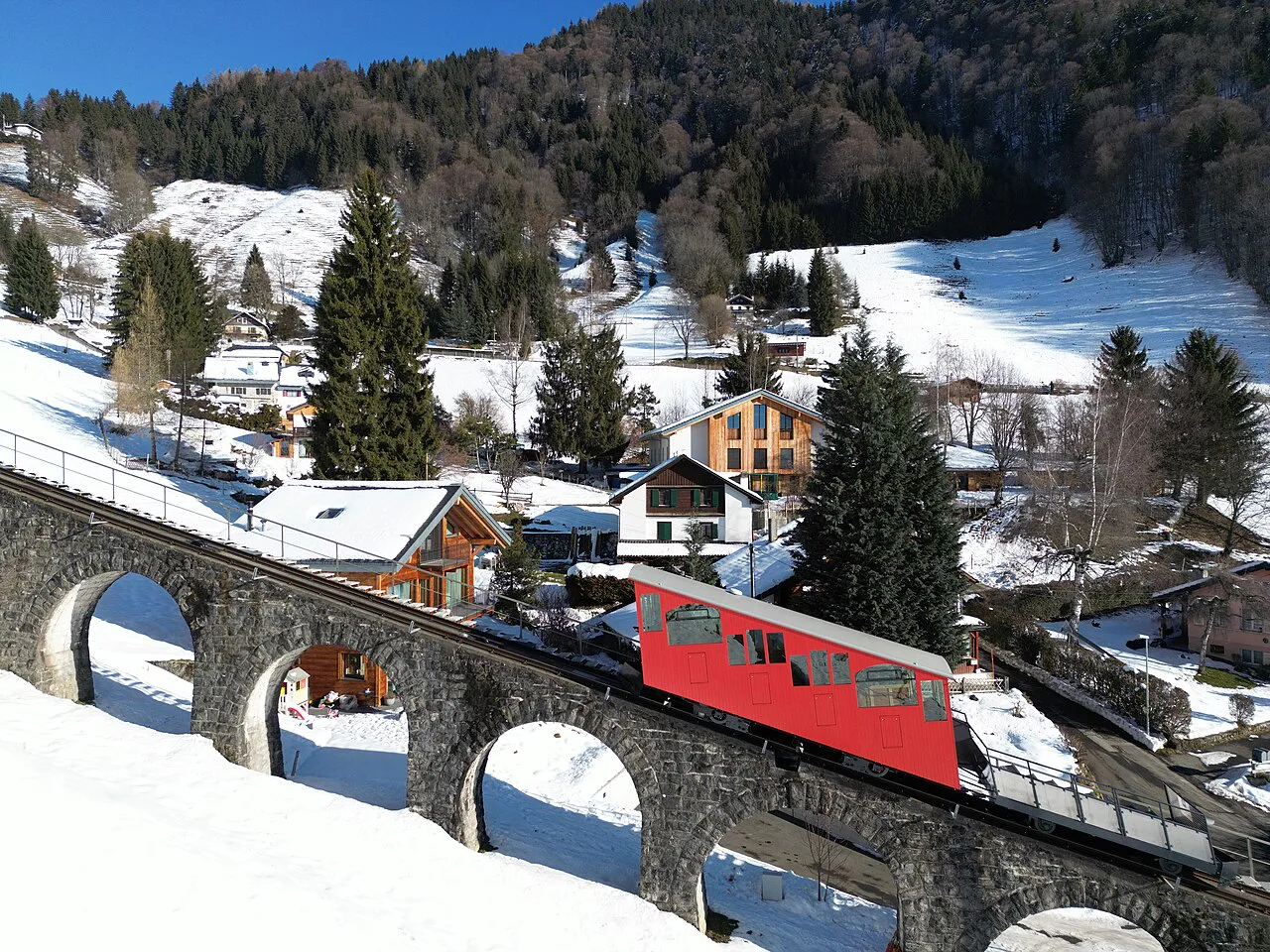
The climb itself is the attraction here: the vineyard terraces rise in tiers beside the track, and the lake stays in view as you go up. That makes this the more scenic of the two lines, even before you reach the top. Give it a half-day rather than squeezing it between other stops.
At the top of Mont-Pèlerin: the walk to the Plein Ciel tower
From Mont-Pèlerin, a 45-minute walk on foot leads to the Plein Ciel radio tower, where a 360-degree panoramic view rewards the effort. The walk is a straightforward leg-stretch, not a mountain route, but it does add time to the outing. Budget the walk in both directions if you plan to return by funicular.
This summit walk is the real reason to choose Mont-Pèlerin over Glion. Glion gives you the view from the village; Mont-Pèlerin makes you earn a wider panorama. If the weather is clear and you have the hours, the tower walk turns the ride into a proper half-day.
The Lavaux UNESCO terraces: why this is the scenic line
The terraced vineyards of Lavaux have been a UNESCO World Heritage Site since 2007, and the Vevey–Mont-Pèlerin line climbs right through them. That designation is the clearest signal that the landscape itself, not just the destination, is worth the ride. The funicular is one of the most direct ways to see the terraces without walking the whole slope.
If your trip is built around views and landscapes rather than checking off sights, this is the line to prioritize. It is the slower, more atmospheric option, and the vineyard setting is what separates it from the short hop to Glion.
Chardonne on the way down: a stop for a glass of Chasselas
A stop at Chardonne on the descent is worth building into the plan. The village sits along the funicular route, and it is the natural place to pause for a glass of Chasselas, the local white wine, before you ride back down to Vevey. Treating the return as a series of stops rather than a through-ride makes the most of the line.
Because the funicular passes through Chardonne, you can break the journey without arranging separate transport. Check the current departure pattern for the descent before you settle in.
Picking a line: viewpoint versus vineyard landscape
Choose Territet–Glion if your priority is a striking lake view with minimal time spent getting it. Choose Vevey–Mont-Pèlerin if you want the vineyard landscape, the UNESCO terraces, and a 45-minute walk to a 360-degree summit panorama. One is a quick hit; the other is a half-day.
A workable compromise is to ride Glion on a day when the rest of your Montreux plans fill the afternoon, and save Mont-Pèlerin for a day when the vineyards and the tower walk are the main event. Both start near the lake, so neither forces a long detour.
Recognizing the two base stations
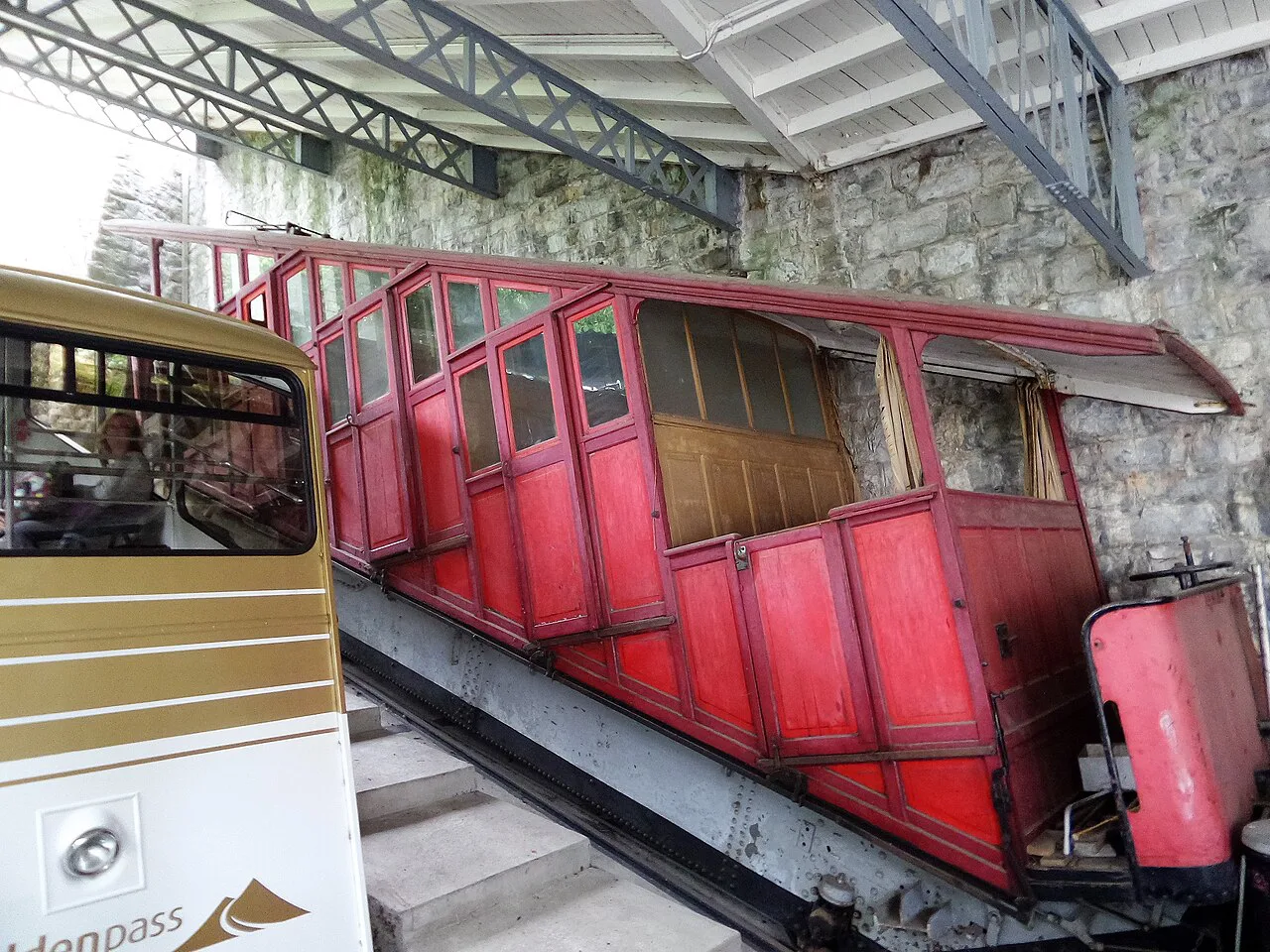
The Territet–Glion base station sits in Territet, below Montreux on the lake side, close to the shoreline. The Vevey–Mont-Pèlerin base is Vevey Funi, in Vevey at the other end of the stretch. Knowing which village you are in keeps you from heading to the wrong base.
Both stations are modest and easy to miss if you are scanning for a large terminal. Look for the funicular track rather than a big building.
Funicular or cable car: what the difference means here
A funicular is a rail line that climbs a steep slope on tracks, counterbalanced by a car going the other way. Both lines here are funiculars in that sense, which is why they feel like short railways rather than suspended gondolas. A cable car, by contrast, hangs from an overhead cable. That matters when you compare options for a Montreux Attractions day out, because the two types give very different rides.
If you specifically want a suspended ride, look elsewhere; these two lines are rail-bound. If you want the historic, ground-hugging climb with the lake falling away behind you, the funiculars deliver it.
Practical notes for planning the day
Confirm what your day looks like before you commit to the longer line, since the summit walk adds meaningful time. The Montreux old town and the shoreline make natural companions to a Glion morning.
Fares, timetables and seasonal operation for both lines are set by Transports Montreux-Vevey-Riviera, so check the official pages before you travel. Bring a layer for the top, where the air is cooler than at the lakefront.
Pairing a Funicular with the Rest of Your Day
A Territet–Glion ride fits neatly into a day built around the Montreux shoreline: up for the view, back down, and on with the afternoon. The Vevey–Mont-Pèlerin line works better as the centerpiece of a day, with the Lavaux terraces, the Plein Ciel walk and a stop in Chardonne filling it out.
Whichever you choose, check current fares and operating days with Transports Montreux-Vevey-Riviera before you set out. That single check keeps a good plan from running into an empty track.
Explore more Montreux guides
Frequently Asked Questions
What is the difference between the two Montreux-area funiculars?
Territet–Glion is a short 600 m climb to a plunging lake view. Vevey–Mont-Pèlerin is a 1,500 m ride through the Lavaux vineyards to Mont-Pèlerin, where a 45-minute walk reaches the Plein Ciel tower.
How long is the Territet–Glion funicular ride?
The line covers 600 m between Territet and Glion, making it a short ride that suits a morning or late-afternoon slot.
Where does the Vevey–Mont-Pèlerin funicular start?
It departs from Vevey Funi in Vevey and climbs toward Chardonne before reaching Mont-Pèlerin.
What can you see from Mont-Pèlerin?
The funicular passes through the Lavaux terraces, a UNESCO World Heritage Site since 2007, and from Mont-Pèlerin a 45-minute walk leads to the Plein Ciel tower and its 360-degree view.
Is a stop at Chardonne worth adding?
Yes, if you want to break the descent. Chardonne sits along the route and is the natural place to pause for a glass of Chasselas before riding back down to Vevey.
Is a funicular the same as a cable car?
No. A funicular runs on rails up a steep slope, while a cable car hangs from an overhead cable. Both of these lines are rail-bound funiculars.
How do I check fares and operating days?
Fares, timetables and seasonal operation are set by the operator and published on the official pages.
Sources
Notes for your Swiss city break
Optional updates to our Swiss city guides.
You might also like
Continue reading
More guides you'll find useful