Is Vevey Worth Visiting? A Swiss Riviera Guide
Vevey is worth visiting for its lakeside promenade, Chaplin's World, the Alimentarium and the Lavaux vineyards. Here's what you get, and who it suits.
On this page
Vevey is worth visiting if you want a compact Lake Geneva town with a flat promenade, Alpine views and two sights you will not find elsewhere in Switzerland: Chaplin's World at Manoir de Ban and the Alimentarium food museum. Give it a full day, or two nights if you want the Lavaux vineyards and the Mont Pèlerin viewpoint as well. Your strongest options are a museum morning followed by the lakefront in the afternoon, or the reverse if the light matters to you.
The town sits in the canton of Vaud on the northeastern shore of Lake Geneva, between Lausanne and Montreux, which makes it easy to reach by train and easy to leave again. Its layout splits into two halves you should plan separately: the flat quays along the water and the sloping streets of the center. Walkers with limited time should treat the promenade as the spine of the day and the Old Town as the loop off it.
Where Vevey Sits on Lake Geneva and How the Town Is Laid Out
Vevey faces south across Lake Geneva toward the French Alps, so the waterfront catches light most of the day and the mountains sit directly in the view. The town is small enough to cross on foot: the station sits above the lake, and a short downhill walk brings you to the quays. Plan your day around that slope, because every return to the station is uphill.
Two distinct zones matter for planning. The lakeside promenade is flat, paved and continuous, running past flowerbeds, sculptures and benches with the Alps across the water. The center climbs away from the shore through cobbled streets and small squares, which is where you spend time on foot rather than on a route.
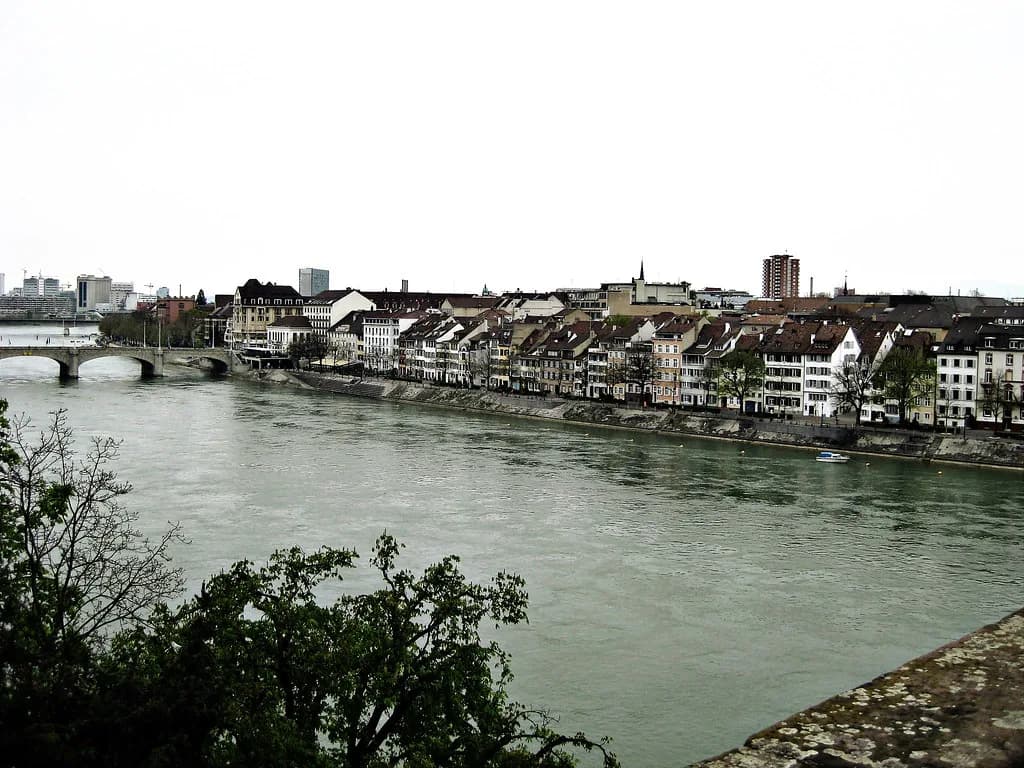
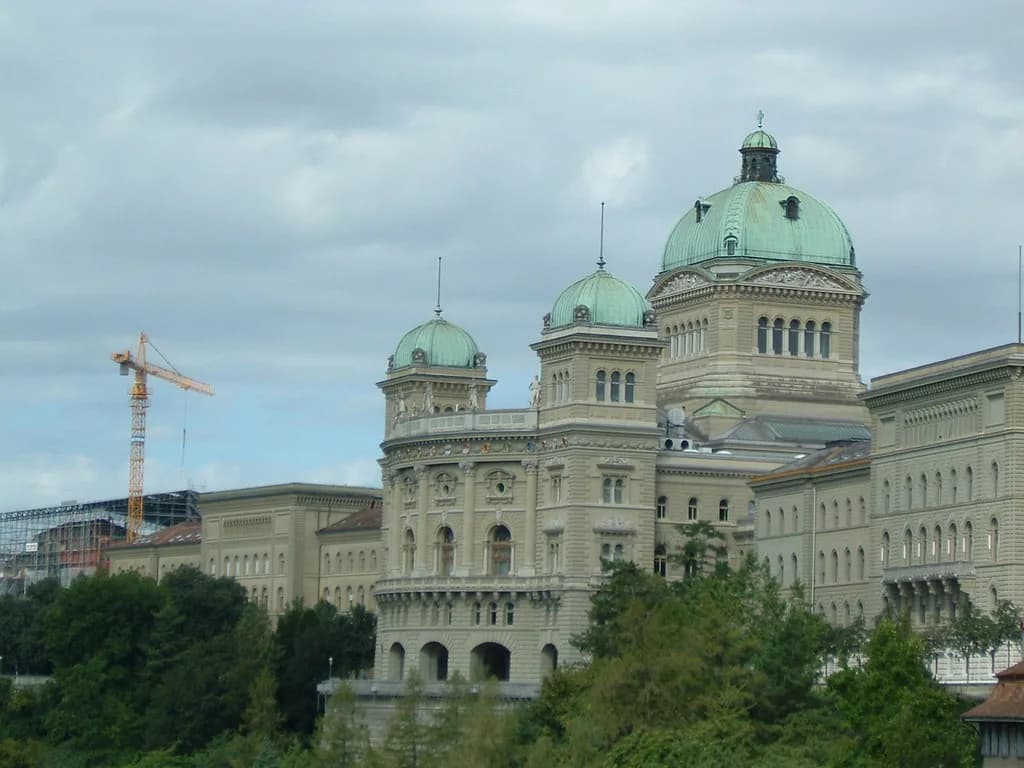
Trains from Geneva take roughly an hour and ten minutes to Vevey, and the ride along the lake is part of the appeal rather than dead time. Coming from Lausanne or Montreux the hop is short, which is why Vevey works well as a stop rather than a separate trip. If you are weighing several Swiss cities, the same question shapes is Basel worth visiting and is Bern worth visiting.
The Lakeside Promenade: The Fork, the Flowerbeds and the Alpine View
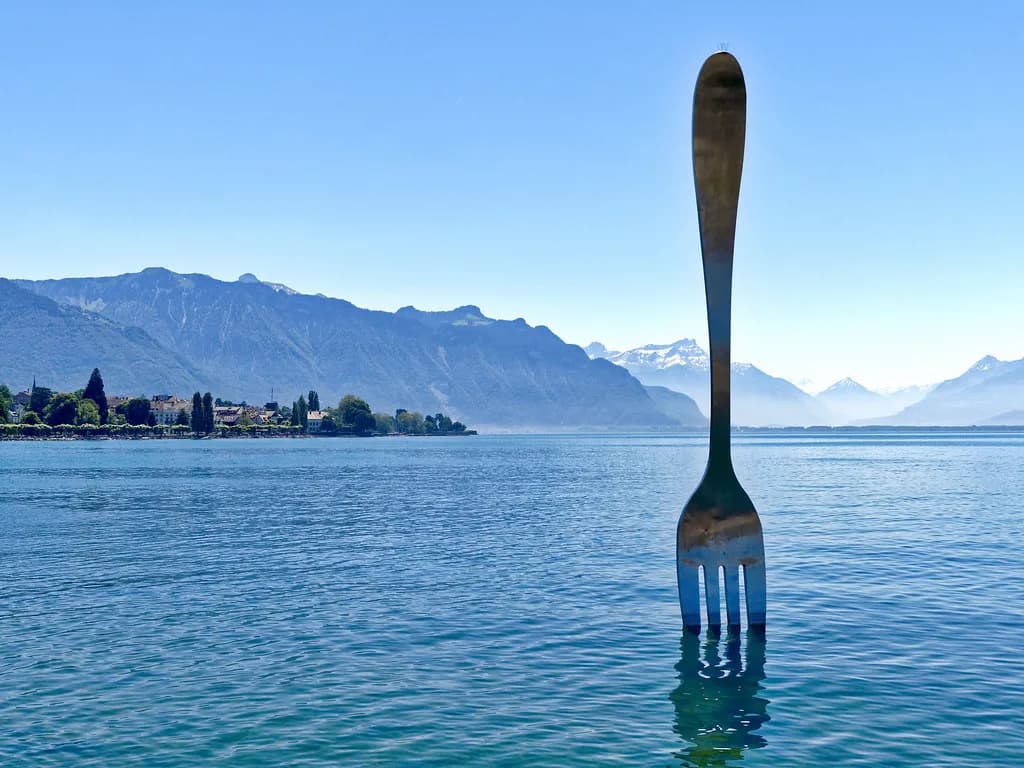
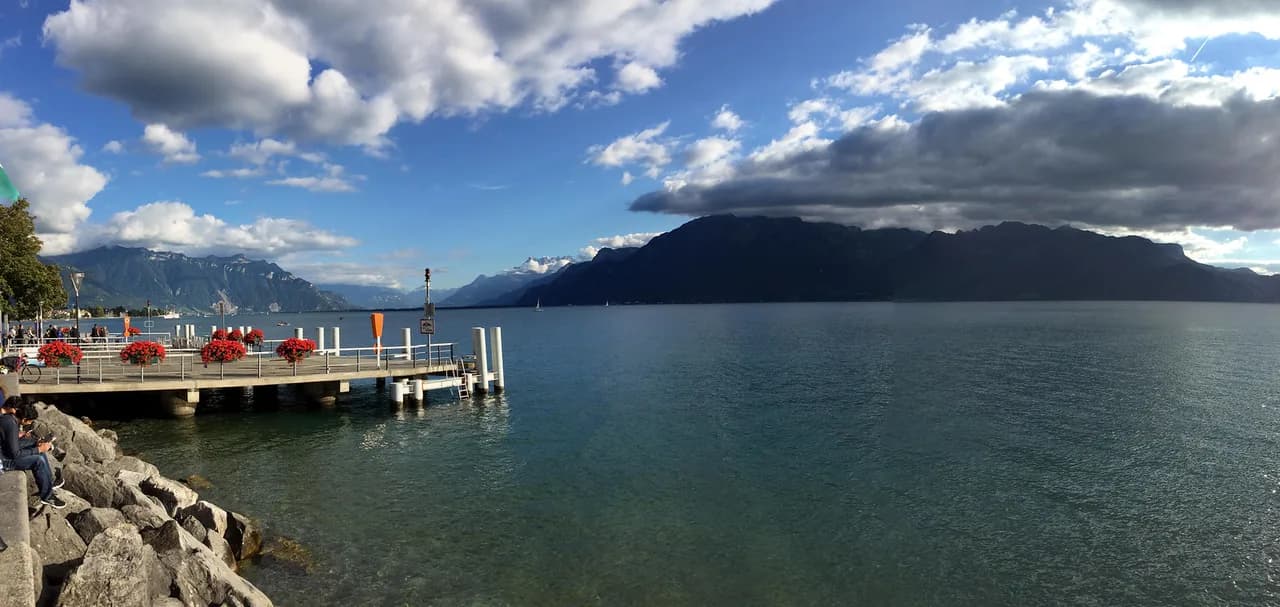
The promenade is Vevey's strongest free attraction and the reason many travelers rate the town above its size. It runs along the water past blooming flowerbeds, quirky sculptures and benches, with the Alps rising across the lake. The giant fork standing in the water near the Alimentarium is the obvious photo stop, and you will pass it naturally on a lakeside walk.
A statue of Charlie Chaplin stands along the promenade, a nod to the comedian who lived in the town for 25 years. Travelers consistently describe the long paved lakefront and the Alpine backdrop as the town's most beautiful feature, which is why an early-morning or late-afternoon walk here is worth protecting in your schedule. Allow about an hour for the full length at an unhurried pace.
The promenade costs nothing and needs no ticket, which makes it the best value in a town where museum admissions add up. Use it as the connective tissue of your day: walk it between sights instead of taking the train one stop.
Chaplin's World at Manoir de Ban: What the Museum Covers and How to Get There
Chaplin's World occupies Manoir de Ban, the family home where Charlie Chaplin lived, and combines the house's rooms with recreated film sets and exhibits on his career. The gardens look out over Lake Geneva and the Alps, so the visit is not only indoor. Budget a half day including travel, and treat it as the anchor sight of a Vevey trip rather than an add-on.
The museum sits above the town in Corsier-sur-Vevey rather than on the waterfront, so plan the trip as a separate excursion and look up the current bus connection and admission on Chaplin's World's own site before you go. That is one of the two moments in this guide where checking details pays off.
The Alimentarium and the Giant Fork in the Lake
The Alimentarium is a museum devoted to food and nutrition, run in the town where Nestlé has its headquarters, and it stands right on the lakefront next to the fork sculpture. Because it sits directly on the promenade, it fits neatly into a lakeside morning without a detour. Pair it with the waterfront walk rather than scheduling it as a standalone stop.
Check the museum's current opening days and admission on its own website, since neither is fixed in any way you should plan around from memory. If a food museum is not your interest, the fork and the promenade outside still justify the walk.
Vevey Old Town, Grande Place and the Market Hall
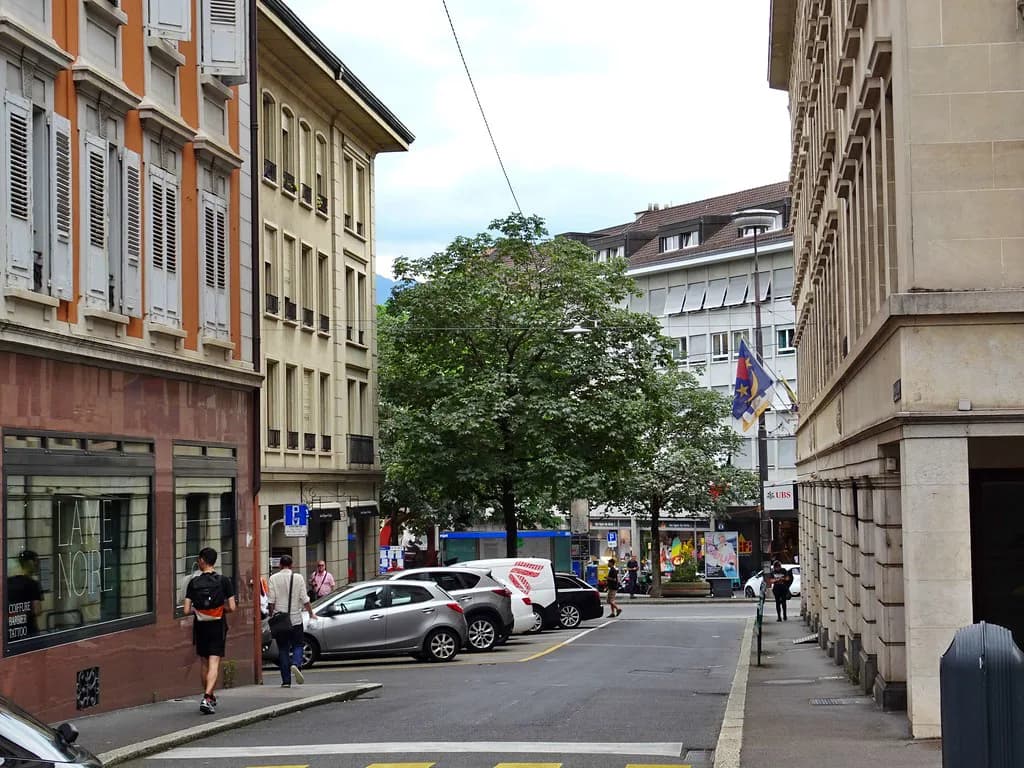
Behind the waterfront, the Old Town climbs through cobblestone streets, colorful facades and small boutiques, with the Grande Place counted among Switzerland's largest open market squares and a market hall nearby. The market is described as running on Tuesdays and Saturdays, so a weekday visit can still include it if your dates line up. Otherwise the squares and streets are the draw on their own.
Treat the Old Town as a one-hour loop rather than a full sight in itself: the streets reward wandering, but the specific buildings are not the reason to come. If shopping is part of your plan, the compact center keeps it manageable in an afternoon.
The Grande Place and the market hall give the center a public, everyday character that the waterfront alone does not, and both sit within easy walking distance of the quays. Combine them with a coffee stop rather than treating them as a separate outing.
Musée Jenisch and the Art Side of Town
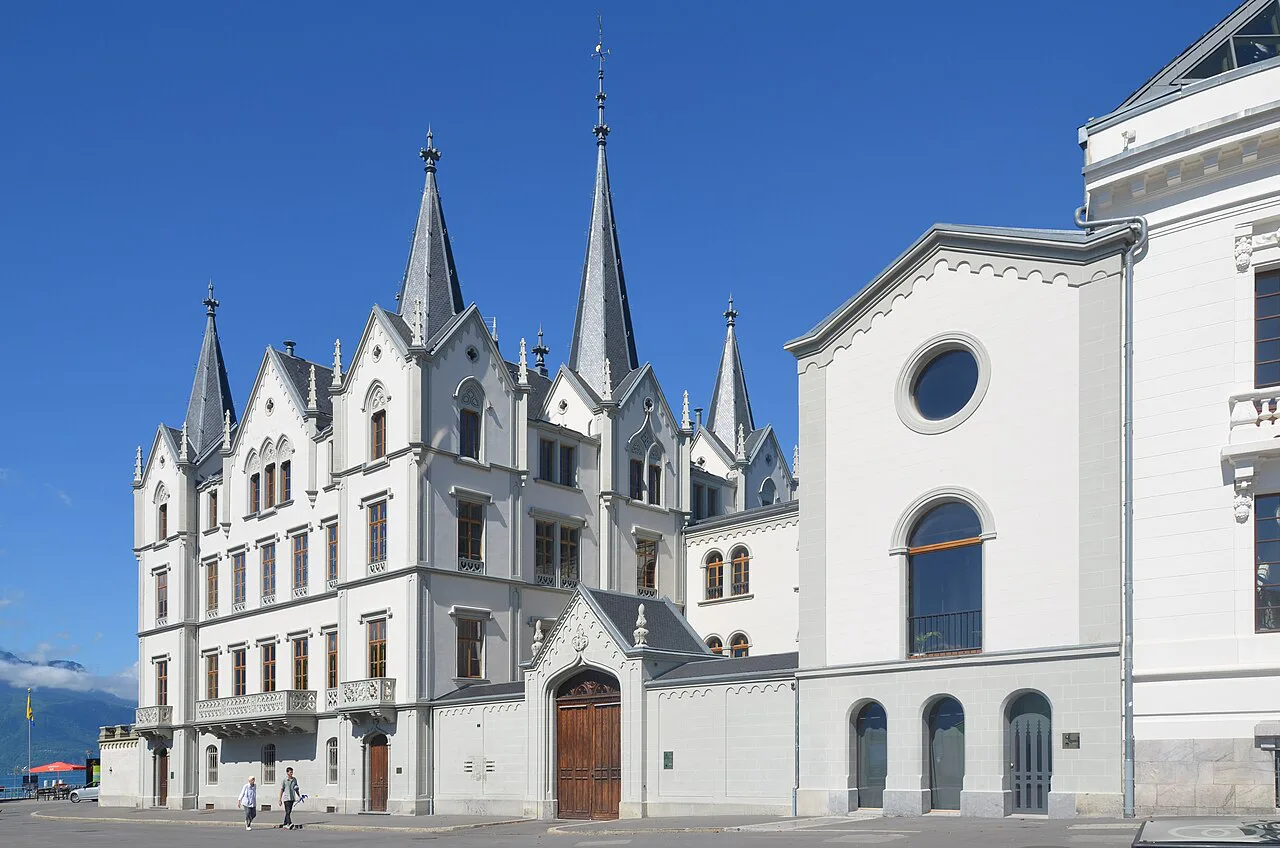
The Musée Jenisch is Vevey's art museum, holding works on paper and a broader collection, and it gives the town a cultural stop beyond Chaplin and food. It suits a rainy half day or an afternoon when the lake wind picks up. Check its current opening days and admission before you build a day around it.
If you only have one day, choose between Chaplin's World and the Musée Jenisch rather than trying both: they sit in different parts of town and each deserves unhurried time. Travelers with two days can comfortably do both.
The Funicular to Mont Pèlerin and the View from the Top
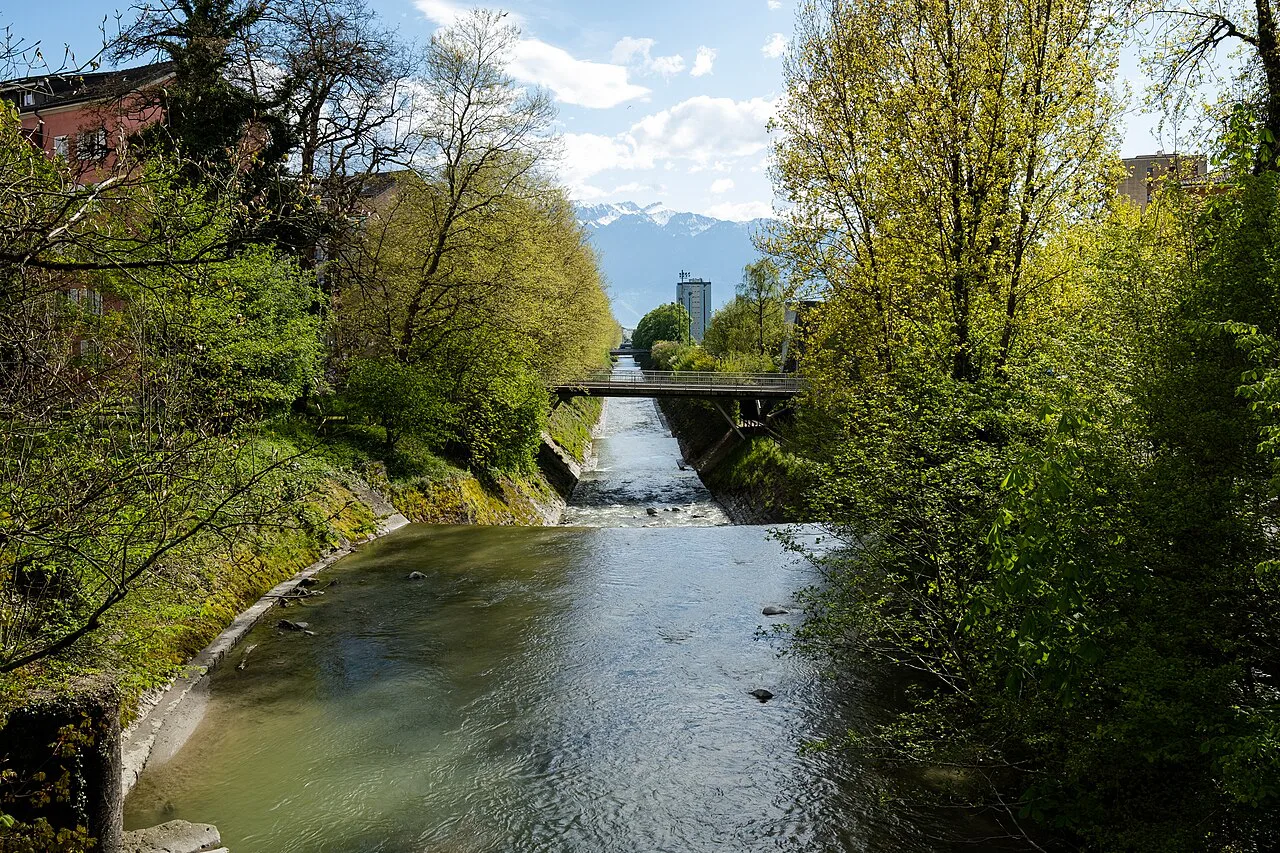
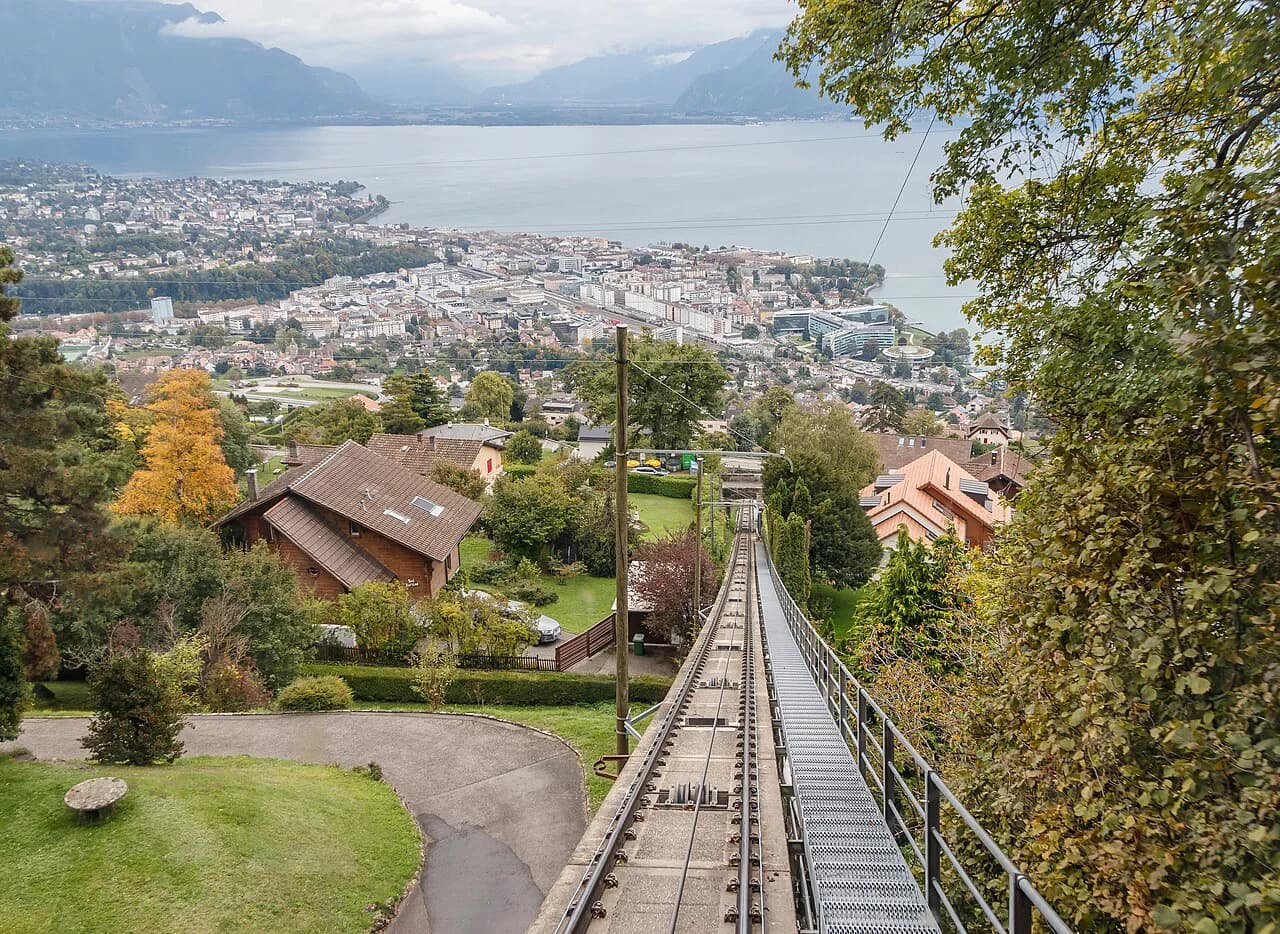
The funicular leaves from Vevey and climbs via Chardonne to Mont Pèlerin, which the source describes as taking about 45 minutes in total and rewards you with views over Lake Geneva, the Lavaux terraces and the Alps. Go up on a clear day; the whole point is the view, and cloud can erase it.
Check the funicular's current operating days and fares before you commit an afternoon to it, since mountain transport runs to its own seasonal rhythm. If the weather closes in, the promenade and the museums are the reliable fallbacks.
The Lavaux Vineyards, a UNESCO World Heritage Site Above the Lake
The terraced vineyards of Lavaux rise between Vevey and Montreux and are a UNESCO World Heritage site, with small winemaking villages and a wine trail winding along the hills above the lake. This is the landscape that makes the Swiss Riviera distinctive, and it is best seen on foot rather than from a train window.
Wine tastings and vineyard experiences in the area need booking, and many sit outside the town itself, so a half day is realistic for one terrace walk with a tasting. The Chasselas grape is the local specialty.
How Many Days Vevey Needs: Half a Day, a Full Day or Two
Half a day covers the promenade, the giant fork and a walk through the Old Town, which is the minimum that justifies the trip. A full day adds one museum, and Chaplin's World is the better choice if you want something specific to Vevey rather than general art.
Two nights let you spread Chaplin's World, the promenade, the Old Town and either the Mont Pèlerin funicular or a Lavaux walk across separate mornings. Trying to fit all of it into one day produces a rushed sequence of short stops.
Vevey or Montreux: Which Base Fits Your Trip
Vevey is the quieter of the two, and the source notes it draws fewer crowds than nearby hotspots. Montreux, about 20 minutes away by train or a lakeside stroll, has the Belle Époque facades and the more polished resort feel. Choose Vevey for calm and Montreux for buzz and a wider spread of places to eat and stay.
Both towns put you on the same rail line, so the choice matters less than it first appears: you can sleep in one and spend an evening in the other. Travelers who want a lakefront base with a short commute to the vineyards tend to prefer Vevey.
Vevey or Lausanne: Small-Town Calm Against City Energy
Lausanne is the larger city, with steeper streets, markets, cafés and a livelier everyday rhythm, while Vevey is small enough to cross in twenty minutes. If you want a city base with evening options, Lausanne wins; if you want the lake and the vineyards close at hand, Vevey does.
The practical trade-off is time. Vevey's compact size means less walking between sights, while Lausanne offers more to fill a second or third day. For a two-night stop on a longer Swiss trip, Vevey is the easier town to enjoy without a plan.
When to Go and What the Seasons Do to a Lakeside Break
Vevey's lakeside position means the promenade is pleasant in spring and autumn, when the light on the Alps is clearest and the terraces are less crowded. Summer brings the busiest quays and the warmest walking, while winter quiets the town but shortens the daylight for viewpoints.
The Fête des Vignerons is the exception to any seasonal rule: it takes over the lakeside and the stadium roughly once every 20 to 25 years to honor the region's winegrowers. Check whether it falls in your year rather than assuming it will.
Who Vevey Suits, and Who Should Look Elsewhere
Vevey suits travelers who want a walkable lake town with one strong museum, a free promenade and vineyards within reach, and who are happy with quiet evenings. It also works well for a couple of nights between Geneva and Montreux.
Look elsewhere if you want a big-city break with nightlife and a long list of sights, or if you have only one day and no interest in Chaplin or food museums; in that case a base in Lausanne or Montreux delivers more. Vevey's appeal is precisely its small scale, which is also its limitation.
Costs and Money-Saving Options for Vevey Sights
Museum admissions are the main cost of a Vevey day, and no single card is documented as covering Chaplin's World, the Alimentarium or the Musée Jenisch. Check each museum's current admission on its own site, and remember that prices in Switzerland are quoted in francs.
Pass benefits exist in the wider region: entry to Chillon Castle is free with a Swiss Travel Pass, and the Montreux Riviera Card or Swiss Travel Pass brings discounts at museums and sights in Montreux. Do not assume those apply at Vevey's own museums without checking.
The promenade, the fork sculpture and the Old Town streets cost nothing, so a low-cost Vevey day is genuinely possible if you skip the museums. That is a real plan, not a consolation prize.
Getting There and Where It Sits Between Geneva, Lausanne and Montreux
Vevey sits between Lausanne and Montreux on the Lake Geneva rail line, roughly an hour and ten minutes by train from Geneva's main station. Driving takes about the same time, but the train along the water is the more rewarding approach.
From Geneva airport, expect about an hour and a quarter by train with a connection at Lausanne. Once in Vevey, everything in this guide is walkable or a short local trip, so you do not need a car.
Is Vevey Worth It? The Answer for Your Trip
Yes, for a day or two, and especially if you want a calm lakefront base with a distinctive museum and vineyards on the doorstep. Book Chaplin's World and the promenade as your core day, add the Old Town and a viewpoint if you have a second, and leave the shopping and the funicular for the spare hours.
If you are choosing between Swiss towns for a short break, compare the alternatives directly: is Basel worth visiting and is Bern worth visiting both ask the same question Vevey asks. The honest answer for Vevey is that it rewards travelers who want small-scale and lakeside rather than a full city itinerary.
Explore more Vevey guides
Frequently Asked Questions
Is Vevey worth visiting?
For most travelers, yes, provided you give it at least half a day. The lakeside promenade with its Alpine view, the fork sculpture, the Old Town and Chaplin's World give the town a coherent day of things to do. It suits travelers who want a calm lake town rather than a city break. If you have only a few hours and no interest in the museums, use it as a stop between Lausanne and Montreux instead.
Which is better, Vevey or Montreux?
They serve different moods. Montreux has the Belle Époque resort feel and more places to eat and stay, and it is about 20 minutes away by train or along the lake. Vevey is quieter, less crowded and closer to the Lavaux vineyards. Pick Vevey for calm and lakeside walks, Montreux for a livelier base.
Which is better, Lausanne or Vevey?
Lausanne is the better base if you want city energy, markets, cafés and more to fill several days. Vevey wins if you want a compact walkable town with the lake and vineyards close by. Vevey is easier to enjoy without a plan because the distances are short.
Is Vevey worth visiting for a day?
A full day covers the promenade, the fork, the Old Town and one museum, which is Chaplin's World if you want something specific to Vevey. Half a day is enough for the promenade and the Old Town alone. If you also want the Mont Pèlerin funicular or a Lavaux walk, plan on two nights.
How many days do you need in Vevey?
Half a day for the promenade, the fork and the Old Town; a full day to add Chaplin's World or the Alimentarium; two nights to add the Mont Pèlerin funicular or a Lavaux vineyard walk. Trying to do all of it in one day produces a rushed sequence of short stops.
What is Vevey famous for?
It is known as Charlie Chaplin's longtime home, the site of Chaplin's World at Manoir de Ban, and the headquarters town of Nestlé. The Alimentarium food museum and the giant fork in the lake follow from that food-industry identity, and the surrounding Lavaux terraces are a UNESCO World Heritage site.
How do you get to Vevey from Geneva?
By train from Geneva's main station, which takes roughly an hour and ten minutes along the lake. From Geneva airport, expect about an hour and a quarter with a connection at Lausanne. Driving takes about the same time, but the rail route along the water is the more rewarding approach.
When is the best time to visit Vevey?
Spring and autumn give clear light on the Alps and quieter terraces along the promenade, which suits walking and vineyard views. Summer is the busiest and warmest, while winter shortens daylight for viewpoints. The rare Fête des Vignerons festival takes over the town roughly once every 20 to 25 years, so check whether it falls in your year.
Sources
Notes for your Swiss city break
Optional updates to our Swiss city guides.
You might also like
Continue reading
More guides you'll find useful