
Le Flon, Lausanne: What to See and Do in the City's Modern District
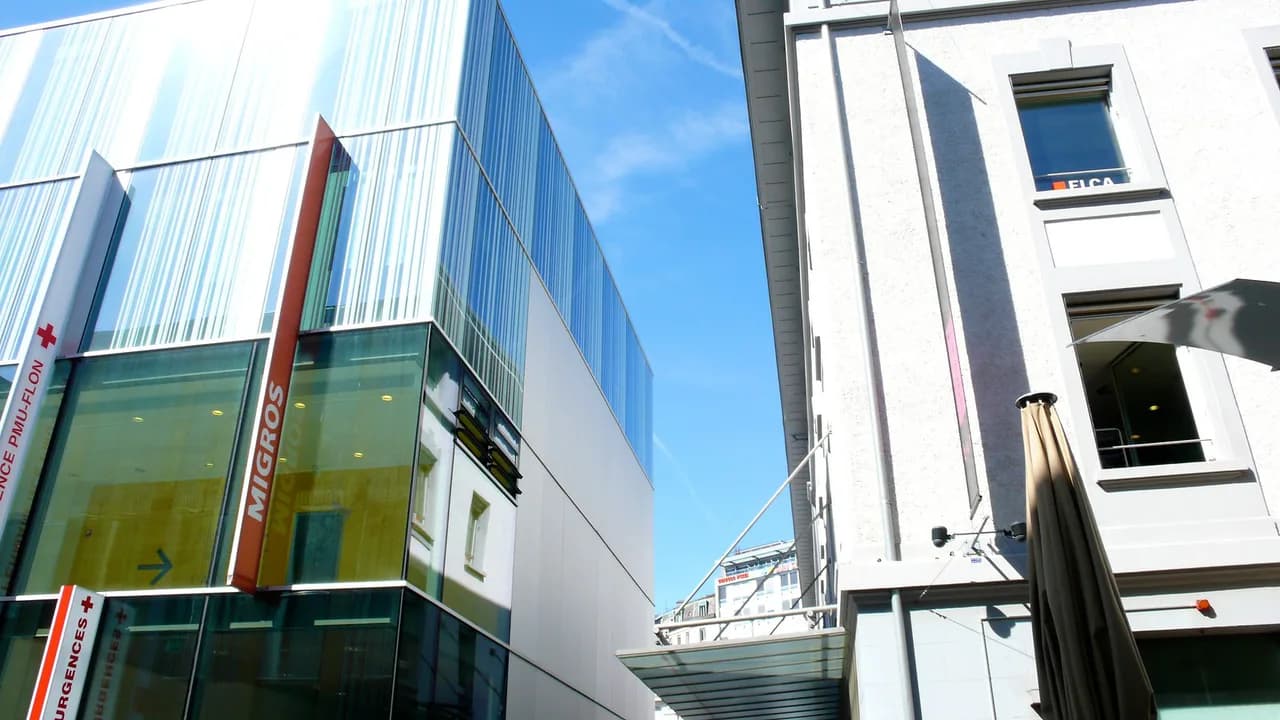
Le Flon is Lausanne's modern counterweight to the medieval old town: a district of former warehouses, rebuilt in reinforced concrete, that now holds shops, restaurants, bars, cinemas, a bowling alley and exhibition spaces. The tourism office calls it the heart of Lausanne, and it is the one part of the city where the layout feels like a grid rather than a climb.
Come here for a half-day of shopping and design browsing, an evening out, or a flat, rain-proof stretch between the station and the old town. Skip it if your priority is cobbled streets and monuments, because the historic sights of Lausanne sit uphill in La Cité.
What Le Flon is and why it looks so different from the rest of Lausanne
The district starts at Place de l'Europe and spreads out as an orthogonal grid of flat-roofed buildings, many of them put up in reinforced concrete, a technique still new when the area was reclaimed from the Flon valley between 1874 and 1915. That geometry is the reason it reads as modern: straight streets and uniform rooflines instead of the winding hillside lanes of the Cité.
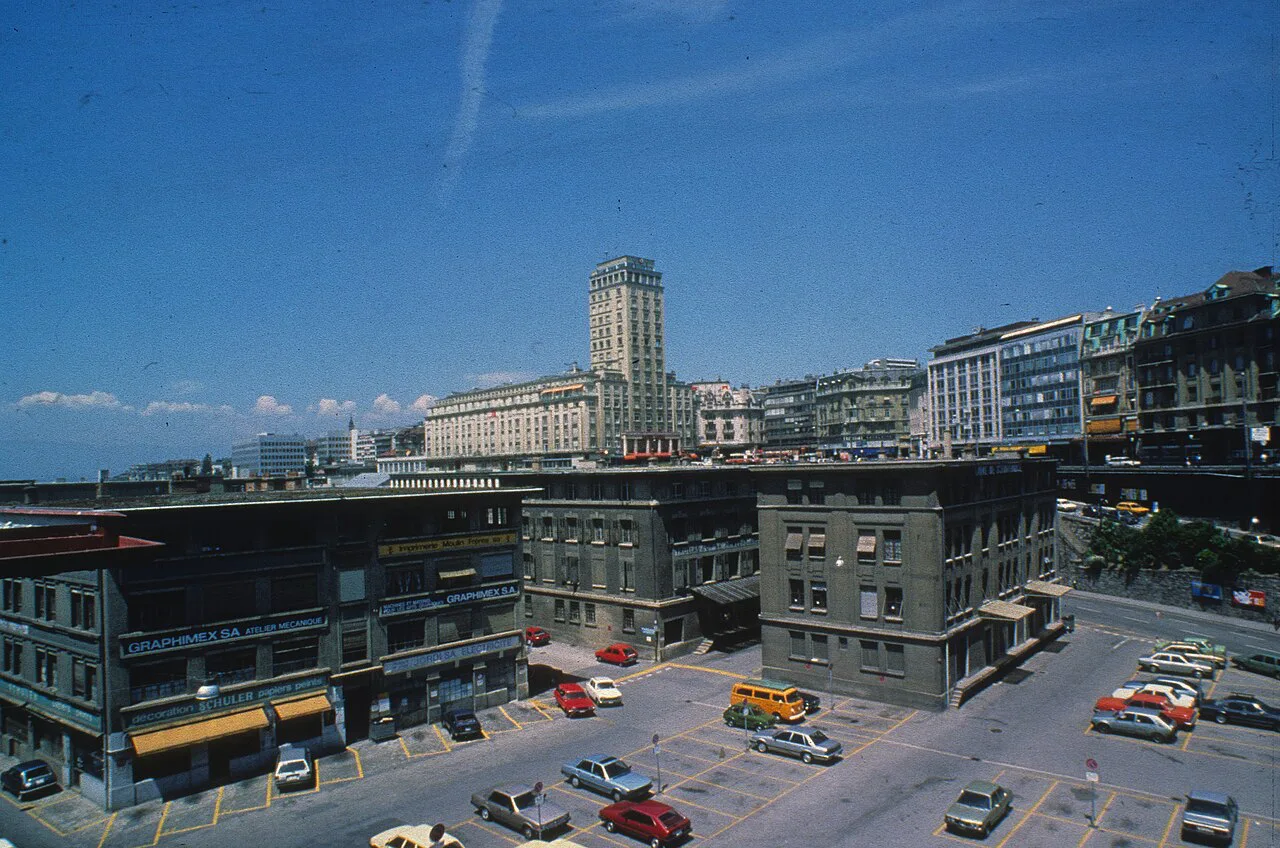
Its previous life was industrial. The Lausanne-Ouchy warehouses went up in 1894, and after the area declined it was reinvented as a shopping and going-out quarter, so the appeal today is contemporary architecture, retail and nightlife rather than centuries-old monuments.
For a broader look at how the districts fit together, from the old town to the lakefront, the city's neighborhood guides are the place to start before you commit a day to any single quarter.
Where Le Flon sits: Esplanade du Flon, Place de l'Europe and the Bel-Air Tower
The official address of the quarter is Esplanade du Flon, 1003 Lausanne, and that square is the practical center of gravity, ringed by bars, restaurants and shops. Use it as your meeting point rather than a single street.
Just beside the district stands the Bel-Air Tower, which takes its cue from American skyscrapers and is described by the tourism office as Switzerland's such building. It is easy to spot from a distance and makes a useful orientation marker when you come out of the metro.
How the district was built: warehouses, reinforced concrete and a shift from industry to culture
The warehouses were built in 1894 on land reclaimed from the valley floor, and the flat roofs and concrete frames were an engineering statement of their day. That building stock is what gives Le Flon its coherent, slightly severe look, and it is why the streets feel more like a planned quarter than an organically grown one.
Industry eventually gave way, and the district's focus shifted toward culture. Today fashion boutiques, sports shops and shopping centers line the streets, with galleries and exhibition spaces filling in the gaps, so the area works as a browsing circuit even in poor weather.
The district's own website keeps a current agenda and a directory of shops, restaurants and cultural tenants, which is the most reliable way to see what is operating when you visit.
Getting there: Lausanne-Flon station on Metro M1 and M2
Le Flon has its own metro station, Lausanne-Flon, served by both the M1 and M2 lines, which makes it one of the easiest parts of the city to reach without walking uphill. Arriving underground puts you directly in the middle of the quarter.
If you arrive by mainline train, the city's station district is a short onward trip on the metro; that area deserves its own time, and the Lausanne Gare guide covers how the transport network knits together from there.
Drivers should note that the quarter publishes parking among its services, but a metro ride avoids the one-way grid and the search for a space, and Lausanne-Flon station serves the quarter directly.
What to do: shops, cinemas, bowling, galleries and exhibition spaces
Shopping is the daytime draw: fashion boutiques, sports shops and shopping centers fill the streets around the square, alongside design and furniture shops that reward slow browsing. The mix suits readers who want contemporary retail rather than souvenirs.
Beyond retail, the quarter packs in restaurants, bars, clubs, cinemas and a bowling alley, plus exhibition spaces that keep it busy from midday into the night. That concentration is why it works as a fixed evening base rather than a passing glance.
For a fuller list of what Lausanne offers beyond this one district, from lakefront promenades to museums, the city's things to do guide helps you slot Le Flon into a wider plan.

Design and architecture stops, including the Galerie du Port Franc and Vaga-Bon-Café
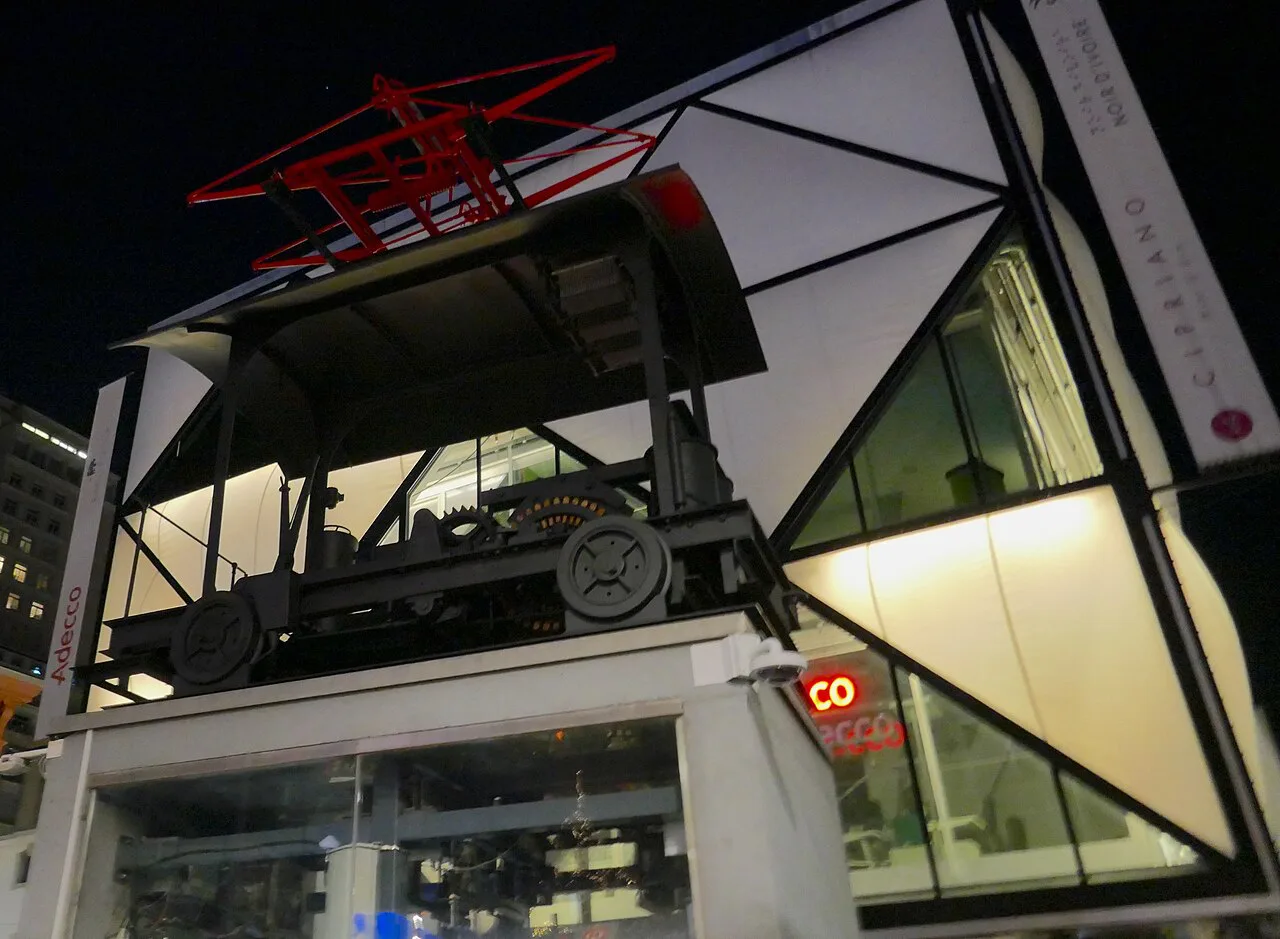
The Galerie du Port Franc occupies a former factory hall in Le Flon and deals in vintage furniture, with only authentic, original pieces on sale. It is the strongest single stop for design-minded visitors and a good reason to cross the district rather than stay on the Esplanade.
At the end of the same hall, Vaga-Bon-Café serves local coffee, plant-based milks, fruit juices and local lemonades, making it a natural pause inside the design circuit. Pair the two and you have a compact architecture-and-design detour.
The district website also lists studios, art workshops and graphic design businesses among its tenants, which is useful if you want to see what is currently open before making the trip.
Eating and drinking around the square: bars, restaurants and terraces
The Esplanade and its surrounding streets are lined with trendy bars and restaurants, and the tourism office treats the square as the natural place to take a break. Expect a contemporary, going-out crowd rather than old-town taverns.
Specific venues come and go, so the quarter's own directory is the honest way to check what is trading now, including names such as Tartares & Co. Venue details and prices are best confirmed on each venue's own page before you go.
If you would rather eat by the water, the lakefront district is a metro or bus ride away, and the Ouchy guide sets out its own eating and strolling options.
Places to stay in and around the district
Le Flon is a practical base if you want bars, shops and the metro on your doorstep, and the quarter lists a hotel among its services. Booking platforms show current room rates, and the district directory is the place to confirm which properties are operating.
A quieter alternative is the station area, where the Lausanne Gare guide explains how that district connects to the rest of the city, including arrivals on services such as TGV Lyria.
For a calmer, more residential feel a short climb from the center, Sous-Gare is worth considering if nightlife noise matters to you.
Bessière Bridge and the metro crossing: an urban viewpoint
Bessière Bridge is the district's best free viewpoint: from the bridge you look down the Flon's main street toward the sunset, and from below you get a different angle on the bridge itself with the metro crossing it. It is a photo stop for people who like infrastructure and geometry rather than panorama terraces.
Time it for late afternoon if you want the light, and keep an eye on metro movements, since the crossing trains are part of the appeal. The walk there is short and flat from the Esplanade.

Walking from Le Flon to Palud square, La Cité and Lausanne Cathedral
Walk uphill from Le Flon and you reach Palud square, which holds the town's oldest fountain, topped by a statue of justice. Its clock runs animated scenes from Vaud history every hour from 9:00 to 19:00, and the square hosts a country market on Wednesday and Saturday mornings plus a craft market on the first Friday of the month.
Above that lies La Cité, the medieval quarter of cobbled pedestrian streets, small bistros and craft shops, with the cathedral, St-Maire Castle and the Old Academy as its monuments. Plan the climb as a slow 20 to 30 minutes with stops rather than a direct march.
Lausanne Cathedral has dominated the skyline for more than eight centuries, and its tower opens a panorama over the Cité roofs, Lake Geneva and the Alps. Note that renovation work means the south transept's rose window and stained glass are inaccessible until spring 2027, so the tower view is the draw for now.
Who Le Flon suits, and who should plan around it
Le Flon suits travelers who want contemporary architecture, easy retail, a flat walk and a lively evening without climbing the city's hills. It also works well for a rainy afternoon, when shops, galleries and cinemas keep you indoors and connected.
It suits less if you came for medieval streets, quiet courtyards and historic houses; those are uphill in the Cité, and Le Flon's own supply of old monuments is thin. Treat the district as a contrast rather than a replacement for the old town.
Families and design fans get the most out of it by day, while evening visitors should expect a busy bar scene rather than a calm promenade.
How much time Le Flon needs in a Lausanne itinerary
Give Le Flon two to three hours for shops, the Galerie du Port Franc and a coffee, or a full evening if you plan dinner and a cinema. Adding the climb to Palud square and the cathedral makes a comfortable half-day on foot.
For a structured version of that day, a wider itinerary helps sequence the old town, the lakefront and the modern quarter without backtracking.
Season matters mainly for light and terraces; the best time to visit guide covers Lausanne's weather patterns and busier periods.
Plan Your Visit to Le Flon
Le Flon rewards a deliberate visit rather than a detour: arrive by metro at Lausanne-Flon, use the Esplanade as your base, and walk the grid for shops, design galleries and a drink before climbing to the old town.
Build the day around what is actually open by checking the district's agenda and directory, then match it to your budget and appetite for nightlife. That way the modern quarter complements the Cité instead of competing with it.
Frequently Asked Questions
What is Le Flon in Lausanne known for?
It is the city's modern district: former warehouses rebuilt in reinforced concrete and now filled with shops, bars, restaurants, cinemas, a bowling alley and exhibition spaces. It is also the home of the Bel-Air Tower and the Galerie du Port Franc.
How do I get to Le Flon in Lausanne?
Take the metro to Lausanne-Flon, which is served by both the M1 and M2 lines and puts you directly in the quarter. Coming from the mainline station, connect onward by metro rather than driving into the one-way grid.
Is Le Flon worth visiting?
Yes if you want contemporary architecture, retail, design galleries and an evening out in a compact, flat area. It is less compelling if your priority is medieval streets and monuments, which are uphill in the Cité.
What can you do in Le Flon besides shopping?
Browse the Galerie du Port Franc and pause at Vaga-Bon-Café, catch a film or a game of bowling, and photograph the metro crossing from Bessière Bridge. The district's own directory lists current cultural tenants and events.
How long does it take to walk from Le Flon to Lausanne Cathedral?
Allow roughly 20 to 30 minutes uphill on foot, with stops at Palud square and through La Cité along the way. The climb is steady rather than long, so plan it as a slow stroll.