
Ouchy, Lausanne: A Guide to the Lakefront District
Ouchy is Lausanne's lakefront district, set directly on Lake Geneva at the bottom of the city's long slope. Its core is small: a harbor, a tree-lined quay, a castle tower that now houses a hotel, and Olympic Park with the Olympic Museum beside it. Plan on half a day here, and treat it as the relaxed counterweight to the cathedral hill uptown.
The district rewards walking rather than ticking off sights. The Quai d'Ouchy esplanade runs about one kilometer past the harbor, the castle and Olympic Park, with the Chablais Alps across the water on clear days. Almost all of that is free, which matters in a country where a coffee can cost as much as a museum ticket.
Why Go to Ouchy: The Short Answer
Come to Ouchy for the lake. The combination of a working harbor, paddle steamers, a landmark castle and mountain views gives you a concentrated dose of the Léman shoreline in a few flat blocks. It is also the easiest part of Lausanne to enjoy without a plan.
The trade-off is that Ouchy is not the historic old town. Its appeal is scenery and strolling, not dense sightseeing, so travelers who want museums and medieval lanes should pair it with the city center rather than spend a whole day at the water.
Where Ouchy Sits in Lausanne
Lausanne climbs steeply from the lake, and Ouchy occupies the bottom step. Uptown you find the station area and the pedestrian center; downhill is the water, with Ouchy as the natural terminus of that descent. The two levels feel like different towns, and the metro that links them is the backbone of getting around.
That geography shapes how you plan a day. Many visitors base themselves near the station and ride down to Ouchy, then walk the quay and take the metro back up. If you are arriving by long-distance train, the arrival point is the station district, so build the descent into your first afternoon rather than doubling back.
The Quai d'Ouchy Walk
Start on the Quai d'Ouchy, the lakeside esplanade lined with knobby sycamore trees. The walk is roughly one kilometer and passes Olympic Park, the castle, the harbor and open lake views in that order, depending on which end you begin. Flat, paved and short, it suits anyone who can stroll for twenty minutes.
Give the quay more time than the distance suggests. Benches face the water, the flower beds along the promenade change with the season, and the mountain panorama across the lake is the main event. A brisk crossing takes about fifteen minutes; a proper wander with stops takes an hour or more.
Olympic Park and the Olympic Museum Grounds
Olympic Park sits along the quay at the edge of Ouchy, with the Olympic Museum beside it. The park is free to walk through and holds a garden, a fountain, a pavilion and statues of athletes in motion. The museum itself anchors Lausanne's Olympic identity; the International Olympic Committee is headquartered in Vidy, south of the city.
The park is the part that fits a short visit. Even if you skip the museum interior, the grounds give you a green pause between the quay and the harbor, and the open lawn frames the lake. Check the museum's own site for current opening days and admission before committing an afternoon to it.
Château d'Ouchy: The Medieval Tower That Became a Hotel
The Château d'Ouchy is the historic centerpiece of the district, a castle on Place du Port whose tower rises straight from the shoreline. A Bishop of Lausanne built the original fortress in 1170, and it served later bishops before becoming a prison. The tower burned in 1609, was rebuilt in 1889 and converted into a hotel in 1893, and sections of the tower are original to 1177.
You cannot wander the building as a sight, because it operates as a hotel with restaurants, a bar and a spa. What you can do is admire the exterior, the vine-covered stonework and the setting from the quay. Treat it as architecture and a photo stop, not an attraction with a turnstile.
Place de la Navigation and the Harbor
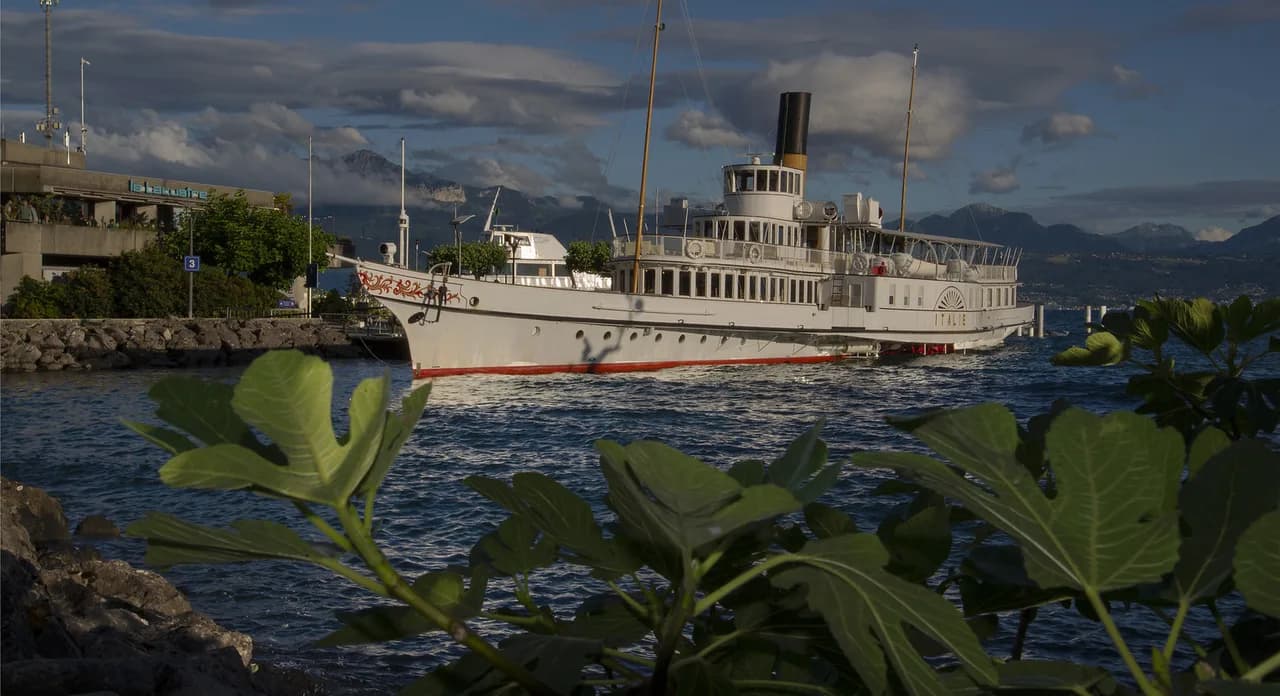
The harbor centers on Place de la Navigation, a square wrapped around the marina, with neighboring Place du Pont close by. It is the social heart of Ouchy: locals play Nine Men's Morris on the outdoor boards, families idle away warm afternoons, and boats come and go. The historic paddle steamers of Lake Geneva still leave from the Port of Ouchy in the warmer months.
Walk the quay edges rather than just the square. Place du Général-Guisan and Quai de Belgique frame the water with flower beds, and the moored steamer Helvetie sits along Quai de Belgique as a piece of working harbor history. Keep an eye on your footing near the moorings, and expect company on sunny weekends.

Views Across Lake Geneva to the Chablais Alps
Ouchy faces the widest stretch of Lac Léman, and the far shore is French: the Chablais Alps rise beyond the water. On clear days the panorama takes in those peaks, and the lake's crescent stretches southwest toward Geneva. The best light usually comes from a bench on the quay or from the harbor's eastern edge, where the marina and mountains line up.
Cloud and haze are part of the picture, so do not schedule your lake views to the minute. Build in a flexible hour and take the walk when the sky opens. The views are typical scenery rather than a guarantee, and a gray afternoon still delivers the harbor atmosphere.
Eole and Other Details Along the Water
Inside the harbor stands Eole, a crescent-shaped sculpture by Clelia Bettua that doubles as a wind vane about twenty meters tall, helping boats read the wind as they come in. It is the kind of small landmark that rewards a second look as you circle the marina.
Wildlife and gardens fill the gaps between the big sights. Mandarin ducks have been spotted in the shallows of Lake Geneva here, and the tulips and pansies along the promenade are planted for the season. Slow down at the water's edge and the district gives you more than the headline buildings.
Who Ouchy Suits, and Who Should Skip It
Ouchy suits travelers who want an easy, scenic half day: couples, families with strollers, anyone who prefers flat ground to steep old-town lanes, and visitors with a few hours before a train. It also works well for a first evening in Lausanne, when a lakefront walk and dinner beat another museum.
Skip it if you have one day and want the cathedral, the old town and the museums. Ouchy's sights are modest in number, and the descent from the center eats time. If your interests run to architecture and history rather than water, spend the hours uptown and see the lake from a viewpoint instead. Uptight planning pays off here, so map the cathedral and old town stops onto a Lausanne itinerary before you commit the day to the water.
Eating in Ouchy: The 57° Grill at the Château d'Ouchy
The most distinctive table in the district is the 57° Grill inside the Château d'Ouchy, where the chef cooks meat, fish and shellfish at a precise 57 degrees in front of guests. The setting is deliberately informal for a castle. The same building also runs Le Bar du Château for cocktails, spirits and a game of billiards, and its summer wellness offering includes an outdoor pool nestled among the trees.
Budget carefully: this is a castle hotel restaurant, not a quay kiosk. The Château d'Ouchy publishes its own restaurant information on its site, so look there for current menus and service days when planning a table for the night you want. For a cheaper meal, look along the streets back from the water.

Staying in Ouchy: The Château d'Ouchy and Hotel Aulac
Ouchy has the lake on its doorstep and a handful of hotels with the water in view. The Château d'Ouchy offers rooms and suites facing Lac Léman or the gardens, split into four categories with three exceptional suites at the top end. It also runs a wellness space, the Boudoir du Château d'Ouchy, with massages, treatments and relaxation rituals.
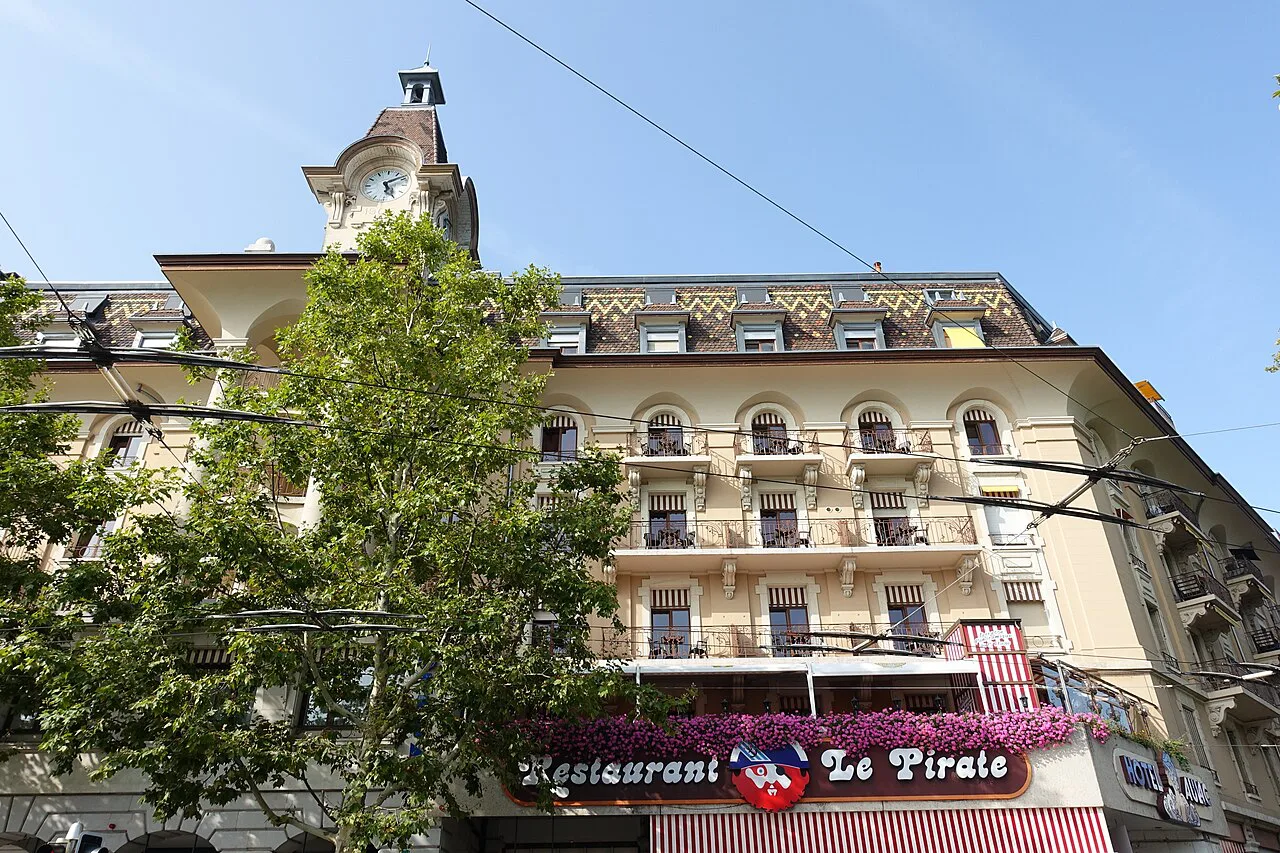
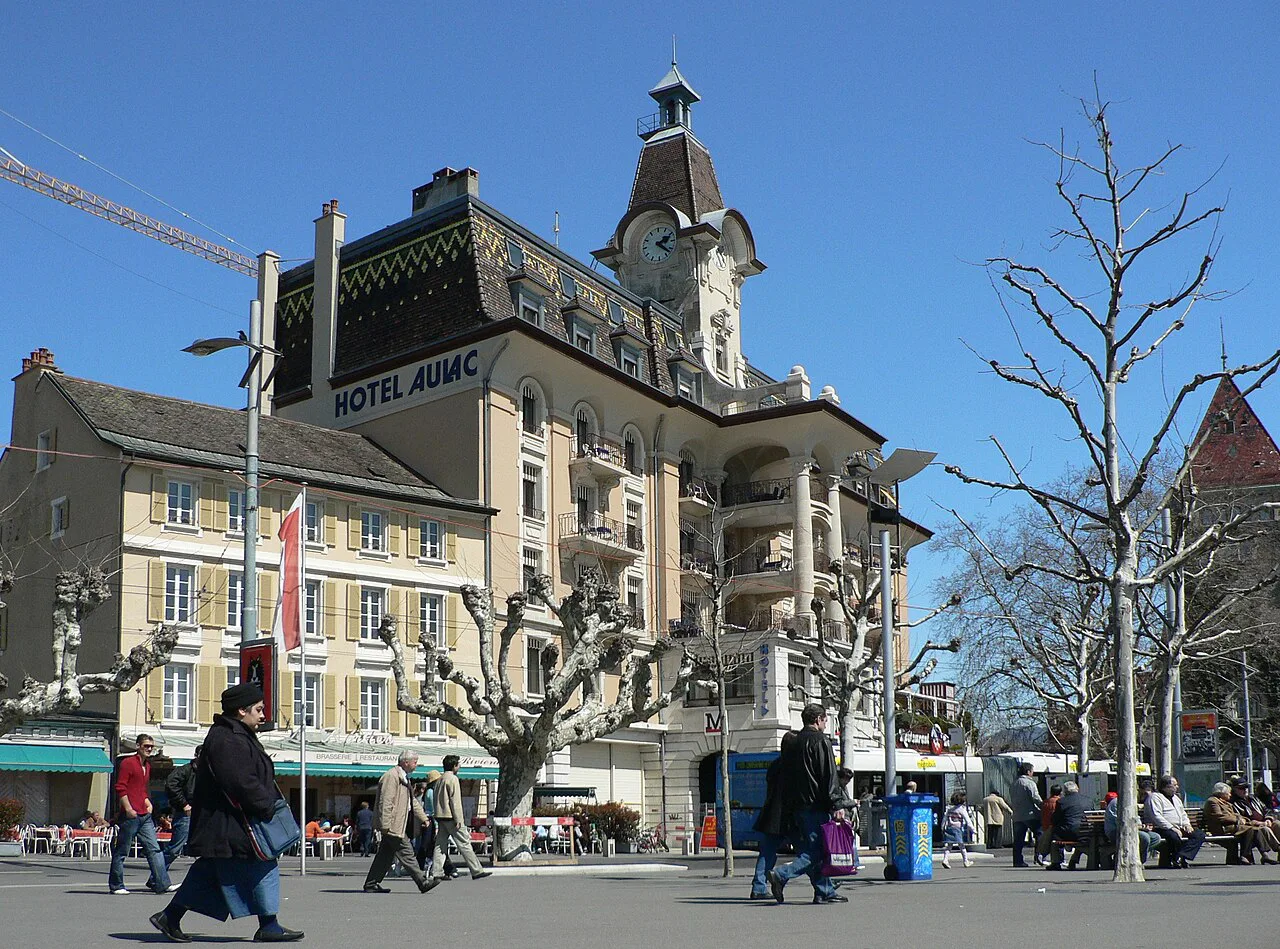
The other historic name on the water is the Hotel Aulac, a three-star house built in 1906 on Place de la Navigation, with a clock and bell tower and rooms whose balconies face the harbor and the Alps. Choose Ouchy for the setting and accept that you are a metro ride from the station and the old town.
If your priority is an early train or heavy sightseeing, the station side is more practical, and Le Flon gives you a central base with restaurants and nightlife. Compare areas before you book rather than defaulting to the lake.
Getting to Ouchy and Around on Foot
Ouchy is compact enough that once you arrive you barely need transport. The metro drops you near the harbor, and from there the quay, Olympic Park, the castle and the squares all sit within a few minutes of each other. Wear comfortable shoes, because the paved surfaces are easy but the distances add up if you also walk uptown.
Arriving from abroad, long-distance trains land at Lausanne station, and the TGV Lyria from Paris is one of the direct connections. From the platforms, head down to the metro for the short ride to the lake. Buy a ticket before boarding, since Swiss inspectors do check.
How Much Time Ouchy Needs
Half a day covers it comfortably: an hour on the quay, thirty to sixty minutes in Olympic Park, a look at the castle and harbor, and a meal. Add two hours if you go into the Olympic Museum. Push it to a full day only if you want a long lakeside lunch and a leisurely return uptown on foot.
Slot Ouchy into a broader plan rather than treating it as a separate trip. Two days in Lausanne lets you give one afternoon to the lake and the rest to the cathedral and old town, and the neighborhood layout helps you group the walking sensibly; a ready-made Lausanne itinerary can show how that split looks in practice. If you want to match your lakefront afternoon to seasonal events and weather, use this guide to the best time to visit Lausanne.
Practical Trade-Offs: Weather, Crowds and Cost
Weather decides the day here. Mountain views come and go with cloud, and a cold wind off the lake can cut a pleasant stroll short; a layer and a flexible schedule matter more than a fixed timetable. Warm summer weekends bring the biggest harbor crowds, so mornings are calmer, and the best time to visit Lausanne guide helps you pick the season that suits.
Costs split neatly into free and paid. The quay, the squares, the harbor and Olympic Park cost nothing, while the museum, the spa and the castle restaurants are where the money goes. Decide before you arrive which side of that line you are on, and the district stays affordable by Swiss standards.
Plan Your Visit
Treat Ouchy as Lausanne's breathing space: a one-kilometer quay, a harbor square, a twelfth-century tower turned hotel and a free Olympic park, all on flat ground beside the lake. Half a day, ideally on a clear morning, is the honest allocation.
Ride the metro down from the station, walk the water's edge from Olympic Park to the castle, and leave time for a bench facing the Chablais Alps. Save the paid interiors for the days when the weather turns, and use the lakefront as the reward at the end of a sightseeing day.
Explore more Lausanne guides
Frequently Asked Questions
What is there to see in Ouchy, Lausanne?
The main sights are the Quai d'Ouchy esplanade, Olympic Park with the Olympic Museum beside it, the Château d'Ouchy on Place du Port, the harbor around Place de la Navigation, and the Eole wind vane sculpture. The quay, squares and park are free to walk.
Is Ouchy worth visiting in Lausanne?
Yes, if you want a scenic, flat half day by the water. It suits travelers who enjoy strolling, lake views and a long lunch, and it pairs well with the city center. Travelers with a single day may prefer to concentrate on the cathedral and old town.
How long does the Ouchy quay walk take?
The Quai d'Ouchy esplanade runs about one kilometer, so a brisk walk takes roughly fifteen minutes. Allow an hour or more if you stop at the benches, the flower beds, Olympic Park and the harbor.
What is the Château d'Ouchy?
It is a castle on Place du Port whose origins go back to 1170, when a Bishop of Lausanne built a fortress there. The tower burned in 1609, was rebuilt in 1889 and became a hotel in 1893. It now operates as a hotel with restaurants, a bar and a spa, so visitors see it from the outside.
Can you see the Alps from Ouchy?
Yes, on clear days the Chablais Alps rise across Lake Geneva on the French shore. Cloud and haze often intervene, so treat the panorama as typical scenery rather than a guarantee and keep your timing flexible.
How do you get to Ouchy from Lausanne?
The metro connects the city's upper levels with the lakefront, dropping you near the harbor. Long-distance trains arrive at Lausanne station, including the TGV Lyria from Paris, and from there it is a short descent to Ouchy. Buy a ticket before boarding.