
Lugano Lakefront: A Guide to the Lungolago
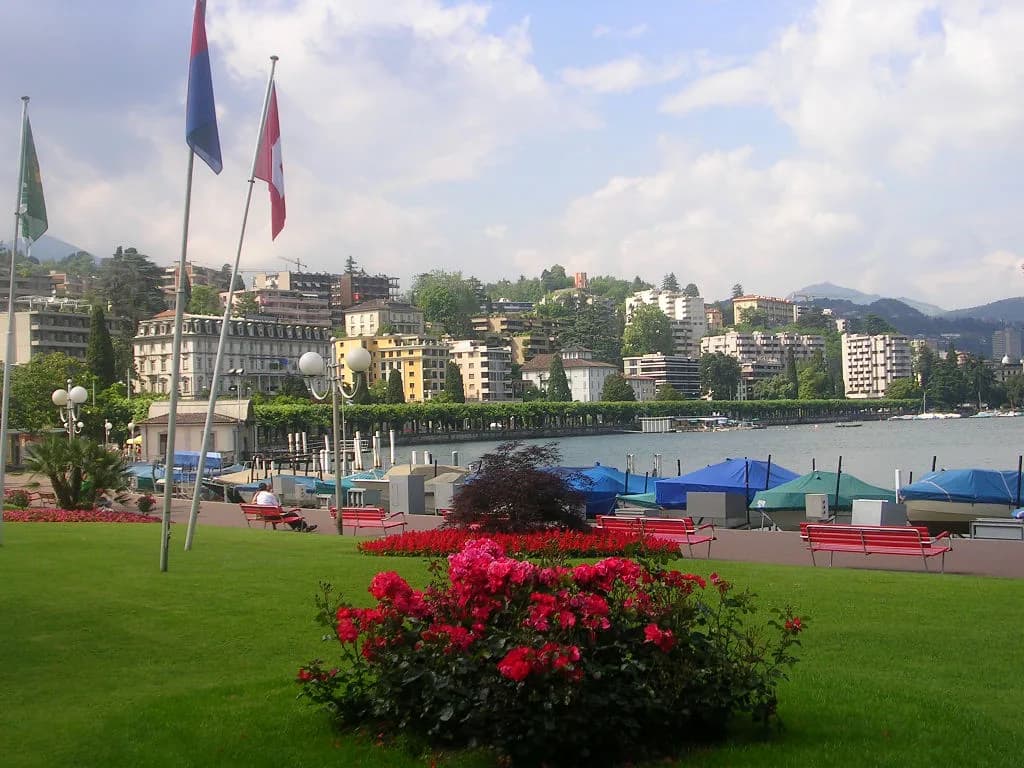
Start in Lugano at the water. The lakefront, or Lungolago, is the flattest, most sociable part of the city, where the pedestrian center meets the lake and the mountains rise behind it. This guide treats that strip as a single district, from Piazza della Riforma to the Paradiso shoreline, so you can plan a day or a base around it.
Why the Lakefront Is the Place to Start
Lugano is a small city, and its postcard-sized downtown is a pedestrian-only area made for slow strolling and long coffees, with pastel buildings lining the piazzas and side streets. That compactness is the reason to begin at the water: the main sights, the boats and the cafés sit within an easy walk of each other.
The city sits in Ticino, Switzerland's only Italian-speaking canton, and it blends Swiss order with a noticeably Italian style of dress and eating. For a short break, the lakefront gives you both faces of the city without a single bus ride.
How the Lungolago Is Laid Out
Think of the lakefront as a line that bends around the bay. Piazza della Riforma anchors the inland edge of the old center, the waterfront park and benches face the water, and the promenade continues around toward Paradiso, the village just beyond the city core.
That bend matters for planning. Staying near the old center puts Piazza della Riforma, Via Nassa and the boat docks on your doorstep, while staying further around in Paradiso trades that immediacy for quiet and elevation, and The View addresses the gap with complimentary electric Smart cars and bicycles for guests.
What to See on Foot: Piazzas, Via Nassa and the Waterfront
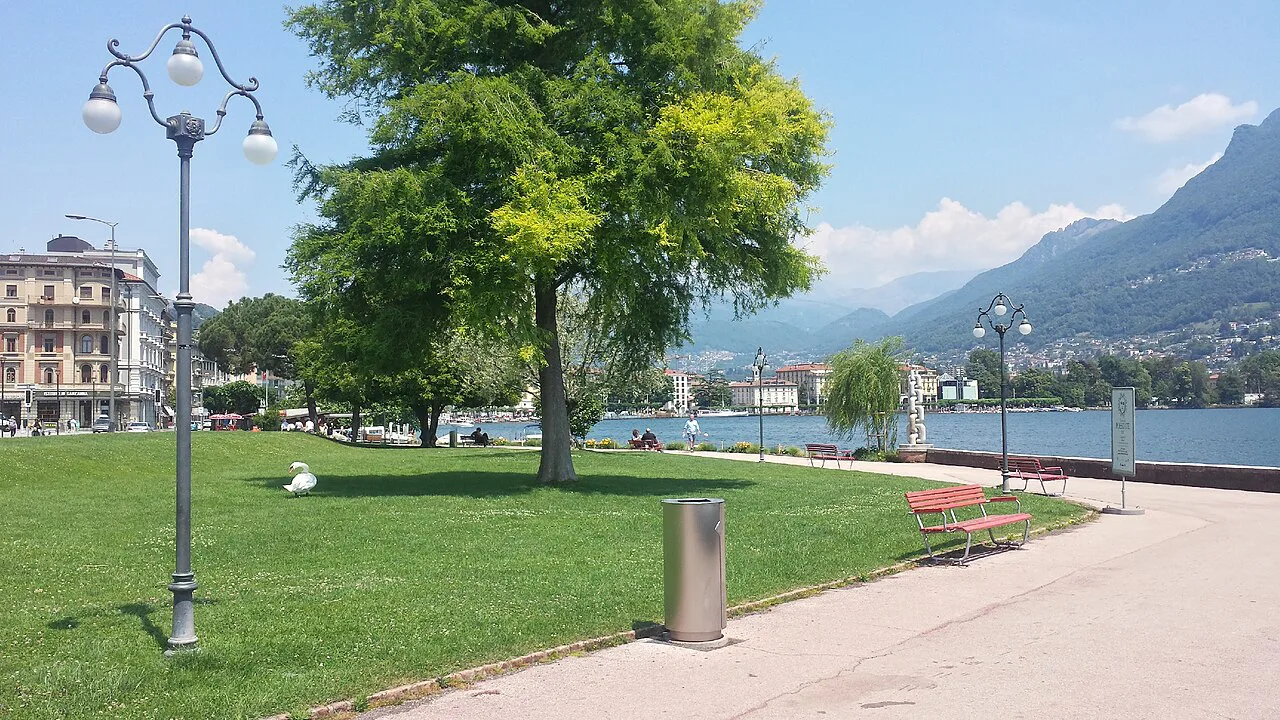
Walk the pedestrian core first. Pastel and brightly colored buildings line the piazzas and lanes, and window-shopping along Via Nassa brings you past labels such as Gucci and Prada. The waterfront itself is the key attraction: benches and a park make the lakeside promenade the place locals and visitors linger.
Allow half a day for the center alone if you like to stop. The streets are made for people-watching, and the flat lakeside path means you can loop from the piazzas to the water and back without climbing. The hillside above the city is where the views open up, and that is a separate trip, so keep it for a second walk once you have sized up the center while planning your Lugano itinerary.
The Lake Itself: Benches, Boats and Ferries
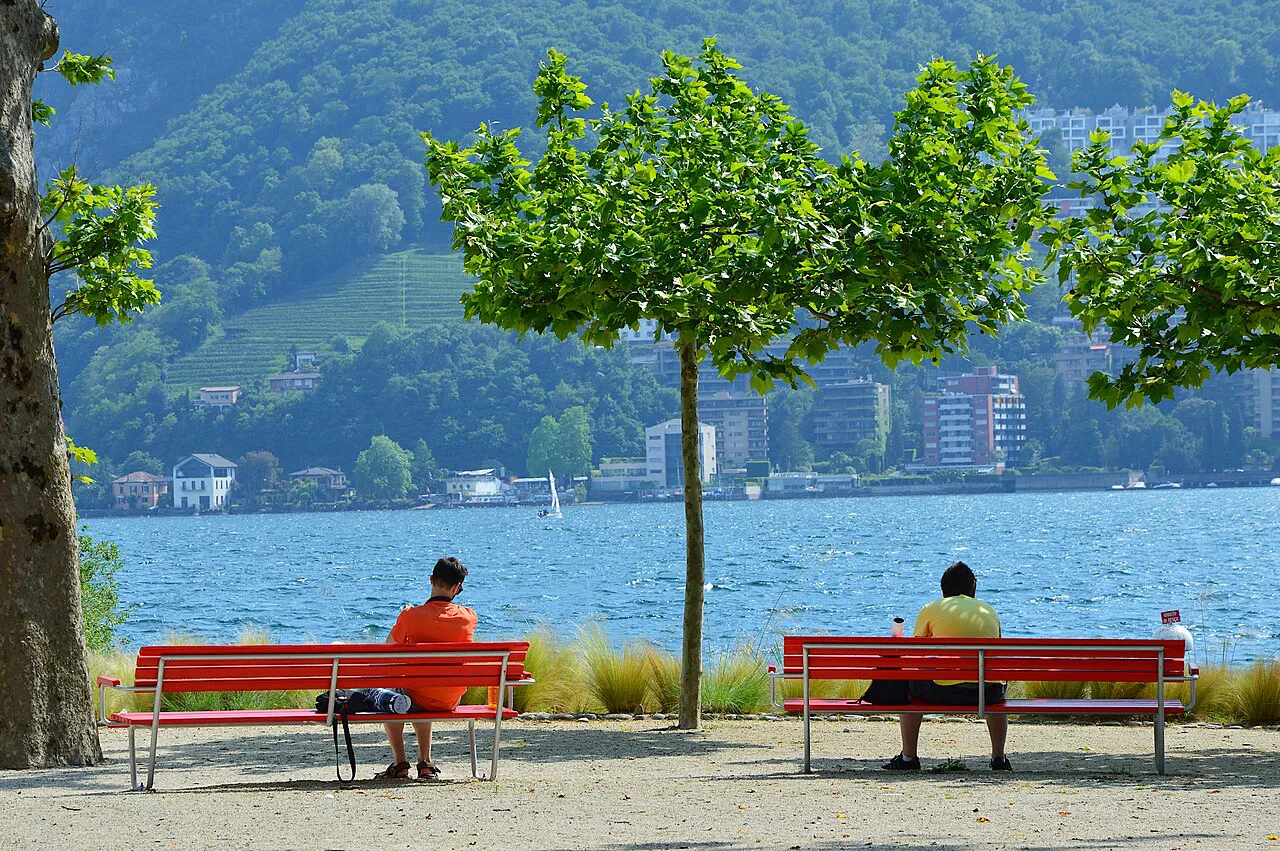
The lake is the beating heart of the district, and the waterfront park and benches are the cheapest seats in town. In the warmer months, pedal boats and motorboats are available to rent, so you can take the water at your own pace instead of joining a scheduled crossing.
For a short trip across the water, ferries shuttle to nearby lakeside villages, and the run to Gandria takes roughly 15 minutes. Treat the ferry as transport with a view rather than an excursion, and check the day's departures at the dock before you commit.
Gandria: The Short Ferry Ride
Gandria is the obvious first escape from the Lungolago, a lakeside village reached most simply by boat. The roughly 15-minute crossing from Lugano makes it a practical half-day rather than a full outing, and arriving by water avoids dealing with a car in a tight village.
Pair it with a slow morning on the promenade: coffee by the lake, the ferry over, a wander through the village, and the boat back before dinner in the center. If you want the detail on the village itself, Gandria: Lugano's Traffic-Free Lakeside Village covers what is there and how the boats work.

San Salvatore: The Historic Funicular and Summit Views
San Salvatore looms over the city and is Lugano's most notable mountain. A historic funicular, first opened in 1890, climbs to the top through the day and into the evening, and a well-marked trail also leads up the roughly 3,000-foot summit for walkers.
At the top, a small restaurant serves the summit and the 360-degree view takes in the city, the lake, the Alps and, in the distance, Italy. Go for the late-afternoon light if the weather is clear, but confirm the day's last descent at the valley station before you head up.
Art and Culture a Few Steps Inland: LAC and MASI
The lakefront is not only water and cafés. LAC: Lugano Art and Culture, created in 2015, is a multi-use venue for theater, dance and music, and it houses MASI: The Art Museum of Italian Switzerland, whose contemporary galleries show rotating exhibitions that have included Chagall, Miró, Giacometti and Dalí.
Smaller spaces fill the surrounding streets, among them Sonnenstube, Fondazione Gabriele e Anna Braglia, Museo Gipsoteca Giudici and Gallerie d'Arte di Lugano. Check what is on before you go, since the program rotates and a closed gallery day can reshape a short trip.
Churches Worth the Detour
Two churches sit a short walk from the water and reward a detour. The Cathedral of San Lorenzo has a façade dating to the early 16th century, while the Church of Santa Maria degli Angeli holds a fresco by Bernardino Luini, a follower of Leonardo da Vinci, treated as a Renaissance masterpiece.
Both fit naturally into a walking loop between the piazzas and the lake. Dress as you would for any city church, and keep the visit short so the promenade and the boats still get their time.
Where to Eat and Drink on and Near the Lakefront
Pizza in Lugano comes thin-crusted and simple, and the restaurants lining Piazza della Riforma will feed you with a view of the square. Tango stands out for its lively outdoor seating and people-watching, while Ristorante della Posta in Morcote, family-run and seemingly unchanged since the mid-century, serves its best tables on a patio built over the lake.
For a coffee in the old center, Grand Café Al Porto has operated since 1803 on Via Pessina, a small street of hanging lights where locals pass in their designer best. Gelato is everywhere; La Gelateria di Lugano by the lake is the closest good stop to the promenade.
If you want the Ticino specialty, head for a grotto, the small family-run restaurants unique to the canton; Grotto Figini in Collina d'Oro is a few minutes from downtown and serves dishes such as wild rabbit with polenta. Reserve ahead for dinner in high season, and expect lakefront tables to cost more than a short walk inland.

Where to Stay on the Lakefront
The classic lakefront address is Hotel Splendide Royal, a five-star hotel open since 1887 on Lugano's lakeside main street, with lake and San Salvatore views from most rooms and two restaurants, including the Michelin-starred I Due Sud. It suits travelers who want the old-world version of Lugano and are willing to pay for the location.
Further around the bay, The View in Paradiso has 18 suites with lake-facing balconies and its own Michelin-starred restaurant, though it sits above the center rather than in it.
Inland above the lake, Relais Castello di Morcote occupies a 17th-century former convent with 12 rooms and a wine estate a short walk away, and Morcote is roughly a 15-minute drive from the center. It is a quiet, car-friendly base rather than a lakefront one, and the trade-off is that you will not stroll to Piazza della Riforma. If you would rather keep the old center on foot, a Lugano itinerary suggests staying closer to the water.
Who the Lakefront Suits, and Who Should Base Elsewhere
The Lungolago suits anyone who wants to arrive and walk: couples on a short break, first-time visitors, and travelers who prefer flat ground, boats and cafés to hills and buses. It is less ideal if you crave quiet nights and a car, in which case Paradiso or Morcote make more sense as a base; either way, the best time to visit Lugano shapes how busy that promenade will feel.
Families and slower travelers will appreciate that the center is pedestrian-only and that the waterfront park gives children room to run. Travelers who mainly want mountain days should look uphill instead, and treat the lakefront as an evening rather than a base.
Getting There and Getting Around
Once you are in the center, everything on this page is walkable, with the funicular to the train station and the boat docks close to the lake. Boats reach Gandria in roughly 15 minutes, and the San Salvatore funicular handles the climb that would otherwise be a hike.
Pick your season with the lake in mind, since the city's sunny lakeside setting is the main draw and the water is busiest in the warm months. The best time to visit Lugano page sets out the trade-offs between summer crowds and cooler, quieter months.
For a wider plan that stitches the lakefront to the mountains and the villages, build a two- or three-day Lugano itinerary around one walking day in the center and one day on the water; our Lugano itinerary lays out the walking day neighborhood by neighborhood. Keep the boat and funicular as your two splurges and let the promenade fill the rest.
Plan Your Lakefront Day
Start at Piazza della Riforma, walk the pedestrian core to Via Nassa, then follow the water toward Paradiso, with a 15-minute ferry to Gandria or the San Salvatore funicular as your one big outing. The lakefront works because it asks nothing of you but walking, and that is the point.
If the lakefront feels too busy in high summer, the villages around the bay offer the same water with fewer people; the Lombardy tourism board notes that the Italian side of Lake Lugano, known locally as Ceresio, is less visited than Como and rewards more than a day trip.
Explore more Lugano guides
Frequently Asked Questions
Is the Lugano lakefront walkable?
Yes. The downtown is pedestrian-only, and the lakeside promenade, the piazzas and Via Nassa sit within an easy walk of each other. The flat waterfront is the easiest ground in the city, while the climb to San Salvatore is handled by the funicular.
How do you get to Gandria from Lugano?
The simplest route is by boat: ferries shuttle from Lugano to nearby lakeside villages, and the crossing to Gandria takes roughly 15 minutes. Check the day's departures at the dock before setting out, since the boat is the practical alternative to driving.
Is San Salvatore worth it?
Yes if you want the view. A historic funicular, first opened in 1890, climbs the roughly 3,000-foot mountain to a summit restaurant with a 360-degree view of the city, the lake, the Alps and, in the distance, Italy. A well-marked trail also leads up for walkers.
Where should you eat near the Lugano lakefront?
Pizza places line Piazza della Riforma, with Tango a strong pick for outdoor seating and people-watching. Grand Café Al Porto on Via Pessina has served coffee since 1803, and La Gelateria di Lugano by the water covers gelato. For Ticino cooking, head to a grotto such as Grotto Figini outside downtown.
Where should you stay on the Lugano lakefront?
Hotel Splendide Royal sits on the lakeside main street and has welcomed guests since 1887, while The View in Paradiso offers lake-facing suites with free use of electric Smart cars and bicycles for the trip into the center. Both are five-star addresses, so compare nightly rates in Swiss francs before booking.
Do you need a car to enjoy the lakefront?
No. The center is pedestrian-only, boats reach Gandria, and the San Salvatore funicular covers the mountain. A car helps only if you base yourself outside the center, as at Relais Castello di Morcote near Morcote.