
Santa Maria degli Angeli, Lugano: A Visitor's Guide to the Luini Frescoes

Santa Maria degli Angeli is a small Franciscan church on Piazza Luini at the southern entrance to Lugano, and its reward is indoors: a Bernardino Luini fresco cycle that most short listings skip. The building sits beside the LAC cultural center and is one of the quickest serious art stops in the city. Plan on 20 to 30 minutes unless you read every panel slowly.
The church belonged to a Franciscan monastery founded in 1490, and the exterior is deliberately plain. That makes the single nave inside, with its pointed arch and four chapels along the right side, feel like a reveal rather than a gradual buildup. If you have an hour before a lakefront walk, this is where to spend the first half of it; if you are weighing when to plan that lakefront walk, our best time to visit guide sets out the seasonal trade-offs.
What Santa Maria degli Angeli Is
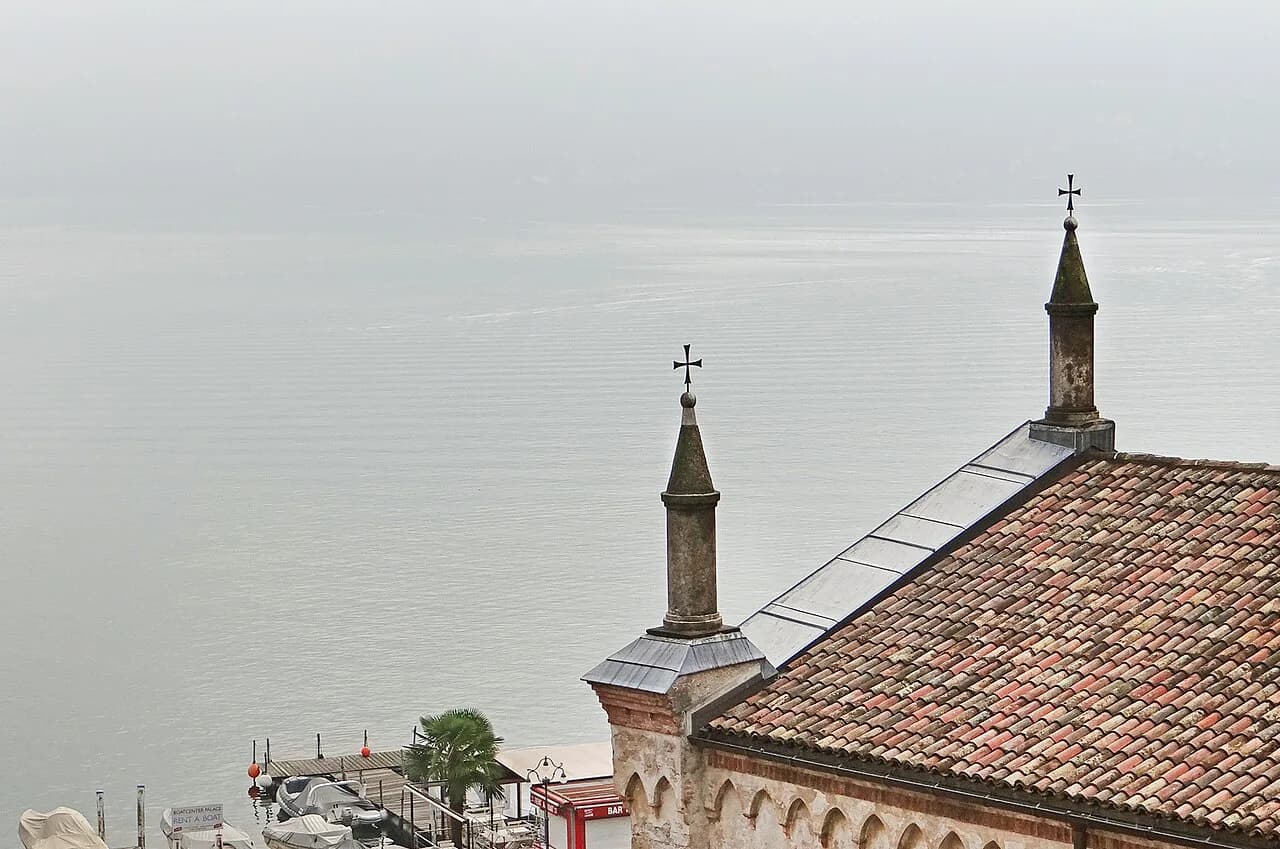
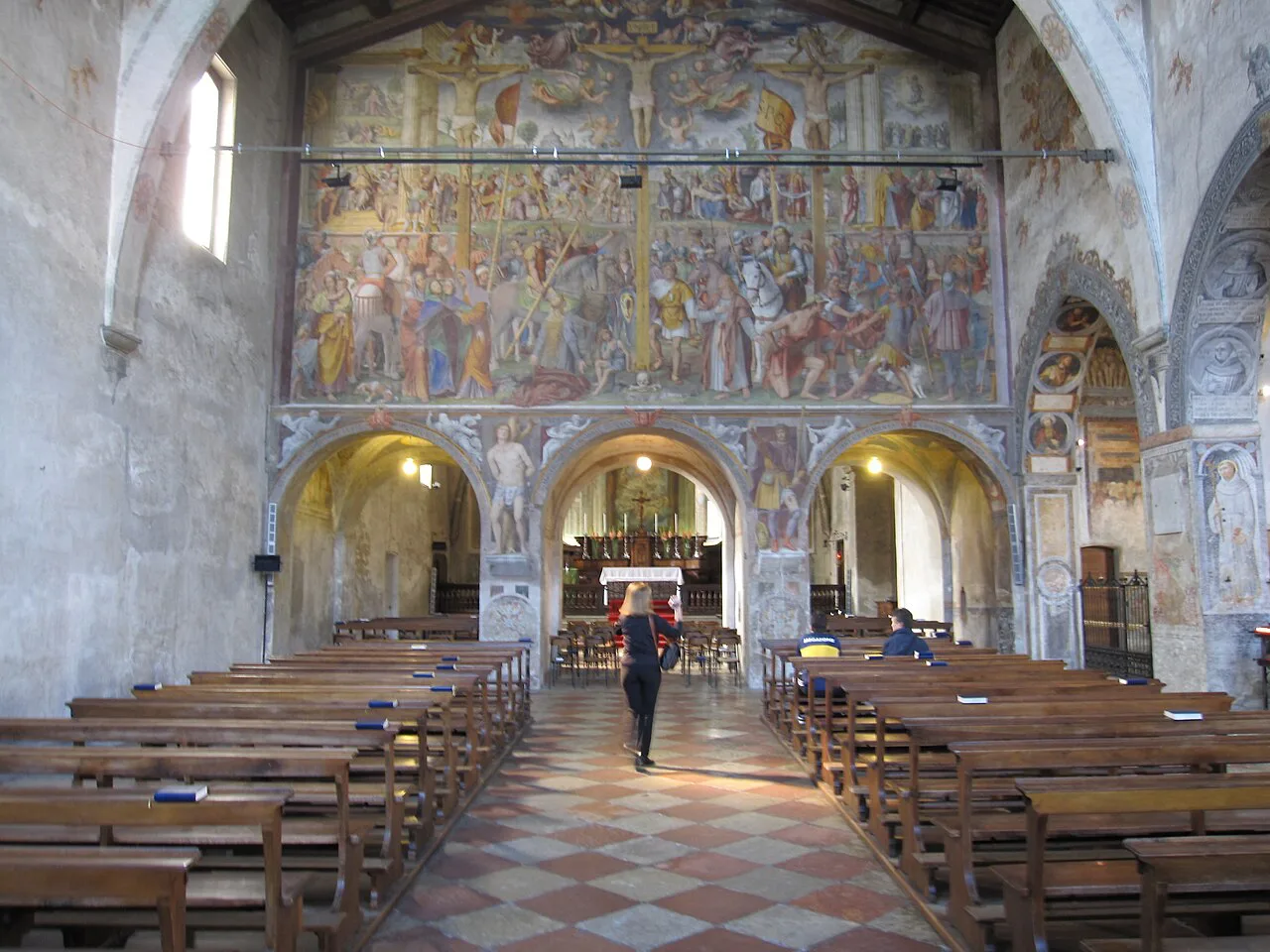
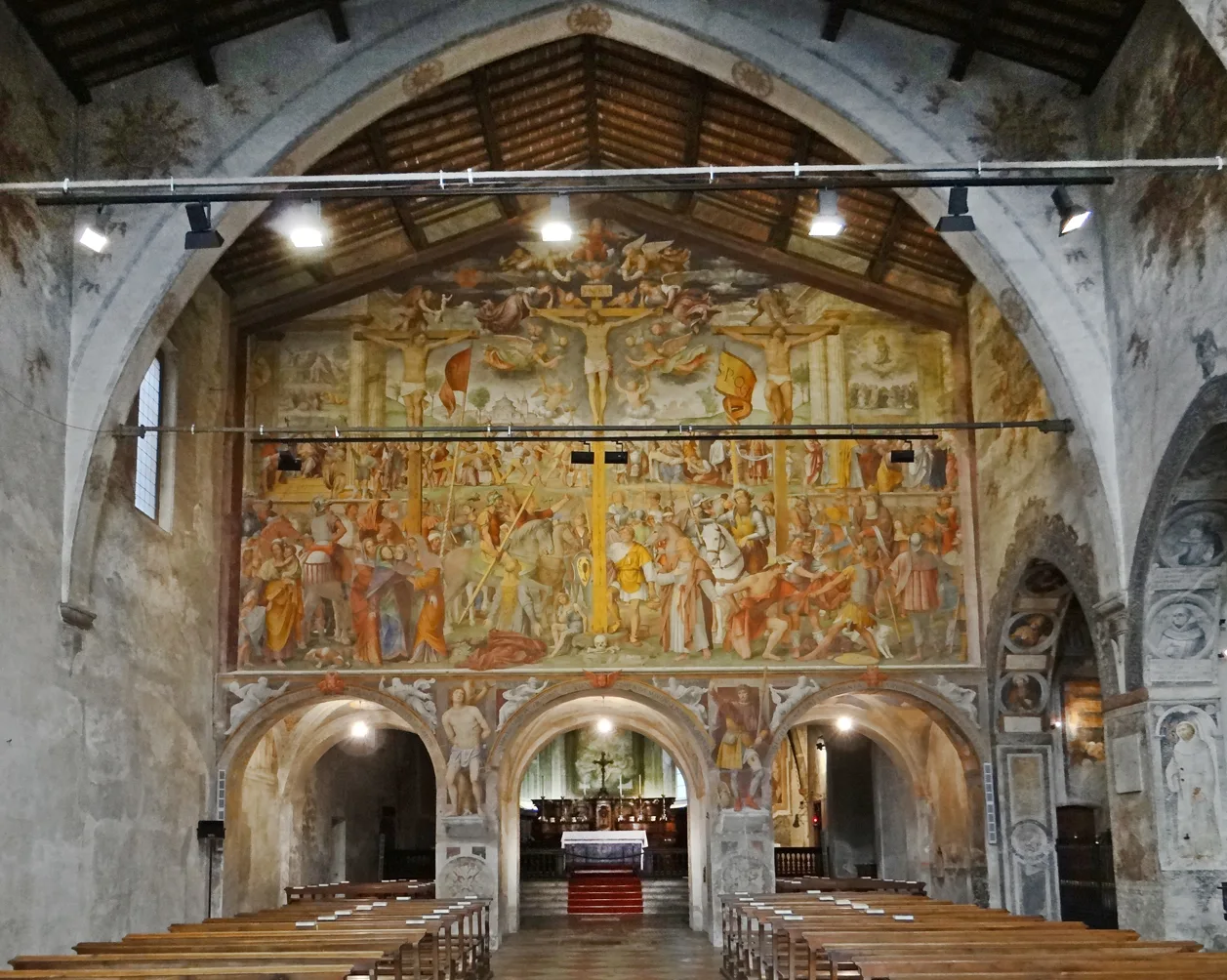
This is a working church, not a museum, and it reads that way from the street: a modest facade, a doorway, and no ticket booth in sight. The interior is a single hall with a pointed-arch ceiling, four chapels flanking the right side, and a choir separated from the nave by a dividing wall.
The building was completed in 1515, which places the Luini cycle near the end of the painter's career rather than at its start. That timing matters when you look at the Crucifixion: it is generally treated as his last work, painted between 1529 and 1532.
Travelers sometimes arrive expecting the Santa Maria degli Angeli at Assisi, a much larger pilgrimage basilica in Umbria. This is a different church entirely, in a different country, and its fame rests on frescoes rather than on scale or relic. If the confusion stems from place names closer to home, the Lugano Neighborhoods guide clarifies which areas of the city you are actually heading toward.
Where It Is and How to Get There
The address is Piazza Luini 3, and the church stands at the south end of the city center. If you are coming from the lakefront, walk south along the waterfront until the LAC complex comes into view; the church is the older, plainer building immediately beside it.
Because it sits on the edge of the historic core rather than in the middle of it, Santa Maria degli Angeli works best as a stop on the way in or out rather than a destination you cross town for. Combine it with the lakefront and the LAC in a single loop, and if you are weighing which season to plan that loop around, our best time to visit lugano guide sets out the seasonal trade-offs.
If you are building a broader few days in the city, our Lugano Attractions: 8 Visitor Guides map out how this stop fits against the funiculars and gardens elsewhere on the slopes.
The Facade and Interior Layout
Start outside. The plain front gives nothing away, and the contrast with what is behind the door is the point. If you are still deciding where in the city to base yourself for such stops, our Lugano Neighborhoods guide compares the areas around the center and the lakefront. Inside, the nave runs as one open hall, so you can stand at the entrance and see the whole spatial arrangement at once.
The four chapels are on your right as you face the altar, each opening off the main hall. The choir at the far end is set apart by a dividing wall, which means the altarpiece area reads as a separate room rather than part of the nave.
Work the chapels in order rather than wandering, because the frescoes are numbered by position and the artistic argument builds from the first chapel to the fourth. The arches under the dividing wall carry their own cycle, so save a few minutes for those on your way out.
Luini's Frescoes, Chapel by Chapel
In the first chapel, on the left wall of the lunette, you will find the Madonna with Child and Saint John, a fresco Bernardino Luini painted in 1530. The second chapel holds a Saint Francis painted by G. A. Petrini in 1728, a much later addition that sits oddly beside the Renaissance work around it.
The fourth chapel takes its name from the Lugano lawyer Camuzio, who is buried there, and its frescoes are again by Luini. They show the Adoration of the Magi and the Flight into Egypt, two scenes that reward a slow look at the backgrounds as much as the figures.
Above, the vault frescoes are attributed to the school of Bramantino, which is a useful reminder that Luini did not work alone in this building. Read the two together: the vault sets the ceiling program, the chapels carry the narrative.

The Crucifixion and the Last Supper Panel
The large Crucifixion, with scenes of Christ's Passion arranged in the background, is Luini's final work, dated 1529 to 1532. It is the piece to give the most time to, because the background scenes turn a single image into a small narrative cycle.
On the left wall of the nave hangs a Last Supper that came from the refectory of the old monastery. Luini modeled it on Leonardo da Vinci's famous Milan refectory mural, and knowing that changes how you read the table, the grouping of figures and the borrowed gestures.
Luini also painted the prophets on the dividing columns, which are easy to walk past on the way to the big panels. Look up at them before you leave the nave.
Jerusalem Views and Other Details
Under the arches of the dividing wall are frescoes showing views of Jerusalem as it was imagined in the fourteenth century. They are architectural and topographic rather than narrative, and they give the wall a function beyond simply separating the choir from the congregation.
The church also holds a large Crucifixion altarpiece and further painted decoration that ties the whole interior together. If you only have ten minutes, spend them on the Camuzio chapel and the Crucifixion and leave the rest for a return visit.
Practical Visiting Notes
The church stays open throughout the year, which makes it an easy fallback when a museum day goes sideways. FAI Swiss has placed a printed historical and artistic description inside in six languages: Italian, German, French, English, Russian and Chinese. Take one at the entrance; it turns the chapel sequence into something you can actually follow.
Entry conditions, any service times and whether the building is closed for a particular function are worth confirming with the parish before a special trip, since the parish publishes its own schedule. The church's own site is the place to look.
The site has taken part in Pro Infirmis's digital accessibility data project, run with Ticino Turismo and the regional tourism organizations, so accessibility details are documented through that scheme. Travelers with mobility needs can consult those records before arriving rather than discovering the layout on the doorstep.
How Much Time to Allow
Twenty to thirty minutes covers the chapels, the Crucifixion and the Last Supper panel at a reasonable pace. Add ten minutes if you read the multilingual guide properly, which is worth doing for the Camuzio chapel alone.
This is a short visit by design, and treating it as a full morning will leave you underwhelmed. Treat it as an art stop that happens to be free of queues and logistics, and it delivers.
If you want a longer half-day, pair the church with a ride up monte bre lugano on the cable car from Cassarate, which adds altitude and a view back over the city. That combination fills an afternoon without repeating the same kind of sight.

What's Nearby
The LAC Lugano Arte e Cultura sits immediately next door and houses MASI, the Museo d'arte della Svizzera italiana. That makes a natural pairing: Renaissance frescoes first, then modern and contemporary Swiss-Italian art in the same block.
The waterfront is a short walk from Piazza Luini. Parco Ciani, Lugano's main lakeside park, gives you a place to sit afterward and digest what you have just seen, with the lake in front of you and the slopes behind.
For a different angle on the same landscape, monte san salvatore rises above the city and is reachable by funicular. It is a separate outing, but a sensible one to slot into the same day if the weather holds.
Honest Trade-Offs
This is a small church. If you are not interested in Renaissance frescoes, the visit will feel thin, and there is no shop, cafe or interactive display to pad it out. The Luini cycle is the entire reason to come.
The flip side is that it costs you almost nothing in time or planning, and the printed guide does the interpretive work. For travelers who want one genuine art encounter in Lugano without committing a half-day, this is the most efficient option in the city.
If your trip is more about views and outdoor time, put your hours into the funiculars and the lakefront instead, and treat the church as a ten-minute add-on when you pass the LAC. Our things to do in lugano guide helps you decide which way to weight the day.
Plan Your Visit
Santa Maria degli Angeli is worth 20 to 30 minutes of a Lugano day, positioned on Piazza Luini beside the LAC. Go for the Luini frescoes, pick up the multilingual guide at the door, and walk the chapels in order from the first to the fourth.
Weather shapes how you sequence the rest of the day: typical climate averages make spring and early autumn comfortable for combining indoor art with the lakefront, while high summer favors the church at midday and the water later. Our best time to visit lugano guide lays out the seasonal trade-offs.
Check the parish's own site for current entry conditions and any service closures before a special trip, then build the rest of the day around the LAC and the park.
Explore more Lugano guides
Frequently Asked Questions
Is Santa Maria degli Angeli in Lugano free to visit?
Admission terms are set by the parish rather than published as a ticket price, so check the parish site before you go. The church is a working place of worship rather than a ticketed museum, and the printed art-historical guide inside is there for visitors.
What frescoes can I see inside Santa Maria degli Angeli in Lugano?
Bernardino Luini painted the Madonna with Child and Saint John in the first chapel in 1530, and the Camuzio chapel holds his Adoration of the Magi and Flight into Egypt. His large Crucifixion, dated 1529 to 1532 and treated as his last work, hangs in the nave, and the vault frescoes are attributed to the school of Bramantino. A Last Supper modeled on Leonardo da Vinci's Milan mural came from the old monastery refectory.
How long does a visit to Santa Maria degli Angeli take?
Twenty to thirty minutes covers the chapels, the Crucifixion and the Last Supper panel at an unhurried pace. Add about ten minutes if you read the multilingual guide, which is worth it for the Camuzio chapel alone.
Where is Santa Maria degli Angeli in Lugano?
The church is at Piazza Luini 3, at the southern end of the city center, immediately beside the LAC Lugano Arte e Cultura. From the lakefront, walk south along the water until the LAC complex appears.
Who painted the frescoes in Santa Maria degli Angeli, Lugano?
Bernardino Luini painted the core cycle, including the first chapel lunette, the Camuzio chapel scenes, the Crucifixion and the Last Supper panel. G. A. Petrini added a Saint Francis in 1728, and the vault frescoes are attributed to the school of Bramantino.
Is Santa Maria degli Angeli open every day?
The church is open throughout the year, but the parish sets its own schedule around services. Check current entry conditions on the parish site before a special trip.