
Bear Park Bern: A Visitor's Guide to BärenPark

Bear Park Bern, the BärenPark, is Bern's bear enclosure on a wooded slope above the Aare, just below the Rose Garden and a few minutes from Nydeggbrücke. The bears live in a 6,000-square-meter park along the riverbank, and the large older bear pit remains accessible to them, so you are looking at a layered site rather than a single viewing wall. It is an outdoor stop of roughly 30 to 60 minutes, which is the honest way to plan it: worth a detour on the way between the old town and the river, not a half-day attraction on its own.
What Bear Park Bern Is
The enclosure is a fenced, landscaped piece of the Aare slope where the city's bears roam, with the river running below and the old town ridge above. What you see from the paths is open parkland, the retaining walls and terraces of the earlier bear pit, and interpretive displays about the animals and their history.
Plan on it as a look-in stop: walk the paths, read the displays, take in the river view, and move on. That framing matters in Bern, where the main sights cluster tightly and a long detour to a park you have already seen from above can eat a morning. If you want to see how the park slots between the other sights, our Bern itinerary plans the days by area so this stop stays a short one.
Where It Is and How the Site Is Laid Out
The park occupies the slope between the old town and the Aare, below the Rose Garden on the hill above. The layout is the thing to understand before you go: paths run along and above the enclosure, and the slope means your viewpoint depends entirely on which side you arrive from.
Kirchenfeld, the district across the river with the museums and schools, belongs to Stadtteil 4 along with Schosshalde, and the city describes it as one of Bern's most popular residential quarters with roughly 18 percent of the population. That gives you a sense of scale: the bear park sits on the seam between a busy residential quarter and the historic center, not out in open countryside.
How to Get There on Foot
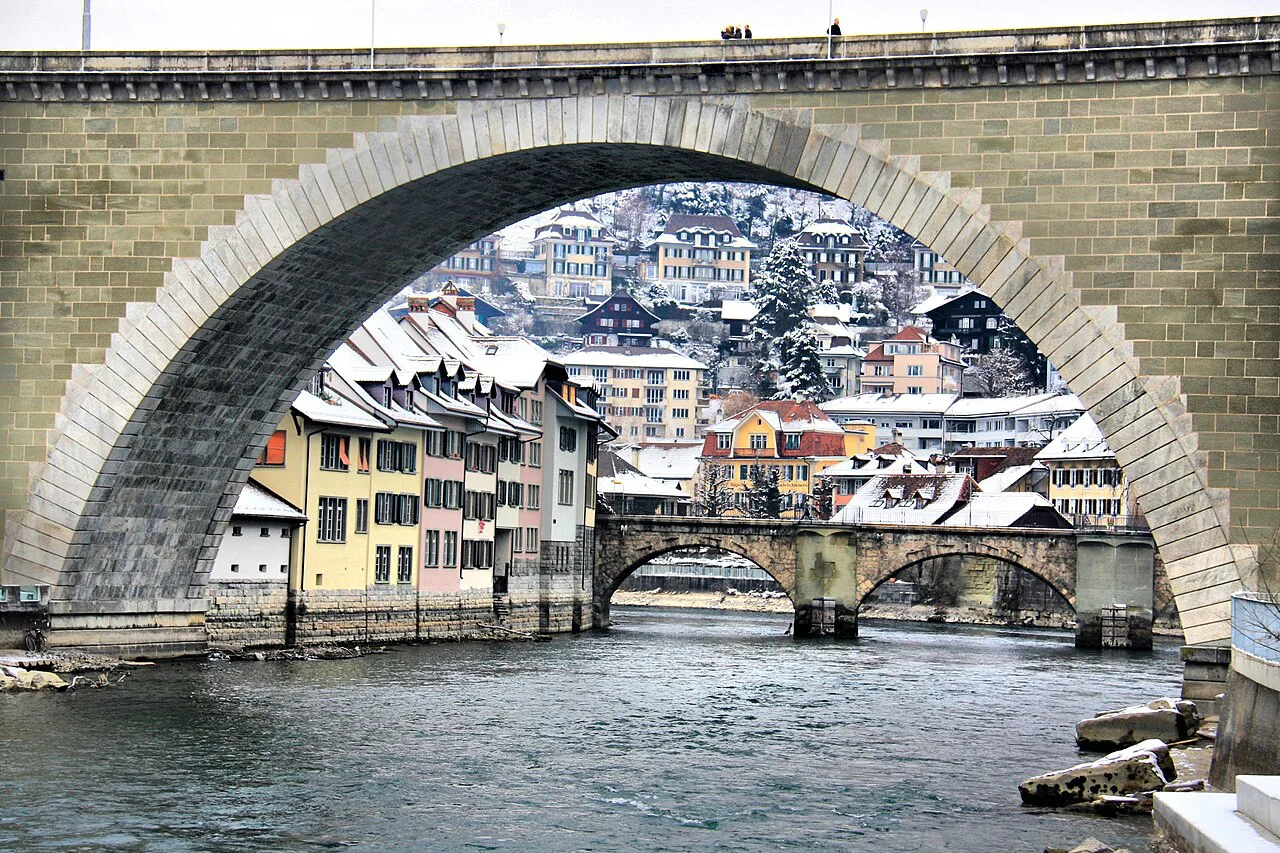
From the old town, the natural approach is across Nydeggbrücke, the bridge at the eastern end of the lower old town, then down and along the riverside paths to the enclosure. Coming from the other direction, you arrive from the Rose Garden side and walk down the slope toward the river, which puts you above the bears rather than beside the river. If you are still deciding where to base yourself for these riverside walks, the Bern Neighborhoods guide covers the areas on both sides of the Aare.
Both approaches are short walks and neither needs a ticket of its own, which makes the park easy to fold into a loop: old town, bridge, riverbank, park, then back up. Public transport toward the Rose Garden side is the practical choice if you are starting from farther out in the city.
What You Actually See
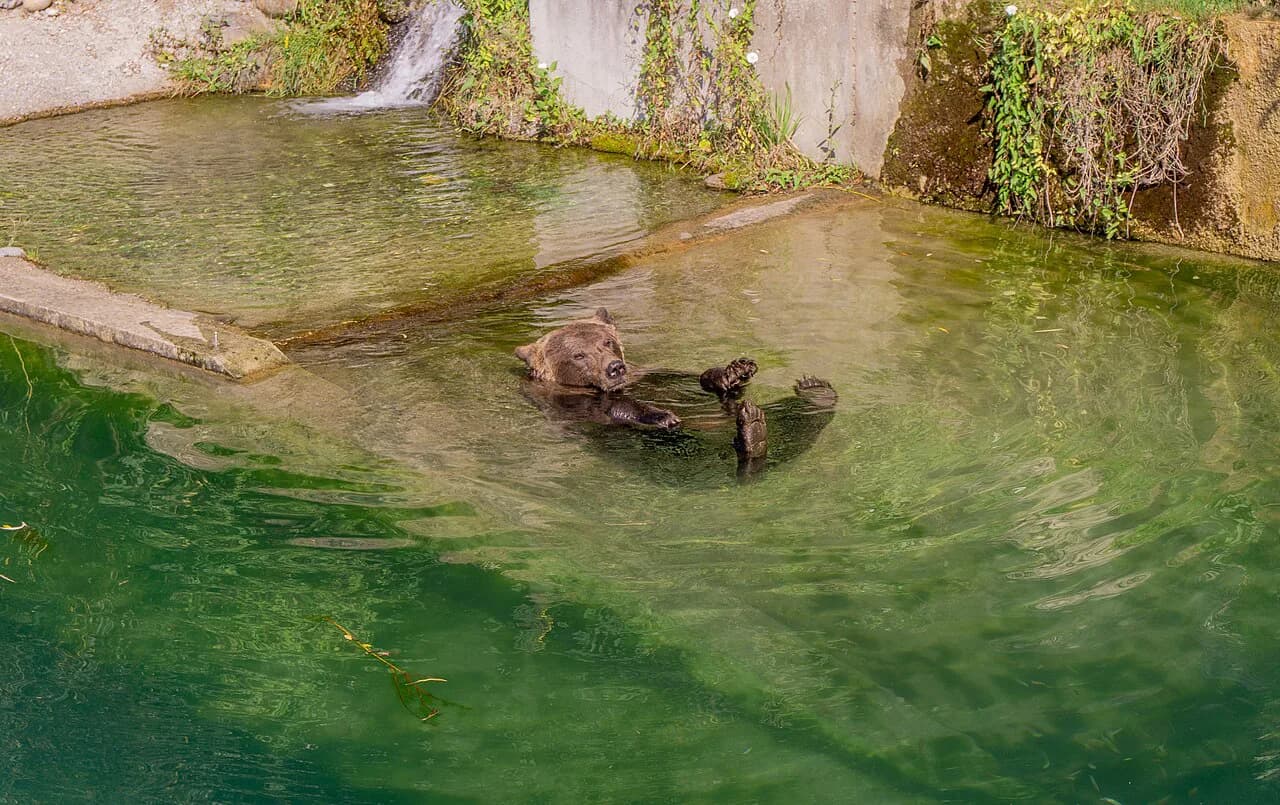
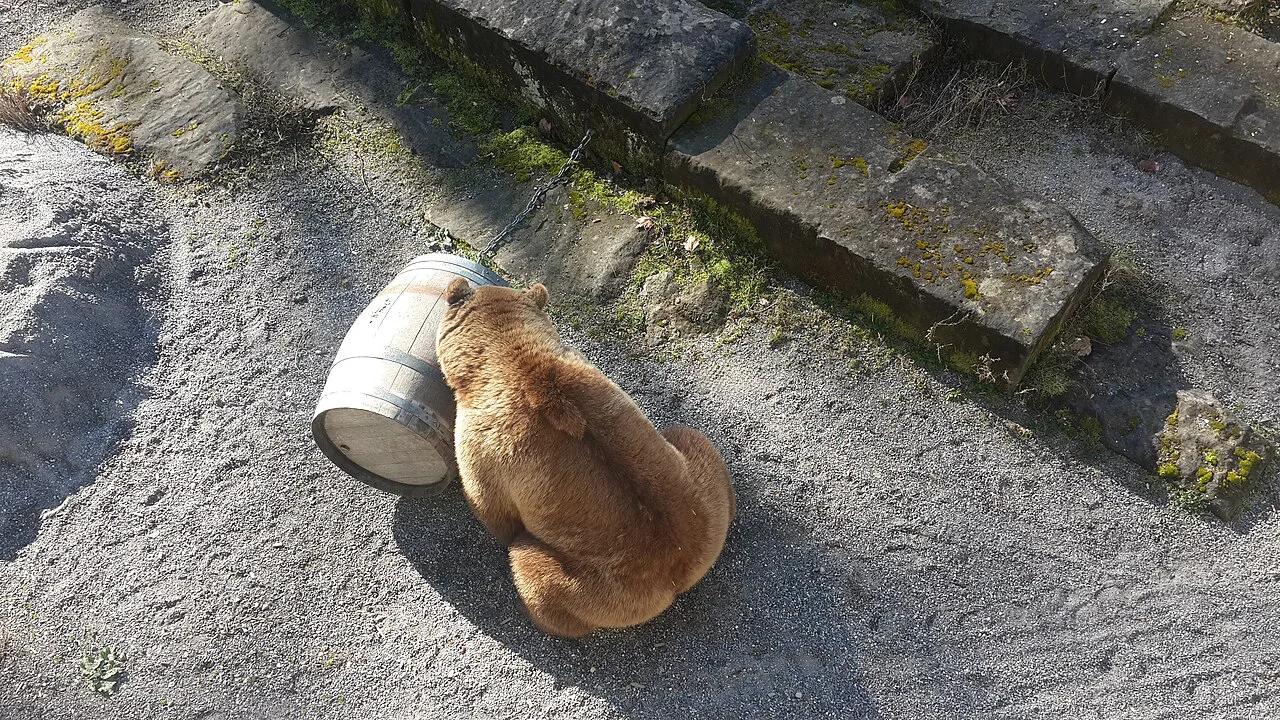
Expect an outdoor animal enclosure, not a zoo building. The bears have a large park area with grass, trees and terrain, plus access to the older pit that once housed them, and the site carries displays that explain the bear tradition and how the animals are kept.
Because the terrain is large and the animals move at will, a sighting is never guaranteed and there is no published viewing timetable to plan around. Treat any appearance as a bonus and let the walk, the river and the displays carry the visit if the bears choose to stay out of view.

The Bear Story
The bear is Bern's emblem, and the city's long association with the animal is why an enclosure exists here at all rather than a municipal zoo. The historical pit, the Bärengraben, was the bears' home for generations before the riverside park took over as their main space, and the old structure still stands as part of the story.
Knowing that history changes what you look at: the old pit walls and the newer slope read as two chapters of the same institution. The displays on site carry the detail, so read them on the way past rather than treating the enclosure as a photo stop only.
How Much Time to Allow
Budget 30 to 60 minutes, including the walk down and back up, and more if you linger on the riverside paths. The park is close enough to the old town that it slots naturally between the Münster and the bridge rather than requiring its own outing.
Late afternoon works well because you can walk down from the old town, see the park, and return along the river as the light softens. Whatever the time of day, expect variation rather than a performance.
Trade-Offs and Realistic Expectations
The main trade-off is visibility. Bears rest, keep to the far side of a large slope, and are not on show to order, and there is nothing indoors to fall back on if they are out of sight. Come for the walk and the river view and you will not be disappointed; come expecting a guaranteed encounter and you may be.
The slope is the second consideration. The paths work fine on foot, but if you have limited time or mobility, decide in advance whether the lower riverside approach or the upper Rose Garden approach suits you better, since they deliver quite different views of the enclosure.
What to Pair With the Park
Nydeggbrücke, the riverside paths and the terrace at Münsterplattform are all within a short walk, and the old town with its arcades and the Zytglogge clock tower is just up the hill. That cluster makes a natural half-day without any transport at all, which is one reason the park is easy to fit in.
If you want a museum to round out the day, the Einstein House on Kramgasse covers the physicist's Bern years in a compact apartment. Bern's museum quarter across the river is a second option, and the Münster tower climb rewards the effort on a clear day.

Admission and Practical Details
There is no entrance fee for the bear park, which makes it a genuinely free stop in a city where most indoor sights charge admission. The enclosure is an open outdoor site, so access follows the public paths rather than a ticketed gate.
The bear park has no published daily hours, so there is nothing to book and no opening time to miss. Guided activities in the city are sold through platforms such as GetYourGuide, but they are a separate purchase from the park itself.
The Parliament Building Nearby
A short walk uphill brings you to the Bundeshaus on Bundesplatz, the seat of Switzerland's parliament and government, built from 1894 to 1902 in neo-Renaissance style under a dome about 60 meters high. It is the other essential Bern building within easy reach of the riverside.
Guided tours of the council chambers run 45 to 60 minutes and can be booked three days ahead through the parliament website, and when the councils are in session you can watch debates from the visitors' gallery. Regular tours pause while councillors are working, so check the session calendar before building a morning around one.
Fit the Bears Into a Bern Day
Treat Bear Park Bern as a 30-minute outdoor pause on the walk between the old town and the river, entering from Nydeggbrücke or descending from the Rose Garden. Read the displays, enjoy the Aare view, and accept that the bears may keep their distance. If you are building a fuller schedule around it, our Bern itinerary shows where the park fits between the old town and the Aare River.
Check the parliament session calendar before planning a Bundeshaus tour, and note that the Historical Museum's main building is set to close for renovation from mid-2027 to mid-2032, with a new Bern history exhibition continuing in the Kubus.
Explore more Bern guides
Frequently Asked Questions
Why is Bern known for bears?
The bear is Bern's emblem, and the city has kept bears in an enclosure for generations. The old Bärengraben pit is still standing, and the bears now live mainly in a 6,000-square-meter park along the Aare, where displays explain the tradition and the animals' care.
Are the bears still in Bern?
Yes. The bears live in the BärenPark on the Aare slope below the Rose Garden, with access to the older bear pit. Whether you see them on a given visit depends on where they are on the slope, so treat a sighting as a bonus.
Is Bear Park Bern free to enter?
There is no entrance fee for the park, which makes it one of Bern's free stops. The enclosure is an open outdoor site reached along public paths, so there is no ticket gate and nothing to book in advance.
How long does it take to visit Bear Park Bern?
Allow 30 to 60 minutes including the walk down and back up, and longer if you follow the riverside paths. It works well as a pause between the old town and Nydeggbrücke rather than as a half-day destination.
Where is Bear Park Bern located?
It sits on the Aare slope immediately below the Rose Garden, a short walk from Nydeggbrücke and the eastern end of the old town. You can approach it from the bridge side or descend from the Rose Garden.
Is Bear Park worth visiting in Bern?
It is worth it as a free outdoor stop with river views and a real piece of Bern's identity, especially when paired with the bridge, Münsterplattform and the old town. It is not a substitute for a museum or a half-day plan.
When are the bears visible?
There is no published viewing schedule, and the animals move across a large slope at will. Go for the walk and the displays, and accept that the bears may be resting out of sight.