
Bern Minster: A Visitor's Guide to Bern's Gothic Cathedral
Bern Minster, the Berner Münster, is the late-Gothic cathedral on Münsterplatz in the heart of Bern's old town, and the reason to step inside is not a lavish interior but a handful of survivals: the carved Last Judgment over the main door, the stained glass of the apse, and painted vaulting that escaped the Reformation. The building went up over more than 150 years, so its fabric mixes periods in a way that rewards a close look rather than a quick photo stop.
Plan on a focused visit of about an hour, more if you climb the tower, and treat the short walk from the Zytglogge clock tower as part of the experience. The church's silhouette only makes sense once you know the tower was completed in 1893, long after the medieval nave.
Bern Minster at a Glance
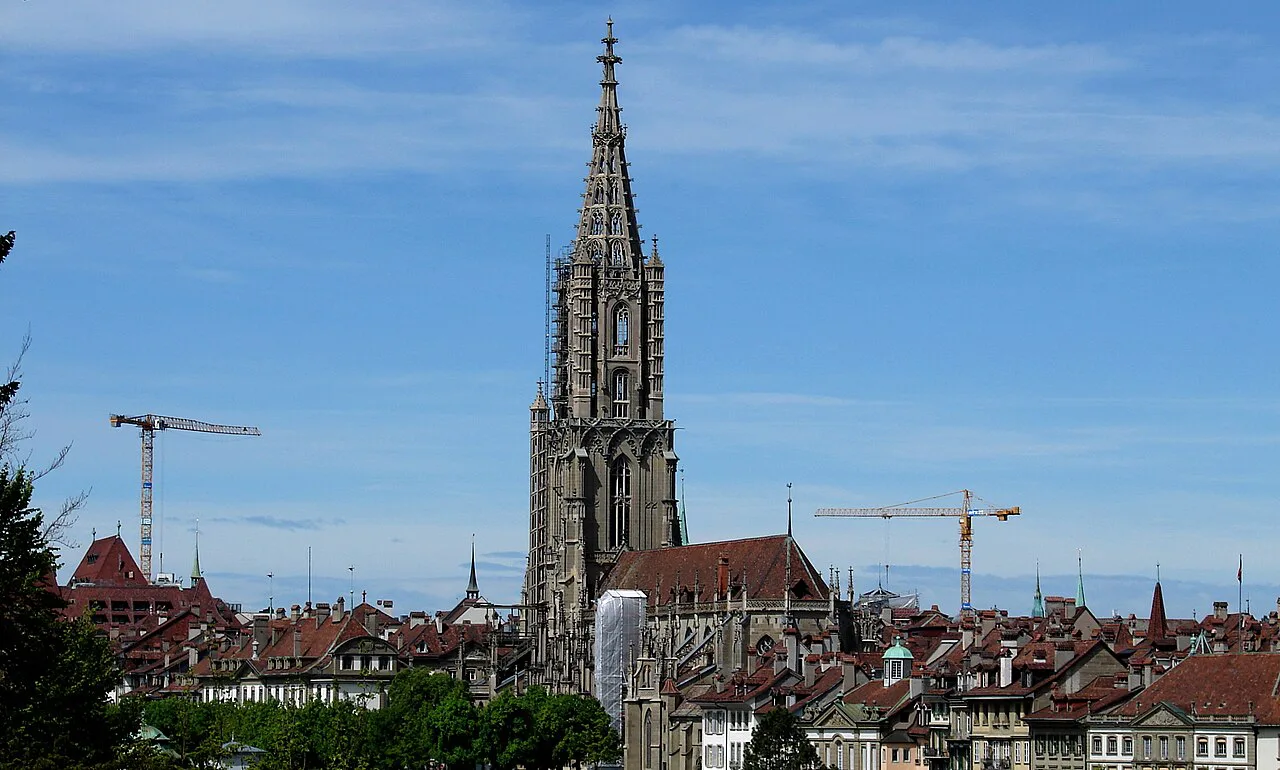
The Berner Münster is Bern's main church, a late-Gothic structure whose construction ran from 1421 to 1575, with the bell tower finished only in 1893. That long timeline explains the building's character: the nave and choir carry their medieval fabric, while the tower silhouette is a much later addition. It sits on Münsterplatz in the old town, a short walk from the Zytglogge and the arcaded shopping streets.
Understand the interior before you walk in. By 1421 Bern was effectively independent and had gained control of its own churches, so the town set out to build a church worthy of its wealth and power, and the result is the most famous Gothic church in Switzerland.
Where Bern Minster Sits in the Old Town
Münsterplatz opens in front of the church on the edge of the old town, high above the Aare, and the square is a natural pause on a walk from the Zytglogge down through the arcades. Approach from the clock tower side along the main street, then turn toward the river; the church is the tall building with the plain, tapering tower. Allow a few minutes on the square before you go in, since the church itself is the point of the stop and the square is where you get the best look at the façade and the tower. If you enjoy comparing cathedral squares, the Basel Minster sits in a similarly historic old town setting on the Rhine rather than the Aare.
If the church is closed when you arrive, the surrounding old town fills the time easily: the covered arcades, the street fountains, and the river viewpoint just beyond the square. The bear park bern sits lower down toward the Aare, a sensible addition on the same walk rather than a separate trip across town.
The Building: 1421 to 1575, Tower Finished in 1893
Construction of the main body of the Berner Münster spanned a considerable period, from 1421 to 1575, and the bell tower was not finished until over three centuries later. A serious fire in Bern in 1405 destroyed much of the city, which created the chance to rebuild the main church in an up-to-date style.
The exterior of the church is nothing special, and the view is dominated by the tower that was not completed until 1893, so do not expect a carved façade to match the great French cathedrals. The rewards are in the details: the portal, the glass, the choir furniture and the gargoyles.
The Last Judgment Portal
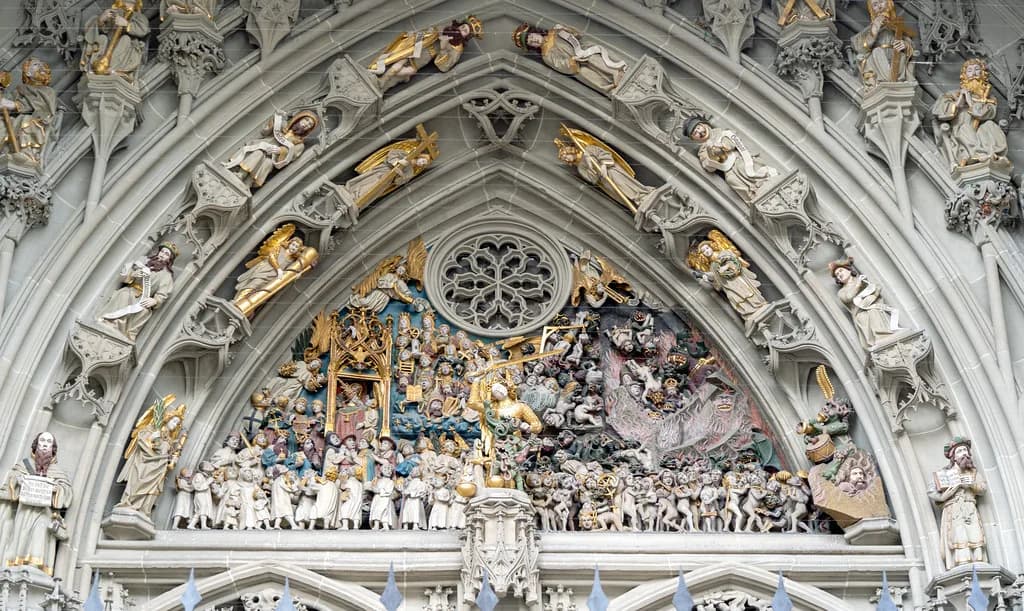
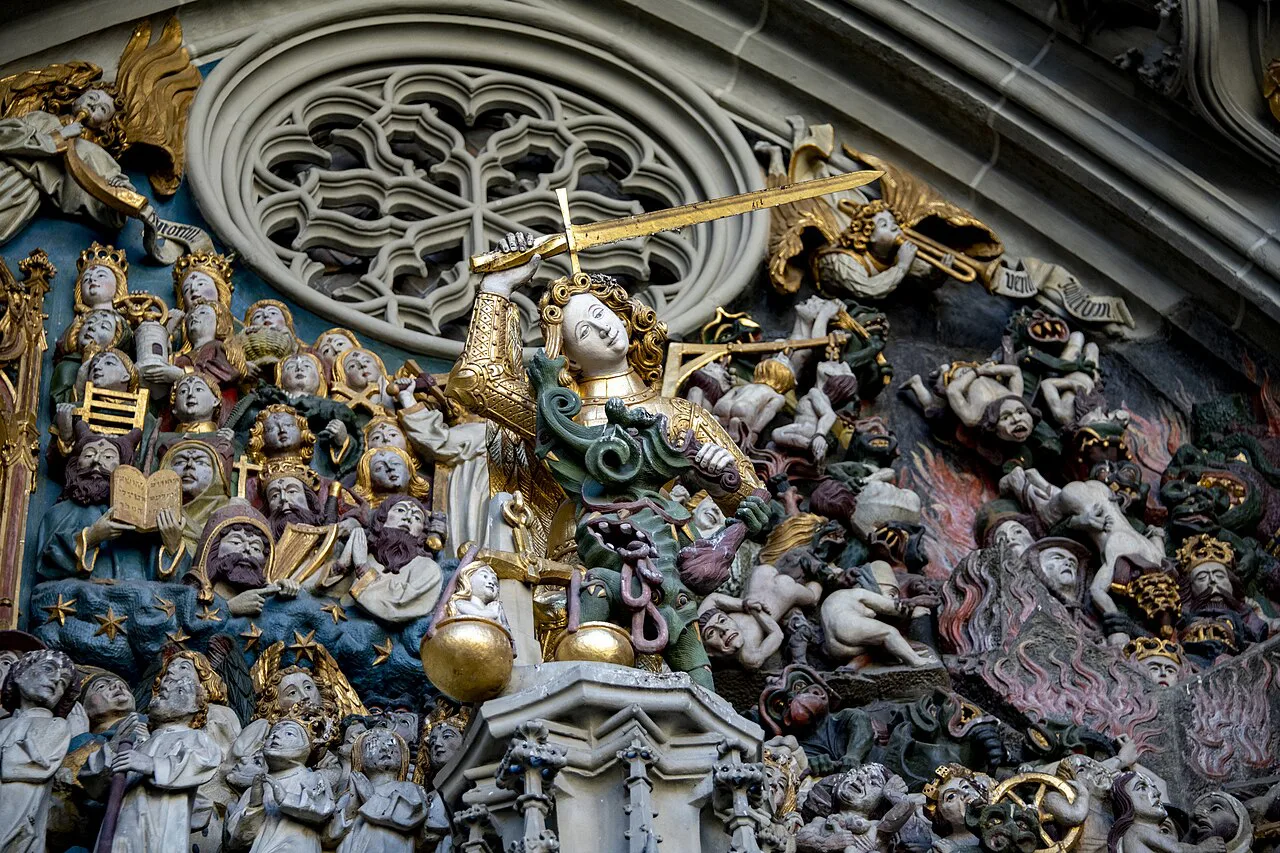
The main portal holds a Last Judgment carved around 1460 to 1480, and it contains the only statues left in place after the Reformation. Look for the saved entering Paradise on one side, with a pope in red leading them and two cardinals beneath, and the damned on the other. Several of the original figures have been moved to a local museum and replaced here with copies, so what you see over the door is partly a stand-in for the originals.
The iconoclasts did not touch this Last Judgment over the main entrance, and the painting has been kept up since, which is why a Reformation church still greets you with a fully populated medieval doorway. Solomon and the Queen of Sheba appear among the onlookers at the judging.
What the Reformation Changed Inside
In 1528 Ulrich Zwingli preached in the church, and as a result the whole city converted to Protestantism. During the Reformation more than forty side altars were removed, along with a large number of statues and paintings, which leaves the interior very sparse. What you see today is a working Protestant church, not a museum of Catholic ceremony, and the emptiness is the story.
One peculiar detail survives from the preaching church: the pews between the pulpit and the table are reversible, so congregants could face the pulpit during the long sermons or services without the Eucharist. An hourglass still sits on the pulpit. Look for these before you settle into a pew, since they are easy to miss in an otherwise bare space.

Surviving Medieval Detail: Apse Glass and Painted Vaulting
Most of the stained glass was installed between 1441 and 1450, including the famous Dance of Death Window and the Passion Window, and the apse windows are in remarkably good condition. The ceiling of the apse also preserves much of the Late Gothic tracery painted onto the vaulting, with the crest of Bern appearing again and again because much of the construction was paid for by the city.
That line of sight matters: stand in the nave facing the choir and read the windows and vault together before you move closer. The combination of painted vaulting and original glass is what gives the sparse interior its color and warmth.
Choir Stalls, Gargoyles and the Slow Lap
The sixteenth-century choir stalls carry carved figures worth a few minutes on their own, and the exterior repays a slow circuit for its gargoyles. Most visitors photograph the tower and walk away, so a deliberate lap around the building puts you ahead of the crowd.
On the square side, look for the Fountain of Moses, one of several decorative fountains throughout the city, visible in older views of the church. It is a small thing but it ties the square together with the church behind it.
Climbing the Tower
Climbing the tower is the other half of a visit, and reviewers single out the view over the old town as the reward. The climb is a physical effort, so decide before you start whether the view matters more than the time it costs.
The tower you climb is the nineteenth-century one finished in 1893, which is why its shape differs from the medieval body below. For up-to-date access rules, any lift or platform arrangement, and the cost of the climb, check the church's published visitor information before you set out, since conditions at height change with the season.

How Long to Allow and When to Go
Allow about an hour for the church and its details, and add the tower climb if you want the rooftop view. Build the visit into a morning along the old town so the church is one stop rather than a detour.
The interior is sparse, so light through the apse windows does much of the work; a visit in the middle of the day catches the glass well. Christmas visits bring seasonal decorations, but the building's core appeal does not depend on the season.
Practical Notes: Hours, Admission and Tower Access
Opening hours, admission and tower access vary, and the church's own visitor information is the place to confirm them for your dates rather than relying on a secondary guide. Check before you commit a morning, especially outside the main visitor season.
If the tower is closed for climbing when you arrive, the interior and the portal still justify the stop. Pair the church with the clock tower and the arcades rather than scheduling it as a standalone outing.
Nearby: Münsterplatz and the Old Town
Münsterplatz itself, the arcaded streets back toward the Zytglogge, and the river viewpoint are all within a few minutes on foot. The Zytglogge in Bern is the obvious next stop, with its moving clock figures drawing crowds at the hour.
If you want a museum after the church, the Bernisches Historisches Museum and Einstein House are both in the old town. For a wider sense of what fits into a few days, use the Bern Attractions: 8 Visitor Guides as a starting point rather than a checklist.
Plan Your Visit
Bern Minster rewards a focused hour: read the Last Judgment over the door, find the surviving apse glass and painted vault, and note the reversible pews that tell you how the church was used. The plain exterior and sparse interior are the honest picture, not a disappointment.
Check the church's own visitor information for current opening times and tower access, then fold the visit into a walk between the Zytglogge and the river. That way the Berner Münster becomes the anchor of a morning in the old town rather than a stop you hurry through.
Explore more Bern guides
Frequently Asked Questions
Where is Bern Minster?
Bern Minster, the Berner Münster, stands on Münsterplatz in the old town of Bern, Switzerland, a short walk from the Zytglogge clock tower. The square sits above the Aare, and the church's tall tower is the easiest landmark to aim for.
How long did Bern Minster take to build?
The main body of the church was built from 1421 to 1575, and the bell tower was not finished until 1893. That long timeline explains why the tower looks different from the medieval nave.
Why is Bern Minster's interior so plain?
During the Reformation, when the city converted to Protestantism after Ulrich Zwingli preached in the church in 1528, more than forty side altars were removed along with many statues and paintings. The result is a sparse working church rather than a decorated medieval interior.
What should I look for inside Bern Minster?
Look for the Last Judgment over the main portal, the stained glass of the apse including the Dance of Death Window, the painted Late Gothic vaulting, and the sixteenth-century choir stalls. The reversible pews and the hourglass on the pulpit are small details that explain how the church was used.
Can you climb the tower at Bern Minster?
Tower climbing gives a view over Bern's old town, though access rules and any costs change, so check the church's own visitor information for current arrangements. Even without the climb, the interior and the portal justify the visit.
How much time should I allow for Bern Minster?
Plan on about an hour for the church, its portal, glass and choir stalls, and add time for the tower climb if access is open. Keep it as one stop on an old-town walk rather than a separate outing.
What is the Last Judgment portal at Bern Minster?
The main doorway holds a Last Judgment carved around 1460 to 1480, the only statues left in place after the Reformation. The saved enter Paradise on one side, the damned are on the other, and some original figures have been moved to a local museum and replaced with copies.
What else is near Bern Minster?
Münsterplatz, the Fountain of Moses, the arcaded streets toward the Zytglogge, and the river viewpoint are all within a few minutes on foot. The Bernisches Historisches Museum and Einstein House are also in the old town if you want a museum after the church.