Bern Itinerary: A Realistic 2–3 Day Plan by Area
Plan two or three days in Bern with a day-by-day route through the arcaded Old Town, the Zytglogge, the Münster tower, Rosengarten and two museums.
On this page
Two full days is the right amount of time for Bern. The Old Town sits on a peninsula inside a bend of the Aare, so most of what you came for lies within a walkable loop of arcaded streets, clock towers and river terraces.
A third day adds breathing room for the free University Botanical Garden and a slow look at the fountains, and a single day covers the headline sights but skips either the Münster tower climb or a museum. The route below groups each day by area so you rarely double back through the arcades.
Why Bern Rewards Two Days Rather Than One
Bern's center is a UNESCO-listed Old Town spread across a peninsula formed by a sweeping bend in the turquoise Aare River, and much of the architecture is built from warm sandstone after a fire in 1405 destroyed hundreds of wooden homes. That compactness is what makes one day possible and two days pleasant: you can cross the historic core in a morning and still have an afternoon left for a tower, a terrace or a museum.
The trade-off is that Bern's best moments are slow ones. The Zytglogge figure show, the arcades, the river views from the bridges and the Rosengarten all reward standing still, which is hard when you are racing a single-day checklist. If you want the honest comparison of what fits in one, two or three days, read how many days in Bern before you book.
How Bern Is Laid Out: The Aare Peninsula, Marktgasse and the Arcades
Start your mental map at Bern Hauptbahnhof. Head east onto Marktgasse, one of the main streets, and it carries you past the Käfigturm toward the Zytglogge and the heart of the Old Town. Almost everything on this itinerary hangs off that spine or the streets running parallel to it.
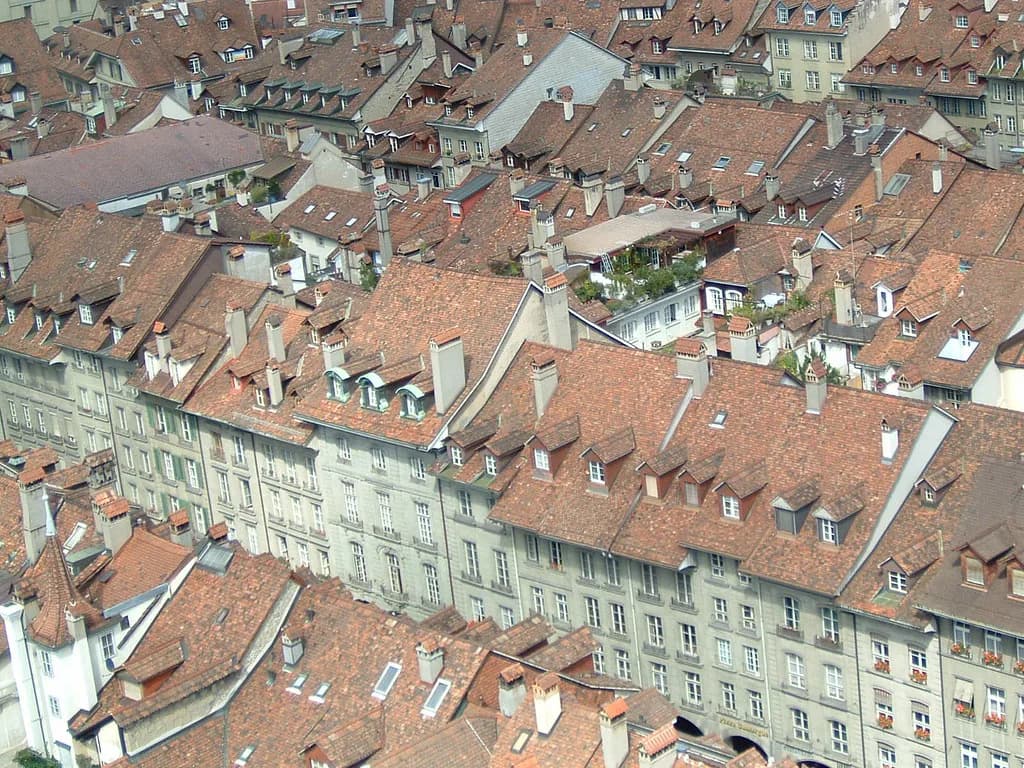
The arcades are the city's signature: roughly six kilometers of covered walkways line the Old Town, sheltering boutiques, galleries and department stores behind the sandstone facades. They are the reason a rainy morning in Bern still works, and they make the shopping streets feel like a covered gallery rather than an open road.
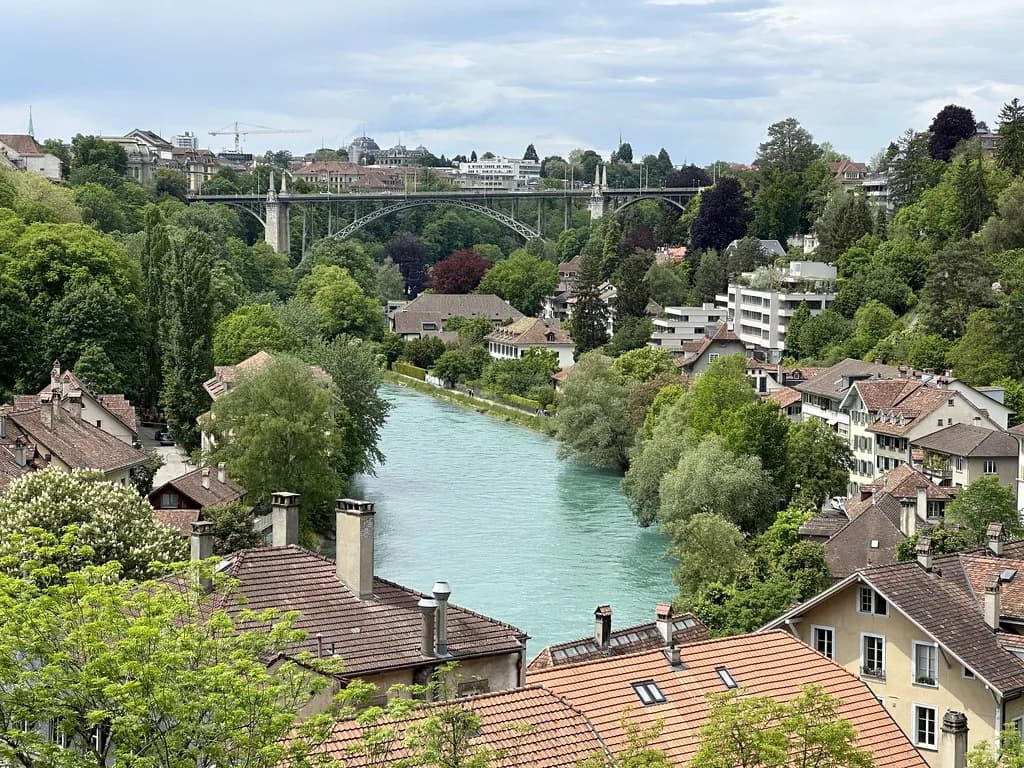
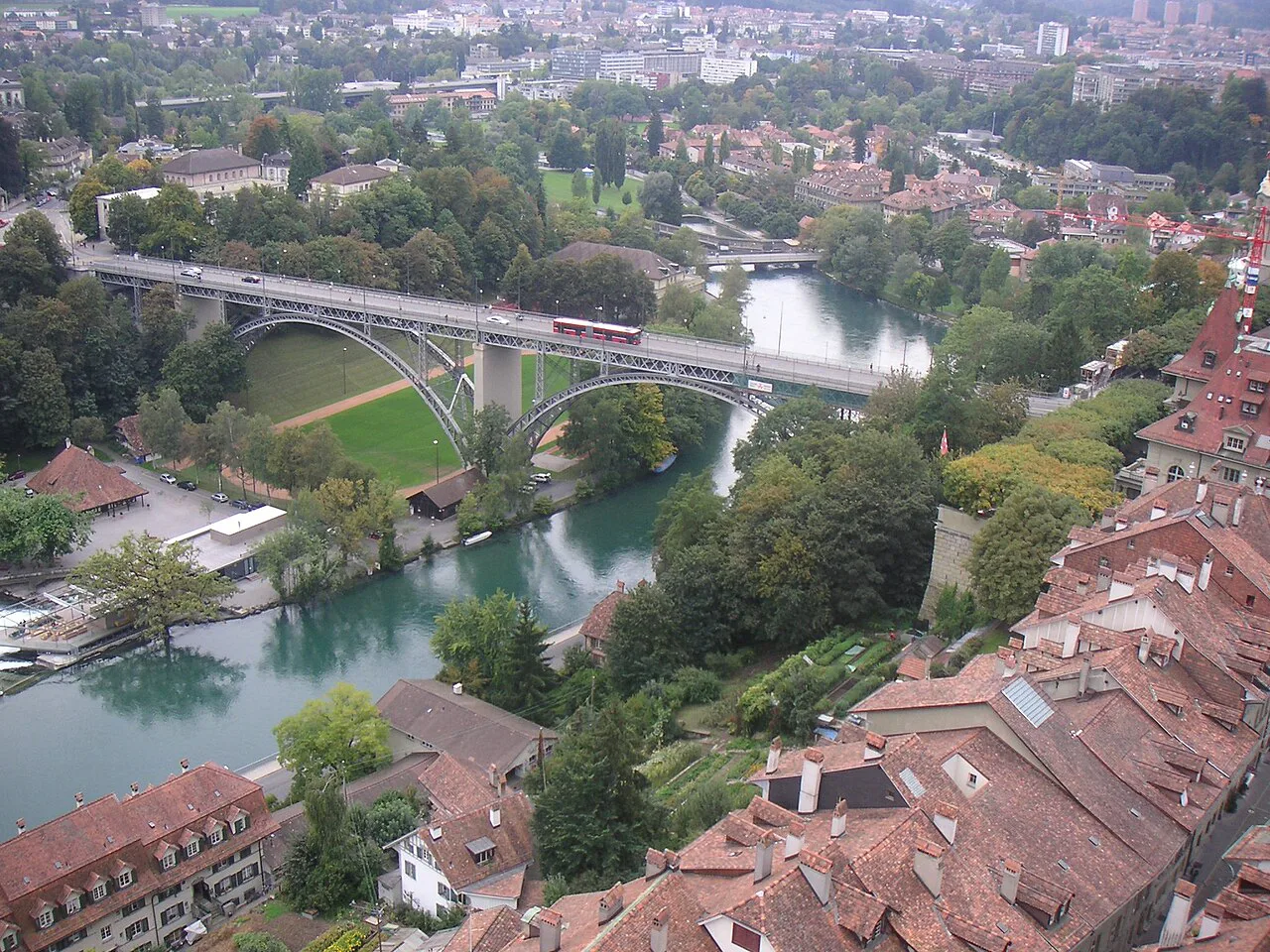
The peninsula closes on three sides with the Aare. Nydeggbrücke in the east leads toward the Rosengarten, Kirchenfeldbrücke in the south gives the classic view back over the river to the green domes of the Parliament Building, and Kornhausbrücke in the north looks over rooftops. Wind gusts on these bridges are real, so hold onto hats and loose scarves.
Day 1 Morning: Marktgasse, Käfigturm and the Zytglogge Figure Show on the Hour
Walk out of the station and follow Marktgasse east, ducking under the arcades as you go. The Käfigturm, a baroque tower with a red clock face, was originally built in the 13th century as a city gate and later served as a prison; the structure you see today dates from a 1640 rebuild. It is one of two surviving medieval guard towers in the Old Town, with the Zytglogge the other.
The Zytglogge is the set piece: a 15th-century astronomical clock tower with a dark blue face and gold sun and moon, once used as a guard tower, fire watch and prison. On the hour, figures including a rooster, Kronos and medieval jesters perform above the dial, and a small exhibition under the tower explains the mechanism. Time your arrival a few minutes early and watch from the square rather than mid-street.
If you would rather let someone else unpack the history of the medieval core, guided walks of the Old Town cover the same ground. Otherwise, keep the morning loose: the arcades, the Käfigturm and the clock tower are all within a few minutes of each other, so there is no need to schedule them tightly.
Day 1 Afternoon: Bern Münster, the Last Judgement Portal and the 344-Step Tower Climb
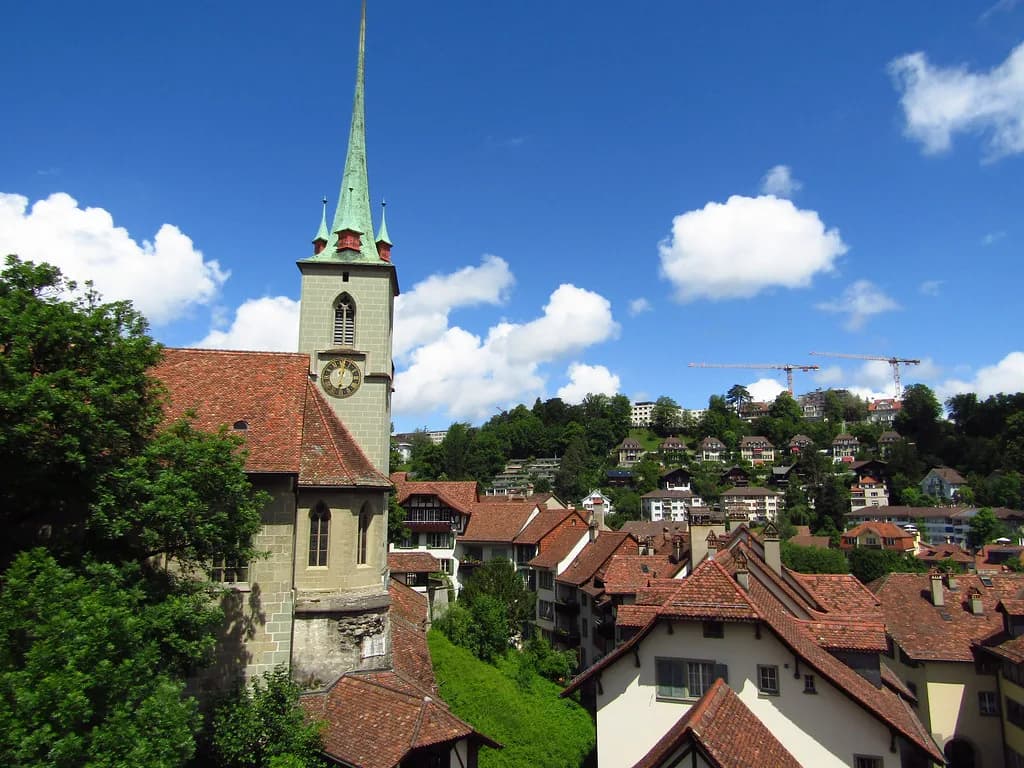
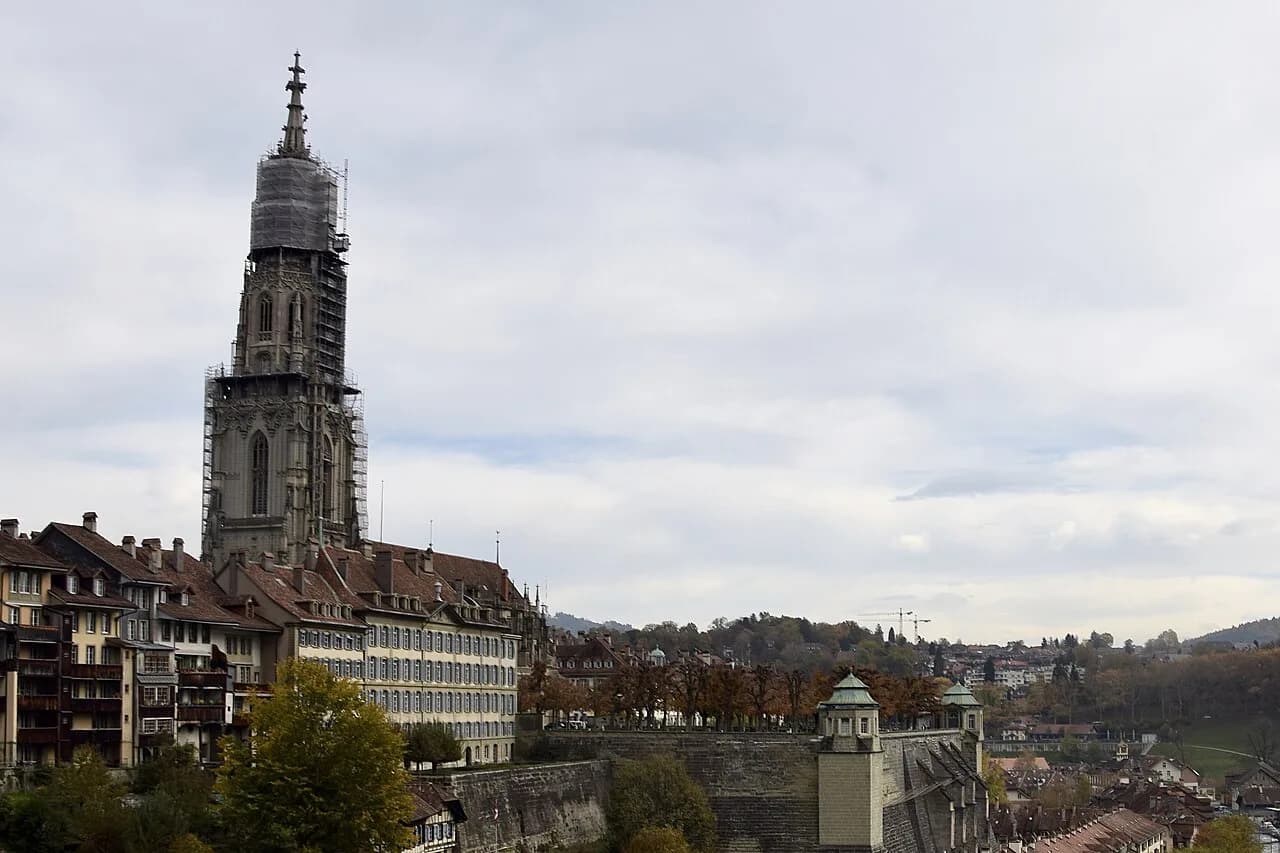
Bern Münster is the largest cathedral in Switzerland, begun in 1421 in late Gothic style and finished over centuries, which is why the details shift as you look upward. The Last Judgement portal above the main entrance carries more than 200 carved figures, one of the most detailed Gothic sculptures of its kind in Europe, and it alone justifies a slow lap before you go in.
The tower rises about 100 meters, the tallest church tower in Switzerland, and the climb is 344 steps. That is the honest trade-off of the day: a sweeping view over the Old Town, the Aare and, on clear days, the Alps in exchange for a stiff stair climb. Skip it if your knees are tired and take the free terrace view at Bundesterrasse instead.
Day 1 Evening: Bundesterrasse and the Federal Palace Terrace Views Over the Aare
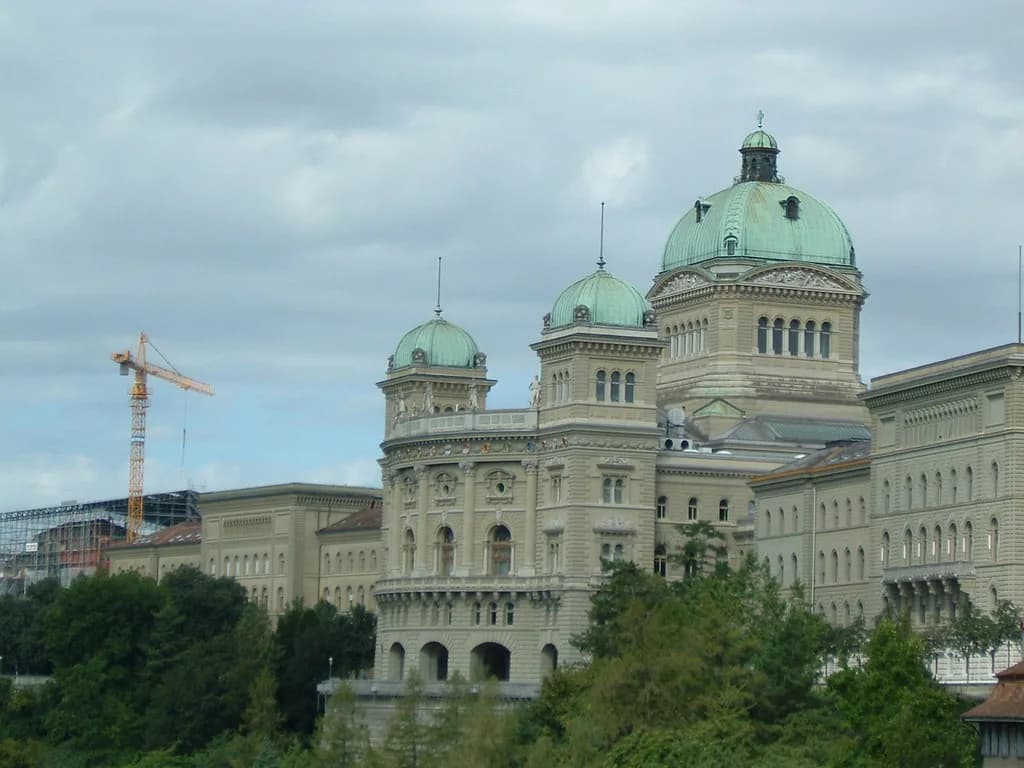
The Federal Palace, the Bundeshaus, opened in 1902 and sits above the Aare with the Bundesterrasse running along the slope below it. The terrace is free, open to stroll, and gives you the wide river-and-rooftops view without any stairs. It is the best low-effort finish to a walking day.
Interior visits to the Parliament Building have to be booked ahead, and places are limited, so decide early in your trip whether that is part of your plan. Otherwise the terrace and the exterior, seen best from Kirchenfeldbrücke looking back, are the draw.
Day 2 Morning: Kunstmuseum Bern
Give the Kunstmuseum Bern a full morning. Founded in 1879, it holds over 3,000 paintings and sculptures plus tens of thousands of works on paper, photographs and films, so a focused two hours beats an exhausting four. General admission is CHF 24, with discounts for students and seniors and free entry for children under 16.
Opening hours matter here. The museum opens daily from 10am to 5pm except Mondays, and stays open until 8pm on Tuesdays, which makes Tuesday the natural day to pair art with a late dinner.
Day 2 Afternoon: Rosengarten, the Einstein Bench and Bärenpark
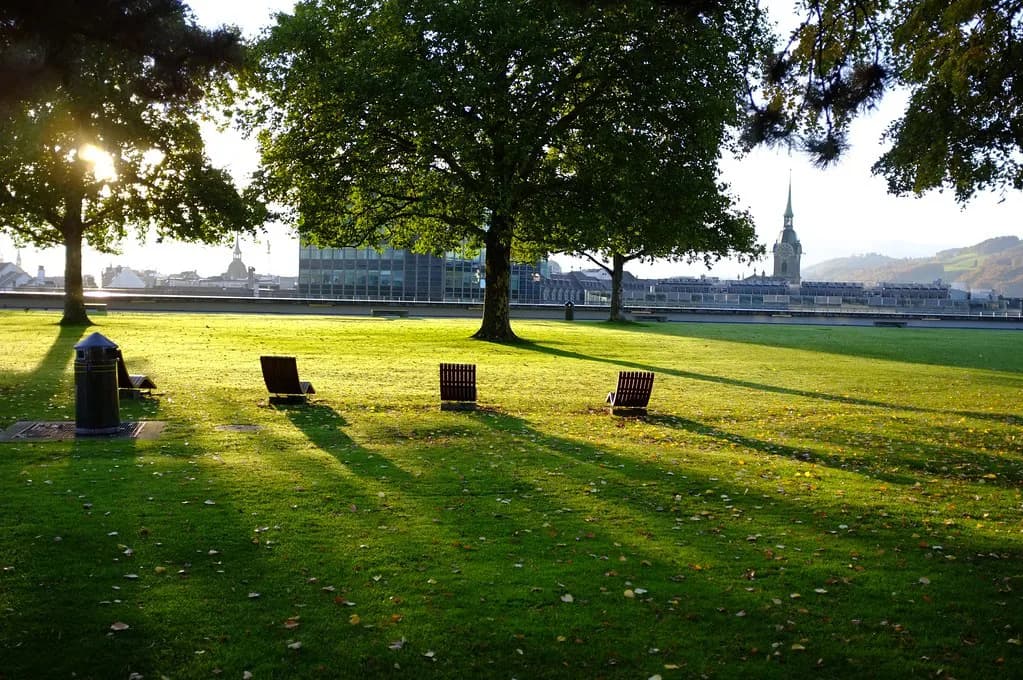
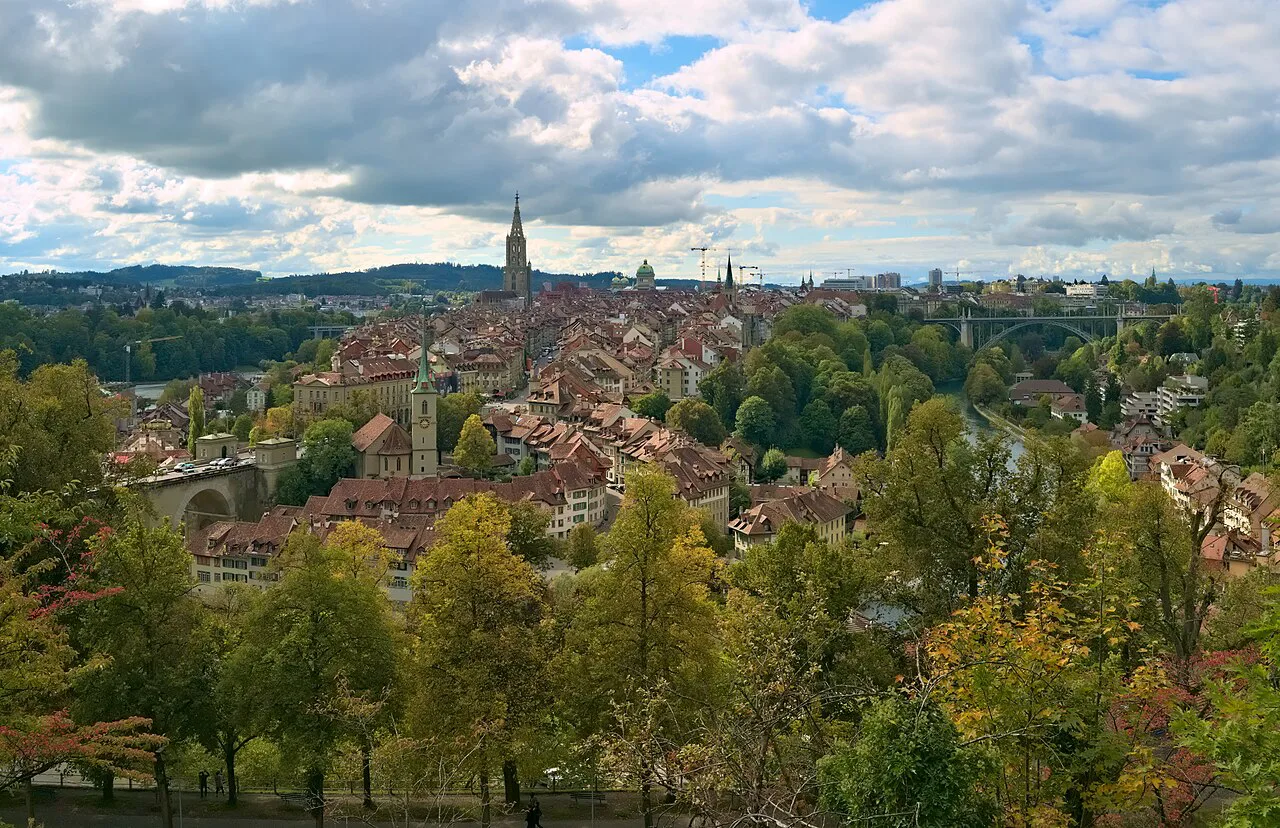
Cross Nydeggbrücke and climb to the Rosengarten for the classic view back over the terracotta rooftops of the Old Town. The garden holds hundreds of rose varieties in the warmer months and the hillside path is lined with cherry blossoms in spring; go early or late in the day, because the city is backlit at midday.
The Rosengarten also holds a bronze Einstein on a park bench, one of four Einstein sculptures placed around the city. The Bärenpark sits back down by Nydeggbrücke, free to visit, and bears have been kept in the city since 1513, making them Bern's living emblem.
Day 2 Alternative for Rainy Hours: Bernisches Historisches Museum or Einsteinhaus
If the weather turns, the Bernisches Historisches Museum covers the city's history indoors and pairs well with the Kunstmuseum if you want a two-museum day. The Einsteinhaus is the smaller, quirkier option: Einstein lived in the apartment from 1903 to 1905, the years of his work on special relativity, and the rooms are preserved as a museum.
Adult admission to the Einsteinhaus starts at CHF 7, it opens daily except Mondays from 10am to 5pm, and it sits near the Zytglogge, so it slots into an Old Town afternoon without a detour.
Day 3 Option: University Botanical Garden and the Lorraine Bridge
A third day is for the green edge of the city. The University Botanical Garden is free to visit, holds more than 6,000 plant species across seven public greenhouses, and centers on an Alpinum that represents mountain ranges from the Pyrenees to the Rockies. It sits on the slopes above the Aare near Altenberg, so it pairs naturally with a river walk.
From there, walk on to the Lorraine bridge, an early-20th-century crossing that gives a perspective on the city most visitors miss. It is a good way to see Bern as a working town rather than only as a medieval set piece.
A Fountain Walk: Kindlifresserbrunnen, Mosesbrunnen and the Meret Oppenheim Tower Fountain
Bern is nicknamed the city of fountains, and a short walk between three of them is one of the best free hours in town. The Kindlifresserbrunnen, the Child Eater, shows a figure eating a sack of babies; its meaning has never been settled, though theories range from Greek myth to local legend. It is odd, and it is right in the middle of the Old Town.
The Mosesbrunnen dates from 1791, with an earlier figure erected in 1544, and reflects Bern's Reformed roots: Moses points to the commandment against graven images. The Meret Oppenheim Tower Fountain, built in 1983, is an eight-meter concrete column covered in moss, so it changes with the seasons and reads as a green creature more than a fountain.
The fountains run with fresh water, so they are useful for refilling a bottle as you walk between them. Line them up between the Zytglogge and the Münster and the detour costs you little time.
Walking Times and How Much Ground You Actually Cover
Bern's sightseeing core is small enough that the itinerary above involves no transport between stops. Marktgasse, the Käfigturm, the Zytglogge, the Münster and the Bundesterrasse all sit within a short walk of one another, and the climb out to the Rosengarten is the only real hill. The bridges add ten to fifteen minutes each way depending on your pace.
Plan each day as one loop rather than a checklist: Old Town and river terrace on day one, museum and Rosengarten on day two, gardens and bridges on day three. That structure keeps you from crossing the peninsula repeatedly and leaves room for unplanned stops in the arcades.
What to Skip If You Only Have 36 Hours
With a day and a half, keep the Zytglogge on the hour, the Münster, the arcades, the Bundesterrasse and the Rosengarten, and choose either the Kunstmuseum Bern or the Einsteinhaus rather than both. Drop the Botanical Garden and the Lorraine bridge first; they reward leisure you will not have. A single day can follow a tighter version of the same route if you want a faster plan.
Bärenpark and the fountains cost nothing and sit on the same loop, so they stay in even on a short visit. The thing to cut is paid indoor time, not the free outdoor sights that define the city.
Costs in Swiss Francs: What Paid Stops Add Up To
Two paid stops anchor this plan: Kunstmuseum Bern at CHF 24 general admission and Einsteinhaus at CHF 7 for adults. Under-16s enter the Kunstmuseum free, and the student and senior discounts there can lower that figure; the museum publishes current rates and reductions.
Everything else here is free: the arcades, the Zytglogge show from the square, the fountains, the Bundesterrasse, the Rosengarten, Bärenpark, the Botanical Garden and the bridges. The Münster tower climb and any tour bookings add costs the cathedral's own ticket desk will quote, so treat CHF 24 plus CHF 7 as the floor for a museum-focused two days rather than a total.
The cheap options for a longer stay are to walk this route in full and decide on the paid interiors on the day. If you are still weighing whether Bern justifies the time, is bern worth visiting sets out what the city does well.
Practical Timing: Monday Museum Closures and Sunday Arcade Shopping
Both paid indoor stops on this plan close on Mondays, so build Monday around the Old Town, the Aare and the Rosengarten rather than museums. Kunstmuseum Bern and Einsteinhaus publish their own hours, so confirm the day of your visit against them rather than assuming a national pattern.
The arcades are where Bern shops, and a Sunday wanders through the windows rather than the stores. Use that day for the viewpoints and the bridges, which stay open and stay free.
Where This Plan Links to the One-Day and Weekend Versions
This is the full version of the plan: two days by area and an optional third. If you are squeezing Bern in around another city, the one day in Bern guide trims it to a single loop, and the weekend in bern guide handles the Friday-to-Sunday shape with the same sights.
If Zürich is your other stop, the 3 days in zurich plan keeps the two cities from overlapping. Neighboring Basel is close enough to pair with Bern too, and its basel itinerary organizes the sights the same area-by-area way. And if you want detail on any one sight, Bern Attractions: 8 Visitor Guides has the individual write-ups.
Plan Your Visit
Two days in Bern means one day of medieval streets and river terraces and one day split between a museum and the Rosengarten, with a third reserved for the free gardens and bridges. Pick your days around the Monday closures, and check the opening days of any paid interior before you set out, since the Kunstmuseum Bern and Einsteinhaus keep to published schedules that can change around holidays.
Budget CHF 24 for the Kunstmuseum Bern and CHF 7 for the Einsteinhaus, and treat the fountains, the arcades, the Bundesterrasse and Bärenpark as the free core that makes Bern one of Switzerland's easier cities to see well.
Explore more Bern guides
Frequently Asked Questions
How many days in Bern do I need?
Two full days cover the Old Town, the Zytglogge, the Münster tower, the Bundesterrasse and the Rosengarten without rushing, plus time for one museum. A third day lets you add the free University Botanical Garden and the Lorraine bridge.
What is the must-see in Bern?
The Zytglogge clock tower and its figure show on the hour, the arcaded streets around Marktgasse, and the Rosengarten view back over the Old Town. The Bern Münster's Last Judgement portal is the most detailed single work in the city.
Is Bern worth visiting?
Yes, if you want a compact medieval city that is easy to walk rather than a checklist of attractions. The Old Town, fountains, river terraces and viewpoints fill two days, and the paid attractions are few, which keeps costs controlled.
Which Bern museums are open and when?
Kunstmuseum Bern and the Einsteinhaus both open daily except Mondays, and the Kunstmuseum stays open later on Tuesdays. Both publish their own hours, so confirm against those before you go.
Which Bern sights are free?
The arcades, the fountains, the Bundesterrasse, the Rosengarten, Bärenpark, the University Botanical Garden, the bridges and the Zytglogge show from the square cost nothing. Paid stops are the Kunstmuseum Bern, the Einsteinhaus and any tour bookings.
What does a two-day Bern itinerary cost?
The paid anchors are CHF 24 general admission at Kunstmuseum Bern and CHF 7 for adults at the Einsteinhaus, with free entry at the museum for children under 16 and discounts for students and seniors. The Münster tower climb is priced at its own ticket desk.
What can I see in Bern in two hours?
Walk Marktgasse to the Zytglogge, watch the figures on the hour, continue to Bern Münster and its Last Judgement portal, and finish at the Bundesterrasse for the river view. That is a tight but complete introduction to the Old Town.
Is one day in Bern enough?
One day covers the headline sights but forces a choice between the Münster tower climb and a museum. Two days removes that trade-off and gives you the Rosengarten and the bridges at an unhurried pace.
Sources
Notes for your Swiss city break
Optional updates to our Swiss city guides.
You might also like
Continue reading
More guides you'll find useful