
Basel Minster (Basler Münster): What to See and How Long to Allow
Basel Minster, the Basler Münster, is the red sandstone cathedral that stands on the Münsterhügel above the Rhine in Basel's Old Town. It is a Reformed Protestant church today, listed as a heritage site of national significance, and it packs Romanesque and Gothic phases, Reformation history and a Rhine-side courtyard into a compact stop. Plan roughly 60 to 90 minutes for the church and the courtyard together.
What Basel Minster Is
Basel Minster is the main church on Basel's cathedral hill, with two slim towers that define the skyline above the river. It was built between 1019 and 1500, combining Romanesque and Gothic work, and it is listed as a heritage site of national significance in Switzerland. Originally a Catholic cathedral, it became a Reformed Protestant church after the Reformation.
The clean way to read the building is as two stories in one shell. The Romanesque structure was destroyed by the Basel earthquake in 1356, then rebuilt, with the final southern tower completed in 1500. That is why parts of the exterior and interior feel heavy and rounded while other sections pull upward in Gothic style.
Where It Sits in Basel
The cathedral occupies the high point of the Old Town, with the Münsterplatz in front and a courtyard behind the church that opens onto views over the Rhine. From the back of the courtyard you look down on the river, the bridges and the rooftops of both sides of the city, including the tower on the bridge that marks the link between Grossbasel and Kleinbasel.
That position makes the Minster a natural anchor for a walk through the Old Town rather than a standalone detour. Use it as a fixed point and build the surrounding streets around it; for the full set of named sights in the city, see the Basel Attractions: 8 Visitor Guides.
How to Get There
You reach Basel Minster on foot through the Old Town, climbing to the cathedral hill above the Rhine. The climb is short but steady, and the reward is the Münsterplatz itself plus the courtyard behind the church. Ferries still carry people across the river between the two halves of the city, which is useful if you are coming from the Kleinbasel side.
If you are plotting a day around the Old Town, the Basel itinerary pairs the Minster with the streets and squares around it. Walk up from the river rather than circling by tram; the approach through the lanes is part of the visit.
The Architecture: Romanesque and Gothic in One Building
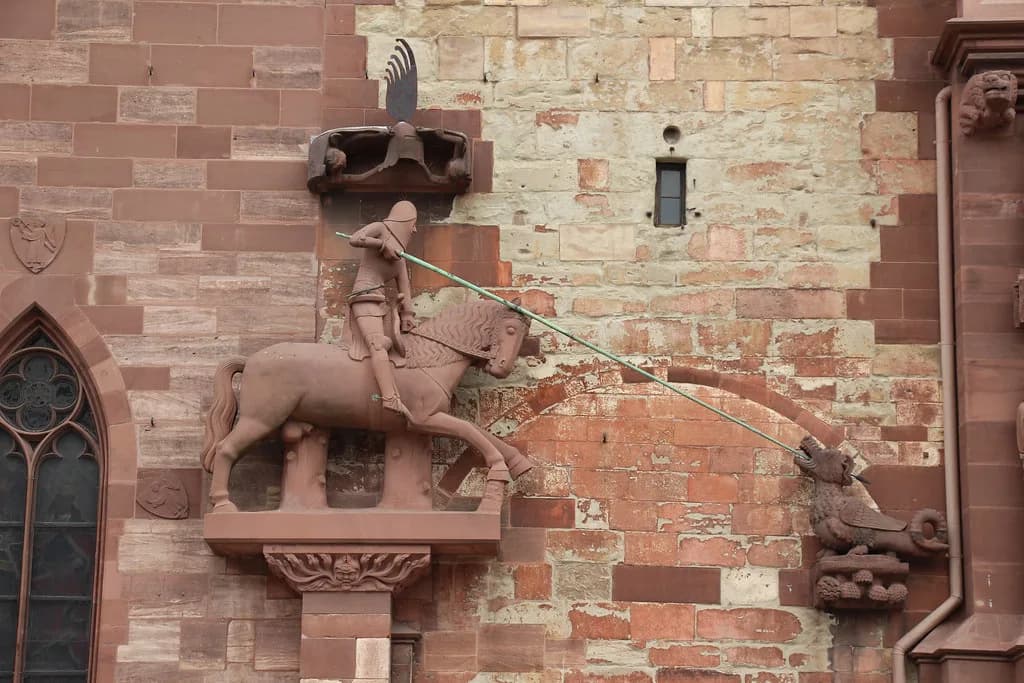
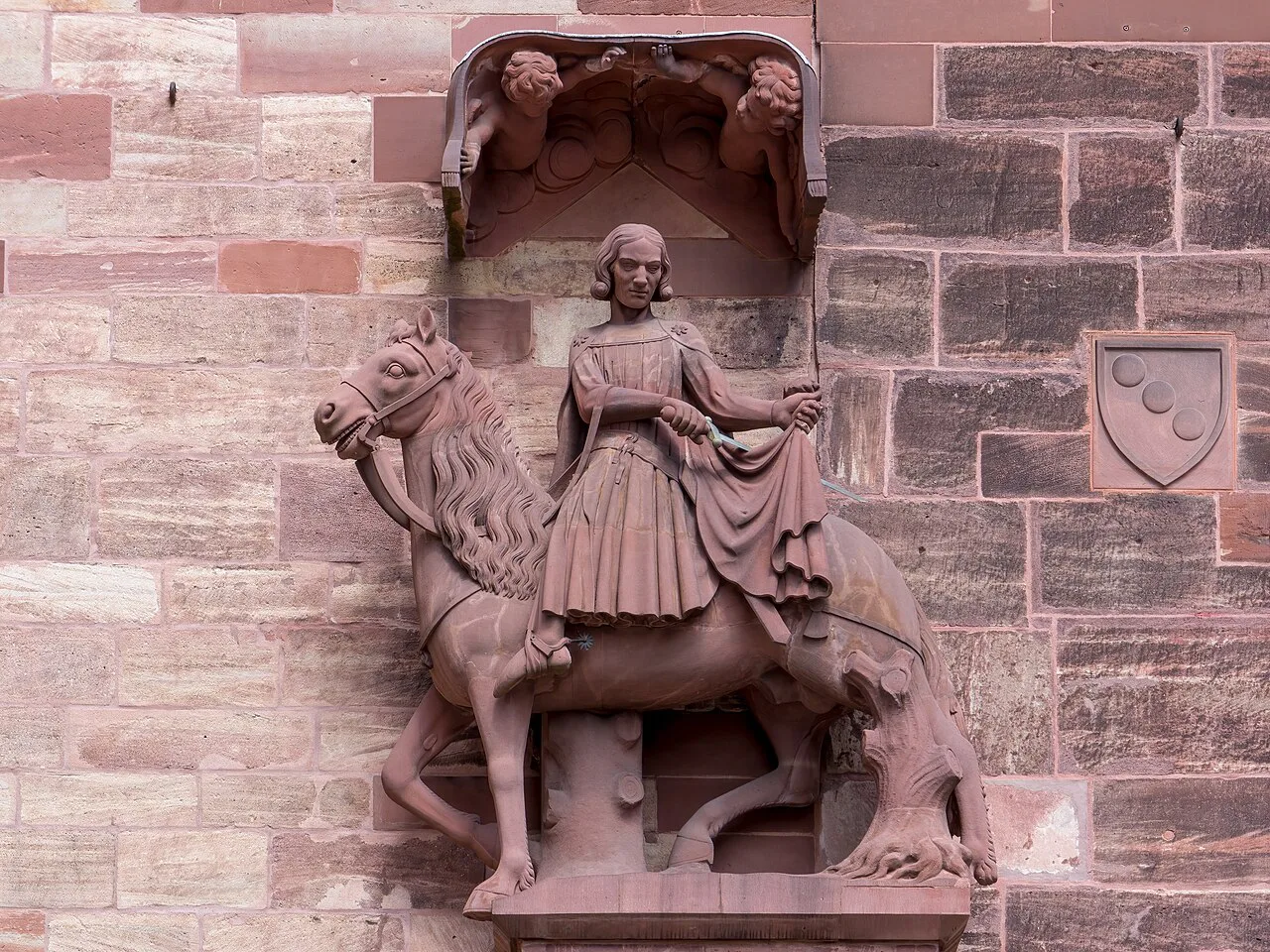
The red sandstone exterior gives the Minster a warmer, heavier look than many Swiss cathedrals, and it is the single most distinctive thing about the building. The two slim towers rise from the west end, and the mix of Romanesque and Gothic detail is visible as you move around the outside. Look at the masonry closely: the phases do not match, and that is the point.
Inside, the nave and choir carry the same layered history, with later Gothic elements layered over the older Romanesque footprint. The building has been through an earthquake, a Reformation and centuries of use, and the architecture records each of those passages rather than hiding them.

Building History: 1019, the 1356 Earthquake and 1500
Construction began in 1019 and continued across centuries, so the Minster is not one building but a sequence of them. The Romanesque structure was destroyed by the Basel earthquake in 1356, and the rebuilding that followed produced much of what you see today. The final southern tower was completed in 1500.
Two later events explain the interior. In 1424 Pope Martin V told Basel's government that the city had been chosen for the next church council, a reform assembly whose legacy still echoes in the city. During the Protestant Reformation, citizens stormed Basel's churches and destroyed religious paintings and statues, which is why the Minster's interior is plainer than its medieval past would suggest.
Inside the Church
The interior is now a Reformed Protestant church, and the Reformation iconoclasm stripped out most of the religious art that once filled it. What remains is the architecture itself: the stone, the vaulting, the windows and the sense of a very old space in daily use. Services and gatherings still happen here, so you may find parts of the church in use when you arrive.
The building is a working church rather than a museum, and visitors are welcome to look around respectfully. Keep an eye on the entrance area for any notices about which parts are open on the day.
The Courtyard and the Rhine View
Walk out to the back of the church courtyard for one of the best views in this part of Basel. From the terrace you look over the Rhine, the bridges and the opposite bank, and you can pick out the tower on the bridge that symbolizes the unity between Grossbasel and Kleinbasel. This is the spot to budget extra time for.
The view is worth more than a quick photo stop: give it ten or fifteen minutes. If you want more of the Old Town after the Minster, the Basel Town Hall (Rathaus) and the Spalen Gate are both within walking distance, and the Mittlere Brücke is a short descent away.
How Long to Allow and When to Go
Treat Basel Minster as a 60 to 90 minute stop: the church interior, a slow circuit of the exterior and the courtyard view. That is enough to see it properly without padding it into a half-day. Morning visits tend to be quieter, and the courtyard is at its best in clear weather.
Because the Minster sits at the top of the Old Town, it works well as the first stop of the day before the streets fill up. Pair it with one nearby museum afterwards rather than trying to stack several sights on the same hill.

Tickets, Tower Access and Opening Times
Opening times, any entry arrangements and whether the towers can be climbed should be confirmed on the day with the church itself; check the official Basler Münster website or the notice at the entrance before planning around a specific time. Basel Minster is a working church, so access can vary with services and events.
If your Basel plan is built around museums as well, the Kunstmuseum's holdings and the Renzo Piano-designed Fondation Beyeler reward a separate slot, while the Pharmacy Museum Basel (Pharmaziemuseum) and the Basel Paper Mill (Basler Papiermühle) suit a slower afternoon. The Museum Tinguely, Basel and the Spalen Gate round out a fuller program across the city.
Nearby: the Old Town and Münsterplatz
The Münsterplatz in front of the cathedral is the natural meeting point, and the lanes below it lead down to the river and the old bridges. From the Minster you can walk to the Basel Town Hall (Rathaus) and its painted façade, or continue to the Spalen Gate at the edge of the old fortifications. Both are short walks on foot through the Old Town.
For a wider view of what else fits around the cathedral, see things to do in Basel, which maps the Old Town around this hill. Beyond the city, Bern Minster (Berner Münster) makes an obvious comparison for anyone heading on to the capital, with a similarly layered Gothic history; the guide to Bern Minster (Berner Münster) covers that cathedral in the same way.
Plan Your Visit
Basel Minster earns its place as the anchor of a Basel Old Town day: a red sandstone cathedral with Romanesque and Gothic phases, a Reformation interior and one of the best views over the Rhine. Allow 60 to 90 minutes, go early for a quieter visit, and end at the courtyard behind the church. Confirm the day's opening arrangements at the entrance before you build your schedule around a fixed time.
Explore more Basel guides
Frequently Asked Questions
What is Basel Minster known for?
Basel Minster is known for its red sandstone exterior, its two slim towers and its mix of Romanesque and Gothic architecture. It is a Reformed Protestant church on the Münsterhügel above the Rhine, listed as a heritage site of national significance in Switzerland. The courtyard behind the church gives one of the best views over the river.
How long does it take to visit Basel Minster?
Allow around 60 to 90 minutes for the church interior, a walk around the exterior and time in the courtyard behind the church. That is enough to see the building properly without stretching it into a half-day. Add more time if you want to sit with the Rhine view.
Is Basel Minster Catholic or Protestant?
Basel Minster is a Reformed Protestant church today. It started as a Catholic cathedral and became Protestant after the Reformation, when religious paintings and statues in Basel's churches were destroyed. Services and gatherings still take place in the building.
Do you need tickets for Basel Minster?
Check the official Basler Münster website or the notice at the entrance for the current arrangements before you go. Any entry details are best confirmed on the day, since the building is a working church and access can vary with services and events.
Can you climb the towers of Basel Minster?
Tower access should be confirmed with the church before you plan around it. Ask at the entrance or check the official Basler Münster website for the day's arrangements. The cathedral's two slim towers are its signature feature from the outside regardless.