
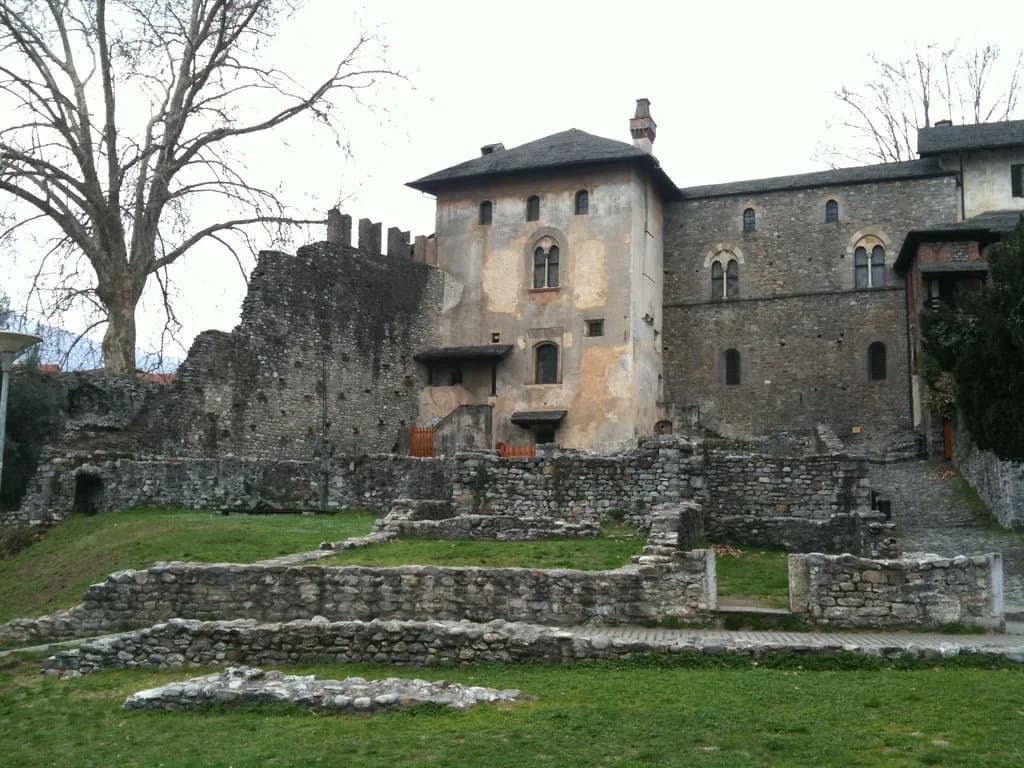
Castello Visconteo in Locarno: what to see and how long it takes
The Castello Visconteo is Locarno's medieval castle and the home of the Museo civico archeologico, which makes it the one stop in the city that covers both the building's own history and the region's deep past in a single visit. It suits travelers who want an hour or two of solid context before or after the lakefront, and families with children old enough to follow a treasure hunt through the halls.
The castle sits on rocky ground in the lower town, a short walk from the lakefront and the center, so it fits easily into a day built around Piazza Grande, Locarno. The exhibitions are spread across several rooms rather than one continuous gallery, and knowing which strands you want to see is the key to pacing the visit.
Where the castle is and how to reach the entrance
The museum's address is Via Bartolomeo Rusca 5, 6600 Locarno, and that is the entrance to use for the castle museum. The setting is the lower town rather than the hillside above it, so you reach the door on foot from the center without any climb.
Locarno's compact core means the castle pairs naturally with the open square at the heart of the old town and with the sanctuary on the hill above, both of which you can read up on separately. If you are building a short city break around these sights, start with the Locarno Attractions: 6 Visitor Guides overview and slot the castle in as an indoor, history-focused block. Comparing museum-and-town planning across the region, our Lugano itinerary shows the same approach for a few days in Lugano.
Opening days, hours and the winter closure
The castle opens Tuesday to Sunday and on public holidays from 10:00 to 16:30, and it is closed on Mondays. The museum also shuts entirely for the winter season from November to March, which makes the closure calendar as important as the daily hours.
That winter closure is the single biggest constraint on a visit: a trip in April through October can slot the castle in almost any day except Monday, while a winter trip to Locarno will not include the interior at all. If your dates fall in the closed season, plan on the lakefront and the hilltop sanctuary instead and keep the castle for a return.
What a ticket costs
Published ticket rates are CHF 15 for adults, CHF 8 for students aged 18 and over who show a student card, and free entry up to age 18. The same rates list free admission for Raiffeisen MemberPlus cardholders, and the museum offers combined tickets and further discounts through its own ticket page.
For a family, the free-under-18 rule is what makes the castle affordable: two adults pay CHF 30 together and children enter at no charge, so the ticket line is worth checking before you assume a museum afternoon will blow the budget. Buy or confirm the current rate on the museum's ticket page rather than relying on an older figure.
The castle building: courtyard, tower and medieval core
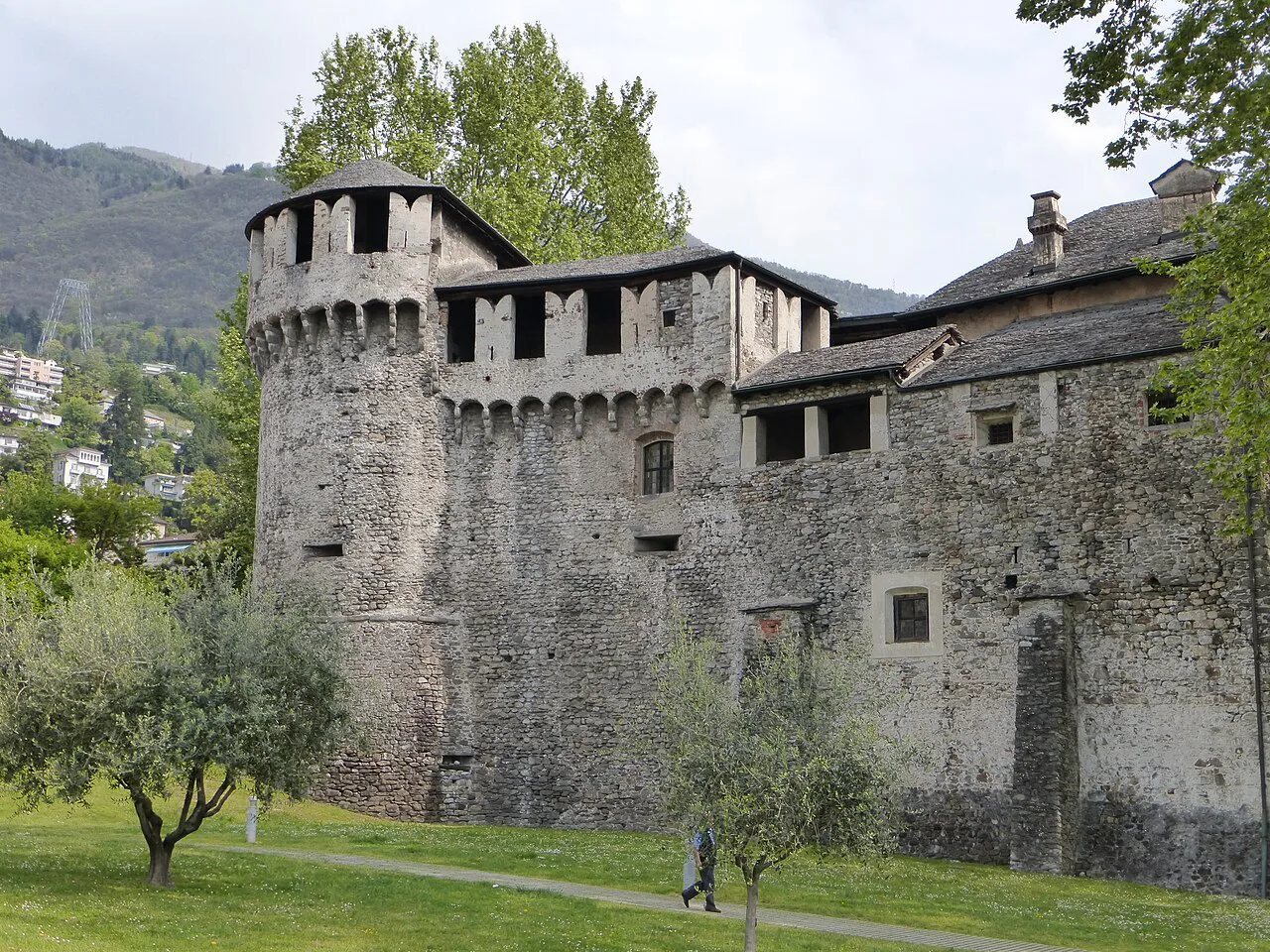
The Visconti family gave the castle its present name after taking it in 1342, and the building passed through the Rusca and Sforza families before coming under the Confederate baillis after the conquest of the Locarnese in 1513. Under that later period roughly two-thirds of the castle was destroyed, which is why what you walk through today is a reduced version of the original fortress rather than its full medieval footprint.
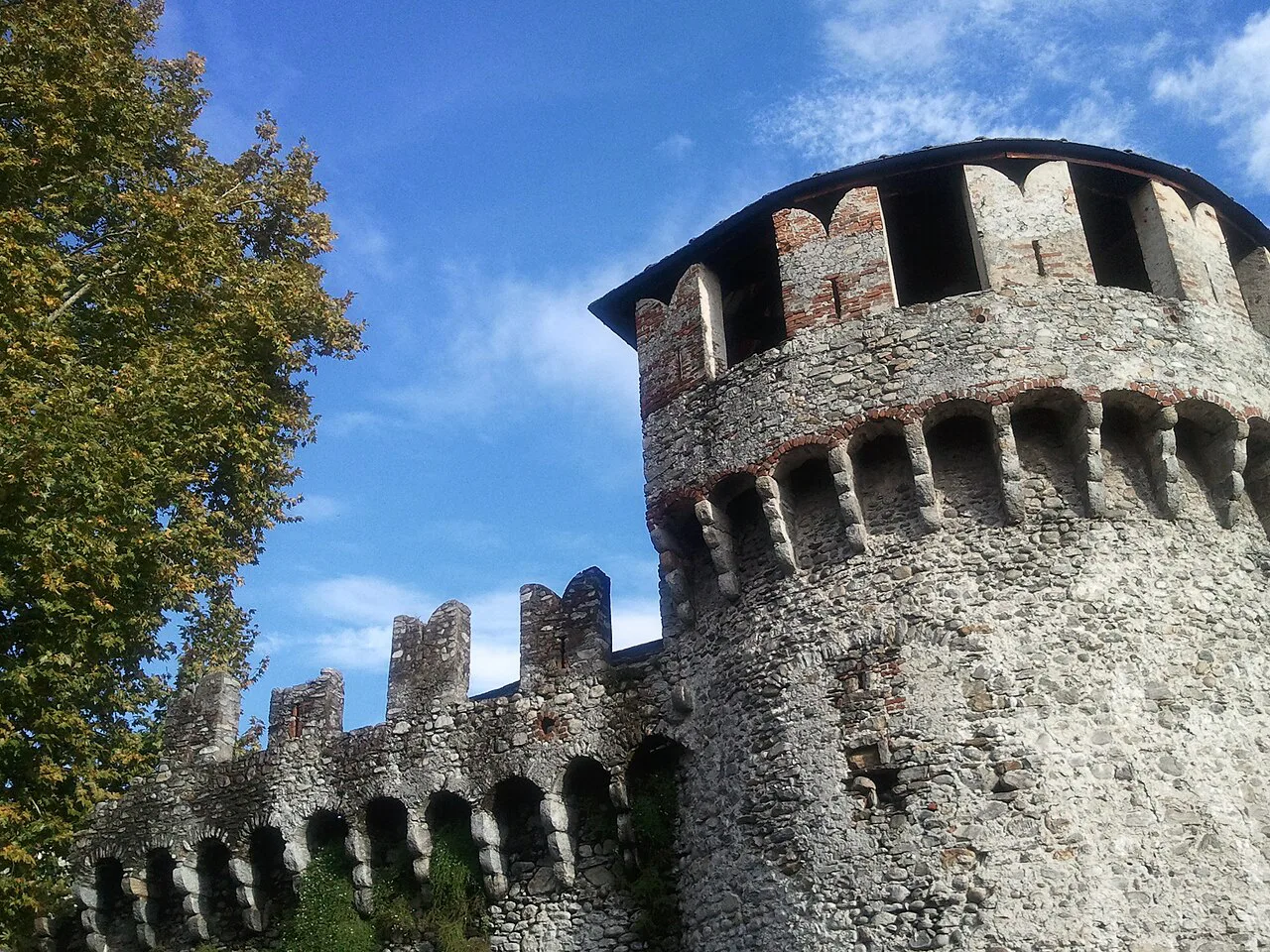
In the nineteenth century the castle lost its military role and served as a prison, barracks and school before a restoration in the early twentieth century returned it to cultural use. Outside, look for the surviving walls, the courtyard with its frescoes and the tower; inside, the rooms carry the exhibitions rather than period furnishings.
The archaeological exhibition: Bronze Age to Roman Locarno
The archaeological exhibition traces Locarno's story from the Bronze Age through the Roman period, presenting finds dated from the thirteenth century BC to the fourth century AD. During Roman times Locarno was a trading point between the Alpine valleys and the Po plain, and the display draws on the necropolis and on glass products to show that role.
Beyond the glass, the cases hold pottery, tools, weapons and jewelry in various metals. Allow a proper half hour here if you read labels, less if you are skimming toward the glass and the twentieth-century rooms.
The Roman glass collection
The museum's Roman glass collection is described as one of the most significant in Europe, which is the strongest single reason to pay for a ticket here rather than only walking the castle courtyard. If you have an hour and one interest, make it this room.

The Locarno Pact exhibition and the 1925 conference
One permanent display covers the 1925 Locarno conference and the Rhine Pact signed that year, when Germany accepted its western border, guaranteed by Britain and Italy, and concluded arbitration treaties with Belgium, France, Poland and Czechoslovakia. The exhibition also maps the places in the city connected with the event, so the conference becomes something you can trace on foot afterwards.
The room shows who took part in the meetings and explains how the brief cooperation that followed was undone when Germany repudiated the treaties in 1936. For travelers who know Locarno only for its film festival and lakefront, this is the section that reframes the city's modern history.
The Reformation exhibition
A second historical display treats the Reformation in the Locarnese, following the city from a place divided by religious persecution to a symbol of renewal and social cohesion. The thread runs through the 1549 disputation between the Reformed community and Catholic authorities, the prelude to the exile of Locarno's Protestants, which gives the room its narrative spine.
Edoardo Berta and the 1920s restoration
A dedicated exhibition explains the restoration carried out in the 1920s by Edoardo Berta, a leading figure in Ticino art, whose approach respected the building and brought its historical layers back into view. Unpublished drawings and photographs document the process, and a memory box invites visitors to add personal testimony about the castle.
Read this section before or after walking the courtyard, because it explains why the castle looks the way it does: the surviving medieval fabric and the twentieth-century interventions sit side by side once you know what to look for.
The castle history film in the Sala del Camino
A documentary on the castle's history, directed by Jonas Marti, screens in the Sala del Camino on the ground floor and is subtitled in several languages for an international audience. It covers the medieval and Renaissance chapters and makes a sensible first stop if you want the building's story before the objects.

Visiting with children
The castle runs a year-round treasure hunt for children aged 5 to 12, who follow clues in search of Countess Beatrice Rusca-Casati and the story tying her to the castle. A family kit can be downloaded in advance, and children who finish the hunt receive a ticket for a surprise at Pasticceria Marnin.
Workshops and themed guided tours also run through the year, which turns the castle into an activity for a rainy or shoulder-season afternoon rather than a quick photo stop. Download the kit before arriving so the hunt is ready when you walk in.
How long to allow, and when to go
Budget about two hours to cover the archaeological rooms, the glass, both historical exhibitions and the film, and closer to an hour if you skip the film and the Reformation room. Families following the treasure hunt will need longer, so leave the castle for a morning rather than squeezing it between two other stops.
The hours are short by museum standards, so an early-afternoon arrival is safer than a late one. Mornings are also the better bet if you plan to climb to the hilltop sanctuary afterwards while you still have energy.
Accessibility and practical notes
The art gallery is not equipped for wheelchair access, a limitation worth knowing before you plan a visit around it. Travelers with mobility needs should contact the museum directly about which rooms and routes are usable.
What to pair with the castle
The castle sits well within a walking loop of the old town: Piazza Grande, the lakefront and the sanctuary above the city are all within reach on foot. The Museo Casa Rusca in Locarno and the Museo Casorella add two more museum stops if you are spending a full day on art and history, and the lakeside Parco delle Camelie is a gentler option for the late afternoon.
If your priority is planning the wider stay, the things to do in locarno guide sets the castle alongside the rest of the city's sights, and the Madonna del Sasso, Locarno page covers the hilltop church that completes the classic Locarno day.
Plan Your Visit
The Castello Visconteo is the right stop if you want Locarno's deep history, its Roman glass and the story of the 1925 conference in one building, and it is a comfortable choice for families thanks to the free entry for children and the year-round treasure hunt. Check the museum's ticket page for current rates and opening days before you set out, since the castle closes on Mondays and for the winter season.
Frequently Asked Questions
Is the Castello Visconteo open in winter?
No. The castle is closed for the winter season from November to March, so a visit has to fall between April and October. Check the opening days for the specific date you plan to travel.
How much does entry to the Castello Visconteo cost?
Adults pay CHF 15, students aged 18 and over with a student card pay CHF 8, and entry is free up to age 18. Raiffeisen MemberPlus cardholders enter free, and combined offers are available. Confirm the current rate on the museum's ticket page before you go.
Which day is the Castello Visconteo closed?
The castle is closed on Mondays. It opens Tuesday to Sunday and on public holidays.
What can you see inside the Castello Visconteo?
The castle holds the city's archaeological museum, from the Bronze Age to the Roman period, a celebrated Roman glass collection, displays on the 1925 Locarno Pact and the Reformation in the Locarnese, an exhibition on Edoardo Berta's 1920s restoration, and a multilingual film on the castle's history in the Sala del Camino.
Is the Castello Visconteo good for children?
Yes. A year-round treasure hunt is designed for children aged 5 to 12, who search for Countess Beatrice Rusca-Casati, and a family kit can be downloaded before the visit. Children up to 18 enter free.
How long do you need at the Castello Visconteo?
Allow about two hours to see the archaeological rooms, the Roman glass, both historical exhibitions and the film, or around an hour if you skip the film and one exhibition. Families doing the treasure hunt should allow extra time.
Is the Castello Visconteo wheelchair accessible?
The art gallery is not equipped for wheelchair access. Contact the museum directly to ask which rooms and routes can be used.
What is near the Castello Visconteo?
The castle is a short walk from Piazza Grande, the lakefront and the path up to the Madonna del Sasso sanctuary. Museo Casa Rusca, Museo Casorella and the Parco delle Camelie are further stops in the city.