Things to Do in Locarno: Lakeside, Funiculars & Old Town
Plan a Locarno city break with Piazza Grande, the Madonna del Sasso sanctuary, the Cardada-Cimetta cable car and chairlift, and the arcaded old town.
On this page
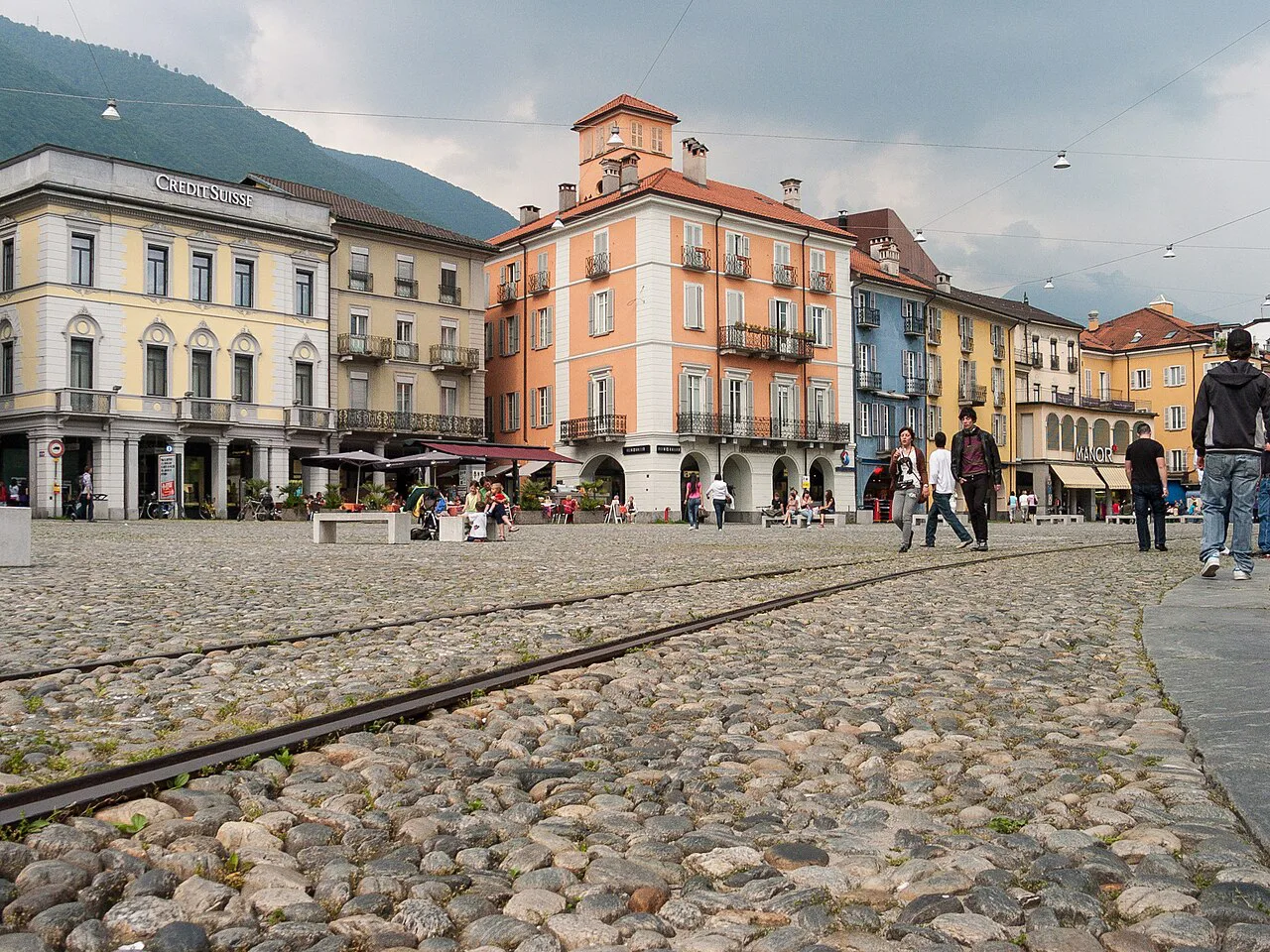
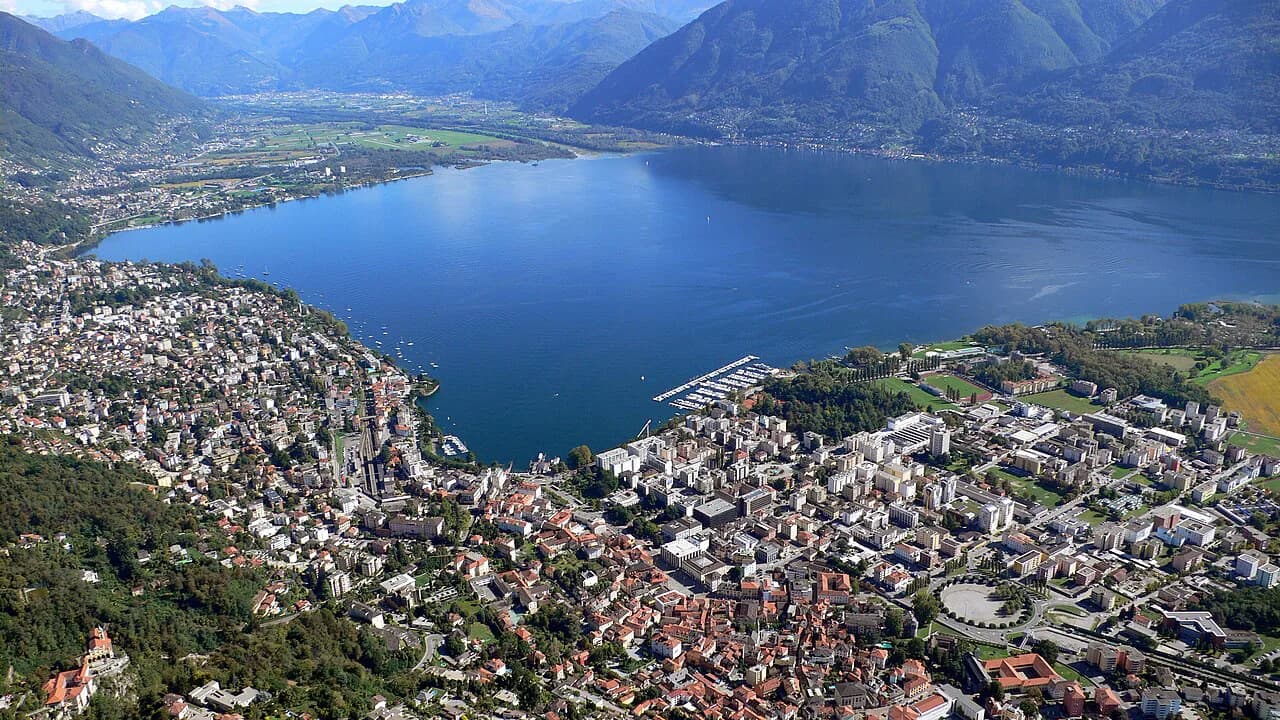
Locarno's main draw is Piazza Grande, a long arcaded square of cafés and shop fronts that doubles as a farmers' market on Thursdays, so a visit can be built around whichever version of the square is running during your stay. Above the town, a funicular climbs to the Madonna del Sasso sanctuary in Orselina, and from there a cable car and then a chairlift reach the Cardada-Cimetta ridge over Lake Maggiore. The rest of the time goes to the arcaded lanes of the old town and a short list of sights within a five-minute walk of the station.
Piazza Grande: the square that changes character
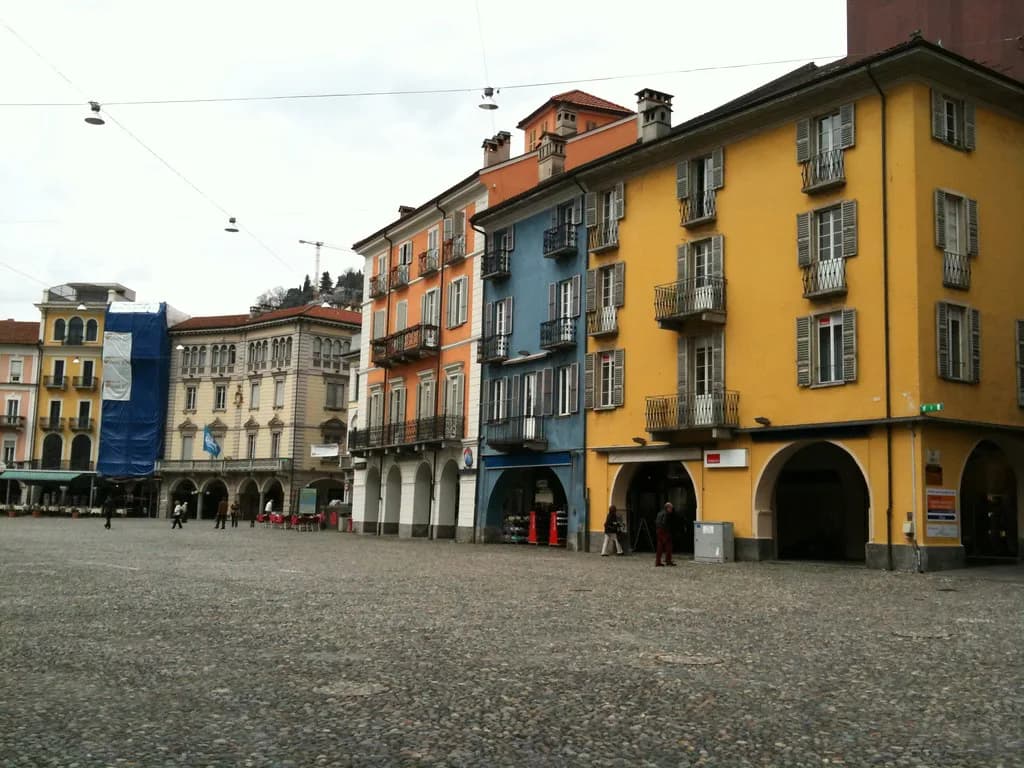
Piazza Grande is the hinge of any Locarno visit and the one place you will cross several times a day. Most Thursdays the square fills with a farmers' market selling cheese, salami, honey and crafts, which is the liveliest free thing to do in town and worth arranging your week around.
For most of the year the square works as a broad, open-air living room ringed by arcades, with the shop fronts of the old town running straight through it. During the Locarno Film Festival the piazza is fitted out as a giant open-air cinema, and attendees arrive early to claim seats in the unreserved sections because the good spots fill quickly.
Treat the piazza as a starting point rather than a destination in itself: walk its full length, duck under the arcades and use it as the anchor for a wandering loop through the lanes behind it.
The old town on foot
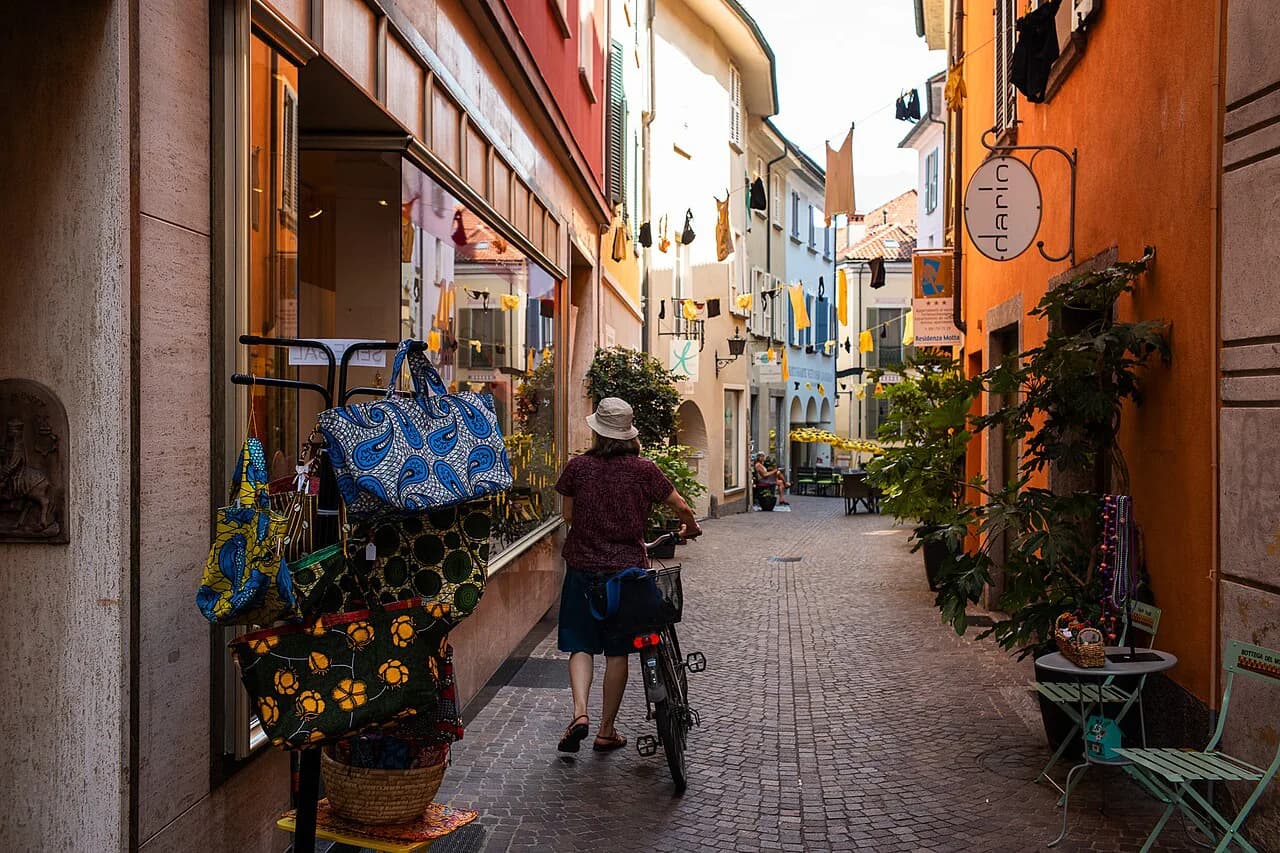
The old town is compact and best covered on foot, with the arcaded streets giving shade in the middle of a warm day and shelter when it rains. Start from the piazza and work back into the lanes; a simple loop takes well under an hour before you stop for coffee.
One building worth finding is Casa del Negromante, a fourteenth-century house described as the oldest historic building in the city and now used as a bar and restaurant that draws a local crowd. It works as a marker on the walk rather than a sight that needs a timed slot.
The lanes run straight through the shopping streets, so browsing and walking merge into the same hour. If retail is the priority rather than the architecture, our guide to shopping in Locarno maps the main streets and what each one is good for.
Santuario della Madonna del Sasso in Orselina
The sanctuary sits high on the hill above Locarno in Orselina and is the town's signature sight. Pilgrims have climbed to the site for centuries, drawn by the reported appearance of the Virgin Mary in 1480, and the complex combines church interiors, art and views back over the rooftops.
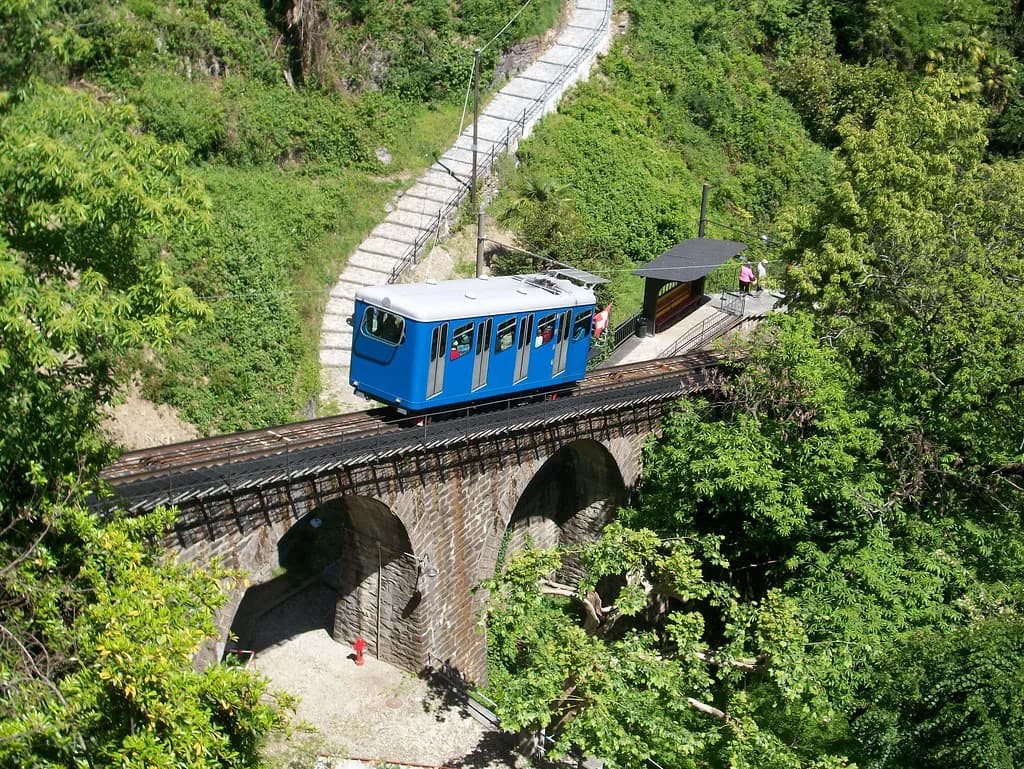
The easiest approach is the funicular, a short scenic ride that saves the climb and delivers you at the sanctuary. Casa del Padre, a museum housed in the Capuchin convent on site, adds an indoor stop if the weather turns.
If you prefer to earn the view, a walking path climbs from town toward Orselina and gives you the grounds at a slower pace, with pauses for the panorama. The funicular and the path can be combined: ride up and walk down, or the reverse, depending on how much time you have.
Cardada-Cimetta: the mountain above town
The mountain trip is the reason to give Locarno more than a single day. From Orselina a cable car climbs to Cardada, and from there a chairlift continues to Cimetta; these are two separate legs, so budget time for the change rather than expecting one continuous ride.
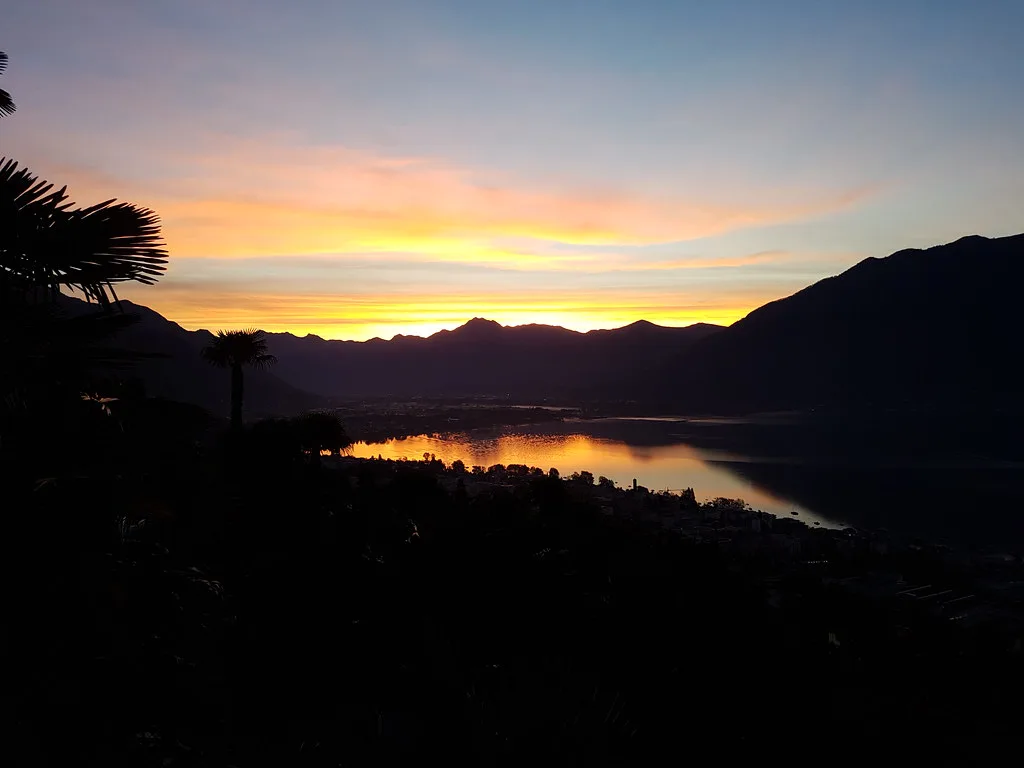
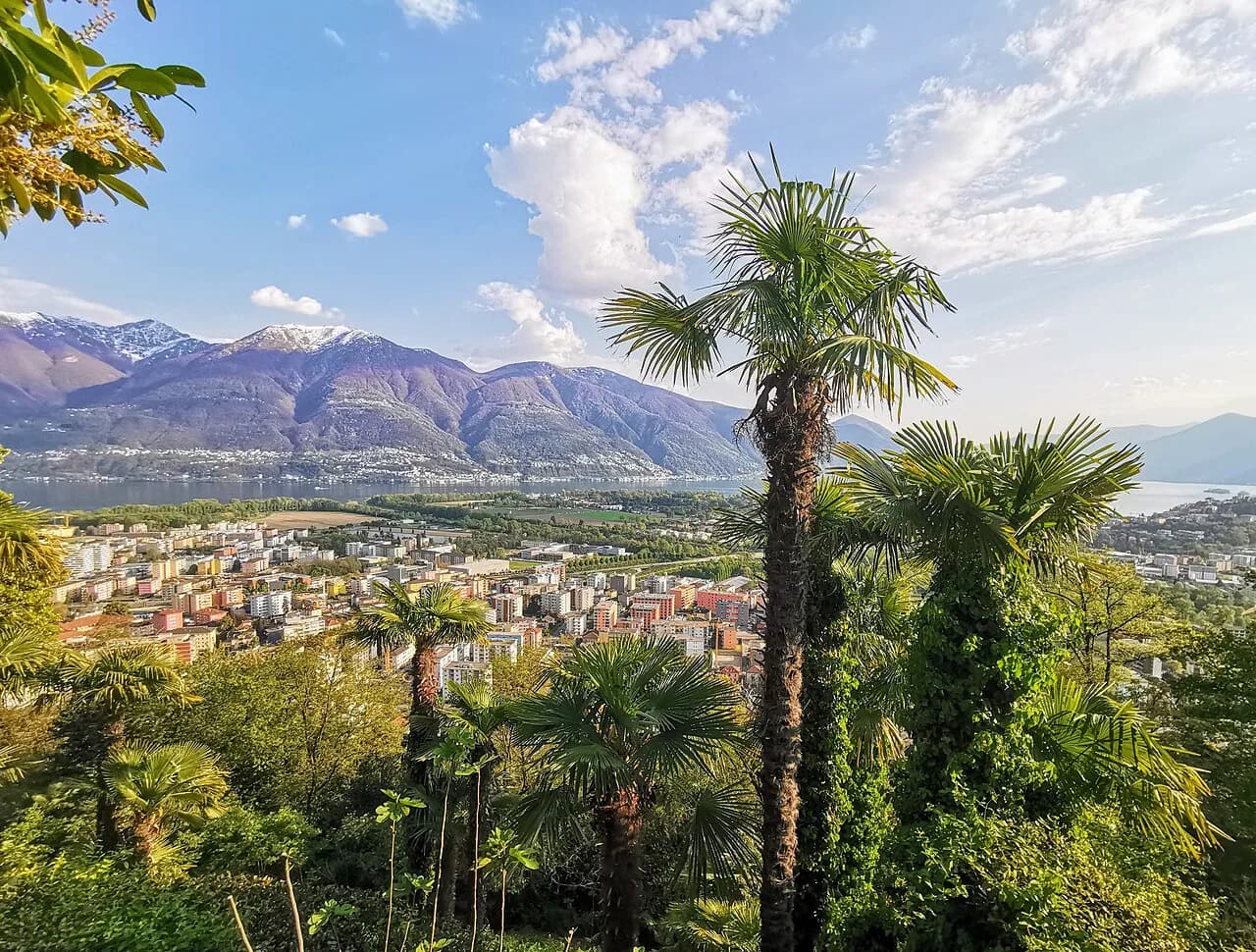
At the summit a 360-degree panorama takes in Lake Maggiore, one of the lowest points in Switzerland, and the Dufourspitze in the Monte Rosa massif, the country's highest. Shaded woodland paths and a handful of lodges and restaurants sit near the top, so the mountain can absorb a half day without feeling rushed.
The lift runs as a spring-to-autumn season rather than year-round, so a clear-day mountain plan belongs in the warmer half of the year. Order the trip around the weather: keep the old town for cloud and save the ridge for a day with an open forecast.
The Ticino Ticket and the Ascona-Locarno Cultural Pass
Two different money tools apply here, and they solve different problems. Guests staying at least one night in a hotel, hostel or campsite receive the Ticino Ticket free of charge; it cannot be bought separately and stays valid until midnight on the day of departure, covering public transport and giving reduced fares on cable cars, ferries and many attractions.
The Ascona-Locarno Cultural Pass works differently: you pay full price for the first ticket and get a 20 percent discount on additional tickets at participating institutions. That makes it a tool for a museum-heavy stay rather than a general transport card, so count how many paid collections you actually plan to enter before treating it as a saving.
Because the guest card comes with the overnight stay, ask your accommodation whether it is issued automatically at check-in and how it applies to the funicular and mountain lifts. Lift fares and card coverage vary, so settle those details directly with your hotel before you budget for the mountain excursions.
Museums and galleries
The wider Ascona-Locarno region counts 22 museums, seven theatres and more than 40 art galleries, so there is enough indoor culture to fill a wet afternoon without leaving the area. Locarno itself is compact, and a single museum or two alongside the sanctuary complex is a realistic target for a short break.
Use the Cultural Pass math to decide how many ticketed collections to take on, and check exhibition days directly with each venue. Our Locarno Attractions pick out the individual sights and museums worth slotting into the day.
Shopping and browsing the arcades
Via Sant'Antonio is the street to know for fashion, jewellery and artisan products, and the arcaded streets around the square keep browsing mostly weather-proof. Prices are Swiss, so treat a shopping hour as browsing rather than bargain hunting.
The Thursday market on the square is the better use of a shopping hour for most visitors: local cheese, salami and honey make better souvenirs than anything in a window, and the stalls are the same ones locals use. Shops are a separate matter, so check individual store hours for Sunday opening.
How many days Locarno needs
One day covers the essentials: the arcaded old town, Piazza Grande and the funicular up to the sanctuary, with the descent on foot if the weather holds. That pace leaves no room for the mountain and works best for travelers passing through Ticino on a longer Swiss itinerary.
Two days is the honest answer for most people, because it gives the mountain its own clear morning. Day one stays low, day two goes high via the cable car and chairlift to Cimetta and finishes back at the lakefront.
A third day suits slower travelers or anyone who wants a museum afternoon and a second pass at the old town. If you are weighing the city against its bigger neighbor, our Lugano vs Locarno comparison sets the two lakeside towns side by side.
When to go
Locarno sits in Ticino, the Italian-speaking canton, and its reputation rests on the warmest and sunniest climate in Switzerland, which makes spring and autumn comfortable for walking the old town and the hill paths. Summer is hot and busy, with the film festival drawing an estimated 8,000 attendees to the square and, in the same period, brief but heavy evening downpours that send people under the arcades.
Late autumn and winter need more care, because a number of hotels and restaurants close at the end of summer and reopen in the spring, and the mountain lifts run a spring-to-autumn season. Book that season loosely and confirm what will be open before committing to a late-year date.
Getting your bearings
Piazza Grande is about a five-minute walk from the station, which makes the city easy to handle on arrival even with luggage. From the square, the arcades lead through the old town and the funicular and cable car legs up to Orselina start within easy reach.
Public transport within the region is free for holders of the guest card, which removes most local ticket decisions from your day. Check current lift operating days before relying on the upper mountain, since the chairlift and cable car follow a seasonal calendar rather than a daily one.
Plan Your Visit
Build the trip around two days: one for the arcaded square, the old-town lanes and the sanctuary, one for the cable car and chairlift up to Cardada-Cimetta on the clearest morning of your stay. Book the overnight in Locarno so the Ticino Ticket comes with it, and count your paid museum entries before deciding whether the Cultural Pass adds anything.
If you are building a wider Swiss route, the same logic of one low day and one high day carries over to other cities, and our guides to things to do in Bern and things to do in Basel apply it to the arcaded capitals of the plateau.
Explore more Locarno guides
Frequently Asked Questions
What should I do first in Locarno?
Start at Piazza Grande, walk the arcades and the old-town lanes behind it, then take the funicular up to the Santuario della Madonna del Sasso in Orselina for the view back over the town. That fills a first day without touching the mountain.
Is the Cardada-Cimetta cable car worth it?
Yes, on a clear day. The cable car from Orselina reaches Cardada, a separate chairlift continues to Cimetta, and the summit gives a 360-degree panorama from Lake Maggiore to the Dufourspitze in the Monte Rosa massif. Save it for a day with an open forecast, since the lifts run a spring-to-autumn season.
How do you get up to Madonna del Sasso?
The usual route is the funicular from Locarno up to Orselina, which puts you at the sanctuary without the climb. A walking path also climbs from town, so you can ride up and walk down if you want the views at a slower pace.
Is the Ticino Ticket free and what does it include?
It is free for anyone staying at least one night in a hotel, hostel or campsite in the region, cannot be bought separately, and remains valid until midnight on the day of departure. It covers local public transport and gives reduced fares on cable cars, ferries and many attractions.
What day is the market in Piazza Grande?
The farmers' market sets up on the square on Thursdays, with local cheese, salami, honey and crafts. During the Locarno Film Festival the same square becomes an open-air cinema instead, so the two uses rarely overlap.
How many days do you need in Locarno?
One day covers the old town, the square and the sanctuary. Two days is better because it gives the Cardada-Cimetta cable car and chairlift a clear morning of their own, and a third day suits anyone adding a museum afternoon.
Do Locarno hotels and restaurants close in winter?
A number of them close at the end of summer and reopen in the spring, and the mountain lifts run a spring-to-autumn season, so a late-autumn or winter trip needs checking before booking. Confirm specific hotel and restaurant dates directly with the property.
Does the Ascona-Locarno Cultural Pass save money?
It reduces admission rather than making entry free: you pay full price for the first ticket and get 20 percent off additional tickets at participating institutions. It pays off only if you plan to visit several paid collections during your stay.
Sources
Notes for your Swiss city break
Optional updates to our Swiss city guides.
You might also like
Continue reading
More guides you'll find useful