
Madonna del Sasso, Locarno: How to Visit the Sanctuary Above the Old Town
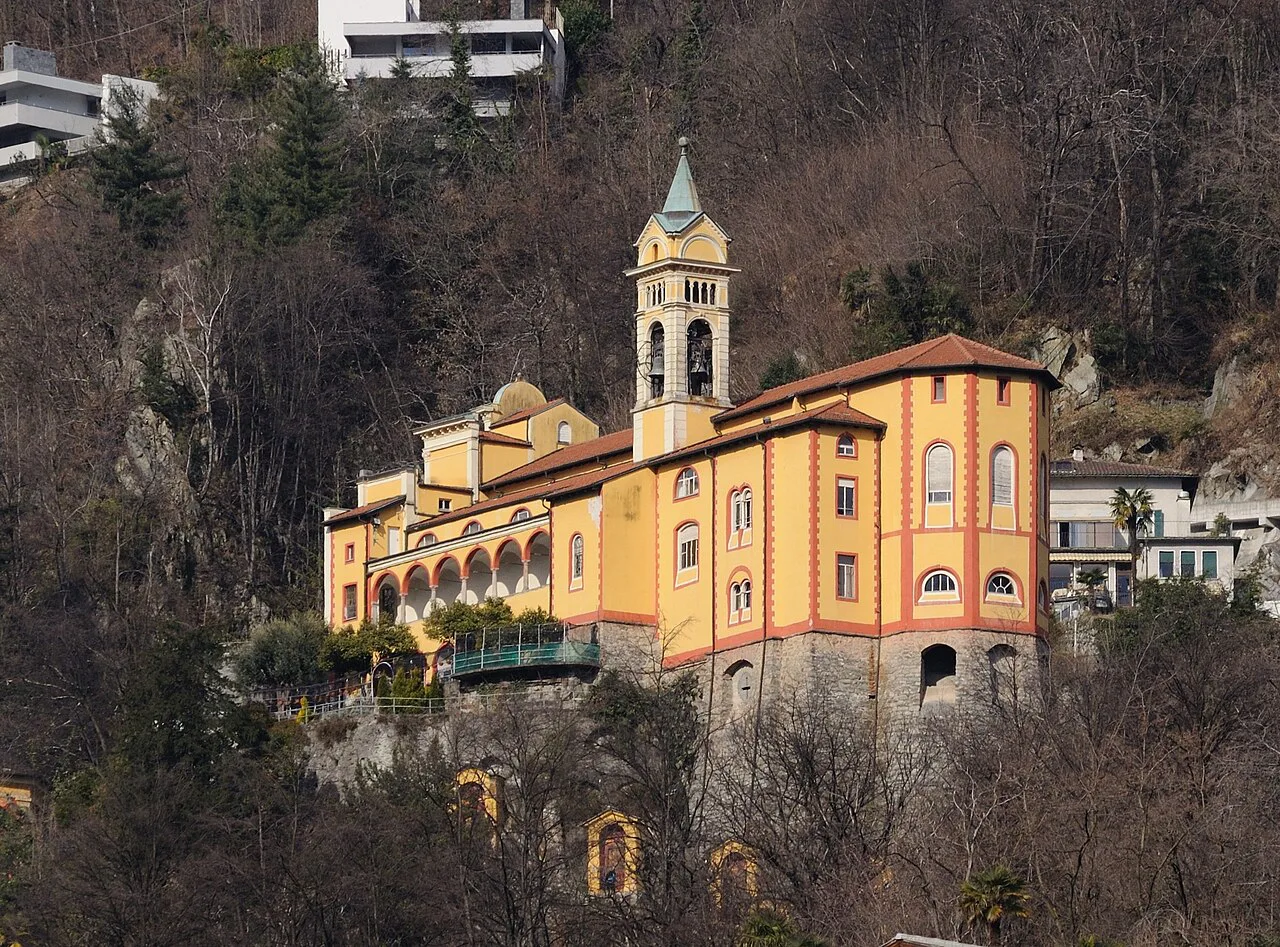
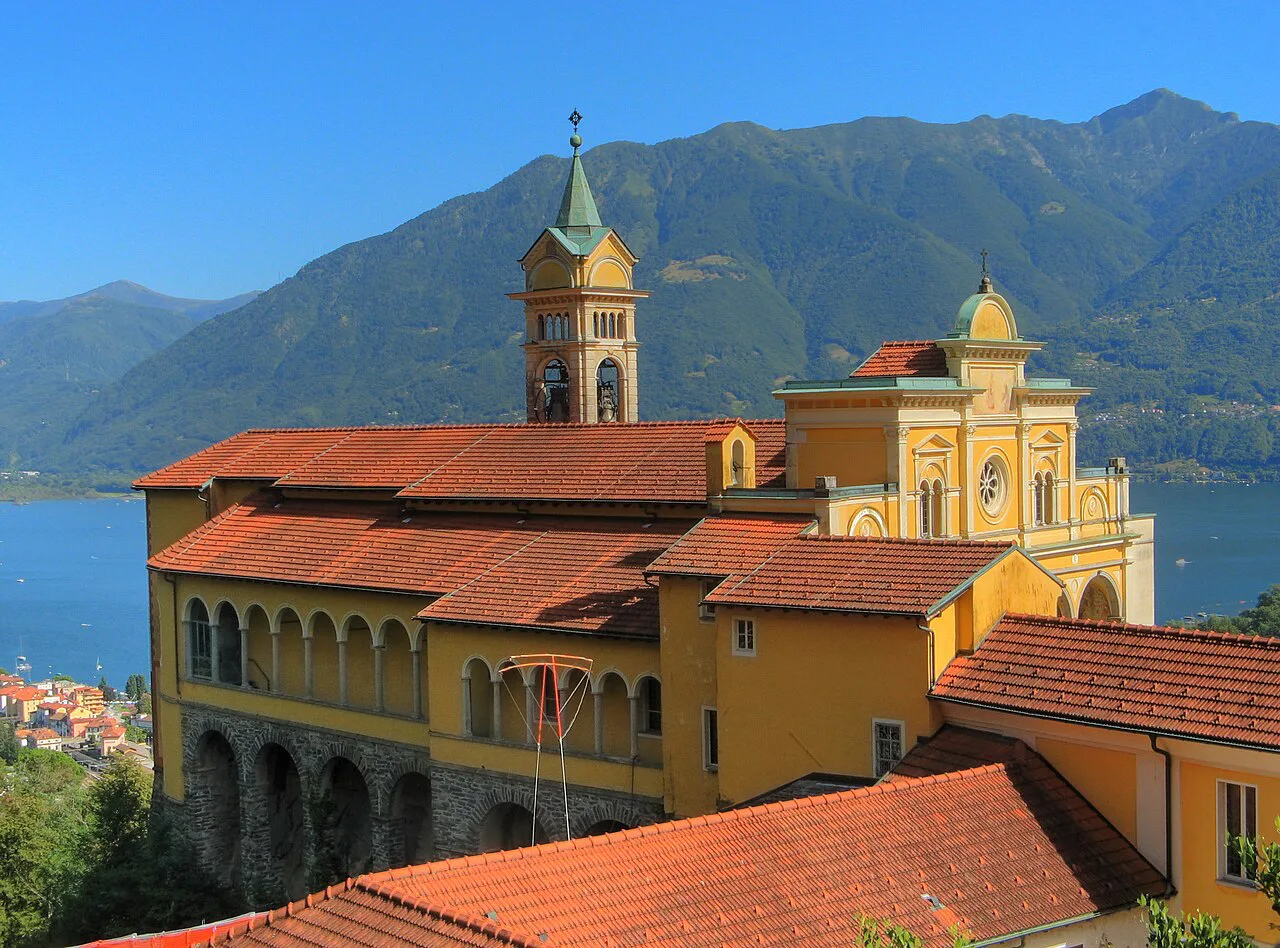
Madonna del Sasso is Locarno's pilgrimage sanctuary, founded in 1487 on a rocky spur above the city where it overlooks Lake Maggiore, the town and the Maggia delta. The complex takes its name from the rock itself, and the terrace in front of the basilica is the reason many visitors make the climb.
You reach it two ways: on foot from the Old Town along two historic devotional routes, or by the Locarno-Orselina funicular, which starts close to the railway station and stops at the sanctuary. The walk takes roughly 20 to 30 minutes of steady climbing, so decide at the bottom whether you want the exertion.
What Madonna del Sasso Is
The sanctuary is a Sacred Mount, a type of devotional complex common in the pre-Alpine belt in which chapels and stations carry scenes from the life of Christ, the Virgin or the saints up a mountainside. Tradition holds that the Franciscan friar Bartolomeo Piatti of Ivrea founded the sanctuary in 1487, seven years after a vision of the Virgin Mary on the same spot on the eve of Ascension in 1480. The chapel that followed the vision quickly grew into the larger Sacred Mount complex, which was extended considerably in the seventeenth century.
Capuchin friars now live in the monastery, and Canton Ticino has entrusted them with the religious care of the site. The sanctuary belongs to the CoEUR network of devotional walking trails that links the Camino de Santiago with the Via Francigena, which places it in a much older tradition of European pilgrimage.
Where It Sits and How the Complex Is Laid Out
The sanctuary occupies a rocky outcrop on the hillside suburb of Orselina, directly above Locarno, and the basilica of the Madonna del Sasso stands at the top of the Sacred Mount at the end of a large piazza. Below it are the church of the Annunciation, the convent, the Via Crucis and the road of the chapels, of which only remnants survive. A niche in the complex holds a Last Supper scene carved in terracotta figures.
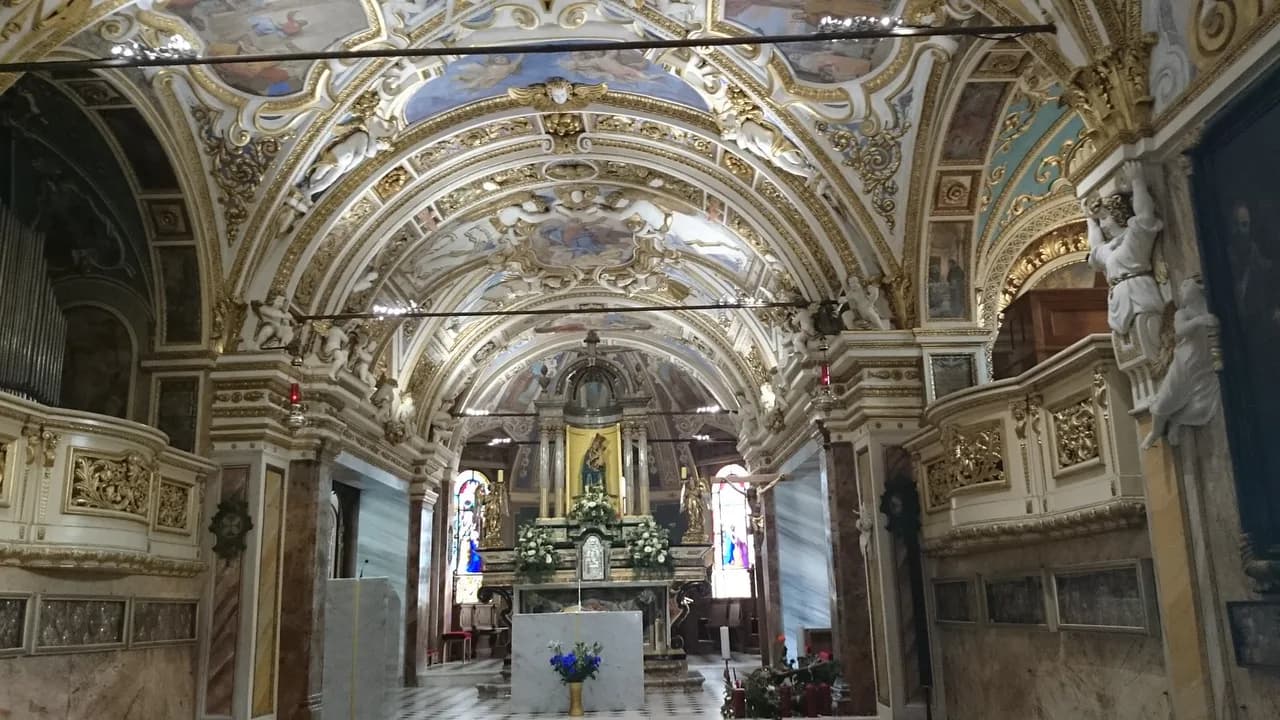
The church itself is lavishly decorated with frescoes and votive panels, and ex-votos collected over the centuries record the devotion the Madonna has attracted. Walk the piazza and the terraces first to get your bearings, then go into the basilica, since the layout opens up as you move from the overlook toward the church door.
Back down in town, the sanctuary is one of the main stopping points in a short Locarno visit; the Old Town streets, Piazza Grande, Locarno and the medieval castle below make up the rest of a compact circuit, and you can plan the pieces together using the Locarno Attractions guide.
Getting Up There: The Two Walking Routes
Both pilgrim paths leave from the heart of Locarno's Old Town at the foot of the slope. The road of the chapels, also called the road of the valley, passes the church of the Annunciata and the remains of several chapels, while the Via Crucis climbs a series of stations set in aedicules decorated with cast-iron bas-reliefs of the Passion. Pick the chapels road if you want the older churches and the Via Crucis if you want the sculptural stations.
The climb takes about 20 to 30 minutes at a steady pace, up a steep wooded ravine, and the going is uneven with stone steps and roots in places. Wear shoes you can walk downhill in, because the descent is harder on the knees than the climb, and carry water in warm months.
The Locarno-Orselina Funicular
If you would rather skip the climb, the Locarno-Orselina funicular leaves from near the railway station and stops at Madonna del Sasso before continuing to Orselina. From the Madonna del Sasso stop you step out at the panoramic viewing point and walk down a short flight of steps to the church itself. It is the practical choice for anyone with limited mobility, small children or a tight schedule.
The funicular is the quickest way up and pairs well with a descent on foot along one of the pilgrim paths, so you get both the view from the terrace and the chapels or Via Crucis on the way down. Fares and schedules are set by the Funicolare Locarno–Madonna del Sasso and are not set by the sanctuary, so look them up at the station before you travel.

What to See Inside the Sanctuary
Inside the basilica, look for the painting Fuga in Egitto by Bramantino and Ciseri's Trasporto di Cristo al sepolcro, both of them the artistic high points of the complex. The statue of the Madonna del Sasso stands out on the piazza rather than inside, so walk the square carefully before you leave.
The votive paintings and ex-votos are displayed around the complex and are the part of the visit most people hurry past. Slow down for them: they are centuries of ordinary local stories compressed onto small panels, and they make the sanctuary feel like a lived place rather than a monument.
The Museo Madonna del Sasso
The Museo Madonna del Sasso opened in 2016 in the oldest part of the monastery and covers the life of the convent and the history of the pre-Alpine Sacred Mounts. Its collection includes sacred vestments and objects of worship as well as drawings and paintings by the Ticino painter Antonio Ciseri, who lived from 1821 to 1891. Pairing the museum with the church helps the artworks inside the basilica make sense.
Allow 30 to 45 minutes for the museum if you read the labels and follow Ciseri's career, less if you are only browsing. Ask at the sanctuary about entry and museum hours for the day you visit; they are managed on site and can vary by season.
The Terrace and the View
The piazza in front of the basilica is one of the best vantage points on this side of the lake, taking in Locarno, the Maggia delta and the open water of Lake Maggiore, with the Lepontine peaks behind. From the viewing point near the funicular station you can pick out the town below and the Alps across the water. The view is worth the trip on its own, so build in time just to sit and look rather than only photographing it.
The panorama shifts through the day: mornings are often clearest, while late afternoon gives the lake a softer light and the mountains a pinkish hue at dusk. If you have a spare hour, come twice, once for the church and once for the terrace in different light.
For a change of scenery lower down, the Parco delle Camelie and the lakefront give you a gentler walk on another day, and Lake Maggiore's shoreline is an easy contrast to the heights. If you are extending your trip across the lake, our Lugano city guide has plenty more ideas for a few days in Lugano.
How Much Time to Allow
Plan on half a day from the Old Town back to the lakefront: roughly 20 to 30 minutes up on foot, an hour or so for the basilica, the piazza and the view, and another 30 to 45 minutes if you add the museum. With the funicular up and the walk down, the trip compresses neatly into an afternoon.
If you are short on time, choose the funicular up and the Via Crucis down, which gives you the panorama and the sculptural stations without a second climb. If you want the full pilgrim experience, walk up the chapels road and take the funicular down to save your legs for the Old Town afterwards.
The sanctuary is one anchor of a Locarno break rather than a whole day out, so fit it around the rest of your things to do in the city and keep the timing flexible.

Practical Points Before You Go
Opening hours at the sanctuary, the museum and the funicular are seasonal and are not the same across the three. Confirm the day's times with the sanctuary and the funicular operator, and remember that church services may restrict access to part of the basilica while you are there.
The climb and the terrace are exposed at the top, so bring a layer, a hat and water even on a mild day in Locarno, and allow extra time if anyone in your group finds steps difficult. The funicular stop and the church are close together but not level, with a short flight of steps between them.
Nearby: Orselina and the Old Town
At the top of the funicular, the final stop is a little further up the hill at Orselina, where you can switch to the Cardada cable car and then a chairlift to Cimetta for higher views. Treat Cardada and Cimetta as the next stage up rather than part of the sanctuary visit, and give them a separate slot in your day.
Back at lake level, Piazza Grande, Locarno and the Castello Visconteo are an easy walk from the sanctuary paths' starting points, and the Museo Casorella and Museo Casa Rusca in the Old Town make a natural rainy-day pairing with the sanctuary museum.
Piazza Grande, Locarno, the arcaded main square, is where most visits to the city end up, so plan the sanctuary as a morning and leave the afternoon for the square and the castle.
Plan Your Visit
Madonna del Sasso rewards the climb: the 1487 basilica, the Ciseri and Bramantino paintings, the small monastery museum and one of the best lake views in Canton Ticino all sit on a single rocky spur above Locarno. Choose the funicular if you want speed and the pilgrim paths if you want the chapels and the Via Crucis, and give the terrace its own time rather than rushing it.
Before you set out, check current ticket prices, funicular times and sanctuary hours with the Funicolare Locarno–Madonna del Sasso and the sanctuary, since they vary by season. Everything else, from the foundation story to the terrace view, you can plan around right now.
Frequently Asked Questions
How do you get to Madonna del Sasso from Locarno?
Walk from the Old Town along either the road of the chapels or the Via Crucis, or take the Locarno-Orselina funicular from near the railway station, which stops at the sanctuary before continuing to Orselina.
How long does the walk up to Madonna del Sasso take?
The climb from the Old Town takes about 20 to 30 minutes on steep, wooded stone paths. The descent takes a similar time and is harder on the knees, so wear shoes with grip and allow extra if anyone in your group finds steps difficult.
Is the funicular the easiest way up?
The funicular is the quickest and easiest option, especially for anyone with limited mobility or small children. It leaves from near the railway station and drops you at the viewing point a short flight of steps above the church. Fares and timetables are available at the station.
What is there to see inside the sanctuary?
Inside the basilica look for Bramantino's Fuga in Egitto and Ciseri's Trasporto di Cristo al sepolcro, plus the frescoes and votive panels. On the piazza stands the statue of the Madonna del Sasso, and a niche in the complex holds a terracotta Last Supper scene.
Is the Museo Madonna del Sasso worth a visit?
The museum opened in 2016 in the oldest part of the monastery and covers the convent's history, the pre-Alpine Sacred Mounts and the work of the Ticino painter Antonio Ciseri. Allow 30 to 45 minutes if you read the labels and pair it with the church.
How much time should you allow at Madonna del Sasso?
Plan about half a day from the Old Town back to the lakefront: the climb, an hour or so for the basilica and the terrace, and another 30 to 45 minutes if you add the museum. The funicular up and a walk down compresses it into an afternoon.
Why was Madonna del Sasso founded?
Tradition holds that the Franciscan friar Bartolomeo Piatti of Ivrea founded the sanctuary in 1487, after a vision of the Virgin Mary on the same spot on the eve of Ascension in 1480. The chapel that followed grew into a larger Sacred Mount complex over the following centuries.
What is nearby after visiting the sanctuary?
At Orselina, the next stop up the funicular, you can switch to the Cardada cable car for higher views. Back at lake level, Piazza Grande, the Castello Visconteo and the Old Town museums are an easy walk from the sanctuary paths' starting points.