Is Locarno Worth Visiting? Your Guide to Deciding
Locarno is worth visiting for its lakeside piazza, castle museum and mountain cable cars. Here is what the city does well and who should look elsewhere.
On this page
Locarno is worth visiting if you want lake-and-mountain days rather than big-city museums. The city sits at the Swiss end of Lake Maggiore in Ticino, near the Italian border, and it is famous for its beautiful location, its historic center and its restaurants, per Passport the World. Anyone expecting Zürich-scale collections will find the cultural offer modest by comparison.
The compact center makes the first half day easy on foot: a pastel square, a lakeside boulevard and a 12th-century castle museum sit close together. The second half day belongs to the mountain above town, reached by funicular, cable car and finally an open two-seater chairlift. That split between flat town and vertical viewpoint is the real shape of a Locarno visit.
Where Locarno Sits and Why That Matters
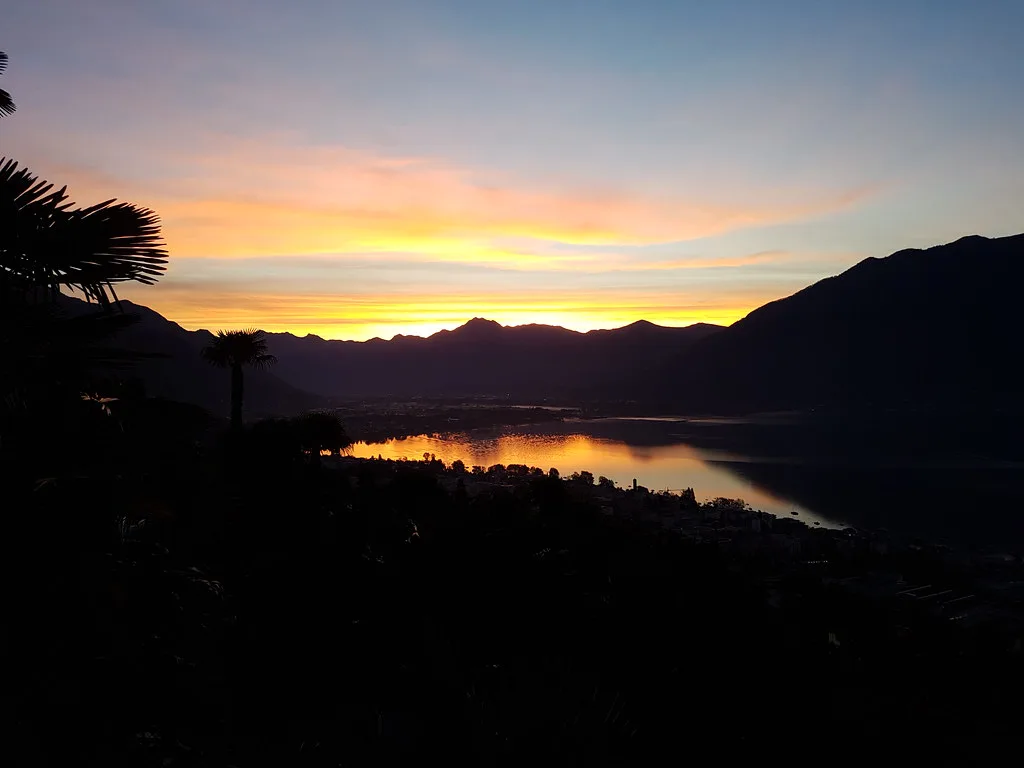
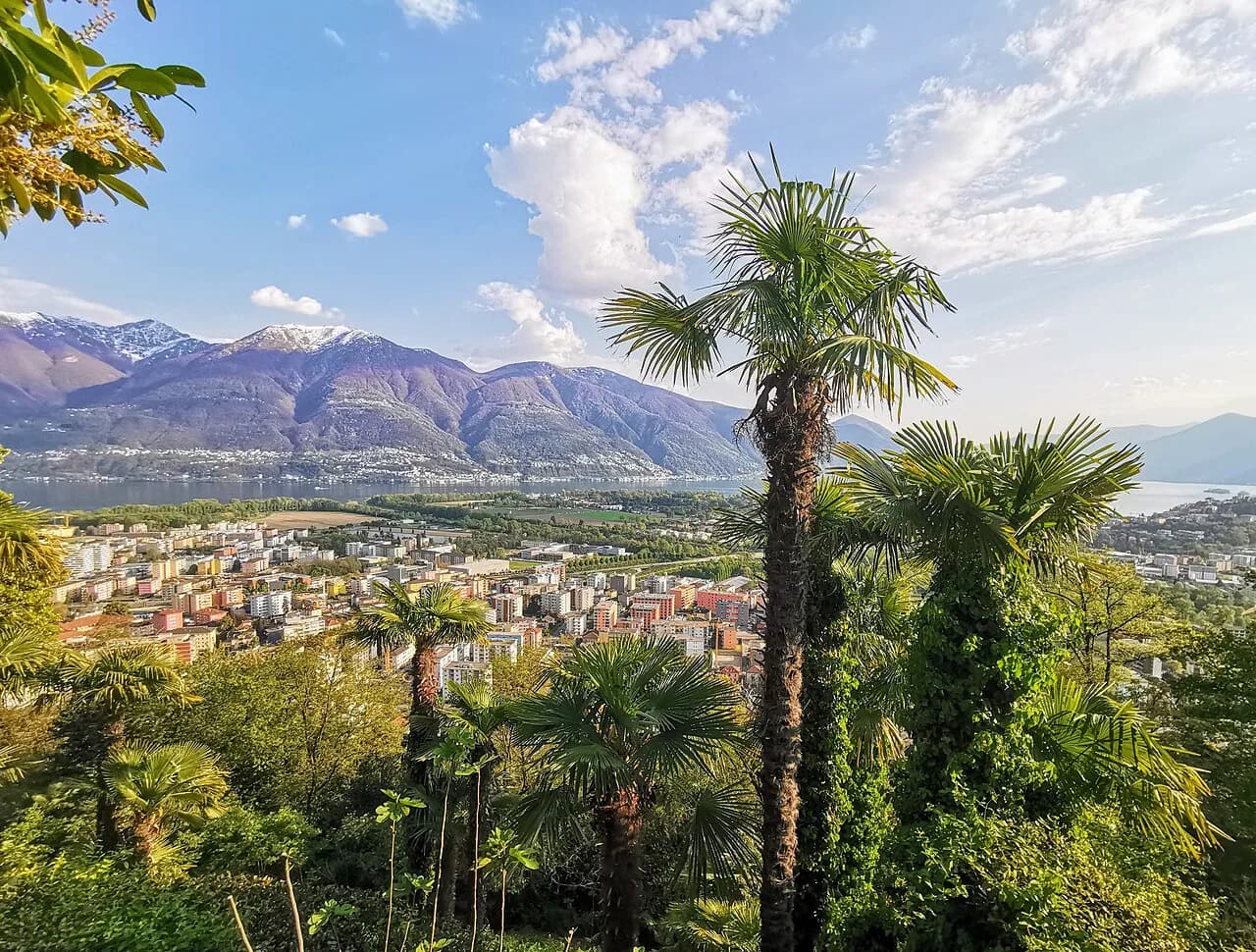
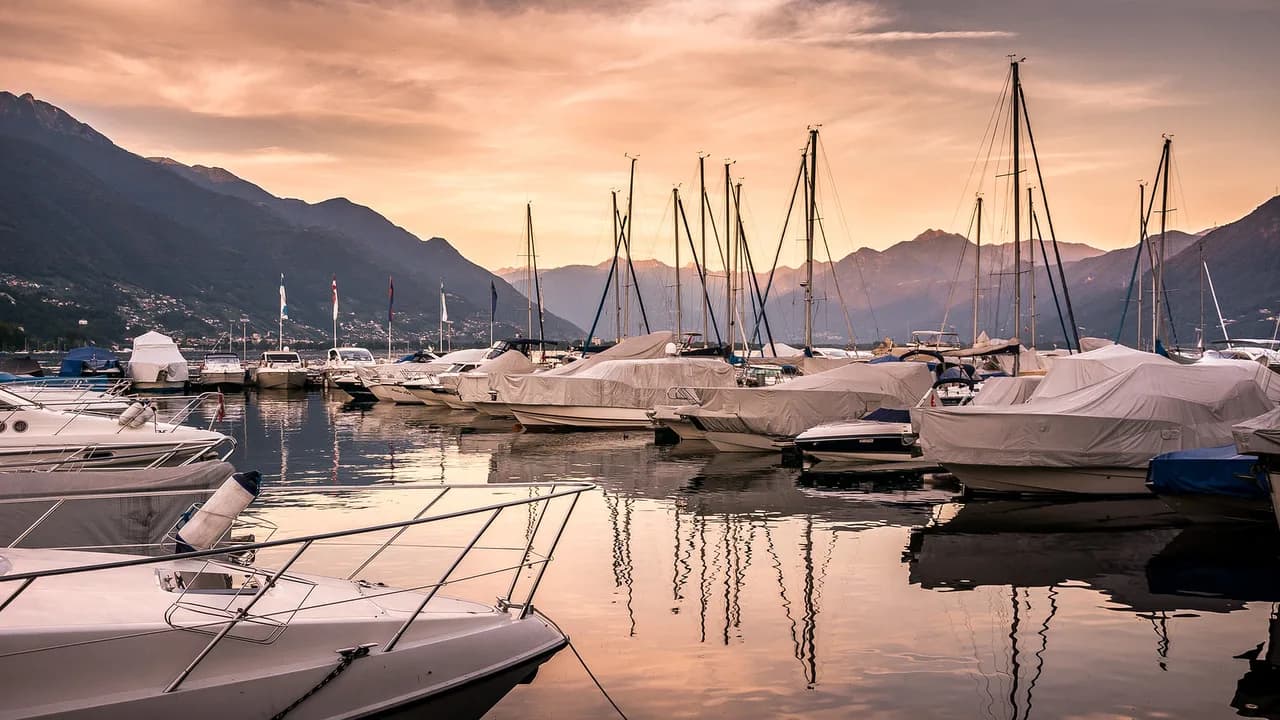
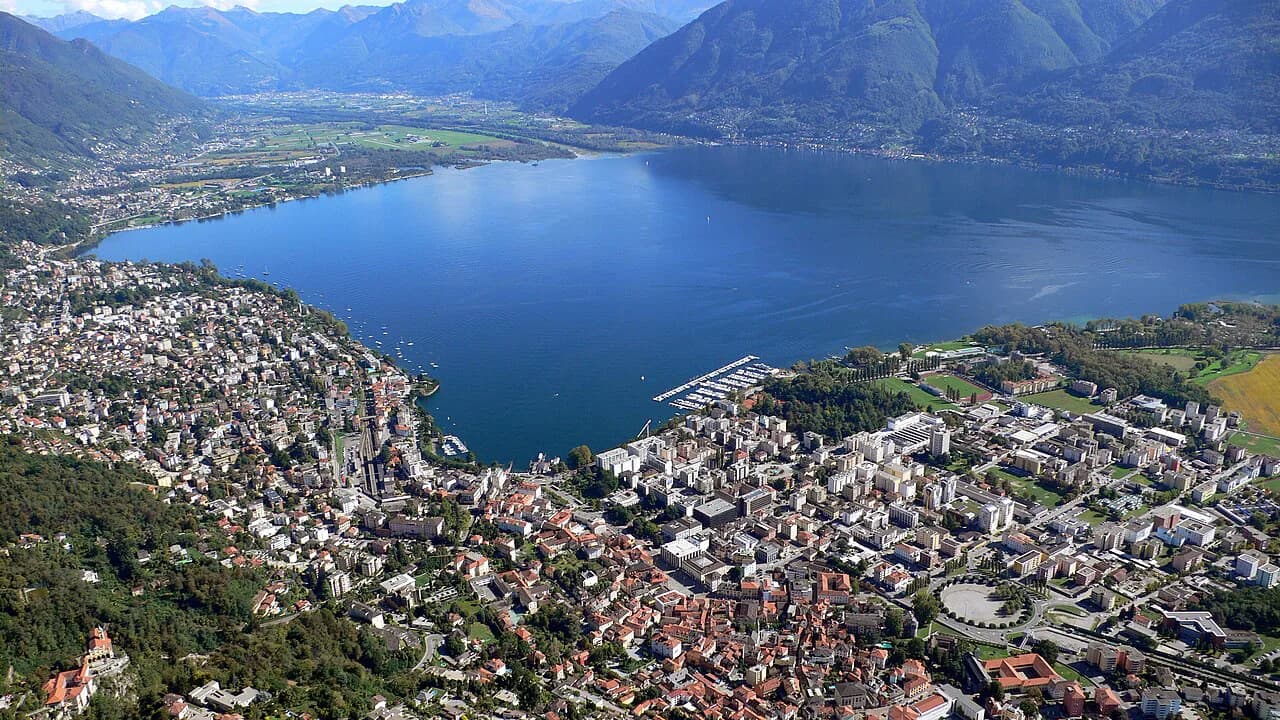
Locarno is the third city of Ticino after Lugano and Bellinzona, and it faces Lake Maggiore with the Swiss Alps behind it. Ticino is Switzerland's southernmost region, next to the Italian border, and the source describes a landscape of palms, fertile valleys, historic villages and a mild, pleasant climate. That southern position gives the city an Italian dolce vita feel that feels removed from the German-speaking north.
The setting makes Locarno a lake destination first and a city destination second. If your Swiss trip is built around alpine trains and mountain villages, Locarno adds a lower-altitude contrast where the water and the terraces carry the day. If your trip is built around art museums and grand architecture, the city's modest scale becomes the limiting factor.
Piazza Grande: The Square That Sets the Tone
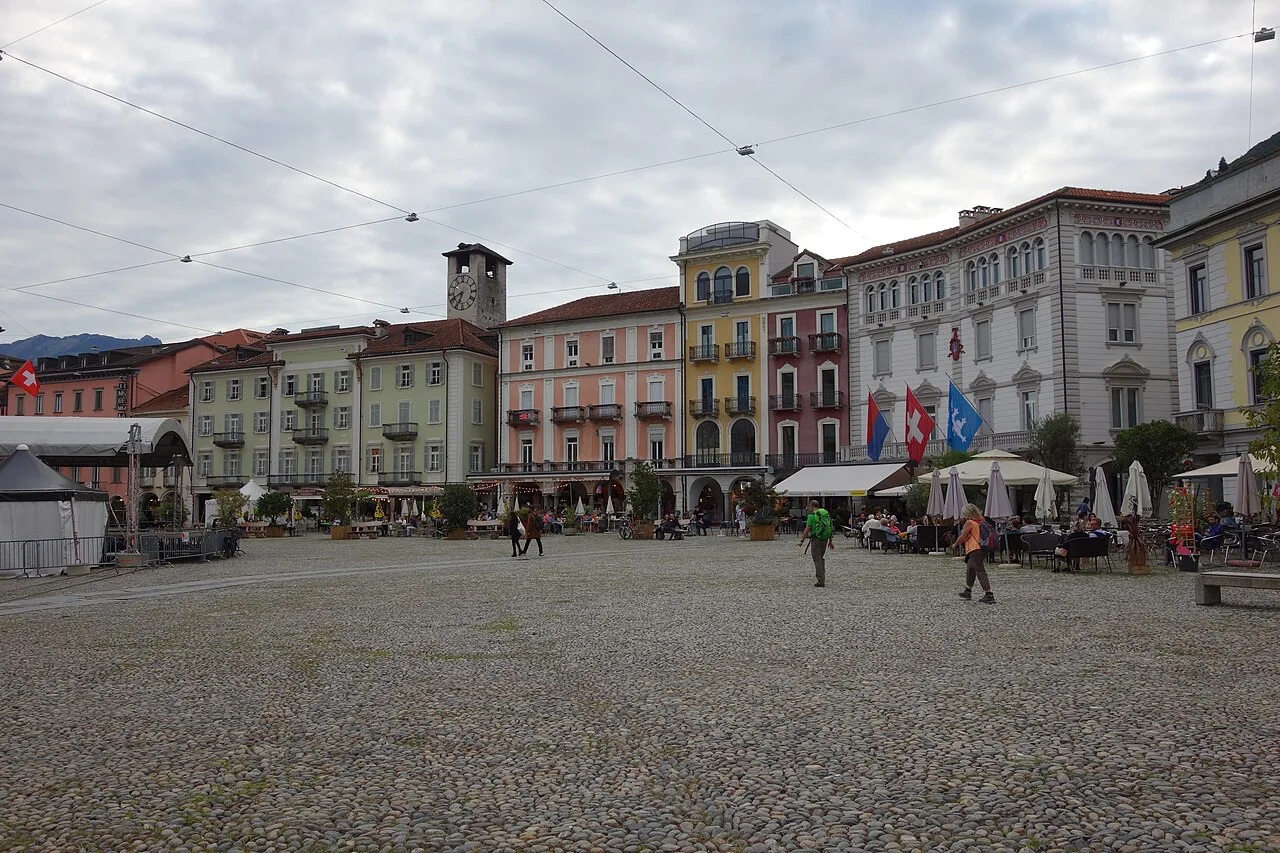
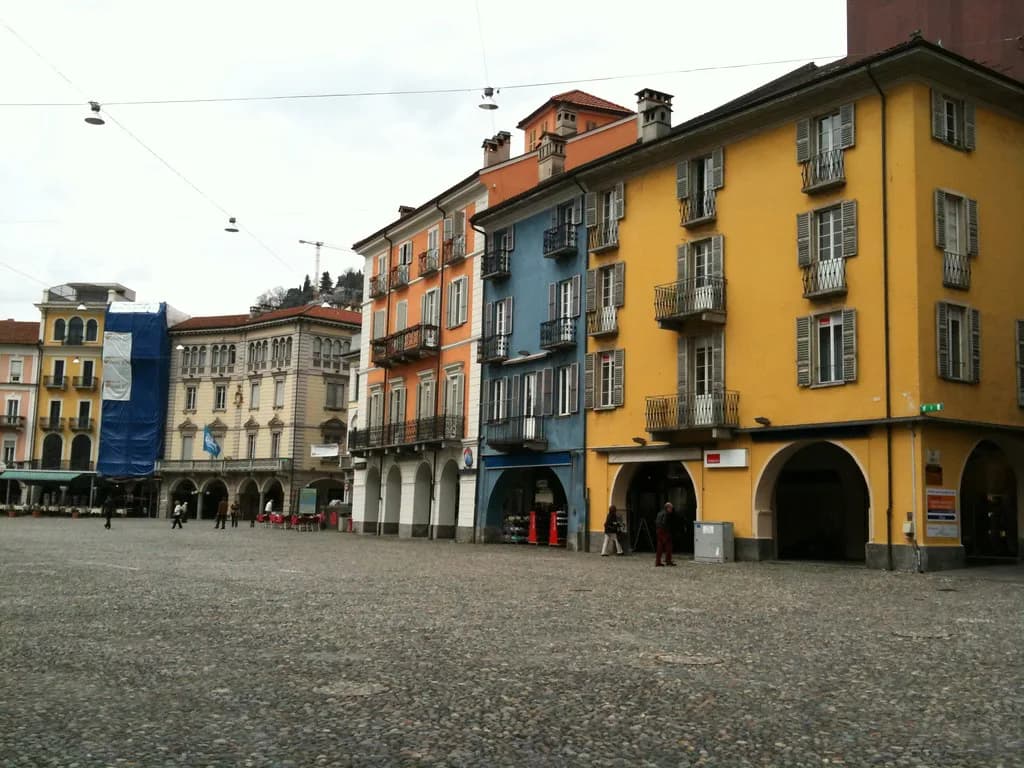
Piazza Grande is the central square, known for its architecture and pastel-colored houses, and it works as both a photo stop and a place to settle onto a terrace. A large market has been held here every Thursday since the 12th century, according to Passport the World. Since 1946 the Locarno film festival has used the square every year, turning it into what the source calls the largest open-air cinema in the world.
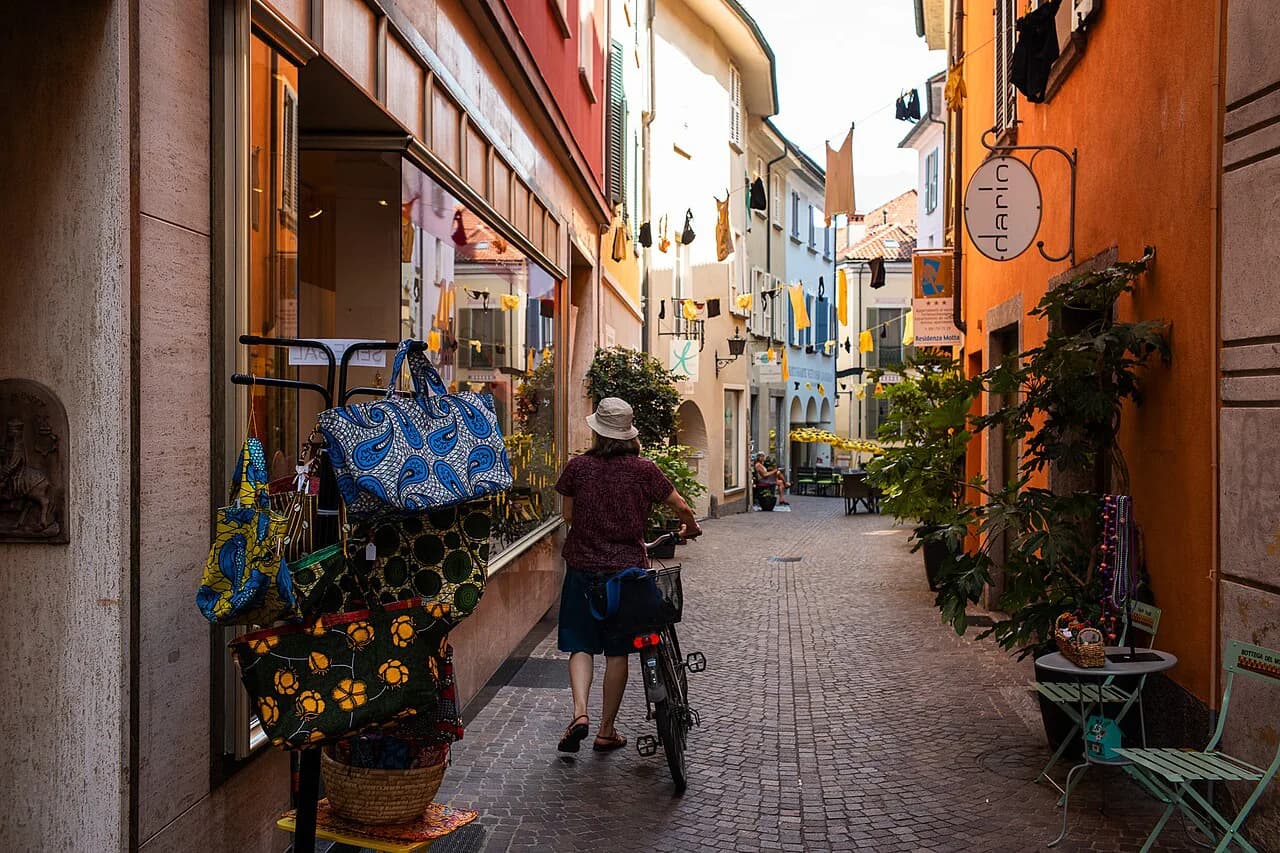
Treat the square as the anchor of a walking loop rather than a single sight. The pastel facades, the arcades and the café tables make it the obvious place to start, and the rest of the historic center folds away from it. Build your morning around it and you will pass the castle on the way back.
Thursday brings the market crowds to Piazza Grande; give the square a wide berth on that morning if you want clean photographs, and come back later for the terraces.
The Lakeside Boulevard
The boulevard along Lake Maggiore is one of the simplest things to do in Locarno: a flat promenade with benches, a walk you could repeat daily, and in summer food stalls and concerts. Passport the World treats it as an activity in its own right, not just a route between sights. Its flatness matters in a country where so much sightseeing involves gradients.
Pair the boulevard with the square for an unhurried first afternoon. The lakeside gives you the water and mountain views; the square gives you the architecture and the terraces. Together they cover the low, easy half of a Locarno day without any transport.
Castello Visconteo and the Churches
Castello Visconteo, built in the 12th century on the edge of the old town, now houses an archaeological museum and is open on a daily basis, per Passport the World. Even travelers who skip the interior find it a strong photo stop. The castle gives the city its one proper historical sight, and it sits close enough to the square to fold into a short walk.
The churches reward a slower look at interiors, paintings and courtyards: Santa Maria Assunta, also called the new church, plus San Francesco and Sant'Antonio. Rather than chasing every nave, pick two and give them time. The old town lanes between them are as much of the attraction as the pews.
Sacro Monte Madonna del Sasso
High above Lake Maggiore, the Sacro Monte Madonna del Sasso monastery stands in the municipality of Orselina, and a stepped path leads up from the center of Locarno in about half an hour. The name means Our Lady of the Rock and the complex was built in the 16th century as a place of pilgrimage. Inside are murals, works of art and a small museum on its history, with views over the lake.
The half-hour climb is a real walk on steps, so anyone carrying luggage or traveling with small children should ride up instead. A train reaches Orselina within a few minutes, and the monastery is open to visitors. Sunset light over the lake is the reason to time the trip late rather than at midday.
The Funicular, Cable Cars and What Each Stage Gives You
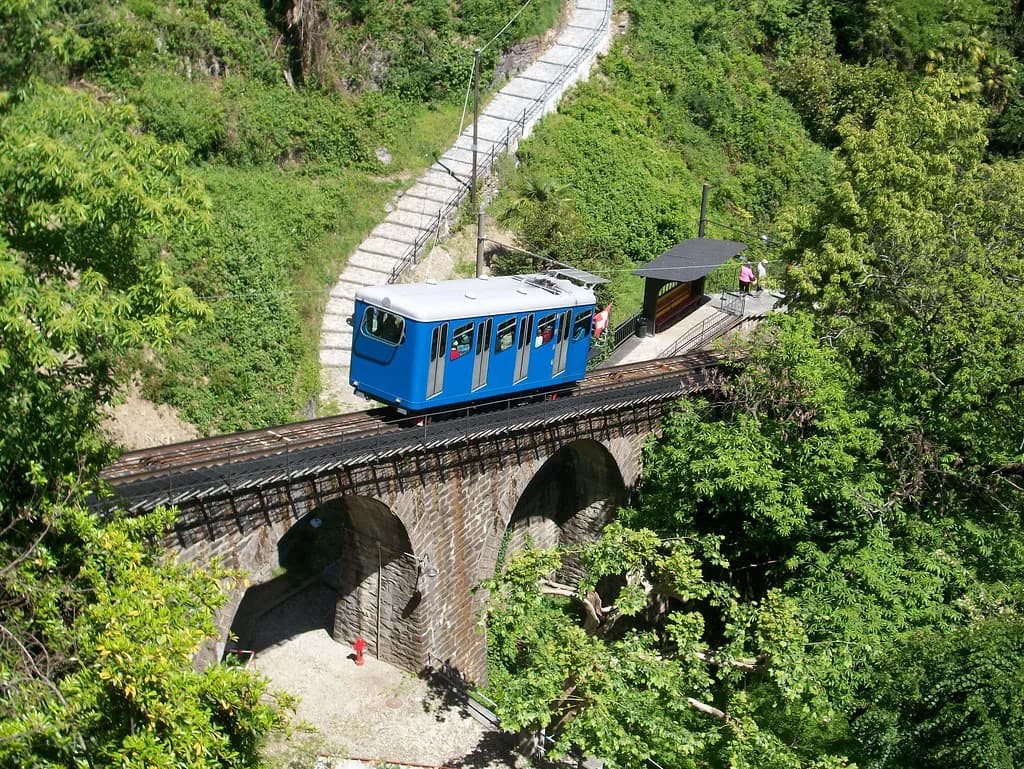
The mountain day runs in three stages: a funicular from the center of Locarno to Orselina, a change to the cable car up to Cardada at 1,400 meters, then an open two-seater chairlift to Cimetta at about 1,700 meters. The views begin as soon as you leave the town, and the source treats the Cimetta ascent as one of the best things to do in Locarno. At Cardada there is a walk and a chalet for a drink.
Each stage buys a different payoff, so decide how high you actually need to go. Orselina delivers the monastery and a first broad view; Cardada adds a mountain terrace with room to walk; Cimetta delivers the highest, most exposed panorama. Travelers wary of small open chairs can stop at Cardada and still get the full lake sweep.
Funicular and cable-car times and fares change with the season, so confirm the day's service before you commit a morning to the climb. The altitude difference between Cardada and Cimetta matters most in changeable weather: the top can sit in cloud while the town below stays clear. If the summit is enclosed, the Orselina monastery and Cardada terrace make a sensible fallback.
How Many Days Locarno Needs
One day covers the flat town comfortably: Piazza Grande, the boulevard, the castle and a couple of churches, with time to slow down. A second day belongs to the funicular and cable cars up to Orselina, Cardada and Cimetta. Only with that second day does the city's lake-and-mountain appeal fully register.
If you can spare just a single day, keep it in town and skip the mountain rather than rushing both halves. The center is compact enough that a forced-march day still works, but the walk to the monastery and the return down can eat the afternoon. A well-planned one day in Locarno beats a day split between town and summit.
When to Go
Ticino has a reputation for a mild and pleasant climate, and Passport the World describes the region that way alongside its palms and fertile valleys. The boulevard's summer food stalls and concerts concentrate the crowds in the warm months. Late spring and early autumn keep the terraces usable with fewer people on the piazza.
The film festival turns Piazza Grande into an open-air cinema each year, which is a draw for some travelers and a disruption for others. If you want a calm square to photograph, plan around those dates once they are announced. If you want the buzz, build the trip around it.
What It Costs and How to Save
The concrete money-saver in Ticino is the Ticino Ticket: check in at a hotel, youth hostel or campsite in the canton and it comes with your booking, giving free unlimited use of public transport across Ticino for the whole stay plus discounts at various places. That covers a lot of local travel that would otherwise be paid for piecemeal.
The Ticino Ticket is tied to an overnight stay, so day-trippers arriving by train from Lugano or Bellinzona do not get it. For those travelers, the useful framework is a Swiss rail pass comparison against point-to-point fares. For what a full day of sights, the funicular and food actually adds up to, work through the cost breakdown before you commit to the mountain day.
Who Will Love Locarno and Who Should Choose Elsewhere
Locarno suits travelers who want a low-key lake town with terraces, a pretty square and a mountain ascent in the same afternoon, and who are happy to walk a compact center. Couples on a short break, slow travelers and anyone ending a longer Swiss trip with something gentle get the most from it. Photographers will find the pastel facades and the lake views generous.
Travelers who measure a city by its museums, galleries or shopping streets should look elsewhere. The city's cultural sights are a castle museum and a set of churches, not a Kunsthaus-scale program. If that is what you want, Basel rewards a short break far more directly, and the contrast helps you choose honestly, so read up on whether Basel is worth visiting for that kind of trip.
Locarno or Lugano
Lugano is the larger Ticino city and a natural base for Lake Lugano; Locarno sits at the other end of Lake Maggiore, which makes it a good choice if you want the Italian lakes. Pick Locarno for the mountain ascent to Cardada and Cimetta paired with the lakeside square, and Lugano for a bigger, more urbane city on the water. The choice hinges on which lake and which mood you want.
Ascona, a short hop from Locarno, is a smaller lakeside alternative for travelers who want a quieter waterfront base, and it pairs naturally with a Locarno day rather than replacing it. Between the two, Locarno holds the festival square, the castle and the funicular up the mountain, while Ascona offers a different kind of lakefront calm.
Plan Your Visit
Locarno is worth visiting when your Swiss trip needs a lake, a pastel square and a mountain day within easy reach of each other. Give it a full day in the center and a second for the Orselina, Cardada and Cimetta climb. Skip it if museums are the point of your trip.
Check the current funicular and cable-car timetable and the Ticino Ticket conditions for your accommodation before you arrive. Those two details decide how the day is built, and both are published by the lift company and the Ticino tourism office rather than fixed for the season.
Explore more Locarno guides
Frequently Asked Questions
Is Locarno worth visiting?
Yes, if you want lake-and-mountain days rather than a big-city museum trip. The city pairs a pastel central square, a lakeside boulevard and a 12th-century castle museum with a funicular and cable-car ascent above Lake Maggiore. Travelers who judge a city by its galleries will find the cultural offer modest.
What is Locarno, Switzerland known for?
Locarno is known for its position at Lake Maggiore in Ticino, its Italian-influenced atmosphere, Piazza Grande and the annual film festival that uses the square as an open-air cinema. Above town, the Sacro Monte Madonna del Sasso monastery and the cable cars to Cardada and Cimetta supply the mountain side of the visit.
How many days do you need in Locarno?
One full day covers Piazza Grande, the lakeside boulevard, Castello Visconteo and a couple of the old-town churches on foot. Add a second day for the funicular to Orselina and the cable cars up to Cardada and Cimetta. A rushed single day is better spent entirely in town.
How do you get up to Cardada and Cimetta from Locarno?
A funicular runs from the center of Locarno to Orselina, where you change to the cable car for Cardada at 1,400 meters. An open two-seater chairlift continues from Cardada to Cimetta at about 1,700 meters. Check current details before setting out.
Is Locarno nicer than Lugano?
The two cities serve different trips. Locarno is smaller and delivers a lakeside square plus a mountain ascent above Lake Maggiore; Lugano is the larger, more urbane Ticino city on its own lake. Choose Locarno for the lake-and-mountain combination and Lugano for a bigger city base on the water.
Which is nicer, Ascona or Locarno?
Ascona is a smaller lakeside alternative for a quieter waterfront stay, while Locarno holds the festival square, the castle museum and the funicular up to Orselina, Cardada and Cimetta. Many travelers base in one and spend a day in the other rather than choosing between them.
Is the Ticino Ticket included with a Locarno stay?
The Ticino Ticket comes with a booking at a hotel, youth hostel or campsite in Ticino, giving free unlimited public transport across the canton for the stay plus discounts at various places. Day-trippers without an overnight booking do not receive it. Confirm the current terms with your accommodation.
Do shops close on Sunday in Locarno?
Swiss shops commonly close on Sunday, so plan browsing around the arcades near Piazza Grande for weekdays. The weekly market on Piazza Grande fills the square on Thursdays.
Sources
Notes for your Swiss city break
Optional updates to our Swiss city guides.
You might also like
Continue reading
More guides you'll find useful