Locarno Old Town: What to See and How to Walk It
Locarno's old town climbs from Piazza Grande through arcades and alleys to Madonna del Sasso. Here's what to see and how to walk the historic center.
On this page
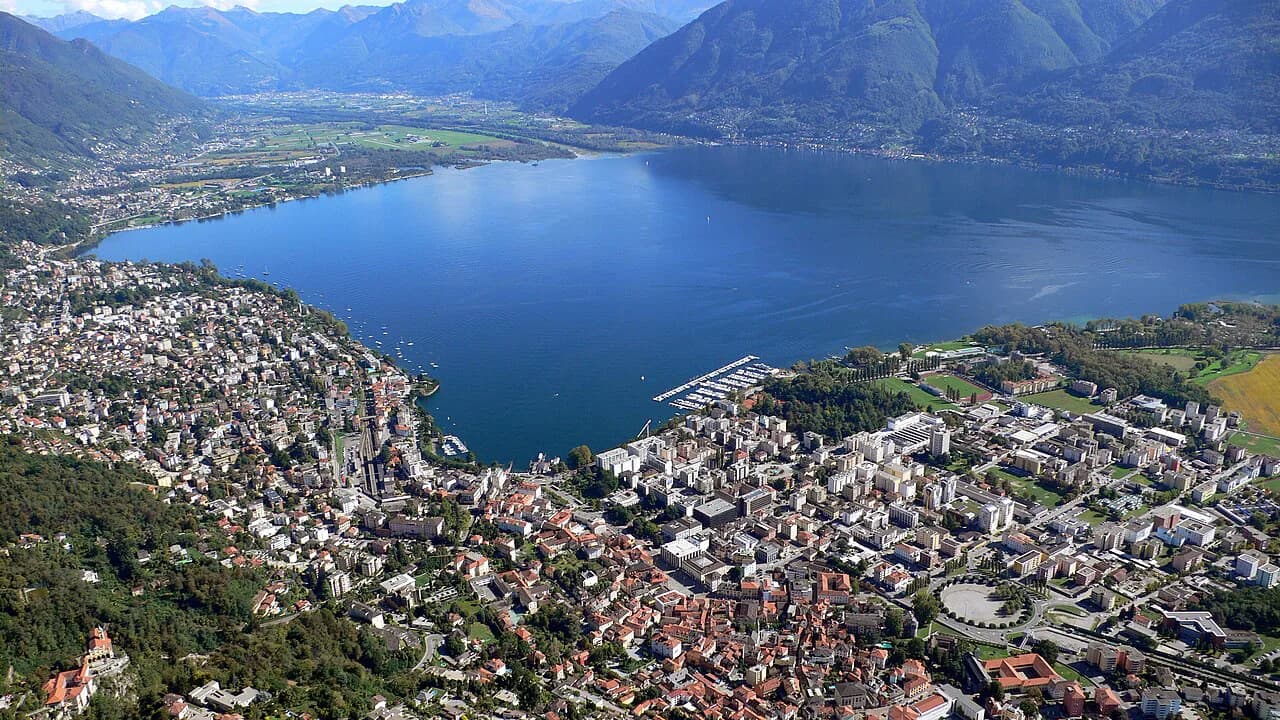
Locarno's old town sits just above the northern shore of Lake Maggiore, stacked in tiers from Piazza Grande up through narrow lanes to the sanctuary of Madonna del Sasso on its rocky outcrop at Orselina. It is compact enough to cross in a morning, but the climb is what shapes the visit: the lower half is flat and arcaded, the upper half is stairs and cobbles. Allow three to four hours for the full route from the square to the sanctuary and back, and treat the stop-and-look time as the point rather than the distance. For the wider picture of the lakefront and the valleys beyond, the rest of our things to do in locarno coverage fills in what lies past the old quarter.
How Locarno Old Town Is Laid Out
Think of the historic center as a vertical route rather than a district. Piazza Grande forms the base, and the alleyways that lead uphill between the houses all end up in the old town quarter, which in turn points toward Orselina and the pilgrimage church above.
That shape comes from water. The lake once reached as far as the houses on the square, and the lanes climbing away from it worked as escape routes when floods came; today they are the practical way to reach the historic heart, a knot of alleys, boutiques, cafés and old buildings. The most recent major floods, in 1993, 2000 and 2014, are history rather than a planning worry, but they explain why the town grew upward.
Set aside two hours if you only want the square, the arcades and a wander through the lanes, and add the castle and the sanctuary on top of that. The climb to Madonna del Sasso is the part that takes effort, and it is also the part most visitors remember.
Start at Piazza Grande
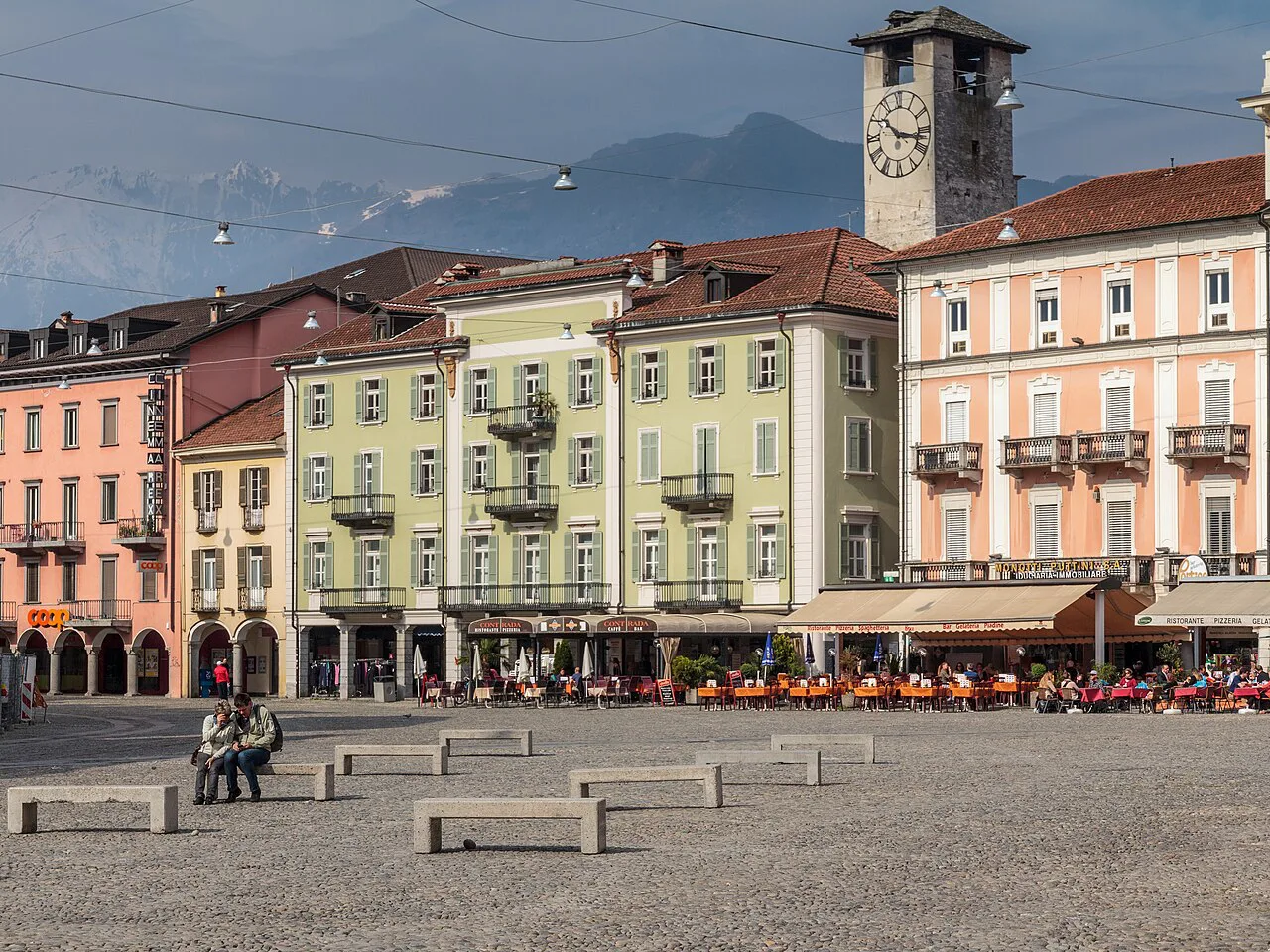
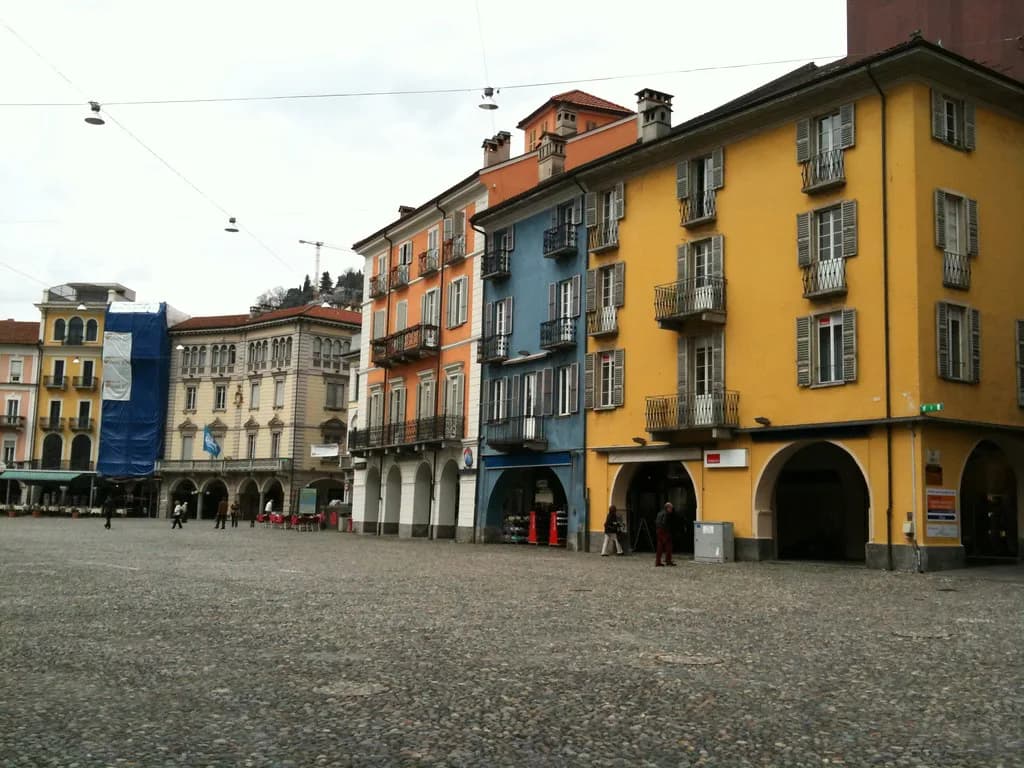
Piazza Grande is the landmark and the living room of Locarno, a large cobbled square ringed by typical town houses and the Torre Communale civic tower with its striking clock face. The pavement is stone from the nearby Maggia river, laid in 1825 as the lake receded and the square took shape. It is the natural place to begin because everything above it is reached on foot from here.
The square owes its look to the Lombard-style arcades that run roughly 700 metres between the piazza and the railway station, filled with shops, restaurants and bars. That covered line is your shelter on a rainy day or in strong summer heat, and it also doubles as the city's main shopping stretch, which our guide to shopping in locarno covers in more detail.
Look down before you look up. The cobblestones are the reason the square reads as a single room, and the civic tower's clock is the easiest orientation point when you come back down from the hill.
The Walk of Fame and the Lakeside Promenade
Between Piazza Grande and the lakeside promenade lies the Walk of Fame, handprints of stars who have appeared at the Moon+Stars festival. It takes a couple of minutes to walk past and is worth it mainly as a marker of how closely the town ties its identity to its events.
The promenade below is flat, open and easy, which makes it a sensible warm-up before the climb or a soft landing afterward. Many visitors treat the lakefront and the old town as separate outings; joining them in one loop from the square down and back up saves doubling back through the same lanes.
Duck Into the Uphill Lanes
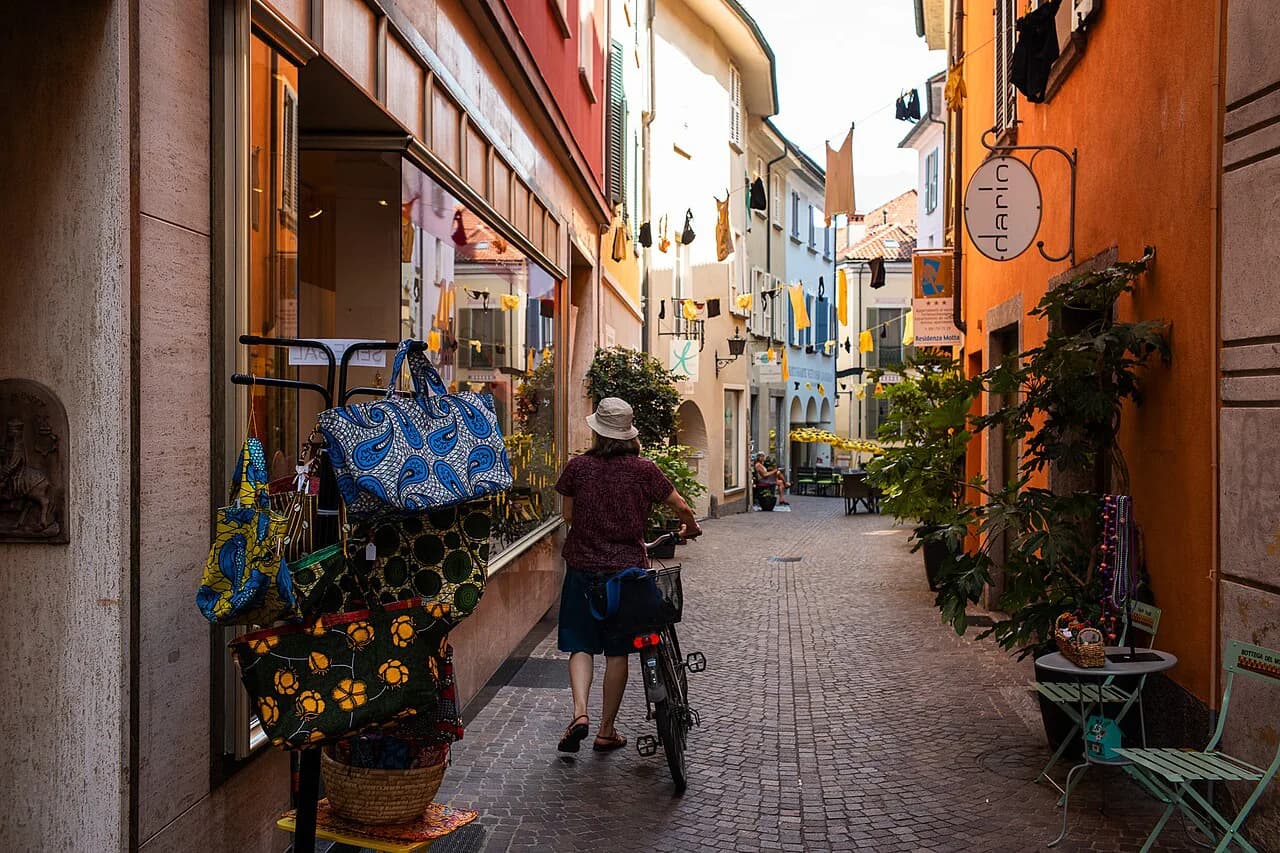
The fun of the quarter is in the alleys themselves, which funnel steeply between houses and open onto small corners with cafés and shopfronts. Walk them slowly and take a different lane up than the one you came down, because each has its own view back over the rooftops toward the lake.
These lanes are stone and often stepped, so shoes matter more than they would on the flat. In wet weather the surface gets slick, and in July and August the climb is hot work with little shade in places; the arcades below are the alternative when the weather turns.
Castello Visconteo and Its Archaeological Museum
A short stroll from the center brings you to Castello Visconteo, a medieval castle that was once part of a defensive stronghold built by the Visconti family of Milan. It fell into disrepair from 1531, was rescued, and now holds the archaeological museum, with Roman finds and medieval pieces that give the town's long history some substance.
It is a compact stop rather than a half-day outing, which makes it easy to slot between the square and the sanctuary. Check the museum's opening days before you build the day around it, since Swiss museums commonly keep one weekday closed.
The Climb to Madonna del Sasso
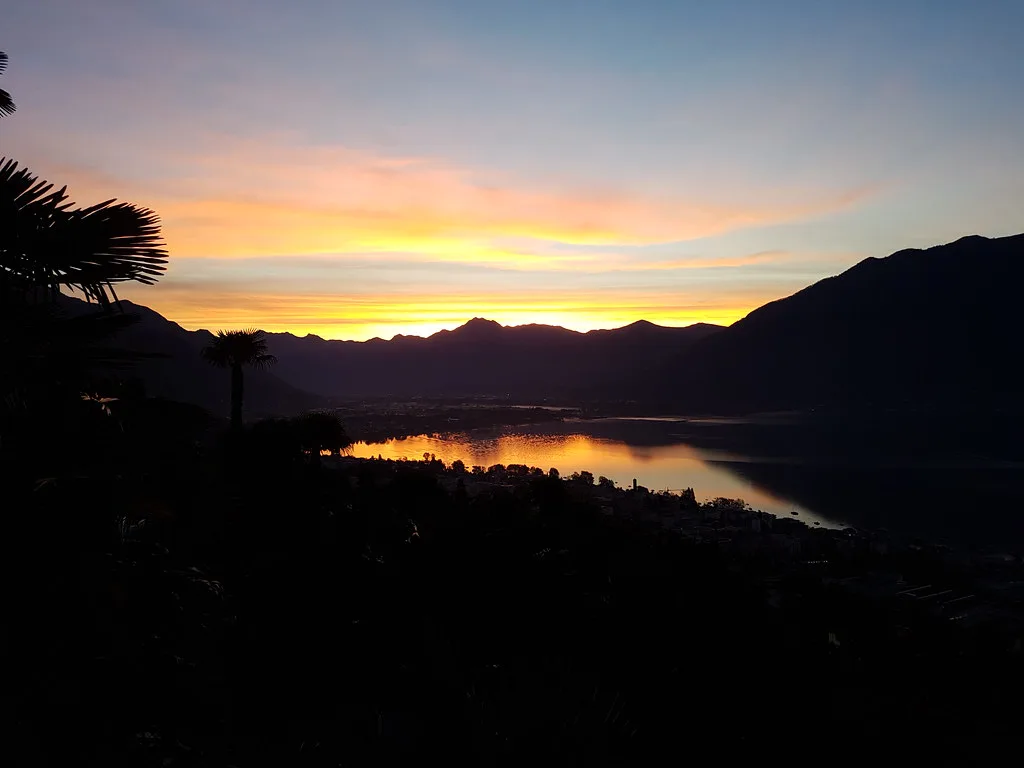
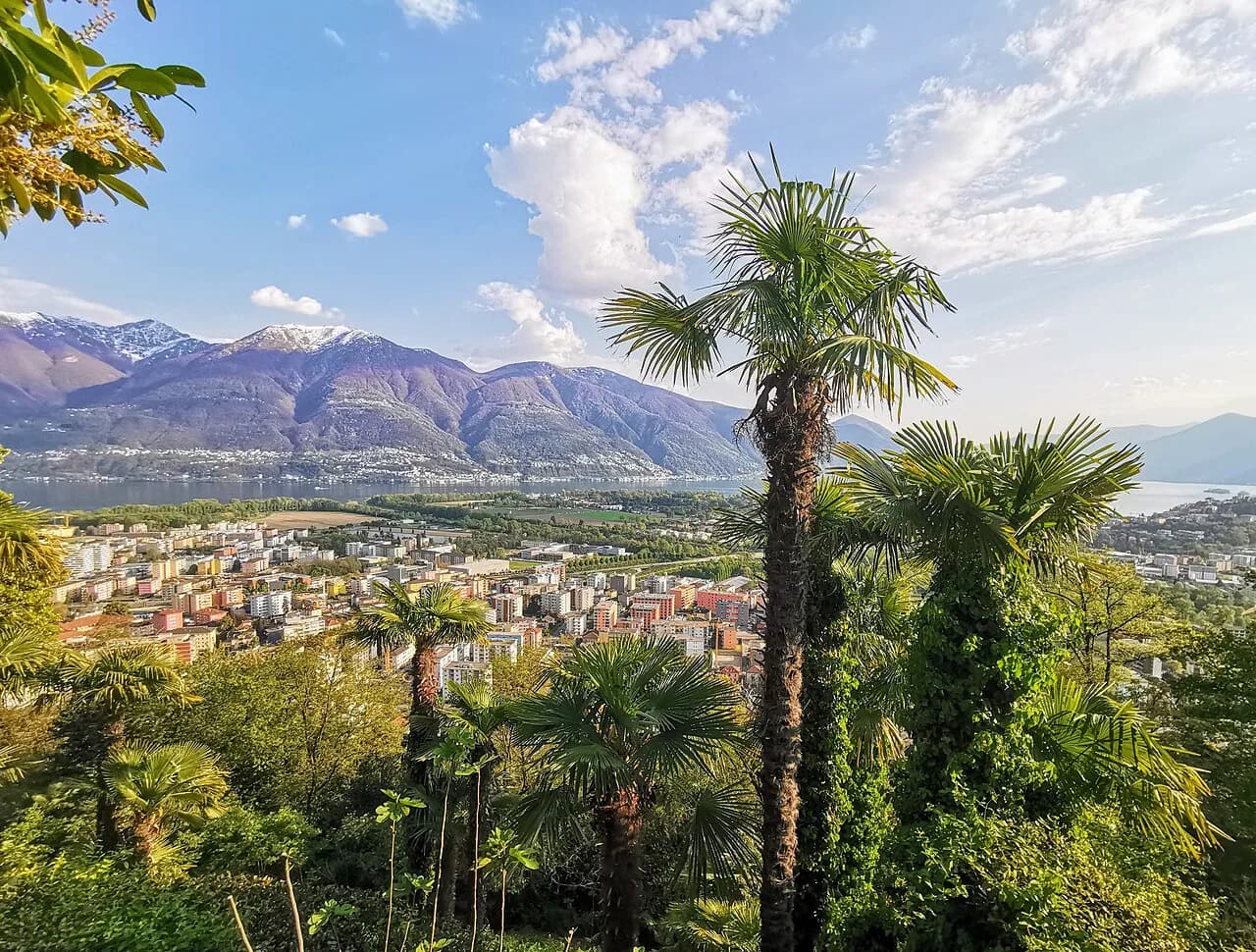
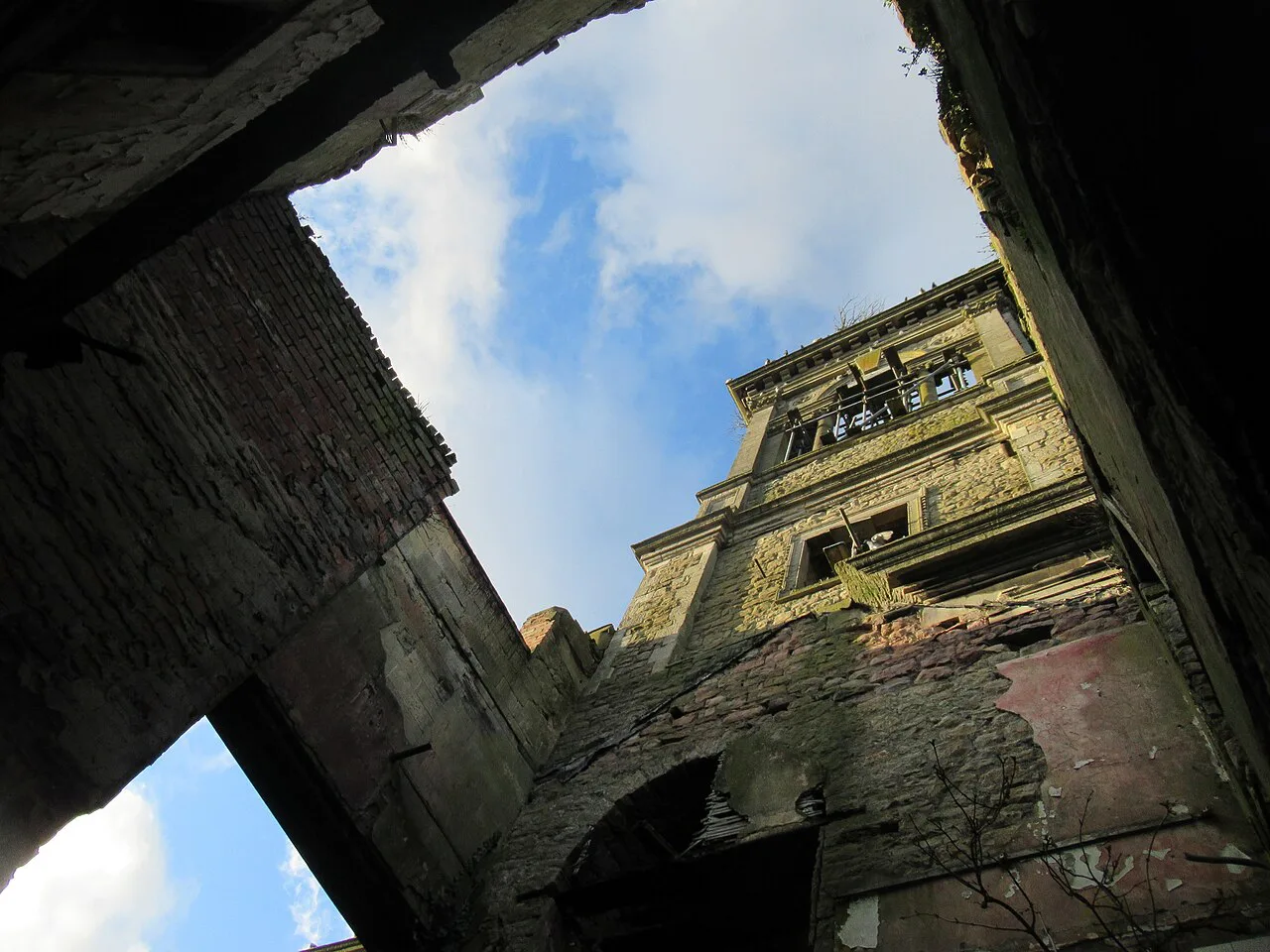
The Sanctuary of the Madonna del Sasso was founded in 1480 on the rocky outcrop above town, and its terrace gives the broadest view in Locarno over the city, Lake Maggiore and the Alps beyond. The energetic way up is on foot through the old town quarter along the Via Crucis, the Way of the Cross, which is steep but continuous.
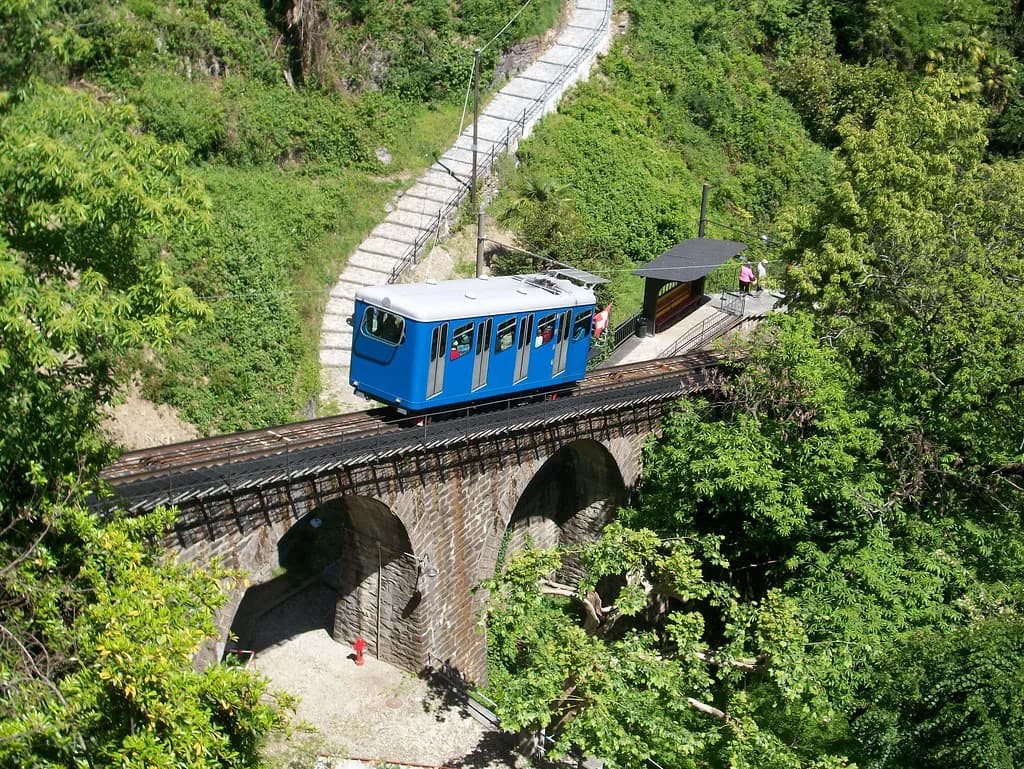
The relaxed way is the cogwheel railway to Orselina, which lifts you to the hillside village with almost no effort and puts you a short walk from the sanctuary. Walking up and riding down, or the reverse, gives you both the climb and the view without committing to the descent on tired legs.
Fares and timetables are not something to guess at, so look them up at the station on the day. Our locarno cable car guide covers the lift options above town if you want to link the sanctuary to another viewpoint.
A Half-Day Walking Order
Start on Piazza Grande in the morning, when the square is quiet and the light on the arcades is good. Cross to the Walk of Fame, glance at the lakefront, then head back and pick an uphill lane into the old quarter before the day heats up.
From the lanes, drop to Castello Visconteo for the museum, then take the Via Crucis or the cogwheel railway up to Madonna del Sasso and come down the other way. Finish with a slow pass through the arcades toward the station, which keeps you covered if the weather has shifted.
If you only have a single day in town, this route plus the lakefront is a realistic plan and leaves the valleys for another trip; our suggested one day in locarno itinerary arranges the same pieces around limited time.
When the Old Town Is Busiest
Piazza Grande is the venue for the events that define Locarno's year, including the Locarno Film Festival, Moon+Stars, the Food Truck Festival and Winterland, and it hosts a weekly market every Thursday. On event days and market Thursdays, the square changes character entirely and the lanes fill with people passing through.
If you want the architecture rather than the crowd, plan the walk for a morning that is not a Thursday and check the event calendar before fixing the date. For a broader view of what the town offers across the seasons, see is locarno worth visiting, which weighs the old center against the lake and the valleys.
What the Old Town Costs
The streets, the squares, the arcades and the Walk of Fame are free, and that is most of the walk. The castle museum and the ride up to Orselina are the two paid pieces; check the castle's archaeological museum and the Orselina funicular at their ticket desks or on their own websites before budgeting, since neither publishes a price in the sources here.
Locarno is a Swiss-priced town, and small costs add up over a day of coffee stops and entry fees; our breakdown of whether locarno is expensive sets out where the money actually goes.
The Trade-Offs
The arcades are the old town's great convenience, giving you roughly 700 metres of covered walking between the square and the station, useful in rain and in the heat of high summer. The price of that convenience is that the easiest route is also the least interesting one, since the lanes above are where the character sits.
The uphill lanes are steep and stepped, which makes the old town harder work than its size suggests for anyone with limited mobility or a stroller. The cogwheel railway solves the height problem for the sanctuary, but the quarter between the square and the castle still has to be taken on foot.
Where the Old Town Fits in a Ticino Trip
Locarno's old center is one piece of a larger Ticino picture that includes the lake, the surrounding valleys and the bigger city of Lugano to the south. If you are choosing between the two, our lugano vs locarno comparison sets out which suits a short break and which rewards a longer stay.
Within Locarno itself, the historic quarter is the anchor for everything else, from boat trips on Lake Maggiore to the wine country inland. The Locarno Attractions hub gathers the individual sights if you want to build the rest of the stay around this walk.
Plan Your Visit
Walk Locarno's old town from the bottom up: Piazza Grande first, then the arcades and the Walk of Fame, then a lane into the old quarter, the castle museum, and finally the sanctuary above Orselina by foot or by rail. Give it half a day, wear shoes that handle cobbles, and pick a morning that is not a market Thursday if you want the square to yourself.
The paid stops are the castle museum and the ride up the hill, and their prices and opening days change with the season, so confirm both at the ticket desk before you commit. Everything else, from the lanes to the view from Madonna del Sasso, costs nothing but the climb.
Frequently Asked Questions
What is there to see in Locarno old town?
The route runs from Piazza Grande, with its civic tower and Lombard-style arcades, past the Walk of Fame toward the lakeside promenade, then up through the alleys into the old town quarter. Above the lanes sit Castello Visconteo with its archaeological museum and the sanctuary of Madonna del Sasso at Orselina, reached on foot along the Via Crucis or by cogwheel railway.
How long does it take to walk Locarno old town?
Two hours covers the square, the arcades and a wander through the uphill lanes. Add the castle museum and the climb or ride to Madonna del Sasso and the full circuit realistically takes three to four hours, including stops for the views.
Is Locarno old town worth visiting?
Yes, if you want the historic center rather than only the lakefront. The old town is compact, free to walk and unusually vertical, with the arcades giving covered passage in bad weather and the sanctuary above offering the best view over the city and Lake Maggiore.
How do you get up to Madonna del Sasso?
Two options: walk through the old town quarter along the Via Crucis, which is steep but direct, or take the cogwheel railway up to Orselina and approach the sanctuary from the village. Many visitors go up one way and down the other. Fares and operating times vary by season.
Is the Castello Visconteo inside the old town?
It sits a short stroll from the center and from Piazza Grande, on the edge of the historic quarter rather than deep inside it. The castle holds the archaeological museum, and its opening days are worth confirming before you plan the walk around it, as Swiss museums often close one weekday.
What is Locarno known for?
Locarno is known for its lakeside setting on Lake Maggiore, its Mediterranean feel within Ticino, the arcaded Piazza Grande and the events it hosts, including the Locarno Film Festival and Moon+Stars. The Madonna del Sasso sanctuary above town and the surrounding valleys add the scenery that fills out a short break.
When is Piazza Grande busiest?
Event days change the square completely, and the weekly market every Thursday brings it to life with stalls. For a quiet look at the architecture, choose a morning outside those times and check the event calendar before fixing your date.
Sources
Notes for your Swiss city break
Optional updates to our Swiss city guides.
You might also like
Continue reading
More guides you'll find useful