
Spalentor Basel: The Spalen Gate and What to See Nearby
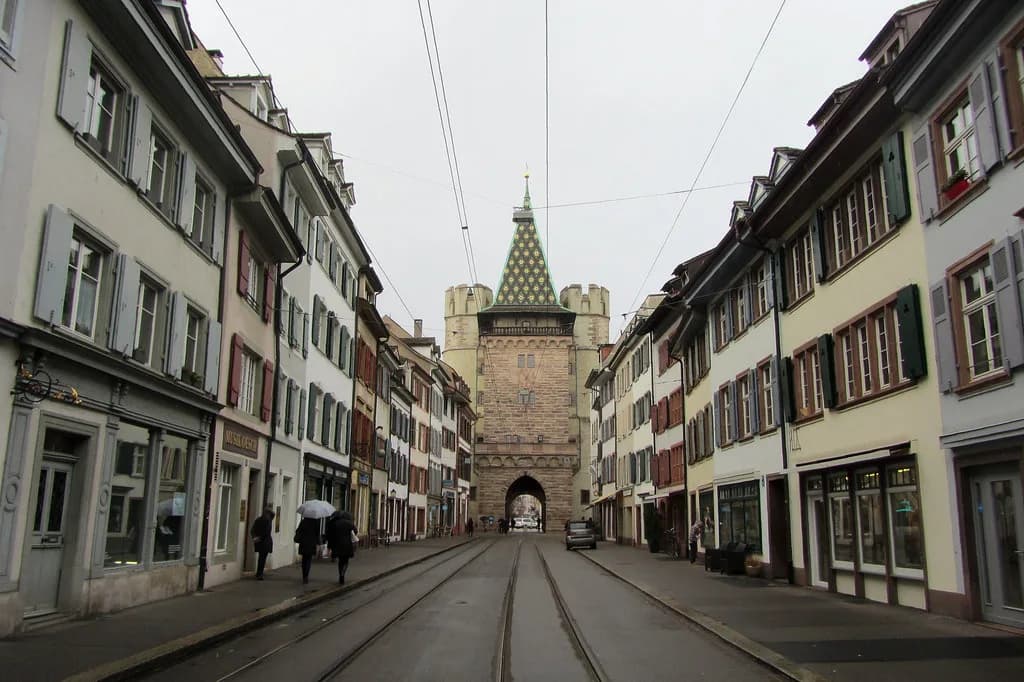
Spalentor is Basel's most impressive surviving city gate, one of three left from fortifications dating to 1400, and it stands at the edge of the old town facing the Botanical Garden and the University of Basel. Seeing it takes minutes rather than hours: it is a monument you look at from the street, not a museum you tour.
Plan it as the first stop on a walk rather than a standalone destination. Pair the gate with the neighboring Botanical Garden, then continue into the old town for the cathedral, the town hall and the museums, and the stop earns its place in a half day. For a wider plan that strings the old town and museums together by area, our basel itinerary is the natural next read.
What Spalentor Is
Spalentor, also written Spalen Gate, is the grandest of the three gates still standing from Basel's city walls of around 1400, and it is widely regarded as one of the most beautiful gatehouses in Switzerland. The other surviving gates belong to the same defensive ring, so the Spalentor is a fragment of a much larger circuit rather than a lone tower.
Basel Tourismus describes it as the most magnificent and impressive of the three remaining gates, which is the right way to read what you see: a tall, richly built entrance that once controlled traffic through the western wall. Look at it as a piece of city defense and its scale and detailing make sense.
Where the Gate Stands
The gate sits on the western edge of the old town, on the Spalenring side, with the Botanical Garden and the University of Basel directly beyond it. That position makes it the natural doorway between the historic center and the university quarter.
For orientation, treat Spalentor as the landmark where the old town thins out into the ring of streets that follows the former walls. If you are coming from the Marktplatz or the Rhine, you are walking away from the river and uphill slightly toward the gate.
Getting There on Foot
The walk from the old town center is short and mostly level, and the gate is easy to find because it spans the street rather than sitting back from it. From the Marktplatz area, head west through the old town and keep the flow of the street toward Spalenberg and the Spalentor.
Trams run along the Spalenring outside the gate, and Basel's compact center means most visitors reach it on foot in the course of a normal day of sightseeing. If you are basing your day around the museums, place Spalentor at the start or end of the walk rather than in the middle.
What to Look At on the Gate
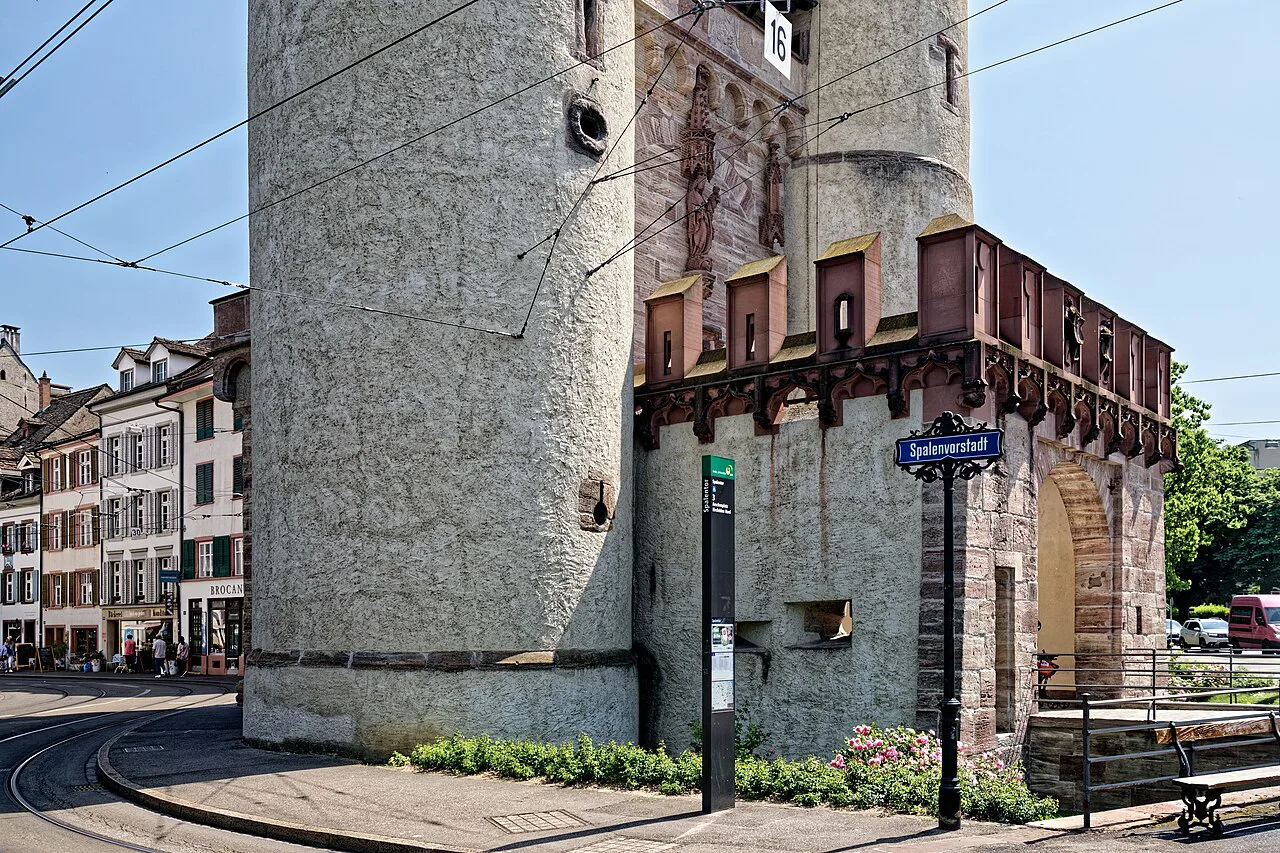
Start with the façade facing the old town: the gate arch, the masonry, the roof profile and the clock face are the details worth a slow look. The structure reads as a small building straddling the road, and from the pavement you can see how traffic was funneled through a single opening.
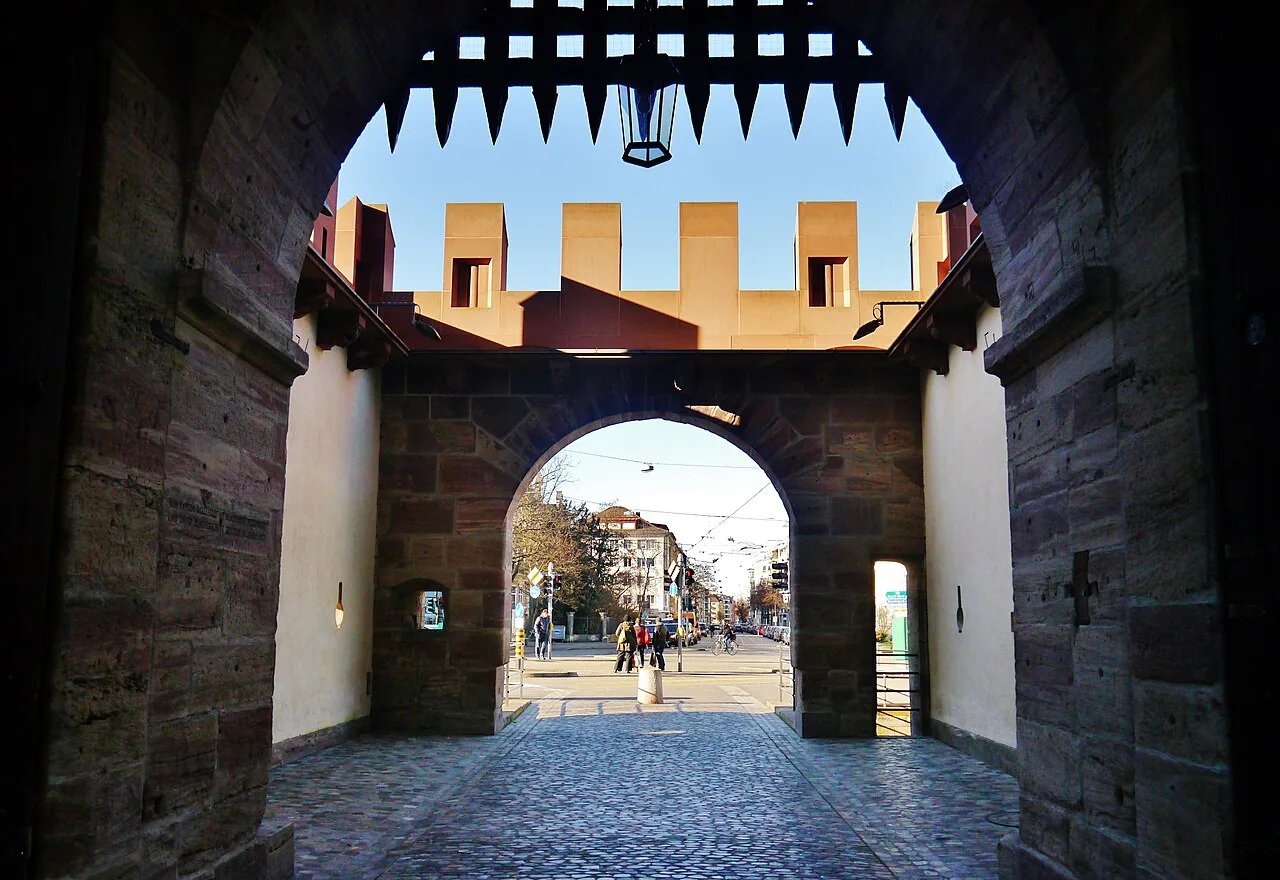
Walk through the arch and turn back for the outer face, which gives the better sense of the gate as part of a wall rather than a freestanding monument. The neighboring stretch of the old fortification line helps you picture the ring that once enclosed Basel.

How Much Time to Allow
Budget ten to fifteen minutes for the gate itself: a walk through the arch, a look at both faces and a few photographs. It is a street monument, so there is no queue, no ticket window and no fixed route through it.
The real time goes into what surrounds it. Add an hour or more if you continue into the Botanical Garden, and half a day if you carry on into the old town for the cathedral and a museum.
The Botanical Garden Next Door
The Botanical Garden lies immediately across from the gate and the university, making it the obvious companion stop. Its show houses and open-air beds hold a large collection, and the garden is a calm contrast to the traffic on the ring road outside.
The garden is a university institution rather than a commercial attraction, so treat opening arrangements as something to confirm on the day rather than assume. Combine the two stops in one visit: gate first, garden second, then back through the arch into the old town.

Nearby: the Old Town and Its Museums
From Spalentor the old town unfolds eastward, with the Marktplatz and its red town hall, the Basel Minster above the Rhine, and a dense cluster of museums within walking distance. The Kunstmuseum Basel, the city's major art collection, is the headline museum stop for most visitors.
Art travelers with a full day can extend to the Fondation Beyeler, the Renzo Piano-designed museum set in a park outside the center, which is a separate trip rather than a stroll from the gate. Keep the old town and the museums as the core of the day and treat the Beyeler as its own outing.
Practical Notes for Visiting the Gate
Spalentor is viewed from the public street, so there is nothing to book and no admission to pay to stand beneath the arch and look up. Any museum or garden stop you add nearby has its own entry arrangements and should be checked before you set out.
If you are staying in a Basel hotel, ask about the BaselCard, a guest benefit that hotels issue on arrival and which covers local tram and bus travel plus cultural and leisure discounts during your stay. It applies to your hotel stay, not to the gate, and it is worth confirming what your own booking includes.
Fitting Spalentor Into Your Basel Day
Spalentor works best as a short, free stop that anchors the western end of an old-town walk: see the gate, cross to the Botanical Garden, then head east through the lanes toward the Marktplatz and the Rhine. Allow a few minutes for the monument and build the rest of the day around what you add to it. If you want to slot the gate into a wider plan by area, our basel itinerary shows how the old town and the museums fit together.
Season matters mainly for how long you linger outdoors, since the gate and the garden are both open-air stops. Spring and early autumn give the most comfortable walking weather for stringing the gate, the garden and the old town together. If you are weighing when to come, our guide to the best time to visit basel breaks down weather and crowds month by month.
Explore more Basel guides
Frequently Asked Questions
What is Spalentor in Basel?
Spalentor, or Spalen Gate, is the most impressive of the three city gates still standing from Basel's fortifications of around 1400. It stands at the western edge of the old town, facing the Botanical Garden and the University of Basel, and is viewed from the public street.
How old is the Spalen Gate?
The surviving gates, including Spalentor, belong to Basel's city fortifications dating from around 1400. The gate is a remnant of that defensive ring rather than a later replica.
How long do you need at Spalentor?
Allow ten to fifteen minutes for the gate itself: walk through the arch, look at both faces and take a few photos. Add an hour or more if you continue into the Botanical Garden, or half a day if you carry on into the old town for the cathedral and a museum.
What is near Spalentor in Basel?
The Botanical Garden and the University of Basel are immediately across from the gate. East of it lie the old town, the Marktplatz with its town hall, the Basel Minster and the Kunstmuseum Basel, all within walking distance.
Is Spalentor free to visit?
Yes. The gate is a monument viewed from the public street, with no ticket window or booking. Nearby stops such as museums and the Botanical Garden have their own entry arrangements, which you confirm before you go.
Do I need a BaselCard to see Spalentor?
No. The BaselCard is a guest benefit that some Basel hotels issue on arrival, covering local public transport and cultural and leisure discounts during the stay. It has nothing to do with access to the gate, which is open to anyone on the street.