
Bündner Kunstmuseum: Chur's Art Museum in the Villa Planta
The Bündner Kunstmuseum is Chur's art museum, and its layout is the reason to go: a neoclassical villa holds the permanent collection, while a sculpted concrete cube by Barcelona architects Barozzi Veiga holds visiting exhibitions in galleries two levels below ground. The museum sits at Bahnhofstrasse 35 in the Graubünden capital, which puts it within an easy walk of the old town.
What the Bündner Kunstmuseum is
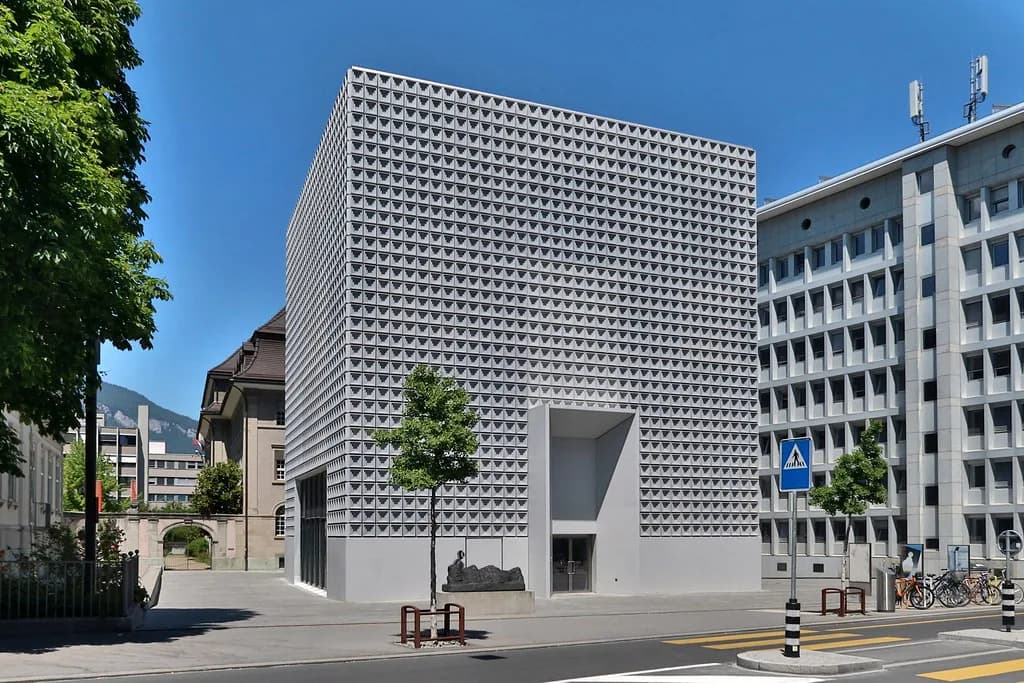
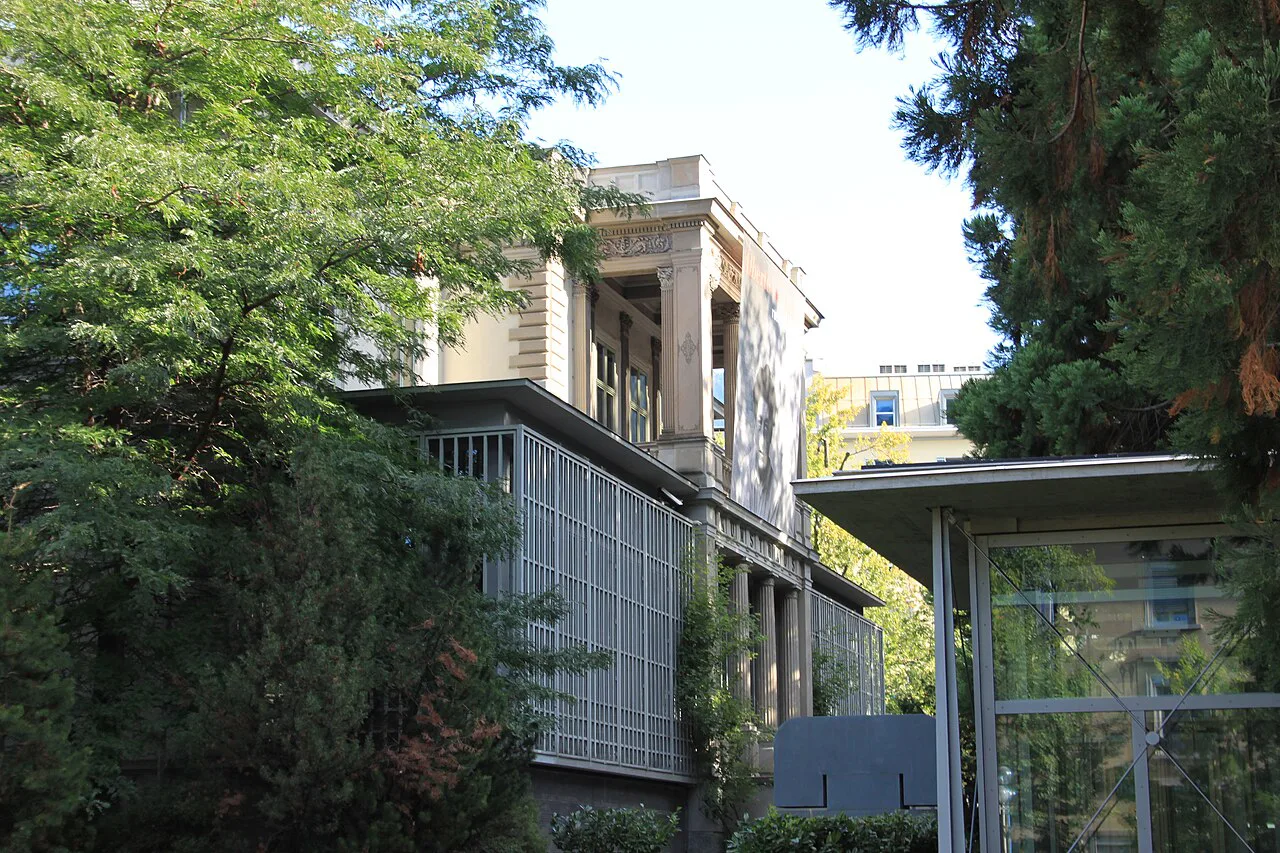
Two buildings, one institution. The historic Villa Planta is the museum's original home, a neoclassical structure with Middle Eastern and Byzantine decorative influences, and it remains the setting for the permanent collection. The freestanding cube beside it, completed by Barozzi Veiga, is a 4,000-square-meter volume that gave a growing collection room to breathe.
The pairing is deliberate. The architects describe the relationship between the two buildings as a dialogue built on shared principles of structure and ornament, even though the extension strips away the villa's decoration in favor of plain geometry. For a visitor, that means one museum stop delivers two very different architectural experiences.
Chur has a cluster of small museums, and this is the city's art museum rather than a regional-history collection. If you want to understand how the museum fits into a wider day in the city, the guide to Chur Attractions: 5 Visitor Guides maps the other stops.
Where it is on Bahnhofstrasse
The address is Bahnhofstrasse 35, 7000 Chur. That street runs through the newer part of the city center, and the museum's position between the station area and the old town makes it convenient to slot into a walk rather than treat as a detour.
Chur's compact center means you can pair the museum with the old town on foot in a single afternoon, with the cathedral and the main squares within walking distance. Build the art museum into a broader loop rather than making a separate trip for it.
The Villa Planta: the permanent collection
Start in the villa. The permanent collection stays in the historic building, so this is where you meet the museum's core holdings in neoclassical rooms that are themselves part of the appeal. The building's symmetry and ornament are the classical reference point against which the extension was designed.
Because the villa and the new building are connected below ground, you do not exit and re-enter to move between them. A lower-ground concrete stairwell links the old building to the new, so the visit flows downward from the historic rooms into the contemporary galleries.
The new wing: a public cube over underground galleries
The extension inverts what most visitors expect. Its four above-ground floors are given over to public space rather than exhibitions, while the display areas spread out beneath it across two underground levels. Plan to descend rather than climb.
Visiting exhibitions occupy the new construction, along with museum education services, workshops and a cafeteria. That makes the cube the busier, more changeable half of the museum, while the villa stays anchored to the collection.
Which exhibitions are on during your stay changes the balance of the visit, so check the museum's own program before you commit an afternoon. Specific artists, works and show dates are best confirmed there rather than assumed from a general guide.

The architecture itself
Treat the building as an exhibit. The extension's four uniform facades are clad in squares of sculpted concrete, and its plan is built around a central symmetry that echoes the villa without imitating its ornament. It reads as a plain, heavy counterpoint to the classical house next door.
One competition entry for the museum ensemble, from E2A Architects, proposed facades of vertically channeled exposed concrete to let the new building enter into an architectural dialogue with the surrounding classical architecture. Look at how the concrete catches light along the street before you go in, since the effect is easiest to see from outside.
The gardens and the entrance side
The extension was planned to preserve and extend the Villa Planta's existing gardens, which matters because the plot available was limited in size. The result is a museum that keeps a green setting rather than walling itself off from the street.
The E2A competition scheme turned the existing building line outward along Graben Street to create a vestibule oriented toward the new entrance, framed by valuable tree plantings. That approach is worth a minute on arrival: it is the transition between the street and the museum proper.
For a green pause after the galleries, the Fontanapark offers a formal garden setting a short walk away in the city center.
How much time to allow
Budget roughly one to two hours. The villa's collection rooms and the two underground gallery levels make a focused visit; the above-ground cube is largely public space, so there is no long upper-floor circuit to work through.
Sequence it this way: villa first for the permanent collection, then down the connecting stairwell into the underground galleries for the visiting exhibition, then back up into the public floors of the cube and out. If architecture is your main interest, add time outside on Bahnhofstrasse and Grabenstrasse before you start.
Add a third hour only if a temporary exhibition genuinely interests you. Otherwise, put the saved time into the old town, which rewards a slow walk more than a rushed museum circuit does.
Tickets and opening days
The museum sets its own admission prices and opening days, and these are the two things to confirm on its official site before you travel. Do not rely on a general city listing for the day's hours. Admission for children, students and groups often differs from the standard rate, so check the categories that apply to you.
If your Chur plans hinge on a specific day, verify the museum's schedule in advance and keep a fallback nearby. The Rätisches Museum Chur is another city museum that pairs naturally with an art stop.

Nearby in Chur
The MySwitzerland museum search for Chur lists nine museums, among them the Domschatzmuseum Chur, the Torculum wine museum, the Polizeimuseum Graubünden, the Rätisches Museum and the Bündner Kunstmuseum itself. That gives you a menu of small, specific collections within the same compact center.
The cathedral, the Chur Cathedral (Cathedral of the Assumption), sits in the old town above the museum and is a natural next stop on foot.
Walking into the old town, the Ober Gasse and the Obertor gate mark the historic entrance to the pedestrian core and make a sensible route back toward the center after the museum.
If you are shaping a fuller stay, Things to Do in Chur, Switzerland covers how these smaller stops fit together across a day or two.
Practical trade-offs
This is a focused museum stop, not an all-day one. Its appeal is the pairing of a historic villa collection with a contemporary building you can read from the street, so it suits travelers who care about architecture and art together rather than those hunting for a blockbuster gallery.
The main trade-off is that the extension's most striking volume is public space rather than display space, which some visitors find surprising. Go in knowing that the galleries are underground, and the building's logic makes sense.
Pair it with the old town and one other small museum, and Chur's compact center does the rest. Trying to fit in every museum on the city list will flatten the day; two well-chosen stops plus a walk is the better plan.
Plan Your Visit
Build the Bündner Kunstmuseum into a Chur walk rather than a special trip: arrive on Bahnhofstrasse, look at the concrete cube and the villa from the street, then take the collection in the villa and the underground galleries in that order. Allow one to two hours and keep an eye on the clock only if you have another museum booked.
Confirm the day's opening hours and the current exhibition on the museum's official site before you set out, then use the rest of the afternoon for the old town and the cathedral.
Frequently Asked Questions
What can you see at the Bündner Kunstmuseum in Chur?
The museum combines the neoclassical Villa Planta, which holds the permanent collection, with a concrete extension by Barozzi Veiga used for visiting exhibitions, education spaces, workshops and a cafeteria. The extension's galleries sit on two underground levels, while its four above-ground floors are public space.
Where is the Chur art museum located?
The Bündner Kunstmuseum is at Bahnhofstrasse 35, 7000 Chur. That puts it between the station area and the old town, close enough that you can combine it with a walk through the historic center on foot.
How long does a visit to the Bündner Kunstmuseum take?
Allow about one to two hours for the villa's collection and the underground galleries. Add more time only if a temporary exhibition particularly interests you, and leave room outdoors for the buildings' facades along Bahnhofstrasse and Grabenstrasse.
Is the Bündner Kunstmuseum housed in the Villa Planta?
Partly. The Villa Planta is the museum's original neoclassical home and remains the setting for the permanent collection. The newer cube by Barozzi Veiga stands beside it and holds the visiting exhibition spaces, connected to the villa by a lower-ground stairwell.
What else can you see near the Bündner Kunstmuseum in Chur?
The MySwitzerland museum search for Chur lists nine museums, including the Domschatzmuseum Chur, the Rätisches Museum, the Torculum wine museum and the Polizeimuseum Graubünden. The cathedral and the old town's Obertor gate are also within walking distance.
Are museums in Chur open on Mondays?
Opening days vary by museum and by season, so check each museum's official site for the day you plan to visit. The Bündner Kunstmuseum publishes its own opening days and admission prices, and those are the details to confirm before you travel.