
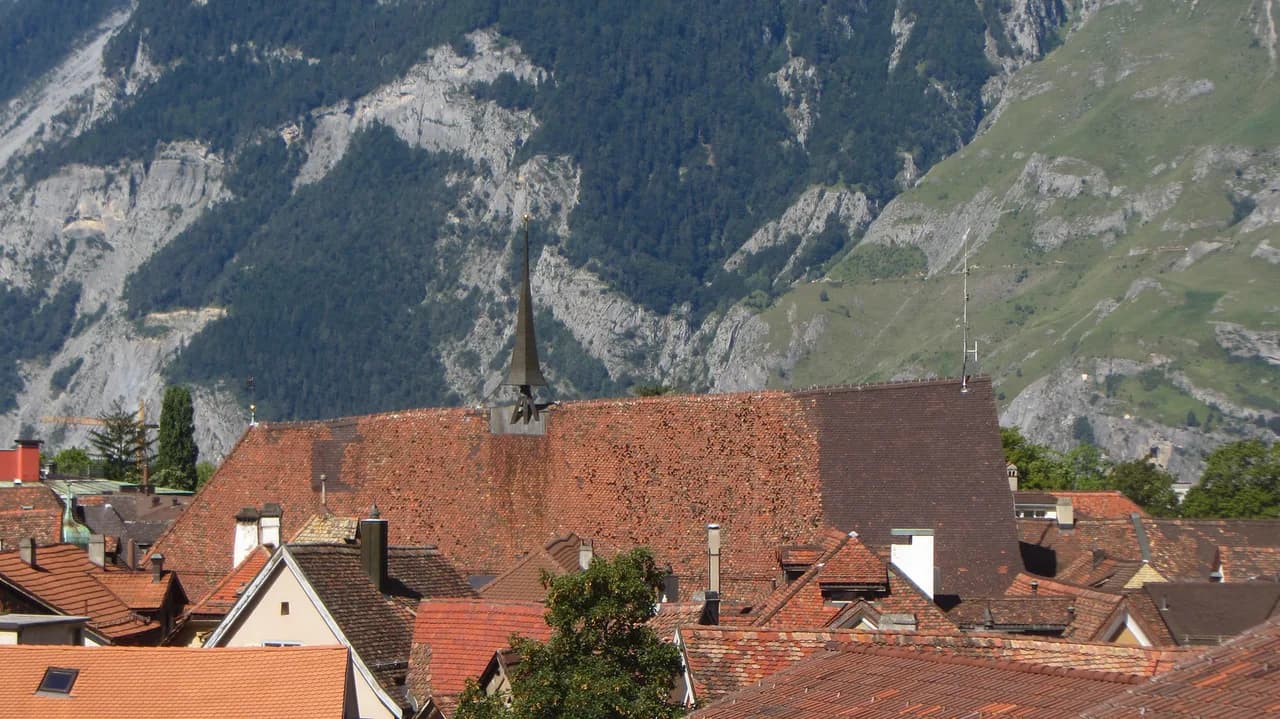
Fontanapark Chur: Visiting the Restored Baroque Park
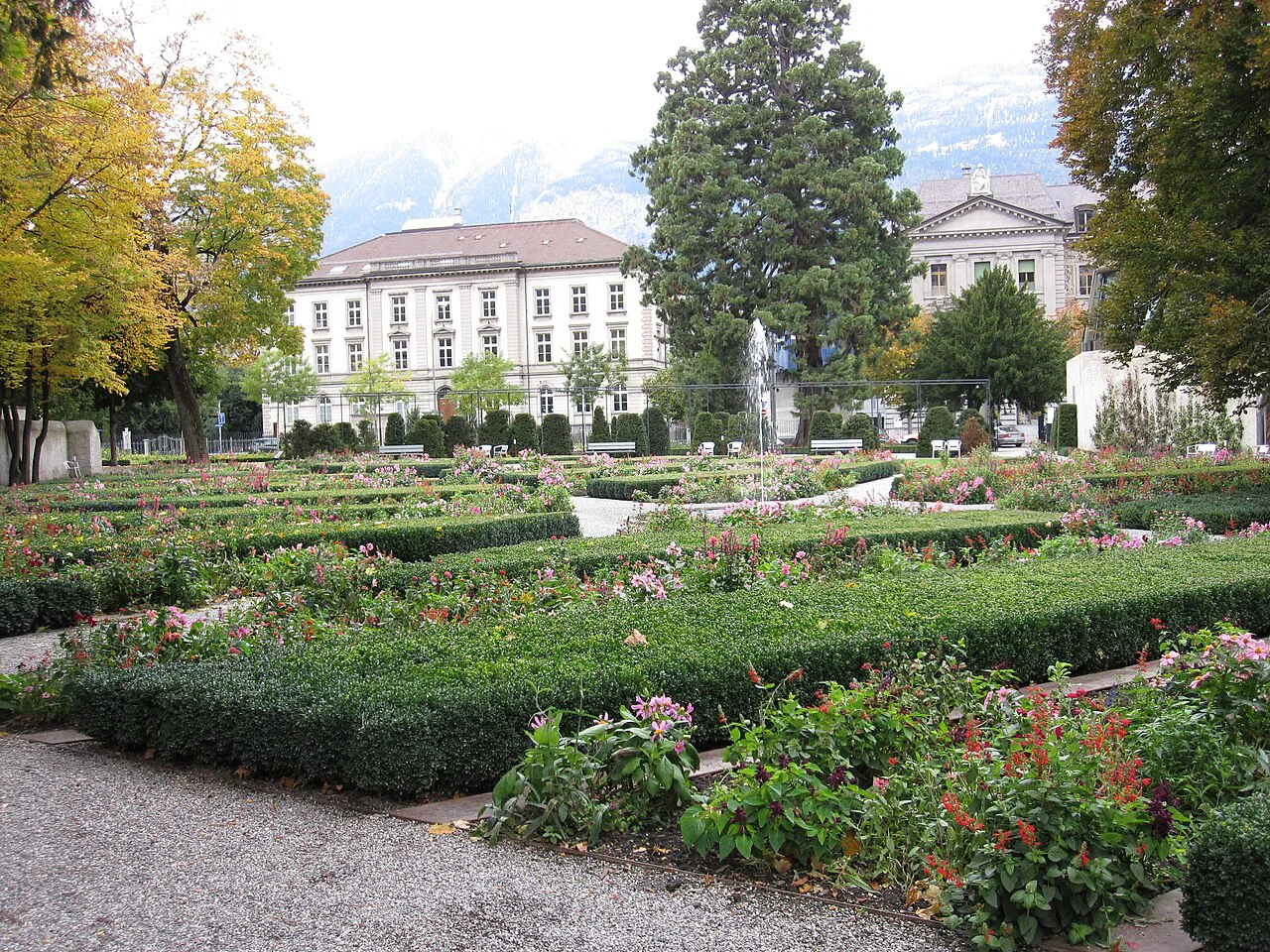
Fontanapark is a public park in the center of Chur, and its current form follows the boundaries of the baroque garden that stood on the site before 1860. That restored geometry, rather than a long list of facilities, is the reason to walk through: you are reading a garden plan as much as looking at plants.
It works best as a short stop inside a Chur day rather than a destination of its own. Allow 20 to 30 minutes to cross it slowly, longer if you want to sit, and treat it as the breathing space between the old town lanes and the museums on the eastern edge of the center.
What Fontanapark Is
Fontanapark occupies a spot in the middle of Chur that has been gardened for centuries, and the present design deliberately returns to the earlier layout. The garden was restored according to a Parkpflegewerk, a conservation plan drawn up for historic grounds, and the work was completed in 2006, the year Switzerland marked as its Year of the Garden. That double anchor, a heritage plan plus a fixed completion date, is why the park reads as a documented restoration rather than a redesigned city square.
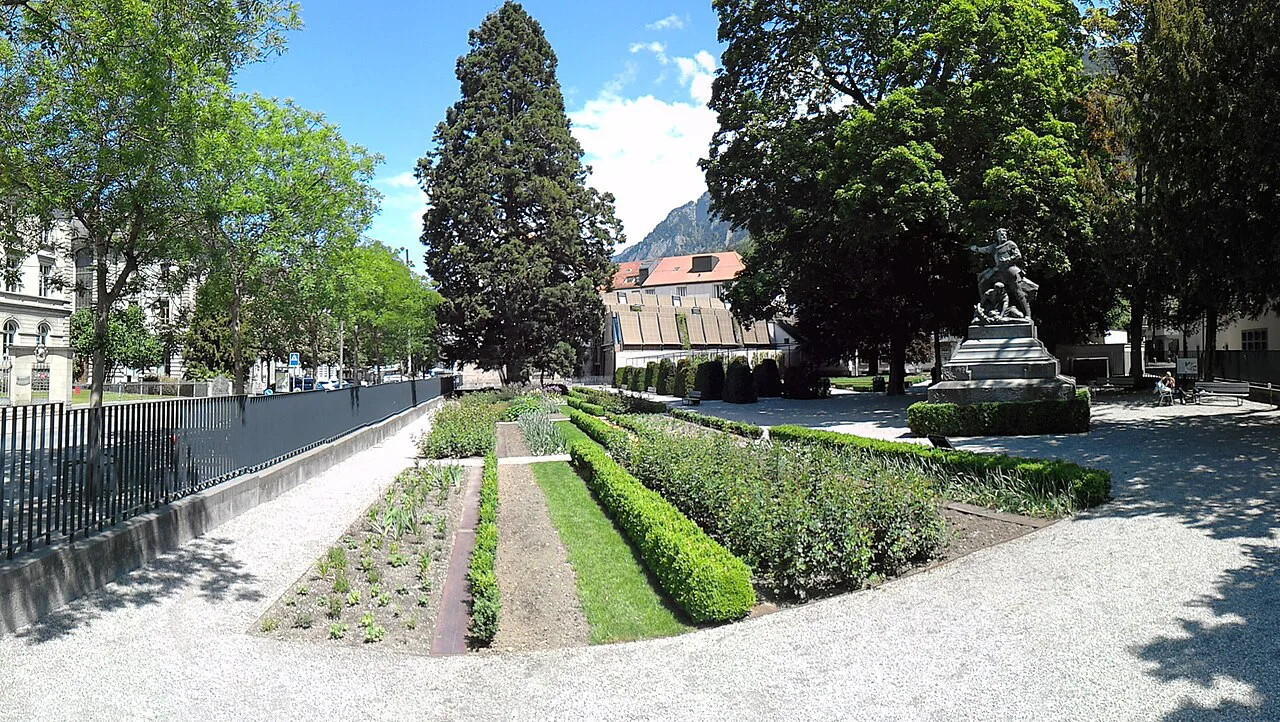
In its present shape the park shows the limits of the baroque garden that existed before 1860. Look at the edges and the path lines rather than at individual beds: the value of the place is the surviving or recovered outline, which tells you how a formal garden related to the surrounding buildings.
Where Fontanapark Sits in Chur
Fontanapark lies in the heart of the city, which in Chur means a short walk from the old town lanes rather than a trip to the outskirts. Because the park is central, it slots naturally into a walking route that also takes in the cathedral quarter and the museums near the Bahnhofstrasse side of town.
From the old town, the simplest approach is on foot through the center; walking times vary with your starting point, so judge the route on a city map rather than a fixed number of minutes. Public transport in Chur is dense, and any city map shows the stops around the park's edges.
The Baroque Footprint and the Restoration
The restoration was not a light tidy-up. The landscape architect's account of the project describes a heritage-conservation job with a series of hurdles, which is a reminder that recovering an early garden layout in a working city center involves negotiation as much as planting.
For a visitor, the practical result is that the park's geometry is the exhibit. Walk the perimeter once, then cross diagonally, and you will notice how the restored limits relate to the pre-1860 baroque garden. That reading takes a few minutes and makes the rest of the visit more interesting than a simple loop.

What to Look For as You Walk
Focus on structure: the alignment of paths, the way the boundary is defined, and how the garden relates to the buildings that frame it. These are the elements the restoration set out to recover, and they reward a slow pass more than a quick cut-through.
Treat the park as one stop among several central sights rather than as a self-contained attraction. The Chur Cathedral sits in the old town above the center, and the Bündner Kunstmuseum is on the opposite side of the middle of town, so the park can sit between them in a single walk.
How Long to Allow
Twenty to thirty minutes covers a deliberate walk with a stop to read the layout; ten minutes covers a pass-through on the way to somewhere else. Because the park is small and central, it is easy to enter, cross, and leave without feeling you have shortchanged the rest of the day.
Pair it with a museum visit rather than building a half-day around it. The Bündner Kunstmuseum Chur and the Rätisches Museum Chur are both close enough to combine with the park in one afternoon, and each gives the stop a purpose beyond the garden itself.
Nearby Sights to Pair With the Park
The old town lanes above the center hold the Cathedral of the Assumption and the Obertor, the surviving medieval gate that marks the historic edge of the city. Walking up from the park and back down gives you a natural loop that mixes the formal garden with the tight streets around it.
If you are building a wider plan for the city, the park belongs in a list of short central stops rather than headline sights. A broader look at the things to do in Chur helps you decide which quarter to give your time to and where a garden break fits.

Practical Notes on Access and Park Etiquette
Fontanapark is a public park, so there is no ticket desk to visit. That makes it one of the easiest additions to a Chur day, and it also means you should expect the ordinary rhythm of a city green space rather than a ticketed attraction.
The city lists the park among its green spaces as a public park, so plan around daylight rather than a fixed timetable and read the notices at the entrances on arrival. The main courtesy is the usual one in a small central park: keep to the paths when the ground is wet and leave the lawns to those sitting on them.
Plan Your Visit
Fontanapark is a 20- to 30-minute stop that pays off if you care about how a city recovers its historic plan. Come for the baroque footprint and the 2006 restoration, then move on to the cathedral quarter or the museums within a few minutes' walk.
Because the park is a public green space with no fixed program, it flexes around whatever else you have booked. Slot it in when you are crossing the center between sights, and it asks nothing of you but the time you choose to give it.
Explore more Chur guides
Frequently Asked Questions
Is Fontanapark in Chur free to visit?
Yes. Fontanapark is a public park in the city center, so there is no ticket desk and no admission to pay. Plan on simply walking in from the surrounding streets.
How long does it take to walk through Fontanapark?
Twenty to thirty minutes covers a slow crossing with a pause to read the layout, and ten minutes is enough if you are cutting through on the way to the old town or the museums. Seating time is extra.
What makes Fontanapark different from other parks in Chur?
Its value is the geometry. The park was restored to the outline of the baroque garden that stood on the site before 1860, so you are looking at a recovered formal plan rather than a newly designed green space.
When was Fontanapark restored?
The restoration was completed in 2006, the year Switzerland marked as its Year of the Garden, and it followed a Parkpflegewerk, the conservation plan used for historic grounds.
Where is Fontanapark in Chur?
It sits in the heart of the city, a short walk from the old town lanes and within easy reach of the cathedral quarter and the museums in the center.