
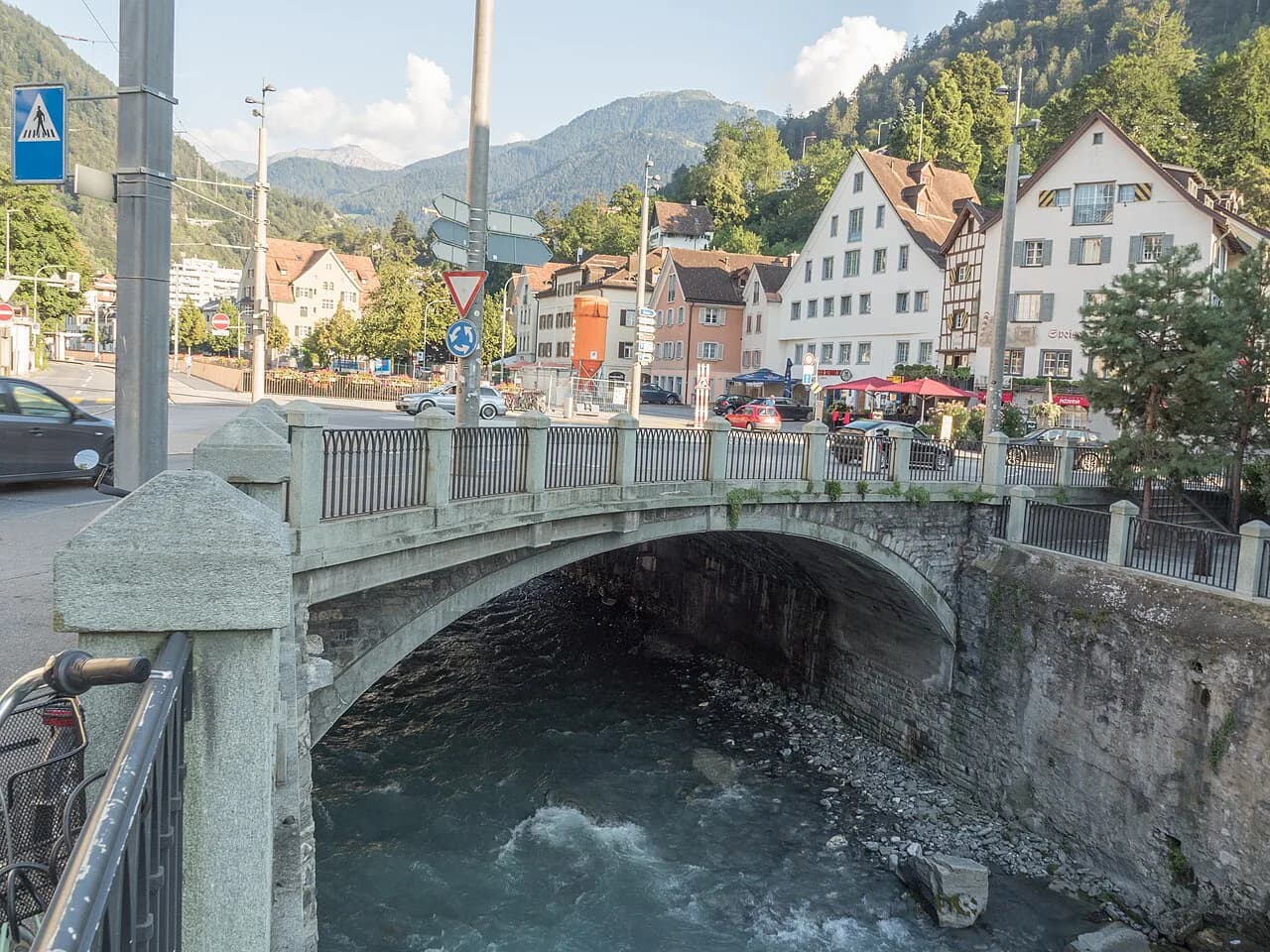
Obertor Chur: The Old Town Gate Above Ochsenplatz

Obertor is a four-story gate tower that formed the entrance to Chur's old town from the upper side, and its tapered profile made it one of the city's landmarks. It stands at the top of the old town, directly above Ochsenplatz, where the lanes of the quarter press together before passing through.
Treat Obertor as a short, focused stop rather than a half-day sight. The tower is viewed from the street and the square in front of it, and the real pleasure is the approach through narrow lanes that tighten as you climb.
What Obertor Is
Obertor is a gate tower of four stories that narrows as it rises, and that shrinking profile is why it reads as a landmark from the lanes below. It served as a gate into the old town and is counted among Chur's signature buildings. The tower's shape, rather than any single ornament, is what visitors come to see.
There is no evidence that the tower can be entered or climbed, so plan on admiring it from outside. That keeps the visit short and makes it easy to combine with the surrounding lanes and squares.
Where It Stands
Obertor sits at the upper edge of the car-free old town, where Ober Gasse, Unter Gasse and Kupfergasse converge and feed pedestrians toward the gate. Ochsenplatz acts as the funnel for that traffic, so you arrive at the tower through a square rather than a wide street. The address of the square is Ochsenplatz, 7000 Chur.
Because the gate marks the upper edge of the quarter, it works naturally as the end point of a walk that begins lower in the old town. Start from Bahnhofstrasse and work uphill through the lanes instead of approaching from outside the gate.
Walking There From Bahnhofstrasse
From Bahnhofstrasse, head into the car-free old town and follow the lanes upward; the streets narrow as you climb and eventually deliver you to Ochsenplatz and the gate. Chur's old town is compact and pedestrian-friendly, with boutiques, museums and galleries lining the route, so the approach is part of the visit.
Wear shoes that handle cobblestones and uneven paving, since the old-town lanes are historic surfaces rather than smooth sidewalks. If you are short on time, walk straight up to the gate and save the browsing for the way back down.
What You See at the Gate
Look first at the shaft: four stories that step inward toward the top, capped by a roofline that gives the tower its distinctive silhouette against the sky. From the lanes below, that taper is what makes the gate recognizable from a distance. The tower's role as a gate into the old town explains why the streets around it bend toward it.
Then turn around and read the square you just crossed, because the fountain and the converging lanes explain how the gate was approached. Seeing both together takes only a few minutes but makes the spot legible.
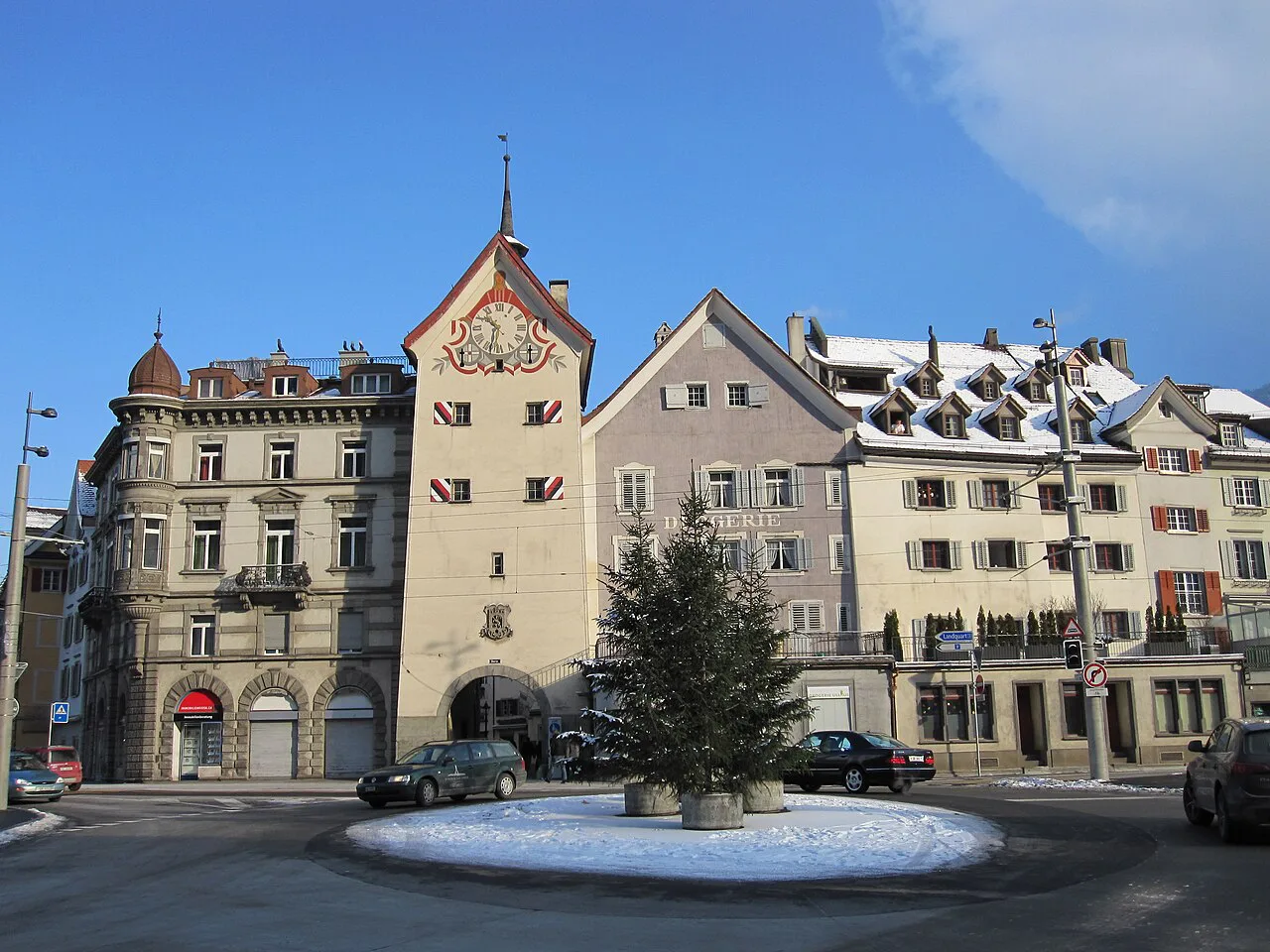

Ochsenplatz and the Ochsenbrunnen
In the middle of Ochsenplatz stands the Ochsenbrunnen, a fountain from 1929 that replicates an earlier basin probably built around 1680. The small weathervane on its pyramid follows that older model, while the Sudelbrunnen, a small trough once used for washing and trade water, was not reproduced.
Knowing this keeps the square from blurring into the rest of the old town: you are looking at a twentieth-century copy of a seventeenth-century fountain, not an original. Read the fountain and the gate as two separate things and the stop becomes more interesting.
How Long to Allow
Budget a short stop at the gate and square, then add time for the lanes you walked through to reach them. The tower is an exterior sight, so there is no queue, no ticket desk and no interior circuit to pad the visit. Most travelers will spend longer on the approach than at the gate itself.
If you want a fuller morning in the old town, pair the gate with a museum or a church nearby rather than stretching the stop itself.

Nearby: Cathedral, Museums and the Old Town
The Cathedral of the Assumption sits on the high ground of the old town near the gate, making it a natural next stop on the same climb. Its position above the lanes means you can see it without descending and re-climbing the quarter.
For art, the Bündner Kunstmuseum is the strongest pairing with a gate-and-cathedral walk, and it gives the old-town stroll an indoor anchor. Check its opening days before you set out, since Swiss museums often keep a weekly closing day.
If you prefer history collections, the Rätisches Museum Chur rounds out the old-town options within easy walking distance of the gate.
For a quieter green pause after the lanes, Fontanapark gives you a Baroque garden to sit in before heading back down.
Practical Notes Before You Go
The gate itself is a street monument viewed from public lanes and the square, so there are no tickets or opening hours to plan around. Ochsenplatz and the lanes leading to it are part of the pedestrian old town, which Chur describes as car-free.
For anything time-sensitive, such as nearby museum opening days, confirm directly with each museum or at the Chur Tourismus office on Bahnhofstrasse before you go. That is a single check that covers the whole old-town circuit.
Plan Your Visit
Obertor is a ten-minute pause that anchors a proper old-town walk: climb from Bahnhofstrasse through Ober Gasse, Unter Gasse and Kupfergasse, read the tower and the Ochsenbrunnen together, then continue to the cathedral or a museum. Keep the stop short and let the lanes do the work.
Explore more Chur guides
Frequently Asked Questions
What is the Obertor in Chur?
Obertor is a four-story gate tower that formed the western entrance to Chur's old town. It narrows toward the top, a shape that made it one of the city's recognizable landmarks. Visitors see it from the lanes and from Ochsenplatz rather than from inside.
Where is the Obertor in Chur's old town?
It stands at the upper edge of the car-free old town, above Ochsenplatz. Ober Gasse, Unter Gasse and Kupfergasse all funnel toward the gate, so you reach it through the square.
How do I walk to the Obertor from Chur station?
Head from Bahnhofstrasse into the car-free old town and follow the lanes uphill; they tighten as you climb and bring you out at Ochsenplatz and the gate. The route is pedestrian and compact, so no transport is needed once you are in the quarter.
How long do I need at the Obertor?
Plan a short stop. The tower is an exterior sight with no ticket desk or interior route, so most of your time goes on the walk up through the lanes. Add a museum or the cathedral to fill a morning.
What is Ochsenplatz and the Ochsenbrunnen?
Ochsenplatz is the small square directly in front of the gate, and the Ochsenbrunnen in its middle is a fountain from 1929 that replicates an earlier basin probably built around 1680. The weathervane on its pyramid follows the older model; a small washing trough was not reproduced.
What else can I see near the Obertor?
The Cathedral of the Assumption is on the high ground close by, and the Bündner Kunstmuseum and Rätisches Museum Chur are both within the old town. Fontanapark offers a garden pause on the way back down.