
Château Saint-Maire: Lausanne's Cantonal Castle Above the Cité
Château Saint-Maire is the gray stone castle on the Cité esplanade, and it is the practical place to start a visit to Lausanne's old town: it anchors the hilltop square and explains why the quarter grew up here. The building is the seat of the canton of Vaud's executive power and has been an administrative building, not a museum, for six centuries. Expect to look at the walls rather than walk through exhibition rooms.
The visit is short and free of ticketing logistics because the experience is architectural: a south facade with openings from several eras, a west wall that carries the story of a controversial modern intervention, and a base at the east end rebuilt in stone from another canton. This guide covers how to reach the castle on foot, what to read in the masonry, how much time to allow, and what sits within a few minutes' walk.
What Château Saint-Maire Is
Château Saint-Maire is a medieval castle in the center of Lausanne that has served as the seat of the canton of Vaud's executive power since the Middle Ages, without interruption for roughly 600 years. That continuity is the key to reading the building: it is a monument that has never stopped being an office building, which is why its walls were carved and adapted for each generation of users.
Treat it as a civic landmark rather than a visitor attraction. There is no ticket desk or exhibition circuit to plan around, and interior access belongs to the administration that works there. For the rest of Lausanne's sights, including museums and churches that do run on published visitor hours, see the Lausanne Attractions overview before you build a day.
Where the Castle Stands
The castle occupies a site 535 meters above sea level in Lausanne's old town, on the plateau known as the Cité. Its signature view is from the esplanade of the Cité, the open square in front of the south facade, which is where the building's full mass and roofline make sense.
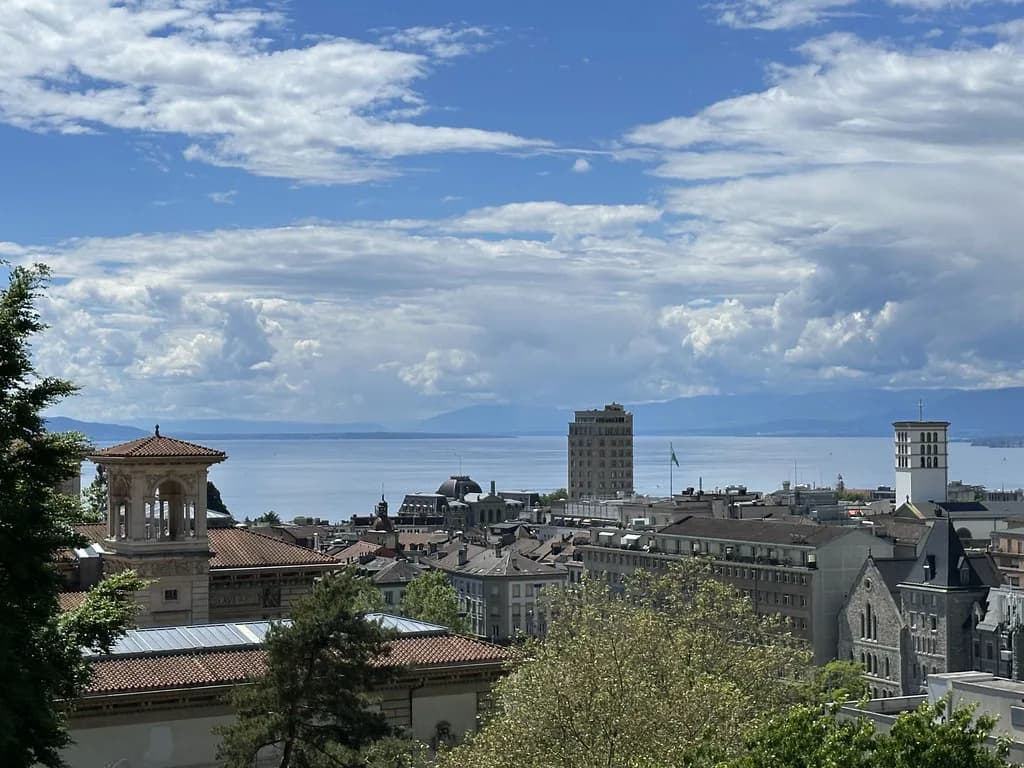
The Cité is the historic core of Lausanne, set above the lower districts that spread toward Lake Geneva. If you are still choosing where to base yourself between the station and the old town, the Lausanne Neighborhoods guide lays out the geography before you commit, and the best time to visit Lausanne page helps you pick the season for that base.
Getting There on Foot
Lausanne is a city of levels, and every approach to the Cité involves climbing. From the lower town and the station areas you gain height through streets and stairways toward the cathedral and the esplanade, which is why comfortable shoes matter more than any transport strategy.
The Escaliers du Marché, the covered wooden stairway that climbs from the Place de la Palud area into the old town, is one of the most direct and most enjoyable ascents. It is a flight of stairs, not an escalator, so budget energy for it and take the climb slowly if you are carrying bags.
The Building's History
Construction ran from 1397 to 1406, which places the castle's core in the late Middle Ages and explains the thick molasse walls that dominate the facades today. From the start it was built as a seat of power, and it has stayed in that role across six centuries.
Almost as soon as the building was finished, around 1430, its occupants began hollowing out the walls to add niches, cupboards, windows and passages, so the solid structure was steadily made more livable from the inside. Preservation specialists describe this as a troglodyte tradition, a building endlessly enlarged within its own mass. The wall surface is actually greater than the floor area, and that is what you are looking at when you study the exterior.

What You See from the Outside
The south facade, seen from the esplanade, has been restored before, more than a century ago, and it shows openings from different periods side by side. Look for the variation in window shape and size along the wall; each reworking left its own mark, which makes the south face the easiest place to grasp the building's long life.
The west facade is the busiest of the three: over the centuries it was pierced by many entrances, and several were walled up once an annex was attached to it in the fifteenth century. This is the wall that repays the closest look, and the one that carries the castle's most debated modern detail.
The east side, where the base meets the street, suffered decades of exposure and its stones, around 35 centimeters deep, had to be replaced. The substitute stone came from the canton of Bern and reads with a greenish khaki tone against the varied blue-gray molasse of Lausanne, so the east base is visibly a patch in a different material. No quarry was reopened locally to supply matching stone, which is why the contrast is there to see.
Reading the Masonry: Two Stones, Two Stories
Lausanne molasse is a soft sandstone that absorbs water like a sponge and, once soaked, deteriorates quickly. That behavior explains both the castle's weathering and the restoration choices: the south facade needed only brushing, while the west facades required stripping a thin outer layer of roughly 15 to 20 millimeters to reach sound stone, and every joint was redone with a soft lime mortar.
Stand back from the west wall and compare it with the east base: the cool blue-gray of local molasse against the greener imported blocks is the clearest visible lesson in how a building accumulates material history. It also explains why old stonework survives when it is maintained roughly every 60 years; the last full campaign before the recent one dated to 1898.
The 2015–2018 Restoration and the Lift in the Wall
The castle was renovated between 2015 and 2018, with the restoration completed in spring 2018, and wood was used extensively inside to tie the historic rooms to the new work: floors, stairs, paneling, partitions and built-in fittings respond to the rafters left exposed in many rooms. The interior doorway doors and cupboards are wood-veneered, and the contractor also built curved fire-rated doors to the EI30 standard.
The most discussed move of the restoration was a new elevator inserted into the thickness of the west wall, where the rubble-and-lime core measures 1.90 meters, almost exactly the dimensions of a lift shaft. The architects reasoned that the castle had always been hollowed from within, so the elevator continues that logic rather than standing as an added annex.
The decision drew criticism from heritage specialists, including public objection that excavation destroyed voids created by past occupants, and it raised the question of whether similar interventions could be approved at Lausanne Cathedral or Château de Chillon. The cut also re-opened old blocked passages and left visible saw marks and a glass elevator cage where you can see the rubble core of the wall.
Interior Access and How Long to Allow
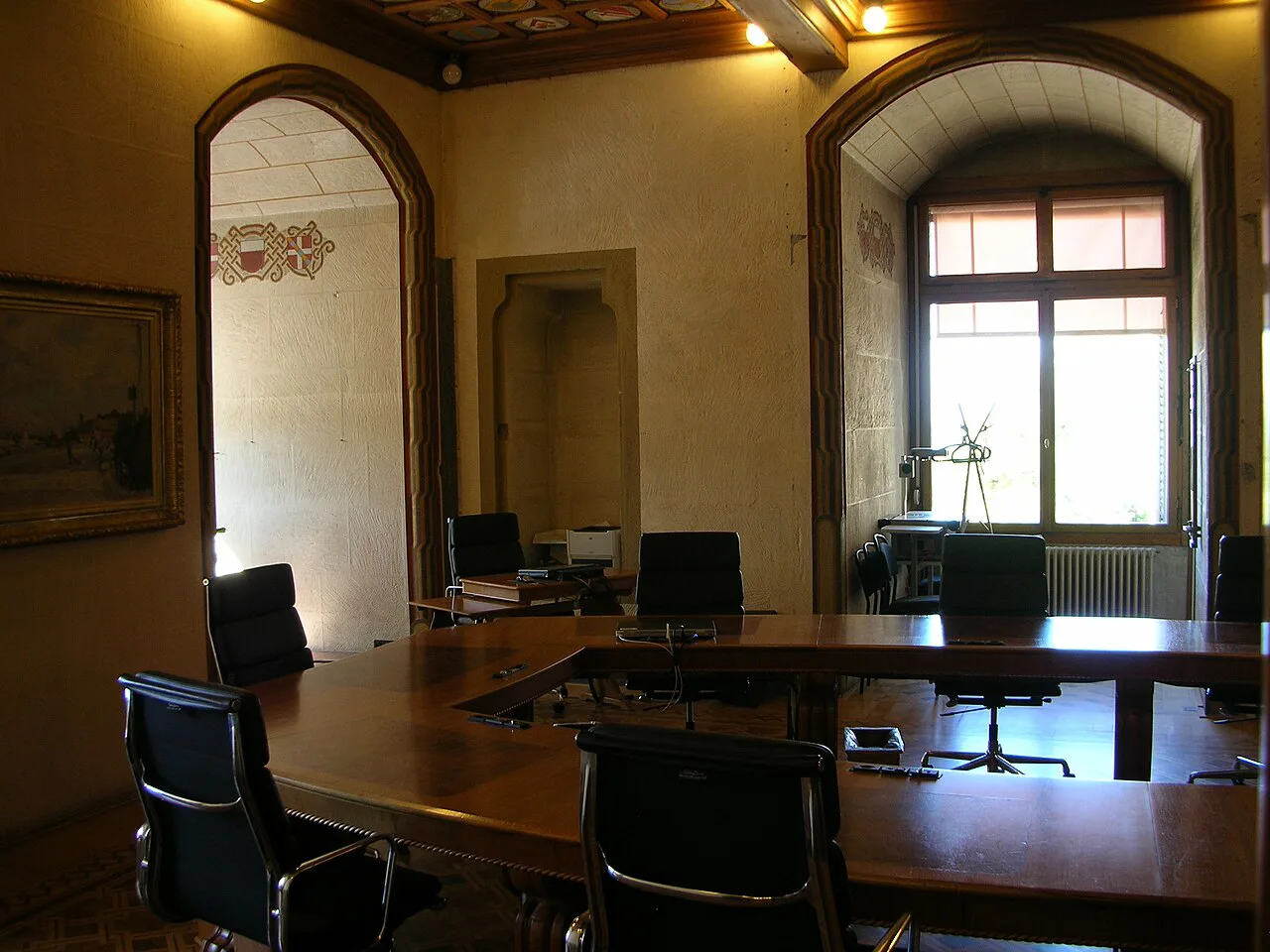
The building is an administrative seat, so interiors are used for government business and the meeting rooms, small kitchen and wooden corridors described in the renovation accounts are not a public circuit. Plan your visit as an exterior one and do not build a day around going inside.
Twenty minutes is enough to walk the esplanade, read the south and west facades and look at the east base, and thirty minutes covers it comfortably with time to compare the stones. Treat the castle as one stop on a Cité walk rather than a destination in itself, and check the Etat de Vaud's pages for the building if you need to confirm access arrangements.

Best Light and Time of Year
The esplanade faces the south facade, so daylight hours give the clearest read of the different window openings; there is no artificial illumination to plan around. Lausanne's climate is mild enough for exterior sightseeing across much of the year, and the best time to visit Lausanne page covers typical conditions by season.
Nearby in the Cité
Lausanne Cathedral, the Cathédrale Notre-Dame de Lausanne, stands a few minutes' walk from the esplanade and is the natural next stop on the same hilltop. It has its own published visitor arrangements, which are worth checking before you go if interior access matters to you. Like the castle, both fit best into a walk planned around the best time to visit Lausanne, when conditions suit time on foot.
The Palais de Rumine, the nineteenth-century building housing several museums on the same plateau, sits close by and gives the Cité walk an indoor option. Further afield but still in the city, the Olympic Museum on the lakeshore makes a contrasting half-day for anyone interested in Pierre de Coubertin's legacy.
If you want to extend the walk downhill, the botanical garden and the Collection de l'Art Brut give the old town two more distinct stops. For a broader shortlist beyond the Cité, the things to do in Lausanne guide pulls the city's main options together.
Plan Your Visit
Château Saint-Maire rewards a deliberate twenty to thirty minutes on the Cité esplanade: read the south facade's mix of openings, find the greener stone at the east base, then look at the west wall where the elevator was cut into 1.90 meters of masonry. It is a working government building, so plan on the exterior and fold the stop into a walk that includes the cathedral and the Palais de Rumine.
Go on foot, allow for the climb, and keep the visit short and observational rather than treating the castle as a ticketed sight. Confirm current access arrangements with the Etat de Vaud, which has owned and used the building since the Middle Ages, before making the castle the purpose of a trip.
Frequently Asked Questions
Can you go inside Château Saint-Maire?
The castle is the seat of the canton of Vaud's executive power and works as an administrative building, so the rooms inside serve government business rather than a public museum circuit. Plan your visit around the facades and the Cité esplanade. If you need to know whether any interior access is possible on your dates, ask the canton directly.
When was Château Saint-Maire built?
Construction ran from 1397 to 1406, placing the core of the building in the late Middle Ages. It has remained in administrative use ever since, and a full renovation was completed between 2015 and 2018.
What is Château Saint-Maire used for today?
It is the seat of the canton of Vaud's executive power and has held that role since the Middle Ages, making it a working government building rather than a heritage attraction with displays. That is why the visit is an exterior one, read through the masonry of the south, west and east facades.
How long do you need at Château Saint-Maire?
Twenty minutes covers the esplanade, the south and west facades and the east base; thirty minutes lets you compare the local molasse with the greener replacement stone at the east end. Most visitors treat it as one stop on a walk through the Cité rather than a standalone destination.
What else is near Château Saint-Maire in Lausanne?
Lausanne Cathedral and the Palais de Rumine are both within a few minutes' walk on the same hilltop plateau. The Escaliers du Marché stairway and the Place de la Palud area sit just below the Cité, so the castle fits naturally into a short old-town circuit.