
Escaliers du Marché: Lausanne's Covered Stairway Between the Market and the Cathedral
Escaliers du Marché is the stairway Lausanne walkers use to get from the lower streets up to the cathedral area, and it is best treated as a route rather than a sight you book time for. The climb itself takes only a few minutes, and it slots neatly into a morning built around the cathedral. This guide covers where the stairs sit, how to find both ends, and how to fold them into a short walk.
The stairs work as a shortcut with atmosphere: you are moving between two levels of the city, and the payoff at the top is the cathedral square. If you are weighing what else deserves time in the city, our wider collection of Lausanne Attractions: 7 Visitor Guides sets the stairs beside the bigger draws.
What the Escaliers du Marché Are
They are a stepped pedestrian passage cut into the hillside between Lausanne's lower town and the raised ground around the cathedral. Locals use them as an everyday link between the two levels, not as a monument with a gate and a ticket desk. That is the right expectation to carry in: you walk them, you do not tour them.
The character of the passage comes from the way it is built into the slope, so the climb is short but never flat. Treat the stairway as part of the street network, which means it is open to whoever is walking past, at whatever hour suits the neighbourhood.
Where the Stairs Sit in Lausanne
The stairway belongs to the 1003 Lausanne postal area, the old center on the hillside above the station district. Its upper end brings you out close to the cathedral plateau, which is the natural reason to take this line rather than a flatter street. Place de la Palud, Lausanne sits nearby and makes a sensible starting point for the walk up, and our Lausanne Neighborhoods guide helps you place the old center within the wider city.
Civic activity clusters here too: the city's communication office is listed at Escaliers du Marché 2, with a postal address of 1001 Lausanne. That tells you the stairway runs through a working part of the municipal center rather than a detached historic zone. Expect ordinary city life around you as you climb.
Finding the Bottom and Top Entrances
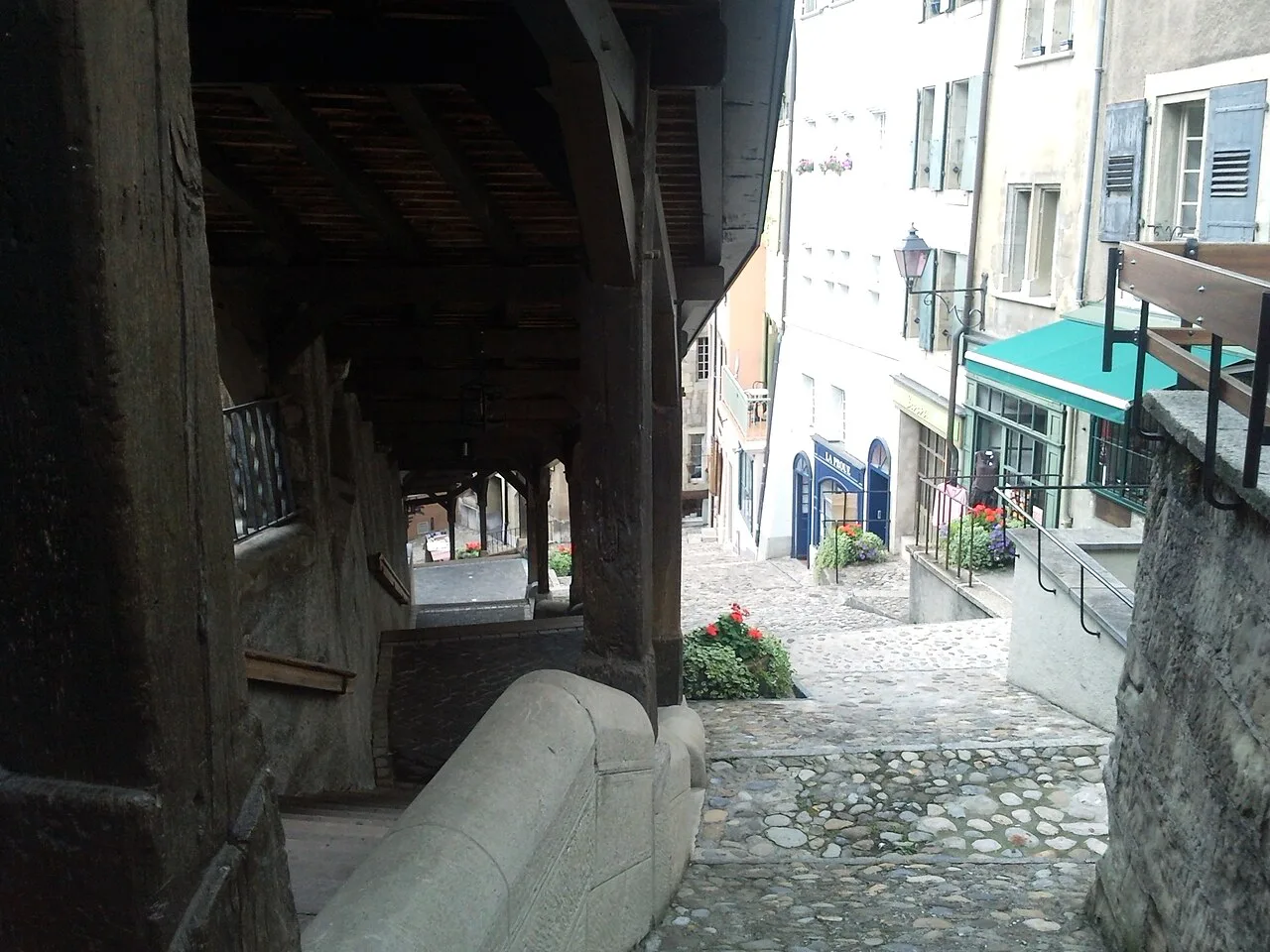
Walk up from the lower town and the stairs announce themselves as a covered stepped passage between buildings. The trick is committing to the pedestrian lanes rather than following the road, which curves and takes longer. If you are coming from the station side, aim for the old center first and then look for the stair line rising toward the cathedral.
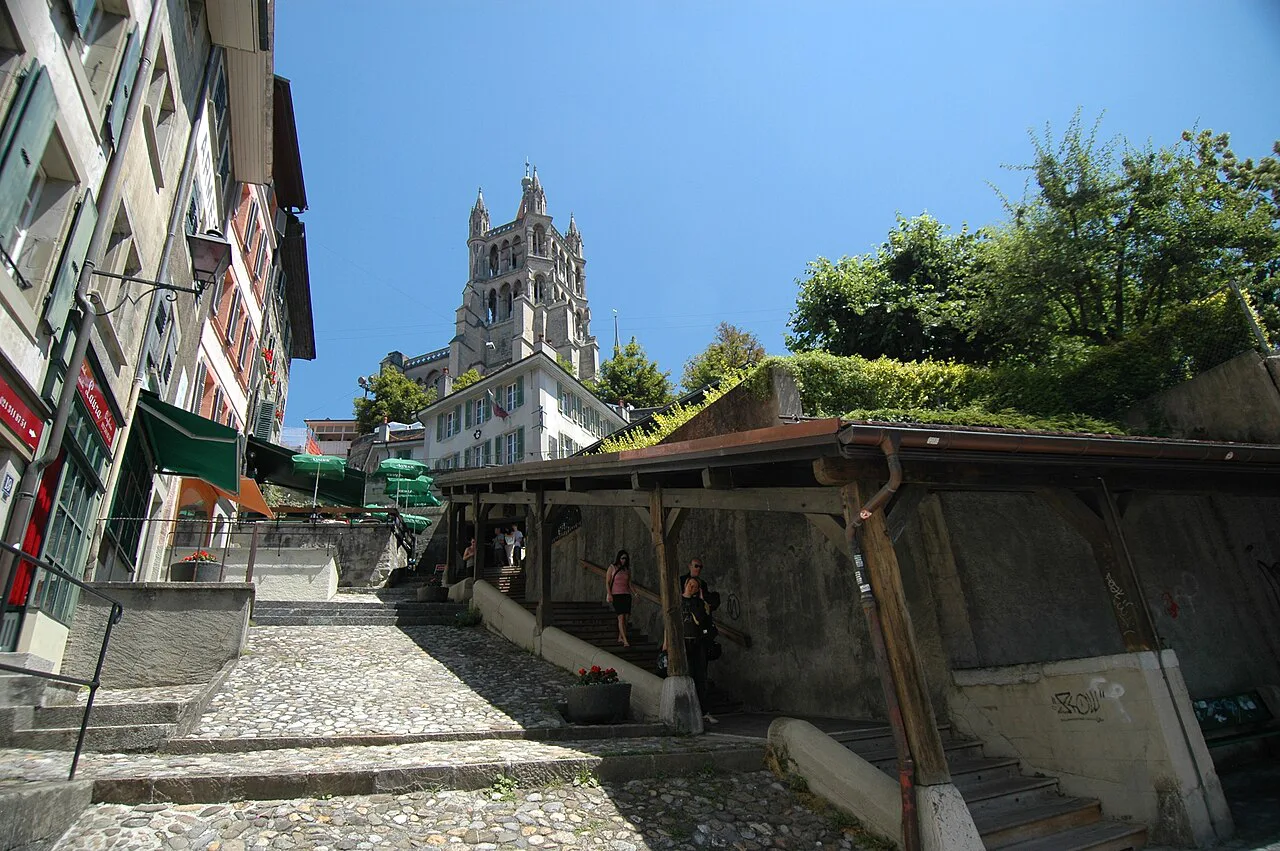
From the top, the entrance is easy to miss because it reads as an ordinary gap off the cathedral plateau. Come out of the cathedral forecourt and look downhill for the stepped passage dropping away between the buildings. Walking down first to see the route, then climbing back up, is the most reliable way to learn both ends in one pass.
What the Climb Is Like
The stairway rises in short flights through a built passage, so you get shade and a sense of enclosure rather than a wide open view. The reward is the transition itself: the lower town feels close and busy, and the cathedral hill feels open and quiet within a few minutes of walking. This is a climb to enjoy for that change of atmosphere.
It is real stair climbing, not a gentle ramp, so anyone with knee trouble or a stroller should plan a different route up. The passage is short enough that most walkers will not be winded, but it is not step-free. If you want a level stroll instead, the Lausanne Botanical Garden (Jardin Botanique) gives you flat ground and planted beds.

How Long to Allow
Allow a few minutes for the climb itself; this is a walk of a couple of hundred paces rather than a half-day outing. The sensible plan is to give the stairway no separate slot at all and let it occupy the gap between Place de la Palud and the cathedral. Budget your time at the top instead, where the cathedral and the terrace above Lake Geneva hold your attention.
Photographers should add a little extra for the framed views back down the passage, which change with the light through the day. The stairway is outdoors, so a wet or icy day makes the steps slower and calls for proper shoes. Late autumn and winter mornings can leave the stone slick. If you are planning a trip around the seasons, our guide to the best time to visit Lausanne helps you judge when the stone is most likely to be dry and the climb safest.
At the Top: the Cathedral
The stairway delivers you to the cathedral hill, which is the reason most visitors take this route. Lausanne Cathedral, the Cathédrale Notre-Dame de Lausanne, is the dominant building of the old center and the natural next stop after the climb. Combine the two rather than making separate trips.
From the cathedral plateau you can carry on across the old town on foot, which is how the stairway earns its place in a day's plan. The Olympic Museum, home to the legacy of Pierre de Coubertin, sits down by the lake and needs its own block of time rather than an add-on here.
Read the old center as a set of lanes and levels rather than a single street, and the stairway makes more sense as one thread through it.

Practical Points
There is no ticket office and no barrier for a public stairway of this kind. Anyone telling you otherwise is selling something else. Spend the money you save on the cathedral or a coffee on Place de la Palud instead.
Access can be affected by city works, weather or events in the old center, and the Ville de Lausanne publishes municipal notices through its official news channel. A quick look before you go confirms whether the lanes around the stairway are clear.
Who Should Take the Stairs and Who Should Skip Them
Take them if you are already heading for the cathedral and want the short, atmospheric way up. Skip them if stairs are a problem, if you are pushing a stroller, or if you have limited time and would rather spend it inside the cathedral itself. There is no shame in arriving at the top by an easier street.
Skip them too if what you want is a viewpoint or a monument with a story attached; this is infrastructure, and its pleasure is in the passage. Visitors who want a ticketed, curated stop should put their hours into the Olympic Museum or the cathedral instead. The stairs are best as the connective tissue of a walking day, not the headline.
Plan Your Visit
Build the Escaliers du Marché into a walk that starts around Place de la Palud and ends on the cathedral plateau, and it costs you nothing but a few minutes of climbing. Wear shoes with grip, go early if you want the passage to yourself, and keep the stairway as the link between two parts of the day rather than a destination.
Explore more Lausanne guides
Frequently Asked Questions
Where are the Escaliers du Marché in Lausanne?
They run between the lower part of Lausanne's old center and the raised ground around the cathedral, in the 1003 Lausanne postal area. Addresses on the stairway include Escaliers du Marché 2, used by the city's communication office, and Escaliers du Marché 25. Approach from Place de la Palud and look for the stepped passage rising toward the cathedral.
Do you need a ticket for the Escaliers du Marché?
No. The stairway is a public pedestrian passage through the city, not a ticketed attraction, so there is nothing to buy and no gate to pass. You simply walk up or down it as part of a route between the lower town and the cathedral hill.
How long does it take to climb?
The climb is a matter of minutes rather than a proper outing. Most walkers will spend longer at the top, at the cathedral and on the surrounding plateau, than on the steps themselves.
Are the Escaliers du Marché covered?
The passage climbs between buildings on the hillside, so much of the route runs through a built, enclosed corridor rather than open ground. It remains an outdoor stairway, which means rain, snow and ice affect the steps, so wear shoes with grip in wet or cold weather.
Is the climb steep?
It is a genuine flight of stairs up a hillside, not a gentle ramp. The distance is short, but the steps are not step-free, so travelers with knee problems, strollers or wheelchairs should choose a different route up to the cathedral.
What is at the top of the stairway?
The cathedral plateau, dominated by Lausanne Cathedral, the Cathédrale Notre-Dame de Lausanne. From there you can continue on foot through the old town, and the terrace side opens toward Lake Geneva.
Can I check whether the stairway is open before I go?
The stairway is a public way with no published opening schedule of its own. City works, weather or events in the old center can affect the lanes around it, and the Ville de Lausanne posts municipal notices through its official news channel, which is the place to confirm conditions.
Is the stairway worth a detour from the cathedral?
Only as part of the walk up. Treat it as your route from the lower town to the cathedral rather than a separate sight, and it adds a few minutes and a change of atmosphere to a day you were already spending on the hill.