
Lausanne Cathedral: What to See Inside Notre-Dame
Lausanne Cathedral, Notre-Dame de Lausanne, is the Gothic church on the hilltop above the old town, consecrated in 1275 in the presence of Pope Gregory X and Rudolf of Habsburg. It is widely described as the finest Gothic church in Switzerland, and it anchors any short stay in Lausanne.
The visit splits into three parts: a terraced forecourt with views over the rooftops to Lake Geneva and the Savoy Alps, a stripped-bare interior that reads as Reformation history, and a tower climb of 224 winding steps. Plan on roughly an hour for the church and terrace, more if you make the climb.
Where the Cathedral Sits
The cathedral stands on the highest point of Lausanne's old town, above the covered wooden staircase known as the Escaliers du Marché. From the terrace the view runs over old-town roofs to Lake Geneva, with the Savoy Alps along the far shore.
The lake below was carved out by the Rhône glacier during the ice ages, and the cathedral is built from molasse, the soft grey sandstone formed from Alpine river sand that fills this lowland basin. That geology explains both the building's warm grey color and its constant need for repair.
How to Get There
Lausanne is a major rail hub on Lake Geneva, and from the main station the M2 metro climbs toward the old town, cutting most of the height gain. From the metro exit the last stretch is on foot, up steep lanes to the cathedral hill.
Walkers coming up the Escaliers du Marché should take the wooden steps slowly, especially after rain, because centuries of feet have polished them and they turn slippery when wet. The staircase is the most photogenic approach, but it is not the easiest one.
The Terraced Forecourt and the View
Before going inside, walk the terrace in front of the west front. It looks south across the water to the Savoy Alps, and the old-town roofs below give the cathedral its crowning position over the city. Clear afternoons give the sharpest lake panorama, and the light is best for photographs from the terrace rather than from the narrow lanes.
The Interior: A Bare Nave That Tells a Story
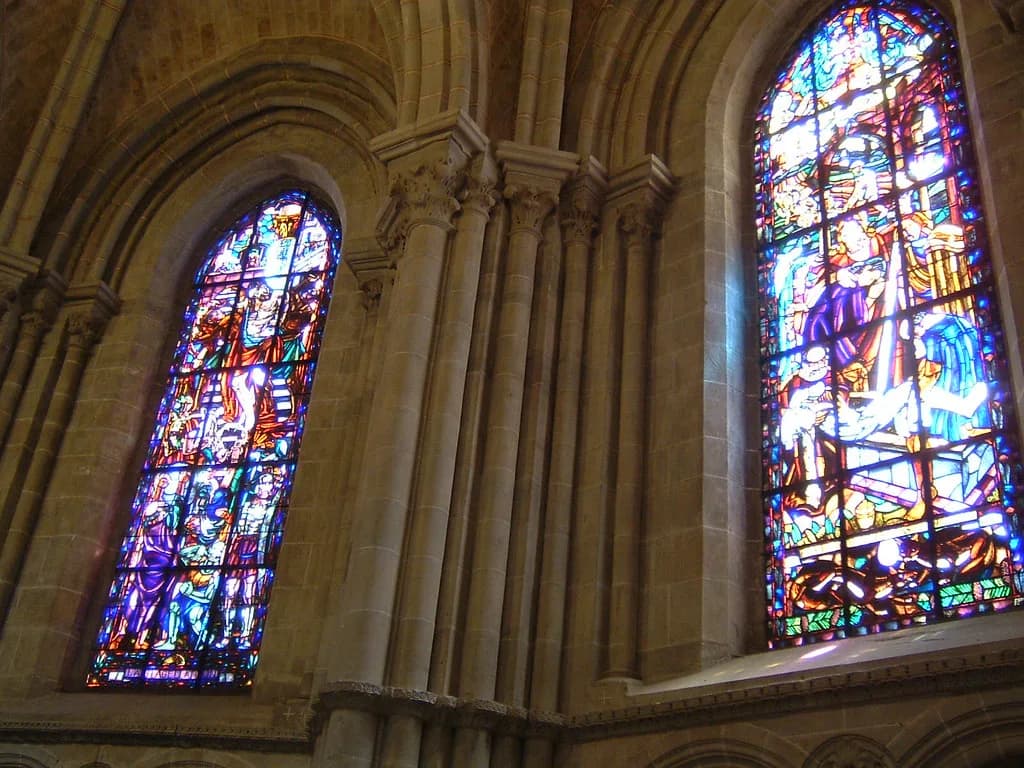
Inside, the long nave and the harmonious run of columns and vaults are the first things to notice, and the space feels conspicuously empty. That bareness is history rather than taste: when Bern conquered Vaud in 1536, the Reformation arrived with it and altars, images and treasures were stripped out.
Building had begun around 1170 and continued for about a century before the 1275 consecration, so the architecture spans the whole arc of French Gothic design. From the 1870s Eugène Viollet-le-Duc directed a sweeping restoration, the last great project of his life, and much of what you see today carries his hand.
The Rose Window in the South Transept
The rose window is the interior's set piece: thirteenth-century glass arranged as a diagram of the created world, with the elements, the seasons, the months and the signs of the zodiac wheeling around a central point. Give it a few minutes rather than a glance, because the program only reads once you pick out the outer ring.

The Painted South Portal
On the south side, the carved portal still keeps traces of the color that once covered every figure, a reminder that medieval churches were painted rather than solemn grey. Look for the surviving pigment in the sheltered recesses of the carvings, where weathering has done the least damage.
Molasse: Why the Masonry Never Stops
The cathedral is cut from molasse, a soft grey sandstone that carves beautifully and weathers alarmingly fast. That is why scaffolding and stone repair are a recurring part of the building's life, and why parts of the exterior may be covered when you visit.
Climbing the Tower
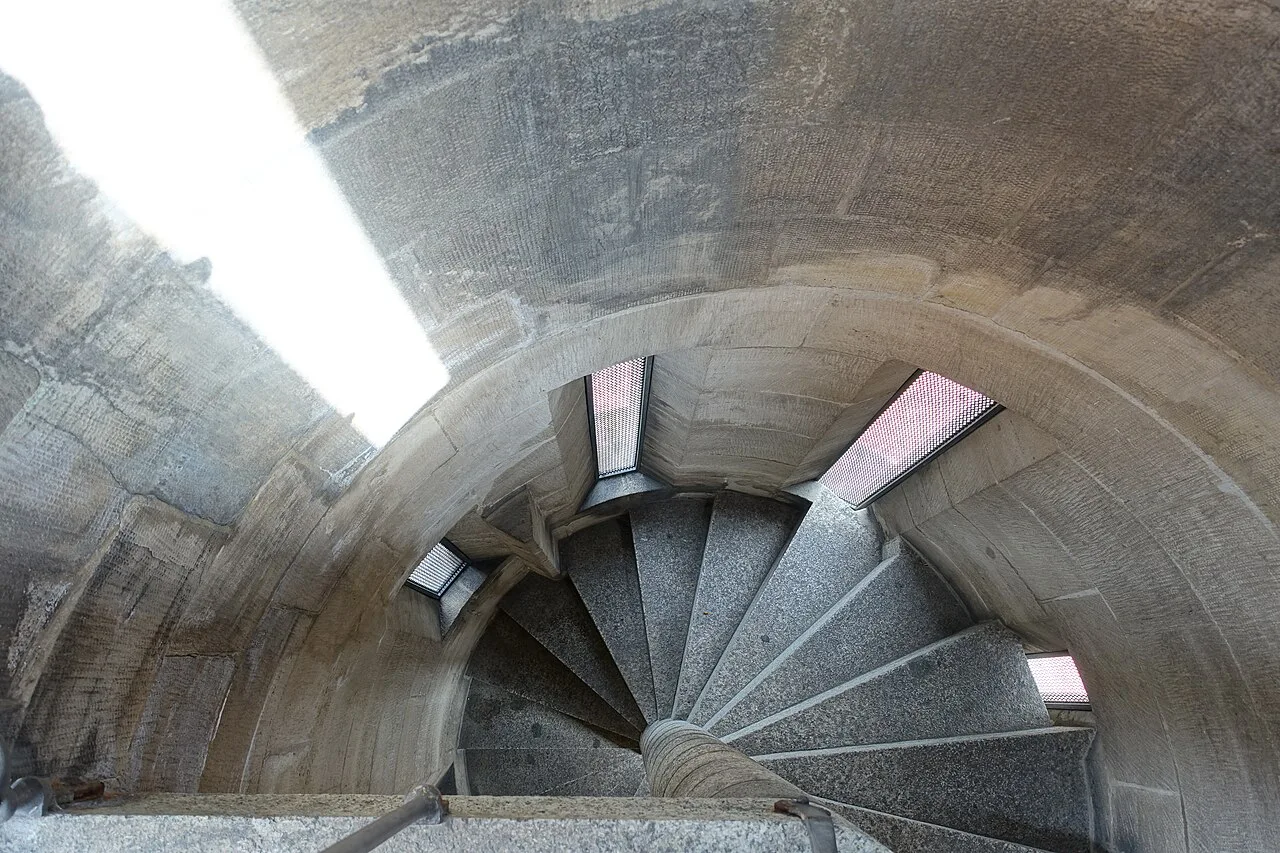
The tower gallery is reached by 224 winding steps, and the reward is a panorama over the old town's roofs, the lake and the Alps. The stairs are narrow, so allow time for passing other visitors and skip the climb if tight enclosed spaces are a problem.
The tower has its own wildlife through the year: Alpine swifts scream past in summer, and a peregrine falcon holds winter territory on the belfry. Whether tower access is open on your dates is a separate question from the cathedral itself, so confirm at the entrance before counting on the climb.
The Guet: A Voice in the Dark Since 1405
Since at least 1405, the year a fire devastated the city, a night watchman called the guet has kept vigil in the bell tower. Every night between ten and two he still cries the hour to the four points of the compass: C'est le guet; il a sonné l'heure.
The call is free to hear if you are staying near the old town, and it is the best reason to be on these lanes late in the evening rather than heading downhill early. Step outside on the hour and listen for it rather than waiting inside the church.
History to Carry With You
Keep three dates in mind as you walk around: building from around 1170, the 1275 consecration before pope and emperor, and the 1536 Reformation removal under Bern. The cathedral was also a celebrated stop on the pilgrim road, and its medieval rose window, painted portal and watchman's call all survive from that world. If you enjoy comparing Gothic churches, the Chur Cathedral (Cathedral of the Assumption) offers another Swiss example of the same medieval craftsmanship.

How Long to Allow
An hour covers the nave, the rose window, the painted portal and the terrace at an unhurried pace. Add thirty to forty-five minutes for the tower climb and the gallery, and more if you linger over the glass or wait out a shower under the west front.
The old-town climb is the real time variable. Coming up by metro shortens the walk but not the last steep lanes, and the polished wooden steps of the Escaliers du Marché take longer in the wet; build in a buffer if you are catching a train.
Nearby on the Hill
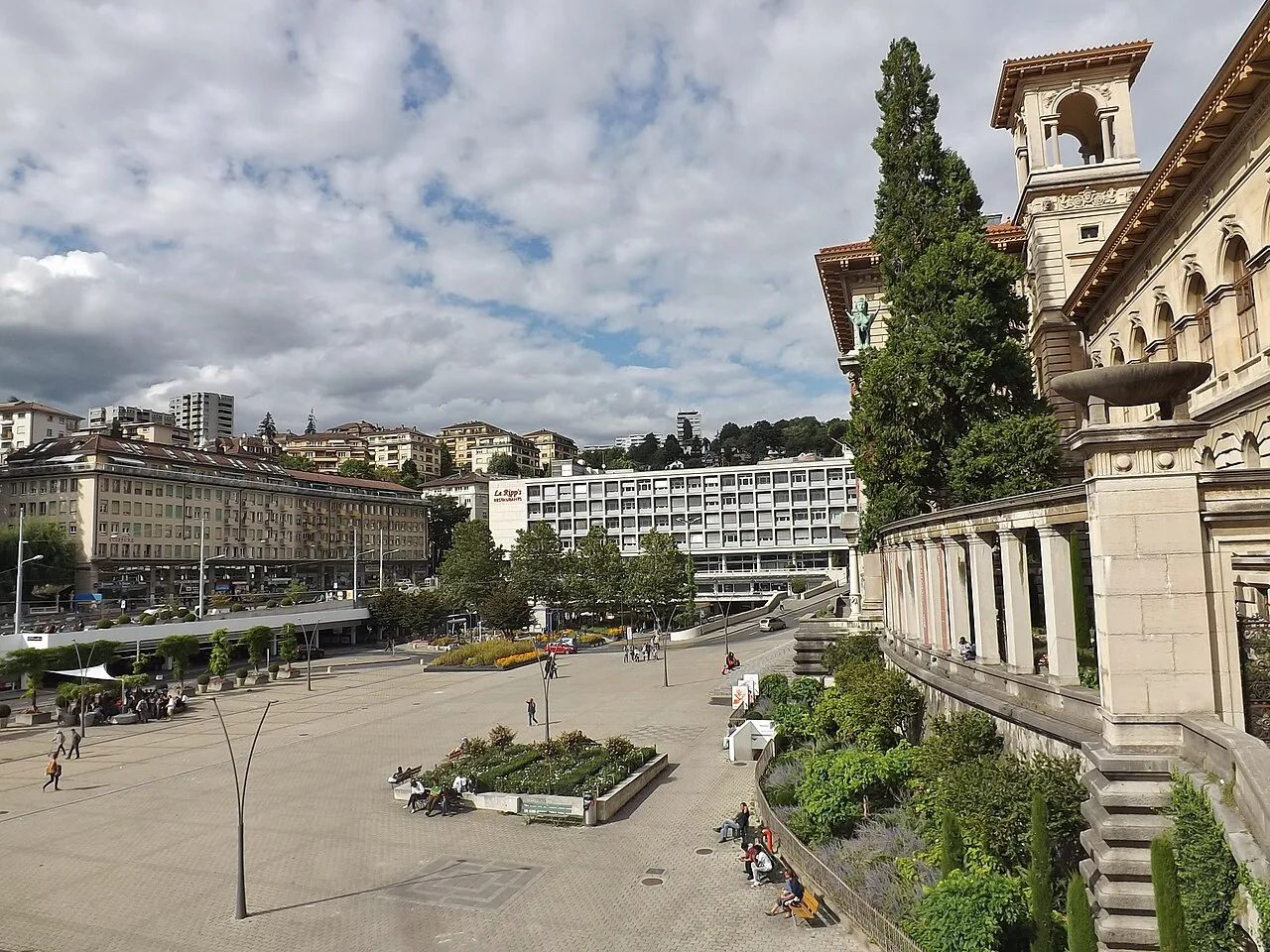
Below the cathedral, Place de la Palud is the old town's natural pause, with its cafes gathered around the square and the town hall. It is the easiest place to sit down after the climb before continuing through the pedestrian lanes.
Other Lausanne sights sit lower in the city and repay a separate half-day, including the art brut collection and the botanical garden. If you are planning the wider city, the Lausanne Attractions overview maps how the pieces fit together around the hill.
Practical Notes Before You Go
Opening hours and tower access change with the season, and no single timetable covers both the church and the climb. Check the cathedral's own information and the notice at the entrance before you plan the day around it.
The cathedral is a place of worship first, so keep noise down during services and dress for the weather on the exposed terrace. The stones are cold and the wind off the lake is real even on bright days.
Plan Your Visit
Lausanne Cathedral is a compact, high-value stop: a Gothic landmark, a free terrace view over Lake Geneva, and a nightly watchman's call that costs nothing but a little sleep. Give it an hour, or two if you make the 224-step climb.
Pair it with the old town lanes and Place de la Palud below, and leave the rest of Lausanne, from the Olympic Museum to the botanical garden, for the following days.
Explore more Lausanne guides
Frequently Asked Questions
Is Lausanne Cathedral Catholic or Protestant?
The sources describe the 1536 Reformation, when Bern conquered Vaud and altars, images and treasures were removed from the cathedral, so its interior reads as post-Reformation history. Check the cathedral's own information for its current denominational status and service times.
What is Lausanne Cathedral famous for?
It is known as the finest Gothic church in Switzerland, consecrated in 1275 in the presence of Pope Gregory X and Rudolf of Habsburg. Its set pieces are the thirteenth-century rose window in the south transept, the painted south portal, the terrace view over Lake Geneva and the Savoy Alps, and the nightly call of the guet watchman.
How many steps are there to the tower gallery?
The climb to the gallery is 224 winding steps, with the old town's roofs, the lake and the Alps at the top. The stairs are narrow, so allow time for other visitors, and confirm tower access at the entrance before counting on it.
What can you see from the Lausanne Cathedral terrace?
From the hilltop terrace the view runs over old-town rooftops to Lake Geneva and the Savoy Alps along the far shore. Clear afternoons give the sharpest panorama, and the terrace is free to walk at any time.
When was Lausanne Cathedral consecrated?
The consecration took place in 1275, performed by Pope Gregory X in the presence of Rudolf of Habsburg. Building had begun around 1170 and continued for roughly a century before that ceremony.
What is the night watchman at Lausanne Cathedral?
Since at least 1405, a watchman called the guet has called the hours from the bell tower every night between ten and two, crying to the four points of the compass. It is a living tradition rather than a re-enactment, and it is free to hear from the streets near the old town.
Is the cathedral easy to reach without a car?
Lausanne is a major rail hub on Lake Geneva, and the M2 metro climbs from the main station toward the old town. The final stretch is on foot up steep lanes, or up the wooden Escaliers du Marché, which turn slippery when wet.
Do I need a ticket to visit Lausanne Cathedral?
The sources give no ticket prices or opening hours, so check the cathedral's own information for current details on entry and tower access. Plan around a visit of about an hour, longer if you make the tower climb.