Basel in October: Weather, Crowds and What to Do
October in Basel brings mild autumn weather, quieter old-town streets and free sights such as the Münster. Here is how to plan a day or two around it.
On this page
October works well for Basel if you want the old town without summer crowds. The center is compact and walkable, so one day covers the main sights and two give the city room to breathe. Plan around free entry at the Münster and the Botanical Garden to offset the paid museums.
This guide runs through what October conditions mean for walking, which sights earn a stop, roughly what things cost in Swiss francs and how to shape a one-day or two-day route. Basel sits in northwestern Switzerland on the Rhine, an easy base for exploring the border region.
What October Is Like in Basel
October in Basel means autumn: mild conditions, shorter daylight and a mix of sun and cloud, which is typical of the season rather than a forecast for any given week. The city sits on the Rhine in northwestern Switzerland, close to both the French and German borders. As the month goes on, plan your outdoor walking for the middle of the day when daylight is strongest.
The upside is thinner crowds. The old town stays quiet even in high summer, and Cathedral Square can be nearly deserted on a hot day, so October adds calm rather than subtracting atmosphere. The trade-off is a city that can feel sleepy; if you want bustle, Basel is not the place.
How Many Days October in Basel Needs
One day lets you see most of what the center offers, and two days give a proper feel for the place. The main attractions sit close together, which makes a compact walking route practical even with shorter October daylight. Save the museums for the stretch of afternoon when the light fades.
If your trip is part of a wider Swiss itinerary, Basel slots easily into a route that continues to Lausanne, Wengen or Lucerne. Compare October in Basel against earlier months on the best time to visit Basel, where April is greener and warmer while autumn trades warmth for quiet streets.
What to Pack for Walking the Old Town
Basel is very walkable, and bikes and trams outnumber cars in the center, so bring shoes you can wear for a full day on cobblestones. Layer for mild days and cool evenings, and carry a compact umbrella for October showers. A refillable bottle is worth the weight if you plan to use the public fountains.
Morning: Basel Münster and Münsterplatz
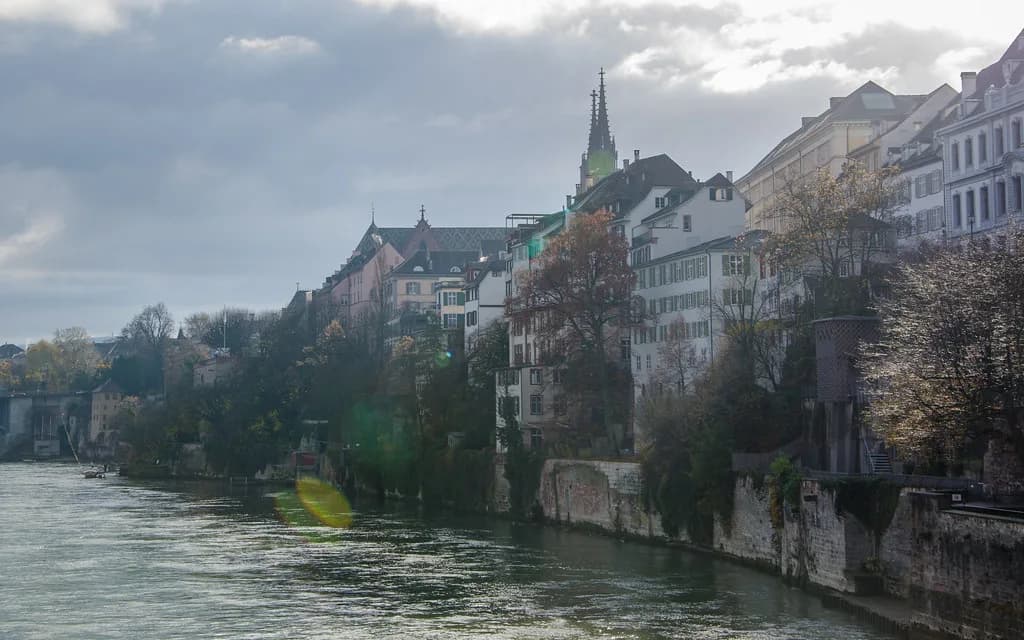
Start at the Basel Münster, the red sandstone cathedral above the Rhine. Entry is free, and the roof is the reason to linger: an intricate mosaic of dark green, maroon, burnt yellow and off-white covers it. The crypt is viewable only during the summer months, so on an October visit you may find it closed.
The Münster is rarely open past 4pm or 5pm depending on the season, which makes a morning visit the safer choice if the cathedral is your priority. Climbing the tower costs extra, and guided tours are usually arranged for a fee, mostly on Saturdays. Münsterplatz outside is free to wander and gives you the cathedral facade from a distance.
Midday: Markthalle Basel for Cheaper Food
The Markthalle Basel sits a few minutes' walk from the train station, which makes it a sensible lunch stop before you walk into the center. Stalls sell international food at prices below most restaurants, so it is one of the easier places to eat well on a budget in an expensive city. The hall also has clean public washrooms, useful halfway through a walking day.
Afternoon Walk: Spalentor and the Botanical Garden
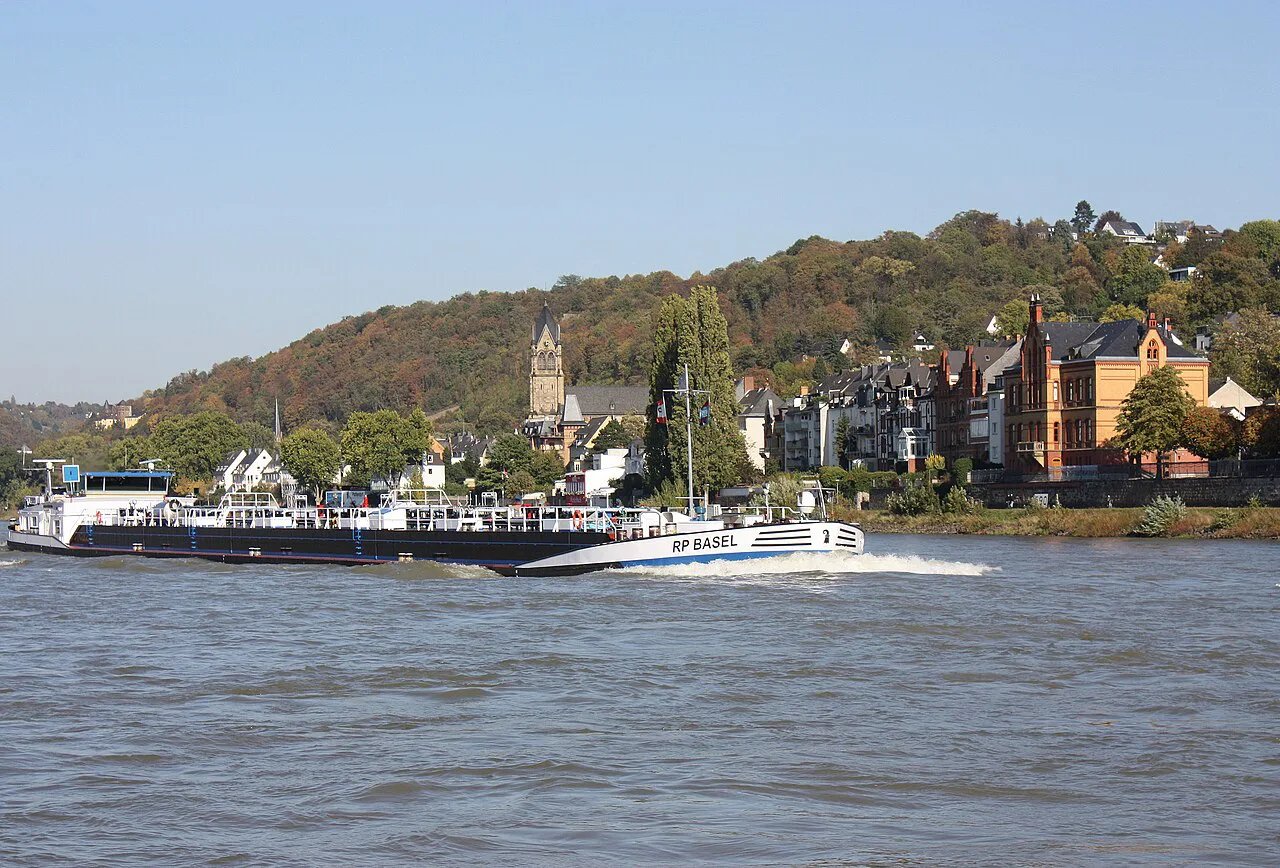
The Spalentor is one of three remaining city gates and the most spectacular, with restored stonework, turrets and a tiled roof that echoes the Münster. Walk under or around the gate and look up for the carvings set high on the facade. From there, the Botanical Garden at the University of Basel is a short walk away.
The garden is free to enter and opens from 8am most days, with the greenhouses opening at 9am; half an hour is enough for a loop. Pair the two sights for an easy, low-cost afternoon. For a wider menu of named sights and neighborhoods, browse Basel Attractions: 8 Visitor Guides before you pick your route.
Cross the Middle Bridge for the Rhine View
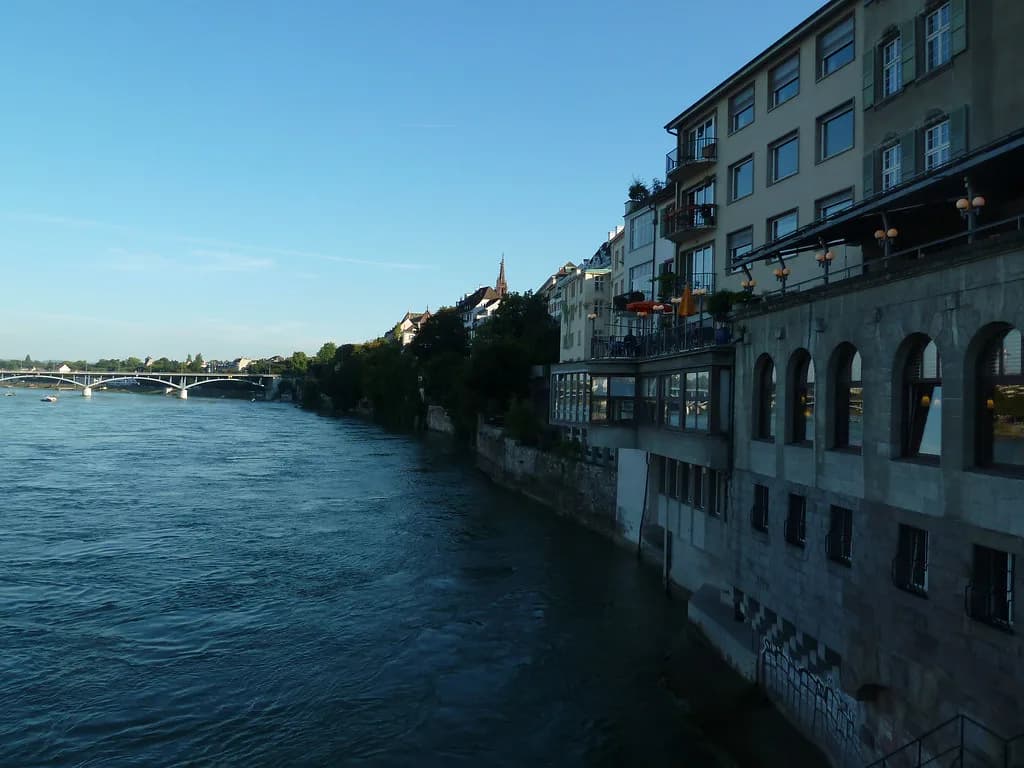
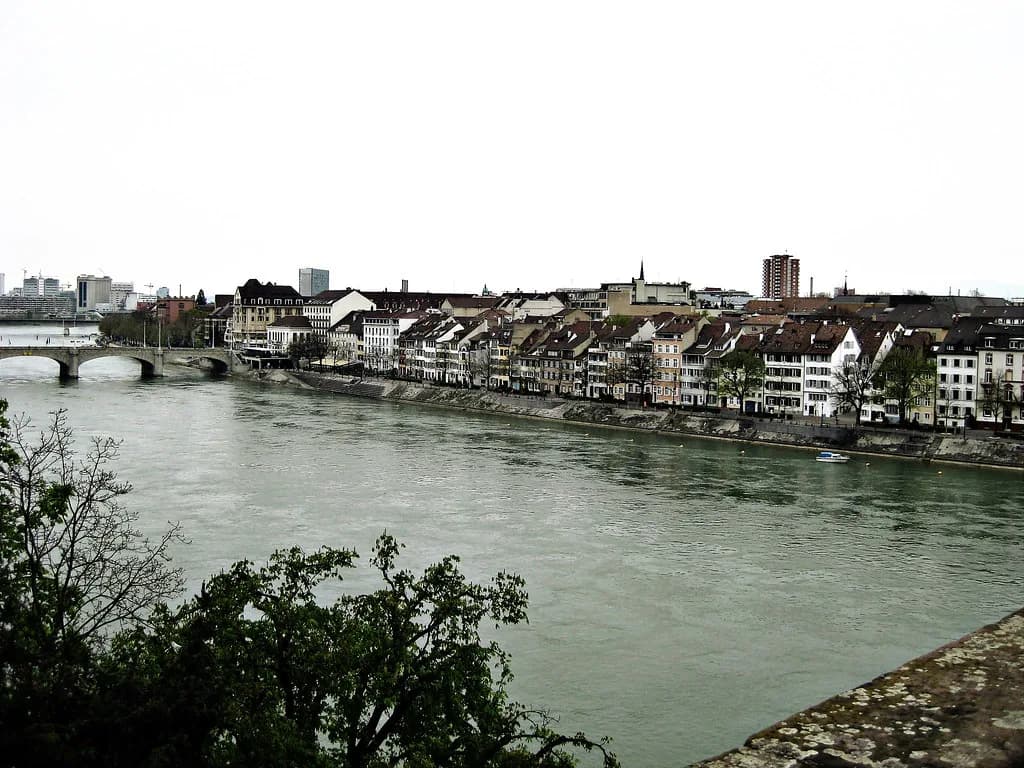
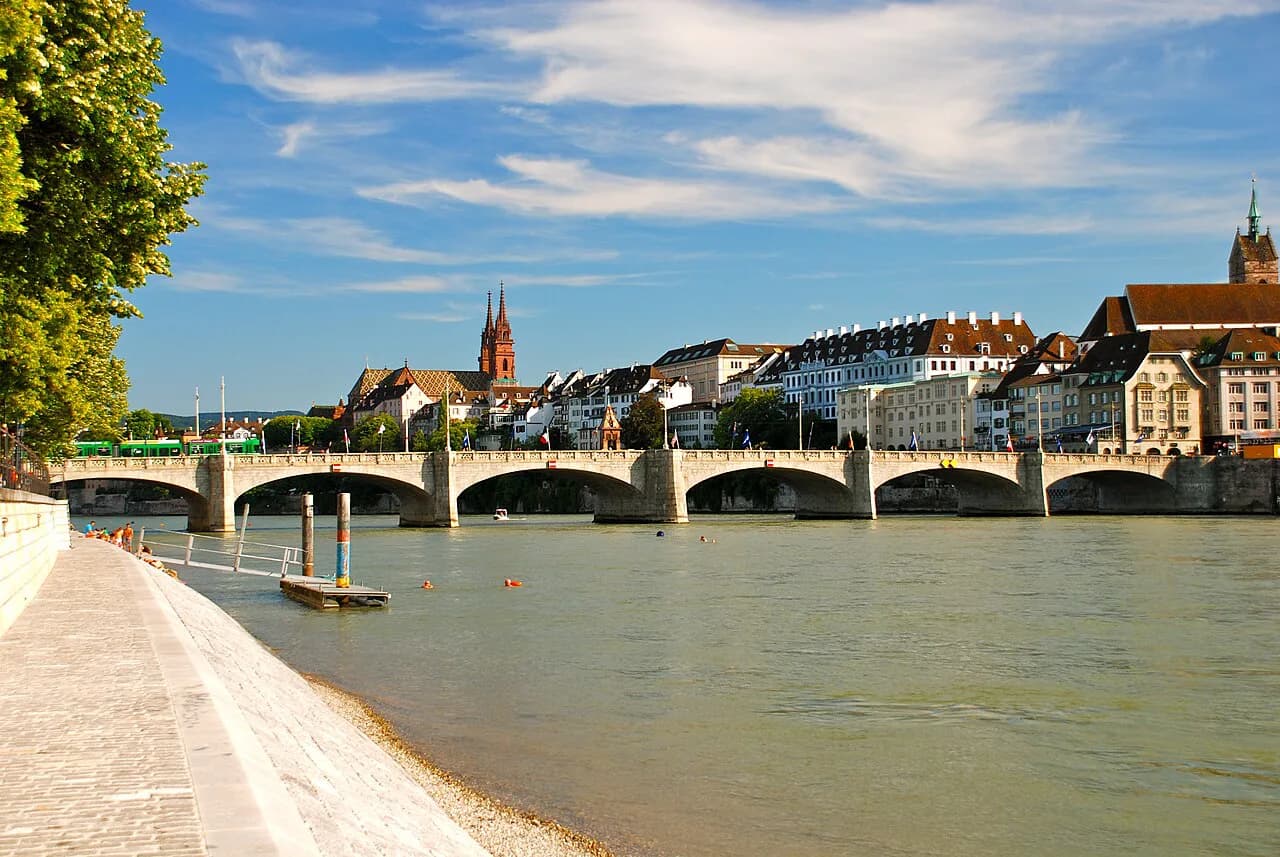
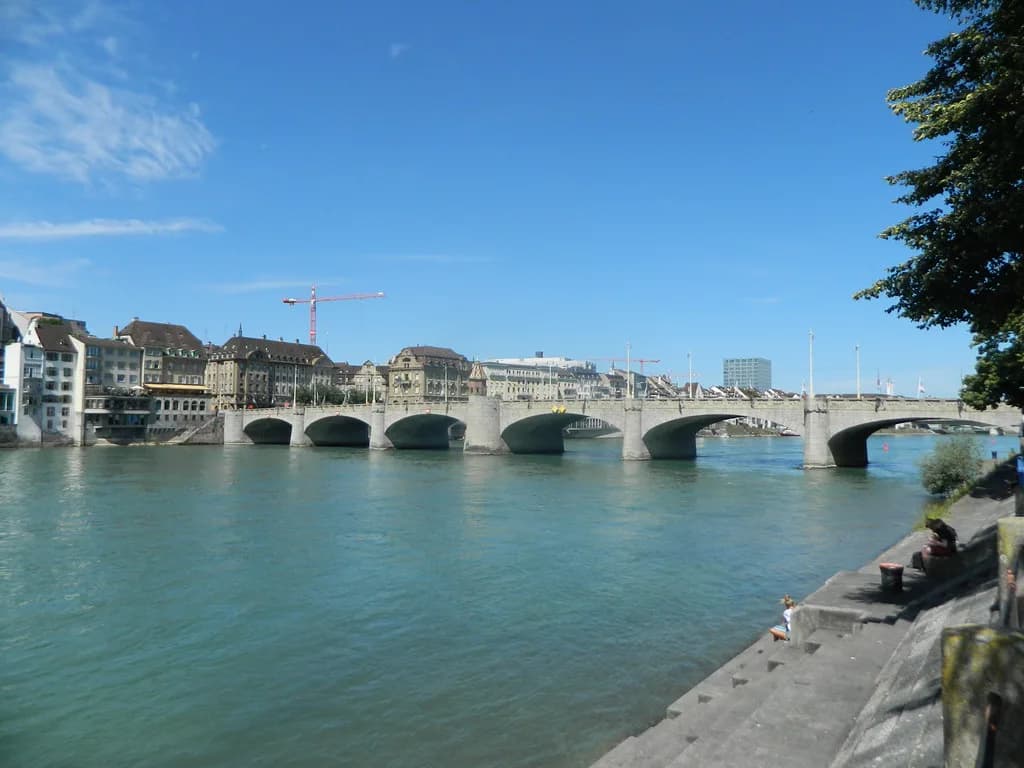
The Middle Bridge is the historic crossing between the two halves of the old town. The current structure has stood for more than 120 years, and only bikes, buses and trams are allowed on it, so the view of the river and the Münster above is free of car noise. Look for the tiled mosaic on the tower mid-bridge, the same pattern that recurs on the Münster and Spalentor.
Walk across and back for the classic Rhine view of the old town, which is excellent in October light. Continue on the Kleinbasel side if you want a riverside drink, or return to the Grossbasel bank to keep walking the center.
Basel Town Hall (Rathaus) and Its Courtyard
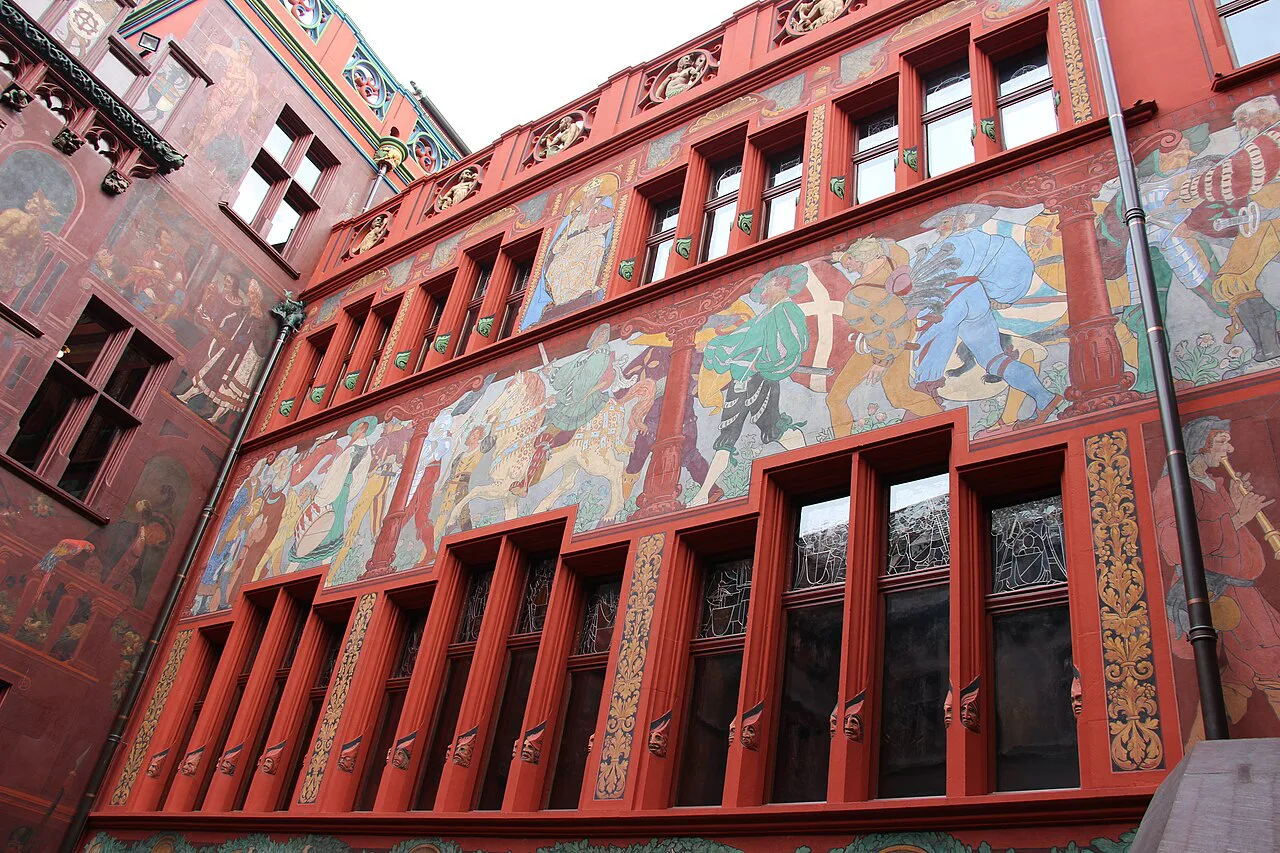
Signs in the old town point to the Rathaus, and you cannot miss the building itself: large, red and the most decorated in the city. It is over 500 years old, and the three arched doorways lead into an inner courtyard more ornate than the front. Wander up the steps to see the decoration close up.
The Rathaus closes on weekends, so plan your visit for a weekday. The building is a free stop that takes 15 minutes, and for many visitors it is the highlight of the old town.
Museum Time: Art, Paper and Cartoons
Basel has museums for most interests, and October afternoons are a good moment to use them. The medieval paper mill houses the Swiss Museum of Paper, Writing and Printing, and the Caricature and Cartoon Museum sits nearby. For a more traditional stop, the Museum of Natural History Basel is a reliable choice, while the city's art museums suit anyone with a full afternoon to spare.
Most museums cost between 10 and 20 CHF per person, so two museums in one day add up quickly. Pick one or two that genuinely interest you rather than trying to cover the whole list.
Free and Low-Cost Options in an Expensive City
Overall Basel is an expensive place to visit, but several of its best sights cost nothing. The Münster, the Botanical Garden, the Spalentor, the Middle Bridge and historic squares are all free, and wandering the decorated streets is itself the attraction. Budget your paid stops around one museum and one tower climb rather than both at every sight.
Eating out is where costs climb fastest, so mix Markthalle stalls with supermarket lunches. Chocolate is the notable exception to careful spending: supermarket aisles stock more bars than the tourist shops, at lower prices.
Dreiländereck: The Three-Country Point
Dreiländereck is the spot in northern Basel where Switzerland meets France and Germany, marked by a monument at the end of a long pier. Walking there takes real time from the center, and the reward is the novelty of standing at the border junction rather than another historic sight. If your October daylight is short, skip it for the old town.
If you go, combine it with a riverside walk back toward the Middle Bridge, where bars and cafes line the bank. The stretch between the two points is the most pleasant part of the route.
Where October Fits Against Other Seasons
October trades the warmth and greenery of basel in april for quieter streets and autumn light. If your dates are flexible, Zurich in October follows a similar pattern and works well if you pair the two cities in one trip. Use a Swiss Travel Pass if you plan to move between cities, since it covers train, bus and boat travel across the country.
A Sample One-Day and Two-Day Plan
For one day, start at the Münster and Münsterplatz in the morning, walk to Markthalle Basel for lunch, then continue to the Spalentor and the Botanical Garden. Cross the Middle Bridge for the Rhine view late in the afternoon and finish at the Rathaus courtyard on a weekday. That route covers the free highlights with one optional museum slot.
For two days, spread the same route across both mornings and give the afternoons to museums and the Dreiländereck walk. The second day leaves room for the Caricature and Cartoon Museum or the art museums without rushing the old town. Check current opening times for the Münster and the Rathaus before you finalize the order.
Plan Your Basel October Visit
October gives you a compact, calm Basel with mild autumn conditions and enough daylight for a full walking day. Build your plan around free sights such as the Münster, the Botanical Garden and the Middle Bridge, then add one or two paid museums at 10 to 20 CHF per person.
One day covers the center and two days let you slow down. Confirm a few opening details before you go and keep the rest of the schedule loose enough to follow the weather.
Explore more Basel guides
Frequently Asked Questions
What is the weather like in Basel in October?
October is autumn in Basel, with mild conditions, shorter daylight and a mix of sun and cloud. Treat those as seasonal tendencies rather than a forecast and plan outdoor walking for the middle of the day.
Is October a good time to visit Basel?
Yes, if you value quiet streets over bustle. The old town stays calm even in summer, so October adds fewer crowds and autumn light while the compact center remains easy to walk in a day.
How many days do you need in Basel?
One day covers most of the center, and two days give a proper feel for the city with time for museums and the walk to Dreiländereck. The main sights sit close together, so you spend little time in transit.
What are the best free things to do in Basel?
Entry to the Basel Münster is free, as is the Botanical Garden at the University of Basel. The Spalentor, the Middle Bridge and the decorated old-town streets cost nothing, and the Rathaus courtyard is free to visit on weekdays.
Is Basel worth visiting in autumn?
Basel rewards travelers who like architecture, museums and riverside walks rather than nightlife or crowds. Autumn suits that profile well, with mild conditions and thinner crowds in the squares and streets.
How expensive is a day in Basel?
Most museums charge between 10 and 20 CHF per person, while several major sights are free. Eating at Markthalle stalls rather than restaurants keeps food costs down, and Switzerland generally runs more expensive than neighboring France and Germany.
Sources
Notes for your Swiss city break
Optional updates to our Swiss city guides.
You might also like
Continue reading
More guides you'll find useful