Basel Cable Car Guide: Which Rides to Choose
Cable cars and funiculars near Basel climb into the Jura and along the Rhine. See which lines run, where they start, and how to fit a ride into a short break.
On this page
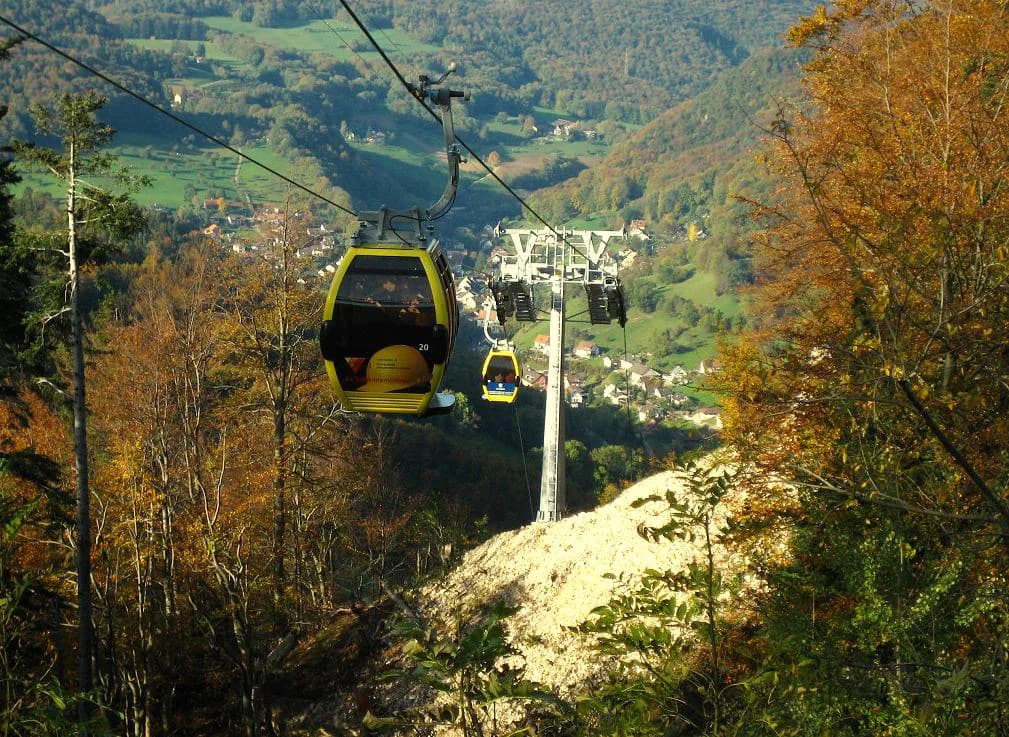
Basel has no cable car of its own. The nearest proper cable car ride is the Wasserfallenbahn, a gondola lift that climbs from the village of Reigoldswil in Basel-Landschaft into the Jura hills of northwestern Switzerland. It is a short regional lift rather than a big alpine gondola, and that shapes how you should plan it.
Most visitors pair it with a city day: museums and the riverfront in the morning, then a train out to Reigoldswil for the ride and a look from the top. Check the city side against our guide to things to do in basel before you commit a half-day to the hills.
What a Basel cable car ride gets you
A gondola lift like the Wasserfallenbahn does one job well: it moves you from a valley village to higher ground without spending an hour or two on foot. The ride is short, the cabins are small, and the payoff is altitude and open Jura scenery rather than a glacier panorama.
Swiss lifts come in several forms, from small gondola cabins to large aerial cable cars, and the experience varies more than the word cable car suggests. An introduction to cable cars in Switzerland is worth reading if you want to understand what you are boarding before you buy a ticket.
The practical trade-off is time versus view. The lift buys you height in minutes, but you still need to get to Reigoldswil and back, so treat it as an outing from Basel rather than something you squeeze between two museums.
Wasserfallenbahn: the Reigoldswil cable car into the Jura
The Wasserfallenbahn, also called the Reigoldswil-Wasserfallen cable car, is a gondola lift in the Chain Jura above the Basel-Landschaft village of Reigoldswil. It carries passengers from the village up toward the Wasserfallen area, which is why walkers use it as a shortcut to higher ground.
It is a local lift, not a landmark attraction with a visitor center, so plan around the ride itself: arrive at the valley station, buy a ticket, and ride up. The Reigoldswil end is the start, and the mountain station above the village is the finish.
Because it is small, capacity is limited and busy weekends behave differently from quiet weekday mornings. If your Basel itinerary is tight, aim for a weekday and avoid the middle of a sunny Sunday.
What you see from the Wasserfallen mountain station
The top station sits in Jura hill country rather than at an alpine summit. Expect ridges, forest, and farmland, with the Swiss Plateau spreading out below on clear days. This is countryside scenery, not a high-altitude snowfield.
The surrounding area around Reigoldswil is walking country, and several trails pass the mountain station and nearby highlights. If you only want the view, you can ride up, look around the station area, and ride back down without committing to a long walk.
Visibility is the whole point, so pick a day with a decent forecast. Cloud sitting on the Jura ridges will erase the view and leave you with a short, expensive lift ride.
Riding options: one way, return, or walk down
Three options cover most visits. A return ticket is simplest if you want the view without effort. A one-way ticket up makes sense if you plan to walk down through the Jura slopes. A one-way ticket down is the choice for anyone who climbs on foot first and saves their legs for the descent.
Walking down sounds easy and often is not: Jura trails drop steeply in places, and wet ground makes them slower than the map suggests. Take the descent seriously if you choose it, and carry water.
If you are unsure, buy the return and decide at the top. You can always walk partway down and ride back, and you avoid locking yourself into a long descent on a day when the weather turns.
Anyone building a whole day around the area should look at walking options before buying, since the lift is primarily a link for walkers heading up toward the Wasserfallen.
How long to set aside for a Wasserfallen trip
Treat the Wasserfallenbahn as a half-day from Basel. The train ride to Reigoldswil, the lift, time at the top, and the return journey add up, and rushing it defeats the purpose of going into the hills.
A workable shape is an early start, the lift up, an hour or so at the top, and a return to Basel by mid-afternoon. That leaves the evening free for the old town and the Rhine.
If you have only one full day in Basel, keep the city itself and skip the lift. The ride rewards people with a spare half-day more than it rewards people squeezing it in.
Other lifts and funiculars to know before you go
Basel is not a funicular city. For travelers who want more vertical rides in Switzerland, Zurich and Bern offer their own small lines and viewpoints, and both are easy train hops from Basel.
Cable cars are not the only way to get a view near Basel. The Münster and the Pfalz terrace give you the Rhine and the rooftops without leaving the city, and they cost nothing.
If your priority is a big alpine lift with a long ride and a famous summit, plan that separately; the Wasserfallenbahn is a modest regional link, not a substitute for a major mountain excursion.
Fares, tickets and pass discounts
The Wasserfallenbahn sells tickets at the valley station in Reigoldswil, and fares are set by the operating company rather than by Basel tourism. Swiss lifts commonly price one-way and return separately, so decide before you reach the counter.
Prices vary by lift across Switzerland, and a small regional gondola is not priced like a flagship alpine cable car. Read the fare on the sign at the valley station or on the lift's own website before you travel out, since published prices change with the season.
Pass coverage differs from line to line. Many Swiss lifts accept national rail passes or offer reduced fares, but the terms are set by each lift company, so ask at the Reigoldswil ticket window whether your Swiss Travel Pass or Half Fare Card applies instead of assuming it does.
Pay in Swiss francs, and carry a card as well as cash. Small lifts do not always handle foreign cards smoothly, and there is nothing else to spend money on at the top.
When the lines run: seasons and weather
Small Swiss lifts follow their own seasonal calendars, and many pause for maintenance in spring or late autumn. The Wasserfallenbahn serves a walking area, so its busiest period is the warmer half of the year.
Before setting out from Basel, check that the lift is running on your chosen day. Weather and maintenance both cause short closures, and a phone call or a look at the lift company's site saves a wasted trip.
Once at the top, wind and cloud move quickly on Jura ridges. A jacket and shoes with grip matter more than a camera here.
How a Swiss cable car compares with a big alpine lift
Swiss cable cars range from four-seat gondolas over farmland to large aerial cabins climbing to high stations. The Wasserfallenbahn belongs at the small end: short, low, and practical, with views over the plateau rather than over glaciers.
That is not a drawback if you set expectations correctly. You get a genuine Swiss lift ride, a village start, and hill country above Basel for a modest outlay of time and money, all within a day trip of the city.
Travelers who want the dramatic version should plan a separate alpine day rather than hoping this lift delivers it. Mixing the two expectations leads to disappointment in both directions.
Practical mistakes to avoid
The first mistake is expecting a cable car in central Basel. There is not one, so build the Reigoldswil trip into your plan instead of wandering the old town looking for a station. Compare notes with a self guided walking tour of the city center if you want to use the day well.
The second is buying a return out of habit and then discovering you want to walk down, or the reverse. Decide at the top, not at the counter.
The third is going on a cloudy day and expecting a view. Save the lift for clear weather and use the grey days for museums in basel instead.
The fourth is treating the lift as a full day. It is a half-day at most from Basel, and that is exactly what makes it useful on a short break.
Plan Your Visit
The Wasserfallenbahn is the nearest cable car ride to Basel: a short gondola lift from Reigoldswil into the Chain Jura, best used as a half-day outing on a clear day. Ride up, look out over the plateau, and decide at the top whether to walk down or ride back.
Keep the city for the rest of your time: the old town, the Münster, and the riverfront are what make a Basel break, and they need no lift ticket.
Explore more Basel guides
Frequently Asked Questions
Is there a cable car in Basel itself?
No. Basel has no cable car or funicular in the city center. The nearest cable car ride is the Wasserfallenbahn, a gondola lift from the village of Reigoldswil in Basel-Landschaft into the Jura hills, reached by train from Basel.
Where does the Wasserfallenbahn start and finish?
It starts at the valley station in Reigoldswil and climbs to a mountain station in the Wasserfallen area above the village. The lift primarily serves walkers heading into the Jura countryside.
How long does the ride take?
The lift ride itself is short, a matter of minutes. Allow a half-day from Basel once you include the train to Reigoldswil, time at the top, and the return journey.
Do I need a reservation?
No reservation is needed for this kind of regional gondola lift. Turn up at the valley station in Reigoldswil and buy a ticket; busy weekends mean longer waits but not advance booking.
Are fares covered by the Swiss Travel Pass?
Coverage varies by operator. At the Reigoldswil ticket window, ask whether your Swiss Travel Pass or Half Fare Card applies before you pay.
When is the best time to ride?
Pick a clear day in the warmer half of the year, when the lift is running and the view over the Swiss Plateau is open. Avoid cloudy days, when the ride gives you little in return.
Sources
Notes for your Swiss city break
Optional updates to our Swiss city guides.
You might also like
Continue reading
More guides you'll find useful