Zermatt in October: Fall Larches, Weather and What's Open
Zermatt in October brings golden larch forests, quieter trails and cold nights. Plan a few days around the Matterhorn with one side of the valley per day.
On this page
October in Zermatt is the month when the valley empties out and the mountains turn gold. The larches, deciduous conifers whose needles go from green to neon yellow before dropping, light up the slopes above the village, and the Matterhorn stays as dramatic as ever. The trade-offs are real: cold nights, moody weather and thin crowds that make the place feel less like a resort and more like a mountain town.
What October in Zermatt is actually like
October is a shoulder month, and the crowd level reflects it. The village still draws visitors, but the crush of midsummer and the winter ski rush are gone, which makes the streets easier to walk and the trails above far quieter. Expect a real autumn atmosphere: crisp air, low light in the valley and snow possible on the high peaks.
The decisive variable is the larch color. Larches turn gold in a narrow window that shifts each year depending on elevation and the weather, so the same calendar week can deliver peak yellow one year and mostly green the next. Elevation matters as much as the date: trees higher up turn first, and the village floor often stays green while the slopes above are already glowing.
Typical October temperatures and what that means for packing
October days in the mountain towns of the Bernese Oberland and Valais typically run in the mid 40s to low 50s Fahrenheit, and temperatures can drop to freezing at night. Those figures are climate averages, not a forecast, so treat them as the baseline you pack against rather than a promise for your dates.
In practice this means layers you can shed on a sunlit climb and pull back on the moment the valley goes into shade. A warm mid-layer, gloves and a hat earn their place in October, and shoes with grip matter more than waterproof fashion. If you plan to spend a full day above the village, pack for both a warm afternoon and a cold descent.
Why the larches turn gold in October and where to see them
Larches are the only conifers in Switzerland that lose their needles, and the change happens from the top down. The golden window lasts a few weeks and moves with elevation, weather and the particular autumn, which is why a foliage tracker can predict peak color in the Zermatt region but never guarantee it.
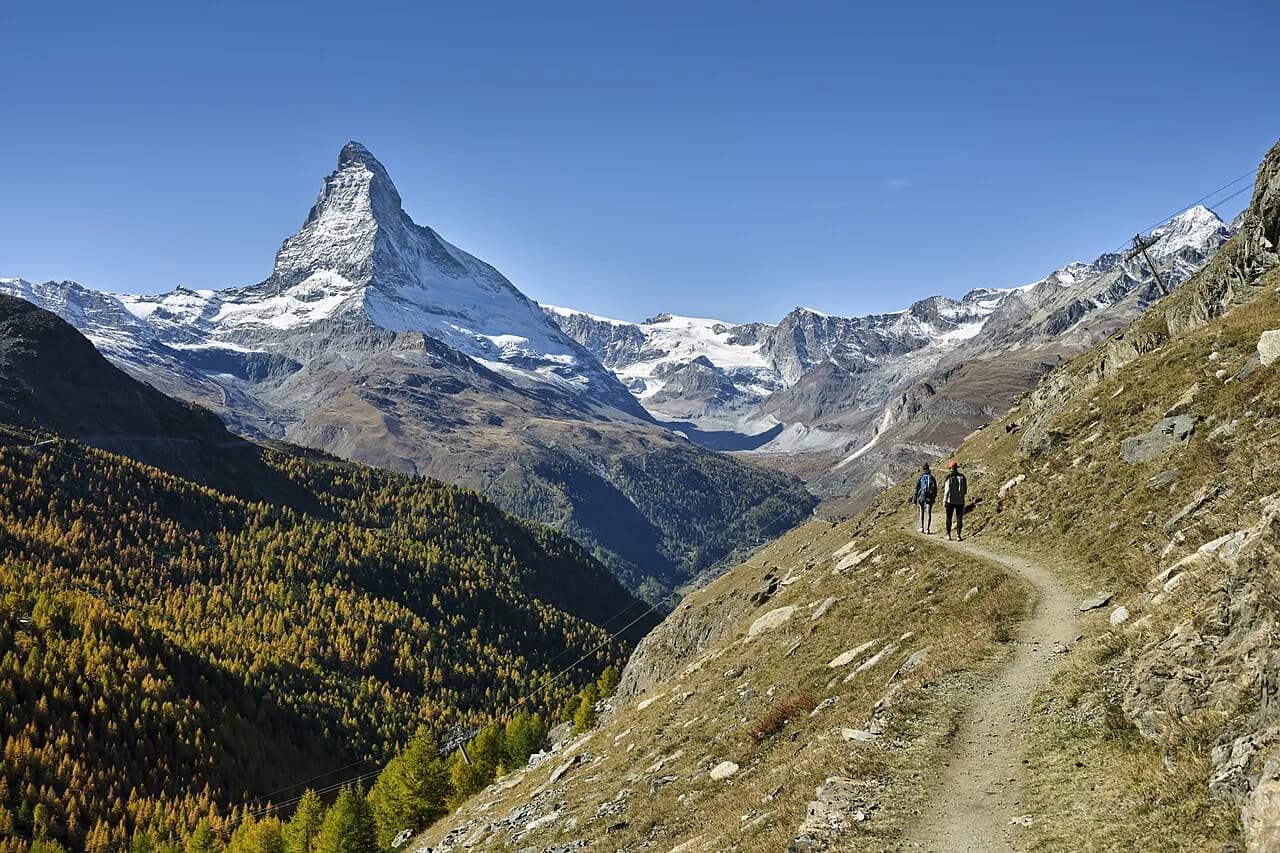
The payoff is a forest that looks almost artificially bright, with individual trees glowing above the rocky high-alpine terrain. The best viewing is above the village rather than in it, on both sides of the valley, and the color holds longest where the trees sit high. That makes a cable car or mountain railway a sensible first move if you want to see gold quickly.
East side of the valley: high viewpoints above the village
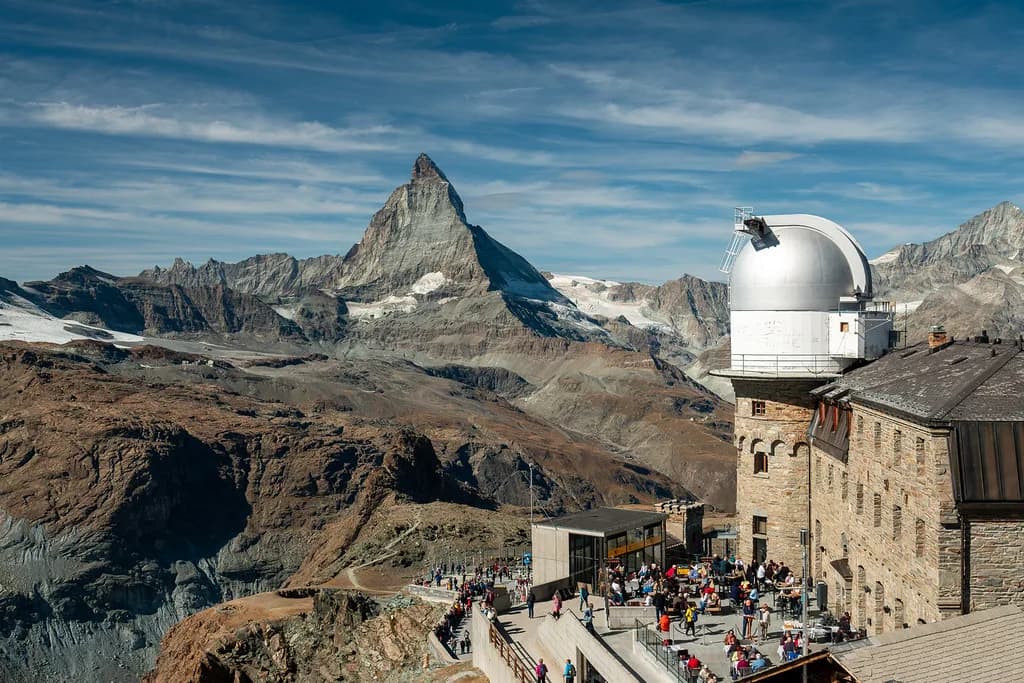
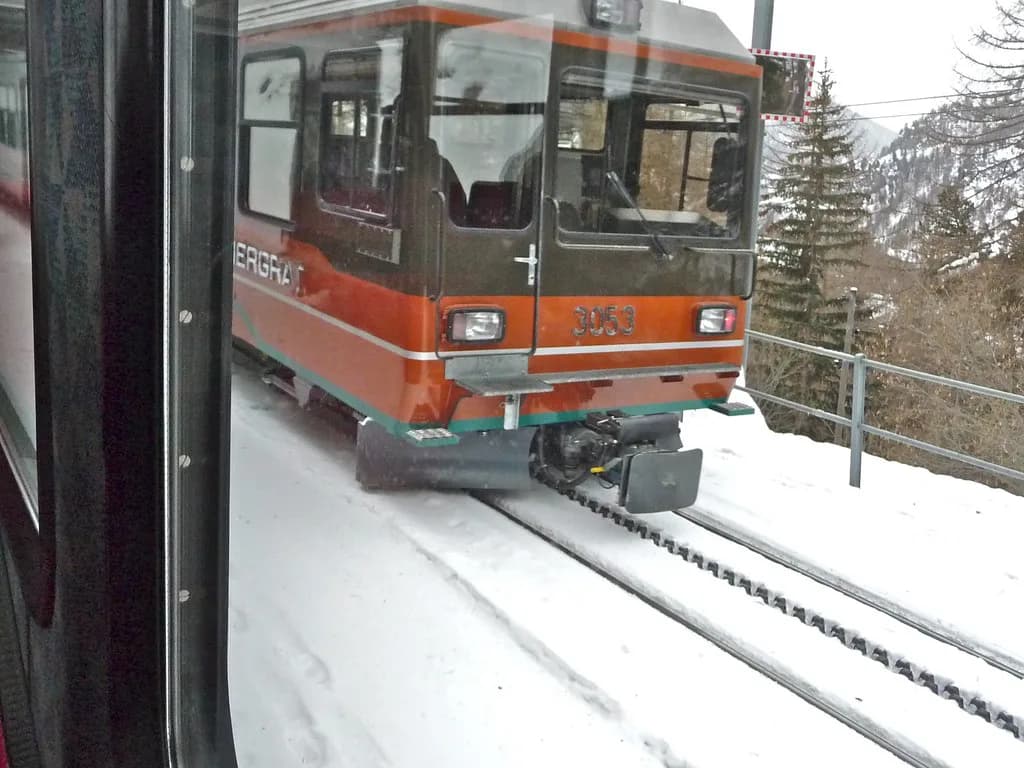
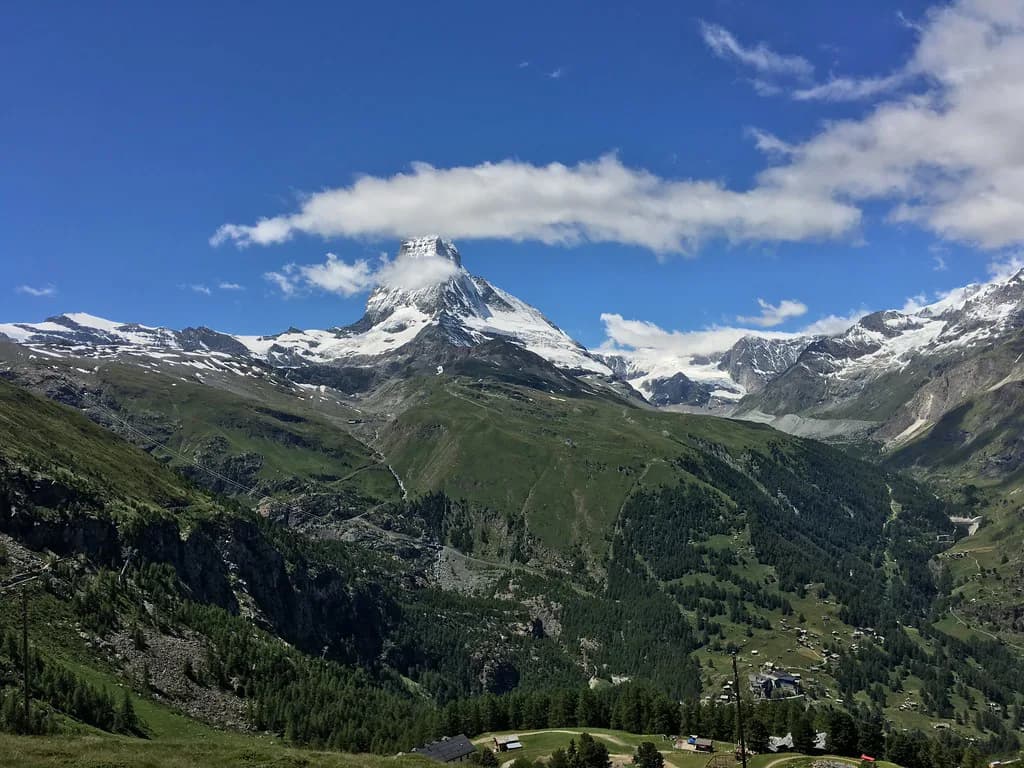
Zermatt sits at the end of a long valley with distinct walking areas on either side. The east side is the busier one, served by a network of mountain railways, funiculars and gondolas, and it is where you get the iconic view of the Matterhorn's pyramid-shaped north face. A long loop linking the high points can take seven hours or more, so plan it as a full day with a clear turnaround time.
The mountain infrastructure that makes the east side easy also cuts across the slopes, and the gondolas and pylons are an eyesore outside of winter. The views more than compensate, but if you want a wilder feel, put the west side on your itinerary too. Which lifts and railways run in October changes by season and company, so confirm operating status before you buy a ticket.
For a wider view of how the seasons compare, the best time to visit zermatt breaks down what each month delivers and where October sits in that picture. If you are deciding between Swiss shoulder-season bases, zurich in october shows how a city break handles the same month. If you are weighing a spring trip instead, zermatt in april spells out what changes when the snowpack starts to melt.
West side and the Zmutt valley: a quieter angle on the Matterhorn
The west side of the valley feels wilder and quieter, with almost no infrastructure and far fewer people. The Matterhorn appears from a different angle here, less as a perfect pyramid and more as a massive wall of rock rising directly above you, close enough that you half expect to spot climbers. Walking up through the Zmutt valley takes you past tiny hamlets such as Zmutt, Furi and Zum See, clusters of traditional wooden houses and barns that in places date back centuries.
This is where the larch color arrives as a gradient rather than a single switch, moving from chartreuse to yellow and orange and finally to deep rust and amber as you climb. Zmutt itself is a handful of buildings, with a restaurant in a centuries-old wooden house serving mountain food if you want a late lunch before looping back. Give the west side its own day rather than squeezing it in.
Riffelsee and the classic Matterhorn reflection
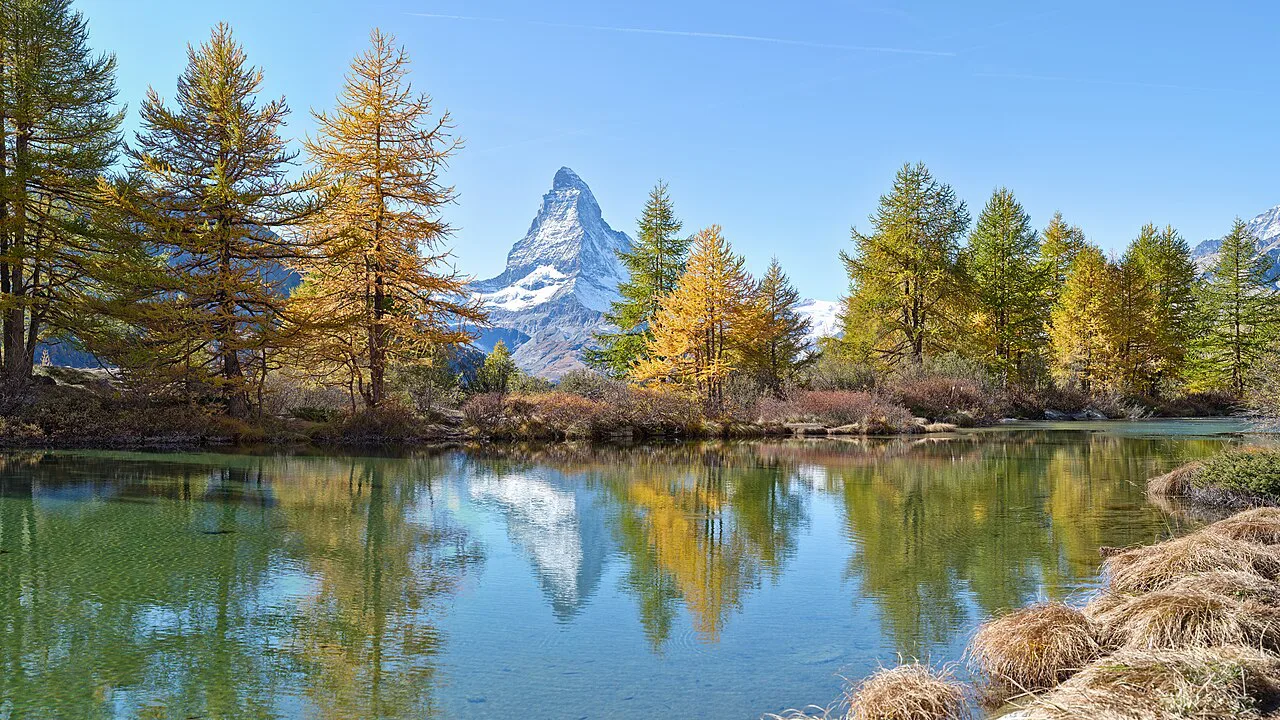
Riffelsee is the small lake famous for reflecting the Matterhorn, and it is on the east side where the crowds gather. Come early or late if you want space at the water's edge, and accept that on a windy October day the reflection may not cooperate. The larch forests around the lake frame the north face of the Matterhorn, which is the shot most visitors come for.
Gorner Glacier and the glacier garden
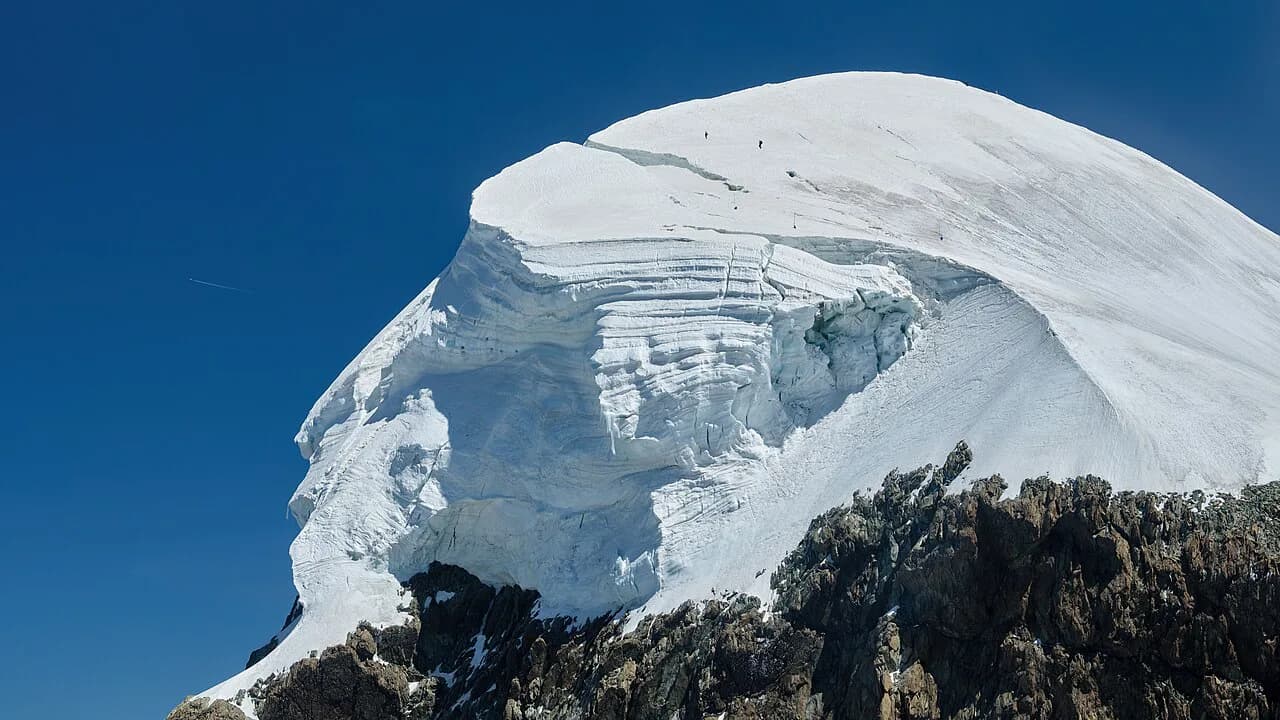
A short detour along the Gorner Glacier puts you beside one of the big ice bodies that ring the valley, and the contrast with the forest below is part of the appeal. Further down, the so-called glacier garden is a smooth, sculpted valley formed by ancient glaciers, dotted with larches and cut by a milky turquoise river. By late afternoon the valley is already in shade, so time your visit for the middle of the day if you want warmth and light.
Village realities: crowds, construction and prices
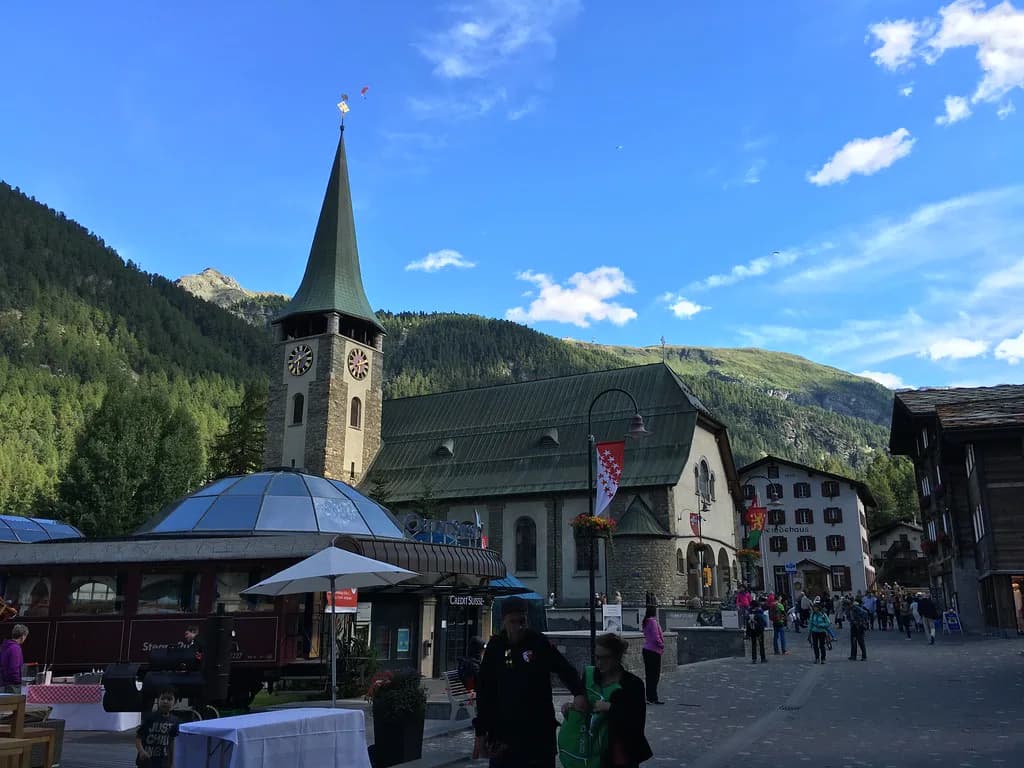
Zermatt village is unapologetically touristy. Step out of the train station and you meet tour groups, crowds and mountains of luggage, and construction seems to be a permanent feature of the streetscape. The wooden chalets and fondue restaurants still look the part, but do not arrive expecting a hidden local secret.
Prices follow the tourism. The village is on the expensive side for food and lodging, and mountain transport adds up if you use it repeatedly. Switzerland is expensive in general, so build a realistic daily budget rather than discovering it at the ticket window, and look up fares for each lift you plan to ride before you commit.
How many days October needs
Two full days is the minimum that does October justice, and it allows one day per side of the valley. A long east-side loop linking the high viewpoints, Riffelsee and the glacier area eats most of a day, while the Zmutt valley walk fills another. Three days gives you a buffer for a weather day, which is worth having in a month when cloud can close in on the Matterhorn.
A simple two-day plan: one side of the valley per day
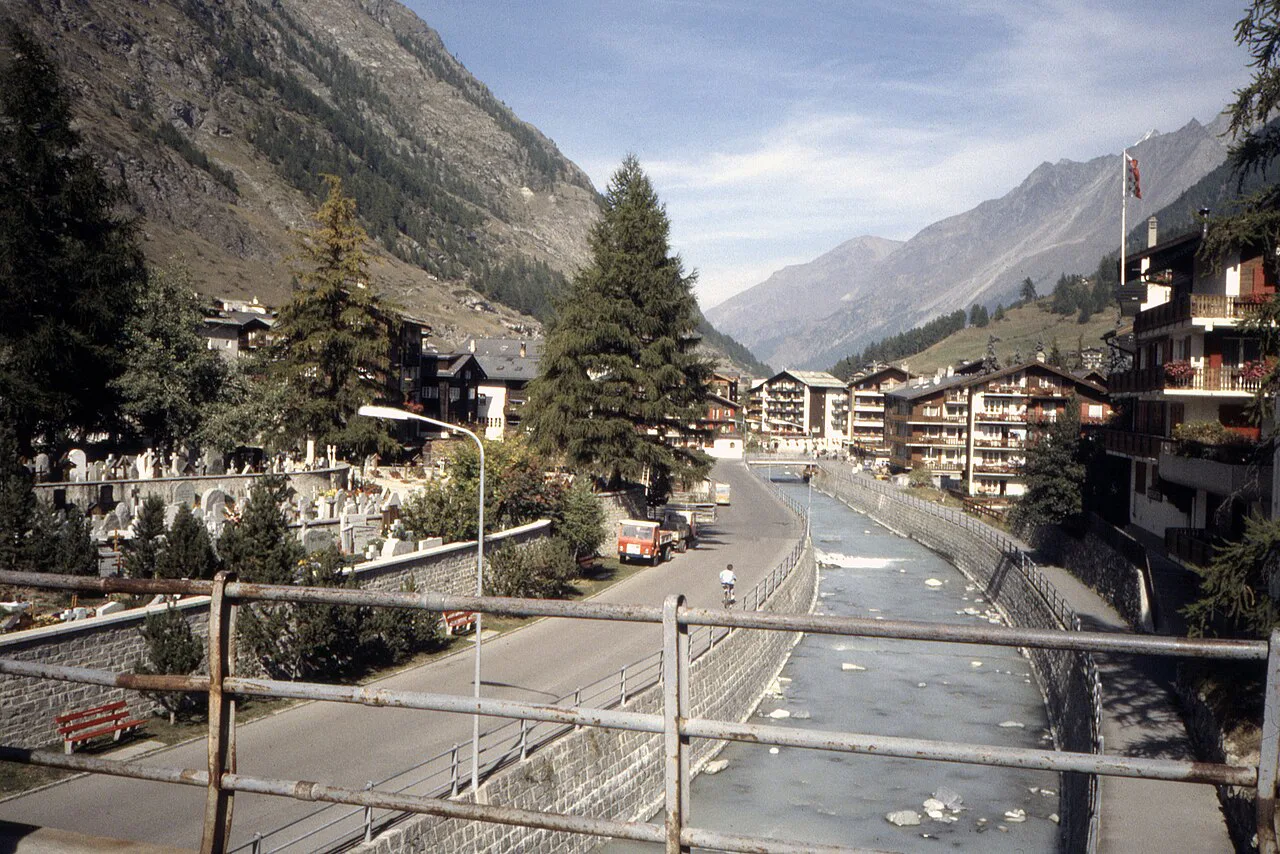
Day one, take the east side. Use the lifts to gain height early, walk toward Riffelsee for the Matterhorn reflection, detour to the Gorner Glacier and finish through the glacier garden before the valley goes into shade. Day two, walk up the Zmutt valley on the west side for the quieter perspective and a late lunch in Zmutt before returning to the village. Keep both days flexible: if the forecast is better on day two, swap them.
If your dates sit earlier or later in the fall, the neighboring month guides show how the rhythm shifts. zermatt in september covers the last warm weeks before the larches turn, zermatt in may explains the spring transition, and zermatt in june marks the start of the summer walking season.
Money notes: where October costs bite
The big costs in Zermatt are mountain transport and food, not the walking itself. A day on the east side can involve several lifts, so check fares and any available passes before committing to a long loop. October is not a discount month across the board, but thinner crowds mean more flexibility on short-notice plans.
Honest trade-offs: moody weather versus thin crowds
October gives you the best of Zermatt's quiet season and the worst of its weather roulette in the same trip. A clear day with the Matterhorn in full view is unforgettable, but cloud can swallow the mountain for the whole of a short break, and cold nights make lingering outdoors in the village uncomfortable. The compensation is space: trails that are packed in summer feel almost empty, and the larch color, when it lands, is extraordinary.
To decide whether that gamble suits you, compare the shoulder months in the best time to visit zermatt and weigh October's thin crowds and shifting color against the steadier conditions of other months.
Plan Your Visit
Book October in Zermatt for the larches and the space, not for guaranteed sunshine. Give yourself two full days, one per side of the valley, and keep one plan flexible in case the weather turns. Check lift and railway operating status before you travel, and confirm fares when you buy tickets rather than assuming summer prices carry over.
Explore more Zermatt guides
Frequently Asked Questions
Will there be snow in Zermatt in October?
Snow is possible on the high peaks, and night temperatures can drop to freezing in the mountain towns. The village itself is more likely to see cold rain than settled snow, but conditions vary year to year, so pack for both.
What is there to do in Zermatt in October?
Walk the larch forests above the village, ride up to viewpoints on the east side, visit Riffelsee for the Matterhorn reflection, detour to the Gorner Glacier and the glacier garden, and spend a quieter day in the Zmutt valley on the west side.
Is early October a good time to visit Zermatt?
Early October usually brings thinner crowds and the start of the larch color at higher elevations. The color window shifts each year, so a later visit may catch more gold on the slopes nearer the village.
When do the larches turn gold in Zermatt?
The golden window lasts a few weeks and moves with elevation and weather. Trees high above the village turn first, and the village floor often stays green while the slopes are already bright.
Do you need more than two days in Zermatt in October?
Two full days cover one side of the valley per day. A third day gives you a buffer for bad weather and a chance to repeat whichever side you preferred.
Sources
Notes for your Swiss city break
Optional updates to our Swiss city guides.
You might also like
Continue reading
More guides you'll find useful