Lucerne in Summer: What to Do, See and Skip (June–August)
Plan a summer trip to Lucerne with the Chapel Bridge, Musegg Wall, lakefront and museums. See what fills a day and how to pace three days on foot.
On this page
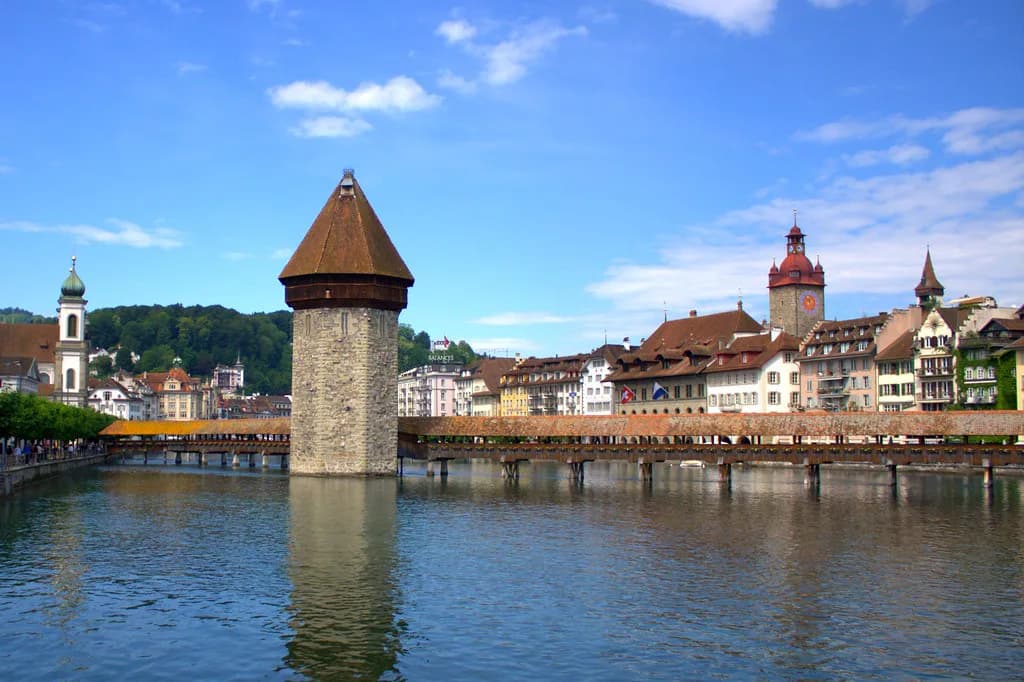
Lucerne in summer gives you the version of the city that works best on foot: warm days, light that lasts well into the evening, and a medieval core small enough to cross twice before lunch. The Reuss river splits the Old Town, the Chapel Bridge and its Water Tower stitch the two banks together, the lake basin opens to the east and the Musegg Wall runs along the northern edge. Almost everything worth seeing sits inside that loop, which is why two days covers the essentials and three lets you actually slow down.
What summer actually changes about a Lucerne visit
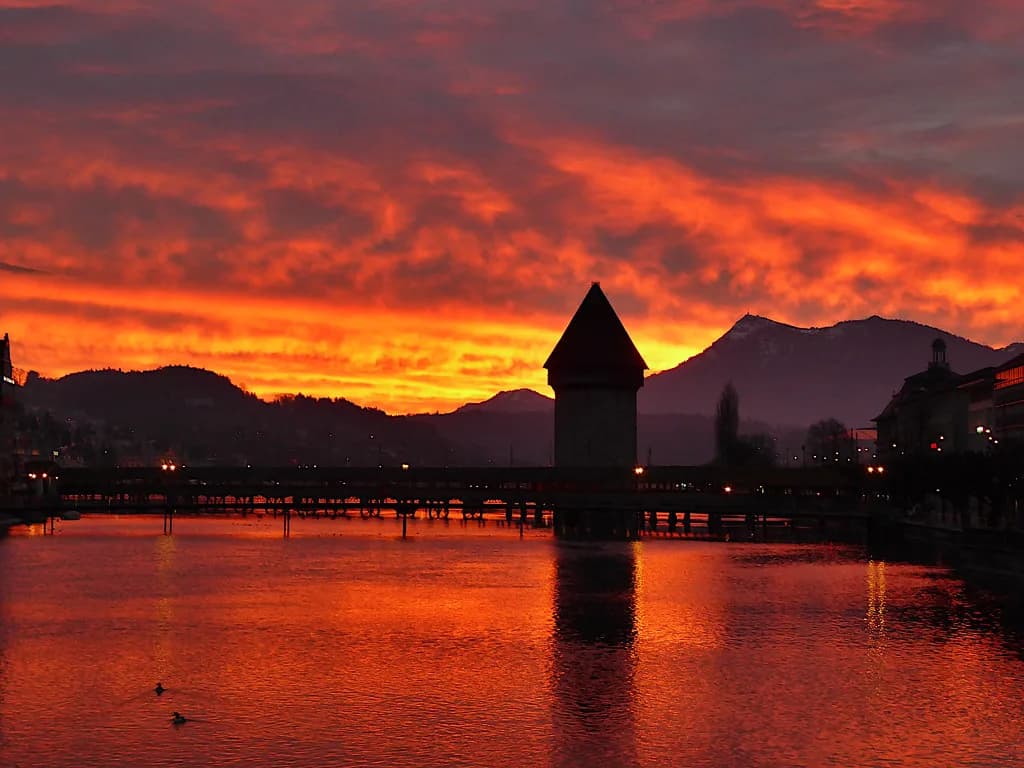
The sights do not change with the season; the shape of your day does. Between June and August the daylight stretches late, so the lakeside promenade and the Reuss bridges stay photogenic long after the museums have shut, and you can push the walking to the evening when the stone has cooled. Mornings are the time to be in the Old Town before the coaches arrive.
Summer also brings the outdoor calendar that the rest of the year does not: the weekly market spreads across three city-center locations twice a week, and the flea market settles into the Vögeligärtli every Saturday from 2 May to 31 October 2026. If your dates fall outside those windows, plan the mornings around the market instead. For a month-by-month comparison of light, temperatures and crowds, use the best time to visit lucerne guide.
How Lucerne is laid out
Think of the city as a river corridor with a lake attached. The Reuss flows out of the lake basin at the east end and cuts the Altstadt in two; the Chapel Bridge is the northern pedestrian crossing and the Spreuer Bridge the southern one, with the Needle Dam between them. West of the river the land rises toward the Musegg Wall and its towers, while the station and the KKL concert hall sit on the northern bank where the lake narrows.
That compactness is the practical point: the Old Town, the Chapel Bridge, the Lion Monument, the Musegg Wall and the lakeside promenade are all within easy walking distance of each other. You do not need a transport pass to see the core, though you will want one if you add a museum on the outskirts or ride out to the lake.
Start at the Chapel Bridge and Water Tower
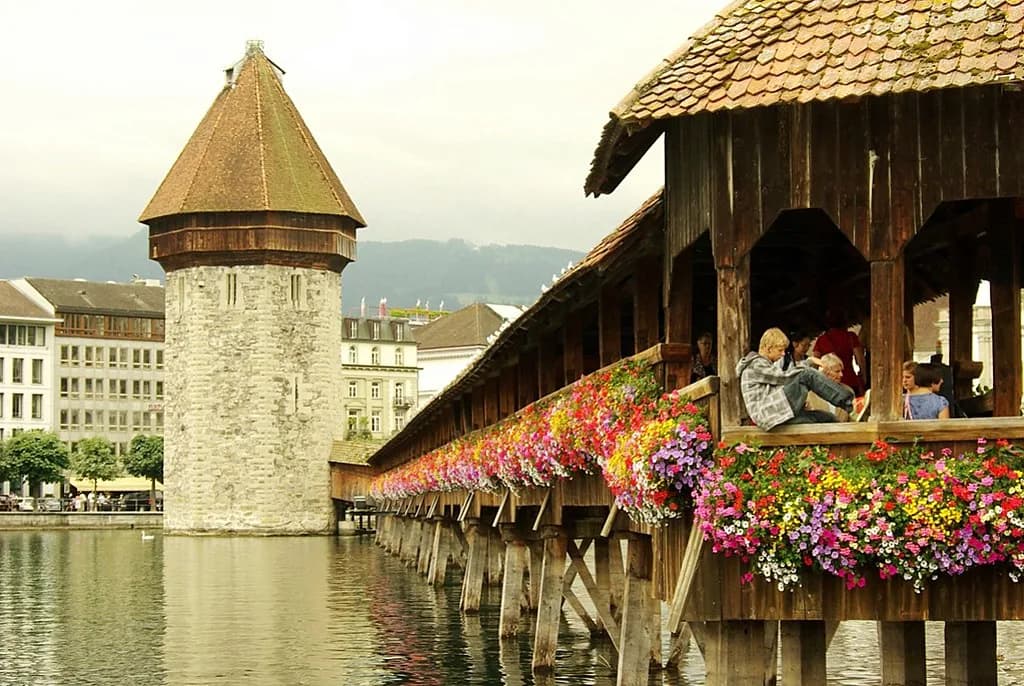
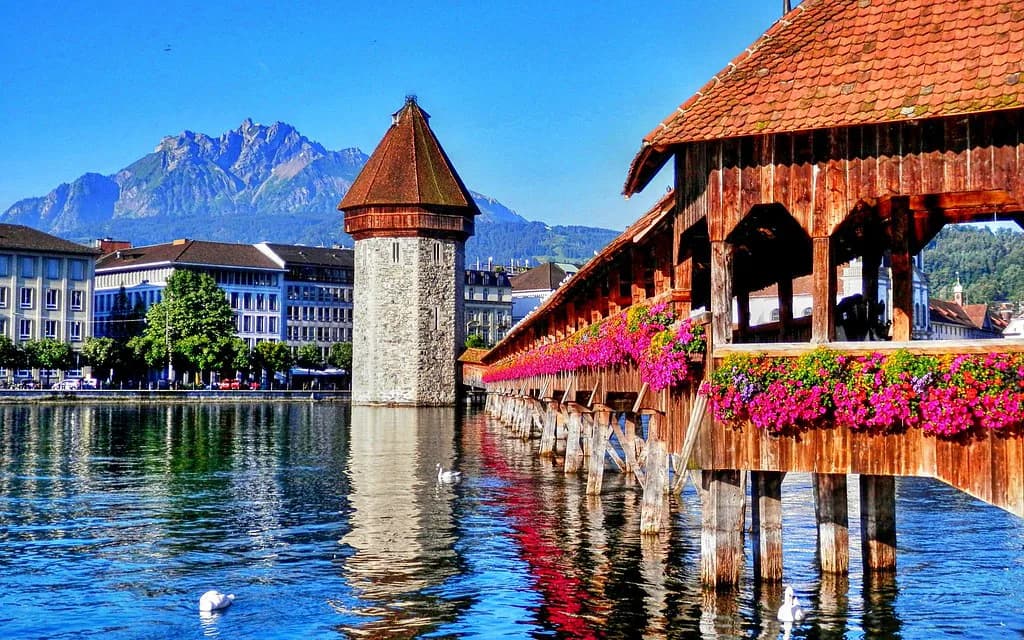
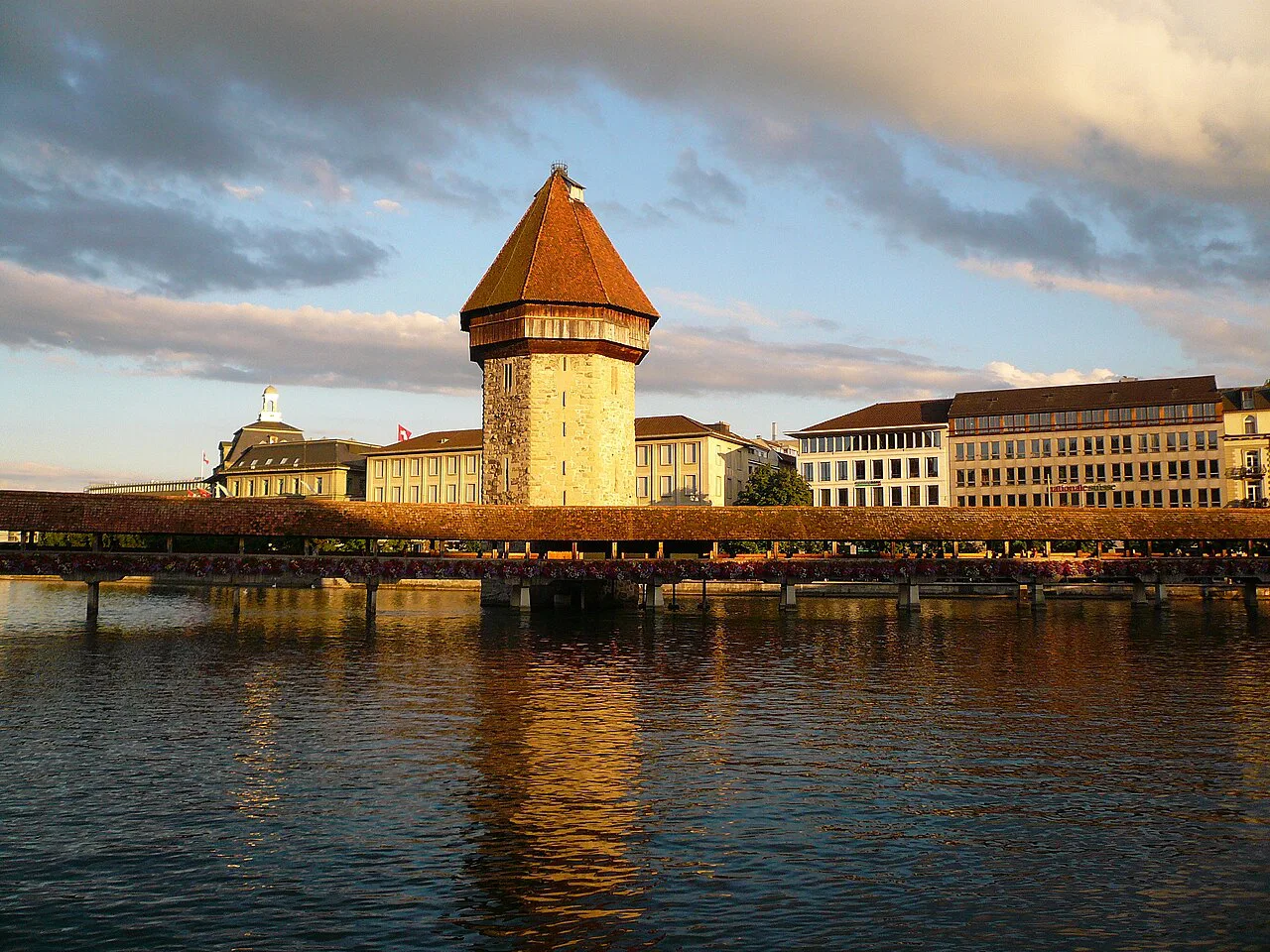
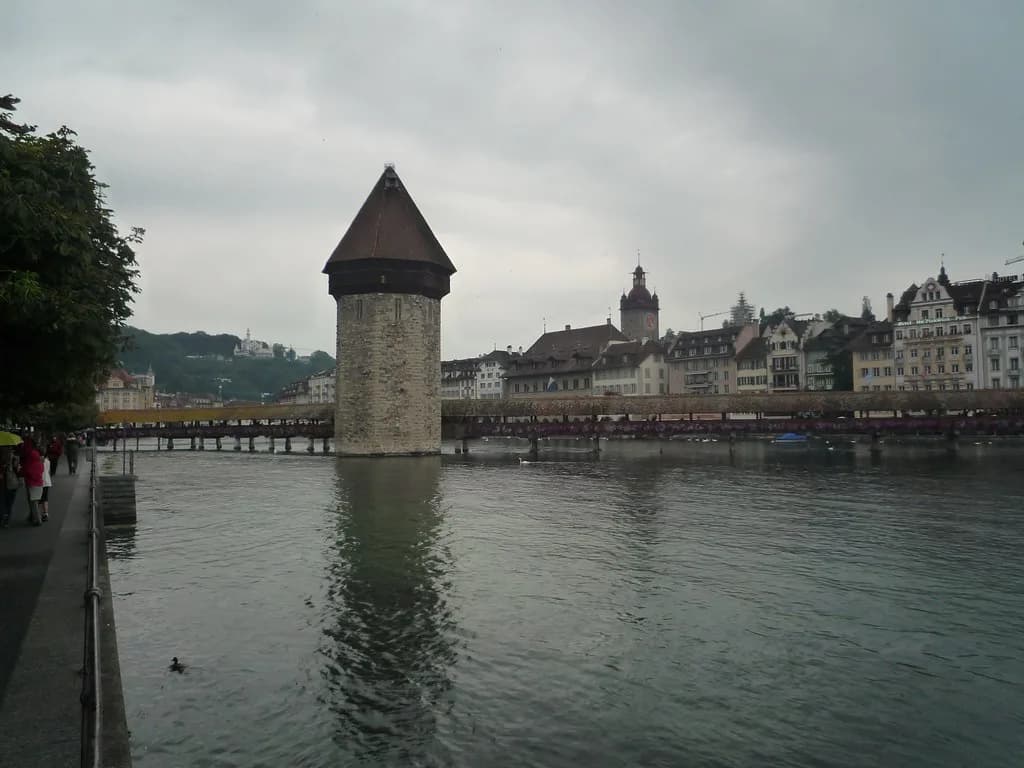
The Kapellbrücke is the image you already know, and it earns the attention. The wooden footbridge runs from the theatre on the south bank past the octagonal Water Tower to the St. Peterskapelle on the Rathausquai side, and it formed part of the city's fortifications long before it became a photo stop. The tower itself went up around 1290 to 1300, before the bridge, and has served as watchpost, archive and prison over seven centuries.
Much of the bridge burned in the night of 18 August 1993; the two bridgeheads and the Water Tower survived, and the missing span was rebuilt and reopened on 14 April 1994. The painted panels inside tell the story, and the originals are older and more complicated than the reconstruction suggests. Walk it once in each direction: the light and the framing of the tower are completely different from the two banks.
Old Town on foot: squares, churches and the second bridge
From the Rathausquai, step inland to the Kornmarkt, where the Renaissance Town Hall stands as one of the country's finest public buildings, then on to the Weinmarkt, the Old Town's most elegant square and the setting for the monthly craft market. The Jesuit Church sits directly on the Reuss, bright enough to spot from across the water. Give the Old Town a half day at an unhurried pace rather than treating it as a corridor between the bridges.
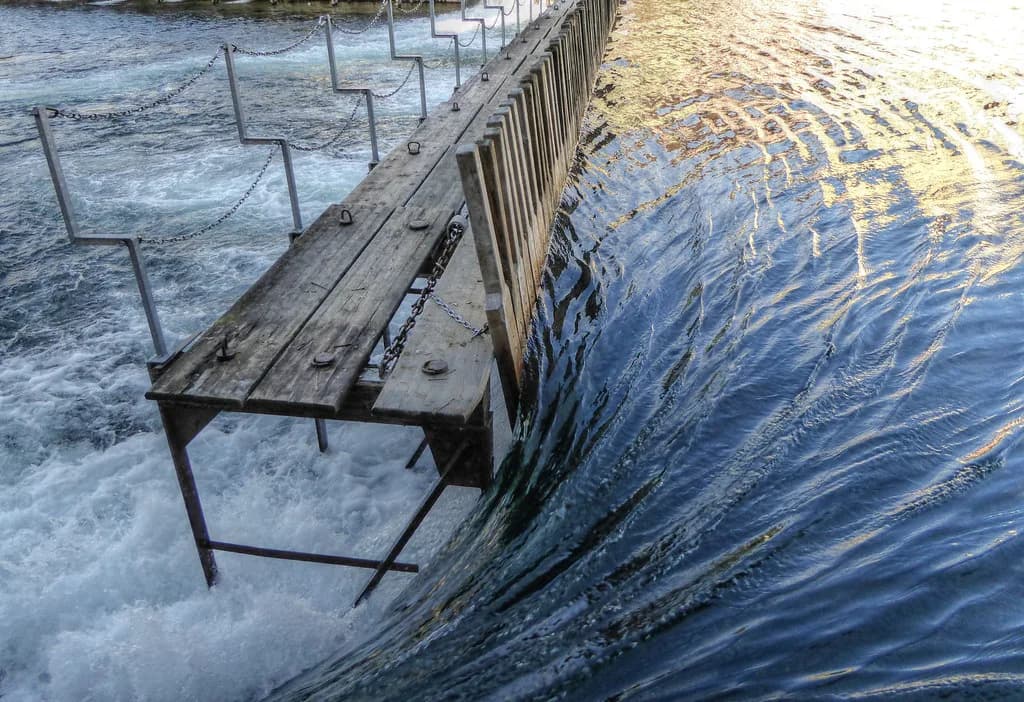
Cross to the south bank and follow the river down to the Spreuer Bridge, the quieter of the two wooden crossings, and the Needle Dam beside it, a piece of nineteenth-century engineering that still regulates the lake's outflow. Most visitors never reach this stretch, which makes it the best place in the city for an uncluttered photograph of painted timber and water.
The Lion Monument and the Musegg Wall
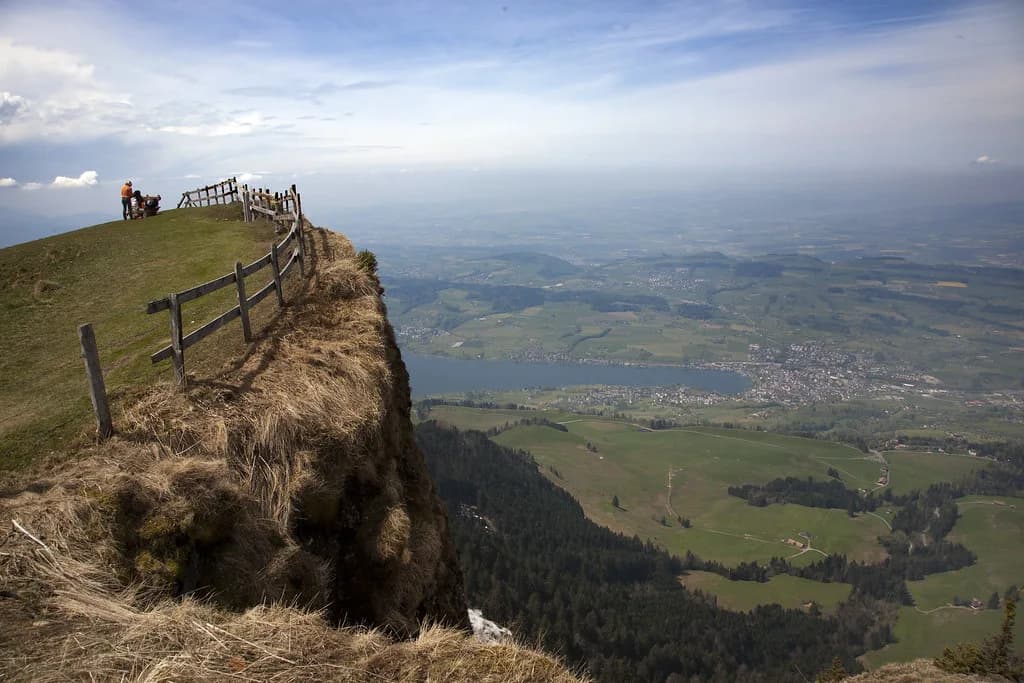
The Lion Monument, carved into a sandstone cliff face, is a short walk from the Old Town and free to visit. Pair it with the Musegg Wall on the ridge above: nine towers along the old fortification line, which you can walk at your own pace. The climb is the honest trade-off of a summer afternoon — the wall is exposed and the slope is real — so go early or late rather than at midday, and keep the visit short if the heat is heavy.
The reward is the only place in the city where you look down onto the roofs, the river and the lake at once. The route along the top is a walk, not a hike, and it takes far less time than the map suggests if you skip the towers that are closed.
Rainy or overcast summer day swaps
Summer rain in Lucerne is usually an afternoon inconvenience rather than a washed-out day, so swap rather than cancel. The Glacier Garden sits right by the Lion Monument and combines glacial rock formations with a mirror maze and a lookout tower; admission starts at CHF 24.00 per person, which makes it the priciest of the small sights and worth it mainly if you have children or a genuinely wet few hours to fill.
For a full wet day, the Swiss Museum of Transport on the Haldenstrasse is the big one, with the Swiss Chocolate Adventure and a planetarium under the same roof. Closer to the center, the Rosengart Collection holds modern masters on Pilatusstrasse, the Bourbaki Panorama near the Lion Monument wraps a huge circular painting around you, and the Museum of Art Lucerne by the station handles contemporary work.
Factory tours are the other wet-day option the region pushes: glassworks, a distillery in the city center, a watch house, show dairies in the surrounding countryside. Some are bookable online with published per-person prices, others require a call ahead, and several sit well outside Lucerne. Check the individual listing before you commit a day to one.
Where to be outdoors in the evening light
As the day-trippers drain back toward the station, the lakefront becomes the best free seat in the city. The Schweizerhofquai curves along the northern shore toward the KKL, whose cantilevered roof and glass hall were built for classical concerts and look their best reflected in the water at dusk. The plaza in front of the KKL is public and flat, a good place to end a long walking day.
Then loop back through the Old Town and over the Reuss bridges, which empty out in the evening and give you the Chapel Bridge lit against the Water Tower without a crowd in front of it. The whole circuit takes under an hour at an easy pace.
Summer market mornings
The Wochenmarkt is the reason to set an alarm on a Tuesday or Saturday: it runs 6 a.m. to 12 p.m. on the Rathausquai, under the Egg and along the Bahnhofstrasse, with an extra Saturday edition at the Helvetigärtli. Fresh bread, mountain cheese, flowers and vegetables — it is a shopping trip for locals as much as a spectacle, so go early and buy something.
On Tuesday, Friday and Saturday the fish market takes over under the Egg in the same 6 a.m. to 12 p.m. window. The craft market at the Weinmarkt runs on the first Saturday of each month from April to December, 7 a.m. to 5 p.m., with jewellery, ceramics and leatherwork from the people who make it. On Saturdays from May to October, the flea market in the Vögeligärtli adds a browse-and-haggle option to the same morning.
Getting the days right: museums, Mondays and money
Most of Lucerne's headline sights cost nothing: the Chapel Bridge and Water Tower, the Lion Monument, the Musegg Wall, the Jesuit Church and the Spreuer Bridge are all free to walk. Admission applies at the Glacier Garden and at museums such as the Swiss Museum of Transport. Group the free outdoor sights onto whichever day looks sunniest and hold the ticketed museums in reserve.
Before you lock in a museum day, look up that museum's own opening days for your dates — summer schedules vary, and a single closed morning can strand you in the Old Town with nothing booked. The same applies to any guest card or museum pass discount you are counting on: read the terms where you booked your accommodation rather than assuming they apply everywhere.
A three-day summer plan
Day one stays on foot and free: Chapel Bridge and Water Tower in the morning light, then the Kornmarkt, the Weinmarkt and the Jesuit Church, an afternoon pause, and the Spreuer Bridge and Needle Dam before dinner on the lakefront. Day two takes one big ticketed museum in the morning — Transport or Rosengart, depending on the weather — and gives the late afternoon and evening to the Schweizerhofquai and the KKL forecourt.
Day three starts with the Wochenmarkt if it is a Tuesday or Saturday, then climbs to the Musegg Wall and the Lion Monument before the heat builds, leaving a slow afternoon for whatever you missed. If your third day is a Monday, flip days two and three so the outdoor morning lands on the day the museum might be shut.
How many days you need
Two days covers the core comfortably: both wooden bridges, the Old Town squares, the Lion Monument and the Musegg Wall, plus one museum. Three days is the sweet spot in summer because it lets you take the market morning and the long evening seriously instead of sprinting between sights. A fourth day only pays off if you want a second museum or a slower pace by the water.
What summer in Lucerne is not
This guide stays inside the city. Lake bathing, mountain hikes, saunas and nightlife are covered elsewhere, and day trips beyond a single mountain or lake excursion deserve their own itinerary rather than a rushed half day. If you are comparing Swiss cities for a summer trip, look at Zürich in Summer and Basel in Summer before you commit the days.
Plan Your Visit
Summer rewards the traveler who treats Lucerne as a walking city with a museum backup rather than a checklist. Book the market mornings first, build the free sights around the best-weather day, keep one ticketed museum in reserve for rain, and leave the evenings for the lakefront and the bridges.
A guided city tour runs at 10.15 a.m. on selected days and the City Train is a 45-minute non-stop loop from Franziskanerplatz ending at Löwenplatz — useful if you want orientation, not a hop-on bus. Check current prices, opening days and market dates on the official Lucerne tourism site before you travel.
Explore more Lucerne guides
Frequently Asked Questions
What is there to do in Lucerne in summer?
Walk the Chapel Bridge and Water Tower, cross the Old Town squares from the Kornmarkt to the Weinmarkt, visit the Jesuit Church, the Spreuer Bridge and the Needle Dam, then climb to the Musegg Wall and the Lion Monument. Evenings belong to the Schweizerhofquai and the KKL forecourt. Add a museum for a wet afternoon and a market morning on Tuesday or Saturday.
Is summer a good time to visit Lucerne?
Yes, mainly because the daylight is long and the sightseeing core is compact enough to cover on foot with evenings to spare. The trade-off is that you should plan outdoor time for mornings and late afternoons, and keep a ticketed museum in reserve for rainy days.
How many days do you need in Lucerne in summer?
Two days covers the core sights and one museum. Three days lets you take in a market morning, walk the Musegg Wall at a relaxed pace and still have long evenings by the lake. A fourth day only adds value if you want a second museum or a slower rhythm.
What can you do in Lucerne for free?
The Chapel Bridge and Water Tower, the Lion Monument, the Musegg Wall, the Jesuit Church, the Spreuer Bridge and the Needle Dam are all free to visit. Admission applies at the Glacier Garden and at museums such as the Swiss Museum of Transport; check current prices where you book.
What is there to do in Lucerne when it rains in summer?
The Swiss Museum of Transport, the Rosengart Collection, the Bourbaki Panorama and the Museum of Art Lucerne all work as indoor backups, and the Glacier Garden is close to the Lion Monument if you have children with you. Factory tours in the region are another option; check each listing's booking terms and price before committing.
Are Lucerne's sights walkable?
Yes. The Old Town, Chapel Bridge, Lion Monument, Musegg Wall and the lakeside promenade are all within easy walking distance of each other, and you can cross the river on either wooden bridge. You only need transport for museums on the outskirts or an excursion out to the lake.
When is the weekly market in Lucerne?
The Wochenmarkt runs on Tuesdays and Saturdays from 6 a.m. to 12 p.m. on the Rathausquai, under the Egg and along the Bahnhofstrasse, with an extra Saturday edition at the Helvetigärtli. The fish market takes over under the Egg on Tuesday, Friday and Saturday in the same window. Confirm dates on the Lucerne tourism site before you go.
Is the Glacier Garden worth it in summer?
It is the closest ticketed sight to the Lion Monument and combines glacial rock, a mirror maze and a lookout tower, with admission starting at CHF 24.00 per person. That makes it the priciest of the small sights, so it earns its place mostly on a wet afternoon or with children rather than as a default stop.
Sources
Notes for your Swiss city break
Optional updates to our Swiss city guides.
You might also like
Continue reading
More guides you'll find useful