Free Things to Do in Lucerne: Sights, Bridges and Walks
Most of Lucerne's best sights cost nothing: the Chapel Bridge, the Musegg Wall towers, the Lion Monument and the Old Town's painted squares.
On this page
Almost everything that defines Lucerne's skyline is free to visit: the Chapel Bridge and its Water Tower, the Lion Monument and the Musegg Wall cost nothing, and the city's main sights sit close enough together to cover on foot. The paid exceptions are specific and easy to plan around — the Glacier Garden and museums such as the Swiss Museum of Transport require an admission ticket, so budget for those separately or skip them. One useful starting point for the wider list is this guide to the things to do in Lucerne.
Lucerne's free sights in one answer
The free core of Lucerne is a compact cluster on and around the Reuss River: the Chapel Bridge, the Water Tower, the Spreuer Bridge, the Jesuit Church, the Old Town squares, the Musegg Wall and the Lion Monument. Lucerne's own tourism board describes these main attractions as close together and easy to explore on foot, with the Old Town, Chapel Bridge, Lion Monument, Musegg Wall and lakeside promenade all within easy walking distance.
What costs money is equally clear: an admission ticket is needed for the Glacier Garden and for museums such as the Swiss Museum of Transport. Everything else in this guide is a street, a bridge, a church interior or a tower you climb without paying.
Chapel Bridge and the Water Tower: the best free half hour in the city
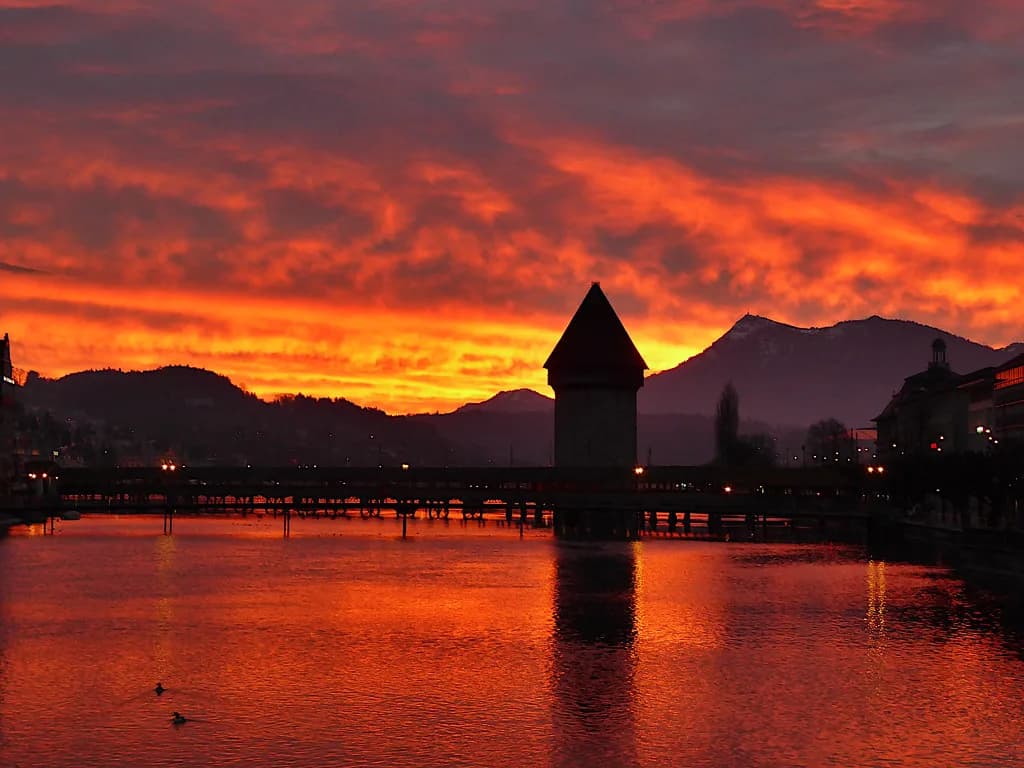
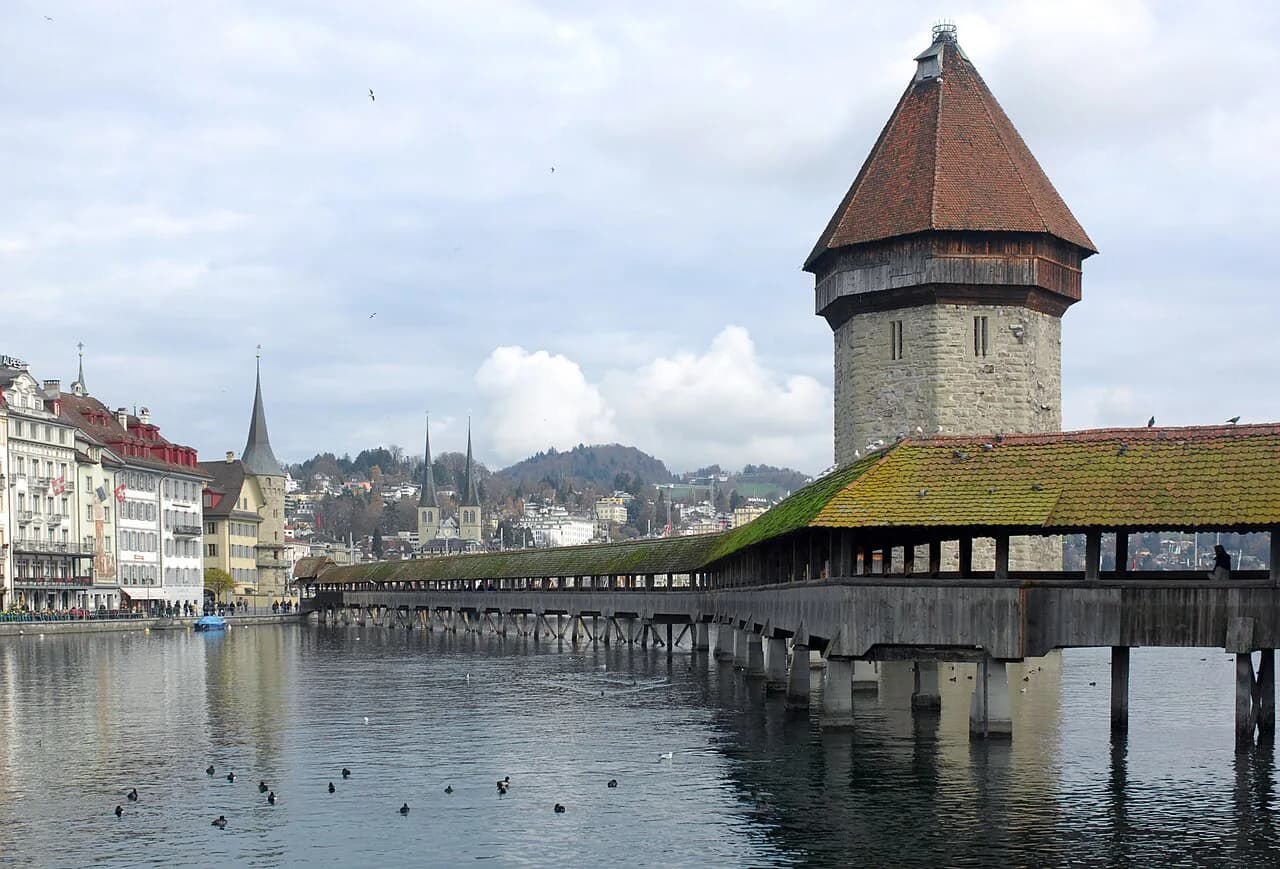
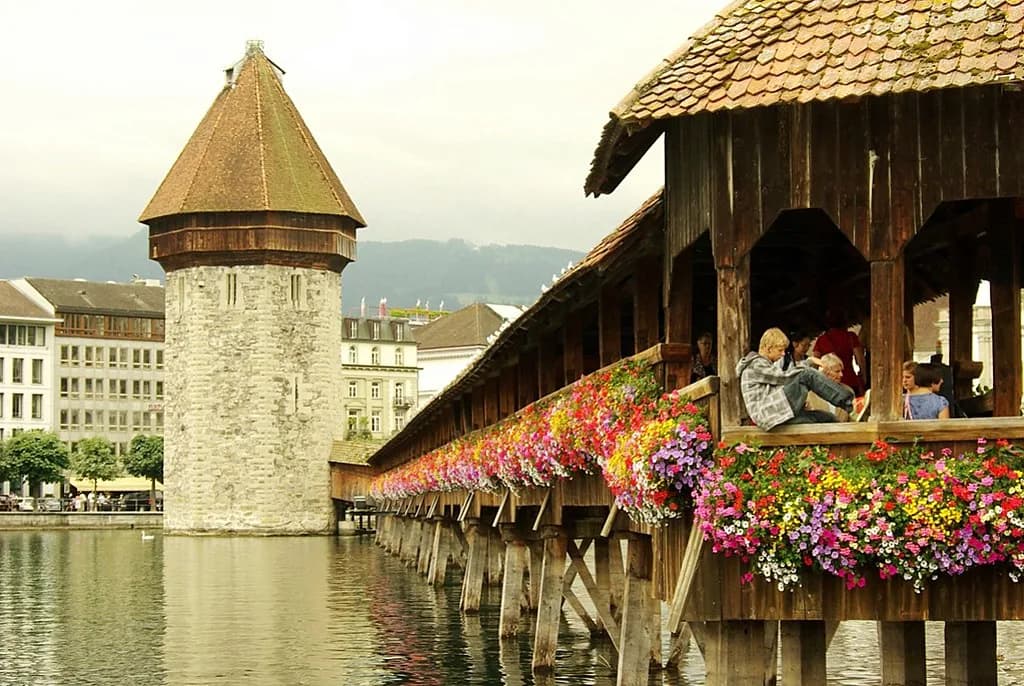
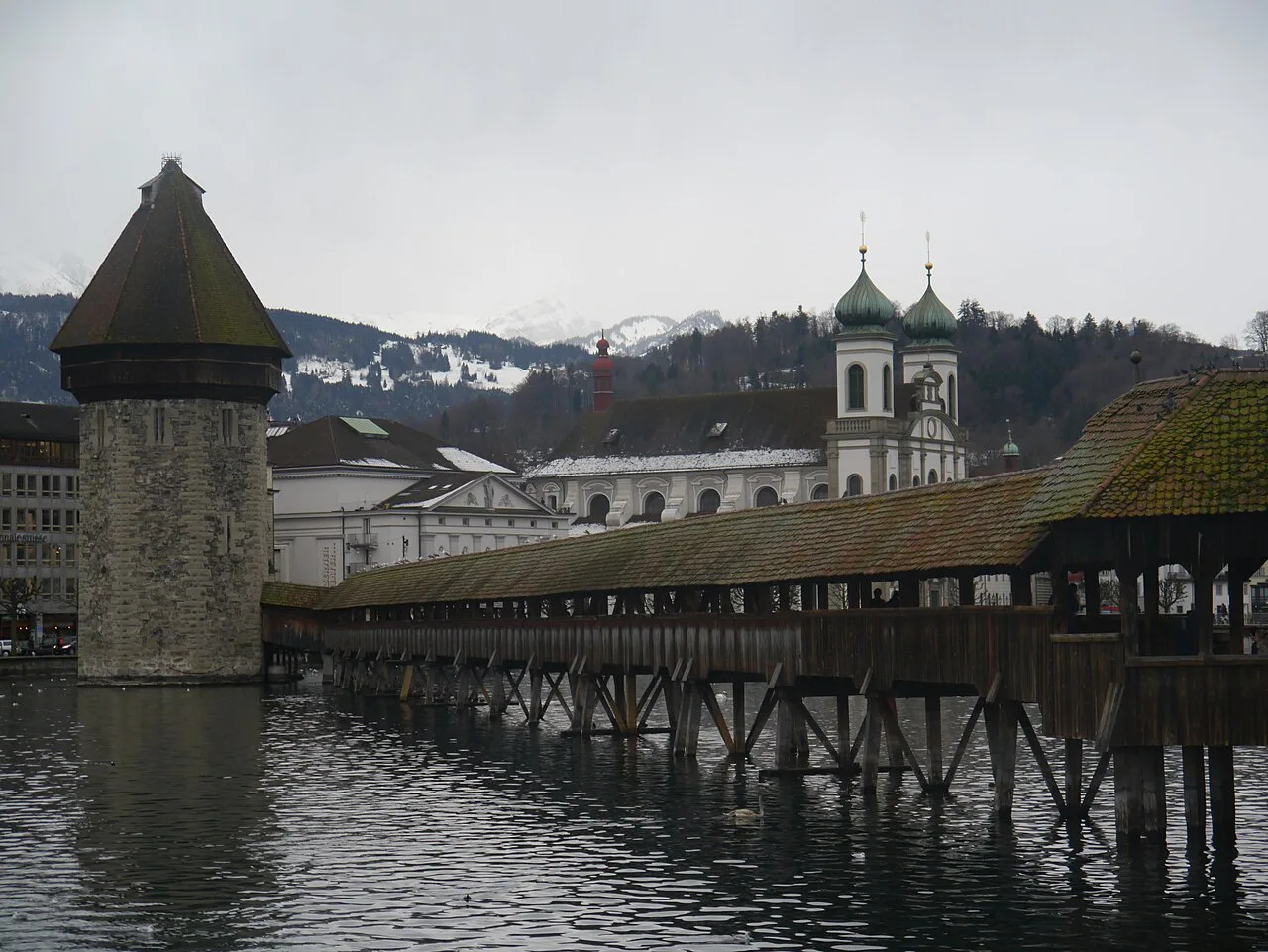
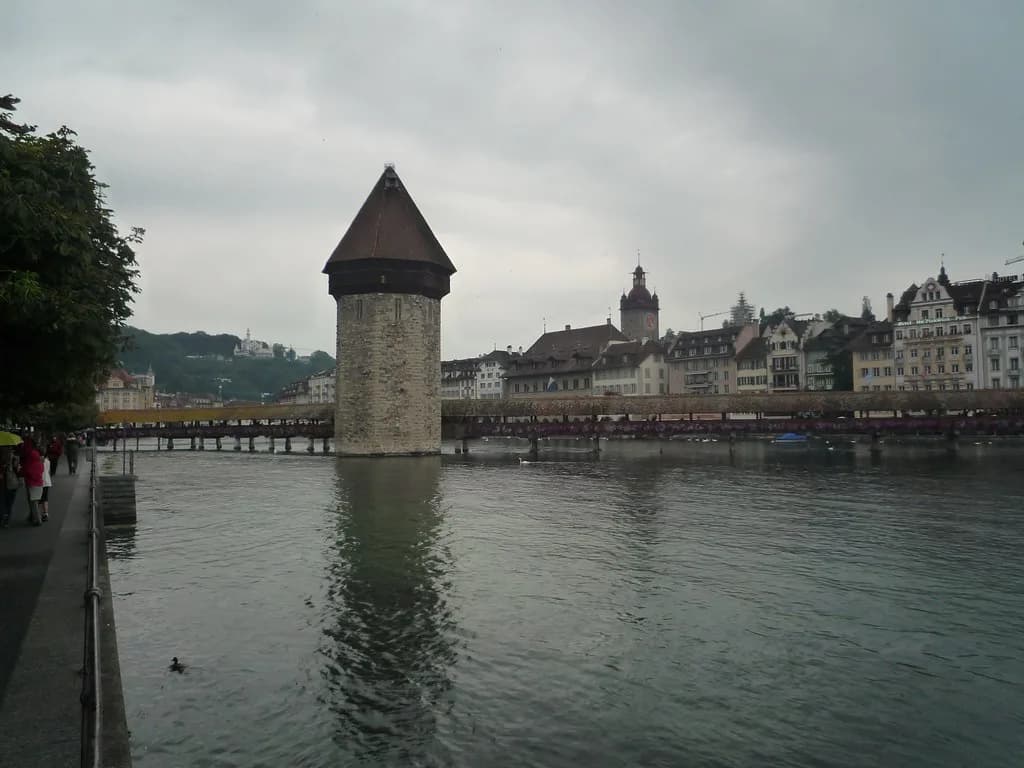
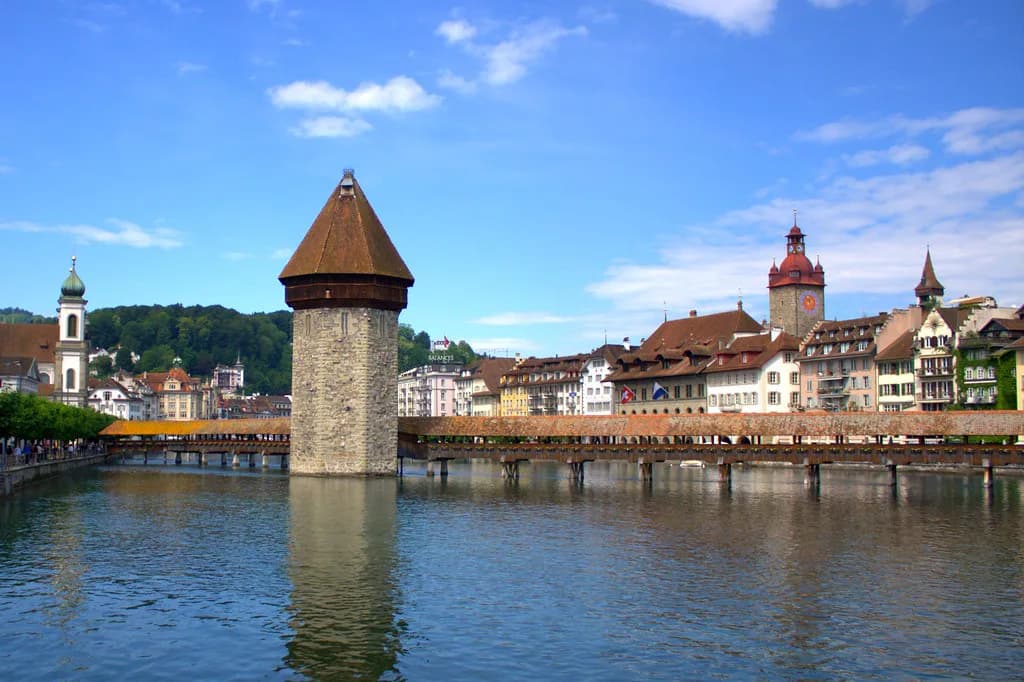
The Kapellbrücke is Lucerne's signature sight and the single best free stop in town. Built in the 14th century, it is the oldest wooden covered footbridge in Europe, its interior roof carries paintings depicting Swiss history, and flower boxes line the outside. A fire in 1993 destroyed all but a small portion of the original structure; the bridge was rebuilt in 1994 and traces of the fire remain.
Allow about 30 minutes to cross, read the paintings and photograph the Water Tower, and come back at dusk when the wooden exterior is at its best. The crossing sits in the middle of town, so it slots into any walking route without a detour.
Spreuer Bridge: the quieter painted bridge
A quarter mile down the Reuss from the Chapel Bridge, the Spreuer Bridge is smaller and far less crowded, and Lucerne's tourism board calls it the hidden jewel among the city's sights. Its painted panels and its angle back toward the Old Town and the Musegg Wall give you a different view from the famous crossing. It takes roughly 30 minutes to walk it and linger.
Old Town on the north bank: Weinmarkt and the painted facades
Most of the Old Town sits on the north bank of the Reuss, a warren of streets where the buildings carry colorful medieval frescoes. Give it about an hour of unhurried wandering rather than treating it as a single sight.
Two landmarks anchor the walk: the Town Hall on Kornmarkt, described by Lucerne's tourism board as one of the most beautiful public buildings in Switzerland, and the red roof of the Town Hall clock tower, one block back from the river. From Weinmarkt square you can pick out the white Château Gütsch across the river.
Musegg Wall: ramparts and open towers without a ticket
The Musegg Wall and its nine towers are part of Lucerne's historic city fortifications, and the tourism board lists the wall among the sights that are free to visit. Luegisland Tower is the tallest of the nine, and the Zyt Tower holds the city's oldest clock tower. Several towers, including the Zyt Tower, can be climbed for a view over the city, the river and the surrounding mountains.
Plan one to two hours for the wall if you intend to climb, more than you would guess from looking up at it. If you want to compare the rampart view with other high points in the city, this guide to the best views in Lucerne lines up the alternatives.
The Lion Monument: 30 minutes with the 1820 relief
The Lion Monument is a rock relief carved in 1820 to commemorate the Swiss Guards killed in 1792 during the French Revolution, and it ranks among the most visited monuments in Switzerland. Budget about half an hour; the scale of the carving is hard to capture in a photograph, so it rewards standing still rather than snapping and leaving.
Jesuit Church and the Reuss riverfront walk
The Jesuit Church stands directly on the Reuss, recognizable from a distance by its pair of green domes, and it is one of the sights that costs nothing to visit. Pair it with a riverfront stroll past the cafes and shops on the south bank; give the walk anywhere from half an hour to an hour.
Two more churches round out a free architecture circuit: the Church of St. Leodegar, described as the most important Renaissance church building in Switzerland, and the Franciscan Church, a piece of medieval mendicant architecture. Both are listed among Lucerne's highlights and neither needs a ticket.
Spreuer Bridge to the Needle Dam: the engineering stretch
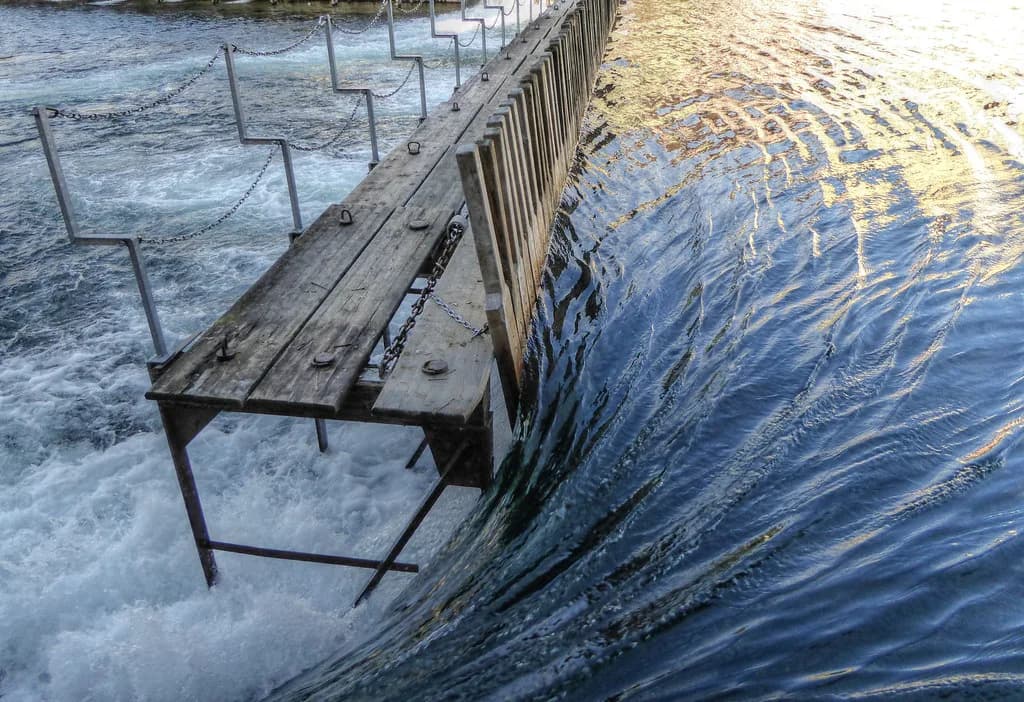
Between the Spreuer Bridge and the Needle Dam, the Reuss does double duty as scenery and as a piece of 19th-century engineering. The Needle Dam is listed among Lucerne's sights as a marvel of that era, and you can read it from the bank without a ticket. Walk this stretch in the late afternoon, when the light comes low across the water and the crowds thin out.
KKL Lucerne and the lakeside promenade
The KKL culture and convention centre is the modern counterpoint to the Old Town, a striking building on Lake Lucerne designed primarily for classical concerts. The exterior and the surrounding promenade are free to walk; concerts inside are ticketed. Time it for the end of a free afternoon, when the lakeside stretch connects naturally back toward the station.
What is not free: the Glacier Garden, the transport museum and the museums card
Two paid sights come up on almost every Lucerne list: the Glacier Garden and the Swiss Museum of Transport. Both require an admission ticket, so decide in advance whether they earn a slot in a short stay. A museums card covering nine museums is sold for visitors who plan to visit several, which is the sensible option if the weather turns and you want to be indoors.
Free on a Swiss Travel Pass: Lake Lucerne boats
A Lake Lucerne cruise is covered by the Swiss Pass, so passholders step aboard at no extra cost. Boats leave from Bahnhofquai and call at lakeside towns including Beckenried, Brunnen, Flüelen, Meggen, Vitznau and Weggis, so you can ride for as long as you like and return by train or bus. Without a pass, check the current fare with the boat company before boarding.
Boats and mountain lifts are a separate budget line from the city sights, which stay free either way. If you want to add a cable car or funicular to a free-sights day, compare the options first in this guide to Lucerne cable cars and funiculars.
A free half day and a free full day on foot
For a free half day, start at the Chapel Bridge, walk the north bank through the Old Town via Weinmarkt and the Town Hall on Kornmarkt, climb a Musegg Wall tower, then drop to the Lion Monument. That sequence uses no tickets and keeps the walking short. The Lucerne Self-Guided Walking Tour maps out a similar order if you prefer to follow a route rather than improvise.
For a full free day, add the Spreuer Bridge and the Needle Dam in the morning, the Jesuit Church and the riverfront after lunch, and finish on the KKL lakeside promenade at dusk. The first nine stops on a classic Lucerne circuit can be done in a single day on foot, with the boat pier at Bahnhofquai as the natural endpoint if you hold a pass.
Money-saving habits beyond the sights
Lucerne is walkable, and a large section of the Old Town is pedestrian-only, so transport is rarely the expense. The bus system is efficient and covered by the Swiss Pass. Packing a picnic from a grocery store at the station beats paying mountain-top restaurant prices, and the city's drinking fountains are free to refill from.
If your trip runs four days or more, a Swiss Pass tends to pay for itself across boats, buses and mountain transport, which frees up cash for the paid sights that interest you. Shoppers should note that many shops close on Sunday in Switzerland; plan browsing for a weekday or check ahead.
Where free Lucerne fits in a wider Swiss trip
Lucerne is unusually generous with free sights for a Swiss city, and the same walking formula works elsewhere. Bern's UNESCO World Heritage old town and Basel's Basler Münster anchor similar no-ticket days, useful if you are linking two or three cities by rail.
Plan Your Free Days in Lucerne
The free version of Lucerne is not a compromise: the bridge, the wall, the monument and the painted squares are the reasons people come. Build the day around those, decide deliberately whether the Glacier Garden or a museum earns a ticket, and hold the boats for a pass day.
Explore more Lucerne guides
Frequently Asked Questions
What can you see in Lucerne for free?
The Chapel Bridge and Water Tower, the Spreuer Bridge, the Old Town and its squares, the Musegg Wall and several of its towers, the Lion Monument, the Jesuit Church, the Church of St. Leodegar, the Franciscan Church, the Needle Dam and the KKL exterior are all free to visit. The Glacier Garden and museums such as the Swiss Museum of Transport charge admission.
Is the Chapel Bridge free to visit?
Yes. The Kapellbrücke is a public covered footbridge in the center of Lucerne, and crossing it costs nothing. Allow about 30 minutes to read the painted roof panels and photograph the Water Tower, and return at dusk for the best light.
Can you climb the Musegg Wall towers for free?
Several towers along the Musegg Wall, including the Zyt Tower, can be climbed without a ticket, and the wall is among the sights Lucerne's tourism board lists as free. Set aside one to two hours if you plan to walk the ramparts and climb.
Is the Lion Monument free?
Yes. The Lion Monument is an open-air rock relief in the city and there is no admission charge. Half an hour is enough time to see it properly.
Which Lucerne attractions charge admission?
The Glacier Garden and museums including the Swiss Museum of Transport require a ticket. A museums card covering nine museums is available for visitors planning to visit several.
How long does a free walking route through Lucerne take?
A half day covers the Chapel Bridge, the Old Town, a Musegg Wall tower and the Lion Monument at an easy pace. A full day adds the Spreuer Bridge, the Needle Dam, the Jesuit Church and the lakeside promenade, all on foot.
Are Lucerne's churches free to enter?
The Jesuit Church, the Church of St. Leodegar and the Franciscan Church are listed among Lucerne's sights and do not require an admission ticket. They sit close to the river and the Old Town, so they fit into the same walking route.
Does a Swiss Travel Pass cover Lake Lucerne boats?
A Lake Lucerne cruise is covered by the Swiss Pass, with boats departing from Bahnhofquai for lakeside towns such as Brunnen, Weggis and Vitznau. Without a pass, check the current fare with the boat operator before you travel.
Sources
Notes for your Swiss city break
Optional updates to our Swiss city guides.
You might also like
Continue reading
More guides you'll find useful