Vevey Old Town: A Walking Guide to the Historic Center
Vevey's old town is compact cobblestone streets, pastel facades and a market square. Here is what to see, how to walk it, and when the markets run.
On this page
Vevey's old town is a compact grid of cobblestone lanes, pastel-painted facades and small squares tucked between the Lake Geneva shoreline and the terraced slopes above town. An afternoon covers the core on foot, with time left for the lakeside promenade at either end. The old town is the free part of a Vevey day: walking costs nothing, and the budget goes to whichever museum you choose.
Plan the walk around what is open rather than around a fixed route. The Musée historique de Vevey opens Tuesday to Sunday, the food and flea market takes over place du Marché on Tuesday and Saturday mornings, and the waterfront can be walked any time. If you have limited time, start at the quay and climb inland. For the wider picture of what the town offers, see these things to do in vevey and treat the old town as the walkable backbone of the trip.
Why Vevey's Old Town Is Worth an Afternoon
The historic center does not demand a full day. It rewards a slow few hours: a market square, two churches, a handful of lanes with fountains, and a small history museum in a château building. That compactness means you can move between the lakefront and the upper lanes several times without losing time to transport. Treating it as a short loop rather than a checklist gives you space to stop at a terrace or follow a side street. If you enjoy this kind of walkable historic core, the bern old town guide offers the same approach in the capital.
The geography is the key to walking it well. The old town sits on flat-to-gently-sloped ground between quai Perdonnet on the lake and the rising streets behind, so the natural route is a loop: start at the water, turn inland through the squares, climb a little, then come back down to the promenade. You rarely need a map beyond the first five minutes, and you can reverse the direction whenever a café or a viewpoint catches your eye.
How the Old Town Is Laid Out
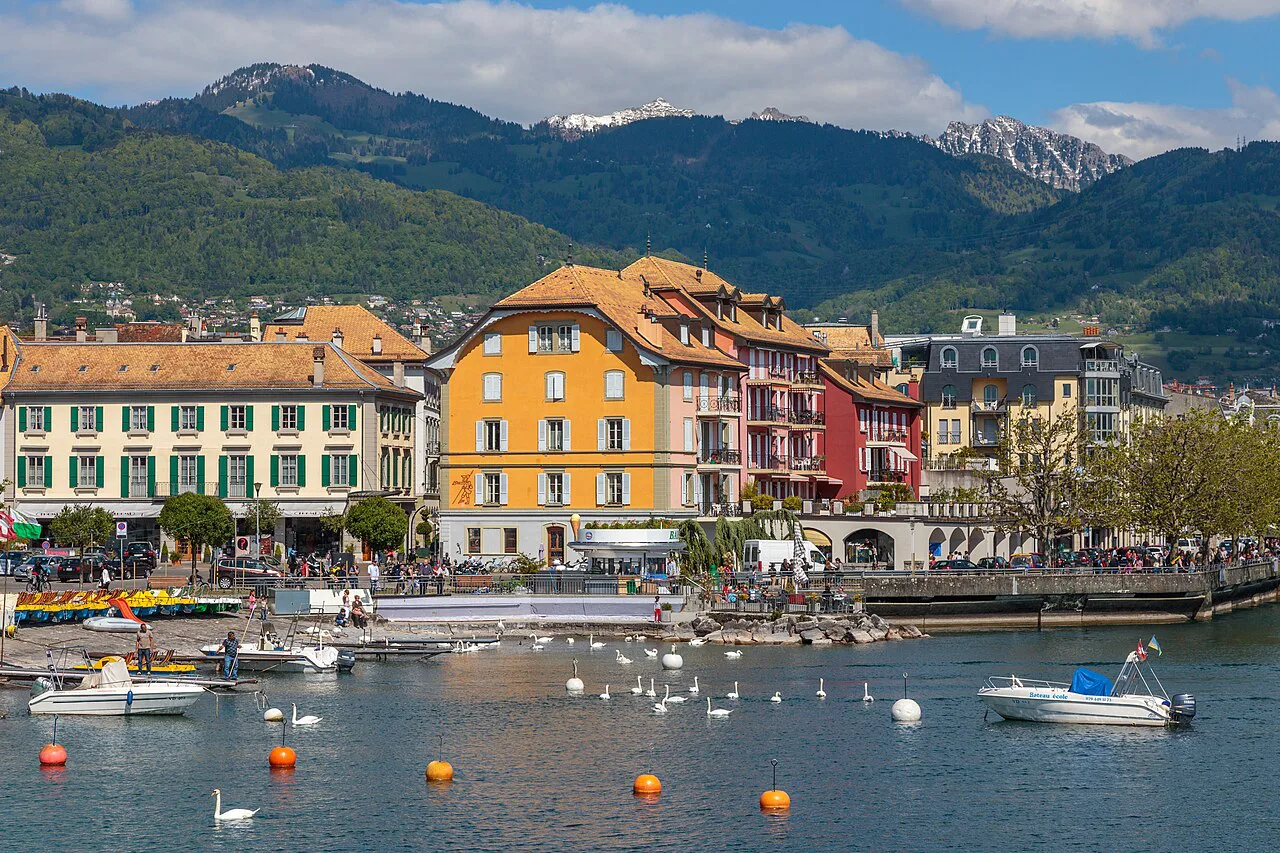
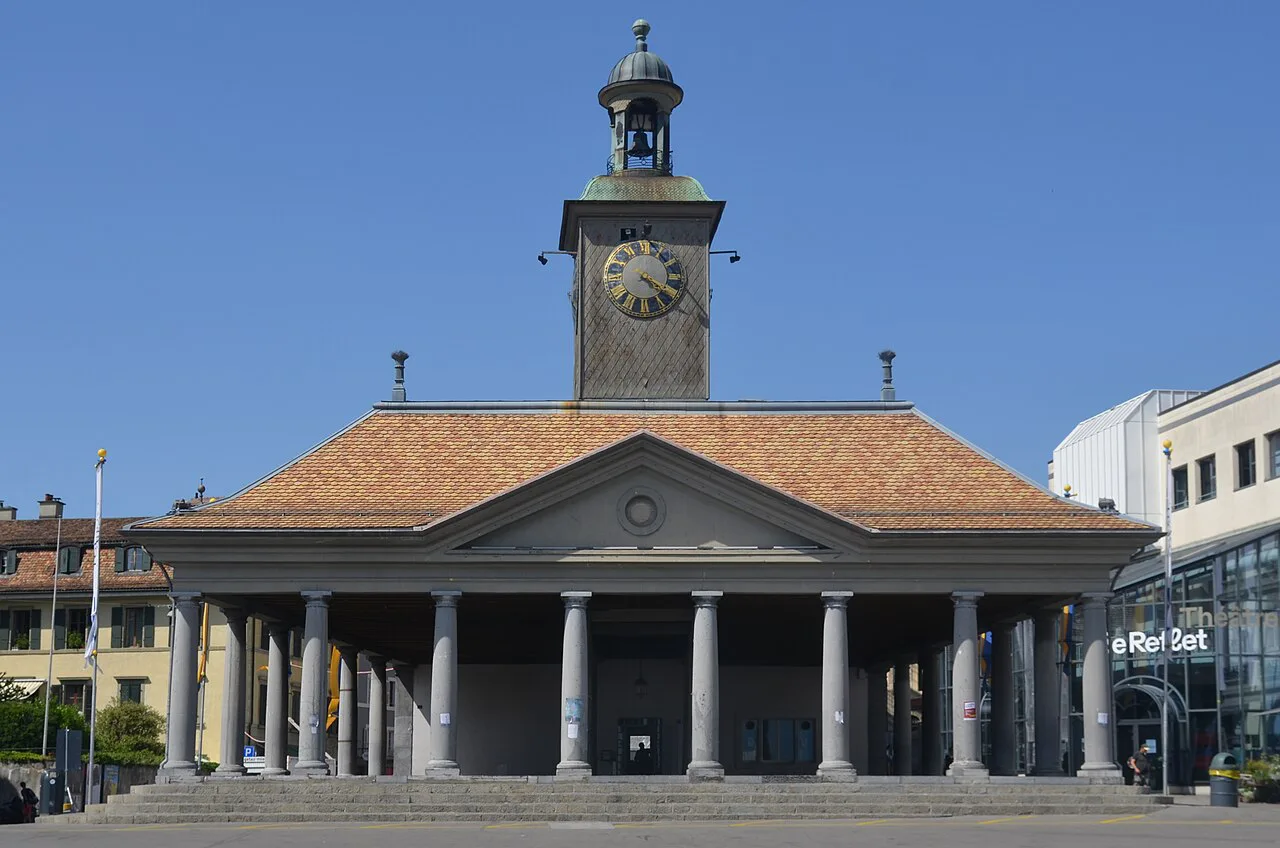
Two open spaces anchor the center: place du Marché, where the town's food and flea market runs on Tuesday and Saturday mornings, and the Grande Place, a broad square near the water. Behind and around them, narrow lanes thread past pastel facades, small boutiques and old fountains. The covered Grenette gives you a landmark to steer by and a dry spot to pause when the weather turns.
Orientation is easy once you fix the lake as your reference. Keep the water behind you and you are walking into the old core; keep it ahead and you are heading back to the promenade. Quai Perdonnet, named for a Vevey benefactor and built between 1861 and 1876, forms the town's front door and links the old streets with the shoreline path.
The lanes themselves are the attraction: cobblestones underfoot, painted shutters at eye level and small squares where streets meet. Allow time for the unplanned stop, because the pleasure here is in the texture rather than in a single monument. A guided walk through the old town can supply the historical background if you would rather listen than read plaques.
Start at Quai Perdonnet and the Lakeside Promenade
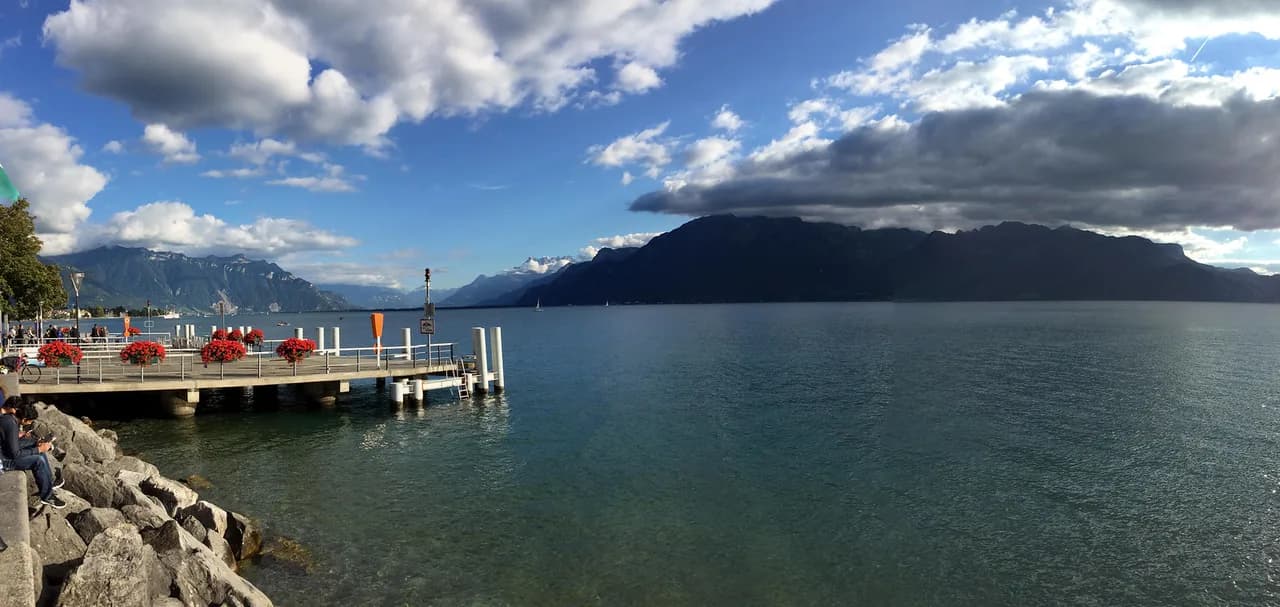
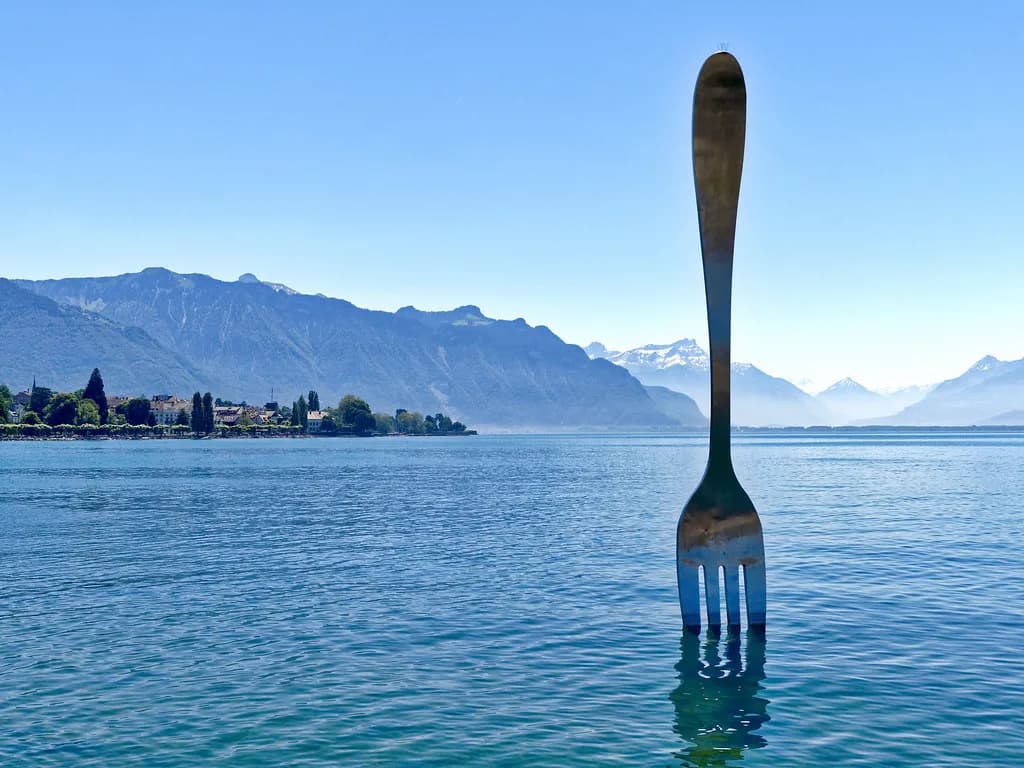
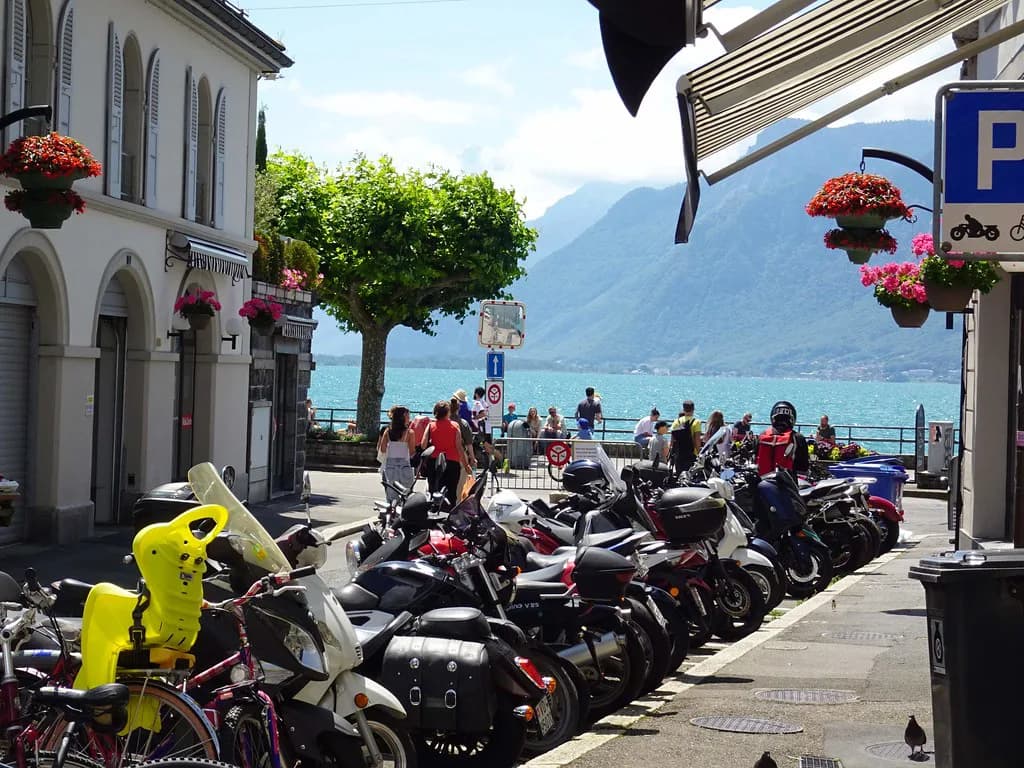
Begin on the quay and walk the promenade before turning inland. The path is lined with flowerbeds, sculptures and benches, with the lake on one side and the town on the other, which makes it the calmest way to get your bearings. The giant fork standing in the water near the Alimentarium is the easiest landmark to spot along the way.
The quay has a history worth knowing before you cross into the streets. Vevey's Musée historique marked 150 years since the first construction of quai Perdonnet with an exhibition opening on 1 April 2026 and running until 4 October 2026, drawing on plans, paintings, photographs and diving equipment to tell the story of the shoreline. If you are in town during that window, the quay becomes a two-part stop: walk it, then read its story in the museum.
The Charlie Chaplin statue sits along the promenade, a short detour that gives the walk its most photographed moment. It pairs naturally with a visit to Chaplin's World at Manoir de Ban, though that is a separate trip out of the center rather than a stop on the old-town loop.
Grande Place and Place du Marché
The Grande Place gives the town a generous open space near the water, useful for orienting yourself and for letting children run while you work out the next leg. It is the sort of square that is busiest when something is happening and quietly functional otherwise. Cross it toward place du Marché to reach the market heart of the old town.
Place du Marché is where the old town earns its reputation as a place to linger. The food and flea market sets up there every Tuesday and Saturday morning, selling produce from local growers alongside secondhand finds. Come with cash and an empty bag, and expect the surrounding lanes to be at their liveliest while the stalls are up.
Place Robin hosts a separate flea market organized by the neighborhood association, with dates published on its own calendar rather than on a fixed weekday. If browsing secondhand stalls is part of your plan, check that schedule before you go and treat it as a bonus rather than a certainty. The covered Grenette also hosts a free market with no money changing hands, held under the hall about one Sunday every three months.
Markets and When to Go
Tuesday and Saturday mornings are the strongest times to see the old town at work. The place du Marché market runs on both, while Saturday mornings from July through September add a folklore market on the same square, an institution going back more than forty years that celebrates Vaud wines and local custom. That makes a summer Saturday the single densest market morning of the week.
Outside those windows, the squares are quieter and easier to photograph. If you want the lanes to yourself and the museum without competition, a weekday morning without a market is the better trade-off. If you want atmosphere and produce, accept the crowd. The old town itself imposes no entry fee either way, so the choice costs nothing but timing.
The Historic Market Hall and the Grenette
The Grenette gives the old town a covered public room under which events and markets take place. Its free market, held roughly one Sunday every three months, operates as a sharing zone where goods are given and received without payment. Even if you miss it, the structure is a handy landmark for meeting points and a shelter when rain interrupts the walk.
Use the hall as a hinge in your route: market square on one side, lanes climbing behind it on the other. Because it sits among the streets rather than on the waterfront, it pulls you into the core, which is exactly where the old town is at its best. From there, pick any lane heading uphill and let the slope guide you.
The Lanes and Squares of the Old Core
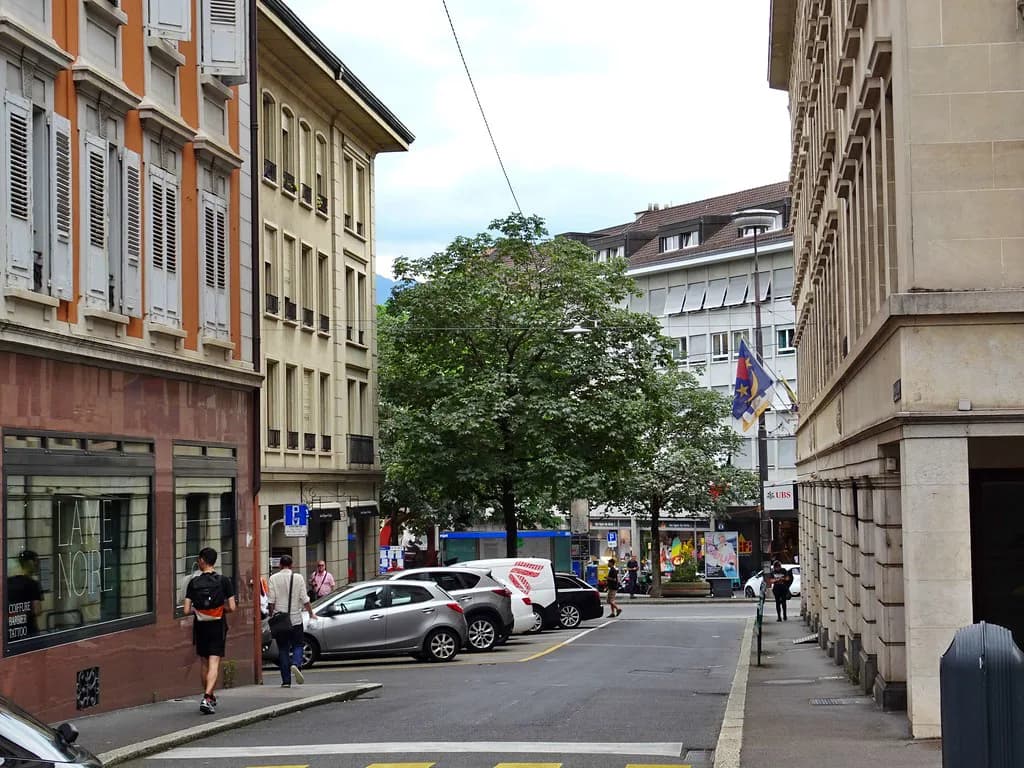
The old core is a warren of narrow streets where pastel facades, fountains and small workshops appear around each corner. There is no single must-see street; the pleasure comes from wandering a loop and letting the architecture do the work. Keep an eye out for the town's small chocolate and artisan shops tucked into ground floors.
Walking the lanes is also the cheapest thing you can do in an expensive country. If your budget is tight, this is where to slow down rather than speed up. For a sense of what the shops along these streets offer, the shopping in vevey guide covers the retail side of the center without turning the walk into a spending exercise.
Église Sainte-Claire in the Center
Église Sainte-Claire is the old town's central church, a Reformed temple on rue Sainte-Claire right in the middle of the shopping streets. Its position makes it an easy five-minute pause rather than a detour, and it gives you a quiet interior between stretches of cobblestone. Booking through the parish's online calendar is for reserving the temple, so a quiet visit needs no appointment.
Pair it with the surrounding lanes rather than treating it as a destination on its own. The building works best as part of the rhythm of the walk: market square, church, uphill lane, downhill return. That sequencing keeps the old town manageable in an afternoon.
Église Réformée de Saint-Martin and Its Terrace View
Église réformée de Saint-Martin sits by the southern entrance to the cemetery on boulevard de Saint-Martin, and its terrace looks out over Vevey. That elevated view makes it the natural end point for the uphill half of the loop, before you descend back toward the lake. It is also the one place in the core where the town's layout becomes obvious at a glance.
The climb is modest and the reward is the panorama rather than the interior. If you only have time for one church, choose between Sainte-Claire's centrality and Saint-Martin's outlook based on whether you prefer convenience or the view. Both are functioning parish buildings, so the online calendar is what you use if you want to reserve the temple for an event.
The Two Chaplin Stops
Chaplin's World at Manoir de Ban occupies the house where Charlie Chaplin lived, with recreated film sets inside and gardens looking over Lake Geneva and the Alps. It is a proper half-day outing, not a stop on the old-town loop, so give it its own slot in the itinerary. The Charlie Chaplin statue on the promenade is the free counterpart and takes only minutes.
Do the statue on your old-town day and save the museum for a separate morning. That split keeps the walking route light and avoids paying an admission ticket on a day when the streets themselves are the plan. The statue also gives you a natural photo stop between the quay and the market square.
Musée Historique de Vevey and Its Perdonnet Quay Exhibition
The Musée historique de Vevey sits at rue du Château 2 and opens Tuesday to Sunday from 11:00 to 17:00. Its Perdonnet quay exhibition, running from 1 April 2026 to 4 October 2026, uses plans, engravings, photographs and objects to trace how the shoreline was built, rebuilt and reshaped, with a section on diving equipment and images of what lies under the quay today.
Because the museum is inside the old town, the exhibition closes the loop on the shoreline walk you started at the water. Visit the museum first, then walk the quay with the story in mind, or reverse the order. Either way, treat the 2026 dates as a season rather than a permanent display.
The Alimentarium and the Giant Fork
The Alimentarium, Vevey's food and nutrition museum, stands by the lake near the giant fork sculpture that rises from the water. Together they form the most recognizable stretch of the waterfront and a natural marker between promenade and old town. The fork is free to see and quick to photograph, which makes it a good anchor for meeting up.
Whether you go inside depends on your interests and budget rather than on the old town itself. The museum carries an admission ticket, and no published price is quoted here, so check the current rate at the entrance or on the museum's own site before committing. Skipping it costs nothing and leaves the lakeside walk intact.
How Much Time the Old Town Needs
A half-day is the right allowance: two to three hours for the streets, squares and churches, plus one museum if you want one. That leaves the rest of the day for the promenade, the statue and a slow lunch. If you are combining Vevey with the vineyards or the funicular, keep the old town to the morning and take the separate outing after lunch.
A sensible half-day plan starts at quai Perdonnet, crosses to the Grande Place and place du Marché, dips into Sainte-Claire, climbs to Saint-Martin for the view, then returns to the lake past the Alimentarium and the Chaplin statue. It is a loop, not a straight line, so you can cut it short at any point. If you want to weigh whether Vevey deserves the slot against other Swiss stops, is vevey worth visiting lays out the honest case.
Money and Timing Trade-Offs
Walking the old town costs nothing, which makes it the most budget-friendly part of a Vevey day. Markets are free to browse, and the squares and churches do not charge admission. Museum tickets are where the money goes, so decide in advance whether Chaplin's World, the Alimentarium or the Musée historique earns your budget and skip the rest without regret.
Timing matters as much as money. Many Swiss museums close on Monday, and the Musée historique follows a Tuesday-to-Sunday pattern, so a Monday visit means focusing on streets and squares. Weekday mornings without a market give you quiet lanes; Tuesday and Saturday mornings give you the market bustle. Choose the version of Vevey you came for.
Where the Old Town Stops
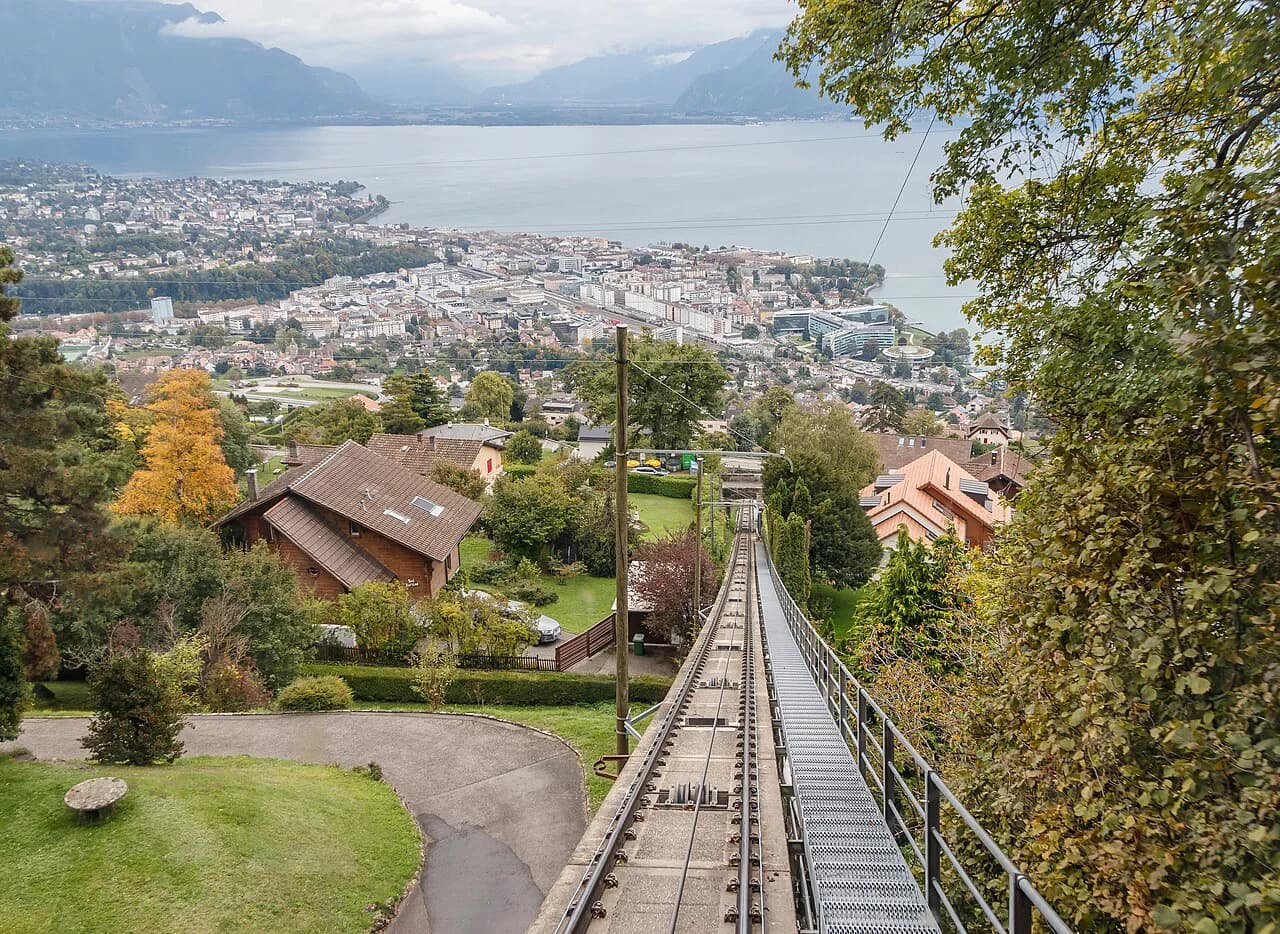
The old town ends where the excursions begin. The Lavaux terraced vineyards and the Mont Pèlerin funicular are separate outings with their own transport and timing, and neither belongs inside a walking loop of the center. For the funicular specifically, the vevey funicular guide covers the ascent and what waits at the top.
Keeping those outings separate keeps the old town honest. It is a small, walkable core rather than a full-day attraction, and its appeal comes from that modesty. If you try to bolt Lavaux onto the same morning, the lanes get rushed and the market gets missed.
Plan Your Walk
Vevey's old town works best as a slow loop from the quay through the squares and back to the lake, timed around a Tuesday or Saturday market morning or a quiet weekday. Pair it with one museum, keep the separate outings for another day, and let the streets themselves be the main event.
Before you go, confirm the current opening hours of whichever museum you plan to enter and the season dates of the market you want to see, since those details change with the calendar. For the broader menu of sights around town, the Vevey Attractions hub collects the individual guides in one place.
Explore more Vevey guides
Frequently Asked Questions
Is Vevey old town worth visiting?
Yes, if you want a compact, walkable historic center rather than a blockbuster sight. The old town offers cobblestone lanes, pastel facades, two churches, a market square and a small history museum, all within an easy loop between the lakefront and the slope above. It costs nothing to walk, which makes it a sensible half-day in an expensive country.
How long does it take to walk Vevey old town?
Two to three hours covers the lanes, squares and churches comfortably, and adding one museum brings it to a half-day. The core is compact enough to loop more than once without transport, and you can cut the route short at any point if time runs out.
Which day is market day in Vevey?
The food and flea market runs on place du Marché on Tuesday and Saturday mornings. On Saturday mornings from July through September, a folklore market celebrating Vaud wines takes place on the same square. A separate flea market on place Robin follows its own published calendar.
Are Vevey's museums open on Monday?
The Musée historique de Vevey opens Tuesday to Sunday from 11:00 to 17:00, so Monday is not a museum day there. Other museums keep their own schedules, so confirm the one you plan to enter before setting out.
What is the Grande Place in Vevey known for?
It is one of Switzerland's largest open market squares and a broad gathering space near the waterfront. It works as an orientation point between the quay and the older lanes rather than as a ticketed sight.
Where is the Charlie Chaplin statue in Vevey?
It stands along the lakeside promenade, a short walk from the old town and easy to combine with the quay and the giant fork. Chaplin's World at Manoir de Ban is a separate outing outside the center.
Is Vevey old town walkable from the train station?
Yes, the center is compact and the station sits close enough that you can walk into the old town and reach the waterfront on foot. Trains from Geneva take roughly an hour and ten minutes according to published guides, so a day trip is feasible.
Sources
Notes for your Swiss city break
Optional updates to our Swiss city guides.
You might also like
Continue reading
More guides you'll find useful