
Hinterdorf Zermatt: A Guide to the Old Village Quarter
Hinterdorf is Zermatt's old quarter, the rear village, where more than thirty buildings from the 16th to the 18th century survive in a tight cluster of dark timber. It is not a museum with a gate and a ticket desk: it is a lived-in quarter you walk through, and forty-five minutes at an unhurried pace covers the lanes, the granaries and the fountain. The reward is in the details, especially the flat stones on the granary piers that most visitors pass without noticing.
What Hinterdorf is
The name translates as rear village, and that is exactly where it sits relative to the newer center: behind and above the streets of shops. The old part of Zermatt, as it is known, preserves barns, stores, stables and houses built between the 16th and 18th centuries, all packed closely together. This is the best free lesson in how a Valais mountain village was actually built, and it takes no planning beyond walking into it.
Treat Hinterdorf as a quarter rather than a sight. There is no single headline building to queue for, so the visit works best as a slow loop with stops: a lane of larch houses, a group of granaries, the fountain, and the church just beyond. If you are working through the wider Zermatt Attractions: 8 Visitor Guides, this is the one entry in the set that costs nothing and needs no weather window.
Where Hinterdorf sits in Zermatt
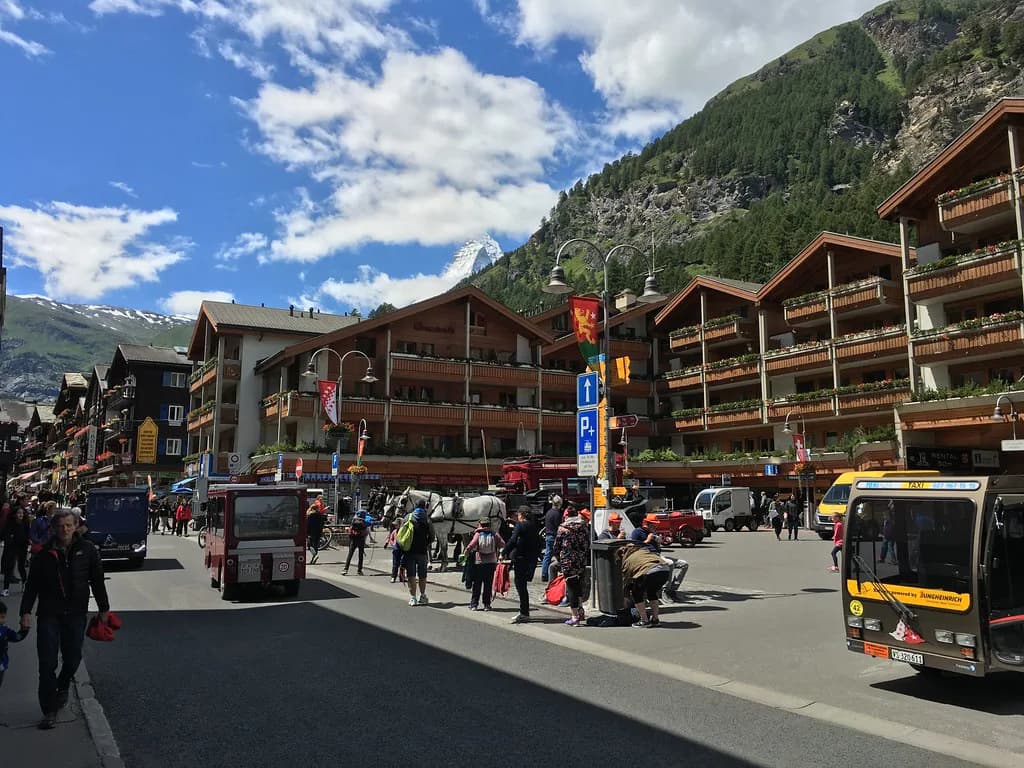
Zermatt is car-free, and the whole old quarter lies inside the village center, a short walk from the main street and the Matter Vispa river. The river runs through the middle of town, and the Hinterdorf lanes climb gently away from it on the older side. Because the center is compact, you reach the timber houses on foot from almost anywhere in the village.
Look at the orientation before you set off: the village is dense, houses and shops stand close together, and the lanes of the old quarter are narrow enough to miss if you keep to the main street. The practical approach is to walk the center once, note where the timber buildings begin, then return and go slowly. The Zermatt Neighborhoods: 4 Area Guides help if you want the center mapped before arrival.
Getting there from the station
Arriving by train puts you at Zermatt station, in the middle of the car-free village, with the old quarter a few minutes away on foot through the center. Walk toward the river and the older streets behind the shopfronts rather than following the main shopping stretch, and the timber houses appear quickly. Allow roughly ten to fifteen minutes at an easy pace from the platform to the first granaries, with the caveat that exact timing depends on where you start counting. If you want to know which of the surrounding lanes you are standing in, the guide to Zermatt Neighborhoods maps the center before you arrive.
No bus, taxi or ticket is involved, which is the honest reason Hinterdorf suits a spare hour before or after a mountain excursion. Electric village vehicles serve luggage and deliveries, not sightseeing, so plan on your feet. Sturdy shoes help after rain, when the lanes and stone piers are slippery.
The larch houses and their shutters
Start with the houses themselves: timber walls weathered almost black, shutters thrown open in summer, geraniums in most of the window boxes and edelweiss in some. The effect is a street of working mountain houses rather than a preserved exhibit, and it is the reason the quarter photographs so well. Look at the joints and the thickness of the walls, not just the flowers.
The wood is larch, which grows locally and resists pests through its high resin content. That single fact explains why these buildings have lasted four centuries without paint or chemical treatment, and it is worth knowing before you judge them as simply old. The same timber appears across the Valais, so the quarter doubles as a primer for village architecture elsewhere in the canton.
The granaries and their mouse-stones
The set piece of Hinterdorf is the group of granaries raised clear of the ground on stone piers, each pier capped with a flat round stone. The cap is the clever part: mice can climb the pier but cannot pass the overhanging disc to reach the store above. Once you know what the discs are for, the lanes read differently, and you will spot the same detail on storehouses throughout the old quarter.
Walk around one granary rather than past it. The gap beneath the floor also kept damp and vermin out of the grain, and the separate small store buildings kept the harvest away from the living quarters. Give the cluster fifteen minutes of your time; it is the most concentrated piece of old Zermatt in the village.

Modern Zermatt beside the old
The quarter is not frozen in time. Modern hotels stand alongside the older timber houses, often within a few meters, and the contrast is part of what makes the streetscape legible: dark larch on one side, glass and concrete on the other. That mix also means Hinterdorf is a real neighborhood with residents, so keep voices low in the lanes and doorways.
If you want the fuller picture of how the resort grew from an agricultural village into a mountaineering destination, the Matterhorn Museum – Zermatlantis covers that story indoors. It makes a sensible pairing with a Hinterdorf walk on a wet or cold day, when the lanes are better seen quickly and the exhibits carry the history.
The Ulrich Inderbinen fountain
A fountain in the street is dedicated to Ulrich Inderbinen, the Zermatt guide born in 1900 who climbed the Matterhorn 371 times and made his last ascent at 89, in 1990. The figures are the point: this was a working guide whose career spanned most of the twentieth century, and the fountain marks him in the middle of the old quarter rather than in a museum. Stop long enough to read the name, then look up at the mountain he climbed.
The fountain is also a useful landmark for navigating the lanes, which bend and fork without street signs that mean much to a first-time visitor. Use it as a fixed point: the granaries lie on one side, the church on the other, and the main street is downhill. That mental map is enough for the whole quarter.
The English Church nearby
A few minutes from the old quarter stands the English Church, consecrated in 1870, a measure of how many British guests were already coming to Zermatt by then. The church is tied to the early climbing history: the first ascent of the Matterhorn in 1865 was led by Edward Whymper, and of the seven men who reached the summit only three came down alive. The remains of the Reverend Charles Hudson, who died on the descent, lie under the main altar.
Treat the church as the second stop on the same short walk rather than a separate outing. The building is small, the interior quiet, and the connection to 1865 gives the surrounding streets more weight than the shopfronts suggest. Opening times vary, so check at the door or with the Zermatt tourist office on the day.
Matterhorn views at the end of the streets
In the center, the Matterhorn shows at the end of most streets, framed between roofs and chimneys as you walk. Hinterdorf is the best place to catch that composition, because the dark timber and the steep lanes give the mountain a foreground. The light is best early, before the peak softens into haze.
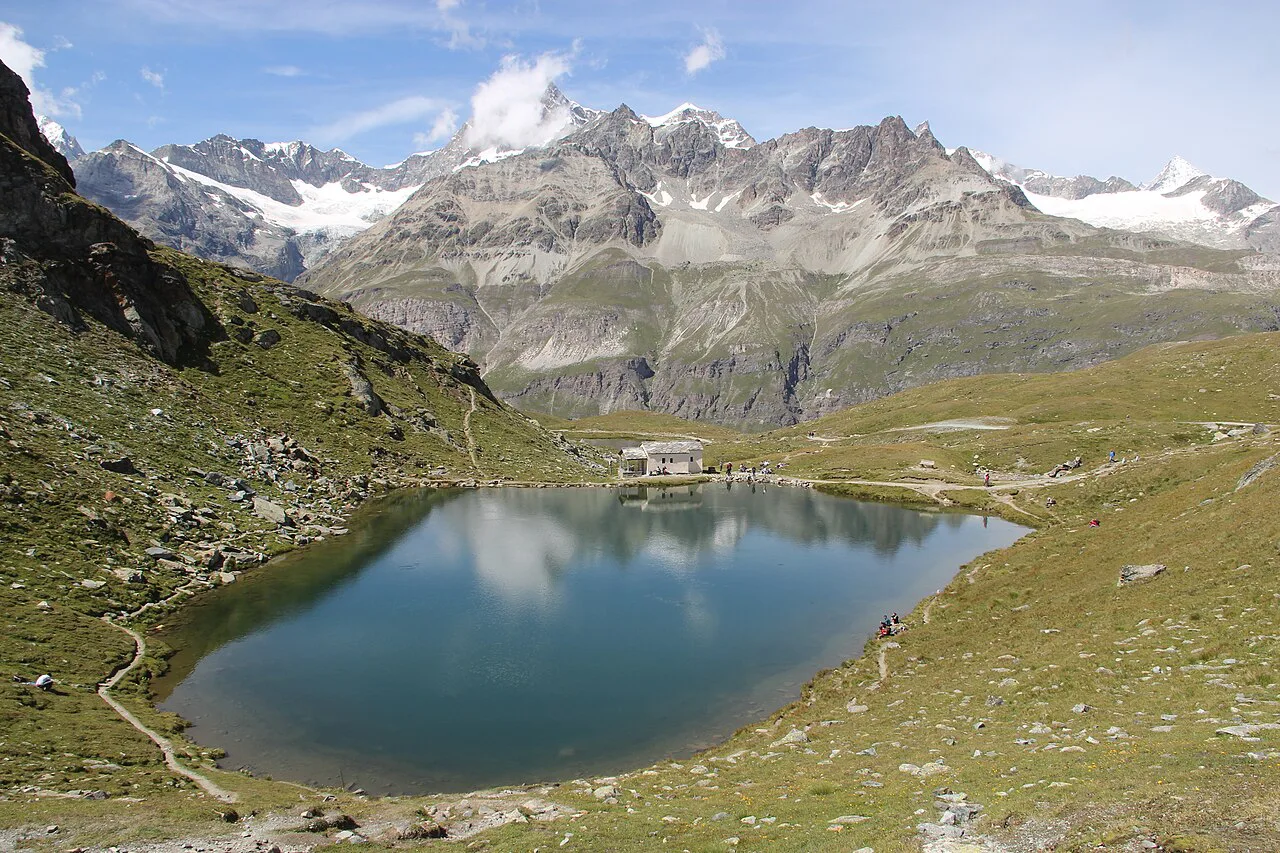
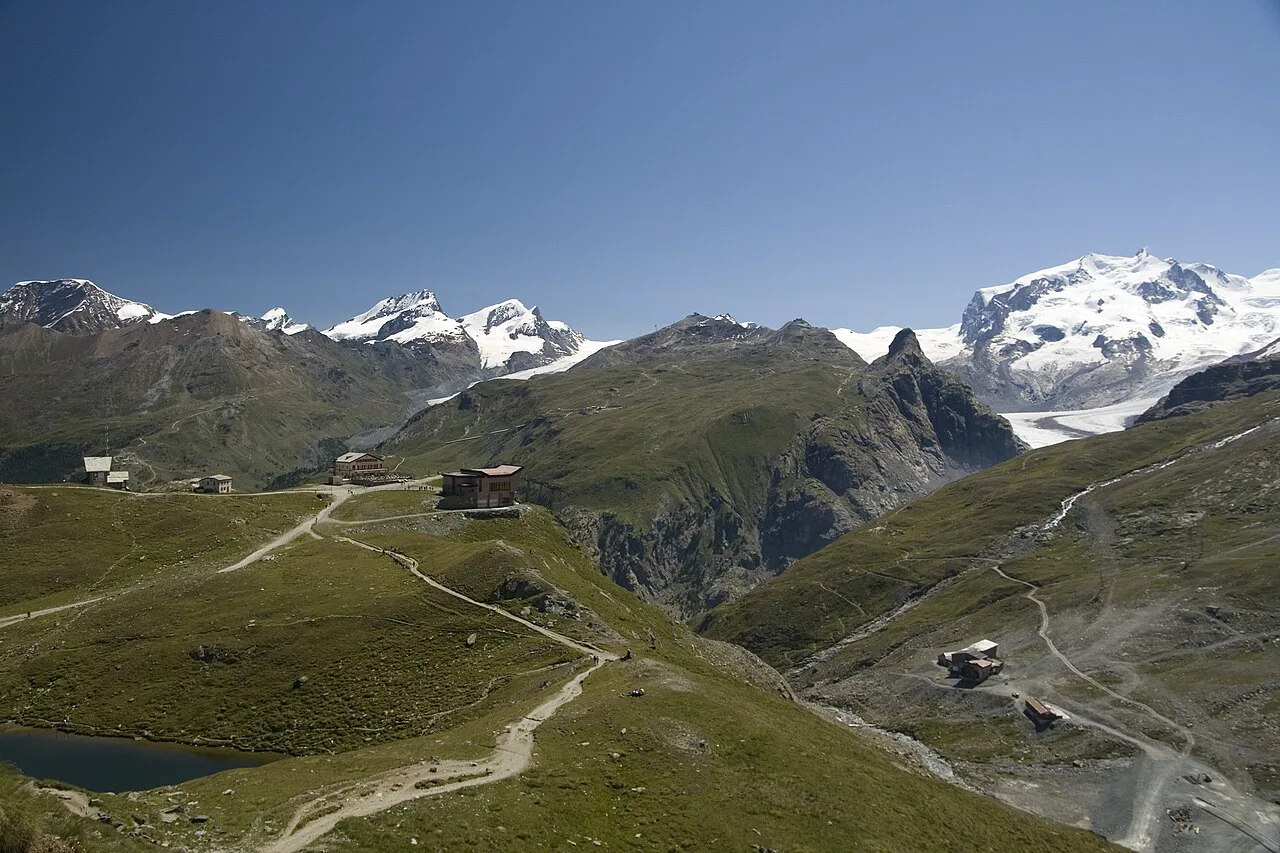
If the peak itself is the goal, the Pennine Alps ridge above the village offers the classic close-up, and the Gornergrat railway climbs to a ridge at 3,100 m with the Gorner Glacier below. Both are half-day outings from the village and pair naturally with a morning in the old quarter. Save them for a clear day and keep Hinterdorf for the hours in between. If you are weighing when to make the climb, the best time to visit Zermatt guide covers the seasons.

How much time to allow
Budget forty-five minutes to an hour for Hinterdorf itself: fifteen for the granaries, ten at the fountain, a slow pass through the lanes, and the short walk to the English Church. That is enough to see it properly without turning a compact quarter into a half-day. Add twenty minutes if you stop for photographs at the street ends where the Matterhorn appears.
The honest trade-off is that Hinterdorf has no café, no shop and no bench circuit of its own, so it works as a first-morning orientation walk or a late-afternoon loop before dinner. It also fits neatly around a mountain excursion: see the quarter early, ride up, and return through the lanes at dusk. For seasonal light and crowds, Best Time to Visit Zermatt lays out the year.
Tickets, hours and access
There is no ticket desk, gate or published opening time for the Hinterdorf lanes; the quarter is part of the village and you walk through it. Individual buildings are private homes and stores, so admire them from the lane rather than testing doors. Any occasional closure or access restriction is announced locally, and the Zermatt tourist office is the place to confirm it on the day.
Practical points for a short visit
The lanes are cobbled and uneven, with short climbs, so wear shoes with grip and skip the wheeled luggage. Rain makes the stone piers and paving slick, and the timber walls offer little shelter in a downpour. In winter the same lanes hold snow and ice, which changes the walk from a stroll into something slower; check conditions before setting out.
Because Zermatt is car-free, everything in the center is reached on foot, and Hinterdorf is no exception. Keep the visit short and unstructured, and let the granaries and the fountain set the pace. If you have a full day, the Sunnegga funicular climbs to 2,300 m in about four and a half minutes, which makes a morning in the old quarter and an afternoon above the valley easy to combine.
Fitting Hinterdorf Into a Zermatt Day
Hinterdorf is the part of Zermatt that explains the rest of it: larch houses, granaries on their mouse-stones, the Inderbinen fountain and the English Church, all within a short walk of the station. Give it an hour on your first morning, before the mountain excursions and the shops, and the village will make sense for the rest of the stay.
Explore more Zermatt guides
Frequently Asked Questions
What is Hinterdorf in Zermatt?
Hinterdorf is Zermatt's old quarter, literally the rear village, where more than thirty buildings from the 16th to the 18th century survive in a tight cluster of dark timber lanes. It is a lived-in neighborhood rather than a ticketed museum, and you walk through it on foot.
How old are the buildings in Hinterdorf Zermatt?
The surviving barns, stores, stables and houses were built between the 16th and 18th centuries, which makes them the oldest standing architecture in the village center. They are built mainly of larch, a local wood whose high resin content resists pests.
Why are the granaries in Hinterdorf raised on stone piers?
The granaries stand clear of the ground on stone piers, each capped with a flat round stone. The overhanging cap stops mice climbing the pier into the store, and the raised floor also kept damp away from the grain.
How long does it take to see Hinterdorf?
Allow forty-five minutes to an hour for the quarter itself, including the granaries, the fountain and the short walk to the English Church. Add twenty minutes if you want photographs at the street ends where the Matterhorn appears.
What is near Hinterdorf in Zermatt?
The English Church, consecrated in 1870 and linked to the 1865 Matterhorn ascent, stands a few minutes away, and the Matterhorn Museum – Zermatlantis covers the village's climbing history indoors. The Ulrich Inderbinen fountain sits within the old quarter itself.
Do you need a ticket to visit Hinterdorf?
No ticket is needed for the lanes, because Hinterdorf is part of the village and you walk through it. The buildings themselves are private homes and stores, so view them from the street rather than trying doors.