
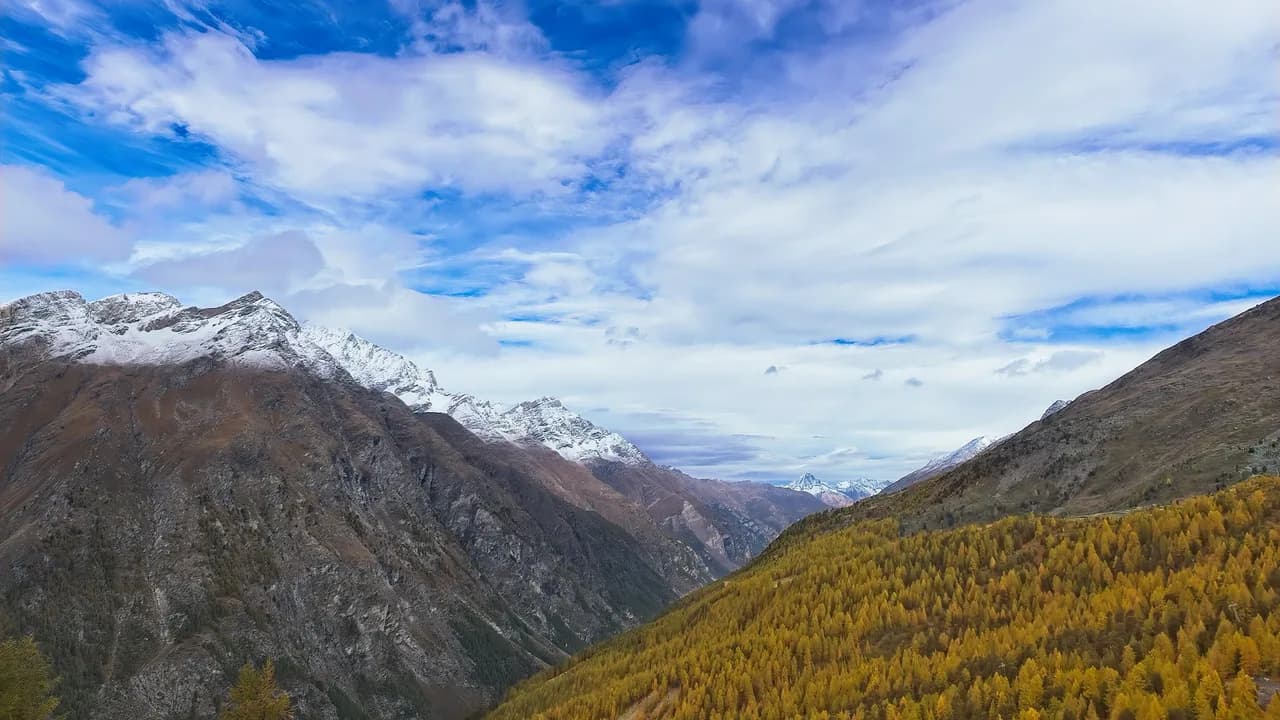
Sunnegga: Zermatt's Sunny Terrace Above the Village
Sunnegga is the first station on the lift chain that climbs from Zermatt toward Rothorn, and it is where most riders step out for their first clear look at the Matterhorn. The bottom station sits on Vispastrasse, about a six-minute walk from the Zermatt train station, so you can be on the mountain shortly after arriving in town. The ride itself is short and entirely inside a tunnel, which means the payoff comes when the doors open, not along the way.
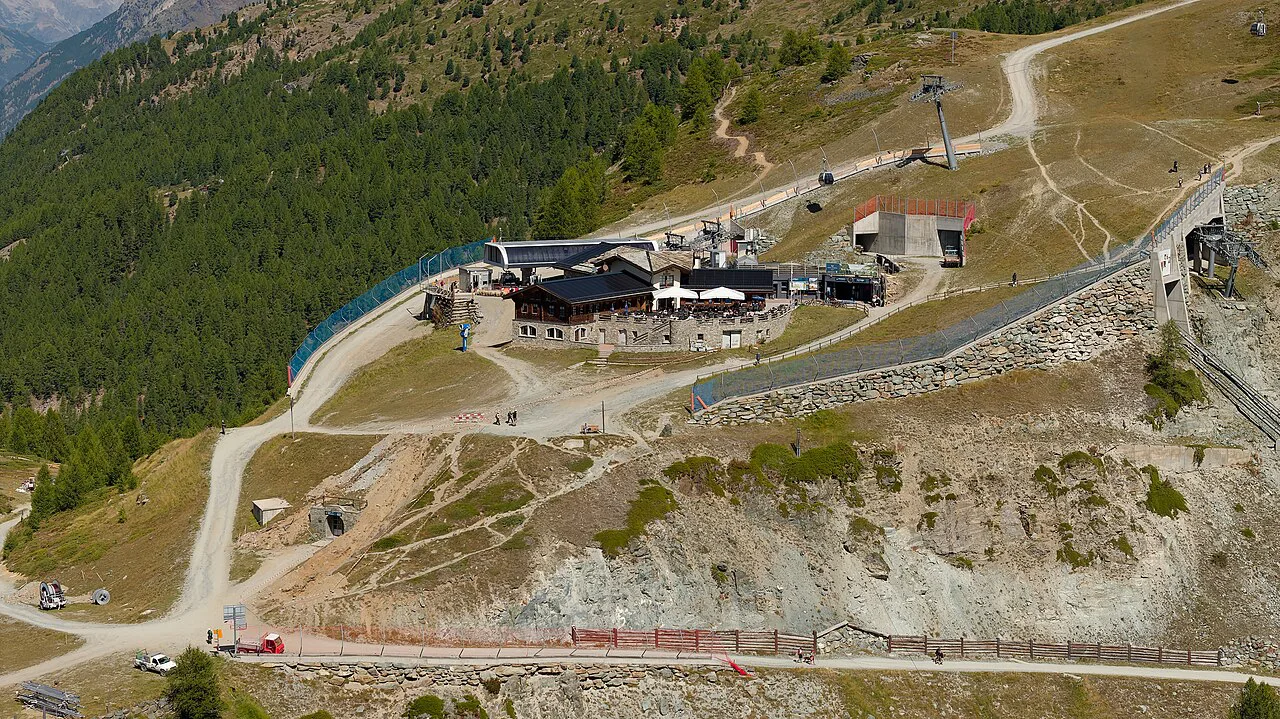
What makes Sunnegga worth more than a photo stop is the layering: a restaurant terrace, viewpoints right at the station exit, trails weaving through open slopes, and the small lake of Leisee just below. From here the same ticket route continues by gondola to Blauherd and by cable car to Rothorn, so Sunnegga works equally well as a quick viewpoint or as the start of a half day higher up.
Where Sunnegga is and how to reach the bottom station
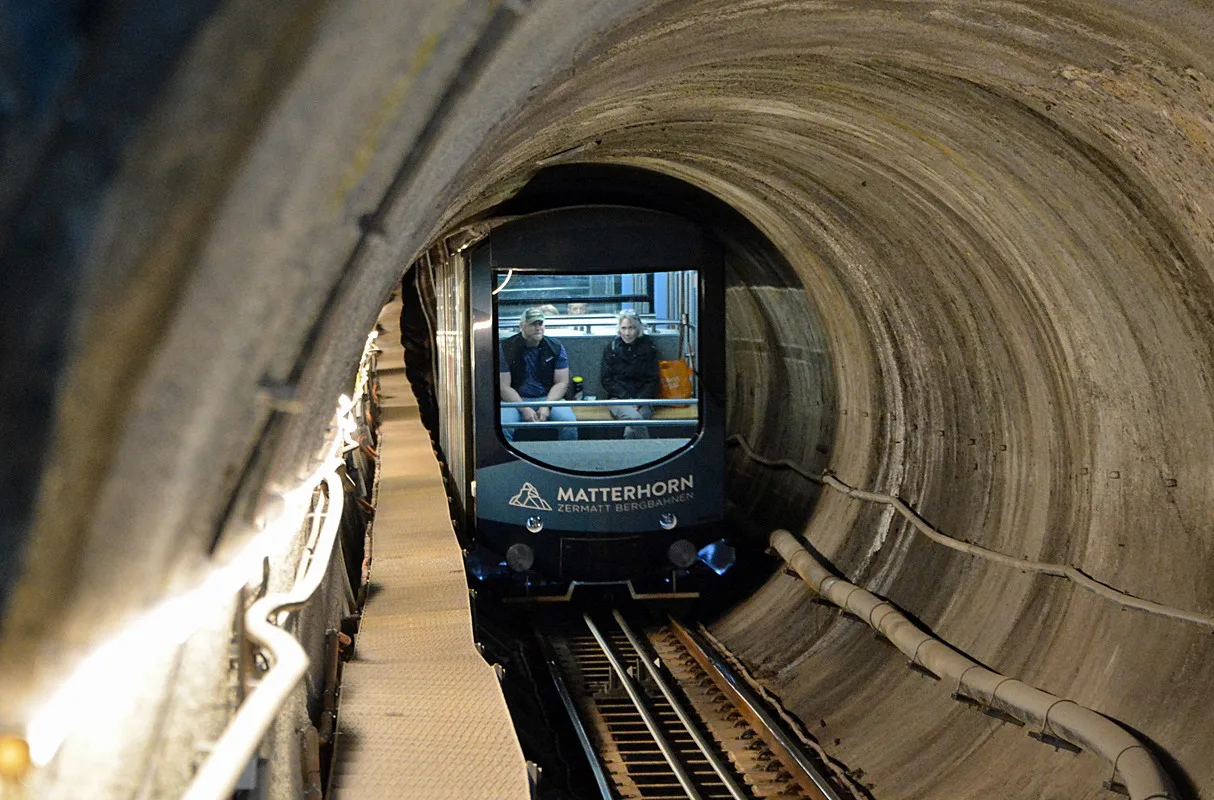
The valley station is signed as the Sunnegga Blauherd Rothorn funicular and stands on Vispastrasse, roughly a six-minute walk from the Zermatt train station. From the street entrance you walk through a long tunnel to reach the funicular platform, then pass a turnstile and climb stairs on either side of the track to board. First-time riders often expect a cable car from the street, so knowing about the tunnel walk saves confusion.
Zermatt is car-free in its core, so arriving on foot from the station or from a hotel along the main street is the normal approach. Allow a little buffer if you are connecting from a train, since the walk plus the tunnel adds up. The surrounding village is compact and well signposted for lifts, which makes the bottom station easy to find without a map.
The ride up: a short funicular in a tunnel
The funicular takes about five minutes to travel from Zermatt to Sunnegga and stays inside a tunnel for the whole ride. That means no mountain view during the ascent, a detail worth knowing if you are choosing between lifts for the scenery. Treat the ride as transport and save your attention for the terrace.
In peak season the first funicular leaves Zermatt at 8:00 am, and the last descent from Sunnegga is at 6:00 pm. Starting early matters for more than crowds: clouds often build around the Matterhorn from midday into the afternoon, and the clearest views tend to come between sunrise and about 10 am. A morning slot at Sunnegga is the single best decision for photography on this side of the valley.
Views from the top
Matterhorn sightlines open up as soon as you leave the station, and they continue from the restaurant terrace and from the trails that thread through the slopes around Sunnegga. Because the terrace faces the peak across the valley, you do not need to commit to a long walk to get a good look. Pick a clear morning and the peak reads sharply against the sky.
The position also gives you a sense of the surrounding range, with the Matterhorn anchoring one side of the view and the upper stations of the lift chain visible above. This is a low-effort viewpoint compared with the summit stations farther up, which suits travelers who want the panorama without a long day at altitude.
Walk down to Leisee
Below the Sunnegga station lies Leisee, a small lake reached by a short downhill walk, with a playground and a wooden raft that kids pull themselves across the water on. It is an easy add-on if you are traveling with children and want to break up the lift rides with something hands-on. The walk back up to the station is short but gains height, so plan the order of your day around it.
Keep the lake visit modest in scope: this is a family pause rather than a destination in itself, and the terrain around it is steep in places. Sturdy shoes help on the gravel paths between the station and the water. From the lake you can rejoin the station or continue on the trails that fan out across the slopes.

The onward lifts: Blauherd and Rothorn
From Sunnegga a gondola climbs to Blauherd, and from Blauherd a large cable car continues to Rothorn, where you step out onto Unterrothorn, one of the highest lift-accessible viewpoints above Zermatt. Each stage adds altitude and a wider panorama, so the trade-off is time and ticket cost against a bigger view. If you only have a couple of hours, staying at Sunnegga and walking to Leisee is the sensible choice.
Blauherd is the trailhead for the Five Lakes Trail, a 10 km walk past five alpine lakes, and for the shorter out-and-back to Stellisee, about 3 km round trip and an hour at an easy pace. Stellisee is where the classic reflection shot of the Matterhorn is taken, though it only works on a still day. The walk from the Blauherd station to the lake takes about 20 minutes.
Hiking out of Sunnegga: the Gourmet Trail to Findeln
The Gourmet Trail drops from Sunnegga toward Findeln, a hamlet of mountain restaurants about 2 km, or just over a mile, downhill from the station, a walk of roughly 30 minutes with some moderately strenuous sections. The restaurants clustered there include Adler Hitta, Findlerhof, Enzian and Chez Vrony, and Chez Vrony is a Michelin-starred table where advance booking is advised. These kitchens are not open seven days a week, and Enzian has been shut on a Monday, so match your day to the house you want.
The real decision comes after lunch. From Adler Hitta, the closest restaurant to Sunnegga at about 1 km away, the shorter option is a climb back up to the station and the funicular down. From Chez Vrony, Findlerhof and Enzian, the walk back up to Sunnegga runs about 45 minutes uphill, while the forest descent to Zermatt takes around an hour and is steep and largely viewless. Most people find the descent to the village the easier finish after a long lunch.
Mountain carts and kickbikes down the mountain
Mountain carts are rented at the Blauherd station and ridden down gravel roads to Sunnegga, a fast and popular way to cover the middle section of the mountain. Multi-ride packages exist if you want to take the gondola back up and repeat the run. Kickbikes offer a similar self-powered descent from the Sunnegga area toward the village.
Both are weather-dependent activities on open gravel, so they suit dry summer days rather than shoulder-season visits. Ask at the Sunnegga lift station ticket desk whether the carts are running when you buy your lift ticket.
Tickets, hours and seasonal closures
A peak-season return ticket from Zermatt to Rothorn, valid July 1 through August 31, costs 89 CHF, and fares are slightly lower outside that window. If you ride up to Rothorn and then take the cable car back down only as far as Blauherd, the combined cost is 74 CHF at peak season, made up of 55 CHF for Zermatt to Rothorn and 19 CHF for Rothorn to Blauherd. Building a one-way day with a mountain cart or a walk down saves money against a full return.
In peak season the last descents leave Rothorn at 4:50 pm, Blauherd at 5:10 pm and Sunnegga at 6:00 pm, which sets a firm end point for any walk you plan from the upper stations. The lift route closes for maintenance twice a year, from early May to mid-June and again from early October to mid-November, and the Blauherd to Rothorn cable car runs on a shorter summer window, listed as June 27 to October 4 for 2026. Check the published timetable on the sunnegga site before you build a day around the top station.

How much time to allow
A simple visit, riding up, taking in the views, walking to Leisee and riding back down, fits comfortably into two hours. Adding the gondola to Blauherd and the walk to Stellisee pushes that to half a day, and continuing to Rothorn on the cable car fills most of a morning. The full Gourmet Trail with lunch in Findeln and a walk down to Zermatt is a full day out.
The lift chain rewards working downward rather than yo-yoing: ride all the way to your highest point first, then descend station by station on foot or by lift. That pattern keeps you ahead of the midday cloud build-up around the peak and avoids paying for repeated ascents.
Nearby options above Zermatt
Sunnegga is one of several lift access points above the village. On the opposite side of the valley, a cogwheel train climbs to Gornergrat for a sweeping view that takes in the Gorner Glacier, and the Matterhorn Glacier Paradise lifts reach Klein Matterhorn, the highest cable car station in Europe. Each offers a different angle on the same peak, so pick according to how high you want to go and how much time you have. If you are still deciding which base suits your trip, the Zermatt Neighborhoods guide breaks down the areas of the village.
Plan Your Visit
Sunnegga works best as an early start: catch the funicular close to opening, take in the Matterhorn from the terrace, walk down to Leisee if you have children in tow, and then decide whether the day continues upward or downhill through Findeln. Booking the lift ticket to match that plan, rather than buying a full return out of habit, keeps the cost in line with what you actually ride.
Travelers weighing when to come should note that the upper cable car runs a shorter season than the funicular, so a spring or late-autumn visit may stop at Blauherd or Sunnegga itself. Building the day around the funicular and the terrace keeps Sunnegga useful even when the highest stage is closed. For a broader look at snow cover, crowds and lift schedules across the year, this guide to the best time to visit zermatt pairs well with planning this side of the valley, much as our Zermatt Neighborhoods guide helps you choose where to stay in the village.
Explore more Zermatt guides
Frequently Asked Questions
Where is the Sunnegga funicular station in Zermatt?
The valley station sits on Vispastrasse, about a six-minute walk from the Zermatt train station. From the street you walk through a long tunnel to reach the funicular platform, then pass a turnstile and climb stairs beside the track to board.
How long does the funicular take from Zermatt to Sunnegga?
The ride takes about five minutes and stays inside a tunnel for its entire length, so there is no mountain view during the ascent. The view arrives when you step out at the Sunnegga station.
What can you do at Sunnegga?
You can take in Matterhorn views from the station exit, the restaurant terrace and the surrounding trails, walk down to Leisee with its playground and wooden raft, follow the Gourmet Trail toward the Findeln restaurants, or continue by gondola to Blauherd and by cable car to Rothorn.
How much does a ticket to Sunnegga or Rothorn cost?
Fares are set by the lift operator and vary by season and by how far you ride. Check the Matterhorn Paradise ticket pages for the current price of the segment you plan to use before you buy.
When do the lifts to Sunnegga and Rothorn run, and when do they close?
In peak season the funicular starts at 8:00 am, with last descents from Rothorn at 4:50 pm, Blauherd at 5:10 pm and Sunnegga at 6:00 pm. The route also closes for maintenance in late spring and again in autumn, and the top cable car runs a shorter summer window, so confirm the published timetable for your dates.
Is the walk from Sunnegga to Findeln steep?
The descent to Findeln is about 2 km and takes roughly 30 minutes with some moderately strenuous sections. The climb back up is the harder part: about 45 minutes uphill from the lower restaurants, or roughly an hour of steep forest descent to Zermatt instead.