
Matterhorn: Seeing the Peak from Zermatt and Climbing It
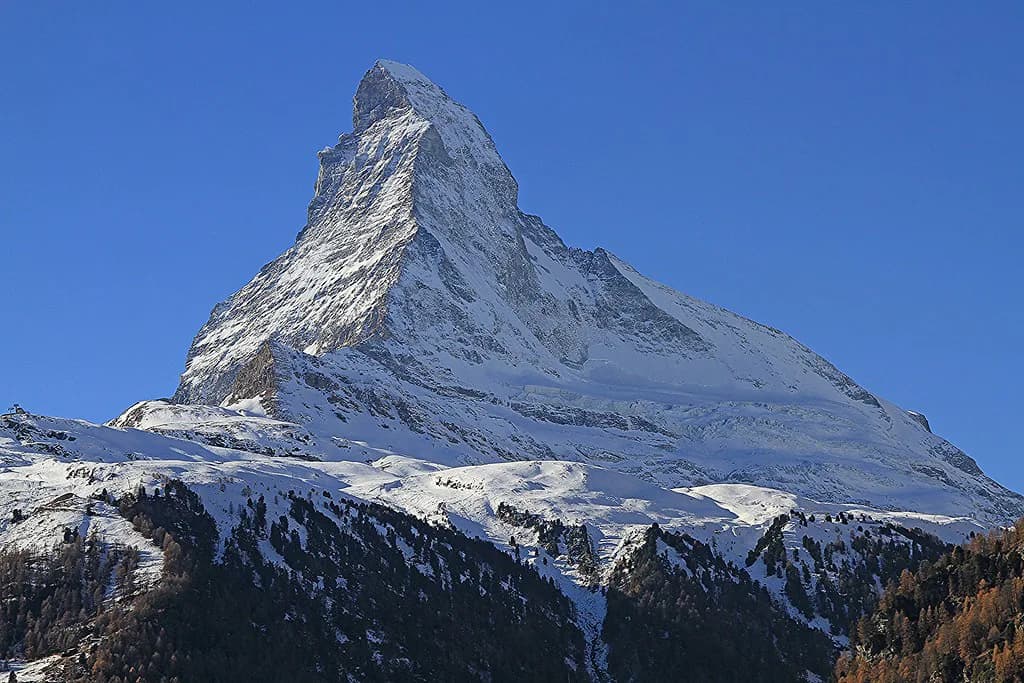
The Matterhorn is the 4,478-meter (14,692 ft) near-symmetric pyramid that rises directly above Zermatt on the Swiss-Italian border, and you can see it without leaving the village. Seeing the peak and climbing it are two very different trips: one needs a free afternoon and a cable-car ticket, the other needs a guide, conditioning and time at altitude.
This guide separates the two. It covers where the peak sits, which streets and lift stations frame it best, what the Matterhorn Museum – Zermatlantis adds to the story, and how long each option takes.
Why the Matterhorn Is So Famous
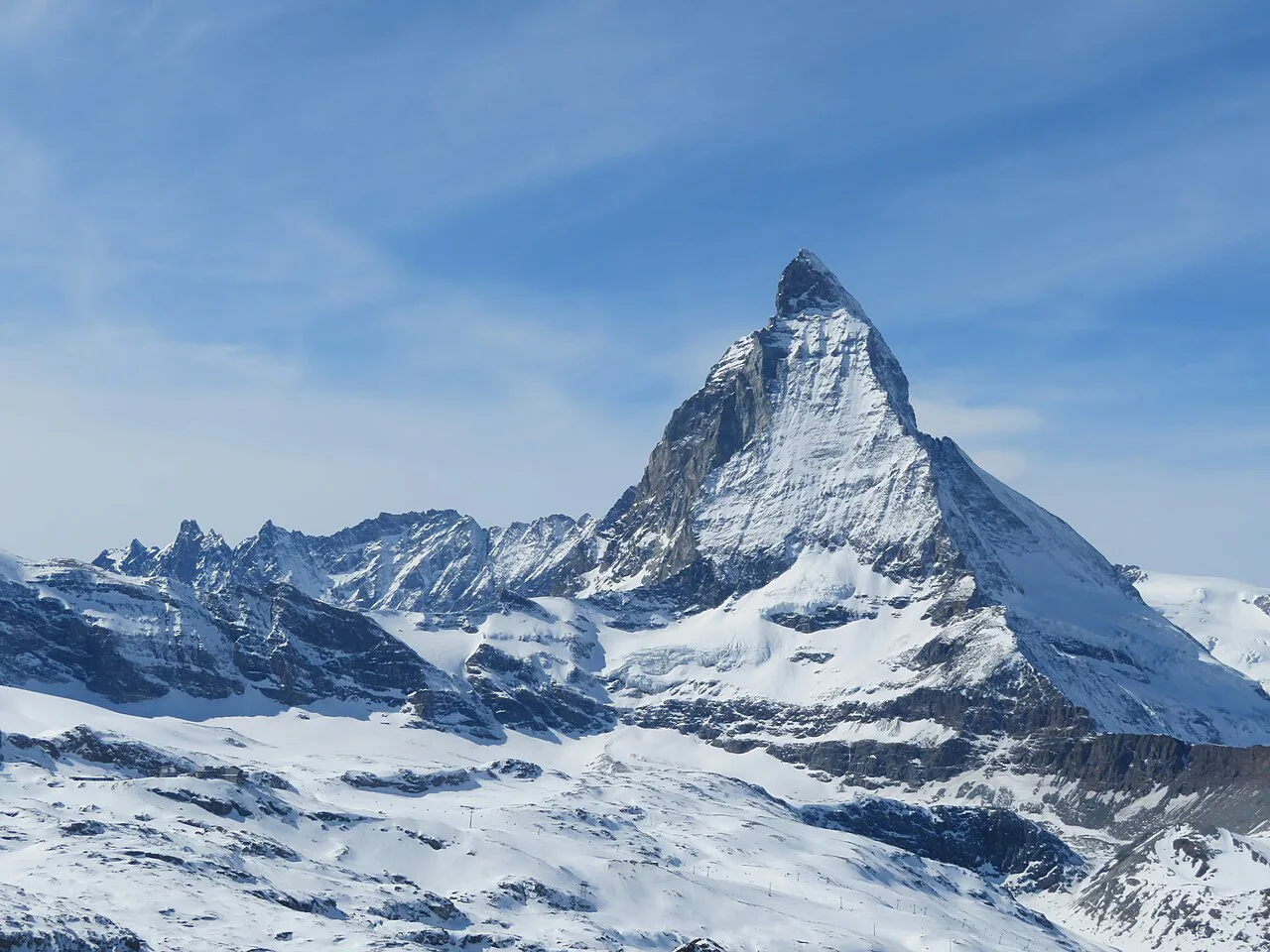
The shape does most of the work. The Matterhorn is a large, near-symmetric pyramidal peak in the extended Monte Rosa area of the Pennine Alps, and its four faces align so cleanly that it reads as a single triangle from Zermatt. Few mountains of that height look so isolated and so regular at the same time.
The second reason is the 1865 first ascent and its aftermath. Four of the seven climbers died on the descent, and the broken rope from that expedition is now displayed in the village museum. That story of triumph and loss spread well beyond Switzerland and fixed the peak in the public imagination.
Where the Matterhorn Sits
The summit stands on the border between Switzerland and Italy, above Zermatt on the Swiss side and Breuil-Cervinia on the Italian side; Italians call the mountain Monte Cervino and the French Mont Cervin. From the Zermatt valley the Swiss face is the one you see, and the village sits at the foot of it.
The Swiss-side lift system runs under the Matterhorn Paradise banner, with cable cars climbing from the village through Furi and Trockener Steg toward the Klein Matterhorn. That network is how you trade a valley view for a high-altitude one.
Seeing It from Zermatt Village
The peak appears the moment you step out of the station area and look south, and it stays in view along much of the main street. Because the village runs north-south along the valley, the mountain closes the end of the street rather than sitting off to one side.
Light changes the mountain more than any other factor. Early morning gives the crispest silhouette, while late afternoon warms the rock face; the middle of the day flattens it. If your schedule allows one choice, plan your village walk for the edges of the day and keep the middle for indoor stops.
The old quarter gives you the tightest framing, with dark timber walls and narrow lanes setting off the bright peak behind. Walking the lanes needs no ticket, which makes it the cheapest way to see the Matterhorn up close.
Viewpoints Reached by Cable Car
Rothorn, at 3,103 meters, is the classic vantage point for a freestanding view of the Matterhorn, and the scenic railway from Blauherd brings you to the start of walks in every direction. The site's own listing gives daily operating hours of 10:00 to 17:00; the railway fare is a separate matter, so price the ride before you commit.
The Klein Matterhorn cable car runs from Zermatt via Furi and Trockener Steg up to 3,883 meters, the highest station in the system, and the ride itself is the attraction on a clear day. Dress as you would for a warm spring ski day, since the temperature at that height bears little relation to the village. Timing your ride matters as much as the weather, so check our guide to the best time to visit zermatt before you lock in the day.
For a shorter, lower excursion, Sunnegga is reached by funicular from the village and gives a wide valley panorama with the peak in frame. It suits a half-day when the summit cable car is crowded or the high weather is doubtful.

The Matterhorn Museum – Zermatlantis
The Matterhorn Museum sits at Kirchplatz in the center of the village, built underground so the square above it stays intact. Inside, reconstructed original houses and staged scenes show how Zermatt grew from a farming village into an alpine destination.
The headline exhibits are the ones tied to 14 July 1865: the original snapped rope from the first ascent and effects belonging to the climbers who died on the way down. A relief model of the mountain marks the climbing routes with illuminated lines, and a multimedia room shows excerpts of the 1937 film Der Berg ruft, shot in Zermatt.
Allow roughly an hour to ninety minutes. An audioguide is available in German, English, French and Japanese, and the museum is wheelchair accessible and suitable for families.
Museum Tickets and Opening Windows
Admission is CHF 12 for adults, CHF 10 for seniors from 64 and for groups of eight or more, CHF 8 for students, and CHF 7 for ages 10 to 16. Children under 10 enter free with an adult, and school classes pay CHF 5 per child with teachers free. The museum also accepts the Museumspass and the Swiss Travel Pass, Swiss Flexi Pass and Swiss Youth Pass.
Standard hours are 15:00 to 18:00 every day, so the museum pairs naturally with a morning outdoors. The published seasonal variations shorten the week to Friday through Sunday from late November to mid-December, and the museum lists a closure from 1 to 19 November 2026.
How Much Time to Allow
A village half-day covers the museum, a walk through the old lanes and a long look at the peak from the main street, with time left over for a coffee. That is enough for travelers who want the mountain as a backdrop rather than a destination in itself.
A full day is the better fit if you ride to Rothorn or up to the Klein Matterhorn, because the transfers eat into the morning and the high stations reward an unhurried stay. Pair the lift with the museum only if you start early and keep the indoor stop for the afternoon window.
Season matters for the high options: summer skiing on the Theodul Glacier runs on the upper slopes while the village sits in warm weather, so a single day can hold both. Check the live lift map before committing, since wind and snow decide more than your plans do, and our guide to the best time to visit zermatt breaks down how conditions shift month by month.
Climbing the Matterhorn
The summit is a serious alpine objective, not a walk-up, and the standard approach is with a certified mountain guide. At 4,478 meters the altitude alone rules out treating it as a village excursion, and conditioning plus a staged acclimatization program come before any summit attempt.
Book through a local guide office and ask what experience they expect before you pay a deposit; the guiding organizations in Zermatt set their own requirements and prices. Beginners should treat the Matterhorn as a long-term goal and build rock, snow and altitude experience on lower peaks first.
Nothing about a village stroll prepares you for the Hornli ridge. Plan the climb as its own trip with its own budget and training block, separate from the days you spend sightseeing.

Costs in Swiss Francs
Museum entry is the one firm figure in a Zermatt stay: CHF 12 for an adult, with the tiers above for seniors, students and children. Lift fares and guided ascents are separate line items, and the operators publish them directly, so check the Zermatt Bergbahnen site and your guide office rather than budgeting from memory.
A guided Matterhorn ascent is the largest cost of any trip here by a wide margin, and it is not something to price from a blog post. Ask the guide office for a written quote covering guiding days, mountain hut nights and equipment.
Nearby Options with the Peak in View
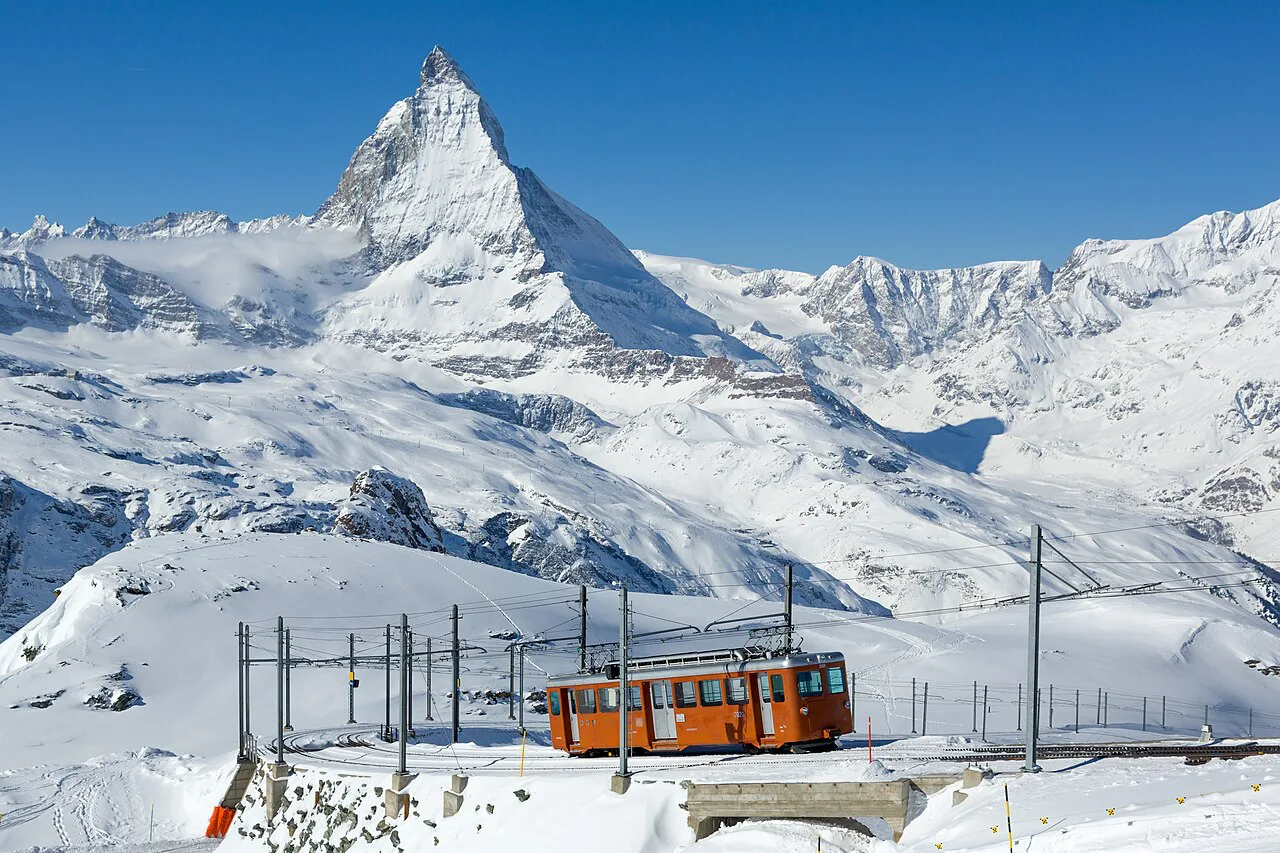
Gornergrat puts you on a ridge with a panorama that takes in the Matterhorn alongside the Gorner Glacier and Monte Rosa, reached by its own railway from the village. It is the natural alternative when the Klein Matterhorn cable car is backed up. If the booking calendar is your sticking point, our guide to the best time to visit zermatt weighs which season suits a ridge day like this one.
The Rothorn area above Blauherd adds the Peak Collection sculpture exhibition, which explains the surrounding peaks with details on altitude, rock type and first climbers. It is a free addition to a viewpoint you have already paid to reach.
In the village itself, the layout is compact enough to cover on foot, and a quick look at the Zermatt Neighborhoods: 4 Area Guides helps you pick where to base your walks.
Pick Your Viewpoint by Weather and Time
Choose the view you can actually get: a village walk and the museum on a short or cloudy day, Rothorn or the Klein Matterhorn when the sky is clear and you have the hours for the transfers. The peak is the same from all of them, but the day around it is not.
If the summit is the point of your trip, treat the climb as a separate expedition with a guide, a training plan and a budget of its own. Everything else in Zermatt is the warm-up.
Explore more Zermatt guides
Frequently Asked Questions
How tall is the Matterhorn?
The summit stands at 4,478 meters, or 14,692 feet, above sea level. That height makes it one of the tallest peaks in the Pennine Alps and the reason the upper lift stations sit in snow while the village below is often warm.
Can you see the Matterhorn without climbing it?
Yes. The peak is visible from much of Zermatt village, and cable cars run to Rothorn at 3,103 meters and to the Klein Matterhorn at 3,883 meters for higher, wider views. The museum at Kirchplatz adds the history without any altitude.
Can a beginner climb the Matterhorn?
No. The summit is a technical alpine climb that requires a certified guide, prior snow and rock experience, and acclimatization to 4,478 meters. Build experience on lower peaks and confirm requirements with a Zermatt guide office before planning an attempt.
What is the closest town to the Matterhorn?
Zermatt is the Swiss town directly below the peak, and Breuil-Cervinia lies on the Italian side. Zermatt has the cable cars and the museum, so it is the usual base for seeing the mountain.
How much does the Matterhorn Museum cost?
Adults pay CHF 12, seniors from 64 and groups of eight or more pay CHF 10, students CHF 8, and ages 10 to 16 CHF 7. Children under 10 enter free with an adult, and the Museumspass and Swiss Travel Pass are accepted.
When is the Matterhorn Museum open?
Standard hours are 15:00 to 18:00 daily. The museum publishes shorter weeks in late autumn and a November closure window, so confirm the current schedule on the Zermatt tourism listing before you go.
How much time do you need for the Matterhorn?
Half a day covers the village views and the museum. Give a full day if you ride to Rothorn or the Klein Matterhorn, since the transfers and the time at the high stations take up most of it.
Why is the Matterhorn so famous?
Its near-symmetric pyramid shape makes it instantly recognizable, and the 1865 first ascent ended in four deaths on the descent. The broken rope from that climb is on display in Zermatt, and the story carried the mountain's name around the world.