Is Zürich Worth Visiting? Your Swiss Trip Decision Guide
Zürich suits travelers who want a compact old town, lake views, and quick mountain access. Here is what it does well and how long to stay.
On this page
Zürich is worth visiting if you want a compact, walkable old town, a lake you can stroll beside, and a genuine mountain viewpoint within a short train ride of the main station. It is not a cheap alpine village, and it will not fill a week with headline sights. Two days covers the center comfortably and leaves room for one hill or one museum.
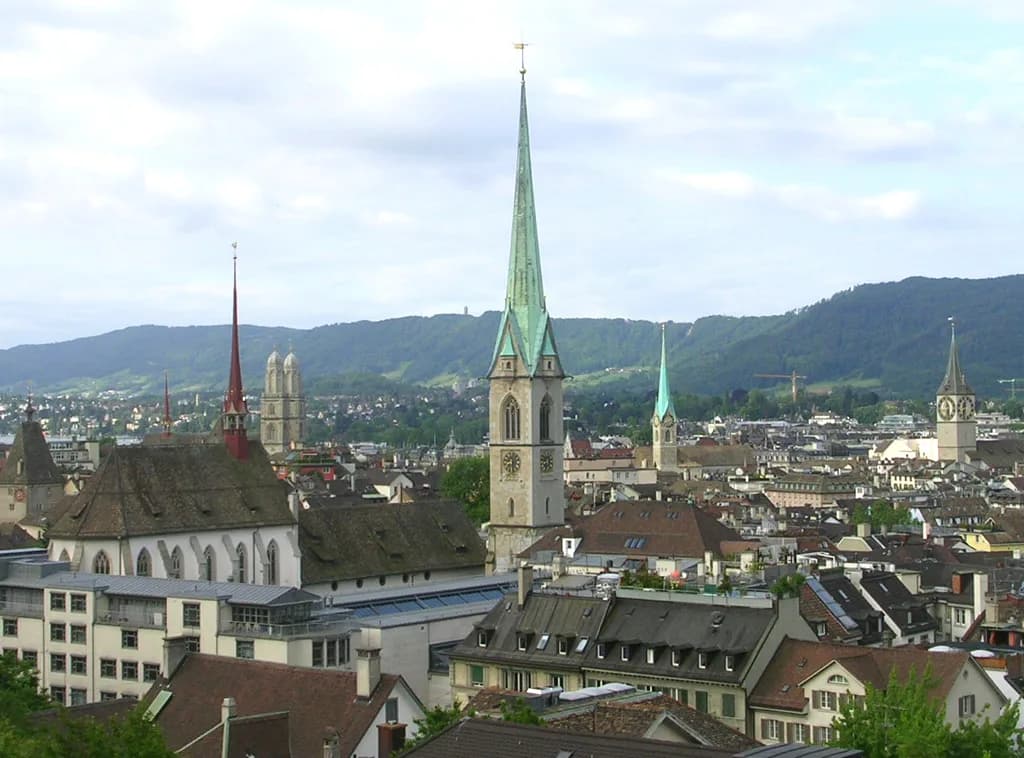
The two strongest arguments for stopping are geography and ease. Grossmünster and Fraumünster stand minutes apart on opposite banks of the Limmat, the Lindenhof gives you a free view over the rooftops, and Uetliberg is a 25-minute train ride from Hauptbahnhof. Travelers who want scenery without long transfers get a lot from a short stay.
Who Zürich Suits and Who Should Skip It
Zürich works best for travelers who like cities first and mountains second: people who enjoy churches, art museums, squares, and waterfront walks, and who treat a summit as a bonus rather than the main event. It also suits anyone with only a few days who wants everything on foot or on a short tram ride.
Skip it, or keep it to a few hours, if your Swiss trip is really about alpine landscapes and small historic centers. Some travelers find the city short on tourist appeal compared with the mountains and finish the center quickly. If you are choosing one city break and want a smaller, more concentrated old town, compare before committing.
The city is compact enough that a single day produces a real impression rather than a rushed checklist. Travelers who arrive by early afternoon often have time for the old town and a lakefront walk before dinner. That makes Zürich a workable opening or closing stop on a longer Swiss route.
How Zürich Is Laid Out: Altstadt, the Limmat, the Lake, and Uetliberg
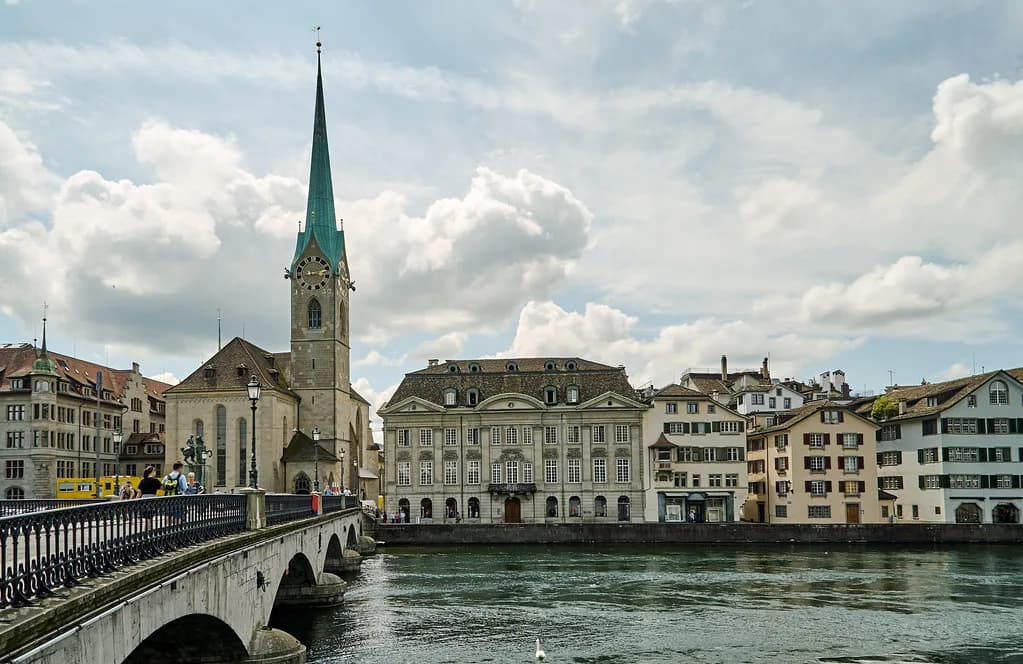
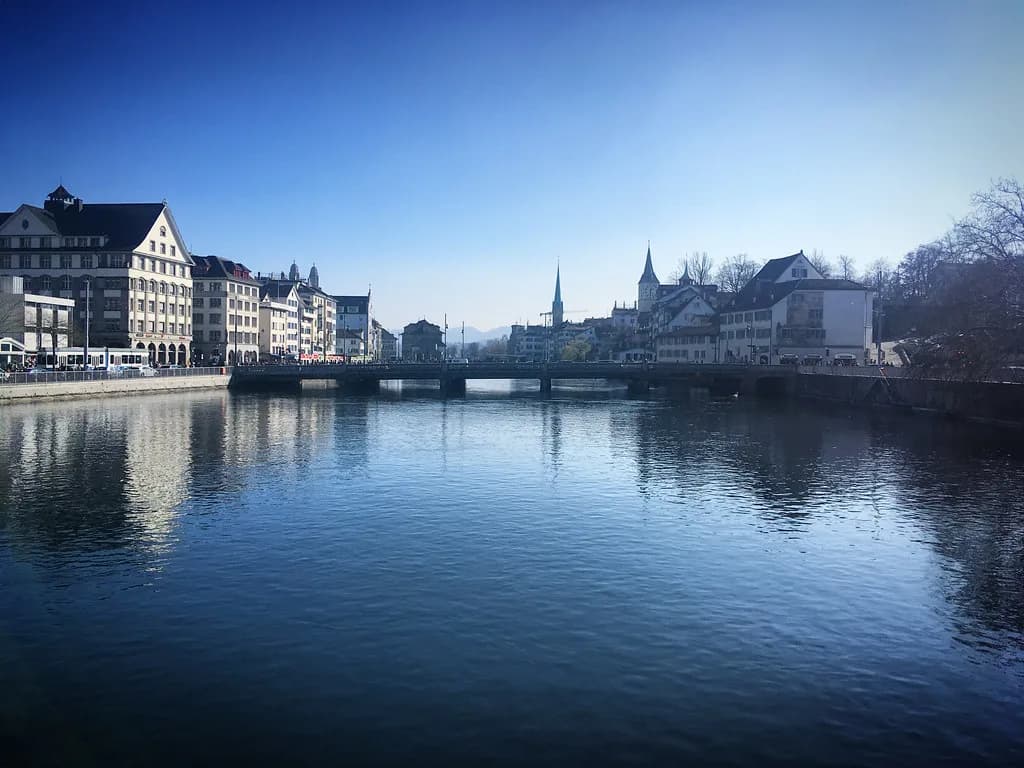
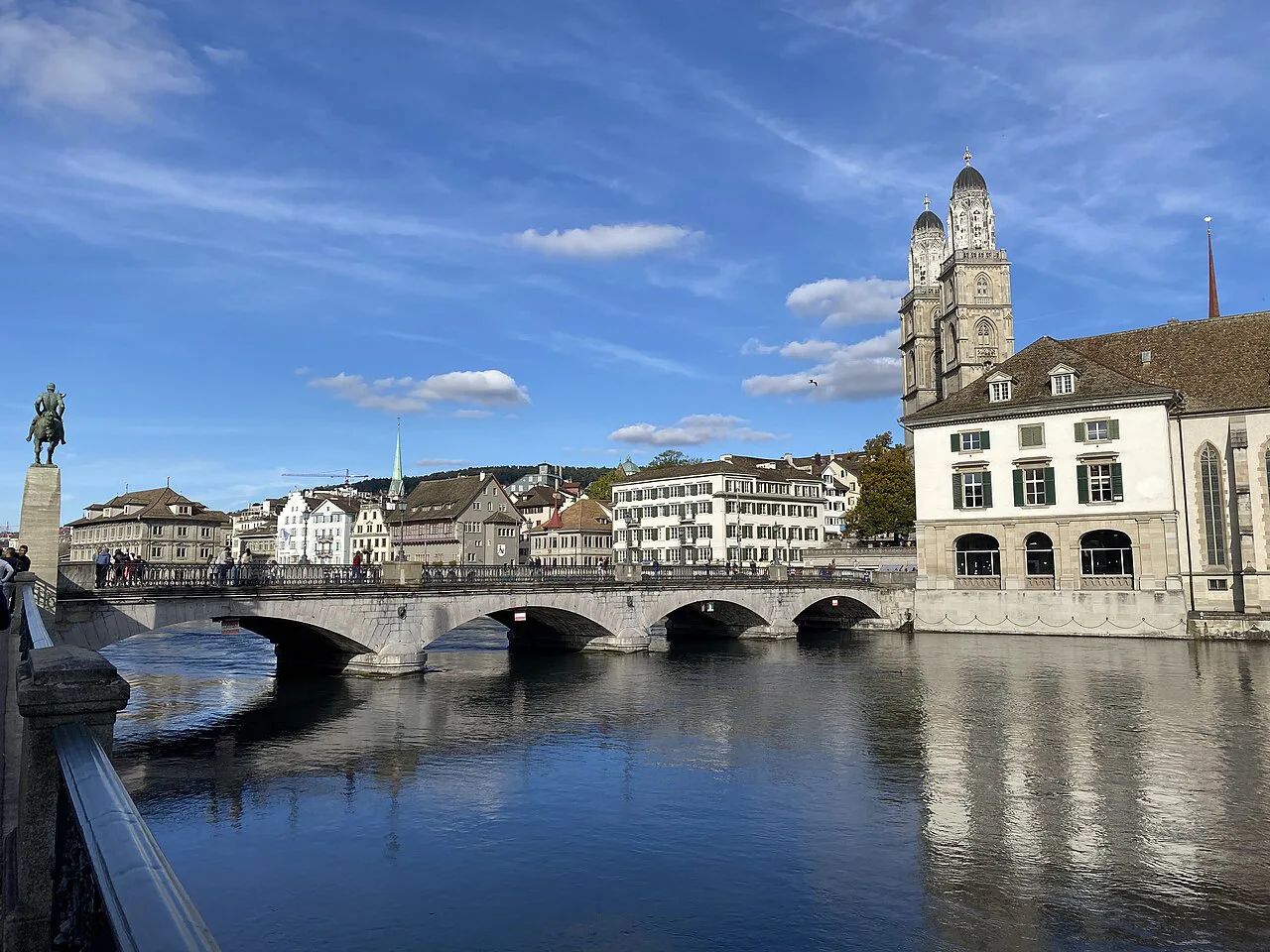
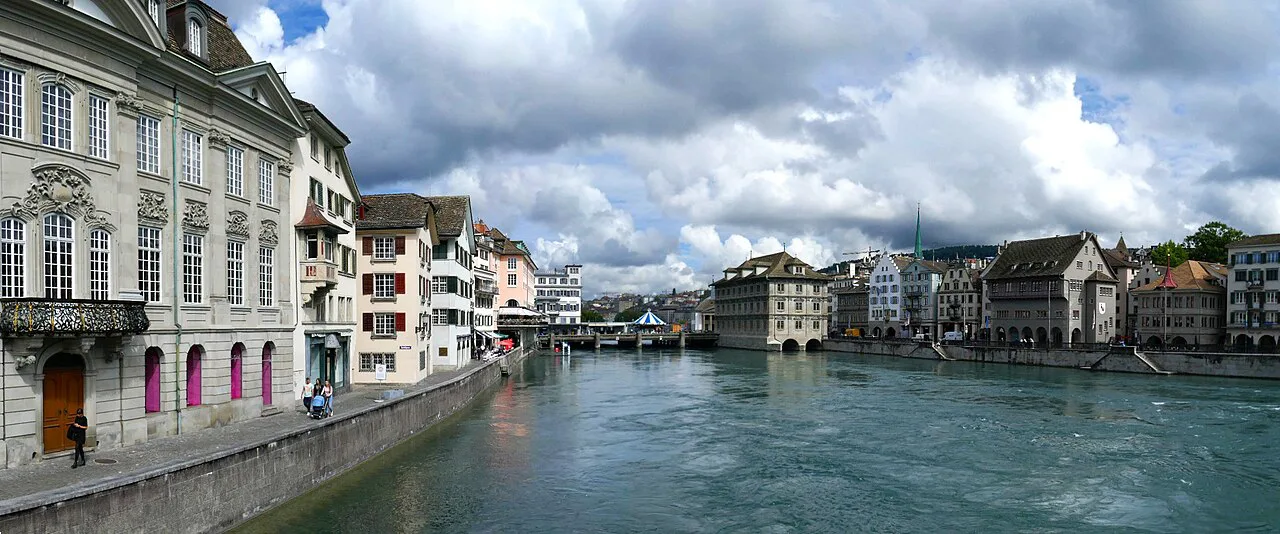
The Limmat River runs north from Lake Zürich and splits the historic center. The Altstadt sits on both banks, with Niederdorf on the east side and Bahnhofstrasse running south from the main station toward the lake on the west. Almost everything a first-time visitor wants is inside this small ring.
The lake begins where the river ends, and the Seefeld promenade along the east shore gives you the open water view with Uetliberg rising behind and across. Uetliberg itself sits west of the city and is reached by train rather than on foot from the center. Picture the city as three layers: river center, lakefront, and hill, each a short hop from the next.
That layout is why Zürich feels manageable. You can cross from Grossmünster to Fraumünster in a few minutes, walk up to the Lindenhof, and be on Bahnhofstrasse without planning transport. Save the tram or train for Uetliberg and for the museum quarter east of the lake.
The Classic First-Day Circuit on Foot: Grossmünster, Fraumünster, Lindenhof, and Bahnhofstrasse
Start at Grossmünster, the Romanesque church with twin towers that defines the skyline, and climb the Karlsturm for the view if your legs are willing. Cross the river to Fraumünster for the Chagall and Giacometti stained glass, which is the interior most visitors remember. Both churches sit within a couple of minutes of the river bridges.
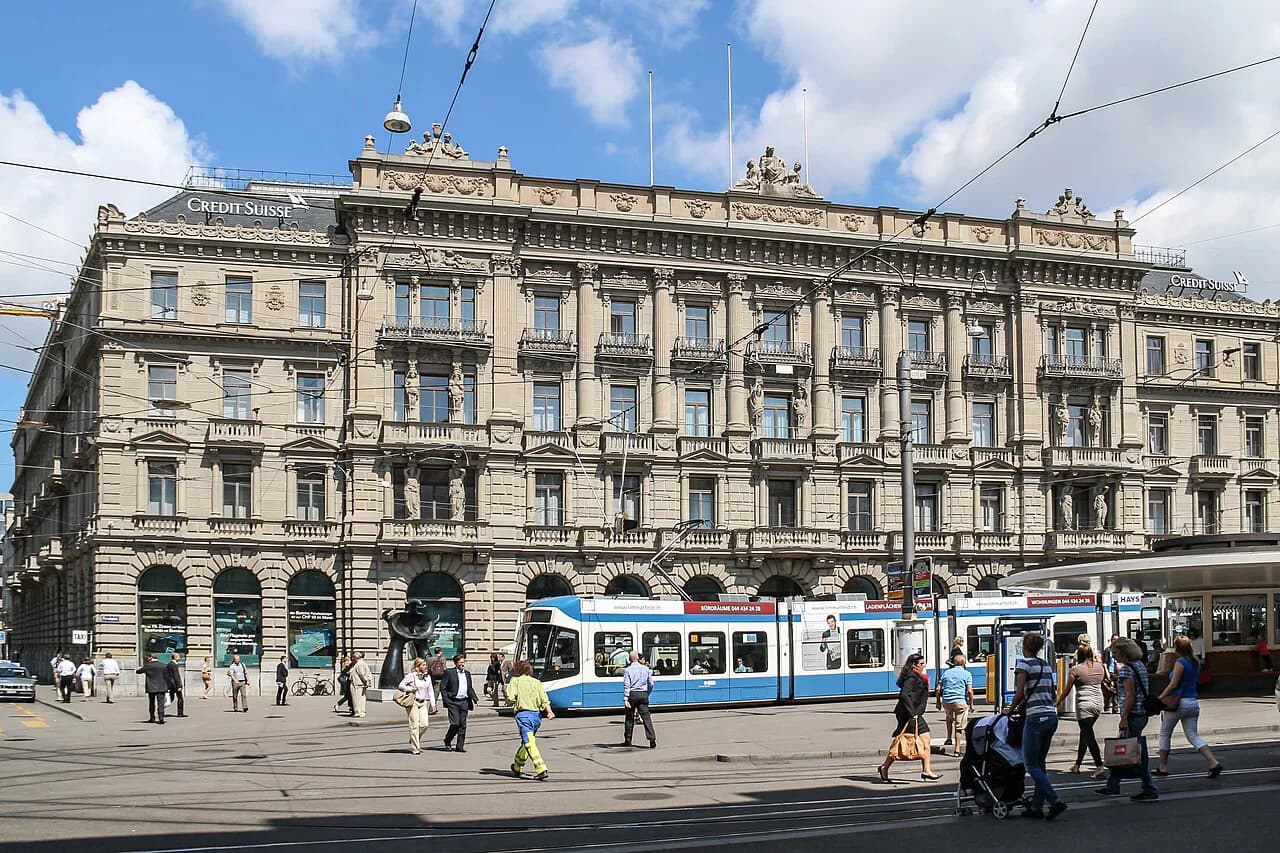
From there, walk up to the Lindenhof, the small park above the old town that overlooks the Limmat, the rooftops, and several of the main landmarks. It costs nothing and gives you the orientation you need for the rest of the day. Then drop down to Bahnhofstrasse, the shopping street that runs roughly a mile from the lake toward the main station.
This circuit fits comfortably into a half day and leaves the afternoon free. If you have only a short window, this is the route to take, and a one day in zurich plan built around these four stops is realistic rather than optimistic. If you are still deciding how to split your time, How Many Days in Zürich? What 1, 2 and 3 Days Cover breaks down what each extra day buys you.
Altstadt and Niederdorf: The Pedestrian Heart of the City
The Altstadt holds much of the city's culture, shopping, and evening life, and it is where the streets feel most crowded. Niederdorf, which locals call the Dörfli, is the car-free section on the east bank: narrow lanes, shops, and no traffic to dodge. Walk down Rennweg for the seasonal decorations on the buildings.
This is the part of Zürich to wander without a destination. The old town is preserved in its original style and rewards an hour of aimless turning between the river and the foot of the hill. The Old Town also holds the Kunsthaus, so you can fold art into the same walk when the weather turns.
Lake Zürich and Seefeld: Promenades and the Ganymed Sculpture
The Seefeld promenade on the east shore is the easiest place to reach the water from the center. You get the open lake, the boats, and Uetliberg across the water, with room to sit and watch the city slow down. Look for the Ganymed sculpture near the lakefront, a figure of a boy with an eagle drawn from Greek myth.
The lakefront is also the city's free living room, and it is where Zürich feels least like a banking center. Give it an hour at the end of an afternoon rather than squeezing it between churches. On a warm evening it is the natural place to finish the day before heading back into the old town.
Uetliberg: The 25-Minute Train to the City's Best Viewpoint
Uetliberg is the strongest single argument for adding a day to Zürich. Take the S10 on the SZU from Hauptbahnhof and you reach the summit area in about 25 minutes, then walk a short stretch to the peak and the observation tower. From the top you look over the city, the lake with its boats, and the Alps on a clear day.
There is a hotel and restaurant at the top if you want to eat before descending. The trade-off is weather: the view is the whole point, so go when the sky is clear rather than burning a slot on a cloudy afternoon. Travelers who want one mountain moment without a full day in the Alps get it here.
Museums That Reward a Wet Afternoon: Kunsthaus Zürich and the FIFA World Football Museum
The Kunsthaus Zürich is the pick for art: a collection of Classical Modernism with the largest group of Munch paintings outside Oslo and the most prominent Monet holdings outside Paris. It sits in the old town area, so it slots into a walking day rather than requiring a trip across town.
Football fans should head to the FIFA World Football Museum in the Enge quarter, which opened in 2016 and occupies three floors of a mixed-use building. It traces the game from its earliest days and documents every World Cup since 1930. It is a strong wet-weather choice for anyone traveling with a fan.
For a bigger sample of what the city offers indoors and out, Zurich Attractions: 8 Visitor Guides covers the individual sights one by one. Plan at least one indoor option per day in Zürich so a rainy morning does not strand you in a café, and confirm each museum's opening days before you set out, since schedules vary by venue.
Sechseläutenplatz and the Opera House: The City's Grand Square
Sechseläutenplatz is the large open square beside the lake, and it is where the Opera House faces the water. The building dates to the 1890s and was designed by the Viennese architects Fellner & Helmer, with Mozart, Wagner, Schiller, Goethe, Shakespeare, and Weber on the facade. Chairs are set out on the square, so you can sit and look at it without buying a ticket.
The square is named for the spring festival held at the fairground next to the lake, which gives it a second life as a gathering place. It is the natural endpoint for a walk down Bahnhofstrasse or along the lakefront from Seefeld. Pair the two on an evening when you want architecture and open space rather than another church interior.
Free Views and Cheap Hours: Lindenhof and the Old Town
The Lindenhof is the best free view in the city: a park above the old town looking over the Limmat, the rooftops, and the main landmarks. Bahnhofstrasse costs nothing to walk and connects the lake to the main station. Combining the two gives you an orientation loop that leaves your budget for the museums and the hill.
Walks through the old town are free, and so is the Seefeld promenade. These are the hours that keep a Zürich day affordable. For the rest, prices in Swiss francs add up quickly; see Is Zürich Expensive? What a City Break Really Costs for a realistic CHF picture, and Zürich on a Budget for where the free hours go furthest.
How Many Days Zürich Needs: One, Two, or a Half-Day Stopover
One day covers the classic circuit: Grossmünster, Fraumünster, the Lindenhof, Bahnhofstrasse, and the lakefront. Two days adds Uetliberg or a serious museum and makes the city feel finished rather than sampled. Three days is generous for the center and better spent on a slower pace than on more sights.
A half-day stopover is viable if you are passing through by train, but treat it as a taste rather than a visit. You can see the churches and the river in a few hours, and you will leave with the city's geography clear but its museums untouched. Travelers who want the mountain view need the full day.
When to Go: Summer Temperatures and the Festival Calendar
Summer is the easiest season for a city break, with temperatures typically hovering in the low to mid 70s, which makes walking and the lakefront pleasant. Spring and autumn bring fewer crowds and still work well for a center that is mostly explored on foot. Pack layers and a small umbrella, because the weather shifts.
Zürich's festival calendar gives summer extra pull. Züri Fäscht takes over the center once every three years on the first weekend of July, with music, food stalls, and fireworks. Zurich Pride has run every June since 1994 with a parade and concerts, Caliente! fills Langstrasse with Latin music, and the Zürcher Theater Spektakel turns a lakeside park into more than ten stages. Check the dates for your year rather than assuming last year's schedule holds.
The Honest Trade-Offs: Cost, Size, and What Zürich Is Not
Zürich is expensive, and a day of paid attractions, meals, and a mountain train adds up in Swiss francs. It is also modest in scale: this is a city of churches, a river, and a lake rather than a checklist of blockbuster monuments. Travelers expecting a miniature alpine village in the center will be surprised by how urban it feels.
The city's real appeal is convenience. You get a walkable center, a genuine viewpoint, and a lake without spending hours in transit. If that combination is what you want from a Swiss short break, Zürich delivers it efficiently. If you came for postcard mountains and car-free lanes, your time and money go further elsewhere.
Who Should Skip Zürich and Head to Lucerne or the Mountains
If your priority is a compact old town with mountain scenery on the doorstep, Lucerne is the stronger single stop, and a Lucerne day trip is a common alternative to a Zürich overnight. Travelers who want quieter streets and a smaller scale should look at Bern or Basel before committing to Zürich.
Choose Zürich when you want a real city with art, churches, and a lake, and treat the mountains as a half-day addition. Choose Lucerne or the Alps when the landscape is the reason for the trip. Comparing a couple of smaller Swiss cities side by side is the fastest way to decide. Is Bern Worth Visiting? What Bern Does Well and Who It Suits and Is Basel Worth Visiting? What the City Does Well and How Many Days It Needs give you honest baselines, and Zürich vs Geneva settles which of the two big cities fits your trip.
Plan Your Visit
Zürich earns its place on a Swiss itinerary when you give it two days and use the center on foot. Build day one around Grossmünster, Fraumünster, the Lindenhof, Bahnhofstrasse, and the lakefront, then keep day two for Uetliberg or the Kunsthaus. That shape matches how the city actually works: dense in the middle, generous at the edges.
Match the city to your trip rather than the other way around. Travelers who want mountains, small lanes, and lower prices will be happier based in Lucerne or the Bernese Oberland. Travelers who want a city that works on foot with a summit 25 minutes from the station will find Zürich unusually easy.
Explore more Zürich guides
Frequently Asked Questions
Is Zürich worth visiting for a first trip to Switzerland?
Yes, if you want a walkable old town, a lakefront, and a mountain viewpoint close to the center. Grossmünster, Fraumünster, the Lindenhof, Bahnhofstrasse, and Uetliberg fit into two days without long transfers. If your first trip is really about alpine landscapes, base yourself closer to the mountains and treat Zürich as a short city stop.
How many days do you need in Zürich?
One day covers the churches, the Lindenhof, Bahnhofstrasse, and the lakefront on foot. Two days adds either Uetliberg or a serious museum such as the Kunsthaus and makes the city feel complete. A third day is generous for the center and better used at a slower pace.
Is Zürich expensive for US travelers?
Swiss prices are high, and paid attractions, meals, and mountain transport add up in Swiss francs. Free hours help: the Lindenhof, the Bahnhofstrasse walk, the old town lanes, and the Seefeld promenade cost nothing. Plan the paid items in advance rather than deciding on the day.
What can you do for free in Zürich?
Walk the old town and Niederdorf, climb to the Lindenhof for the view over the Limmat, stroll Bahnhofstrasse from the lake to the main station, and follow the Seefeld promenade. Sechseläutenplatz, with the Opera House on its edge, is also free to sit in. The paid items are the church towers, the museums, and the Uetliberg train.
Is Zürich a good base for seeing the Alps?
It works as a city base with a mountain bonus rather than an alpine hub. Uetliberg gives you a summit view about 25 minutes from Hauptbahnhof, but the bigger peaks need a longer day out. If the Alps are the point of the trip, a base further south or east saves transfers.
Is Zürich better than Lucerne for a short break?
Zürich offers more city: art museums, a larger old town, and the lakefront promenade. Lucerne suits travelers who want a smaller, more concentrated center with mountain scenery on the doorstep. Choose Zürich for the city and Lucerne for the landscape.
What is there to do in Zürich on a rainy day?
The Kunsthaus Zürich and the FIFA World Football Museum are the two strongest indoor options. The Kunsthaus holds a major Classical Modernism collection, and the FIFA museum covers every World Cup since 1930. Confirm opening days for your dates, since museum schedules vary.
Is the Old Town of Zürich walkable?
Yes. The Altstadt and Niederdorf are compact and largely pedestrian, and Grossmünster, Fraumünster, and the Lindenhof are minutes apart. You can add Bahnhofstrasse and the lakefront without needing transport. Save the tram or the S10 train for Uetliberg and the museum quarter.
Sources
Notes for your Swiss city break
Optional updates to our Swiss city guides.
You might also like

Continue reading
More guides you'll find useful