Is Bern Worth Visiting? An Honest Answer for Your Swiss Trip
Bern is worth visiting for a compact, walkable old town with arcades, the Zytglogge, a cathedral tower climb and Aare views. Here's who it suits.
On this page
Yes, Bern is worth visiting if you want a compact old town you can cross on foot, with sandstone arcades, clock towers and river views at the end of the streets. It is a town, not a mountain base, so it suits travelers who enjoy architecture, museums and slow wandering. Anyone hoping for alpine scenery from the hotel window should treat Bern as a city stop rather than the reason for the trip.
Is Bern worth visiting? The short answer
Bern fits neatly into one day, which is exactly why it is easy to justify: the historic center is small enough to cover on foot, and the main sights sit within a short walk of each other. Travelers weighing whether to add it to a longer Swiss route get a dense, well-preserved medieval core without committing to a multi-day stay. If your trip is built around lakes and peaks, Bern is a half-day to full-day detour rather than a destination in itself.
The honest case for Bern rests on architecture, political history and the pleasure of a walkable center. Travelers who want town things, such as shaded arcades, fountains, churches and museums, get a lot from a single day; Bern is a town of architecture, museums and picturesque streets rather than an alpine base, so judge it on those terms. Travelers who measure a Swiss stop by how close it puts them to mountains are better served by a base further south.
What Bern does better than the big Swiss cities
Bern is a capital city with a small-town footprint. The old town runs along a peninsula above the Aare, so you can walk from the clock tower to the cathedral, past the Federal Palace and out toward the river, without ever needing a tram. That compactness is the city's real advantage over Zürich or Geneva: you spend the day looking at the place rather than moving through it.
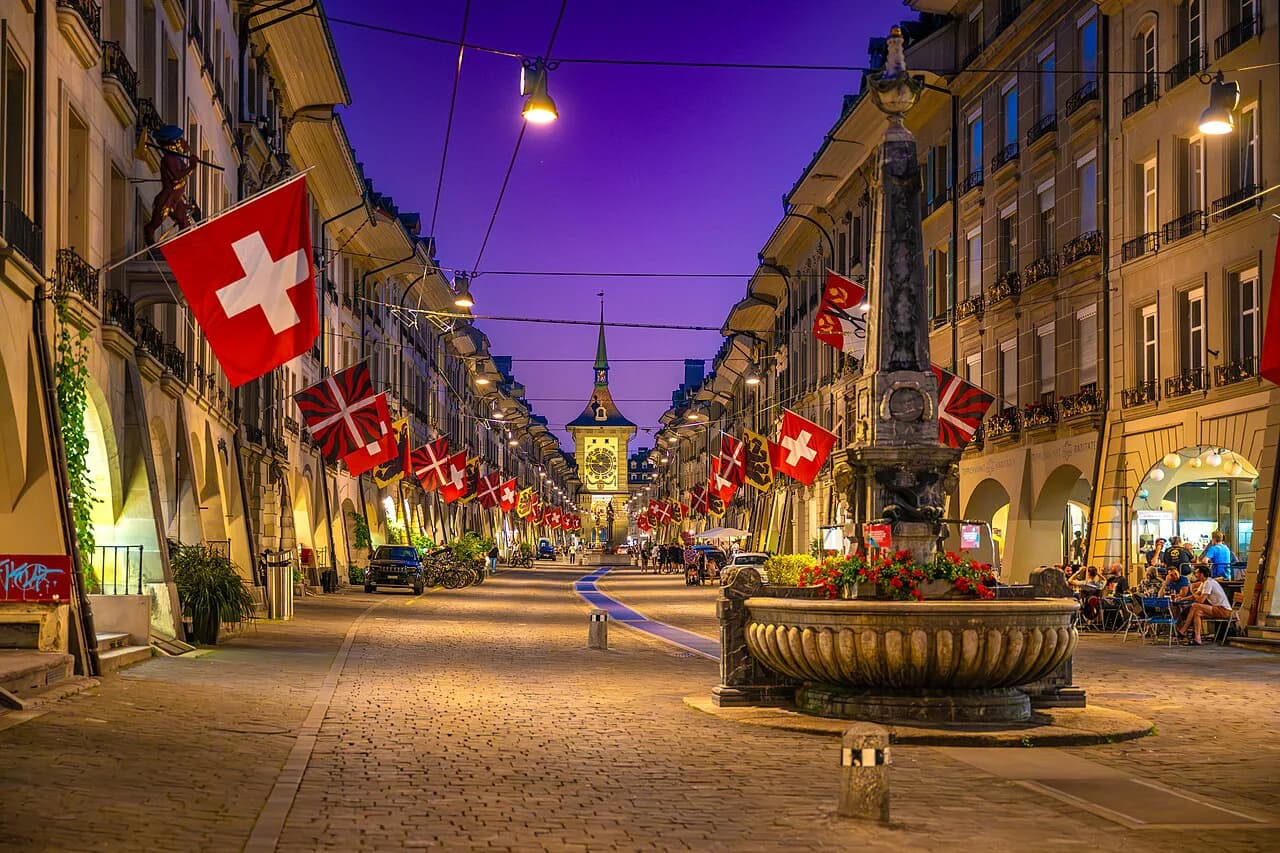
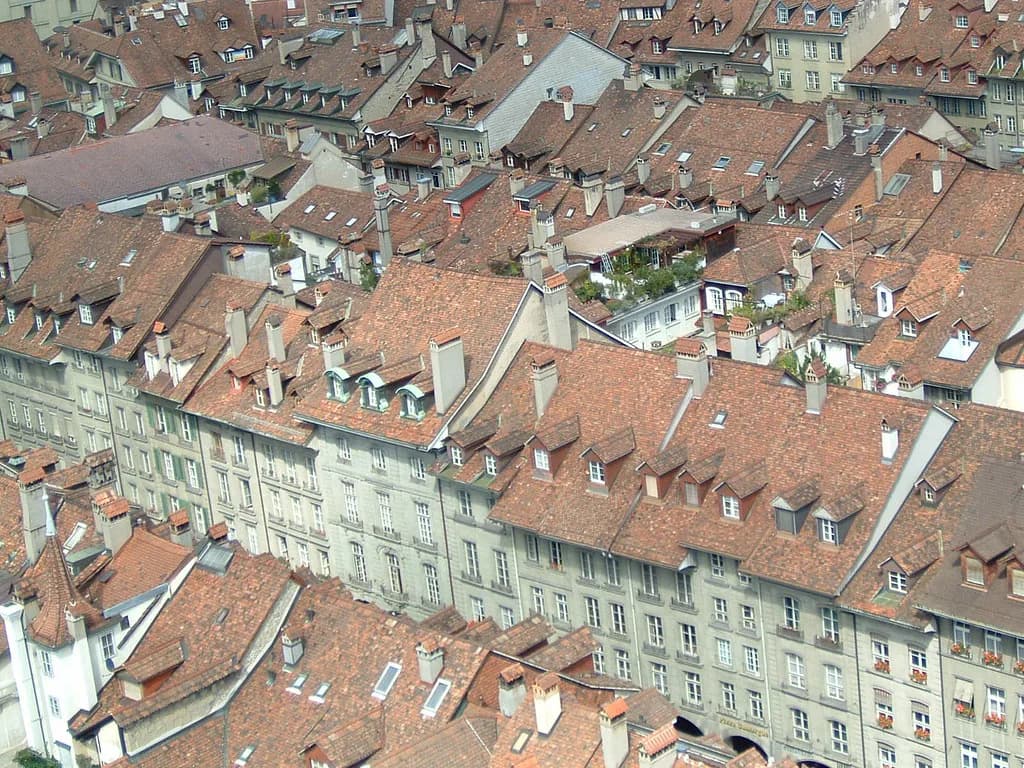
The look of the place is distinctive too. Long sandstone arcades line the streets, fountains stand at regular intervals, and the roofline stays low and uniform. Travelers who have already seen Zürich, Lucerne or Geneva often find Bern the most architecturally coherent of the Swiss cities, because the old town has been preserved as a single continuous streetscape rather than a set of isolated monuments.
The Old Town: arcades, fountains and sandstone, walked in an afternoon
Start at the train station and walk the spine of the old town. The route passes the Zytglogge, continues along the arcaded shopping streets toward the Berner Münster and the Bundeshaus, then spills out toward the Aare. You can walk it end to end in well under an hour, but plan on two to three hours once you stop for fountains, courtyards and coffee.
The arcades matter more than they look on a map: they shelter you in rain and shade you in summer, which makes the old town comfortable in weather that would ruin a more exposed city. Fountains with painted figures stand every few hundred meters, and the cellars beneath the streets hold shops and passages. For a walking order with the sights in sequence, follow a full weekend in Bern that strings the Old Town of Bern together with the river and the museums.
The Zytglogge and the hour's mechanical show
The Zytglogge is the 13th-century clock tower that serves as Bern's emblem, and its mechanical figures perform at the hour. Arrive a few minutes early to get a spot on the street below, because the square in front fills up and the show is short. It is free to watch from the pavement; the tower interior and its guided visits run on their own schedule, so check the city's visitor information for times before you plan around them.
Treat the clock as the start of the day, not a destination in itself. Once the figures finish, you are already on the arcaded street that leads east toward the cathedral and the parliament, which is exactly the direction you want to walk next.
Berner Münster: Switzerland's tallest cathedral and the tower climb
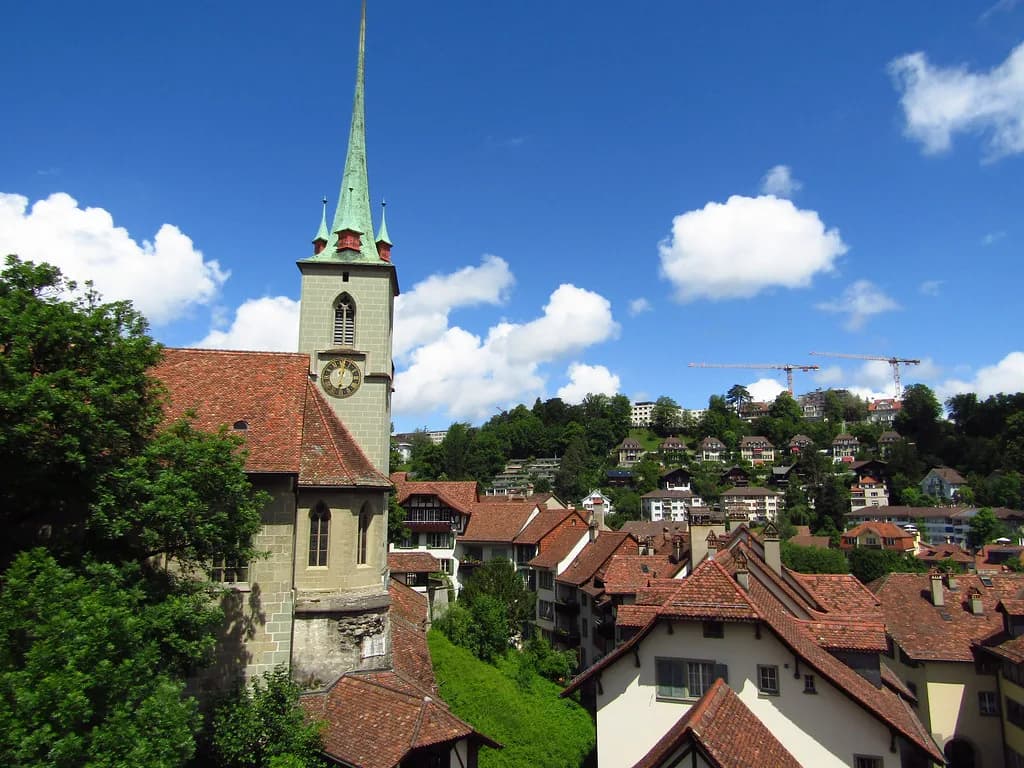
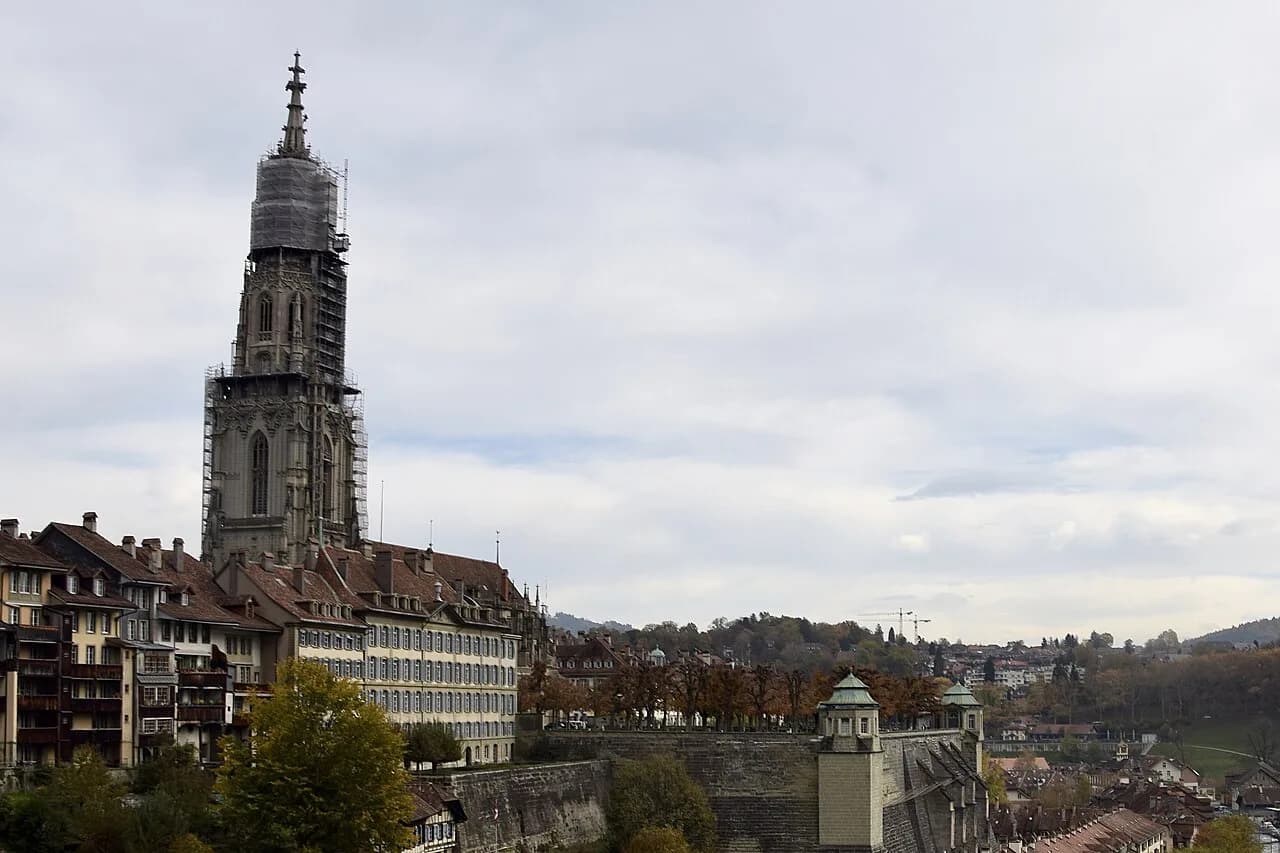
The Berner Münster is the tallest cathedral in Switzerland, with stained glass inside and a tower that gives you a view over the old town's red roofs. The climb is the highlight for many visitors, and it is a proper one: expect stairs and a modest amount of effort rather than an elevator. The cathedral is a working church, so visiting hours vary by season and services; the tower has its own access arrangements and admission, which you confirm at the entrance or through the cathedral's own visitor information before you go.
Budget around 45 minutes if you climb, and less if you only walk the nave. The tower view is close-up and detailed, showing the arcades and fountains from above, which is a different experience from the wide panorama you get from the hills outside town.
The Bundeshaus and Bern's political role
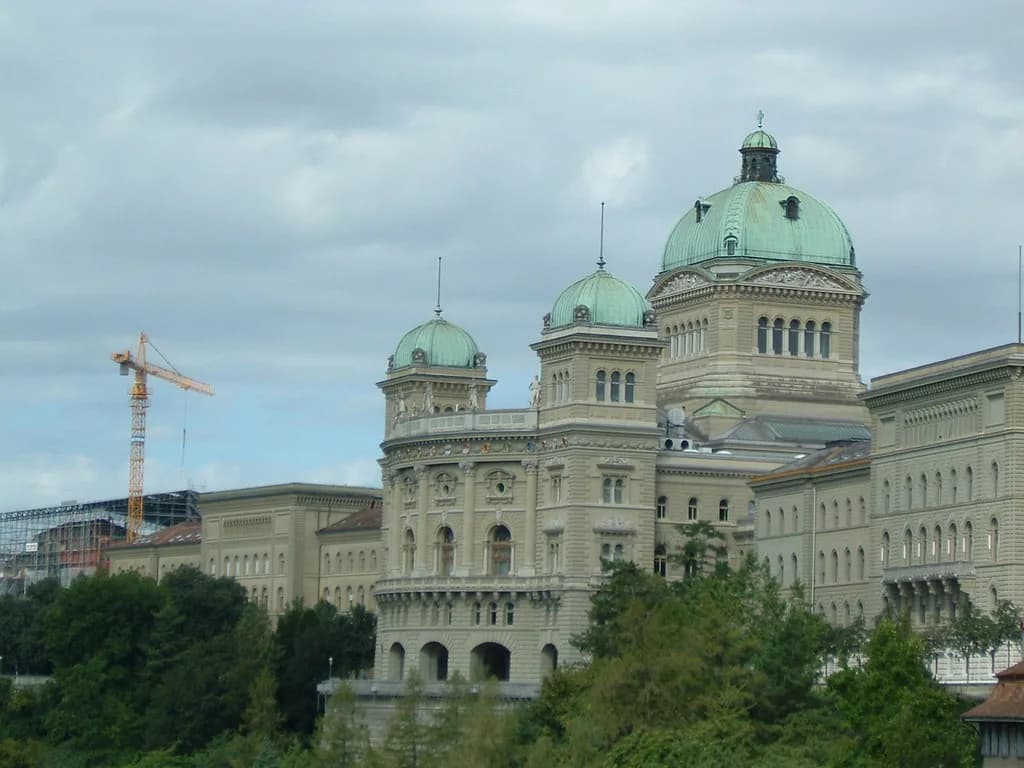
The Bundeshaus is Switzerland's parliament building, and it anchors the western end of the old town near the river. English-language guided tours are the usual way to see the interior, and they run on set days and times with advance registration. Because the building is a working parliament, access changes with the session calendar, so check the parliament's own visitor page for current tour times rather than counting on a daily schedule.
Even from outside, the building explains why Bern matters: this is where Swiss federal politics happens, in a city that feels far smaller than its role. The square in front opens toward the Aare and the bridges, which makes it a natural turning point in a walking day.
Aare views and the walk toward the Bear Park
The Aare loops around the old town on three sides, and the walk down from the center to the riverbank and along toward the Bear Park gives you the panoramic view of Bern's red rooftops that most photographs are taken from. The descent is steep and the return is uphill, so it is worth planning this as the end of an afternoon rather than a quick detour in the middle of one. The river is also where the city feels quietest, even when the shopping streets are busy.
This is the stretch to slot into a longer bern itinerary if you have more than a day, because it rewards slow walking more than checklist ticking. Allow an hour or so for the loop down to the water, along the bank and back up into town.
Museums for a rainy day: Einstein Museum and Zentrum Paul Klee
Two museums carry Bern's indoor day. The Einstein Museum covers the physicist's years in the city, and the Zentrum Paul Klee holds the painter's work in a building of its own outside the center; either one fills an afternoon, and doing both is a full day. Both run their own opening days, seasonal hours and admission prices, so confirm them on each museum's site when you plan, particularly if your visit falls on a Monday.
If you only have one wet day, choose by interest rather than convenience. The Einstein Museum keeps you in the old town and pairs naturally with the clock tower; the Zentrum Paul Klee costs you a trip out of the center but gives you a substantial single-artist collection and a building worth the visit on its own.
Gurten: the funicular ride and what the view actually gives you
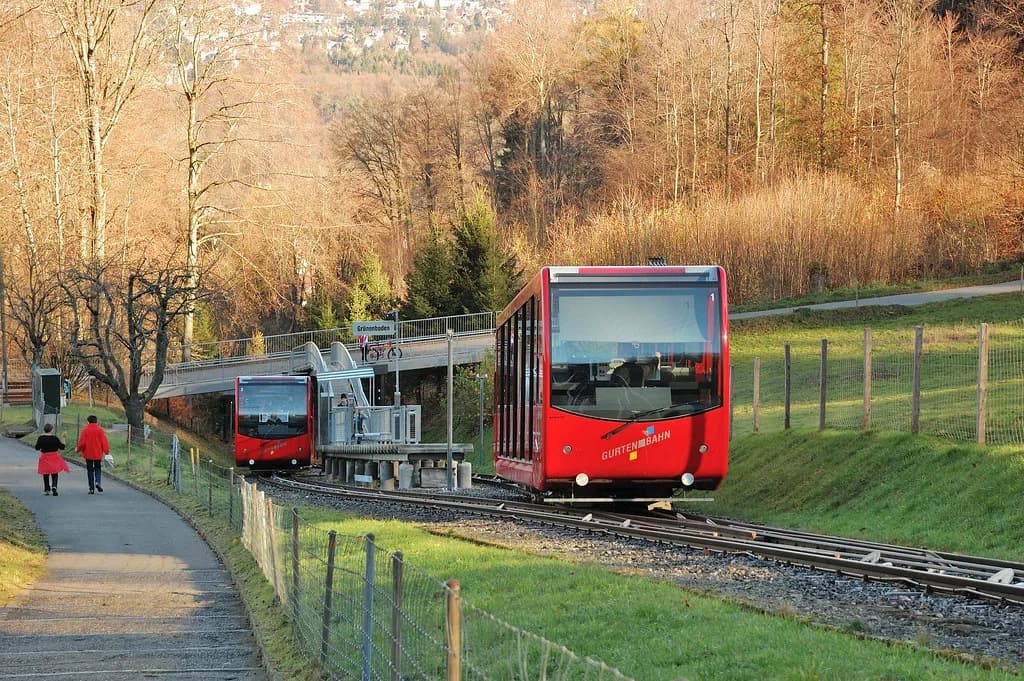
The Gurten sits above the city and is reached by a funicular from the near side of town. The view from the top is wide and high rather than the prettiest close-up of Bern: you see the hills, the roofline and the river loop laid out at a distance, which is impressive but not the intimate rooftop view you get from the cathedral tower or the riverbank. The top also has a short loop to walk and a tower to climb for those who want more height.
Go up if you want a green escape and a different angle on the city, or if you are traveling with people who need space to run around. Skip it if your only goal is the classic postcard view of the old town, which you get more cheaply from the river path. The funicular runs on its own timetable and charges its own fare, so confirm both on the Gurten funicular's own site before you ride.
Rosengarten: the uphill walk and the payoff
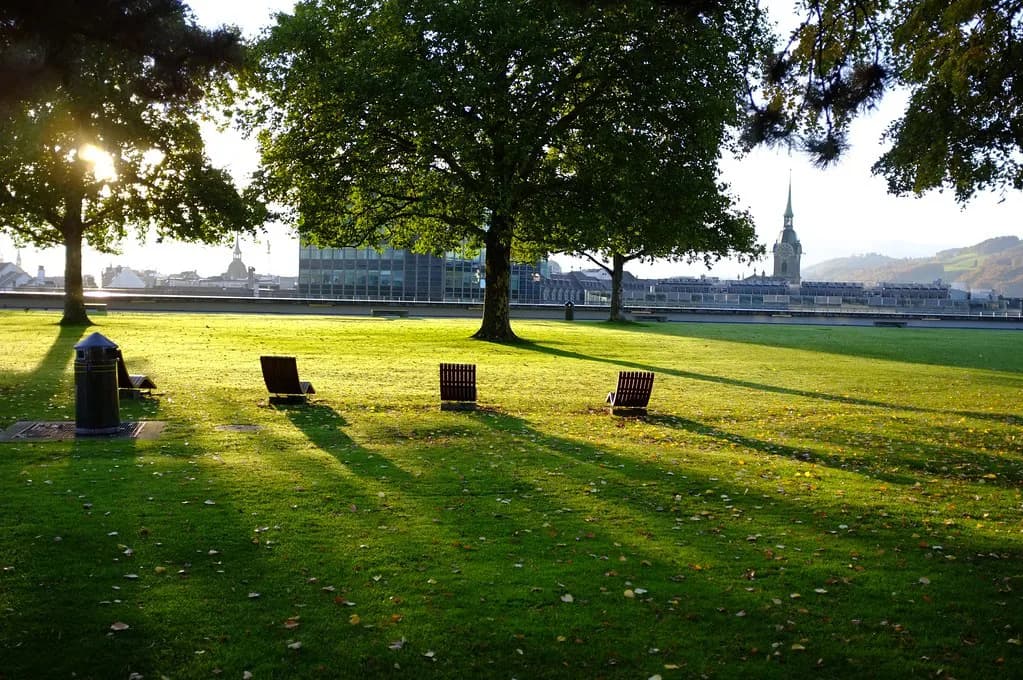
The Rosengarten is a park above the old town with a cafe and a terrace looking back across the rooftops. Reaching it means a genuinely steep uphill walk, not a gentle stroll, so wear shoes you can climb in and give yourself more time than the distance suggests. The payoff is the view that the Gurten cannot give you: the old town close enough to pick out the cathedral, the bridges and the river bend.
It works best late in the day, when the light softens and the walk down is easier than the walk up. If you are short on time, choose the Rosengarten over the Gurten: the climb is harder, but the view is the one that shows you why Bern looks the way it does.
Who will love Bern and who should skip it
Bern suits travelers who like walking a city rather than touring it: arcades, fountains, churches, a parliament building and two good museums fill a day without a single bus ride. It also suits anyone building a Swiss trip around towns, since the old town is a UNESCO World Heritage site and the center is short enough to learn in an afternoon. Travelers on a tight schedule who mainly want mountains and lakes should skip it or give it a morning on the way through.
The main trade-off is height. Bern has no peaks and no lakefront promenade; its views look across roofs and along a green river, not up at glaciers. Readers who chose Switzerland for alpine scenery will find Bern pleasant but not the reason they came, and that is worth knowing before you commit two nights here.
Bern against Zürich and Lucerne: how to choose
Choose Bern if you want the most coherent medieval center and the least time spent in transit between sights. Zürich is bigger and busier, with the lake and a wider spread of museums and shopping, and it works better as an arrival or departure city. Bern is the better pure walking town, but it offers less variety if you have three or four days to fill.
Lucerne wins if you want the lake and mountain-adjacent scenery in the same stop, with the Kapellbrücke and the water right in the center. Bern wins if architecture and a lived-in capital city are what you are after. If you are weighing Zürich in particular, a direct comparison of bern vs zurich will help you decide where to spend the nights.
One day or two? How many days Bern needs
One day covers the old town walking route, the Zytglogge at the hour, the cathedral tower and a river walk, with time for one museum if you move briskly. A second day buys you the museum you skipped, the Gurten or Rosengarten at leisure, and a slower meal in the arcades. Three days in Bern starts to mean using it as a base, which the city does not really support for alpine day trips.
For a structured walking plan, use this one day in bern as your skeleton and add a second day only if museums matter to you. Our guide to how many days in bern breaks down what the second and third days actually give you. Travelers planning a longer Swiss route should treat two nights as the generous maximum.
Practical money notes for an expensive country
Switzerland is expensive, and Bern is no exception: expect museum admission, tower climbs, funicular rides and meals to add up quickly, all priced in Swiss francs. Because prices and opening days change, confirm each one on the attraction or museum's own site when you plan rather than budgeting from old figures. Bern's own visitor information office is the place to ask about any current card or combined ticket before you buy individual entries.
The practical savings in Bern come from what is free: walking the arcaded streets, watching the clock figures at the hour, and looking out over the rooftops from the river path cost nothing. Build your day around those and pay only for the one or two interiors and viewpoints you care about most.
Where Bern fits in a longer Swiss itinerary
Bern works best as a one- or two-night stop between Zürich and the Bernese Oberland, or as a day trip from either. The old town is close enough to the station that you can arrive mid-morning, walk the spine, climb the tower and be back on a train the same evening. That makes it an efficient addition to almost any Swiss route rather than a commitment of its own.
If your itinerary is still taking shape, our full Bern Attractions: 8 Visitor Guides covers each sight individually, and the weekend in bern guide suits travelers staying two nights. Compare it honestly with the alternatives before you commit the days.
Bern against the other Swiss short-break cities
The same question applies to most Swiss cities, and the answer differs each time. If you are weighing the northwest, is basel worth visiting comes down to museums and the Rhine rather than a medieval core. If you are weighing the lake, is lucerne worth visiting comes down to whether you want water and mountains next to the old town. Bern's case is narrower and stronger: one of the best-preserved old towns in the country, walked in a day.
Plan Your Visit
Bern earns a place on a Swiss itinerary for what it does well: a compact, walkable old town with arcades, fountains, the Zytglogge, the Münster tower and a river loop that gives you the best view of the city. Give it one full day, or two if you want both museums and a park above the roofs. Skip it without regret if mountains are the point of your trip.
Before you go, check current opening days and admission on each museum, church and funicular's own site, and keep the walking day flexible around the clock tower's hourly show. Our Bern Attractions: 8 Visitor Guides covers each stop in detail, and the is bern expensive guide helps you budget in Swiss francs.
Explore more Bern guides
Frequently Asked Questions
Is Bern worth visiting for a day?
Yes. The old town is compact enough to walk end to end in an afternoon, with the Zytglogge, the Berner Münster tower, the Bundeshaus and the Aare riverbank within easy reach of each other. One day covers the main sights and leaves time for a museum if you move briskly.
Is Bern or Lucerne better for a short trip?
Lucerne is the better choice if you want lake and mountain scenery alongside the old town. Bern is the better choice if you want the most coherent medieval center and the shortest distances between sights. Neither needs more than two days.
Is Bern better than Zürich?
They do different jobs. Bern is smaller, quieter and more walkable, with a preserved old town that reads as a single streetscape. Zürich is larger, with more museums, shopping and a lakefront, and works better as an arrival or departure city.
How many days should I spend in Bern?
One day for the old town, the clock tower, the cathedral tower and a river walk. A second day adds the Einstein Museum or Zentrum Paul Klee plus the Gurten or the Rosengarten. Beyond two nights, Bern works better as a stop between other places.
Is Bern easy to walk around?
Yes. The old town is level along its main arcaded street, and every major sight sits within walking distance of the station. The exceptions are the climb up to the Rosengarten and the descent to the river and back, both of which are genuinely steep.
Is the Gurten worth going up in Bern?
Go up for a green escape and a wide view over the hills and the river loop. If you only want the classic view of the old town rooftops, the Rosengarten and the river path give you a closer, better one without the funicular fare.
What is there to do in Bern on a rainy day?
The arcades keep the old town walkable in rain, and the Einstein Museum and the Zentrum Paul Klee are the two substantial indoor options. Both keep their own opening days and hours, so check each museum's site before you commit a wet afternoon to it.
Sources
Notes for your Swiss city break
Optional updates to our Swiss city guides.
You might also like
Continue reading
More guides you'll find useful