Lausanne Old Town: What to See in the Cité and Around It
Lausanne's old town climbs a ridge above Lake Geneva, with the cathedral, Château Saint-Maire and Place de la Palud as anchors. Here is how to walk it.
On this page
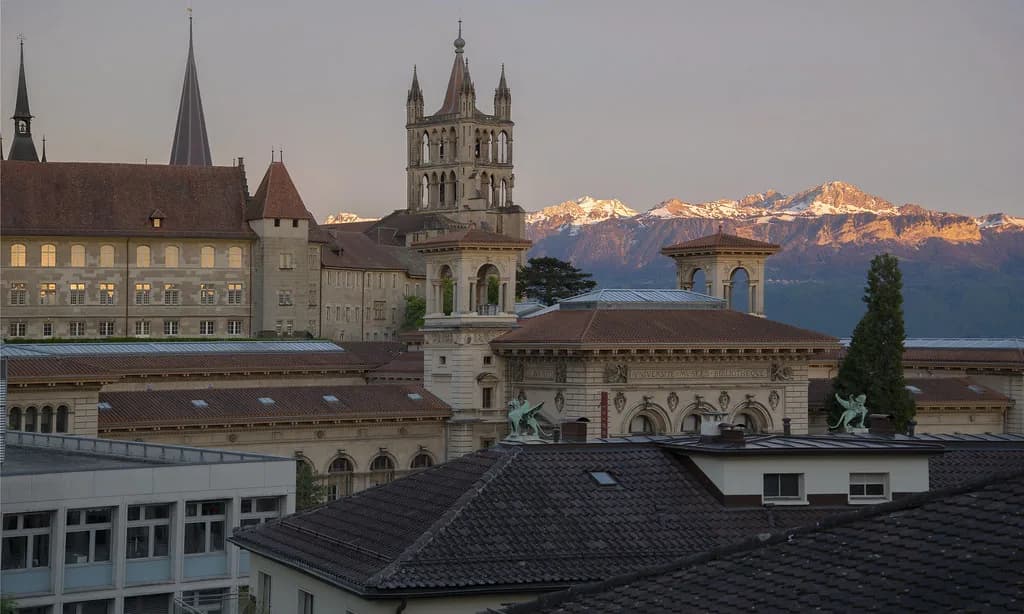
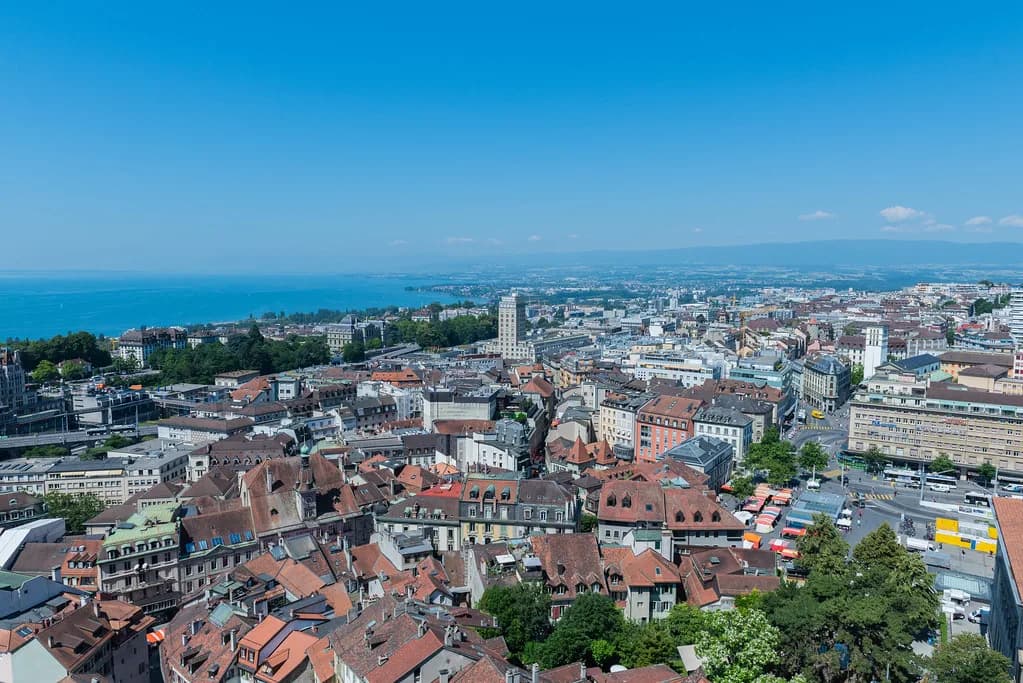
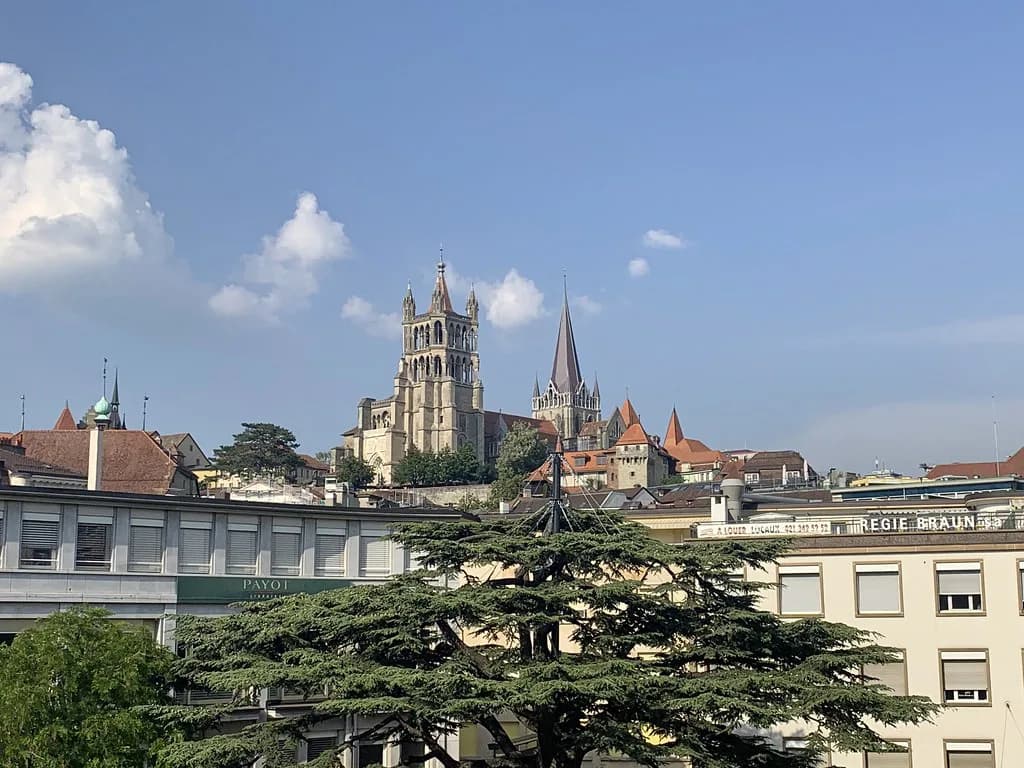
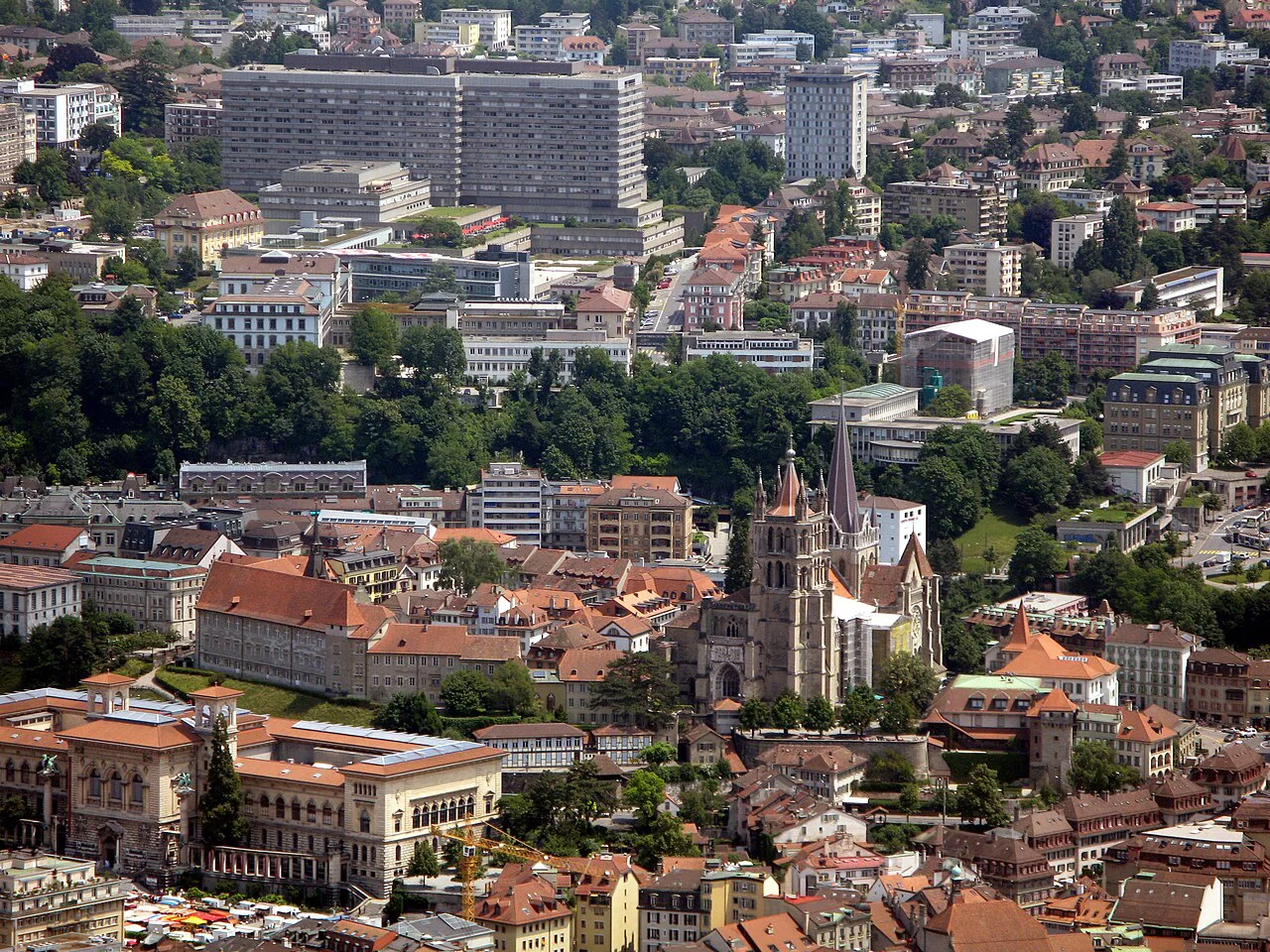
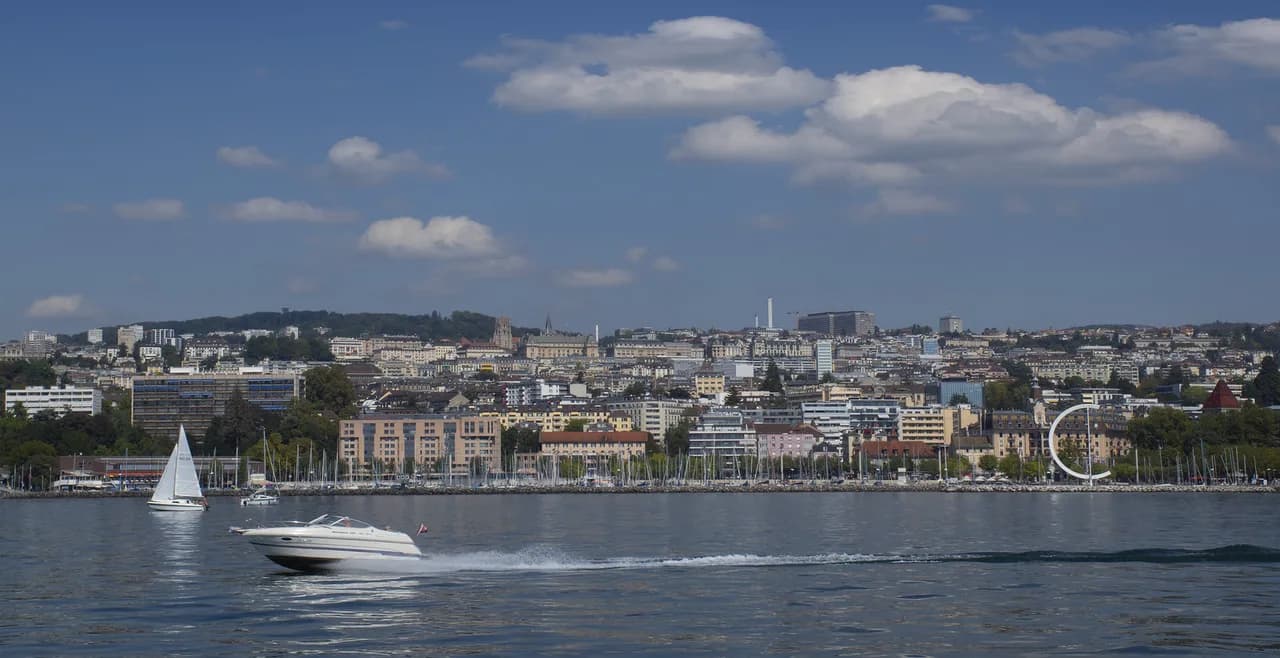
Lausanne's old town is not on Lake Geneva. It sits on a ridge above the lakefront, on the promontory the Cité was built on, which is why a visit here means climbing rather than strolling flat. The medieval city grew around that Cité ridge and spread into four more quarters, so the old town reads best as a short vertical walk with a clear start and finish.
The anchors are compact: Place de la Palud with its Town Hall, the Escaliers du Marché stairs up to Lausanne Cathedral, and the Château Saint-Maire at the northern tip of the Cité. Plan half a day for the core and most of a day if you add the history museum and the cathedral tower.
Why Lausanne's Old Town Sits on a Ridge, Not the Lakefront
The original settlement has occupied the ground between the lakeshore and the Cité for eight millennia, and the medieval city developed around the Cité promontory shaped by the Flon and Louve rivers. Those two valleys are now covered, but they still explain the layout: the old town is a ridge with steep drops on both sides.
For a visitor this means you should expect stairs and slopes rather than a flat grid, and build the day around a single climb from Palud up to the Cité. Sturdy shoes matter more than a map here, and anyone with knee or mobility issues should plan a shorter ridge-only loop.
The reward is a dense cluster of sights within a few minutes of each other. For the wider set of named sights beyond this ridge, the guide to things to do in lausanne puts the old town in context with the rest of the city.
The Five Historic Quarters: Cité, Palud, Pont, Bourg and St-Laurent
Lausanne's old town is really five neighborhoods: Cité, Palud, Pont, Bourg and St-Laurent. The Cité held the official structures, including the cathedral, the bishop's residence, the St-Maire Castle and the Grand Hôpital, while La Palud below became the commercial and political hub around its City Hall.
The Pont district grew where the Flon and Louve met, and tradesmen and artisans settled there to use the hydraulic power of the mills, which numbered more than 50 around 1830. On the far side of the Flon valley, Bourg became the address for luxury shops and inns, and St-Laurent, across the Louve, drew artisans.
Knowing which quarter you are in helps you decide what to linger on. Cité is for monuments and views, Palud for the square and civic buildings, Pont for the sense of a working valley, Bourg for the historic shopping street, and St-Laurent for a quieter church corner.
Start at Place de la Palud: the Town Hall and the Fountain of Justice
Place de la Palud is the natural starting point and the heart of the old town, with the Fountain of Justice in the middle and sidewalk cafés around its edges. The Town Hall faces the square, built by the Lausanne architect Abraham de Crousaz between 1673 and 1675 on the site of earlier town halls, and its belfry still rises over the square.
Treat the square as a ten-minute orientation stop rather than a destination. Look at the Town Hall facade and the fountain, then find the covered wooden stairs at the top of the square, which are the most direct way up to the cathedral.
Climb the Escaliers du Marché to Lausanne Cathedral
The Escaliers du Marché rise from the Palud side toward the cathedral under a wooden canopy, and they are the classic way to gain the Cité ridge on foot. The climb is short but steady, so take it slowly and turn around at the top for a look back over the Palud rooftops.
Lausanne Cathedral has towered over the city for more than eight centuries and is a masterpiece of Gothic art, with carved detail in the stonework and a calm interior. It is the single most important building in the old town, and the pivot of any visit here.
If you want the cathedral folded into a longer sequence of stops rather than a one-off, the lausanne old town walking tour plots the whole ridge in order. Opening hours for the cathedral and its tower are published by the site itself.
Lausanne Cathedral: the Gothic Nave and the Tower Panorama
Inside, the cathedral rewards a slow lap of the nave and aisles rather than a quick photo stop. The Gothic harmony and sculpted detail are the point, and the building is felt as much as seen; give it twenty to thirty minutes at an unhurried pace.
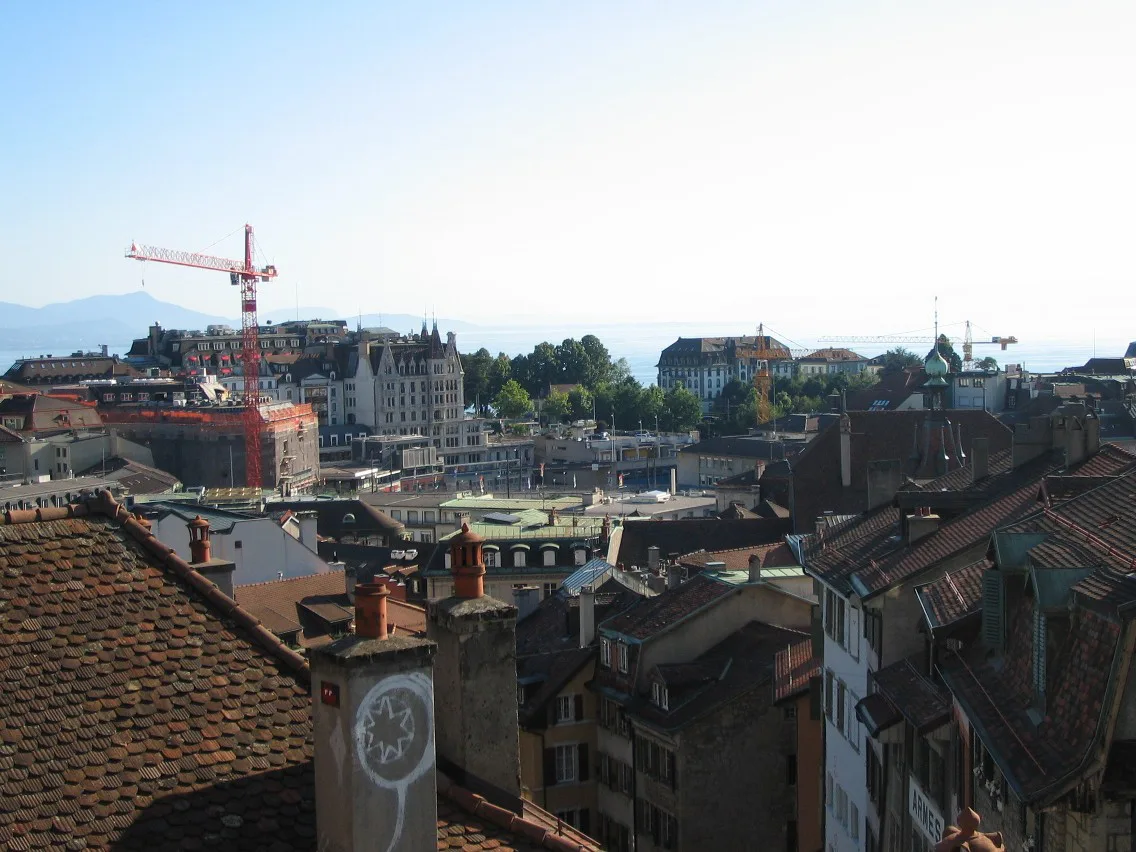
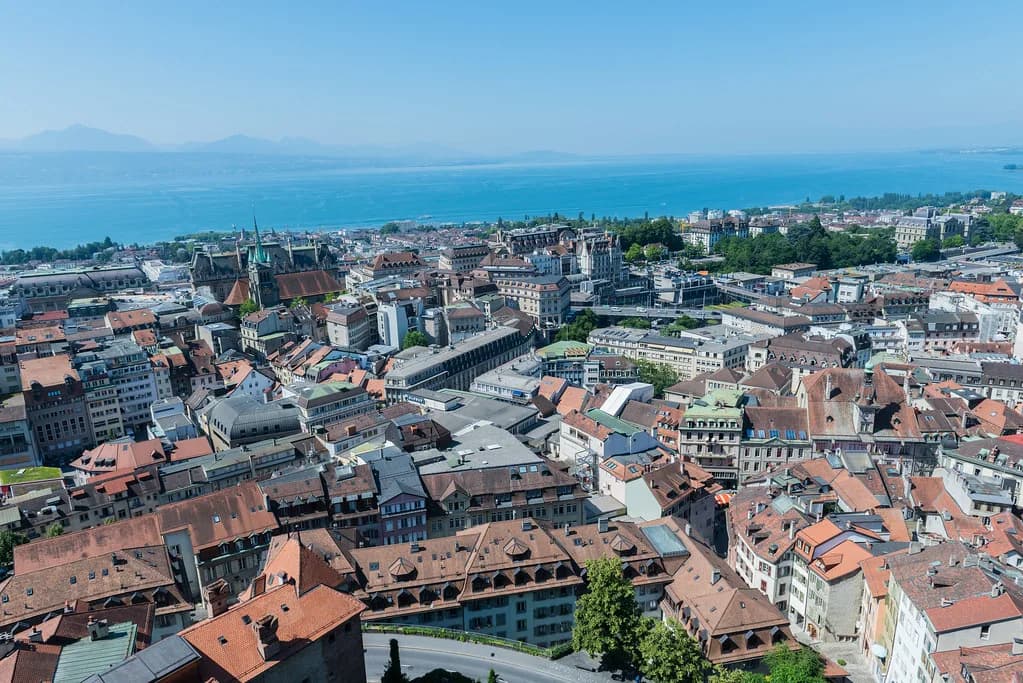
From the cathedral tower, an exceptional panorama opens over the roofs of the Cité, Lake Geneva and the Alps. That view is the best single justification for the climb, but it costs time and many steps, so it belongs in a day with slack rather than a rushed one.
Clear weather is what makes the tower worthwhile, since the point is the view. Warmer months generally give the better odds of a clear horizon, though you should check the day's conditions before committing to the stairs.
Château Saint-Maire and the Ancienne Académie at the North End
At the far north end of the Cité hill stands the Château Saint-Maire, built by Lausanne's bishops between around 1400 and 1430 as their new residence, deliberately set apart from the lower city and its turbulent bourgeoisie. Since its founding it has been the seat of regional power, and it remains a landmark rather than a museum to tour inside.
A short walk from the castle, the Ancienne Académie was built in the middle of the 16th century and housed Europe's first college of Protestant and French theology, then the University between 1890 and 1987. Its courtyard side makes a quiet pause on the way back toward the cathedral.
These two stops take little time but complete the Cité picture: church, bishop, and civic power in one short ridge. Walk between them slowly and use the squares and steps as viewpoints rather than racing on.
The Old Bishop's Palace and the Lausanne History Museum
The old bishop's palace was built between the 11th and 15th centuries for one of the region's most important dioceses, and it now houses the Lausanne Historical Museum. The museum was renovated in 2018, and its central exhibit, the Lausanne, l'Exposition, contains the emblematic model of the city in 1638.
That 1638 model is the fastest way to understand the five-quarter layout you have just walked, because it shows the ridge, valleys and walls together. If it rains, this is the best indoor stop in the old town, and the wider museums in lausanne are worth knowing if you want to add a second collection.
Check the museum's own page for current hours and entry fees before you go, since these change and are not something to guess. Budget an hour for the model and permanent exhibits if you have only a half-day for the old town.
The Tour de l'Ale and the Last Traces of the Medieval Walls
The Tour de l'Ale dates from the 14th century and is the last vestige of Lausanne's old city walls, most of which were destroyed in the 18th century. It is a stubby, easy-to-miss tower, but it gives a real sense of how enclosed the medieval town once was.
The city's defense system is still readable in the ridge itself: sections of the walls are now part of the Old Academy's foundations and can be seen from the Bessières Bridge. A short detour there turns the tower from an isolated remnant into a piece of a larger picture.
Around 50 towers once made up the city's medieval fortifications, and the Ale Tower and the Ouchy bishop's castle tower from the 12th century are the surviving remnants. That number is the useful bit of context: this is a fragment, not a wall you can walk end to end.
Rue du Bourg: Antique Houses, Shops and Bars
Rue du Bourg, on the Bourg side of the Flon valley, is an area of antique houses now filled with jewelry and designer stores, bars and jazz clubs, and it remains one of the livelier corners of the old town. Come for the street itself between sights rather than as a fixed stop.
Bourg's historic role as the quarter of luxury shops and inns is exactly what the street still delivers. For a focused look at the city's retail side, the guide to shopping in lausanne is a better fit than a general old-town walk.
Keep an eye on Swiss shop hours: many stores close on Sunday, so a Sunday stroll through Bourg is likely to be window-shopping. Plan your browsing for a weekday or Saturday if buying is part of the aim.
St-Laurent and Its Neoclassical Church Facade
The Église St-Laurent was built between 1716 and 1719 as a Protestant church over the ruins of a 10th-century predecessor, and its facade is the only neoclassical example in the city. The St-Laurent quarter across the Louve was where artisans settled, and its appearance changed substantially when new streets were opened in the 19th century.
This is a quieter part of the old town, worth ten minutes for the facade and the surrounding streets rather than an extended stop. It reads best as a contrast to the monumental Cité after the density of the cathedral hill.
Pont and the Covered Flon and Louve Valleys
The Pont district grew at the junction of the Flon and Louve, rivers that are now covered over, and its identity comes from water power and trade rather than from monuments. Around 1830 more than 50 mills were turning in this valley, which explains the workshops that once filled it.
Most visitors pass through Pont on the way between the lakefront and the ridge without noticing it. Slow down for one block and look at how the streets step through the old valley floor, and the whole geography of the old town becomes clearer.
Palais de Rumine and Its Five Museums
The Palais de Rumine, built between 1896 and 1906 in neo-Renaissance style, was once the University of Lausanne and now holds the university library and five museums, among them the Musée Cantonal des Beaux-Arts, the History and Archeology Museum, and collections devoted to geology, numismatics and zoology. It sits at the edge of the historic core, which makes it a natural extension of the walk rather than a detour.
Treat the palace as a swap rather than an addition: on a short visit, choose either the history museum on the Cité or one collection at Rumine, not both. Each museum keeps its own hours and admission policy, so confirm them on the day you plan to go.
Route Order and How Long the Walk Takes
Walk it in one direction: Place de la Palud, up the Escaliers du Marché to the cathedral, north to Château Saint-Maire and the Ancienne Académie, then back past the old bishop's palace and the history museum, down through Bourg, across to St-Laurent and back through Pont. That order keeps the climbing in a single push and ends on level ground near the covered valley.
The core loop takes roughly half a day at an unhurried pace, including short stops at the fountain, cathedral and castle exteriors. Add an hour for the history museum, and another hour if you climb the cathedral tower, which is what takes the day to its full length.
When to Go: Light, Crowds and the Tower
Aim for a clear day if the tower is on your list, because the panorama over the Cité, Lake Geneva and the Alps is the whole reason to climb. Mornings tend to give softer light on the cathedral facade, and the Palud square is calmer before the cafés fill.
The old town is public space and free to walk at any hour, so the main cost of timing is museum hours rather than access. If a rainy day is forecast, the history museum and Rumine's collections are the sensible anchors, and the ideas in things to do in lausanne when it rains cover the rest.
Practical Trade-offs: Stairs, Cobblestones and What to Skip
The honest trade-off is the effort-to-reward ratio. The climb from Palud to the cathedral is short, but the tower adds a lot of steps for a view, and the cobblestones throughout are unforgiving in thin soles; pick the tower or the history museum if you are short on energy.
On a half-day, skip St-Laurent and Pont and concentrate on Palud, the cathedral and the Cité monuments, which carry the most weight per minute. Save Rumine, the Tour de l'Ale and the wall traces for a longer stay, or spread them over a second morning.
Most of the old town costs nothing to walk, and the paid elements are the museums and the tower. Check current entry fees at each site's own page rather than relying on older figures, since Swiss museum prices are adjusted.
Plan Your Visit
Lausanne's old town is a compact, vertical half-day that rewards a single climb and a slow descent. Start at Place de la Palud, take the Escaliers du Marché up to the cathedral, follow the ridge to Château Saint-Maire, and come back down through Bourg with the history museum's 1638 model as your reference point.
The best value comes from pairing the free streets and squares with one paid interior, and from choosing the tower only on a clear day. If you want to branch out from the ridge, the free things to do in lausanne and the best views in lausanne pick up where this walk ends.
Explore more Lausanne guides
Frequently Asked Questions
Does Lausanne have an old town?
Yes. Lausanne's old town is the ridge-top medieval core above the lakefront, built around the Cité promontory and divided into five quarters: Cité, Palud, Pont, Bourg and St-Laurent. The main sights cluster within a short walk of Place de la Palud.
What are the must-see sights in Lausanne's old town?
The essential stops are Place de la Palud with its Town Hall and Fountain of Justice, the Escaliers du Marché stairs, Lausanne Cathedral, Château Saint-Maire and the Ancienne Académie. Add the Lausanne History Museum for its 1638 city model, the Tour de l'Ale for the medieval walls, and Rue du Bourg and St-Laurent for the street-level character of the other quarters.
How long does it take to walk Lausanne's old town?
The core loop from Palud to the cathedral and the Cité monuments takes about half a day at an unhurried pace. Add roughly an hour for the history museum and another for the cathedral tower if you want both, which fills most of a day.
Is the old town hilly?
Yes. The old town sits on a ridge above Lake Geneva, and the historic quarters were shaped by the Flon and Louve valleys. Expect steps and slopes, particularly on the Escaliers du Marché between Place de la Palud and the cathedral.
Is Lausanne Cathedral in the old town?
Yes. Lausanne Cathedral stands on the Cité ridge, a short climb from Place de la Palud via the Escaliers du Marché. Its tower opens a panorama over the Cité roofs, Lake Geneva and the Alps, though climbing it costs time and steps.
Where is Place de la Palud, and what is there?
Place de la Palud is the central square of the old town, with the Fountain of Justice in the middle, sidewalk cafés around it, and the Town Hall built between 1673 and 1675 facing the square. It is the best place to start a walk up to the cathedral.
What are the five historic quarters of Lausanne?
Cité, Palud, Pont, Bourg and St-Laurent. Cité held the cathedral and the bishop's castle, Palud was the commercial and political hub, Pont was the artisans' valley around the mills, Bourg had the luxury shops and inns, and St-Laurent drew artisans across the Louve.
Sources
Notes for your Swiss city break
Optional updates to our Swiss city guides.
You might also like
Continue reading
More guides you'll find useful