Things to Do in Montreux in Summer: Castles & Lake Views
Plan a summer break in Montreux with Chillon Castle, the Freddie Mercury statue, the Rochers-de-Naye cogwheel and a June-to-August climate picture.
On this page
Montreux works in summer because everything sits in three layers: a long flower-lined lakefront promenade, the castle end at Veytaux, and the mountain of Rochers-de-Naye rising straight above town. You can walk the first, ride to the second and take a cogwheel railway up the third, all within a short break. This guide covers named sights, walking times, CHF costs where they are documented, and how to structure one, two or four days.
Why Montreux works as a summer base
The town center is small enough to cover on foot, with the station a couple of minutes from the waterfront. From there the action runs along one continuous lakeside promenade, so you never need a plan more complicated than walking south toward the castle. The mountains start immediately behind the town, which is why a summit excursion fits into half a day rather than a full one.
Montreux is also a music town with a specific history: Queen recorded here, Freddie Mercury lived nearby, and the former Mountain Studios now hold the Queen Studio Experience. That gives a rainy afternoon or a hot midday a ready indoor option within a few minutes of the lake. For a wider inventory of sights, see the Montreux Attractions collection before you lock a schedule.
Typical summer weather and what it means for planning
Climate averages for the region put May highs near 58°F (14°C) with lows around 41°F (5°C), and August warmer at roughly 71°F (21°C) with lows near 52°F (11°C).
Treat those as climate normals, not a forecast: mountain tops run colder and windier than the lakefront, so a light jacket belongs in the day pack even in July. Rain is a real possibility across the season, which is the argument for keeping one indoor anchor such as the Queen Studio Experience or the food museum in Vevey in reserve. Warm, settled days are best spent outdoors on the promenade and at the castle. If you are weighing months rather than days, the month-by-month detail on the best time to visit covers the trade-offs between spring, high summer and fall.
Spring visitors get a different picture, with cooler averages and fewer crowds; the Montreux in April guide sets out what that month looks like.
The lakeside promenade and Quais de Montreux
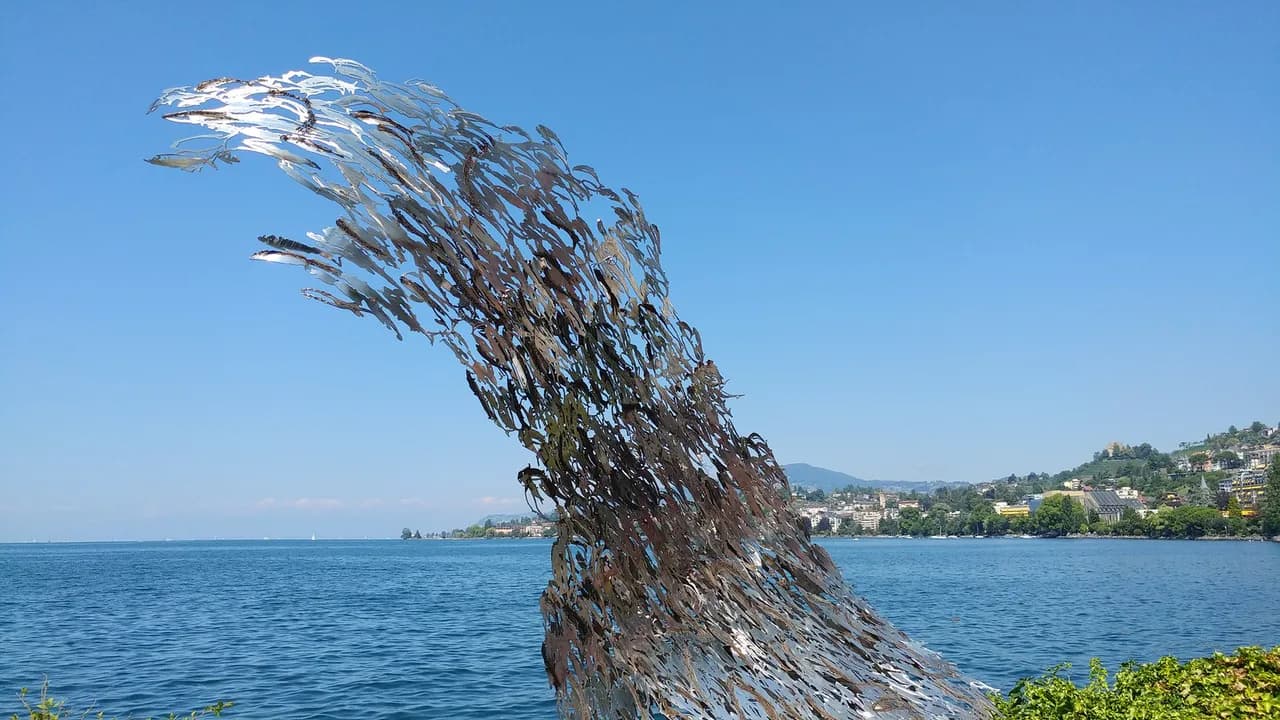
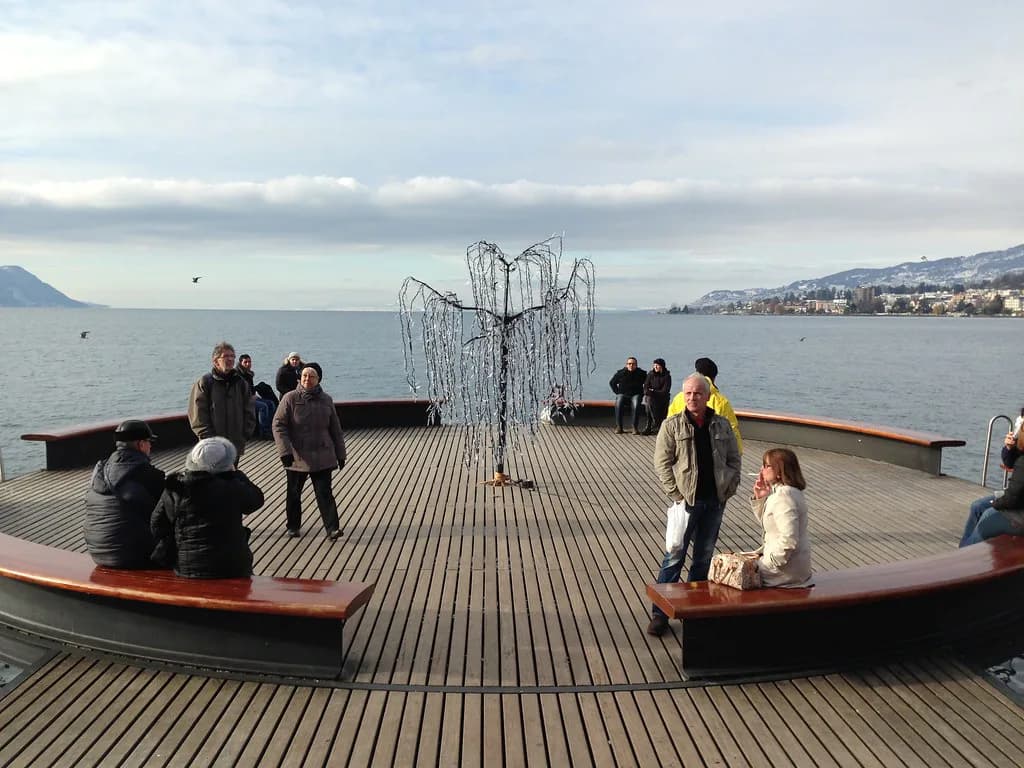
The promenade, also listed as the Quais de Montreux, is free, open around the clock and the single best use of a first afternoon. It runs along Lake Geneva with flower beds, sculpture and mountain views on the far shore, and it is the spine that connects the town center to the castle.
The walk from the town center to Château de Chillon is about 3 km (roughly 2 miles), and most people need somewhere between 30 and 45 minutes if they keep moving. Budget longer, because benches, lake views and photo stops stretch it past an hour easily. You can also ride back by boat from the pier beside the castle or take a bus, which is the sensible option if you have already walked up to the castle and want to save your legs for the evening.
Markers along the path point the way toward the castle, so navigation is not an issue. Wear shoes you can walk in for an hour and carry water; the promenade has little shade in the middle of the day. For more on how the town is laid out, the best time to visit overview explains the geography season by season.
Château de Chillon: the medieval island castle
Chillon sits on a rock in the lake at Veytaux, and entry costs 13.50 CHF with an audio guide at 6 CHF, free to holders of a Swiss Travel Pass. Published hours are 10:00 to 18:00 daily, so an early start beats the midday crush. Give the interior at least an hour, and more if you take the audio guide, which covers the vaults, halls and chapel in detail.
The fortress is the most visited historic monument in the country, which tells you what summer afternoons look like. Arriving near opening keeps the courtyards and dungeons calmer and the lake light softer. Tickets can be bought on arrival, so you do not need to commit to a fixed slot far in advance.
Pair it with the spring and shoulder-season picture if you want fewer people around the ramparts; the Château de Chillon entry in the September guide shows how the same visit changes with the calendar.
Fort de Chillon: the fortress cut into the rock
Directly opposite the medieval castle, Fort de Chillon is a former military site hidden inside the rock and opened to the public in 2020. Exhibits combine history with interactive technology, which makes it a practical choice for families and for anyone who wants a second dose of the castle area without repeating it. It sits at Avenue de Chillon 22 in Veytaux, a few minutes from the castle gate.
Freddie Mercury in Montreux
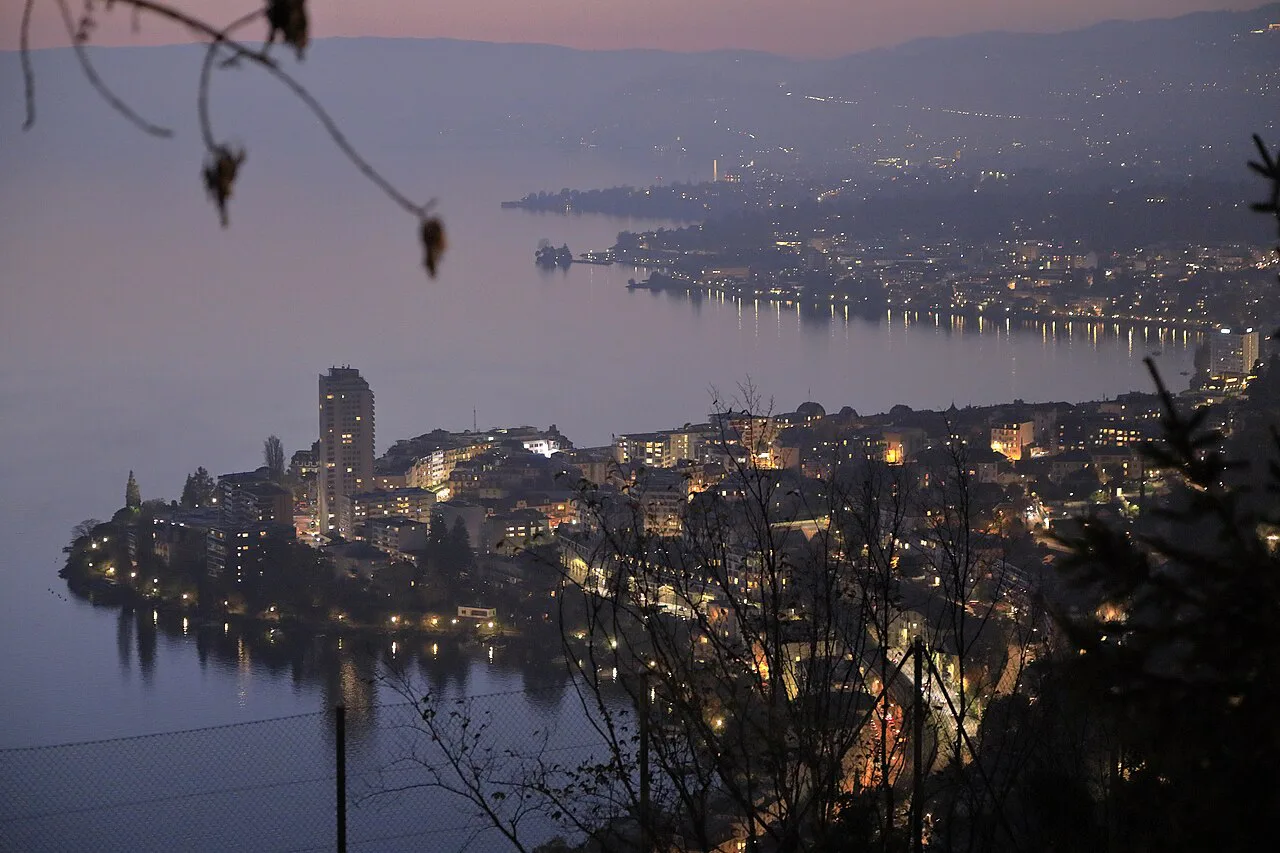
The bronze Freddie Mercury statue stands at Place du Marché, facing the lake, on the spot where the promenade widens into the market square. It is free, always accessible, and the obvious first stop after leaving the station. Fans leave flowers and notes at the base, and the market and supermarket on the square make it a natural lunch halt.
A few steps away at Rue du Théâtre 9, the Queen Studio Experience recreates the rooms of Mountain Studios inside the Casino Barrière Montreux, with handwritten lyrics, instruments and costumes on show. It is the single best indoor hour in town on a wet day, and it sits in the same building as the casino, so the two naturally combine. Guided Freddie Mercury walking tours are also offered locally; check the current price and times when you book.
The Montreux Jazz Festival takes over the waterfront in early summer, and parts of the program are free; the exact dates and lineup are published each year by the organizers.
Rochers-de-Naye: the cogwheel ride to 2,042 m
Rochers-de-Naye tops out at 2,042 m and is reached by cogwheel railway from Montreux via Haut-de-Caux, with the climb to the summit taking around an hour. Plan a few hours for the whole excursion rather than treating it as a quick photo stop. There is a restaurant at the top, and a short walk from the station opens up the panorama over Lake Geneva and the Alps.
With a Swiss Travel Pass, the Montreux to Haut-de-Caux leg is included and the Haut-de-Caux to summit section is charged at half price. Without a pass, expect to pay the full mountain fare, so the card pays off fastest on days that combine a summit trip with a boat. Weather at 2,042 m is colder and windier than on the lakefront even in August, so pack a layer.
Autumn is a strong alternative for the same ride, with clearer air and thinning crowds; the Chillon Castle entry in the October guide gives the seasonal context.
Vevey, Chaplin's World and the Lavaux terraces
A second day points naturally toward Vevey, a short train or boat ride along the shore. The Alimentarium food museum sits on the Quai Perdonnet promenade, with interactive exhibits, a restaurant and a vegetable garden, and it fills a wet or slow morning comfortably.
Chaplin's World in Corsier-sur-Vevey occupies Charlie Chaplin's former family home, the Manoir de Ban, with an exhibition across a ten-acre estate. Adult tickets run around 30 CHF, and the site is generally open daily between 10:00 and 19:00 from April to October, with shorter hours in November and December; confirm the day you plan to go.
The Lavaux terraced vineyards, a UNESCO World Heritage site, cover around 800 hectares above the lake between Lausanne and Chillon. Cully is roughly 25 minutes away by train and gives you a base for short sections of the vineyard paths, with Saint-Saphorin a scenic place to end.
Walking the terraces through October remains rewarding; the Montreux in October guide covers the cooler, clearer version of the trip.
How many days Montreux needs
One full day covers the promenade, the Freddie Mercury statue, the castle and a return walk or boat trip, which is a satisfying taster if Montreux is a stop rather than the whole trip. Two days add the Rochers-de-Naye cogwheel or a Vevey and Lavaux day without racing. Three or four days suit travelers who want both a summit day and a vineyard day and still leave room for the Queen Studio Experience and Fort de Chillon.
A four-day itinerary can also absorb the Golden Pass Railway, the scenic line that runs out of Montreux toward Zweisimmen and on through the countryside. Treat it as a half-day or a full-day commitment rather than a quick add-on.
Money-saving levers: the Swiss Travel Pass
The Swiss Travel Pass bundles trains, buses and boats, gives free entry to Chillon Castle, and halves the fare on most mountain railways, including the upper section of Rochers-de-Naye. The upfront cost is high, so it earns its keep on trips of several days that combine the castle, lake boats and at least one mountain ride. Short visits are usually cheaper paying per leg.
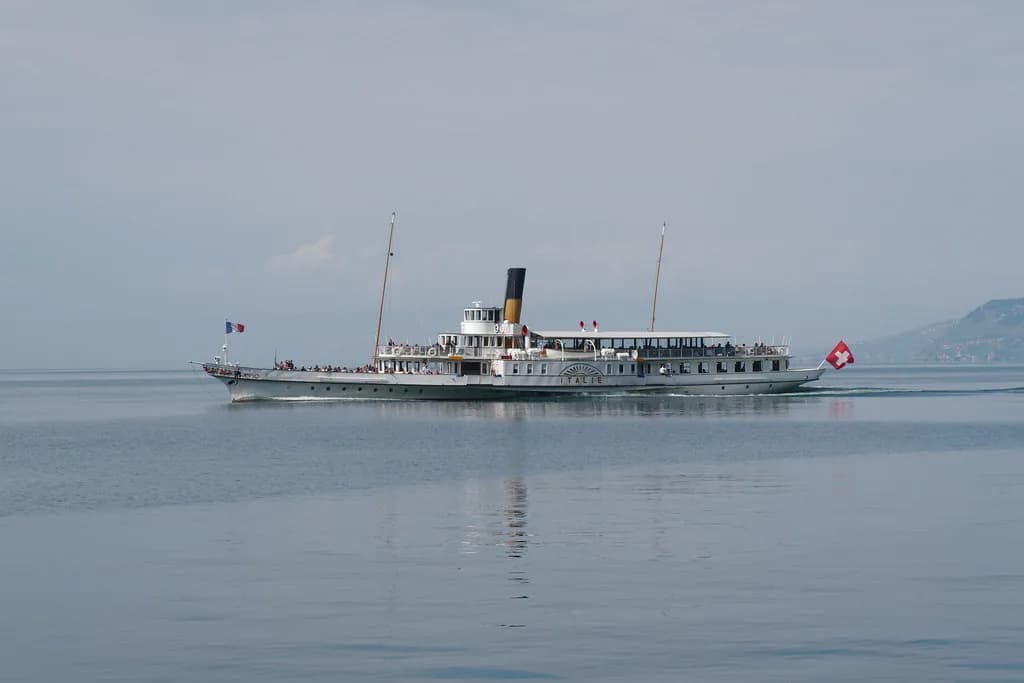
The lakeside boat network doubles as transport and sightseeing, with boats linking Montreux, Vevey and the pier beside the castle. If you carry the pass, those crossings are effectively covered. That makes it easy to build a loop combining a walk out and a boat back.
Where to eat around Place du Marché
The market square is the most convenient refueling point in town. A Migros supermarket sits at Place du Marché 6, with a take-away counter downstairs, which is the cheapest way to assemble a lakeside picnic of bread, cheese and fruit.
For a sit-down meal, La Rouvenaz at Rue du Marché 1 serves Italian seafood, pasta and pizza a few steps from the water, and 1820 Restaurant & Cocktails Bar sits almost on the lake with Italian and Mediterranean dishes and an all-day schedule. Both are relaxed enough for a mid-walk lunch.
If you want a Swiss specialty, the Caveau des Vignerons in the old town does fondue and raclette in a cozy room, which works well on a cooler evening.
Practical trade-offs: crowds, rain and what to skip
The main summer constraint is the combination of festival weeks and day-trippers from Lausanne and Geneva. Early mornings along the promenade and castle visits near opening are reliably calmer than afternoons. If a clear mountain day appears, take it rather than saving Rochers-de-Naye for later, because the summit view is the part that depends on weather.
Rain days are better spent indoors at the Queen Studio Experience, Fort de Chillon or the Alimentarium than trying to out-wait a shower on the promenade.
If you are planning a wider Swiss trip, Interlaken in summer and Lucerne in summer make useful comparison points for how another lake town organizes its high season.
Plan Your Summer Visit
Build the trip around the promenade as a spine: statue and market square first, castle and Fort de Chillon next, then a dedicated half-day for the Rochers-de-Naye cogwheel. Keep one indoor anchor in reserve and carry a layer for the summit even in August. If the dates are still open, the best time to visit montreux guide helps you weigh July crowds against the calmer shoulder months.
Frequently Asked Questions
What are the best things to do in Montreux in summer?
The strongest combination is a walk along the lakeside promenade to Château de Chillon, the Freddie Mercury statue at Place du Marché, the Queen Studio Experience and a half-day cogwheel trip to Rochers-de-Naye. Add a day in Vevey and the Lavaux terraces if you have time.
How many days do you need in Montreux?
One day covers the promenade, the statue and the castle. Two days allow either the Rochers-de-Naye summit or a Vevey and Lavaux day. Three or four days suit travelers who want both, plus indoor stops and the Golden Pass Railway.
What is the weather like in Montreux in summer?
Climate averages give May highs near 58°F (14°C) and August highs around 71°F (21°C), with cool nights. Conditions vary with altitude, so pack a layer for mountain excursions even in high summer.
How long does the Rochers-de-Naye trip take?
The cogwheel railway reaches the 2,042 m summit from Montreux via Haut-de-Caux in about an hour, and the whole excursion needs a few hours. A Swiss Travel Pass covers the lower leg to Haut-de-Caux and halves the summit section.
How far is Chillon Castle from the town center?
Chillon is about 3 km (roughly 2 miles) from the center along the promenade, a walk of 30 to 45 minutes at a steady pace and easily over an hour with stops. Boats and buses provide a return option.
Is Montreux worth visiting in summer?
Yes, if you want a compact lakeside base with a castle, a market square, a music museum and a mountain railway within easy reach. The trade-off is festival-week crowds and higher prices, which favor early starts and shoulder-season alternatives.
Sources
Notes for your Swiss city break
Optional updates to our Swiss city guides.
You might also like
Continue reading
More guides you'll find useful