How Many Days in Interlaken? 1, 2 or 3 Days Explained
Interlaken's town sights fit into one day; two days add Lauterbrunnen, three add Grindelwald or a cable car. Here is what each length of stay covers.
On this page
One day is enough for the town of Interlaken. The center is compact and flat, and the places worth seeing on foot — Unterseen's historic market square, the casino garden and the Höhematte park with its Jungfrau panorama — fill an easy day without a single cable car.
Everything beyond that day goes to the valleys and mountains around town, not to Interlaken itself. Two days buys a full day in the Lauterbrunnen valley, and three days adds Grindelwald or a ride up to First. Our full Interlaken itinerary maps these days onto a workable order.
How Interlaken Is Laid Out
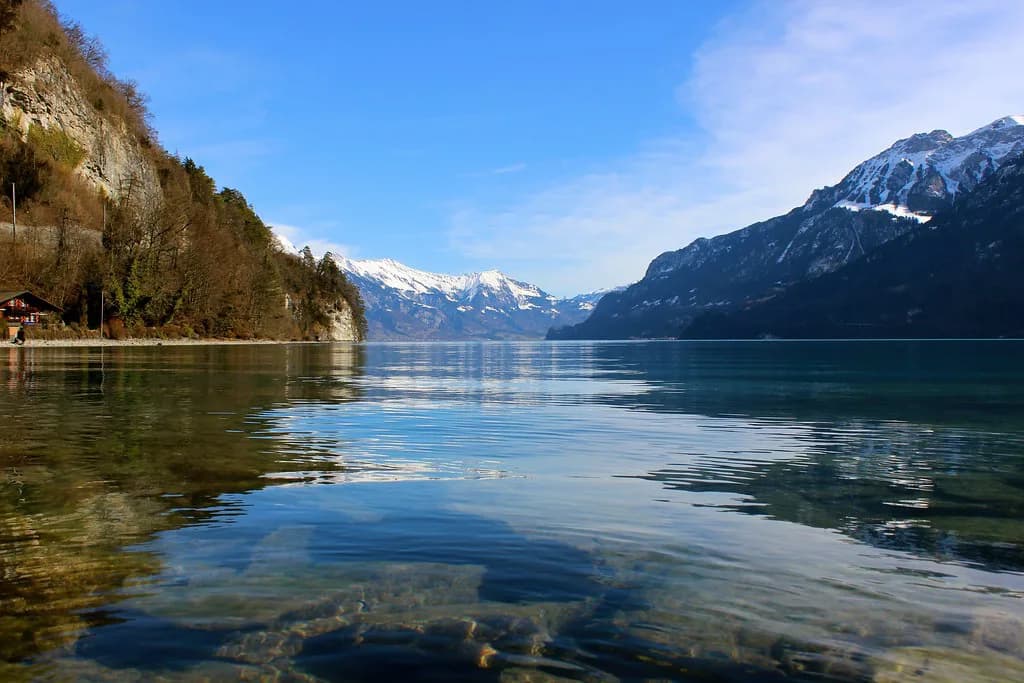
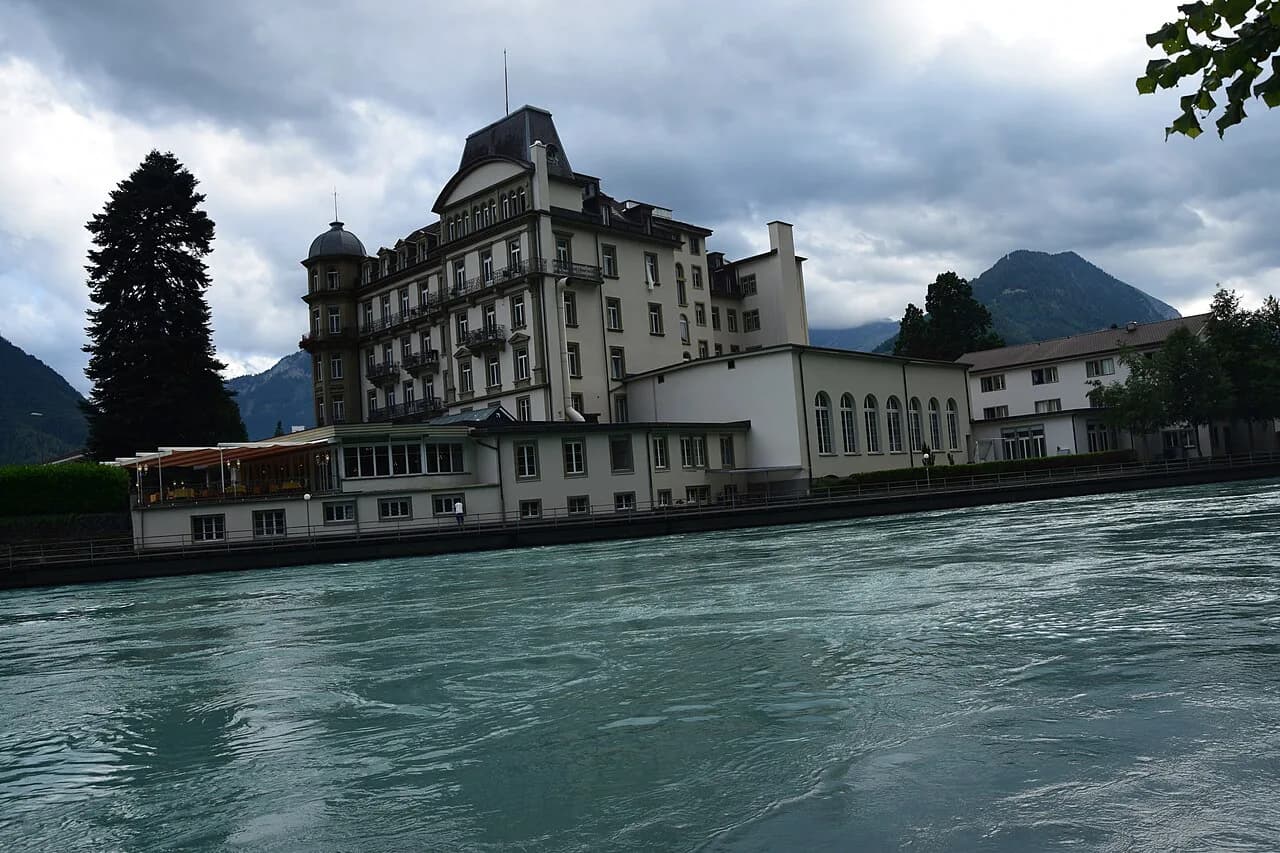
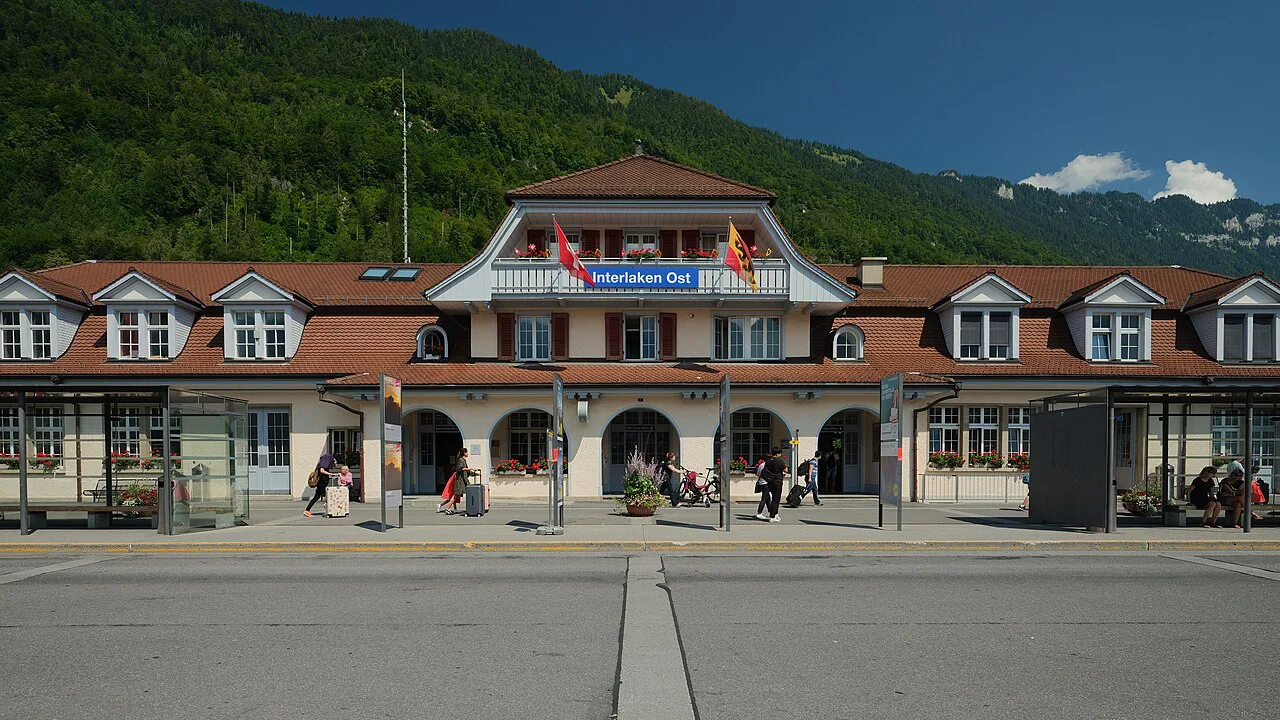
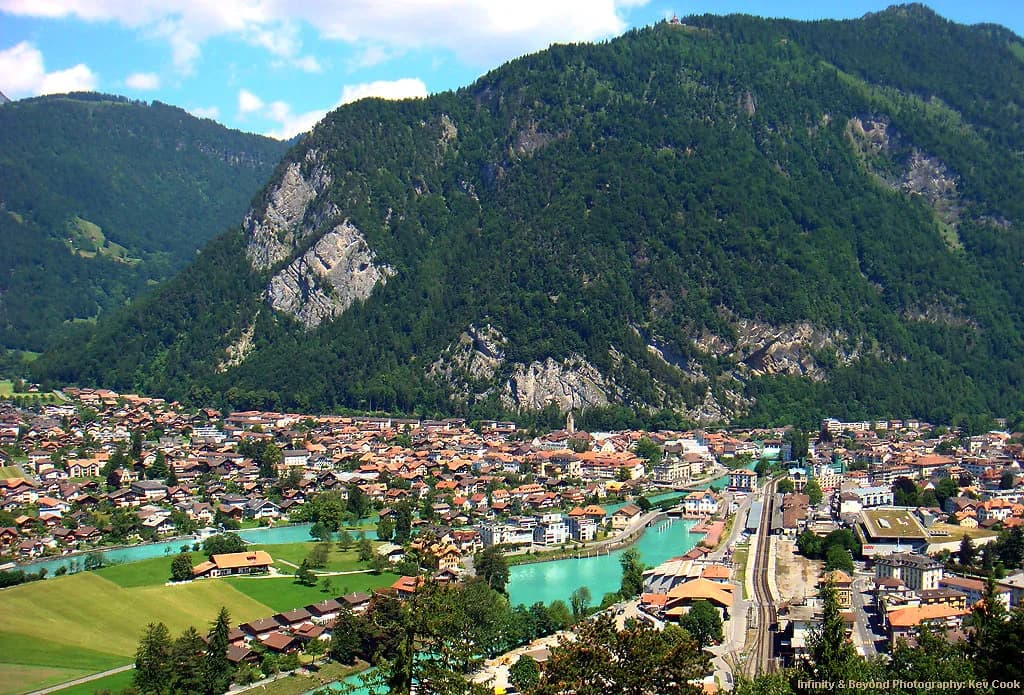
Interlaken runs along a narrow strip of land between Lake Thun and Lake Brienz, with two stations at either end. Interlaken West is the closer of the two to Unterseen's old lanes and market square, while Interlaken East sits beside the Höhematte and the casino garden.
That geography shapes the plan: the town's own sights sit within a walk of each other, and the mountains beyond are reached by train or cable car from the edges. A town day needs no vehicle; a valley day is nearly all transfers.
One Day in Interlaken: The Town Itself
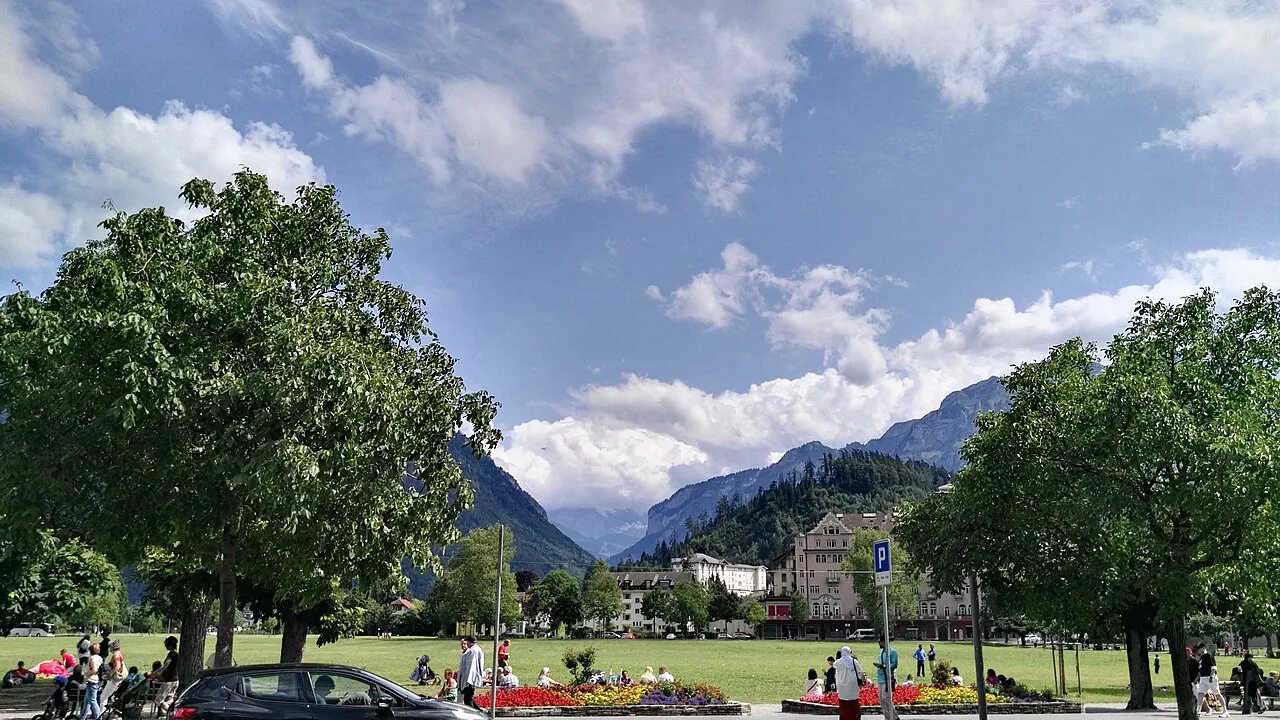
Start in Unterseen, the old market town on the west bank, whose historic square and lanes give Interlaken its only real dose of medieval fabric. Cross toward the Höhematte, the open meadow at the center of town where the Jungfrau fills the gap between the buildings, and walk through the casino garden on the way.
If time is tight, cut the shopping streets first. They repeat what every Swiss town offers, whereas the Höhematte view is the reason people stop here at all. One day also leaves room for the Harder Kulm viewpoint above town if the weather is clear.
Two Days in Interlaken: Add the Lauterbrunnen Valley
The second day belongs to Lauterbrunnen, the valley of waterfalls south of town. Take the bus from Interlaken to Wilderswil and switch to the train; the round trip to Lauterbrunnen runs about CHF 12, with the bus ride from Matten included on the hostel's guest ticket.
From the village, the walk toward Staubbachfall is the first stop, and where conditions allow you can climb the stairs behind the falls for a view down the valley. The Lauterbrunnen to Grütschalp cable car lifts you about 800 meters in under ten minutes for CHF 9 one-way, and from the top a path runs to Mürren.
From Mürren you can continue on foot or by cable car to Gimmelwald for CHF 6 one-way, then descend to Stechelberg the same way. Bus 141 covers the last stretch back toward Lauterbrunnen for CHF 4.40 one-way if your legs are done.
Budget the day around the transfers rather than the sights. Each hop is short, but village-to-village legs add up, and the valley rewards people who pick two or three stops instead of trying to tick off every hamlet.
What the Valley Fares Add Up To
A two-day plan that includes the full Mürren loop is not just a train ticket. Add the Wilderswil train, the Grütschalp cable car, the Mürren–Gimmelwald cable car and the Stechelberg bus and you have a realistic figure for the day before you ever buy lunch.
These are fares quoted for specific legs, so treat them as a planning guide and confirm at the ticket counter or in the SBB app on the day. A Swiss Travel Pass or Half Fare card can change the math, but the savings depend on which legs you actually ride.
Three Days in Interlaken: Grindelwald or First
The third day sends you the other way, to Grindelwald under the north face of the Eiger. The train from Wilderswil to Grindelwald runs about CHF 19.60 return, and the village itself is a short walk with big views in every direction.
If the weather is clear and the budget allows, the First cable car from Grindelwald adds a summit to the day for CHF 34 one-way. At the top, the cliff walk with its glass platform is the headline, and the walk to Bachalpsee or down to the village fills the rest.
Grindelwald is the better third day for travelers who want a village and a viewpoint without another full day of cable cars. The Lauterbrunnen valley is the stronger repeat visit for anyone who wants waterfalls and high hamlets, so pick one rather than cramming both into a single day.
What a Three-Day Trip Looks Like in Practice
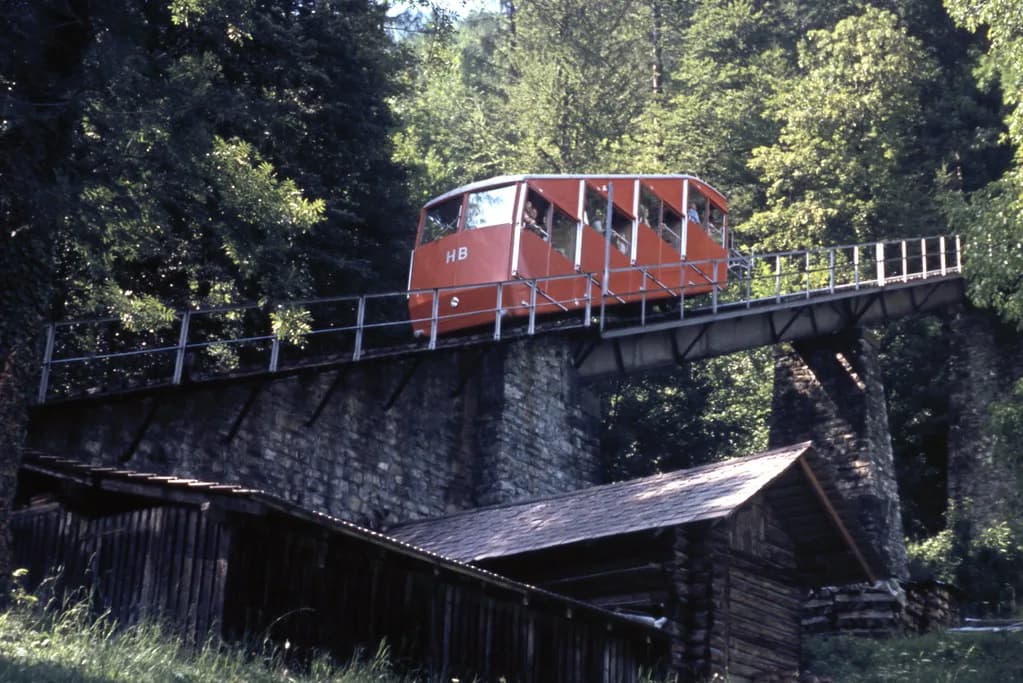
Day one stays in town: Unterseen, the casino garden, the Höhematte and, if it is clear, the Harder Kulm funicular. Day two goes south to Lauterbrunnen with the Staubbachfall walk and the Grütschalp cable car. Day three heads east to Grindelwald, with the First cable car or a village wander depending on weather.
Most of that time is spent moving between villages, not standing at viewpoints. The transfers are short but frequent, and a three-day plan works best when you accept that two of the days are valley days and only one is actually Interlaken.
When Four or More Days Makes Sense
Four days suits travelers who want weather flexibility on the mountain days. If the First cable car is closed by cloud, a spare morning lets you swap days rather than lose the summit entirely, and Interlaken makes a reasonable base for that kind of reshuffling.
More than four days starts to feel slow unless you are using Interlaken as a base for the wider Jungfrau region. The town itself does not grow with extra time; the region around it does.
When One Day Is Enough
One day covers Interlaken if you are passing through or using the town purely as a base for the Jungfrau region. Travelers who want the town's own sights and nothing else can see them before lunch and be on a train by afternoon.
If your trip is mostly a city break, it is worth comparing how many days nearby cities need. Lucerne and Zürich both reward a full day or two of their own, and the choice between them and Interlaken often comes down to whether you want mountains or lakefront old towns. Our guide to how many days in zurich works through the same one, two or three day question for the city, if a lakefront base appeals more than a mountain one.
Trade-Offs: Big Days Out vs. a Calmer Town
The real decision is not how many nights to book but how many valley days you can absorb. Each one costs transfer time and cable car fares, and a two-day plan that squeezes in both Lauterbrunnen and Grindelwald rarely does either justice.
Weather is the other variable. A cloudy day flattens the value of a CHF 34 cable car ride, so build in one flexible day if the mountains are your reason for coming.
Practical Notes Before You Book
Check fares and timetables close to your travel date, since cable car prices and train schedules change with the season. The town's sights are free to walk, which makes Interlaken an inexpensive base even when the mountain days are not.
If cost is your main worry, the honest answer is that the town is cheap and the valleys are not. Compare your plan against the real costs before committing to three days of cable cars.
The Verdict
One day for Interlaken itself, two for the town plus Lauterbrunnen, three if you want Grindelwald or a summit. That is the honest answer, and it holds whether you arrive in summer or winter.
Travelers who are still weighing whether the town deserves a stop at all should read an honest assessment of what Interlaken actually delivers before booking. Our comparison of Lucerne and Interlaken covers the same question from a different angle.
Frequently Asked Questions
How many days do you need in Interlaken?
One day covers the town itself, two add a day in the Lauterbrunnen valley, and three add Grindelwald or a cable car up to First. The town is compact and walkable, so extra days go to the valleys and mountains around it rather than to Interlaken itself.
Is one day in Interlaken enough?
Yes, if you only want the town's sights: Unterseen's historic market square, the casino garden and the Höhematte park with its Jungfrau view. Travelers using Interlaken as a base for the wider Jungfrau region can see the town in a morning and be on a train by afternoon.
What can you do in Interlaken in two days?
Spend the first day walking the town and the second in the Lauterbrunnen valley. The valley day covers the Staubbachfall walk, the Grütschalp cable car and the choice between walking or riding to Mürren and Gimmelwald, with a bus back from Stechelberg if you are tired.
Is three days in Interlaken too long?
No, if you use the third day for Grindelwald or the First cable car. Three days only feels long when all three are spent in town, since Interlaken's own sights do not fill more than one day. The extra days go to the surrounding valleys and mountains.
How much do the Lauterbrunnen and Grindelwald cable cars cost?
Budget for each leg separately, as fares change by season and route: the train to Lauterbrunnen, the Grütschalp cable car, the Mürren–Gimmelwald cable car and the Stechelberg bus each have their own fare. Check current prices at the ticket counter or in the SBB app.
Should you stay in Interlaken or in the villages?
Interlaken works well as a base because both stations and the bus network connect it to the valleys, while the villages put you closer to the mountains but limit your options on a cloudy day. Pick Interlaken for flexibility and the villages for proximity to a specific valley.
Sources
Notes for your Swiss city break
Optional updates to our Swiss city guides.
You might also like
Continue reading
More guides you'll find useful