
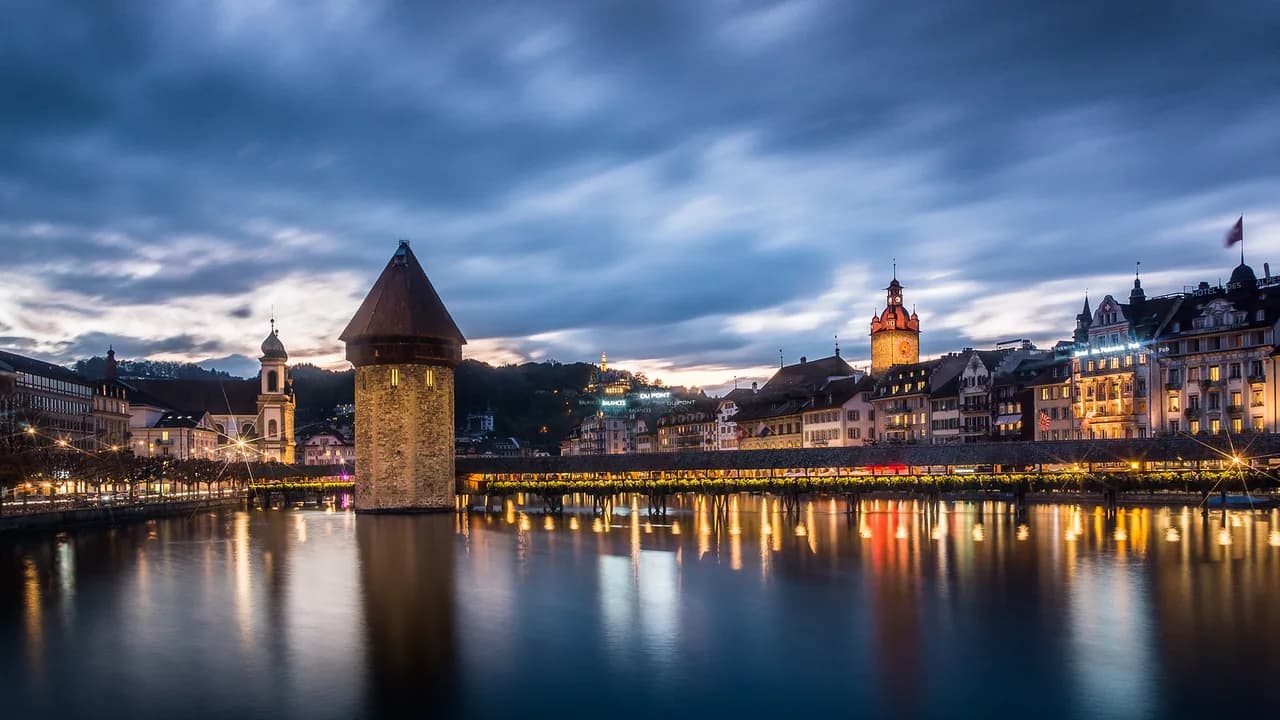
Chapel Bridge (Kapellbrücke) in Lucerne: What to See and How Long It Takes
The Chapel Bridge, or Kapellbrücke, is Lucerne's signature sight: a roofed wooden footbridge that crosses the River Reuss in the middle of the old town, with the stone Wasserturm standing in the water beside it. You do not buy a ticket or plan a slot for it. You walk it on the way between the Theater on the south bank and St. Peterskapelle on the Rathausquai, and it takes only a few minutes.
What repays the time is the detail: a painted panel cycle from the 17th century, a bridge that is largely a reconstruction after a 1993 fire, and a tower that has served as watchpost, archive and prison. This guide keeps to the bridge and tower themselves and what sits within a short walk of both.
What the Chapel Bridge Is
The Kapellbrücke is a covered pedestrian bridge whose roof runs the full length of the deck, so you cross in shade while looking out at the water through open sides. Its name comes from the neighboring St. Peter's Chapel, and the bridge was originally built in 1333; it is one of the oldest covered wooden bridges of its kind.
The Wasserturm is the bridge's partner in every photograph: an octagonal stone tower planted in the river rather than on either bank. Bridge and tower together form the image that identifies Lucerne, and they are best understood as one sight rather than two.
Where the Bridge Runs
The bridge crosses the Reuss diagonally rather than straight. It starts at the Lucerne Theater on the south bank, passes the Wasserturm mid-river, and lands at St. Peterskapelle on the Rathausquai on the north side. Knowing both ends matters: arrive at the Theater end and you walk toward the old town and the chapel; arrive at the chapel end and you walk toward the theater and the lake outlet.
The crossing sits within a couple of minutes of the old town squares and the quays, so it slots naturally into a walk through the center rather than demanding its own trip. If you are building a day around the water, the wider set of Lucerne Attractions: 8 Visitor Guides covers what else sits on the same loop, while the best time to visit Lucerne helps you weigh the seasons for a longer stay.
How to Walk It
Start at the Theater end if you want the classic approach: the tower grows in front of you as you step onto the deck, and you finish facing St. Peterskapelle and the old town. Start at the chapel end if you are coming from the Rathausquai or the squares, and you finish near the lake outlet with the theater ahead.
Either direction, the crossing itself is short: think minutes, not a half-hour. The time goes into stopping at the open sides for views of the Reuss and the quays, and into reading the panels overhead. Budget a short stop for the crossing and a longer one if the painted cycle interests you.
The Wasserturm Up Close
The tower predates the bridge, built around 1290 to 1300, and its octagonal footprint gives it the shape you see from the quays. Lucerne Tourism gives the dimensions: sides of 4.4 to 5 meters, a perimeter of 39 meters and a height of 34.5 meters.
Over seven centuries it has been put to very different uses: a watchpost for shipping in the lake basin, part of the city's defenses on the lake side, an archive into the 20th century, and a prison until the late 18th century. The former armory room above the dungeon now displays a weapons collection. You view the tower from the bridge and the quays rather than climbing it.

The Painted Panels
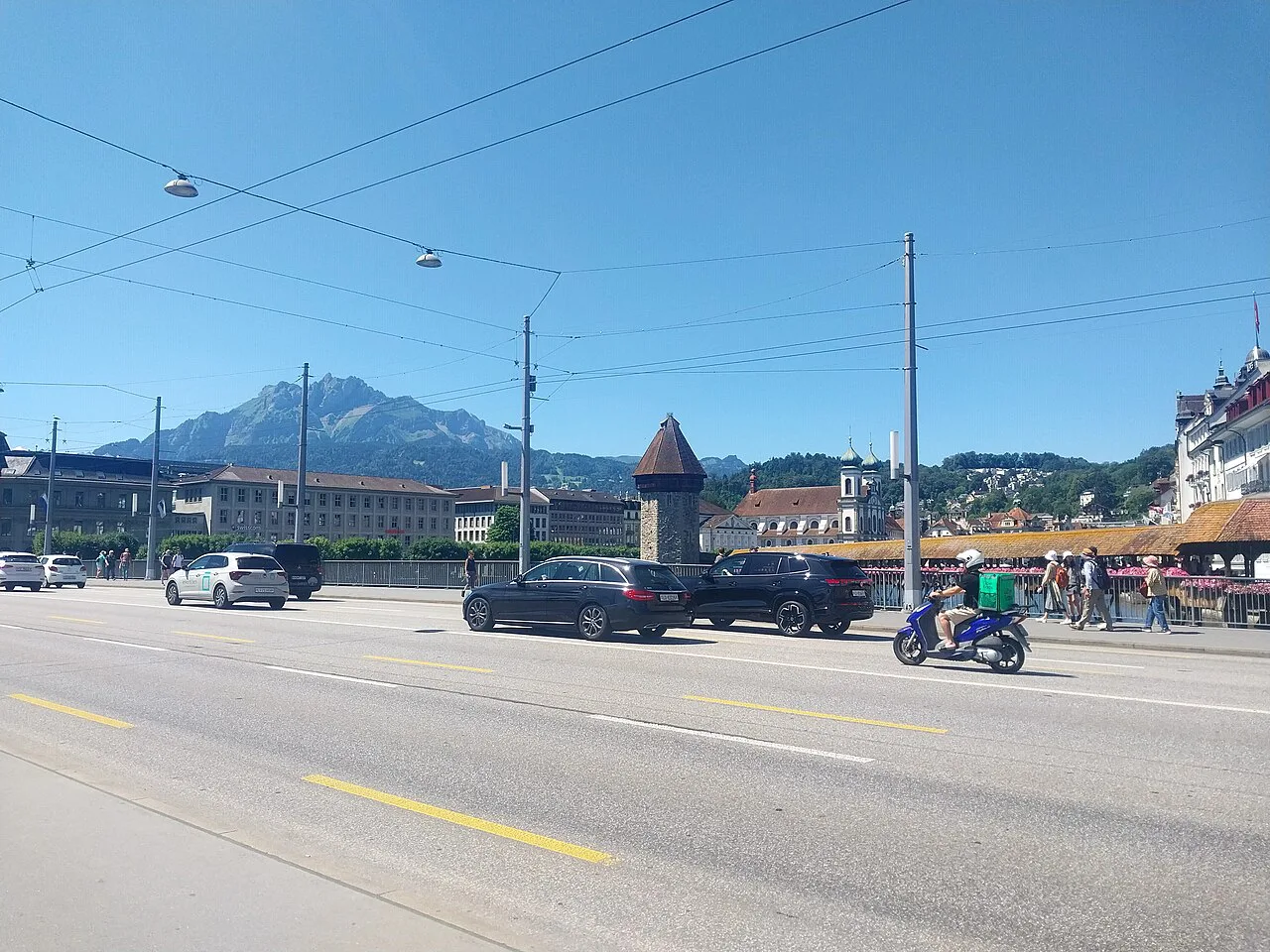
The bridge's interior carries a painted cycle conceived by the city clerk Renward Cysat, who spent years studying Swiss and Christian history to plan it. Wealthy citizens funded individual panels because public money was not available, and the work began after Cysat finalized his ideas in 1611. If you want to fit the bridge into a wider route through the center, our Lucerne itinerary places it among the old town stops.
The subjects are scenes from Swiss and city history plus the lives of Lucerne's patron saints, Leodegar and Mauritius. Before the 1993 fire, 147 of the original 158 panels survived; 110 were in the bridge that night, and roughly two-thirds of those were destroyed or badly damaged. What you see overhead today is therefore a mix, and knowing that changes how you look at it.
The 1993 Fire and the Rebuild
Fire broke out in the night of 18 August 1993 and burned most of the bridge; only the two bridgeheads and the Wasserturm were saved. The missing section was reconstructed in eight months and the bridge reopened on 14 April 1994.
That history is the honest frame for a visit. The structure you walk is largely a careful reconstruction, the tower is the older original element, and the surviving painted panels are the fragments that came through the fire. Treat the bridge as a monument with a documented afterlife rather than an untouched medieval survivor.
Best Views and Photo Spots
The strongest angle is from the quays, not from the deck: stand back on the Rathausquai or the opposite bank and the diagonal line of the bridge, the roof and the tower stack into one composition. The lake outlet end gives you the bridge against the wider basin.
On the bridge itself, the open sides frame the Reuss and the waterfront buildings, and the panel cycle is directly overhead. Early morning is the calmer window for the quays; the bridge is a working pedestrian route, so it fills as the day goes on.
Nearby on the Same Walk
St. Peterskapelle at the north end and the Rathausquai running along the water are the immediate neighbors, and the old town squares with their frescoed facades sit just inland. The Jesuit Church, a landmark on the Reuss, is a short walk along the bank.
The Spreuer Bridge, the city's other covered wooden bridge, is upstream and gives you a second, quieter crossing with its own painted panels. Pairing the two makes a natural loop along the river rather than a single stop.
Beyond the river, the Musegg Wall with its towers and the Lion Monument are within walking distance of the center, and the KKL concert hall sits by the lake. Plan the bridge as the anchor of a half-day on foot; a full Lucerne itinerary sets it alongside these.

Mountains in View
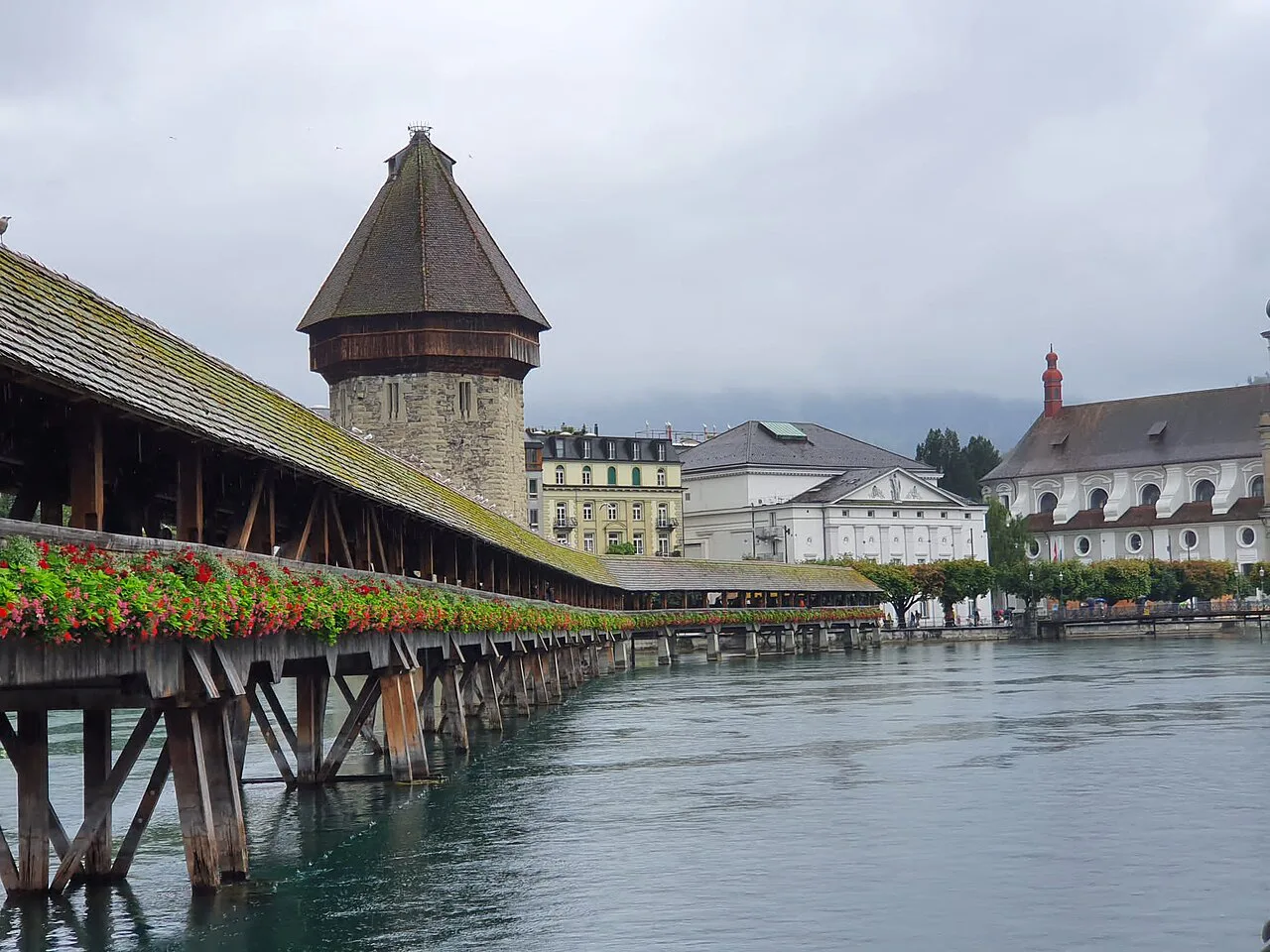
On clear days the peaks above Lake Lucerne frame the water at the lake outlet. Mount Pilatus rises to the south, and mount rigi sits across the lake; both are separate outings with their own transport and costs, not part of a bridge visit.
If a mountain day is on your list, mount titlis in Central Switzerland is a longer commitment than either, with its rotating cable car. Keep the bridge for the town day.
Practical Points
The bridge is a pedestrian crossing forming part of the public route between the banks, so you simply walk on rather than planning a visit around a schedule.
Allow about fifteen to twenty minutes for the bridge and tower together, longer if you read the panels, and add the quays for the photographs. It is an outdoor sight, so rain changes the experience more than any schedule does, which is worth weighing if you are choosing when to plan your trip using the best time to visit Lucerne. If you want a museum indoors nearby, the Sammlung Rosengart is in the center.
Plan Your Visit
Treat the Chapel Bridge as a short, free walk with a long history: cross from the Theater to St. Peterskapelle, look up at the panels, and step off onto the quays for the view that includes the Wasserturm. Then use it as the hinge for the old town, the Spreuer Bridge and the riverbank rather than as a standalone stop.
The bridge serves pedestrians as a public crossing, and the tower is viewed from outside; current visitor information is published by Lucerne Tourism.
Explore more Lucerne guides
Frequently Asked Questions
What is the famous bridge in Lucerne called?
It is the Chapel Bridge, known in German as the Kapellbrücke, a covered wooden footbridge across the Reuss paired with the octagonal Wasserturm.
How old is the Chapel Bridge?
It was built in the first half of the 14th century. The Wasserturm beside it is older, dating to around 1290 to 1300.
Was the Chapel Bridge destroyed by fire?
A fire in the night of 18 August 1993 burned most of the bridge; only the two bridgeheads and the tower were saved. The missing section was rebuilt and the bridge reopened on 14 April 1994.
Who painted the panels inside the Chapel Bridge?
The cycle was conceived by the city clerk Renward Cysat, planned from years of historical study and funded by wealthy citizens, with the work starting after his ideas were finalized in 1611.
How long does it take to walk the Chapel Bridge?
The crossing itself takes minutes. Allow fifteen to twenty minutes for the bridge and the Wasserturm together, more if you stop for the painted panels and the river views.
Is the Chapel Bridge free to visit?
Yes. It is a public pedestrian bridge, so there is no ticket and no booking; you walk across as part of the route between the two banks.
What is the Wasserturm used for?
Over its history it has served as a watchpost for lake shipping, part of the city defenses, an archive and a prison, and it now holds a weapons collection in its former armory room.
What is nearby the Chapel Bridge?
St. Peterskapelle and the Rathausquai sit at the north end, the old town squares are just inland, and the Spreuer Bridge, Musegg Wall and Lion Monument are within walking distance.