
Jesuit Church Lucerne: A Visitor's Guide to the Jesuitenkirche
The Jesuit Church, the Jesuitenkirche, is the baroque landmark on the River Reuss in the center of Lucerne and the oldest large baroque sacred building in Switzerland. It was begun in 1666, consecrated in 1677 and modeled on the Church of the Gesù in Rome, so the facade and the white interior are the reason to step inside rather than a long list of artworks.
Treat it as a 20- to 30-minute stop folded into a walk along the Reuss, not a half-day destination. Pair it with the Chapel Bridge and the old town on the same loop, and you cover the historic core in an easy half day.
Why the Jesuit Church Matters
This is Switzerland's first major sacred building in the baroque style, begun in 1666 and officially inaugurated in 1677 under the Jesuit order. Its design follows the Church of the Gesù in Rome, which makes the Lucerne church a deliberate statement of Counter-Reformation confidence rather than a local experiment.
The building is also Switzerland's first major sacred building in the baroque style, which is why architecture-minded visitors put it ahead of Lucerne's other central churches. You do not need a background in art history to enjoy it, but knowing what to look for turns a quick peek into a proper visit.
Where It Sits on the Reuss
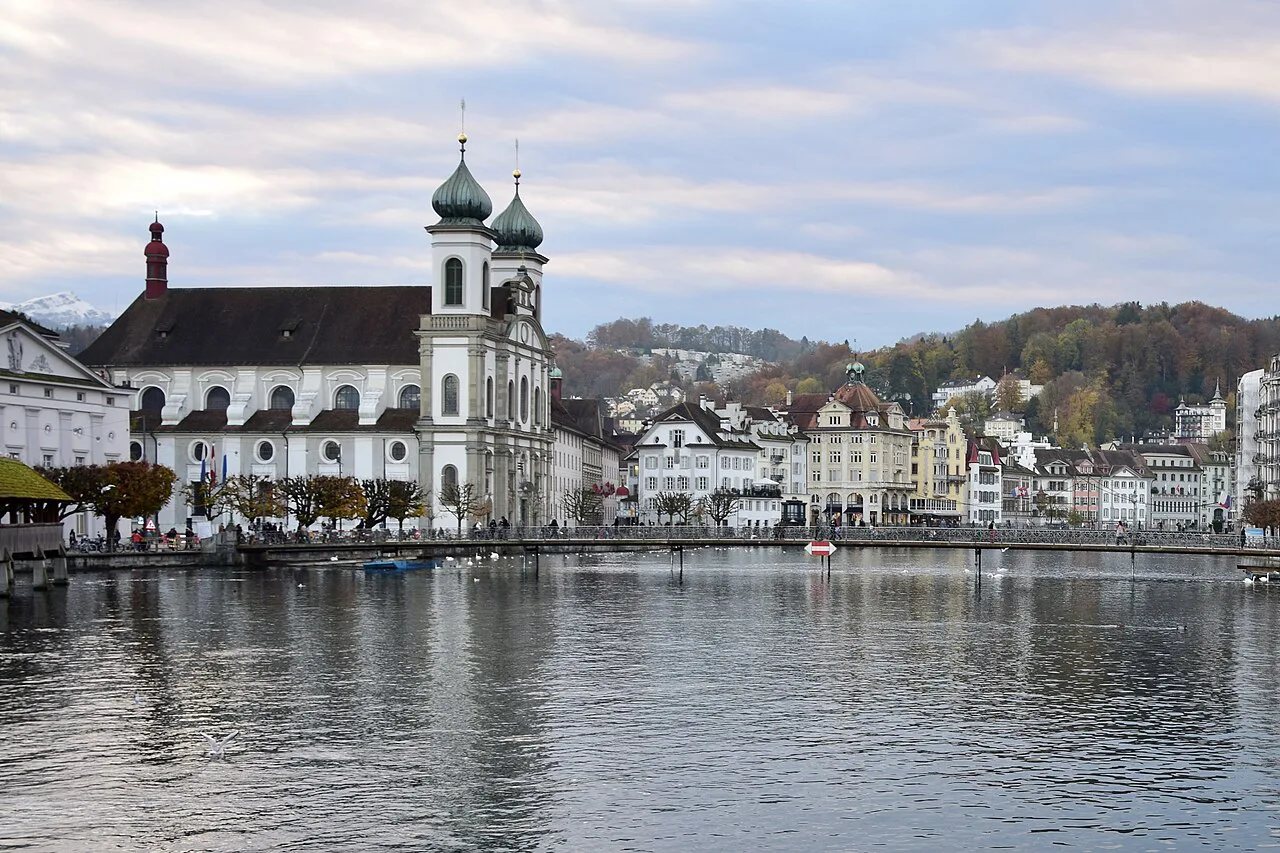
The church stands directly beside the River Reuss in Lucerne's old center, close to the water and recognizable from a distance by its pale facade. Together with St. Leodegar's and the Franciscan Church, it is one of the three large churches that shaped the city's public religious life.
Because it is on the river, the easiest approach is on foot from the old town or from the Chapel Bridge, following the bank until the twin front comes into view. The riverside path is flat and short, so the church slots naturally into a stroll rather than needing its own trip across town.
If you are planning the rest of your day around the historic center, this is a natural anchor for it. The wider set of Lucerne Attractions: 8 Visitor Guides shows how the central sights fit together on foot.
The Exterior and the View from the Opposite Bank
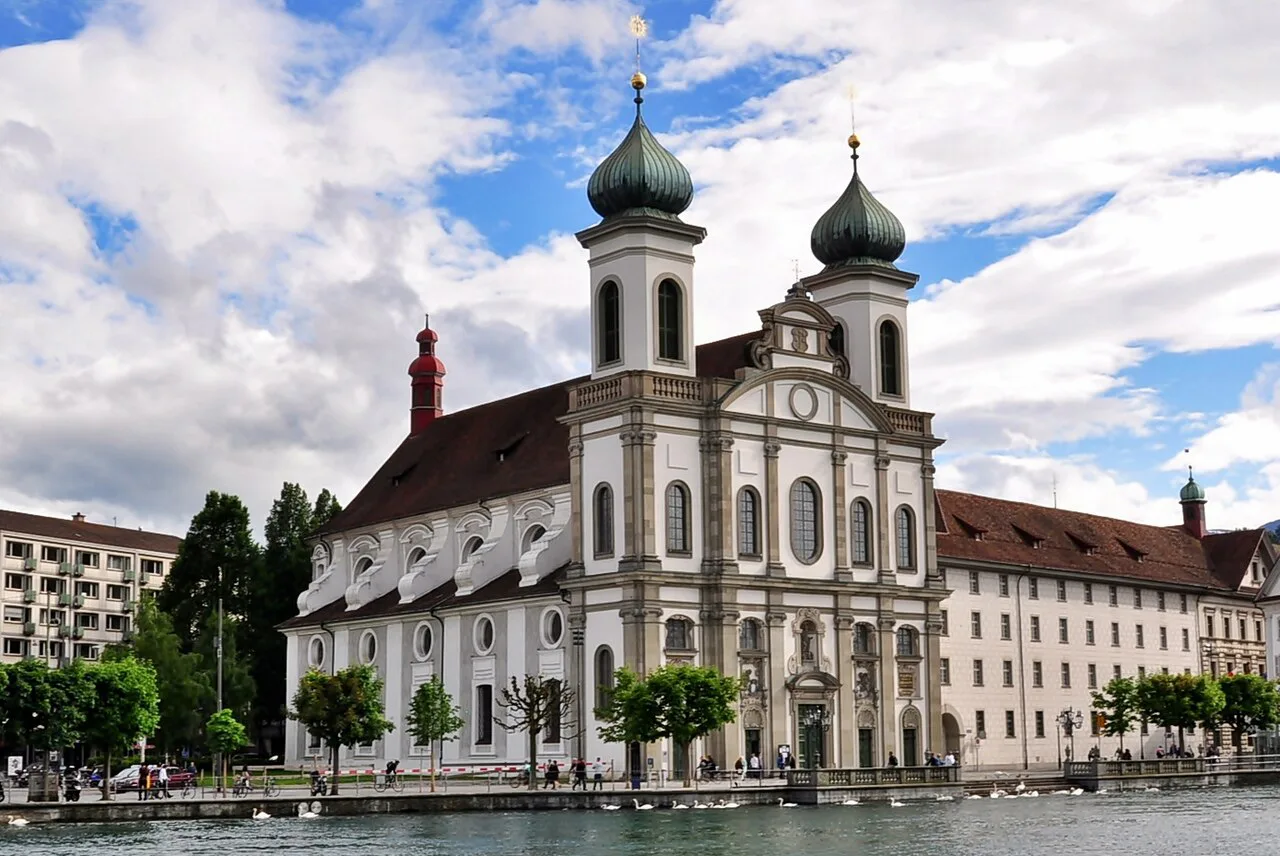
The front of the church faces the river, which is why the best first look is from the far bank rather than from directly beneath it. From across the Reuss the whole composition reads clearly, including the two towers that frame the entrance and the light-colored facade.
Aim to see it twice: once from the opposite bank for the overall shape, and once up close for the stonework and doorway. The walk between the two viewpoints takes only a few minutes, so the double look costs you almost no time.
Inside: Stucco, High Altar, Organ and Treasury
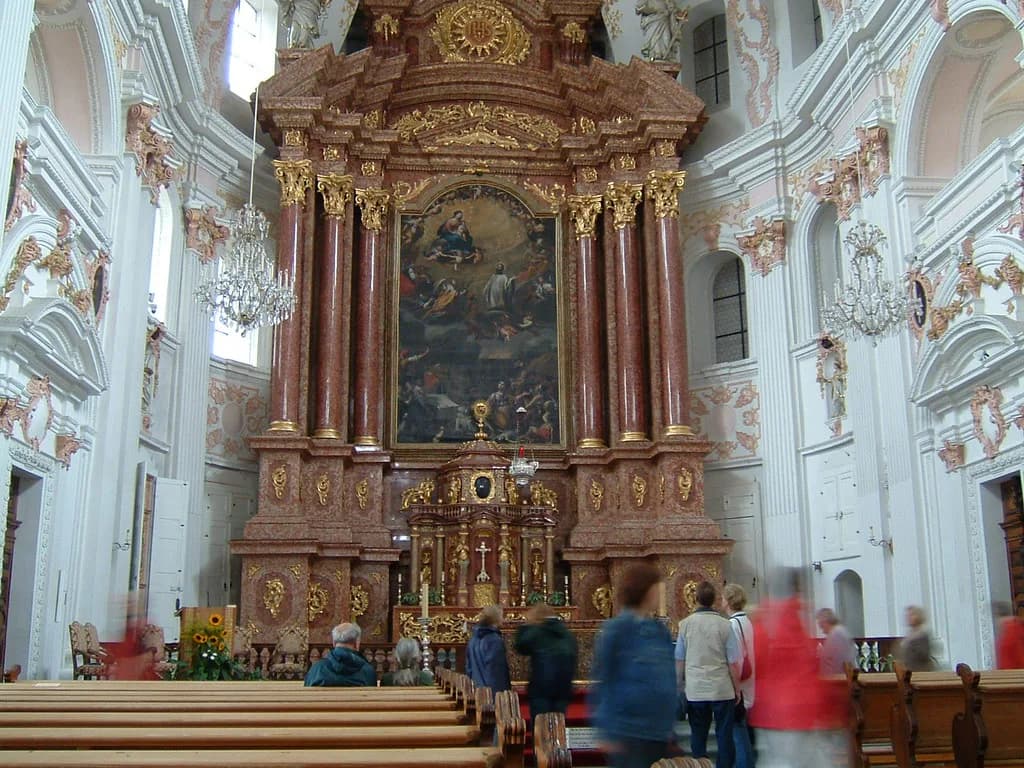
The interior is where the church earns its reputation. The baroque and rococo stucco work, the high altar, the organ and the treasury are the four things to seek out, and each sits in a different part of the nave, so work from the entrance toward the altar rather than wandering at random.
Look up as much as forward: the ceiling and the stucco frames reward a slow scan, and the white-and-gold palette is what gives the space its brightness. Fifteen minutes of deliberate looking covers the main features without rushing past them.
The treasury holds the church's smaller valuables, so it suits travelers who like reliquaries and liturgical objects more than grand architecture. If your time is tight, see the nave and high altar first and treat the treasury as the extra.

The Side Altars and the Counter-Reformation Story
The side altars carry the building's message. One is dedicated to St. Francis Xavier, the church's patron and a missionary figure shown in glory, and another to St. Ignatius, the founder of the Jesuit order.
A third altar honors Nicholas of Flüe, the Swiss hermit and national figure known as Brother Klaus, who was beatified in 1669 while this church was under construction. Reading the altars this way explains why a single riverside church carries so much political and religious weight. If your trip depends on weather and crowds along the Reuss, it is worth checking the best time to visit before you lock in dates.
The church also holds relics obtained from the Roman catacombs during the Counter-Reformation, when Catholic churches demonstrated their continuity with the early church this way. A reliquary of St. Charles Borromeo is among them, a detail worth pointing out to anyone who thinks baroque churches are only about decoration.
Music, Concerts and the Organ
The interior has a particularly good acoustic, which is why the church also serves as a concert venue and why organists are taught here. If you are in Lucerne during a music festival period, this is one of the rooms that makes the city's musical reputation concrete.
Concert and recital schedules change seasonally, so check the official church and Lucerne tourism pages for what is on during your dates. It is worth arranging a visit around a performance if hearing the space matters more to you than seeing it empty.
How Long to Allow
Budget 20 to 30 minutes for the church itself: enough for the nave, the high altar, the organ and a look at the side chapels. Travelers with a strong interest in baroque art should allow closer to 45 minutes to read the altars and find the relics.
If you are building a Lucerne itinerary around the old town, place the Jesuit Church between the Chapel Bridge and a riverfront walk rather than at the start or end of the day. That way the short visit breaks up the walking and keeps you near the water.
Warm afternoons and weekend middays bring the heaviest foot traffic along the Reuss, so an early morning stop tends to be calmer. For a broader view of seasons and crowd patterns, see the best time to visit Lucerne, and if you are weighing a full 2- to 3-day plan, our Lucerne itinerary shows where the church fits.
What Is Nearby
The Chapel Bridge and the old town are within a couple of minutes on foot, which makes the church an easy add-on rather than a detour. Walking the bridge, then the riverbank to the church, then back through the old town is a compact and satisfying loop.
A little farther out, the Lion Monument is a short walk from the old town and pairs well with a central morning. The Lion Monument (Löwendenkmal) in Lucerne takes only a few minutes to see, so it fits neatly before or after your riverfront stop.
For indoor alternatives nearby, the Rosengart Collection Lucerne holds modern art a few minutes from the river, and the Swiss Museum of Transport in Lucerne is a longer walk or short ride out of the center. Both are useful if rain changes your plans.

Practical Details Before You Go
Opening times, service times and any arrangements for visitors are set by the parish, and they vary through the year. Check the current details on the official church and Lucerne tourism pages before you set out, especially if you are making a special trip for a service or a concert.
Remember that this is an active place of worship, so a visit may overlap with a service and the atmosphere will be different from a museum. Plan the church as a short, respectful stop and leave the longer indoor sightseeing for a museum day.
Pairing the Church with a Mountain Day
If you are giving Lucerne two or three days, keep the Jesuit Church for a city morning and use a clear afternoon for the mountains. Mount Pilatus is the classic nearby summit, reached by boat or rail from Lucerne, and the view from Pilatus Kulm over Lake Lucerne is the payoff.
Mount Rigi is the quieter alternative, with Rigi Kulm as the summit and Rigi Kaltbad on the way, both reachable by cog railway and boat. Travelers who want a gentler day out often prefer it to the steeper Pilatus circuit.
For a bigger glacier-and-cable-car day, Mount Titlis in Central Switzerland includes the rotating TITLIS Rotair cabin, but it takes most of a day. Choose one mountain, not two, and keep the Jesuit Church and old town for the remaining half day.
Plan Your Visit
The Jesuit Church is the one baroque interior in Lucerne that justifies a deliberate stop: a 1666 building modeled on Rome's Gesù, with stucco, a high altar, an organ and a treasury in a compact space. Give it half an hour, see it from both banks of the Reuss, and walk on to the Chapel Bridge.
Confirm the current opening and service times before you go, then build the rest of the day around the riverfront and the old town. That combination gives you the historic core of Lucerne without spending your whole visit indoors.
Frequently Asked Questions
When was the Jesuit Church in Lucerne built?
Construction began in 1666, and the church was officially inaugurated in 1677. It was modeled on the Church of the Gesù in Rome and is the first major sacred building in Switzerland in the baroque style.
Is the Jesuit Church free to visit?
Entry arrangements are set by the parish rather than by a museum ticket desk, so confirm the current visitor rules on the official church and Lucerne tourism pages before you go. Do not assume a fixed policy from older trip reports.
What should I look for inside the Jesuit Church?
Focus on the baroque and rococo stucco, the high altar, the organ and the treasury. The side altars dedicated to St. Francis Xavier and St. Ignatius, plus the relics, explain the church's Counter-Reformation role.
How long does a visit to the Jesuit Church take?
Allow about 20 to 30 minutes for the nave, high altar and side chapels. If you want to study the art and relics closely, plan on closer to 45 minutes.
What is near the Jesuit Church in Lucerne?
The Chapel Bridge and the old town are a few minutes away on foot along the Reuss. The Lion Monument, the Rosengart Collection and the Swiss Museum of Transport are also within reach of the center.
Is the Jesuit Church still an active place of worship?
Yes, it remains a working Catholic church and also hosts concerts and organ teaching. Services take priority over sightseeing, so check times before visiting.