
Mount Rigi: How to Get Up, What to See and How Long to Allow
Mount Rigi, the long green ridge the region markets as the Queen of the Mountains, stands above Lake Lucerne between Vitznau, Weggis and Arth-Goldau. You do not climb it on foot to reach the top: cogwheel trains and aerial cable cars do the work, and the summit, Rigi Kulm, opens onto a panorama that takes in a wide spread of lakes and peaks. This guide covers the three main approaches, the walk down, how much time to budget and what you find at the top.
What Mount Rigi Is and Where It Sits Above Lake Lucerne
Rigi is a mountain massif rather than a single peak, with its highest point at Rigi Kulm and a mid-mountain terrace at Rigi Kaltbad partway down. It rises above the northeastern shore of Lake Lucerne, within easy reach of Vitznau and Weggis on the lakeside and Arth-Goldau on the inland side. Because the mountain is served from several directions, your route up shapes your day more than the distance from Lucerne does.
The mountain carries a large trail network, with paths that range from easy walks to exposed climbs, and the panorama stays with you most of the way. That makes Rigi a forgiving choice for travelers who want big views without committing to a hard ascent. The official Weggis Vitznau Rigi site catalogs the mountain's transport systems and trail options if you want to plan beyond the classic summit run, and it helps to know the best time to visit Lucerne before you fix a walking date.
The Summit: Rigi Kulm and Its Panorama
Rigi Kulm is where the cogwheel lines end and where the view opens in every direction. The panorama sweeps across thirteen lakes and a sea of peaks, according to the region's own description of the mountain, which is the reason the summit rewards even a short visit. A restaurant and a gift shop sit at the top, so you can eat and shelter without descending first.
Visibility is the variable that decides your day. Cloud can sit on the summit while the lakeside below is clear, and it can lift just as quickly, so a foggy arrival is not necessarily a lost one. Treat any mountain-top weather as changeable and build a little slack into your plan rather than fixing your descent time in advance.
How to Reach Rigi Kulm from Lucerne: Boat to Vitznau, Then Cogwheel Train
The most scenic approach starts at the Lucerne ferry terminal, directly opposite the main station, with a 60-minute boat ride across the lake to Vitznau. From Vitznau the red cogwheel railway climbs to Rigi Kulm in about thirty minutes.
This route is the one to pick if the journey itself matters to you, since the lake crossing and the steep rack section deliver most of the day's scenery before you reach the top. The trade-off is time: two transport legs each way stack up, and you are tied to boat and train departures rather than free to leave when you like. Check the current sailing and rail times with Rigi Bahnen and the Lake Lucerne boats before you commit to a late-afternoon return.
The Arth-Goldau Approach by Train and Cogwheel Railway
The second option is the fastest on the inland side: a train from Lucerne main station to Arth-Goldau, then the Goldau–Rigi Kulm cogwheel railway up. The train takes about thirty minutes and the cogwheel climb roughly forty-five. This is the route for travelers who want to spend their time on the mountain rather than on the water.
Arth-Goldau also gives you a useful one-way pairing: ascend from Lucerne via Vitznau and descend toward Arth-Goldau, or reverse it, so the day does not repeat the same scenery twice. Whichever direction you choose, confirm the day's departures in advance, since mountain railways run on their own seasonal patterns.
The Weggis Option: Boat, Cable Car to Rigi Kaltbad, Then Cogwheel Train
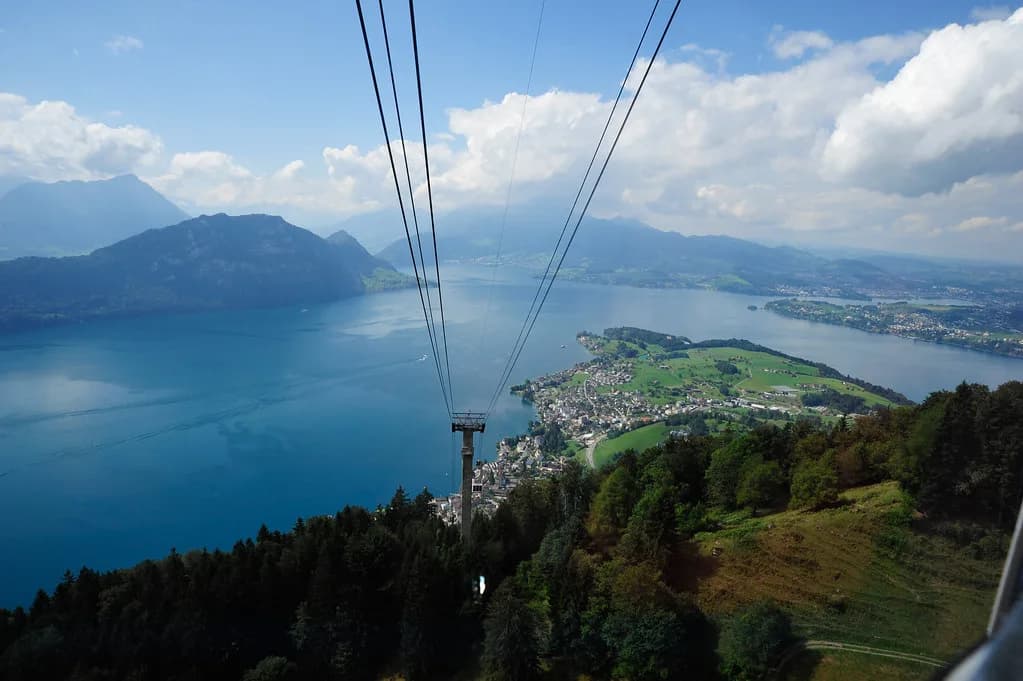
The third approach uses the lake town of Weggis: a 40-minute boat ride from Lucerne, an aerial cableway from Weggis up to Rigi Kaltbad taking about ten minutes, then the cogwheel train to the summit in around twelve. It is the most varied of the three, mixing boat, small cable car and rack railway in a single ascent.
Choose it if you want to break the climb with a stop at Rigi Kaltbad, where the cable car, the cogwheel railway and the onward traverse all meet. The cost is a third change of transport and a little more waiting, so it suits a full day better than a rushed half day.

Rigi Kaltbad as a Mid-Mountain Base
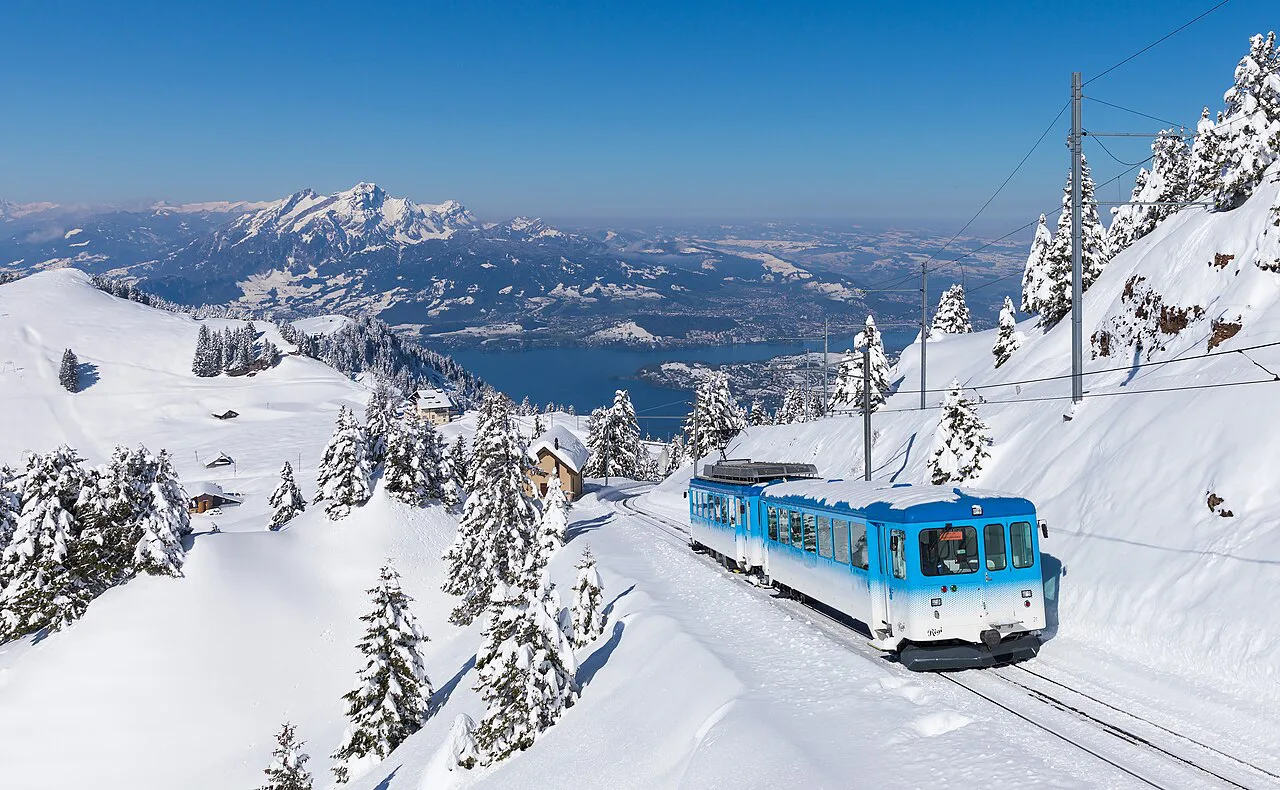
Rigi Kaltbad is the decision point of the mountain. It connects the Weggis cableway, the cogwheel railway and the trails that run along the ridge, which means you can arrive one way and leave another without returning to the summit. The Mineral Bath & Spa Rigi Kaltbad sits at Zentrum 1 in the village, and horsedrawn carriage rides run from Rotstockweg nearby.
Treat Kaltbad as a place to pause rather than a pass-through station. A stop here splits a long descent, gives you somewhere warm to wait out a cloud bank and lets you pick up the next leg of the traverse down toward Rigi Scheidegg.
How Long to Allow: Half Day or Full Day
A half day is enough to ride up, take in the Rigi Kulm panorama, eat at the summit restaurant and ride back down. A traveler who did exactly that from Lucerne treated the mountain as a morning or afternoon outing and still reached the top, though cloud blocked the view on that occasion.
A full day lets you add the walk down and a stop at Rigi Kaltbad, and it removes the pressure of catching a specific return departure. Because the descents and boat crossings are long, a half day leaves little margin for a slow lunch or a long wait in cloud. Plan the full day if the mountain is the main event rather than a stop on a broader Lucerne itinerary, and check the best time to visit Lucerne if you are still choosing your dates.
Walking Down from Rigi Kulm: the Classic Route
The classic descent runs from Rigi Kulm through Staffel, Staffelhöhe, Kanzeli and on to Rigi Kaltbad, and takes about an hour at an easy pace. Yellow signposts mark the way and give walking times to the next station, which makes it simple to judge how much further to go. From Rigi Kaltbad you can take the train down to Vitznau and pick up the ferry back to Lucerne.
The useful trick is to walk only as far as you want and board at the next station. If time is short, ride the cogwheel train down to Staffelhöhe and start walking from there, cutting the descent while keeping the best of the views. The Kanzeli viewpoint is a natural pause, roughly fifteen minutes above Rigi Kaltbad on foot.
The Longer Traverse to Rigi Scheidegg and the Kräbel Cable Car Down
From Rigi Kaltbad the trail continues to First, Unterstetten, Hinder Dossen and Rigi Scheidegg, adding roughly two hours to the descent. At Rigi Scheidegg the Kräbel–Rigi Scheidegg aerial cableway drops you to Kräbel, where a train continues to Arth-Goldau and onward to Lucerne. The Kräbel–Rigi Scheidegg aerial cableway is listed at Chräbelstrasse 46 in Rigi Scheidegg.
This traverse suits strong walkers with a full day, because it commits you to a long ridge walk before the next way down. If the weather turns, the shorter descent to Rigi Kaltbad keeps your options open.

The Other Transport Systems on the Mountain
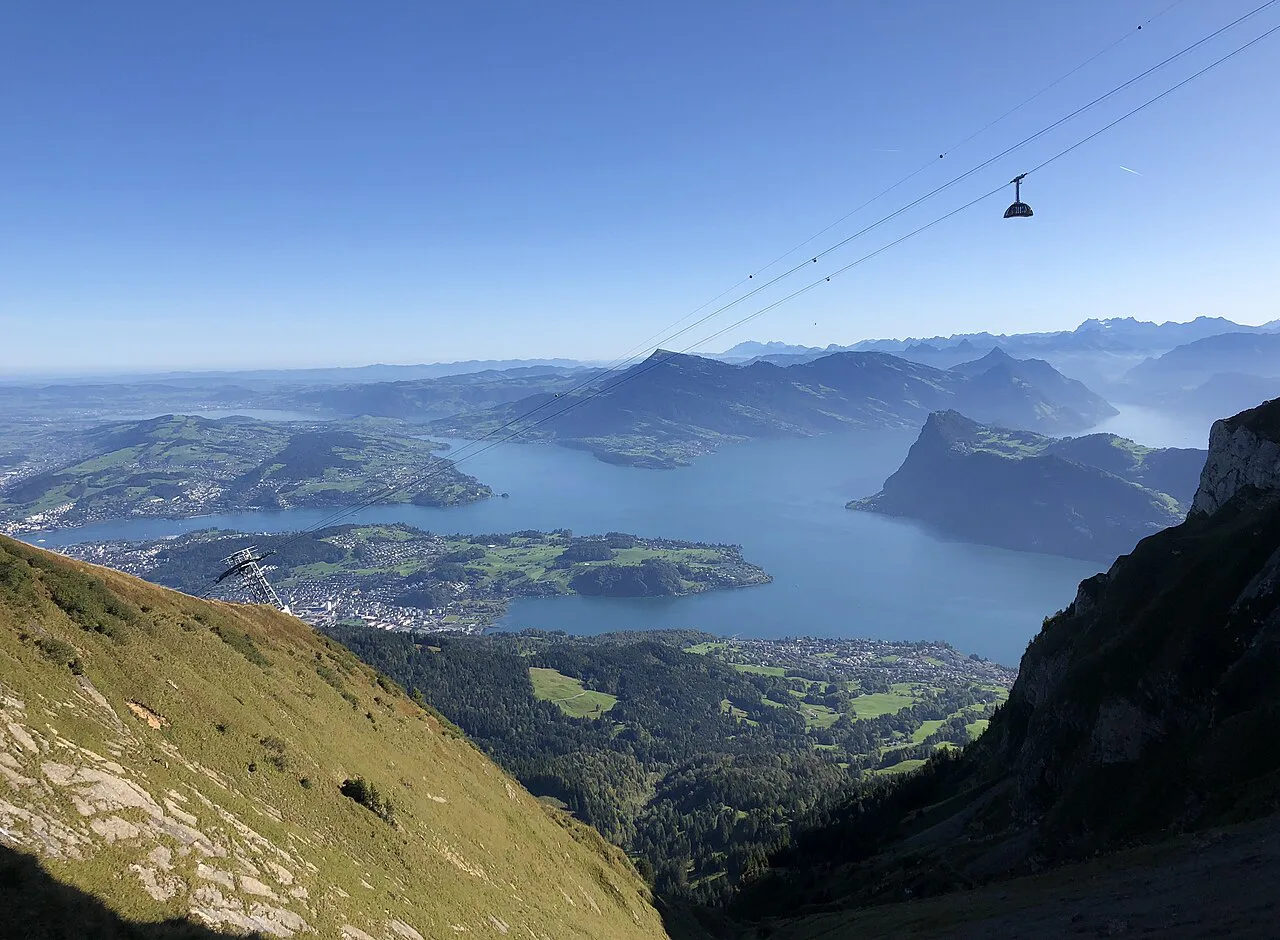
Rigi is served by nine transport systems in all: two cogwheel railways and seven aerial cable cars, reaching the mountain from Vitznau, Goldau, Weggis, Küssnacht, Brunnen, Gersau and Kräbel. That spread means you are not locked into the Lucerne boat route and can approach from whichever side fits your day. The Vitznau–Rigi Kulm cogwheel railway has its base at Bahnhofstrasse 7 in Vitznau.
A few bookable packages run on the mountain, including a winter steam train service advertised from CHF 56.00 per person and Locomotive 7 basket rides from CHF 99.00 per person. These are packaged experiences, not standard fares, so check what each includes and whether it runs on your dates before booking.
Practical Notes on Weather and Visibility
The mountain makes its own weather, and the summit can be in fog while Vitznau and Weggis sit in sunshine. The trip is short enough that you can watch conditions and choose your day rather than booking far ahead. Webcams and local forecasts are the practical tools; the Rigi region's visitor site publishes weather and webcam pages for exactly this purpose.
Nearby Options to Pair with Rigi
Because Rigi is a short hop from Lucerne, it pairs naturally with a city day rather than consuming the whole trip. The Chapel Bridge (Kapellbrücke) and the Lion Monument are both central and easy to fold into the same day if you take an early ascent.
Travelers weighing a second mountain day often look at Mount Pilatus as well, which offers a different mix of transport and terrain. The broader Lucerne Attractions collection covers both so you can compare before you commit a day to either, and a lucerne itinerary helps you see how each fits alongside the city.
Plan Your Visit
Pick your route by what you want from the day: the Vitznau boat for scenery, Arth-Goldau for speed, Weggis for variety and a Kaltbad stop. Budget a half day for the summit alone and a full day if you plan to walk down. Check the day's transport times and the summit webcam before you set out, since visibility is the one thing that decides whether the panorama shows up. If you are still shaping the rest of your stay, a lucerne itinerary helps you slot the mountain in around the city.
Explore more Lucerne guides
Frequently Asked Questions
How long does it take to get to Mount Rigi from Lucerne?
By the Vitznau route, allow about an hour for the boat from the Lucerne ferry terminal and roughly thirty minutes for the cogwheel train to Rigi Kulm. The Arth-Goldau route takes about thirty minutes by train plus around forty-five minutes on the cogwheel railway. The Weggis route runs roughly forty minutes by boat, ten minutes by cable car to Rigi Kaltbad and twelve minutes by train to the summit. These are approximations; check current timetables for your date.
Can you hike down from Rigi Kulm and take the train back?
Yes. The classic descent runs from Rigi Kulm through Staffel, Staffelhöhe and Kanzeli to Rigi Kaltbad in about an hour, and you can board the cogwheel train at stations along the way whenever you have walked enough. From Rigi Kaltbad the train continues down to Vitznau, where the ferry returns you to Lucerne. Yellow signposts give walking times to the next station, so you can judge the remaining distance as you go.
Is Mount Rigi worth a half day or a full day?
A half day covers the ascent, the Rigi Kulm panorama, a meal at the summit restaurant and the ride back down. Add the walk down to Rigi Kaltbad, or the longer traverse toward Rigi Scheidegg, and you need most of a full day, because each transport leg and the ridge trail eat into your hours. If Rigi is the main event of your trip rather than a stop between city sights, plan the full day and keep some slack for cloud.