
Lion Monument (Löwendenkmal) in Lucerne: A Visitor's Guide
The Lion Monument (Löwendenkmal) is a large sandstone relief carved into a former quarry above a small pond in Lucerne, and it costs nothing to see. It commemorates members of the Swiss Guard who were killed in 1792, which is the detail that turns a quick photo stop into a sight worth understanding.
Plan it as a 20 to 30 minute stop rather than a half-day outing. The monument sits in a compact park off Denkmalstrasse, a short walk from the lakefront and from the Glacier Garden, so the sensible move is to fold it into a morning or afternoon you already spend on the north side of the city.
What the Lion Monument Is and Why It Exists
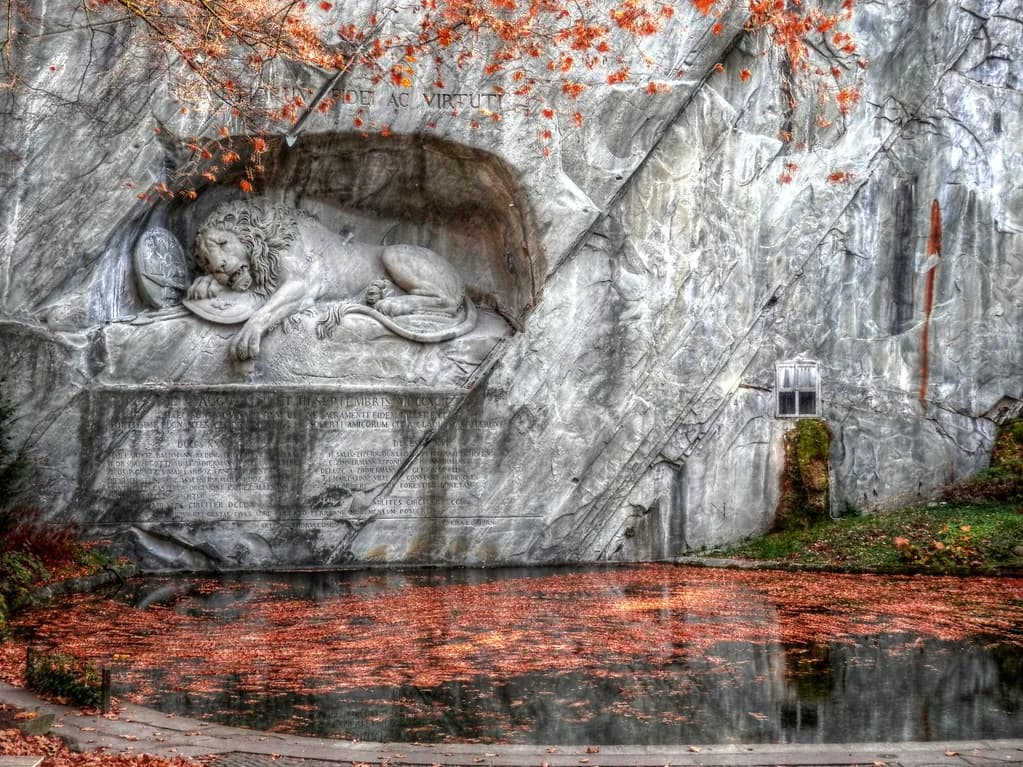
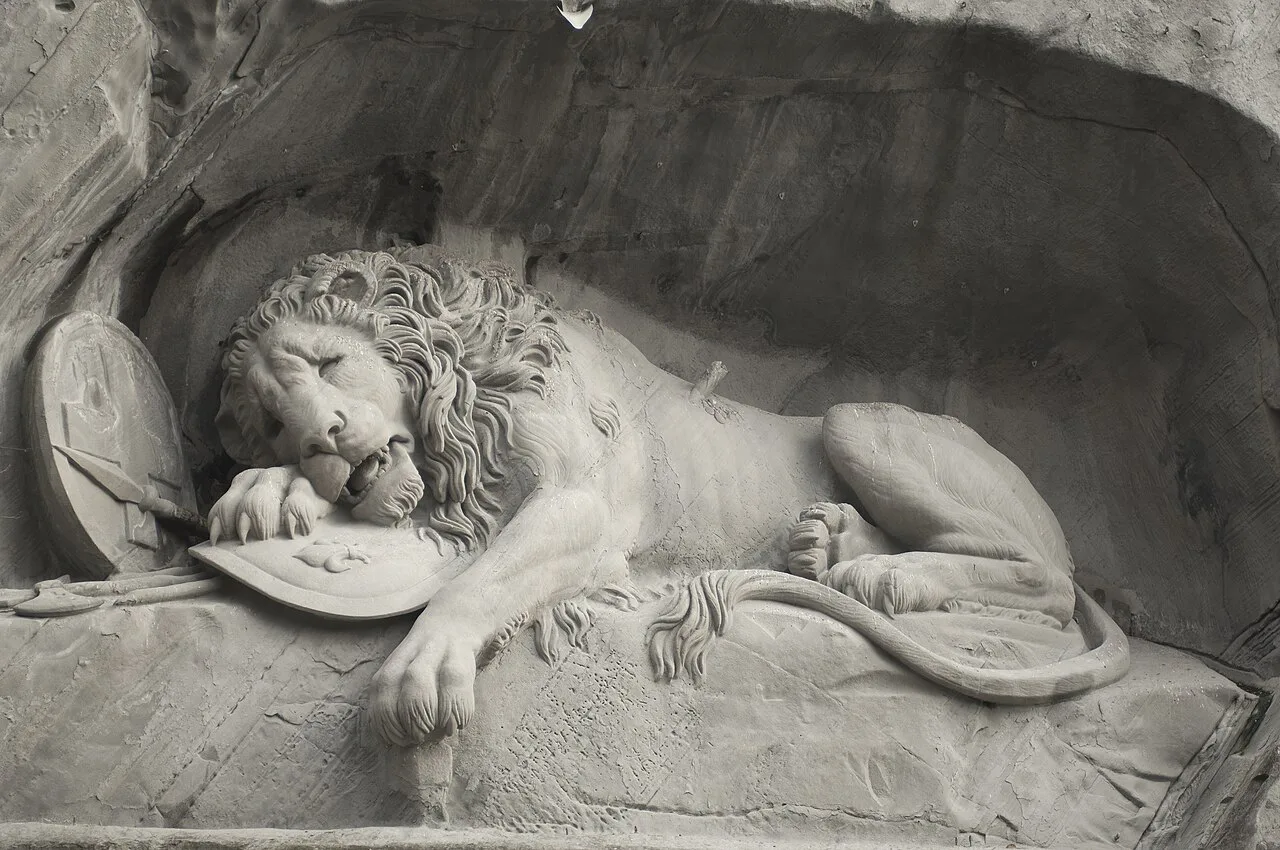
The monument is a large sandstone relief carved into a former quarry, completed in 1821 to commemorate members of the Swiss Guard who were killed in 1792. A dying lion lies over a shield, pierced and slumped, and the whole composition is set into the rock face rather than standing free on a plinth.
The historical anchor is the French Revolution: the Swiss Guards were cut down while defending the Tuileries in Paris, and the monument is their memorial. Keep that context in mind when you look at it, because the carving is more affecting once you know it marks a specific corps of men rather than a generic symbol.
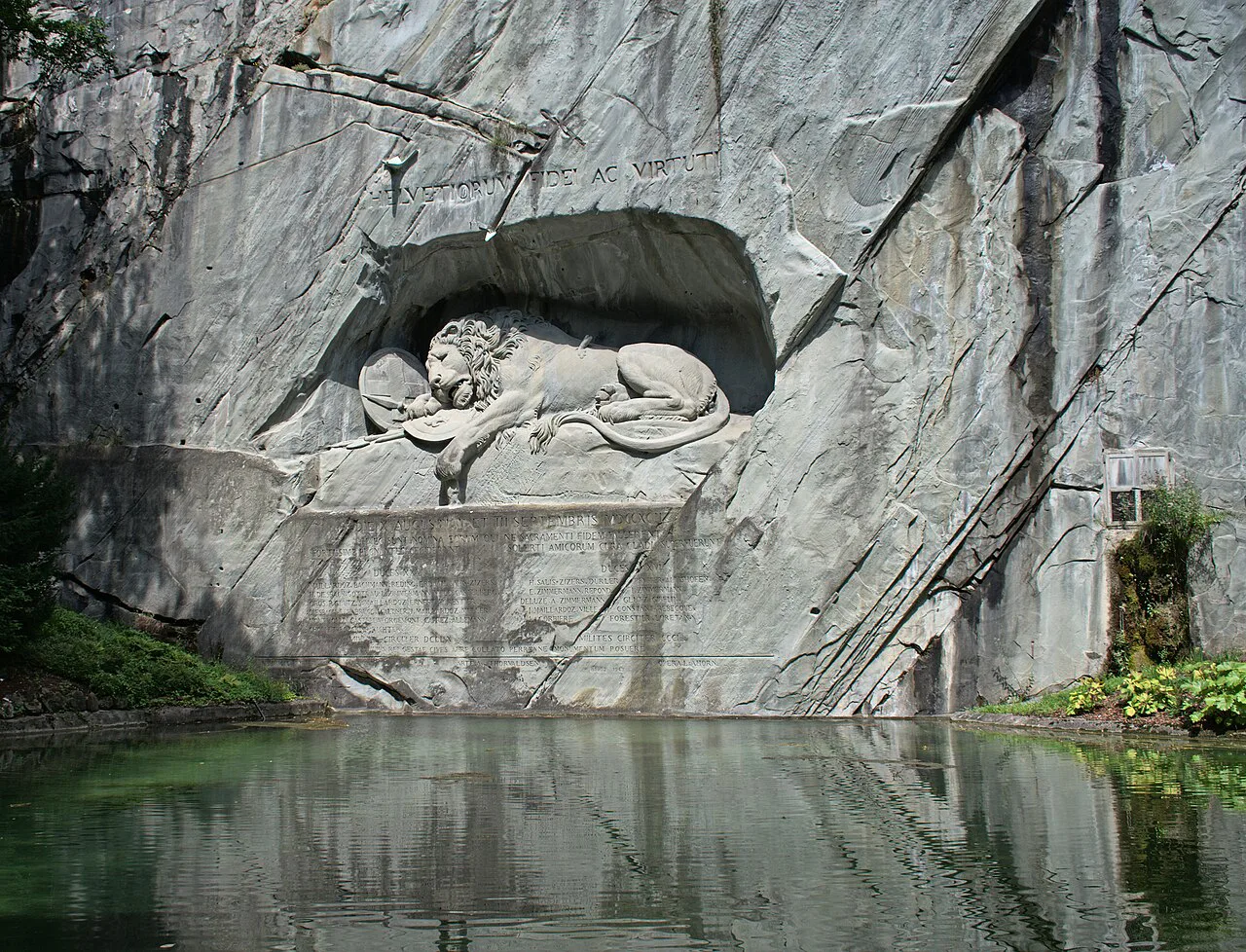
Read the scene closely: the lion is stretched out, its head lowered, a spear broken in its side, and the pond in front catches the light and reflects the rock. The sculpture is the centrepiece, but the enclosed, shaded setting is what makes the viewing feel intimate rather than monumental.
Where It Is
The Lion Monument stands just off Denkmalstrasse, in a small park with a pond, above the lakefront and within walking distance of Lake Lucerne's shore. It is on the north side of the city, close to the Glacier Garden and the old city walls rather than in the middle of the Old Town itself.
Because it is part of Lucerne's compact core, it fits naturally into a walking day among the city's main sights, which cluster within easy reach of one another. Our Lucerne Attractions: 8 Visitor Guides map puts it beside the Glacier Garden and the Musegg Wall so you can order the stops sensibly.
How to Get There on Foot
From the Chapel Bridge, walk back through the Old Town and climb gently toward Löwenplatz; the monument is a few minutes beyond it on Denkmalstrasse. Allow roughly 15 to 20 minutes at an easy pace, more if you stop on the way, and expect a slight uphill pull as you approach the park.
Lucerne's top sights, including the Chapel Bridge, the Lion Monument, the Musegg Wall and the lakeside promenade, are all within easy walking distance of each other, so you do not need transport for this stretch; our Lucerne itinerary lays out the same compact core in a logical order. Wear shoes you can walk in; the streets between the Old Town and the monument are cobbled in places.
What You See and How Long to Allow
You view the relief from a small terrace above the pond, close enough to pick out the lion's expression and the texture of the sandstone. There is no interior and no circuit to walk, so the stop is short by nature: 20 to 30 minutes covers the carving, the pond and a few minutes sitting in the park.
The viewing is close-up rather than panoramic, and the park is small, which is exactly why the site becomes crowded when a coach group arrives. Build in a little slack so you can wait a few minutes for the terrace to clear rather than shooting over shoulders.
The site is free to visit and needs no ticket, and most of Lucerne's headline sights, including the Chapel Bridge, the Lion Monument and the Musegg Wall, are free as well. The paid sights are the ones indoors or behind a gate, such as the Glacier Garden or the museums. Check the Glacier Garden's current admission on its own page before you commit.

Mark Twain and the Monument's Reputation
Mark Twain admired the Lion of Lucerne, and his praise is the reason the monument carries an outsized literary reputation among English-speaking visitors. Treat that reputation as context rather than a promise: the carving is genuinely moving, but it is one stop, not an afternoon.
If you want the story in more depth, pair the visit with the museums nearby; the Swiss Museum of Transport in Lucerne and, on the art side, the Rosengart Collection Lucerne give you indoor options for the same day.
Pairing It With the Glacier Garden and Musegg Wall
The Glacier Garden sits at Denkmalstrasse 4, right by the monument, and is the natural paid companion: you see the free lion, then step into the museum and its glacial potholes. Book ahead online if you want to skip the ticket queue; the site's own listing carries the price.
From there, continue to the Musegg Wall, whose nine towers are part of Lucerne's historic fortifications and which you can walk in the open air. A half-day loop of lion, Glacier Garden and wall works well because all three sit on the same raised edge of the old city.
If you are building a fuller day around the stop, our Lucerne itinerary shows how the monument slots between the Old Town and the lakefront without doubling back. When planning that day, check our best time to visit Lucerne so the walk lands in a comfortable season. For a longer view of the region, Mount Pilatus and Pilatus Kulm sit above Lake Lucerne on the other side of the water.

When to Go
Early morning is the calmest window, before the coach groups working the city circuit reach the park. The site is outdoors and always accessible, so you can slot it in before breakfast or after the museums close, and light in the shaded quarry is softest early in the day. If you are deciding when to build this walk into a longer trip, our best time to visit Lucerne by season covers how each month feels in the city.
Season matters less here than time of day, since the monument is not weather-dependent in the way a cable car is. If your Lucerne days are fixed, our best time to visit Lucerne guide covers what the city feels like month by month.
Practical Notes
The monument is outdoors in a small park, so there are no opening hours or gates to plan around for the viewing itself. If you want a guided context, the city's classic tour runs on selected days from the Tourist Information and can be booked online or in person.
For wet weather, the Lucerne region's own rain-day list points to indoor alternatives such as the Swiss Museum of Transport, the Bourbaki Panorama and the Museum Rosengart Collection, all within the city. Those carry their own admissions and hours, so confirm them on the day.
If you are in the city on a Tuesday or Saturday morning, the Wochenmarkt runs on Rathausquai, under der Egg and on Bahnhofstrasse, which pairs neatly with a walk up to the monument afterward. Saturday is also the day for the Helvetiagärtli market.
Plan Your Visit
Give the Lion Monument a focused 20 to 30 minutes, arrive early, and read the 1792 story before you look at the stone. Then spend the rest of the half-day on the Glacier Garden and the Musegg Wall, which sit steps away and turn a photo stop into a proper morning. If you want to see the monument in context with the rest of the city, our lucerne itinerary places it alongside the Old Town and the lakefront without doubling back.
Further afield, the Jesuit Church Lucerne on the River Reuss and the lakefront complete an easy walking day, and the wider Lucerne Attractions: 8 Visitor Guides collection covers the rest of the city.
Explore more Lucerne guides
Frequently Asked Questions
Is the Lion Monument free to visit?
Yes. The monument is an open-air public memorial in a small park, so there is no ticket and no gate. The Glacier Garden next door and the city's museums charge their own admission, which you confirm on each site's page.
What is the significance of the Lion Monument in Lucerne?
It commemorates members of the Swiss Guard who were killed in 1792 during the French Revolution. The dying lion carved into the former quarry is their memorial, completed in 1821.
How long does it take to see the Lion Monument?
Plan 20 to 30 minutes. There is no interior or route to walk: you view the relief from a terrace above the pond, sit in the small park if you like, and move on.
Where is the Lion Monument in Lucerne?
It is off Denkmalstrasse on the north side of the city, in a small park near the Glacier Garden and a short walk from the lakefront. From the Chapel Bridge, allow about 15 to 20 minutes on foot.
What did Mark Twain say about the Lion of Lucerne?
Twain admired the monument, and his praise is why it is so well known among English-speaking visitors. Read the carving first, then treat the literary reputation as context.
Can I visit the Lion Monument in the rain?
Yes. It is outdoors and always accessible, though the terrace offers little shelter. For longer wet spells, the region's rain-day list points to indoor options such as the Swiss Museum of Transport and the Bourbaki Panorama.
What is nearby the Lion Monument?
The Glacier Garden is right beside it at Denkmalstrasse 4, and the Musegg Wall and its towers are a short walk away. The Old Town, Chapel Bridge and lakefront are all within easy walking distance.